
Meta description: Discover compact dining nook ideas for small spaces, from banquette seating to fold-down tables. Designer tips, size charts, and budget advice for apartments and small homes.
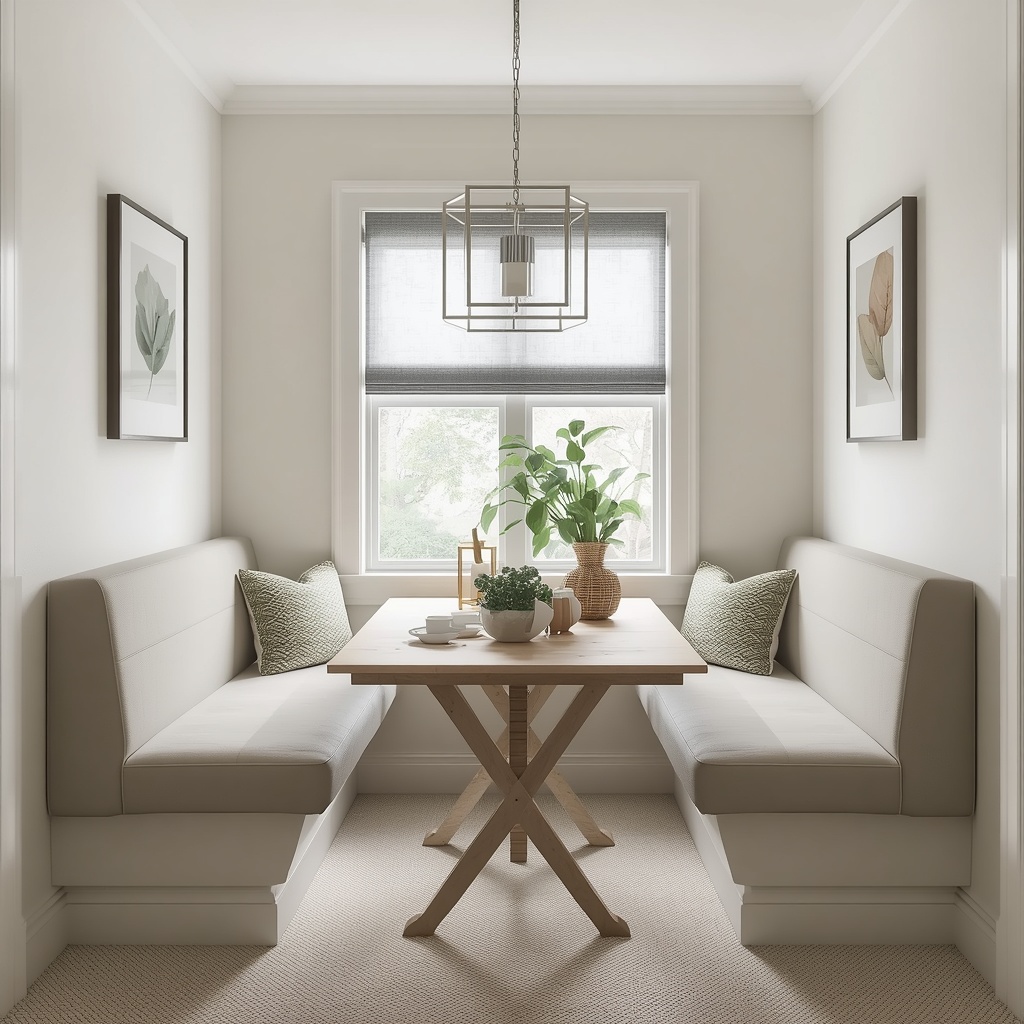
If you live in an apartment, condo, or cozy starter home, you’ve probably asked yourself where on earth a dining table could possibly fit. The good news is that you don’t need a formal dining room to enjoy proper sit-down meals. A well-planned dining nook turns a forgotten corner, a bare window wall, or a sliver of kitchen into the most-used spot in your home.
As an interior designer, I’ve seen a 30-square-foot corner outperform a sprawling dining room again and again. A nook feels intimate and uses every inch of space with purpose. In this guide, you’ll find layouts, measurements, furniture picks, and styling tricks to build a compact dining nook that looks custom, works hard, and fits real American homes.
Why a Dining Nook Works So Well in Small Spaces
A dining nook is a defined eating zone tucked into a corner, alcove, or edge of another room. Because it hugs the walls, it frees up your walkways and keeps the center of the room open. That’s the biggest advantage of nook dining in compact homes: you gain function without sacrificing flow.
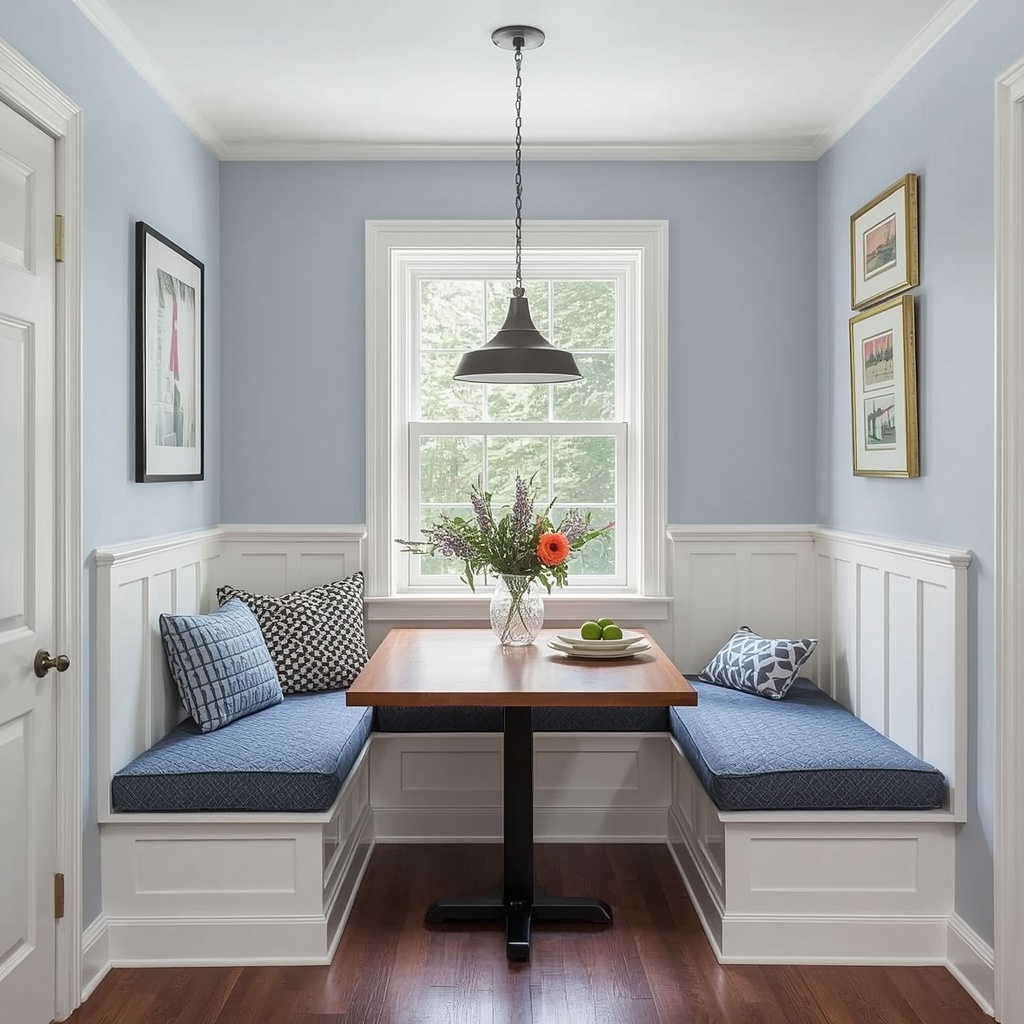
Nooks also add character. A built-in bench, a pretty pendant, or a bold wall color gives a small home architectural interest it might otherwise lack. Many of my clients tell me the nook becomes the heart of the house, where homework, morning coffee, and late-night chats all happen.
Designer’s rule of thumb: “In a small home, every piece of furniture should do at least two jobs. A dining nook should seat, store, and set the mood.”
Measure First: How Much Space Do You Really Need?
Before you fall in love with a table, grab a tape measure. The most common mistake I see is buying furniture that looks perfect online but leaves no room to sit or move. Plan for about 24 inches of width per diner and at least 36 inches of clearance behind chairs where people walk past.
If a walkway isn’t involved, such as a bench tucked into a corner, you can tighten that clearance to around 24 to 30 inches. Mark the footprint on the floor with painter’s tape and live with it for a day or two. You’ll quickly feel whether the layout is comfortable or cramped.
| Nook Size | Ideal Table Shape | Seats | Recommended Table Size |
|---|---|---|---|
| 3′ x 5′ (very tight) | Wall-mounted or drop-leaf | 1–2 | 24″ x 36″ |
| 4′ x 6′ (compact) | Small round or square | 2 | 30″ round or 30″ x 30″ |
| 5′ x 7′ (comfortable) | Round pedestal | 2–3 | 36″ round |
| 6′ x 8′ (roomy) | Oval or small rectangle | 4 | 36″ x 48″ |
| 7′ x 9′ (generous) | Rectangular with bench | 4–5 | 36″ x 54″ |
Where to Put a Dining Nook: Best Locations
You may have more options than you think. Walk through your home and look for underused pockets that already have decent light and a nearby wall.
- Kitchen corner: The classic breakfast nook, close to the cooking action and easy to serve from.
- Under a window: Natural light and a view make meals feel special, even in a studio.
- Living room edge: A narrow table behind the sofa or against a wall defines a dining zone in open-plan layouts.
- Hallway or entry alcove: A forgotten niche can hold a slim table and two stools.
- Stair landing or under-stair space: Built-in seating and storage turn awkward angles into charming nooks.
- Bay window: Wraparound seating makes a bay window one of the most coveted nook spots.
If you’re working with a studio, try anchoring the nook with a rug and a pendant light. Those two elements visually separate “dining” from “sleeping” or “living” without any walls.
Banquette Seating: The Ultimate Space-Saver
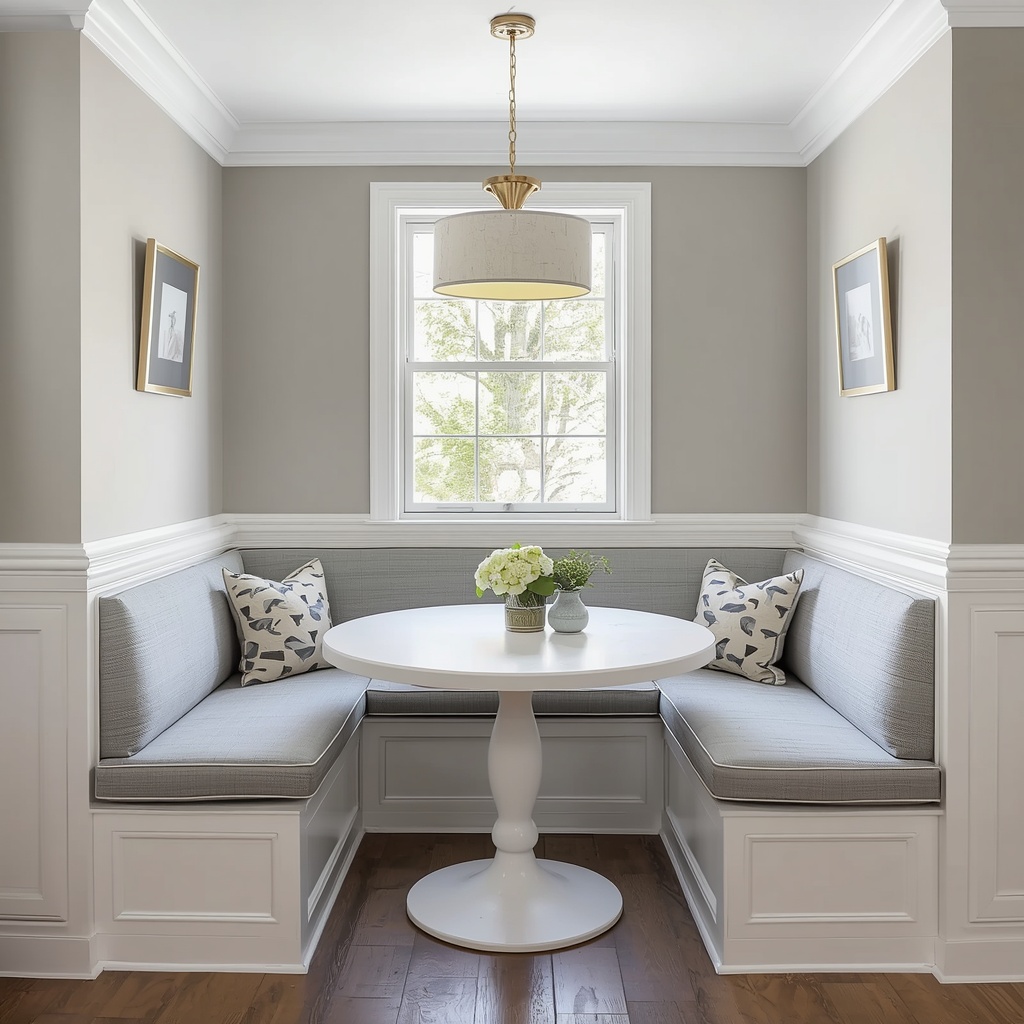
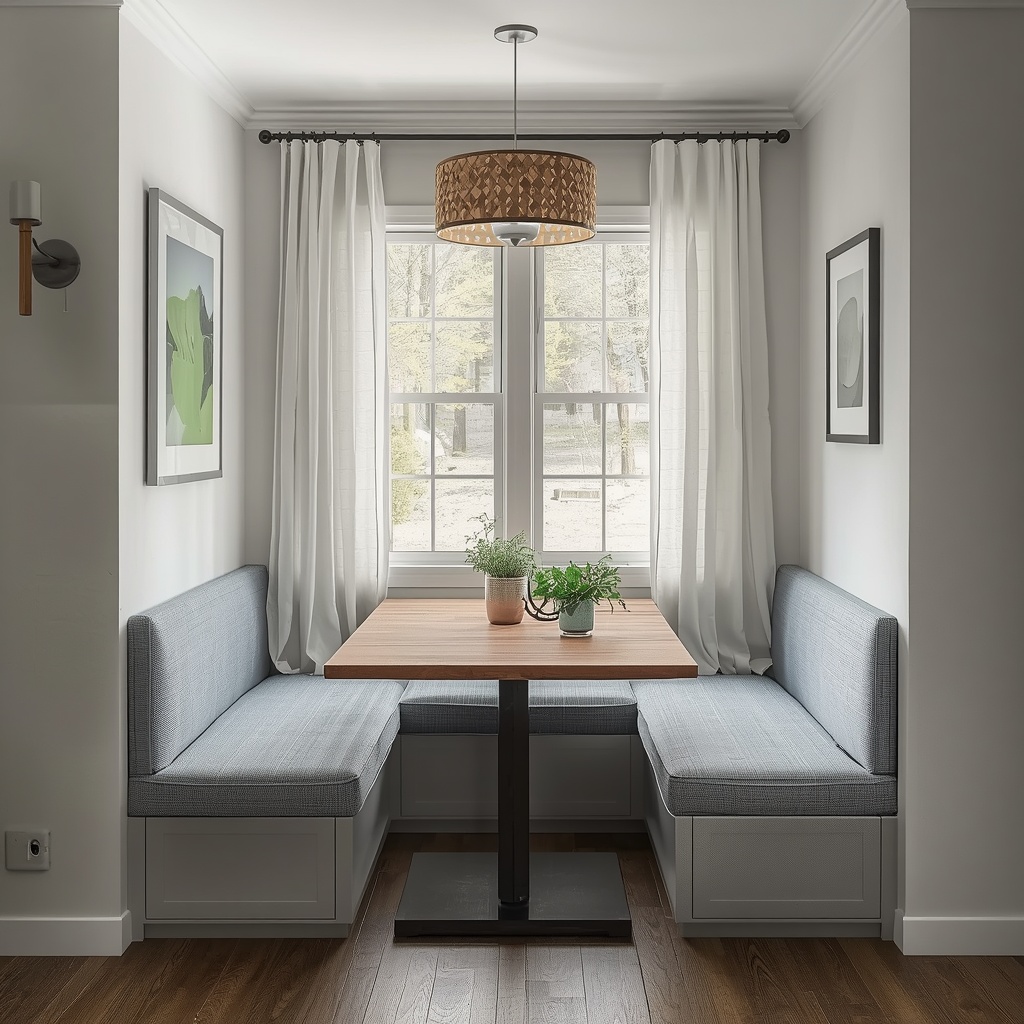
Banquette seating is the secret weapon of small-space dining. A bench pushed against the wall takes up far less room than chairs, which need space to pull out. You can also slide guests in tightly, so a nook that seats two with chairs can often seat four with a bench.
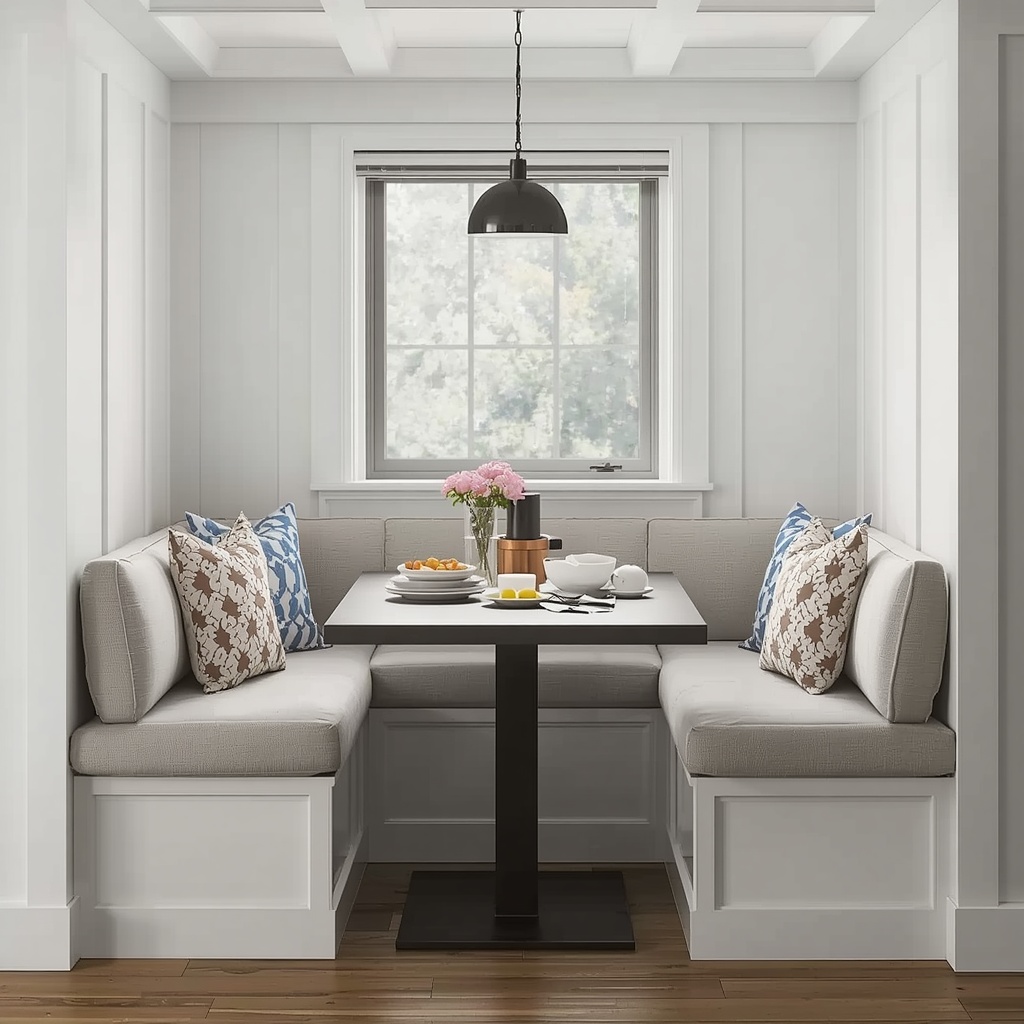
The real magic is storage. Build or buy a bench with a hinged lid or deep drawers underneath, and you’ve got a home for table linens, seasonal dishes, small appliances, or even board games. For a custom look on a budget, an IKEA-style cabinet base topped with a cushion can look surprisingly high-end. Browse IKEA’s storage benches or Houzz banquette inspiration to gather ideas.
Pro Tip: Keep the seat height between 17 and 19 inches and angle the backrest slightly, about 5 to 10 degrees. That small tilt makes a bench dramatically more comfortable for long dinners.
Corner Nook Ideas That Make the Most of Dead Space
An L-shaped corner bench is the most efficient way to seat multiple people in a small footprint. The two benches meet at a right angle, and a round or square table sits in front. You get the seating capacity of a much larger set with almost no wasted floor space.
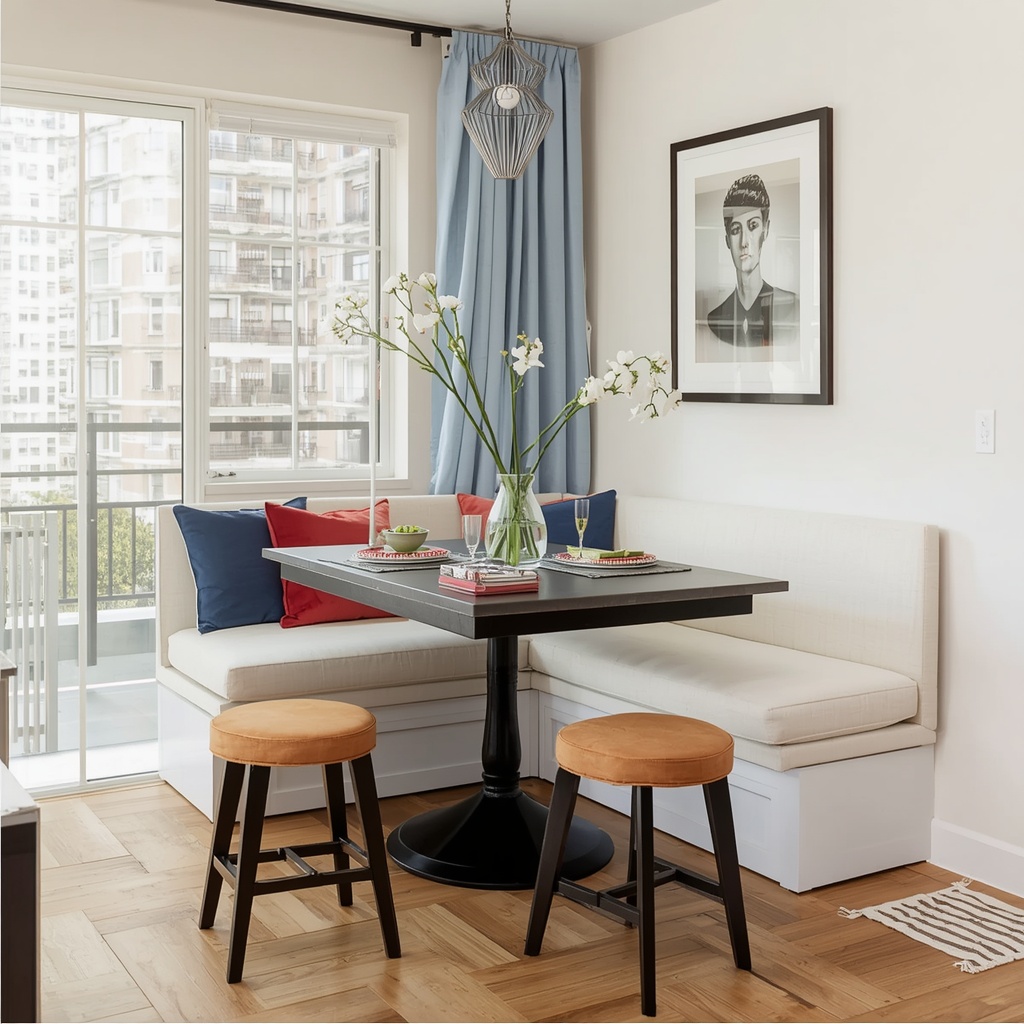
If you can’t build a custom corner, combine a single bench with two armless chairs or stools on the open side. Stools can slide completely under the table when not in use, which is perfect for apartments where the nook doubles as a walkway. Choose backless or low-backed pieces to keep sightlines open and the room feeling airy.
Window and Bay Nook Ideas
A window nook borrows light and a sense of expansiveness from the outdoors. Even a plain window can become the focus of your dining area with a built-in seat beneath it and a small table in front. Sunlight makes small rooms feel bigger, and eating near a window simply feels more relaxing.
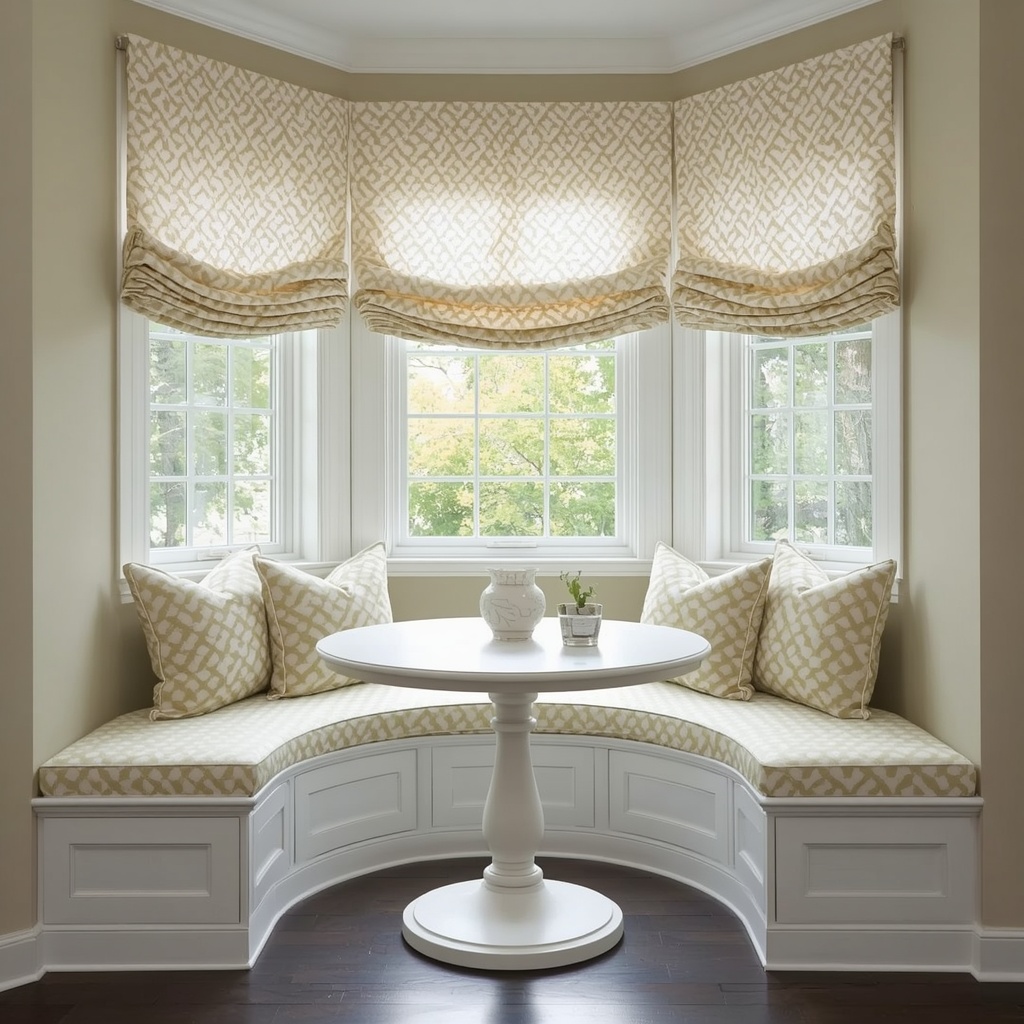
If you have a bay window, use the curve. A semicircular bench follows the shape of the glass and pairs beautifully with a round pedestal table. To manage glare and privacy, layer sheer curtains with a light-filtering shade, or opt for café curtains that cover only the lower half of the window.
Fold-Down, Drop-Leaf, and Wall-Mounted Tables
When you truly have no floor space to spare, go vertical. A wall-mounted fold-down table disappears flat against the wall when you aren’t eating, then opens in seconds for breakfast or dinner. This is a go-to solution for micro-apartments, tiny kitchens, and multi-use rooms.
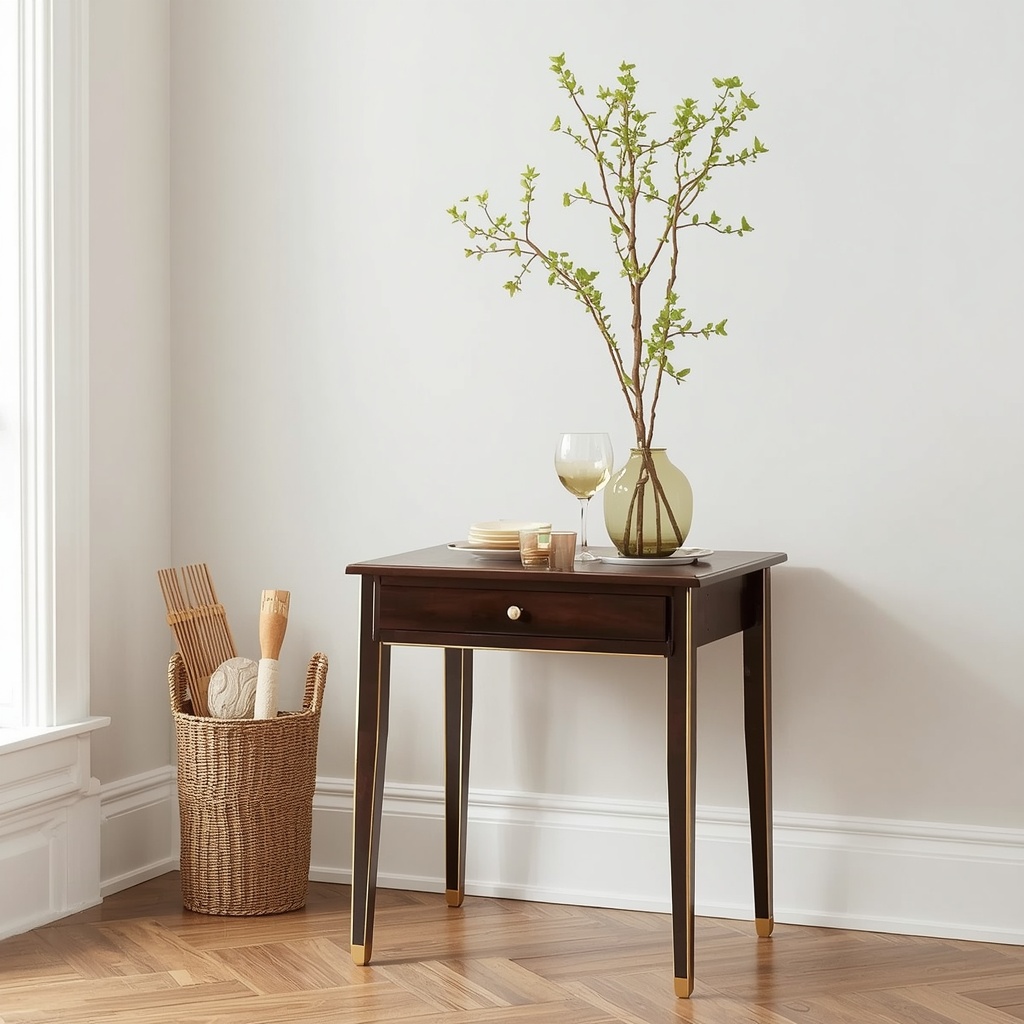
Drop-leaf tables offer a middle ground. Keep the leaves down for daily use and raise them when guests arrive. Look for models with a sturdy hinge and rounded corners, which are safer and friendlier in tight quarters. Some versions even include a drawer for flatware.
| Table Type | Best For | Pros | Cons |
|---|---|---|---|
| Wall-mounted fold-down | Ultra-tight spaces | Disappears when not in use | Limited seating |
| Drop-leaf | Flexible entertaining | Expands as needed | Leaves can wobble if cheap |
| Round pedestal | Corner nooks | No legs to bump, easy flow | Smaller surface area |
| Counter-height bar table | Open kitchens | Visually lighter, doubles as prep | Needs stools |
| Extendable | Occasional hosts | Seats more when needed | Heavier, more storage required |
Choosing the Right Table Shape
Shape matters more than most people realize. Round tables are my top pick for compact dining nooks because they have no sharp corners to snag hips and they let you squeeze in an extra person. A pedestal base is even better since it eliminates legs that compete with knees.
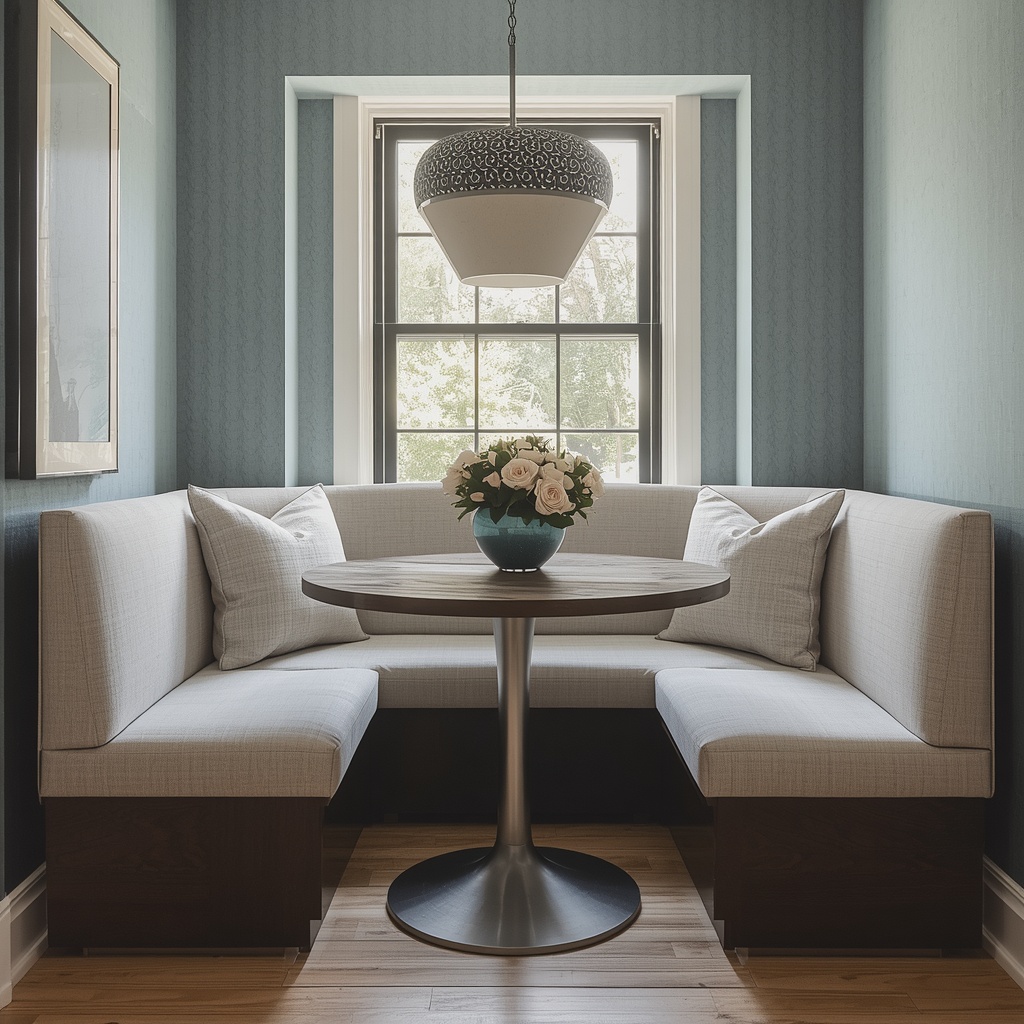
Square tables tuck neatly into corners and suit couples. Rectangular tables work best along a wall or under a window, particularly narrow ones at 24 to 30 inches deep. Glass tops or acrylic bases add visual lightness, while warm wood tones bring coziness. Match the table to your overall style so the nook feels intentional rather than improvised.
Seating Solutions: Chairs, Stools, and Benches
The right seating can make or break the nook. Aim for pieces that are comfortable enough for a long dinner but compact enough to tuck away. Scale down in visual weight, too: open backs, slim legs, and light finishes keep the area from feeling heavy.
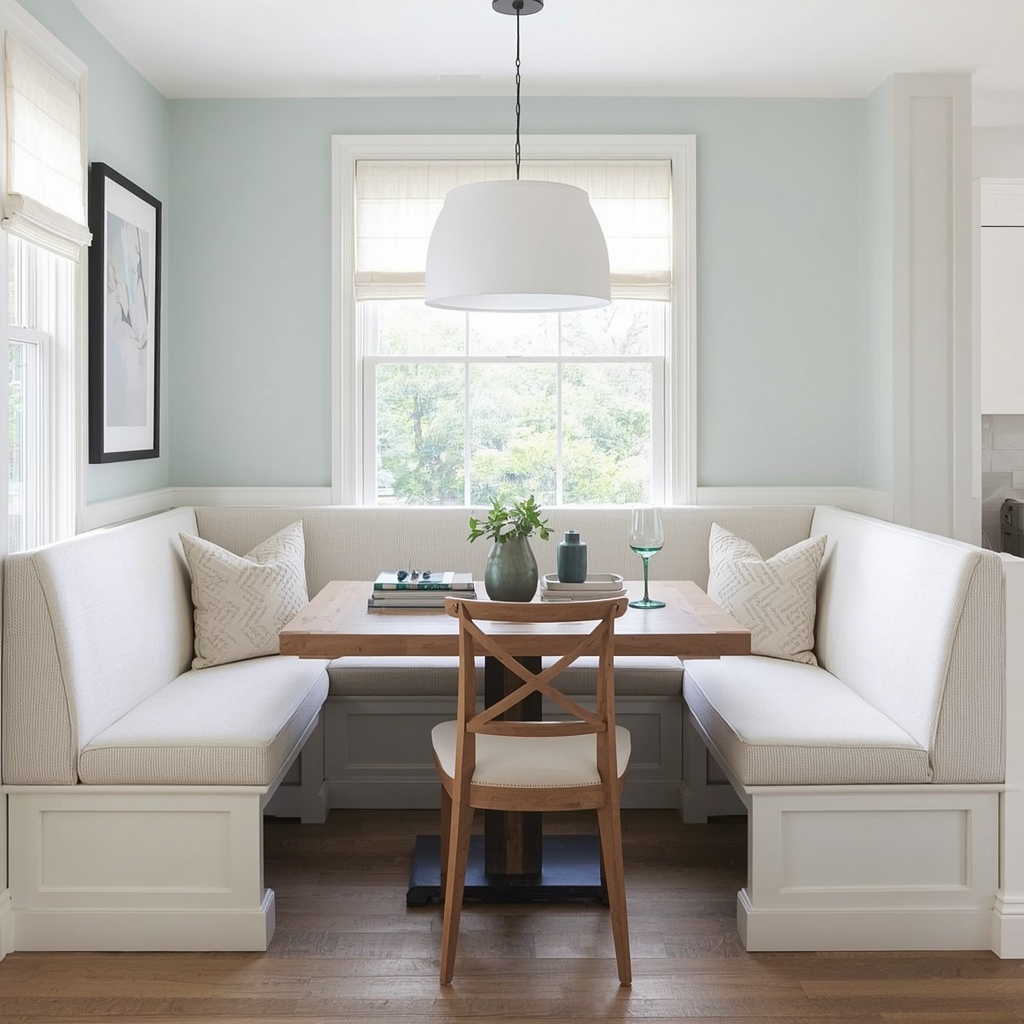
Here are my favorite space-saving seating options:
- Backless stools: Slide fully under the table and vanish from view.
- Upholstered benches: Soft, flexible, and great for squeezing in extra guests.
- Armless dining chairs: Narrower than armchairs and easier to maneuver.
- Folding chairs: Stored in a closet and brought out only for company.
- Stackable chairs: Practical and increasingly stylish in modern finishes.
- Ottomans or poufs: Handy as occasional extra seats that double as footrests.
Color, Light, and Visual Tricks to Make a Nook Feel Bigger
Light, bright colors reflect light and make walls recede. Soft whites, warm creams, sage greens, and pale blues are all reliable choices for small dining nooks. If you love drama, try a deep navy or forest green on the nook walls only, which can make the space feel like a jewel box rather than a cramped corner.
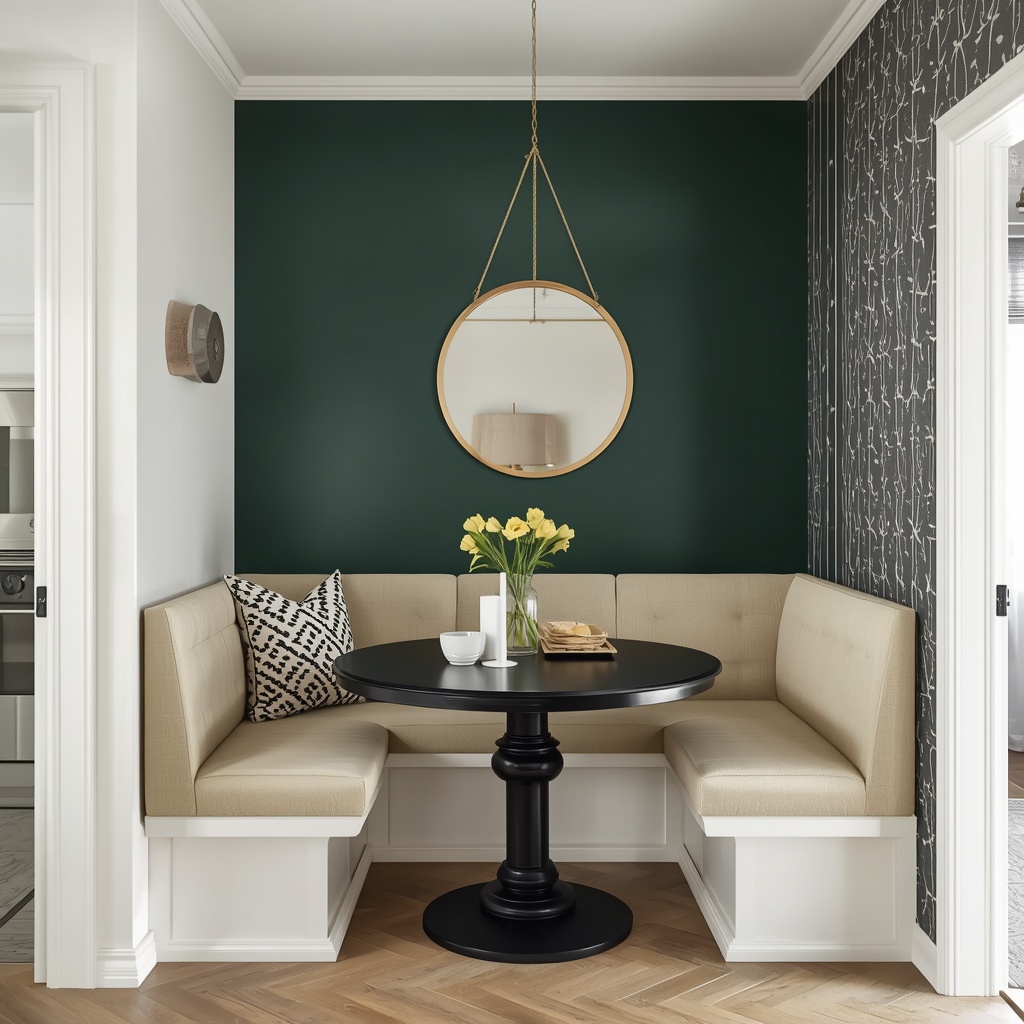
Mirrors are another favorite trick. Hang a round or arched mirror on the wall beside or above the bench to bounce light and double the sense of depth. Vertical stripes, a statement wallpaper on one wall, or a slim shelf at eye level can also draw the eye upward and outward, making the ceiling feel higher.
Designer’s note: “Small doesn’t mean boring. Pick one bold element, whether a pattern, a color, or a light fixture, and let everything else stay calm.”
Lighting: Set the Mood Above the Table
Lighting defines a dining nook better than almost anything else. A pendant light hung 30 to 36 inches above the tabletop instantly signals “this is the dining zone,” even in an open-plan studio. Choose a fixture whose width is roughly one-half to two-thirds the width of the table.
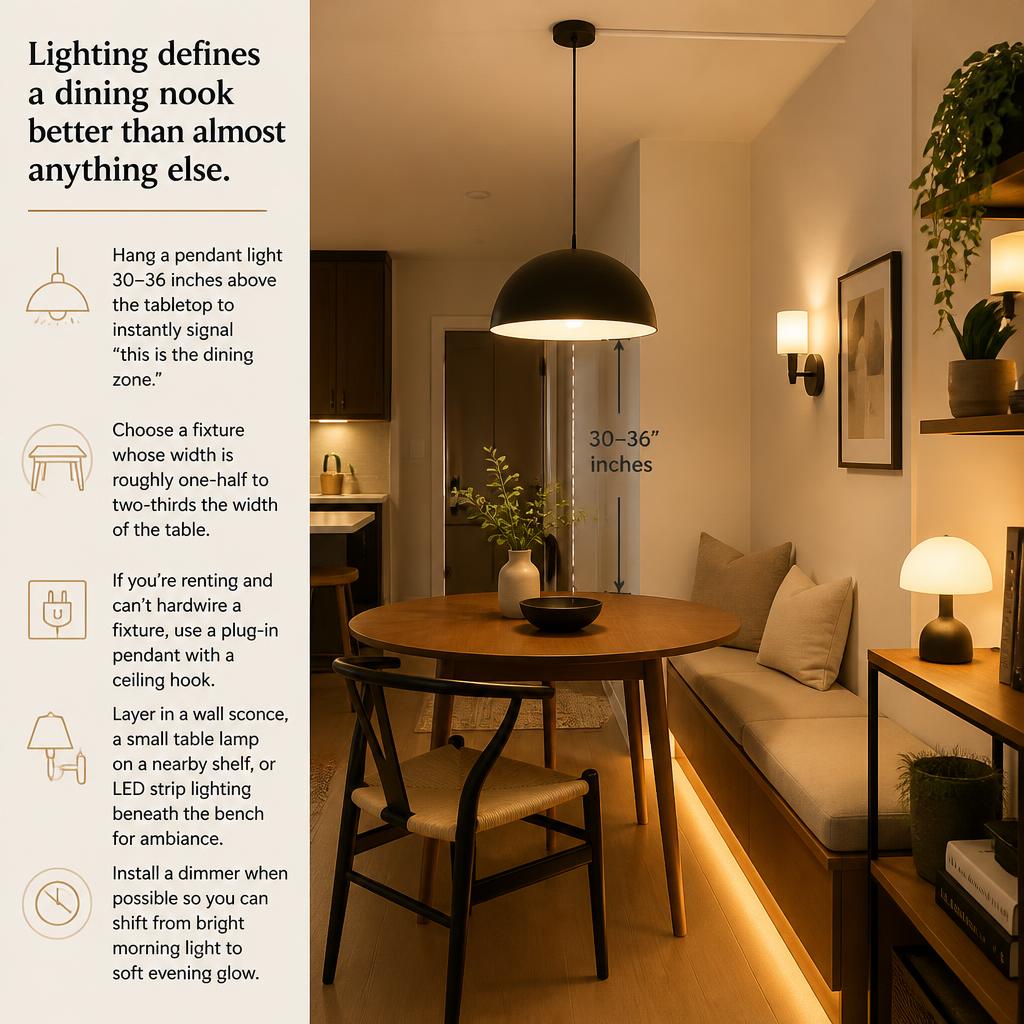
If you’re renting and can’t hardwire a fixture, use a plug-in pendant with a ceiling hook. Layer in a wall sconce, a small table lamp on a nearby shelf, or LED strip lighting beneath the bench for ambiance. Install a dimmer when possible so you can shift from bright morning light to soft evening glow.
Smart Storage Ideas for Compact Dining Nooks
Storage keeps a small nook from becoming a clutter magnet. Start with the bench itself, then think vertically. Floating shelves above the table can hold cookbooks, plants, and everyday dishes, while a slim cabinet or sideboard nearby stores linens and serveware.
Try these additions to maximize every inch:
- Lift-top bench seats for bulky or seasonal items
- Drawers built into the bench base for placemats and napkins
- Wall-mounted rails with hooks for mugs, baskets, or utensils
- A narrow rolling cart that tucks beside the bench
- Over-the-bench pegboards or ledges for art and small decor
Budget vs. Splurge: Where to Spend Your Money
You don’t need a massive budget to create a standout nook. The key is knowing where quality pays off and where you can save. Spend on the pieces you touch every day, and save on the things you can easily swap later.
| Element | Budget Option | Splurge Option |
|---|---|---|
| Bench | Storage cabinet + cushion | Custom-built banquette |
| Table | Secondhand pedestal, refinished | Solid-wood custom piece |
| Lighting | Plug-in pendant | Designer hardwired fixture |
| Cushions | DIY foam + removable cover | Performance fabric, tailored |
| Decor | Thrifted art and plants | Commissioned art or wallpaper |
Styling Your Dining Nook: Finishing Touches
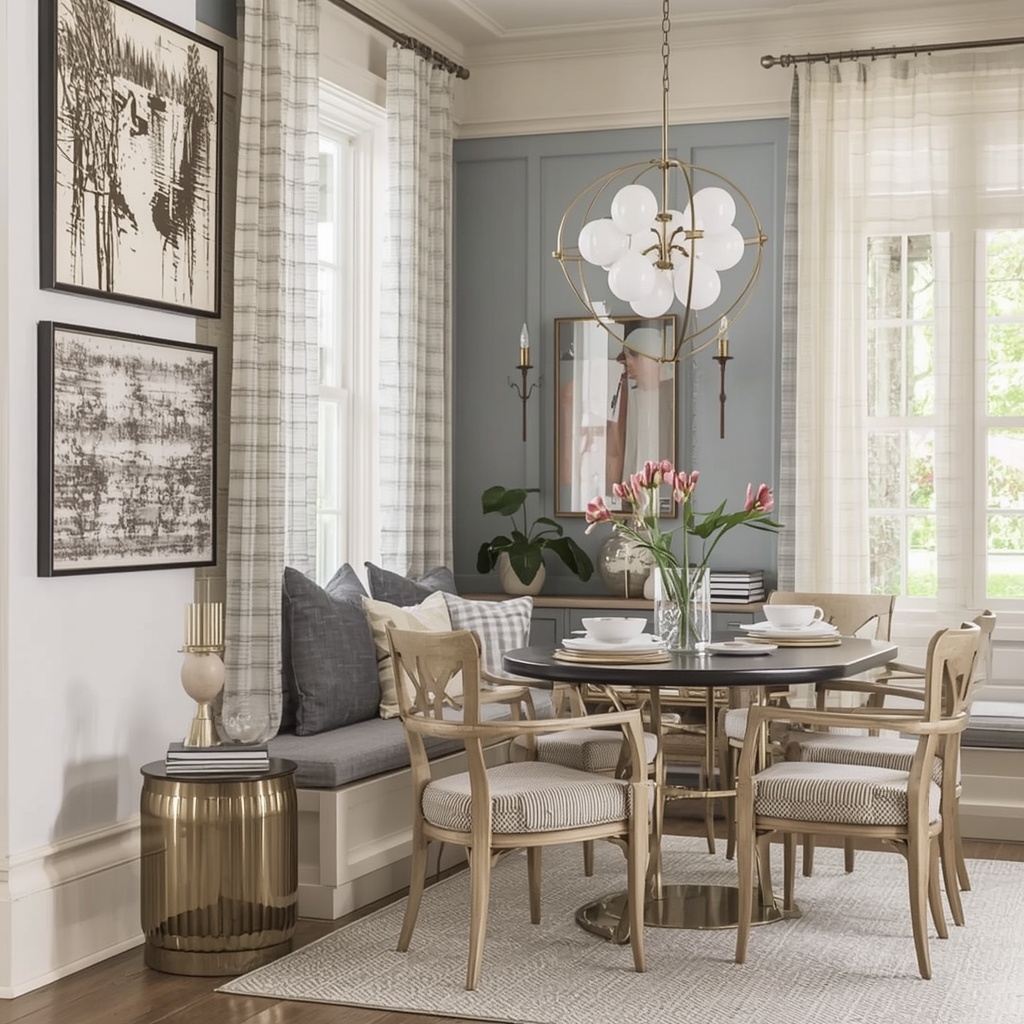
Once the big pieces are in, styling gives the nook its personality. Start with a rug that’s large enough to hold the table and chairs even when they’re pulled out. A flat-weave or low-pile rug is easiest to clean and won’t catch chair legs.
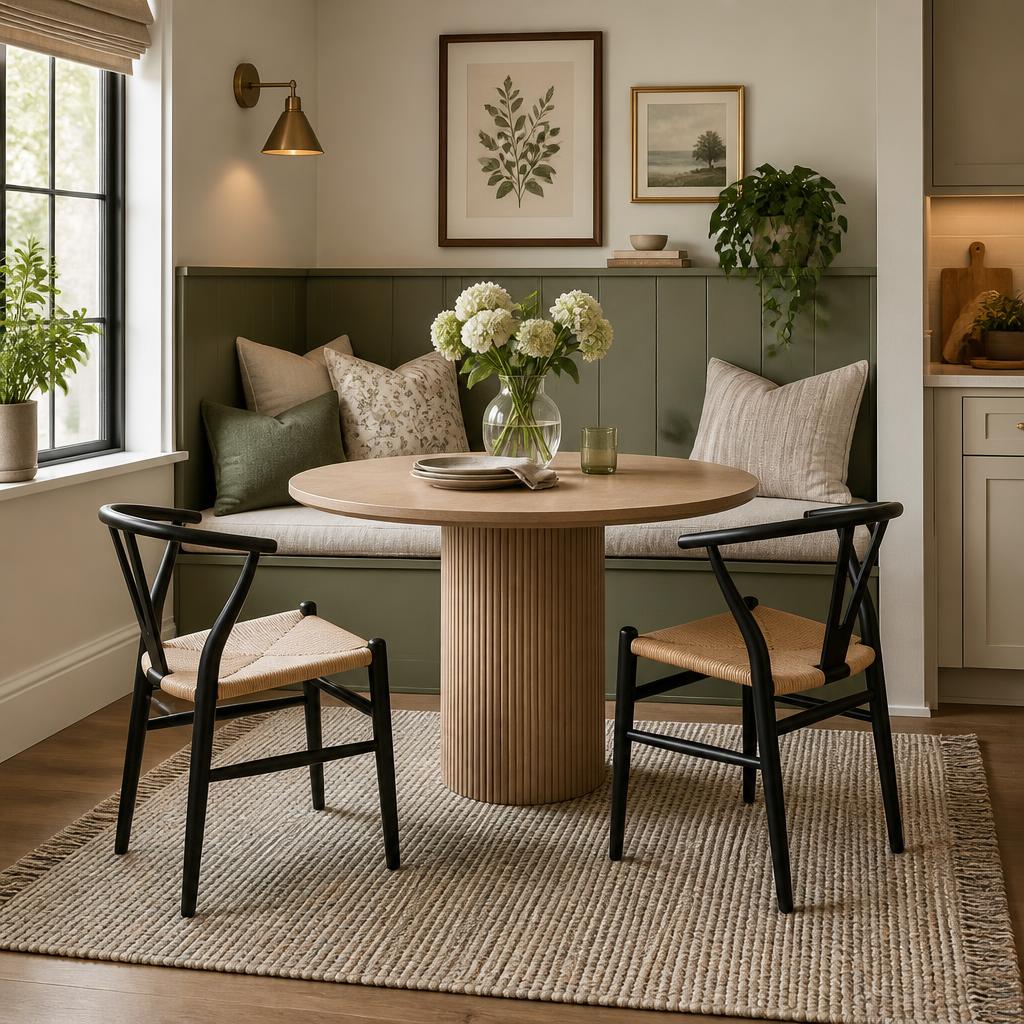
Layer in cozy textiles like throw pillows and a seat cushion in a stain-resistant performance fabric. Add a small vase of fresh flowers or a trailing plant, plus one or two framed prints. Keep the tabletop simple, and remember that edited styling always looks more luxurious than crowded styling. For more cozy inspiration, explore our guide to small kitchen decorating ideas and how to style open-plan living spaces.
Common Dining Nook Mistakes to Avoid
Even seasoned decorators trip up in tight spaces, so watch for these pitfalls:
- Oversized furniture: Always measure twice and tape the footprint on the floor.
- Ignoring comfort: A gorgeous bench is useless if it’s too hard or too upright.
- Skimping on clearance: Tight walkways make the nook frustrating to use.
- Harsh lighting: Overhead glare flattens the mood and the food.
- Too many patterns: In small spaces, stick to two or three that complement each other.
- Forgetting storage: Clutter shrinks a nook faster than any bad paint color.
Frequently Asked Questions
How much space do I need for a dining nook?
You can create a functional two-person nook in as little as 3 by 5 feet using a wall-mounted or drop-leaf table. For four people, aim for roughly 6 by 8 feet with banquette seating.
What is the best table for a small dining nook?
A round pedestal table is usually the best fit because it has no corners and offers flexible seating. For very tight spaces, a fold-down wall table is hard to beat.
Can I create a dining nook in a rental?
Absolutely. Use freestanding furniture, a plug-in pendant, removable wallpaper, and a large rug. Everything can move with you when your lease ends.
How do I make a small dining nook feel cozy, not cramped?
Layer soft textiles, warm lighting, and a limited color palette. Keep the table clear and use closed storage to hide clutter.
Final Thoughts: Small Nook, Big Impact
A compact dining nook proves that great design is about smart choices, not square footage. With the right layout, a space-saving table, comfortable seating, and a thoughtful lighting plan, even the tiniest corner can become a gathering place full of warmth and personality. Start by measuring your space, pick a style direction, and build from there.
Whether you opt for a built-in banquette, a sunny window seat, or a fold-down table that vanishes after dinner, remember that the best nook is the one that fits your life. Take it one piece at a time, and you’ll soon have a dining spot you’re proud to share.