
Few design mistakes are as common—or as easy to fix—as hanging wall art that’s the wrong size for your sofa. You’ve probably seen it: a postage-stamp-sized frame floating awkwardly above a huge sectional, looking lost and unintentional. Or the opposite, an oversized canvas that overwhelms a small loveseat and throws the whole room off balance.
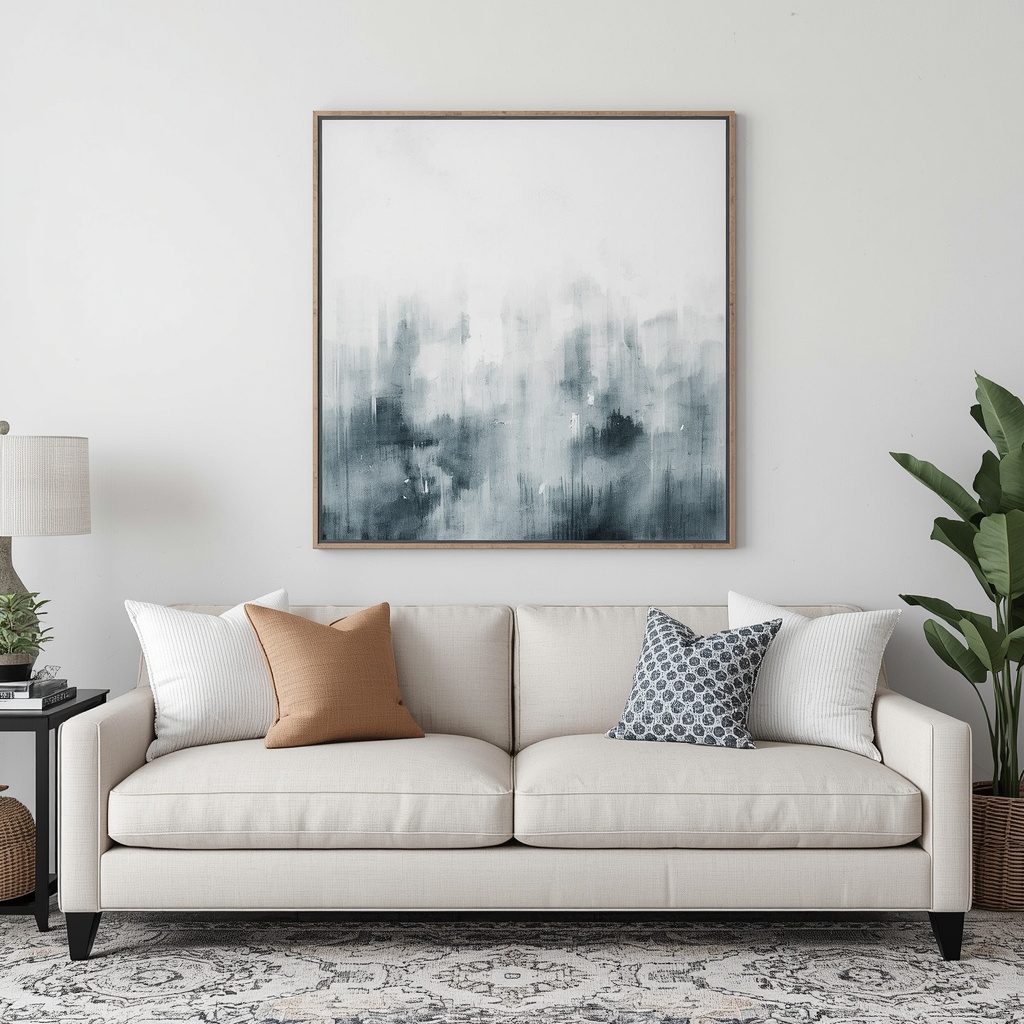
As an interior designer, I can tell you that scale is one of the first things I assess when a client says their living room “just doesn’t feel right,” even though they can’t explain why. Nine times out of ten, the wall art above the sofa is either too small, too large, or hung at the wrong height. The good news? Once you understand a few simple rules of proportion, you can solve this yourself without hiring a professional.
This guide walks you through everything you need to know about choosing the right wall art scale for above your sofa, including sizing formulas, hanging height, layout options, and styling tips that actually work in real American living rooms.
Why Wall Art Scale Matters More Than You Think
Interior design is largely about proportion and visual balance. Your sofa is typically the largest piece of furniture in your living room, and it acts as an anchor point. Whatever you place above it—whether that’s a single painting, a gallery wall, or a mirror—needs to relate to that anchor in a way that feels cohesive rather than accidental.
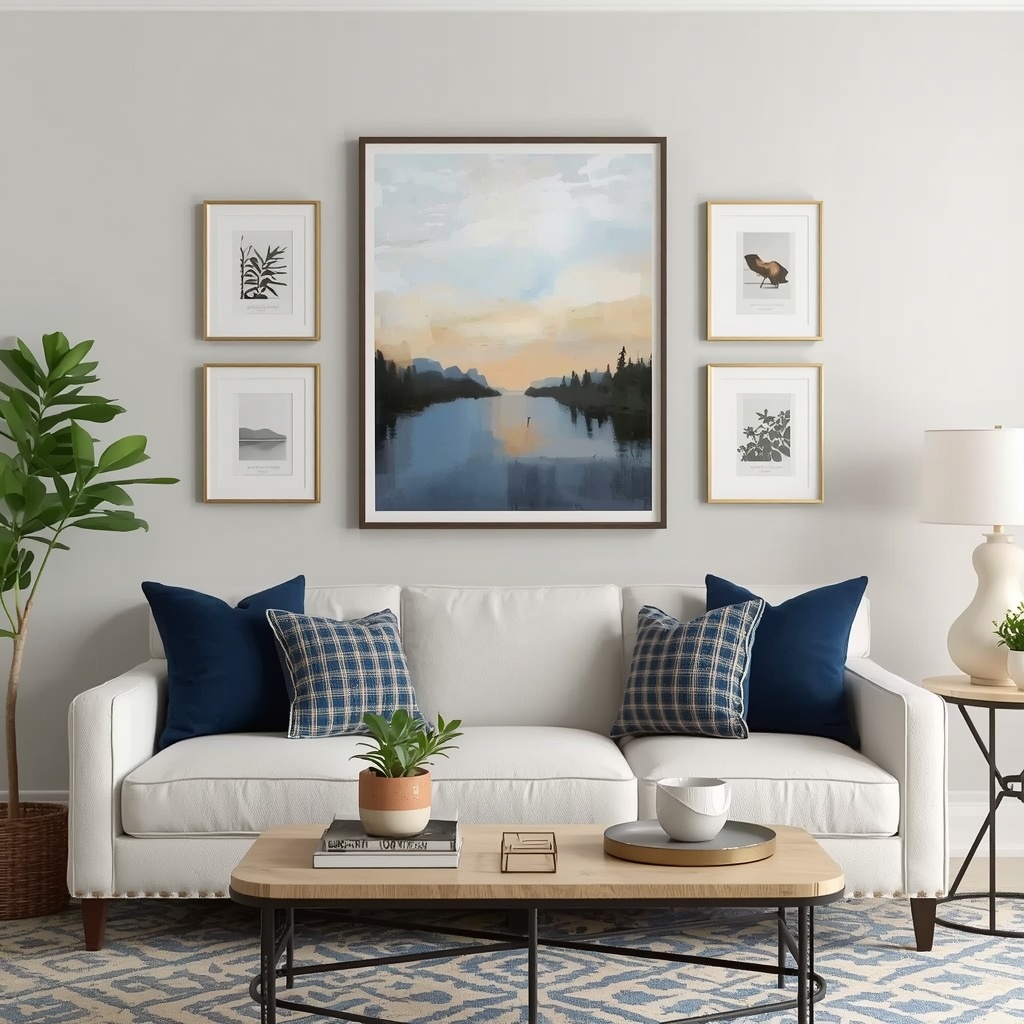
When wall art is properly scaled, your eye moves smoothly through the space. When it’s not, your brain registers something as “off” even if you can’t pinpoint the reason. This is why professionally designed rooms feel effortless, while DIY spaces sometimes feel slightly chaotic despite good individual pieces.
“Art shouldn’t compete with furniture for attention—it should complete it. The goal is a conversation between pieces, not a battle for dominance.”
Getting scale right also affects how a room functions visually. Correctly sized art can make ceilings feel taller, walls feel more finished, and a seating area feel intentional rather than thrown together.
The Golden Rule: The Two-Thirds Formula
Designers rely on a simple, tested formula for sizing wall art above a sofa: your art (or art grouping) should span roughly two-thirds to three-quarters the width of your sofa.
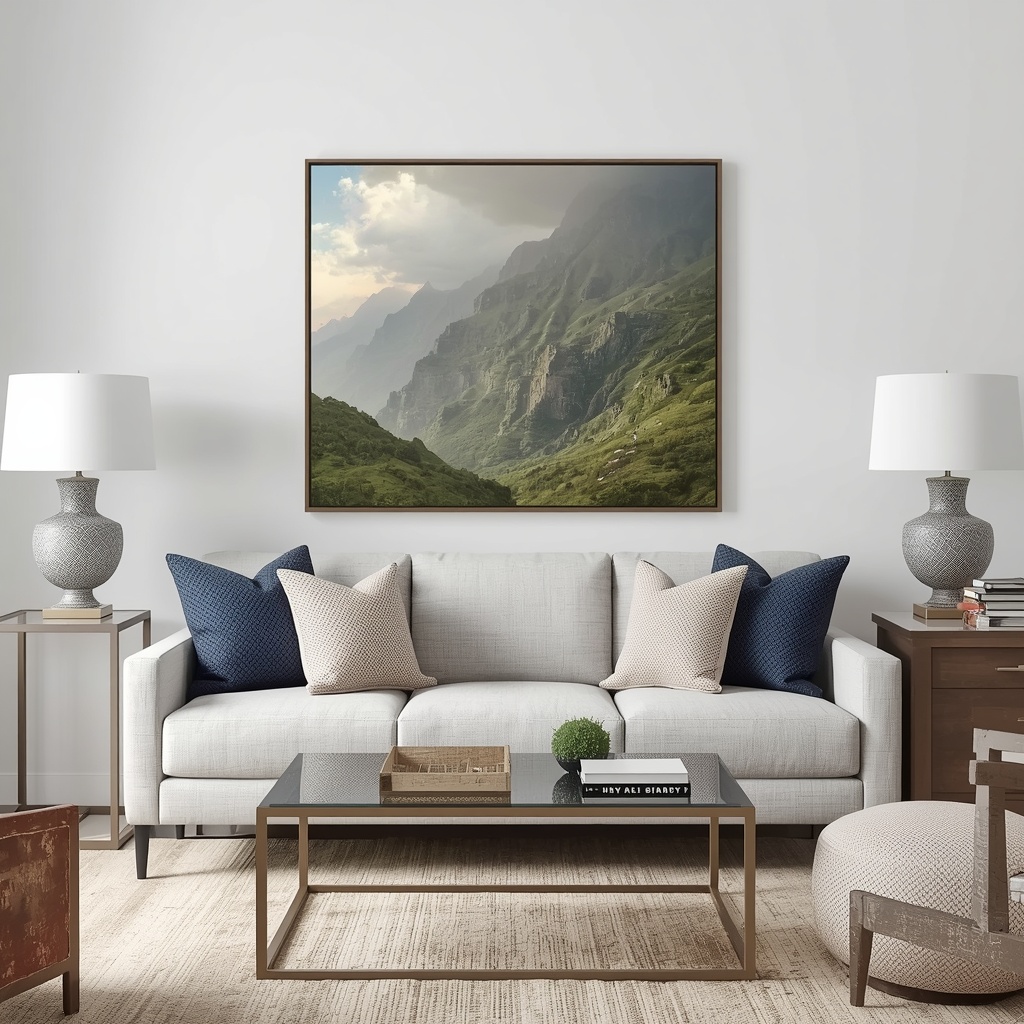
This isn’t an arbitrary number—it’s rooted in the same proportional logic used in classical design and architecture. A width that’s too narrow reads as timid and disconnected. A width that stretches edge-to-edge with the sofa reads as too matchy and rigid.
Quick formula:
Sofa width × 0.66 to 0.75 = Ideal art width
Sofa-to-Art Size Reference Table
| Sofa Width | Ideal Art Width Range | Best Art Approach |
|---|---|---|
| 60″ (loveseat) | 40″ – 45″ | Single medium piece or 2-piece set |
| 72″ (standard sofa) | 48″ – 54″ | Single large piece or 3-piece set |
| 84″ (sofa) | 55″ – 63″ | Large statement piece or gallery wall |
| 96″ (sectional/large sofa) | 63″ – 72″ | Oversized art or multi-panel gallery wall |
| 108″+ (extra-large sectional) | 71″ – 81″ | Gallery wall or extra-large canvas |
Keep a printed or saved version of this table handy when you’re shopping—it takes the guesswork out of online art and furniture browsing.
How High Should You Hang Art Above the Sofa?
Width isn’t the only factor—height matters just as much. The most common mistake homeowners make is hanging art too high, which creates an awkward gap and disconnects the piece from the seating area below it.
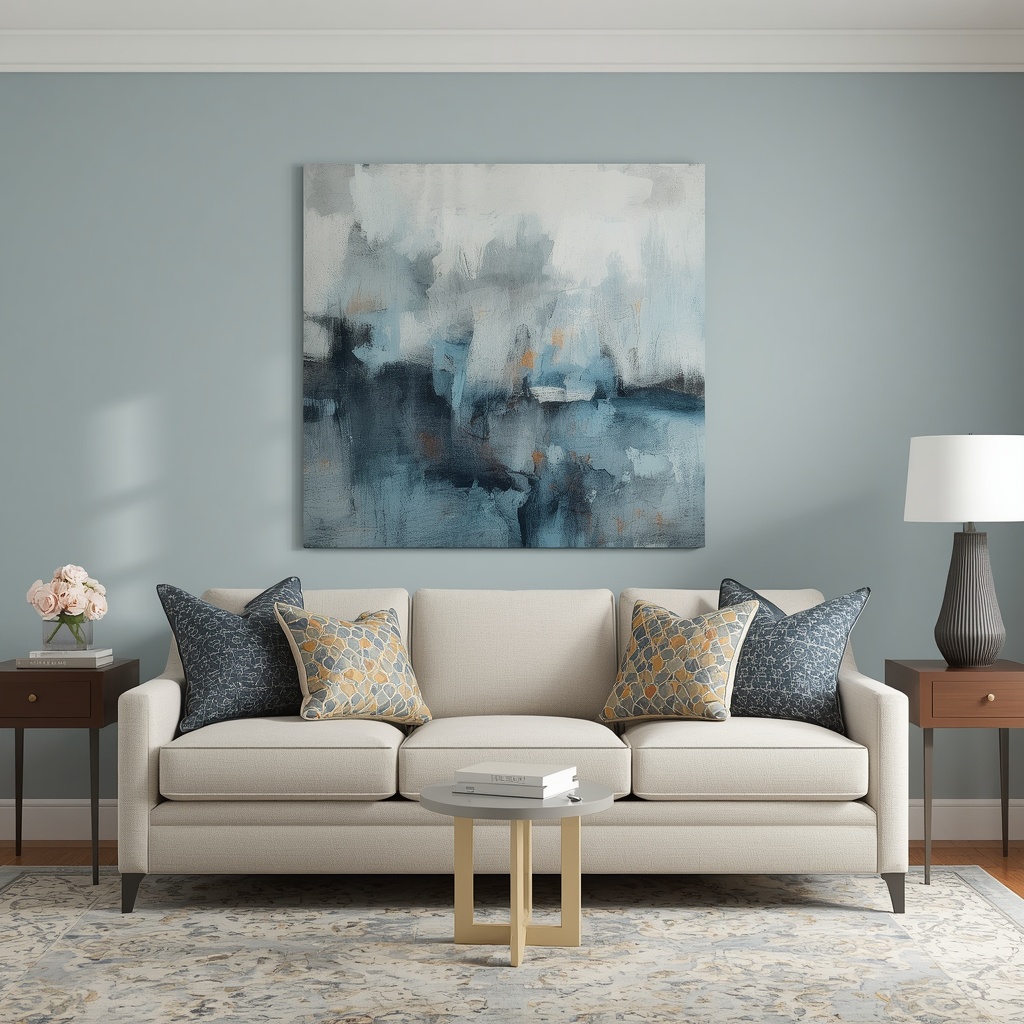
The standard designer guideline is to leave 6 to 8 inches of space between the top of the sofa back and the bottom of the frame. This keeps the art visually “grounded” to the furniture rather than floating up near the ceiling.
Pro Tip: Before you commit to nails and wall anchors, tape a paper template (cut to the exact size of your art) to the wall first. Live with it for 24–48 hours. This single trick prevents more regret purchases and unnecessary wall holes than any other design advice I give clients.
Single Piece vs. Gallery Wall: Which Is Right for You?
Once you know your ideal width range, the next decision is how to fill that space. You generally have three options: a single statement piece, a symmetrical multi-panel set, or an eclectic gallery wall.
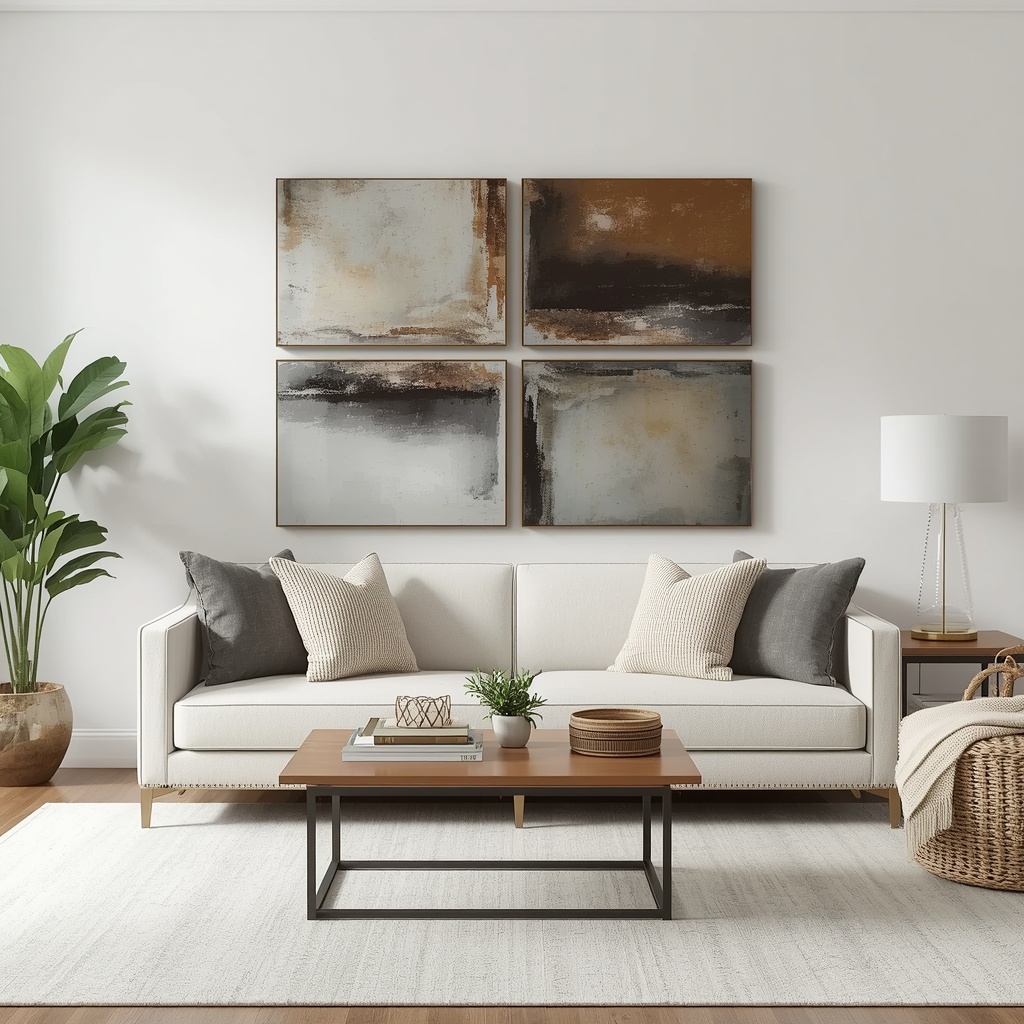
Each approach creates a different mood, and each works better with certain sofa styles and room layouts. A single oversized canvas feels modern and minimal, while a gallery wall feels collected, personal, and layered.
Comparing Your Options
| Style | Best For | Visual Effect | Difficulty Level |
|---|---|---|---|
| Single large piece | Modern, minimalist, transitional rooms | Bold, clean focal point | Easy |
| 2–3 piece matching set | Symmetrical, formal living rooms | Balanced, structured | Easy–Moderate |
| Gallery wall (5+ pieces) | Eclectic, traditional, maximalist rooms | Personal, layered, dynamic | Moderate–Advanced |
| Art + mirror combo | Small living rooms, rentals | Expands light and space | Easy |
If you’re unsure which route to take, ask yourself this: do you want the wall to feel like a quiet backdrop, or a personality-filled focal point? Minimalists tend to gravitate toward a single large piece, while collectors and maximalists thrive with layered gallery walls.
Step-by-Step: How to Choose Your Wall Art Scale
Here’s the exact process I walk clients through when selecting art for above a sofa:
- Measure your sofa width from arm to arm, not including cushions that overhang.
- Calculate your ideal art width using the two-thirds to three-quarters formula above.
- Decide on layout style—single piece, matched pair, or gallery wall.
- Mock it up with paper templates taped to the wall to test scale and height before buying.
- Leave 6–8 inches between the sofa top and the bottom of the frame.
- Center the art over the sofa, not over the wall, if the sofa isn’t centered on the wall itself.
- Step back and evaluate from the room’s main entry point and from a seated position on the sofa.
Following these steps in order prevents the most common issue I see: buying art you love first, then trying to force it to fit a space it was never sized for.
Common Mistakes to Avoid
Even design-savvy homeowners fall into a few predictable traps when it comes to sizing wall art. Being aware of these ahead of time can save you money, time, and unnecessary wall damage.
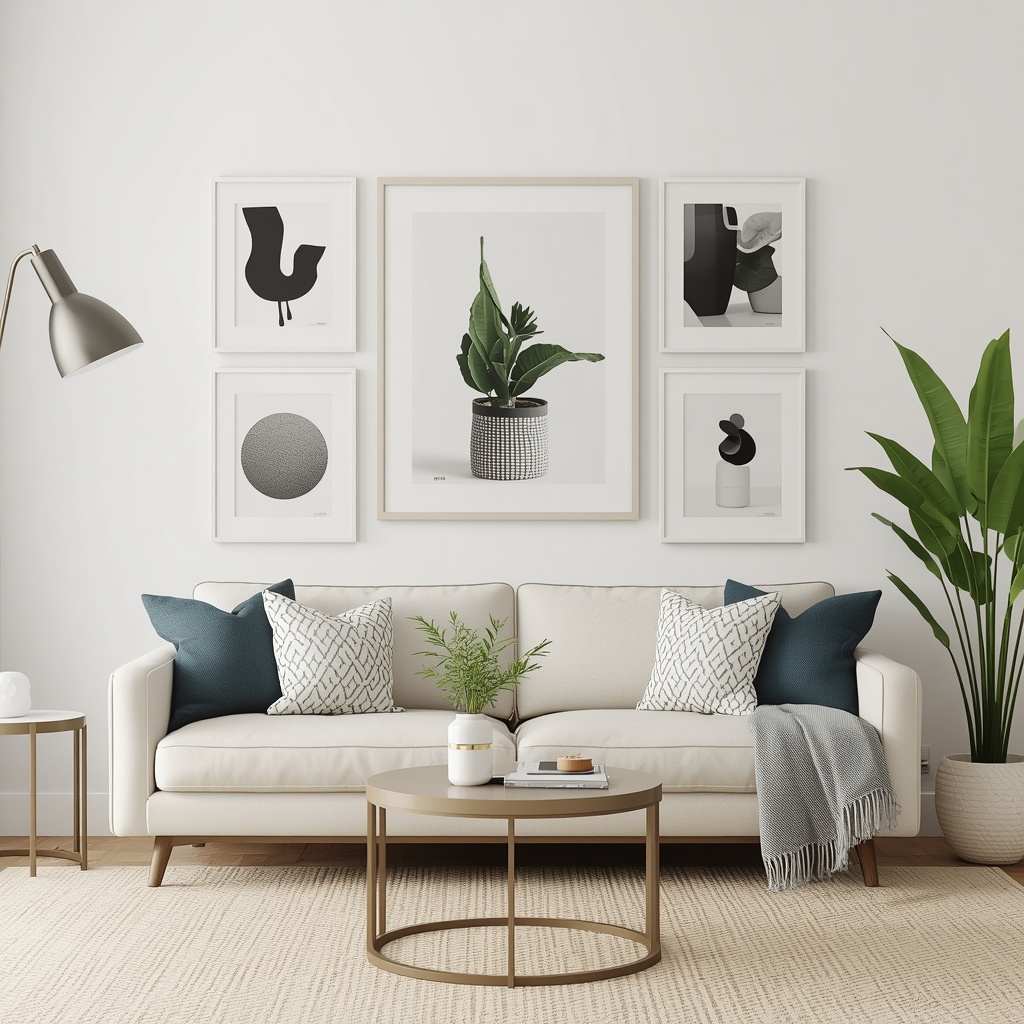
- Hanging art too high, creating a disconnected “floating” look
- Choosing a piece that’s too small, leaving excessive empty wall space
- Centering art on the wall instead of on the sofa itself
- Mixing frame sizes in a gallery wall without a unifying layout plan
- Ignoring ceiling height, which affects how large your art should feel
- Ignoring the room’s line of sight from the entryway, hallway, or kitchen
Avoiding these pitfalls is often more important than finding the “perfect” piece of art. Scale and placement do more visual work than the artwork itself.
Special Considerations for Different Sofa Styles
Not all sofas behave the same way when it comes to pairing with wall art, and small adjustments can make a noticeable difference depending on your furniture style.
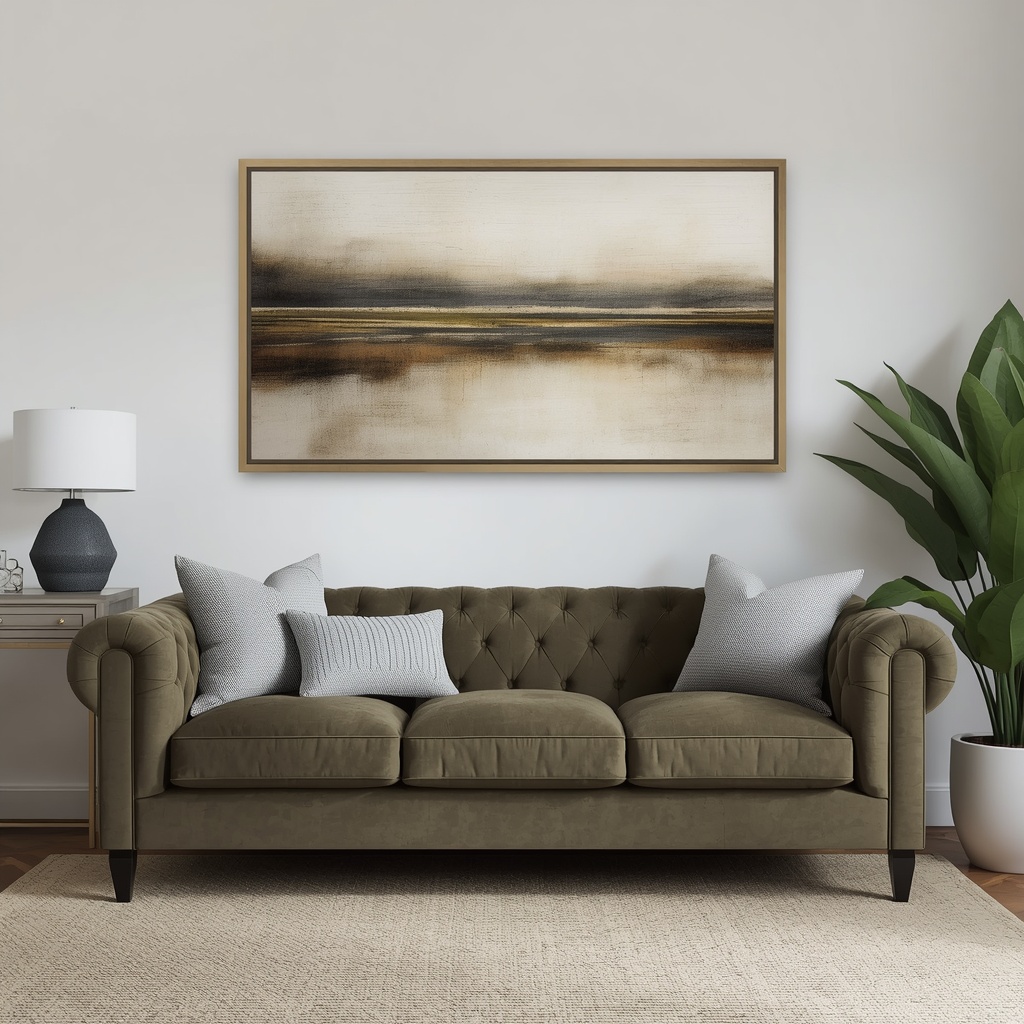
A low-profile, mid-century sofa pairs beautifully with a wide horizontal piece or a linear gallery wall, since the eye naturally travels along the low sightline. A tall, tufted Chesterfield or camelback sofa, on the other hand, often looks best with a single vertical or square piece that echoes its more formal structure.
Pro Tip: If your sofa has a high, structured back (like a Chesterfield), avoid hanging art directly behind the highest point of the frame—give it breathing room by choosing a piece proportioned to the visible wall space above the back cushions, not the sofa’s total height.
Sectionals present a unique challenge because of their length. Rather than trying to find one enormous piece to span the entire back, most designers recommend either a large-scale triptych (three connected panels) or a gallery wall that follows the L-shape of the sectional itself.
Color, Frame, and Style Coordination
Scale gets your foundation right, but color and framing tie the whole look together. As a general rule, your wall art should pull at least one accent color from your existing decor—a throw pillow, a rug, or a piece of drapery—so it feels connected rather than randomly placed.
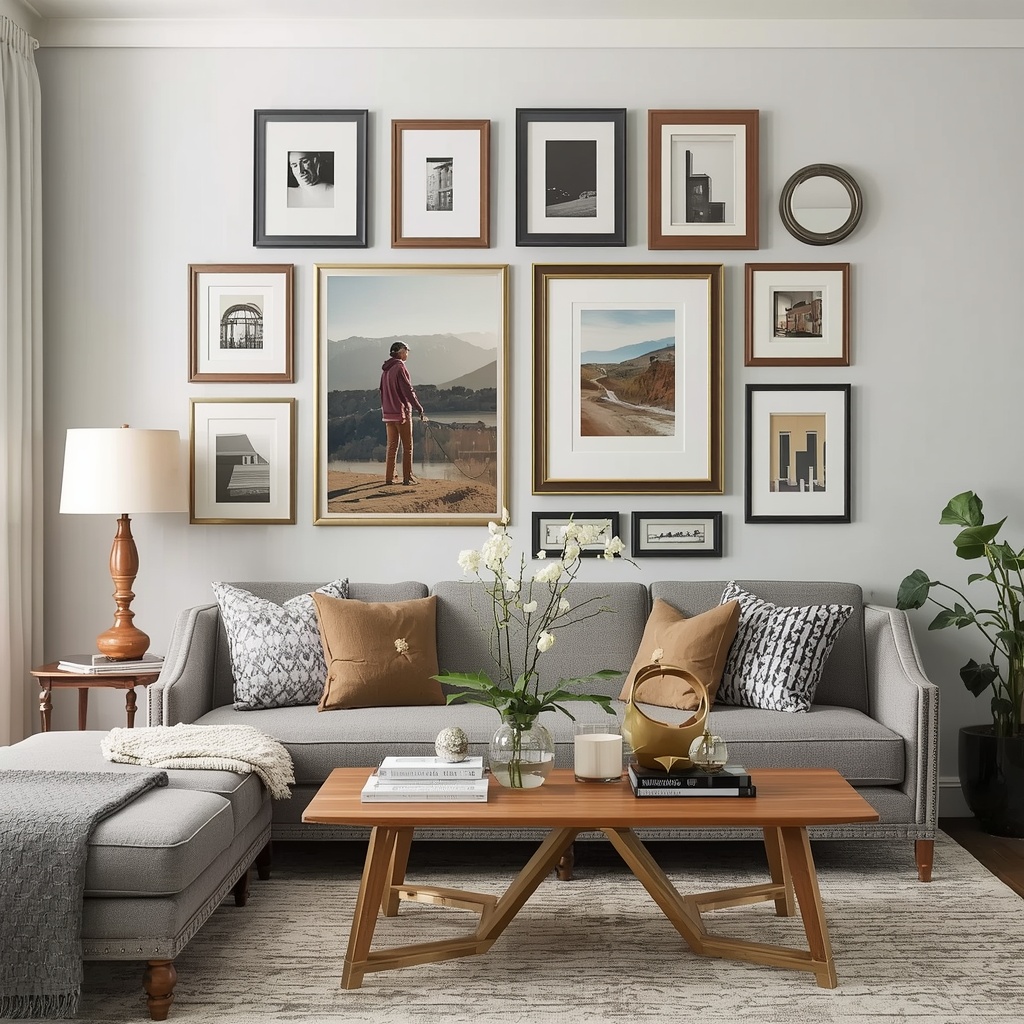
Frame material matters too. A room with warm wood tones (oak, walnut, teak) pairs naturally with wood or brass frames, while a cooler, modern space often calls for black, white, or matte metal frames. Mixing frame finishes intentionally can work in a gallery wall, but it should look curated, not accidental.
Quick Style Pairing Guide
| Sofa/Room Style | Recommended Art Style | Recommended Frame Finish |
|---|---|---|
| Modern/minimalist | Abstract, large-scale prints | Black, thin metal, or frameless |
| Traditional | Landscape, botanical, classic portraiture | Wood, gold, ornate |
| Mid-century modern | Geometric, graphic prints | Walnut, brass, or black |
| Coastal/farmhouse | Watercolor, nature-inspired | White-washed wood, rattan |
| Industrial | Black-and-white photography, urban art | Matte black metal |
Budget-Friendly Ways to Fill Large Wall Space
Oversized art doesn’t have to mean an oversized price tag. If you’re working with a large sofa and a limited budget, there are several affordable ways to achieve the right scale.
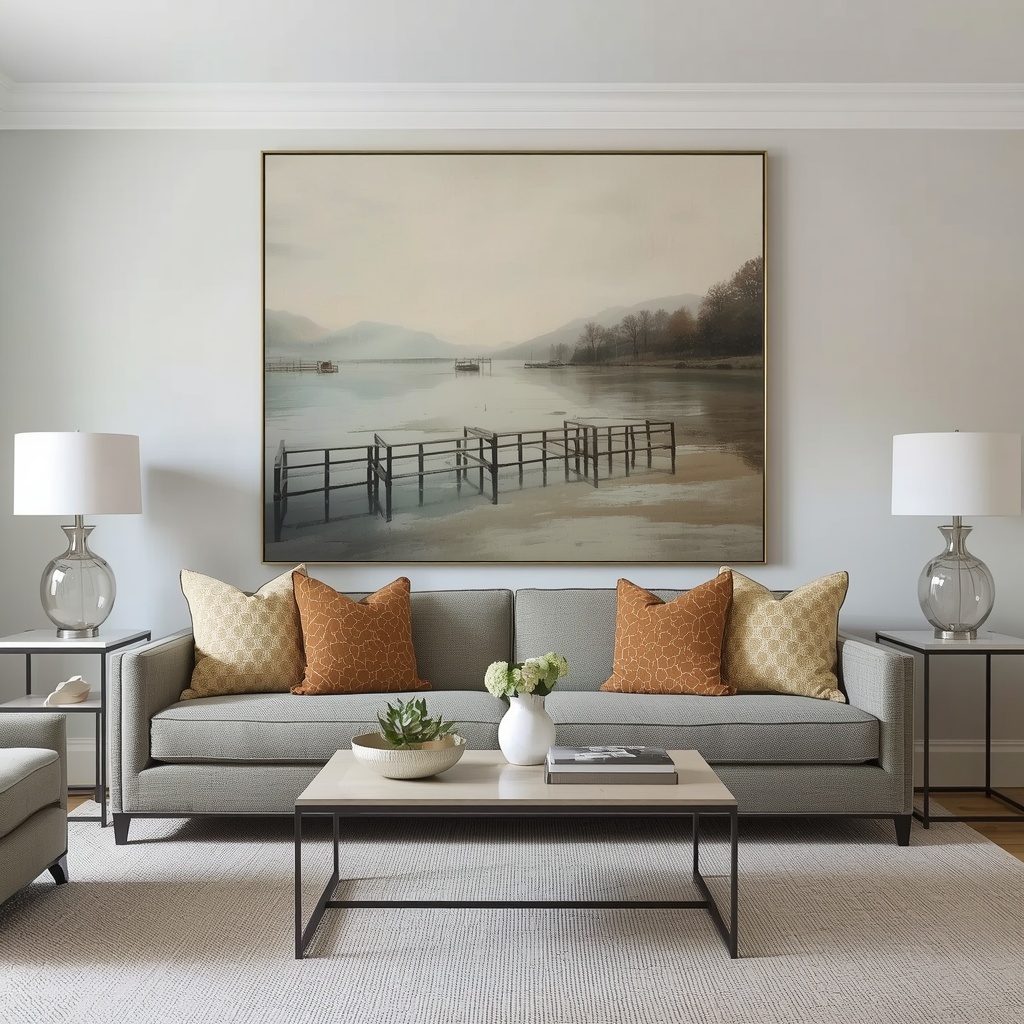
Large-format canvas prints from online retailers, framed tapestries, oversized mirrors, and even a grid of smaller matching frames can all fill the same visual footprint as an expensive statement painting. Many budget-conscious homeowners also print their own photography or artwork at large-format print shops for a fraction of gallery prices.
Pro Tip: A single large mirror is one of the most budget-friendly ways to fill the space above a sofa. It reflects light, makes the room feel larger, and almost always fits the two-thirds width rule without needing custom framing.
Final Thoughts: Trust the Formula, Then Trust Your Eye
Scale is the foundation of a well-designed living room, and the space above your sofa is one of the most visible design decisions you’ll make in your home. Start with the two-thirds to three-quarters width formula, respect the 6–8 inch height rule, and choose a layout style that matches your sofa’s shape and your room’s overall mood.
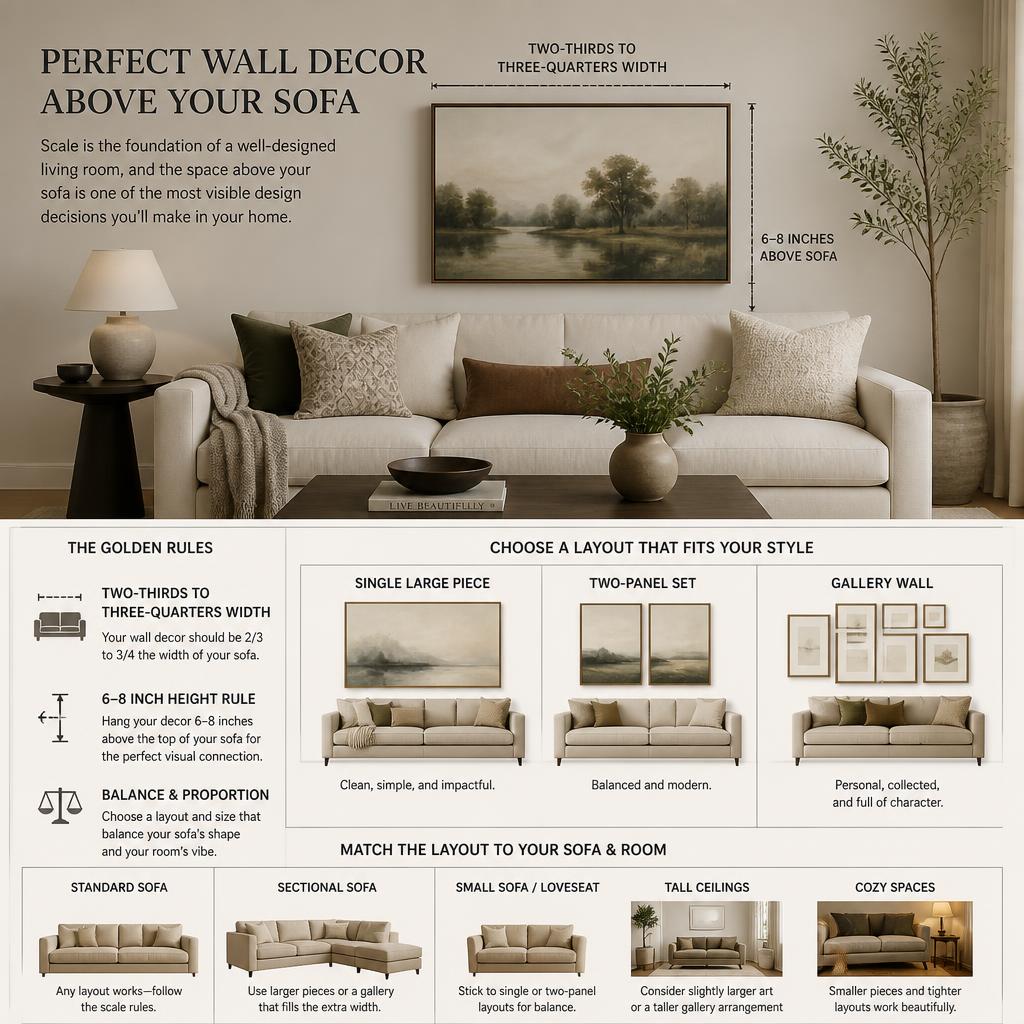
Once the proportions are right, the rest becomes intuitive. You’ll know it when you see it—the art will feel like it was always meant to be there, not squeezed in as an afterthought.
If you want a deeper dive into general art placement throughout your home, resources like The Spruce’s guide to hanging art and House Beautiful’s design tips offer additional room-by-room guidance beyond the sofa wall.