
A bookshelf is one of the hardest-working pieces of furniture in any American home, yet it’s often the most neglected when it comes to styling. Instead of a jumble of paperbacks and dusty knickknacks, your shelves can become a curated gallery that reflects your personality, ties your room together, and even boosts your home’s resale appeal. Whether you have a built-in library wall, a budget bookcase from a big-box store, or a set of floating shelves in a reading nook, the same design principles apply.
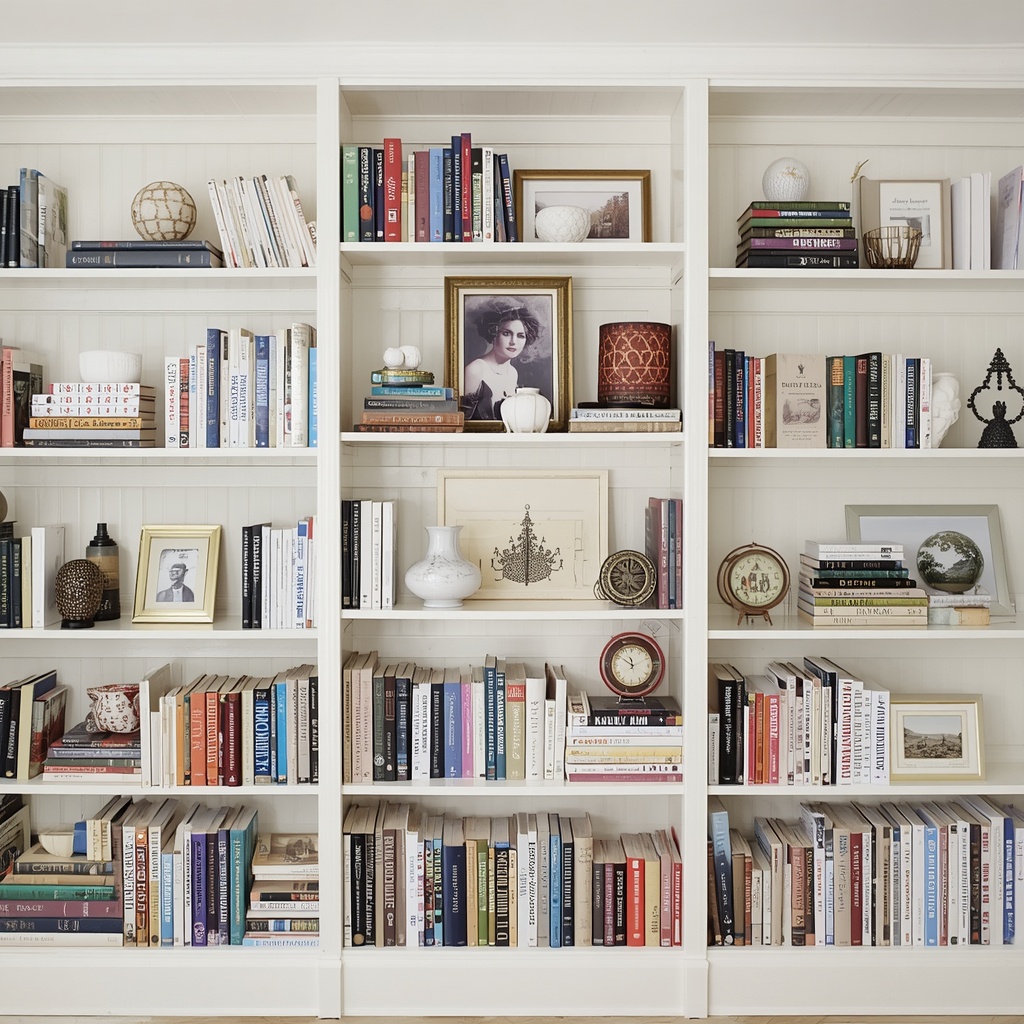
In this guide, we’ll walk through the exact process interior designers use to style bookshelves — from choosing a color palette to balancing negative space, layering decor, and avoiding the most common shelf-styling mistakes. By the end, you’ll have a repeatable formula you can apply to any shelf, cabinet, or bookcase in your home.
Why Bookshelf Styling Matters More Than You Think
Shelves are essentially vertical real estate for storytelling. A well-styled bookshelf does double duty: it organizes your belongings while acting as a piece of functional art. In open-concept homes, bookcases often serve as room dividers or focal walls, which means poorly arranged shelves can make an entire space feel chaotic.
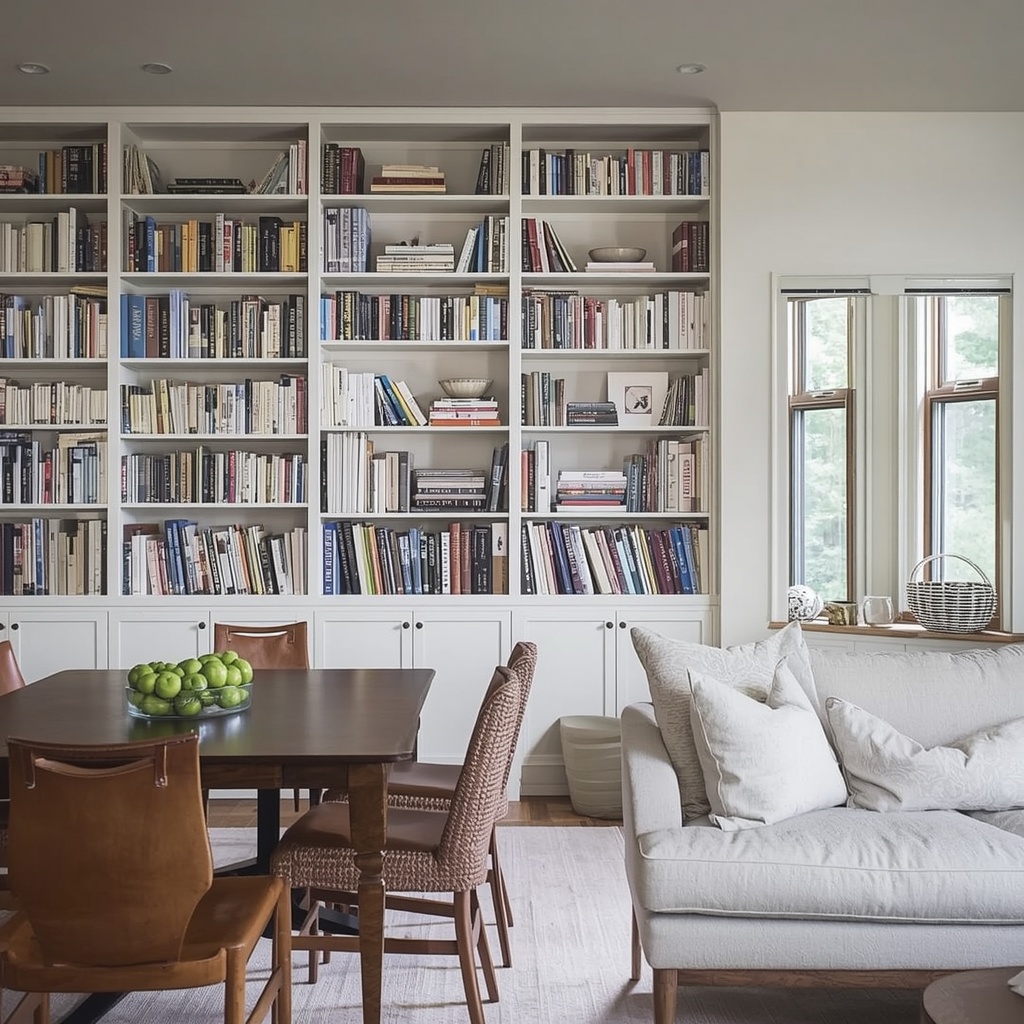
“A bookshelf should read like a sentence — every object is a word, and the spacing between them is the punctuation.” — a principle many professional stylists use when approaching open shelving.
Good shelf styling also supports better mental clarity. Clutter-heavy shelves compete visually with everything else in the room, while thoughtfully arranged shelves create breathing room, guide the eye, and highlight the objects that matter most to you.
Step 1: Edit Before You Decorate
Before you buy a single decorative object, take everything off your shelves. This “blank canvas” approach is non-negotiable for professional-looking results.
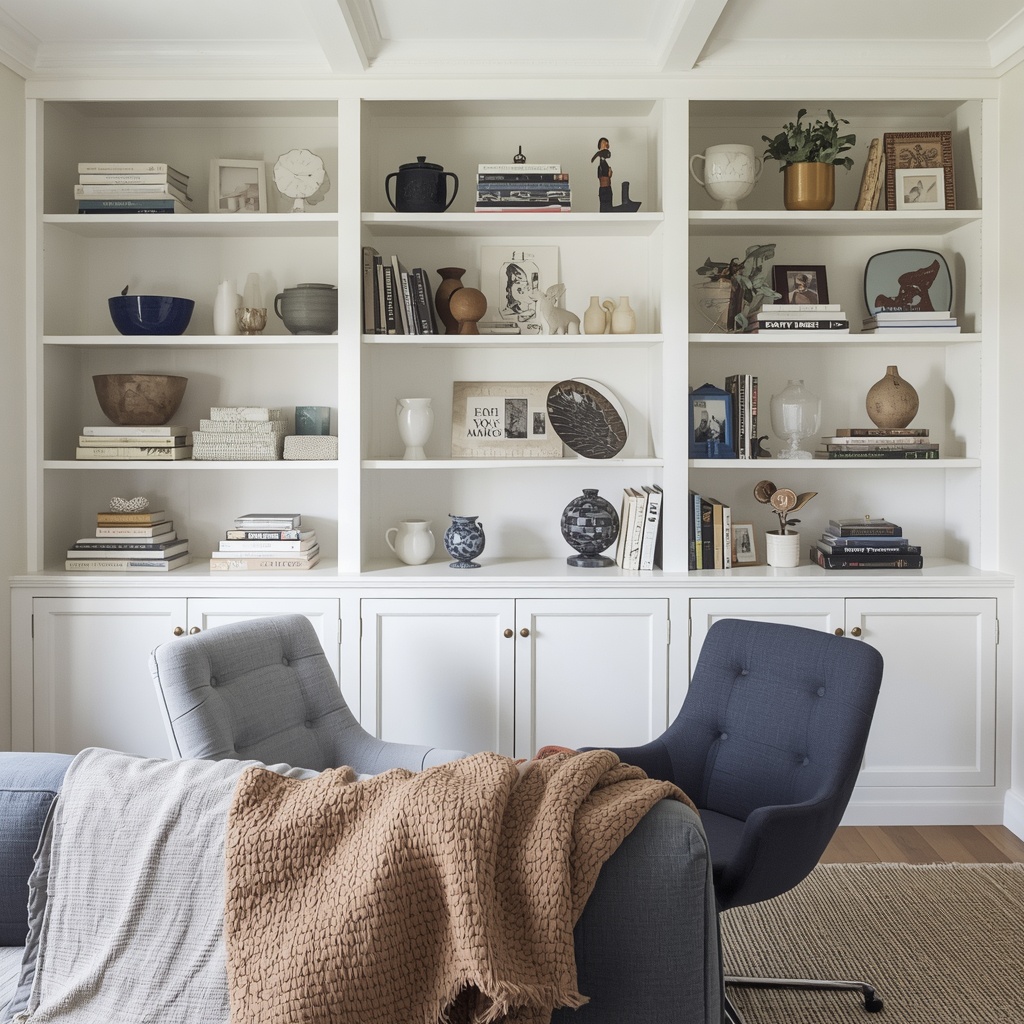
- Remove every book, frame, and object from the shelf
- Sort items into three piles: keep, relocate, donate
- Dust and clean the shelf unit itself, including corners and edges
- Group remaining items by category (books, art, plants, personal objects)
- Assess your shelf’s proportions, lighting, and wall color before restocking
This editing phase prevents the most common styling mistake: simply putting everything back in the same overcrowded arrangement.
Pro Tip
Pro Tip: Only keep about 60–70% of your original items on the shelf. Store or rotate the rest into storage bins, and swap them in seasonally. This keeps your shelf decor feeling fresh without buying anything new.
Step 2: Choose a Color Story
A cohesive color palette is what separates a “shelfie-worthy” bookcase from a cluttered one. Designers typically limit a shelf’s palette to three to five colors, including neutrals like white, black, cream, or wood tones.

One popular technique is rainbowing or color-blocking books by hue, but for a more sophisticated, timeless look, many interior designers recommend arranging books by color family in soft gradients, or hiding busy dust jackets altogether by turning books spine-in to show the natural page edges.
| Style Goal | Recommended Palette | Best For |
|---|---|---|
| Coastal / Light & Airy | White, sand, soft blue, natural wood | Living rooms, reading nooks |
| Moody / Editorial | Black, charcoal, brass, deep green | Home offices, libraries |
| Warm Minimalist | Cream, terracotta, walnut, olive | Scandinavian or Japandi interiors |
| Eclectic Maximalist | Jewel tones, patterned spines, gold accents | Statement walls, dining rooms |
Step 3: Master the Rule of Odd Numbers
Interior design leans heavily on the rule of odd numbers because groupings of three, five, or seven feel more natural and dynamic to the human eye than even, symmetrical pairs. This is one of the foundational principles of shelf styling used by professionals.
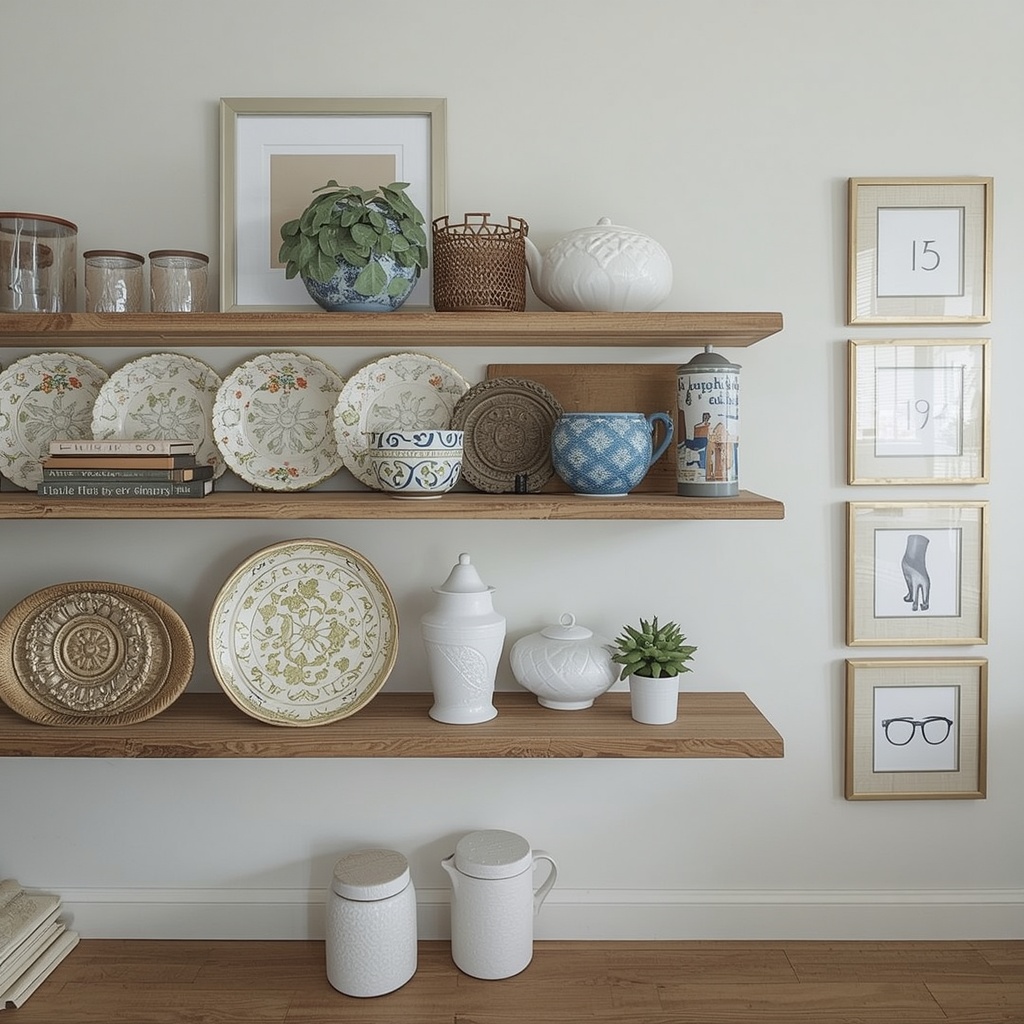
Apply this rule at every scale — group three books with one object on top, cluster five decorative pieces across a single shelf, or layer three frames of varying sizes leaning against the back panel. Odd-numbered groupings create visual rhythm without feeling forced or overly staged.
Step 4: Build in Layers (Front to Back, Not Just Side to Side)
Flat, single-layer shelves often look sparse or amateurish. Instead, think of each shelf as having depth, not just width.
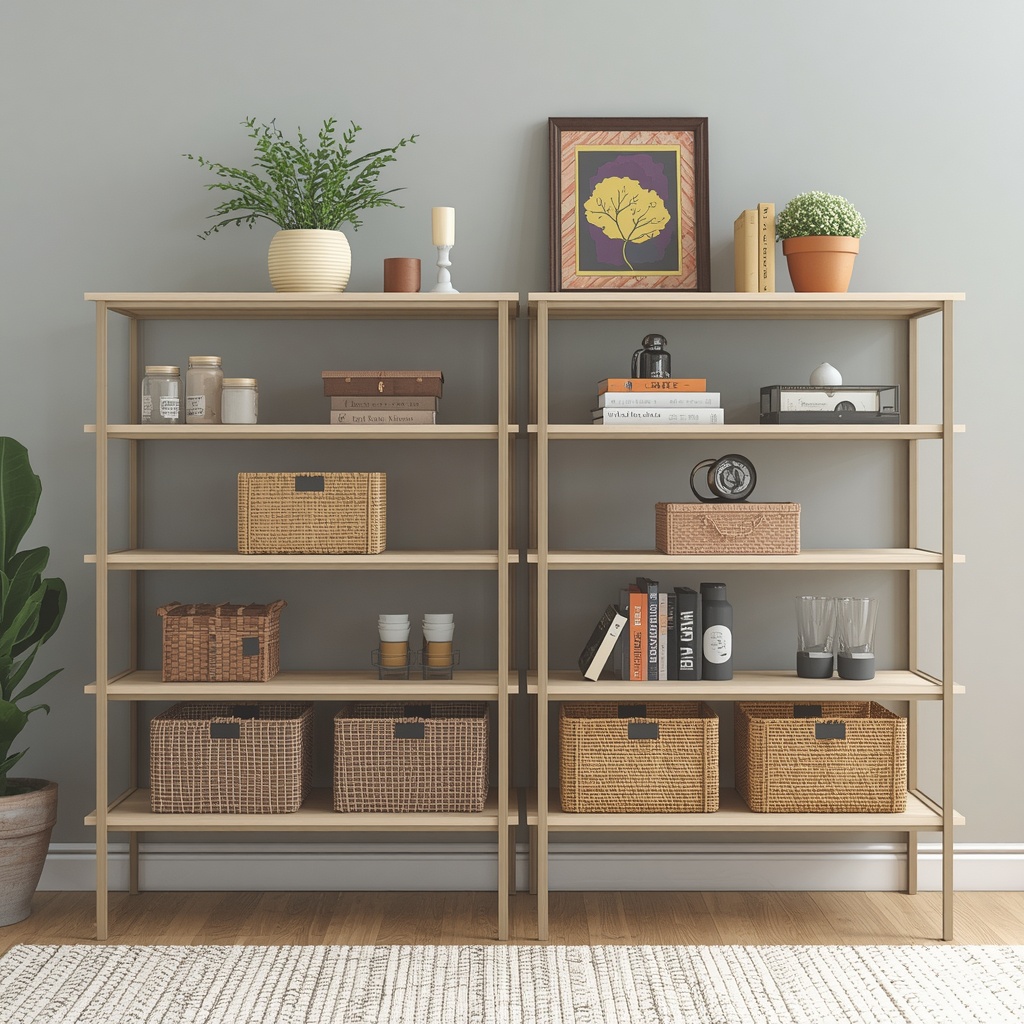
- Back layer: Stack books horizontally or lean a framed print against the wall
- Middle layer: Add a vertical stack of books as a pedestal, or place a small vase
- Front layer: Set a single small object — a stone, a miniature sculpture, a candle — slightly overlapping the middle layer
- Accent layer: Drape a small trailing plant vine over the shelf edge for softness
- Negative space: Leave at least 20–30% of each shelf empty to avoid a cluttered look
This layering technique, often called “shelf styling in the round,” adds dimension even when the shelf is viewed straight-on.
Step 5: Mix Vertical and Horizontal Book Stacks
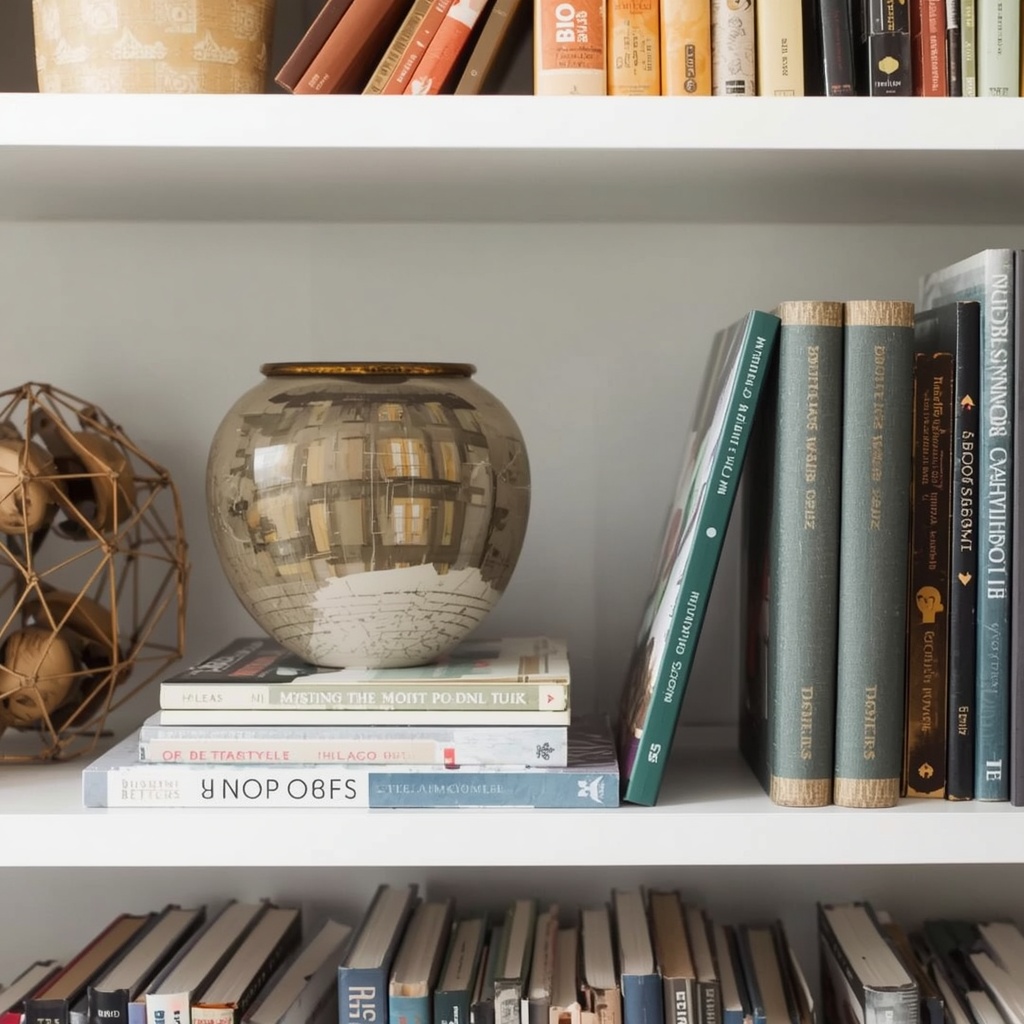
Uniform rows of upright books can feel static and library-like in the wrong way. Instead, alternate between vertical rows and horizontal stacks to create movement across the shelf.

- Stack 3–5 books flat and top them with a small object like a candle, bud vase, or paperweight
- Use the horizontal stack as a “pedestal” to elevate a piece of decor above shelf height
- Keep at least one section of books upright for functional access and visual contrast
- Use bookends shaped like natural materials (marble, brass, wood) to anchor loose vertical stacks
- Avoid stacking more than five books high, as taller stacks can look unstable and tip easily
Step 6: Layer in Personal and Natural Objects
The objects between your books are what make a shelf feel personal rather than like a display in a furniture showroom. Mix categories intentionally rather than clustering similar items together.
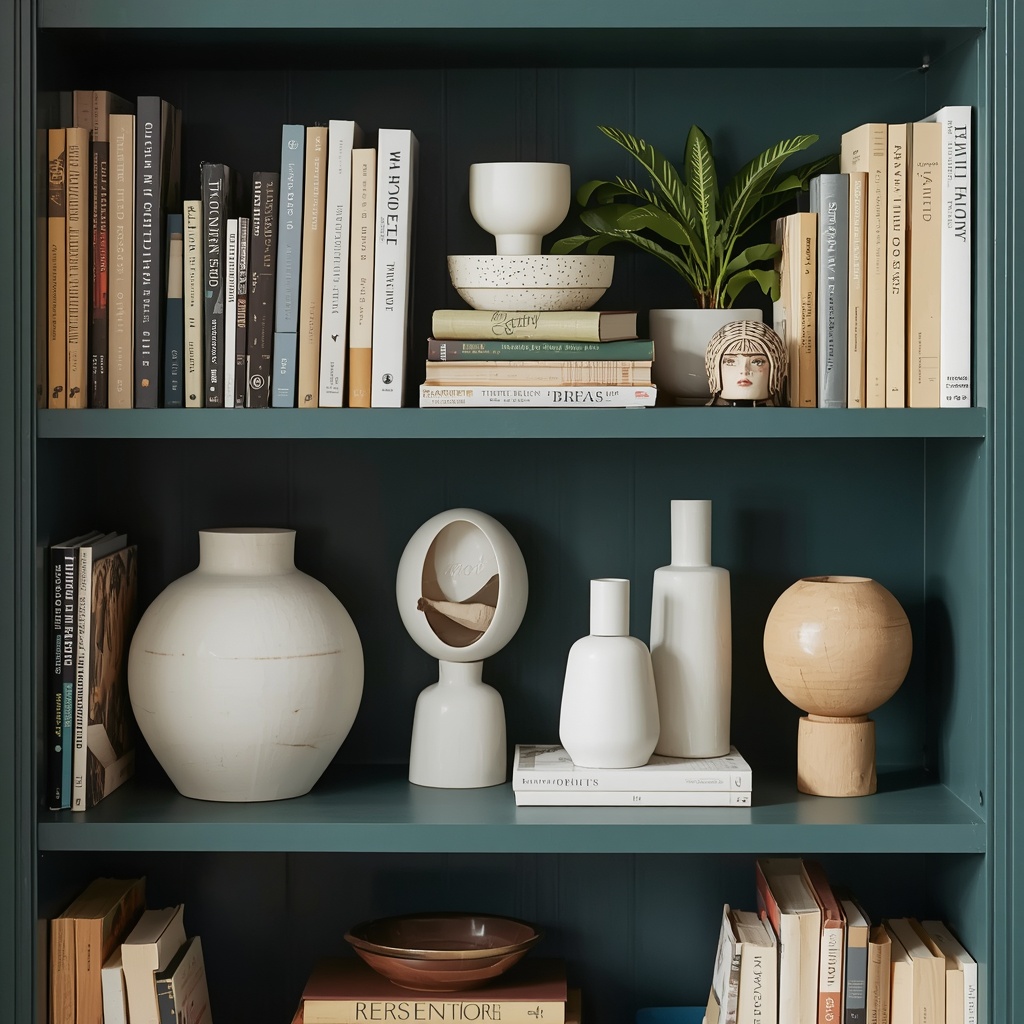
Consider layering in a rotation of:
- Framed photos or small art prints (leaned, not hung)
- A trailing plant such as pothos, ivy, or a small faux fern
- Travel souvenirs, pottery, or hand-thrown ceramics
- A small stack of coffee table books with a decorative object on top
- Woven baskets or textured boxes for hidden storage
- A single sculptural object, like a wood carving or stone bookend
Pro Tip
Pro Tip: Incorporate at least one living or faux plant per shelf section. Greenery softens hard lines from books and wood, and it’s one of the fastest ways to make a bookshelf feel warm and lived-in rather than staged.
Step 7: Balance Symmetry and Asymmetry
Bookshelves with multiple cubbies or sections — like a classic ladder shelf or cube bookcase — benefit from an alternating rhythm between busy and empty sections. If every cube is equally full, the eye has nowhere to rest.
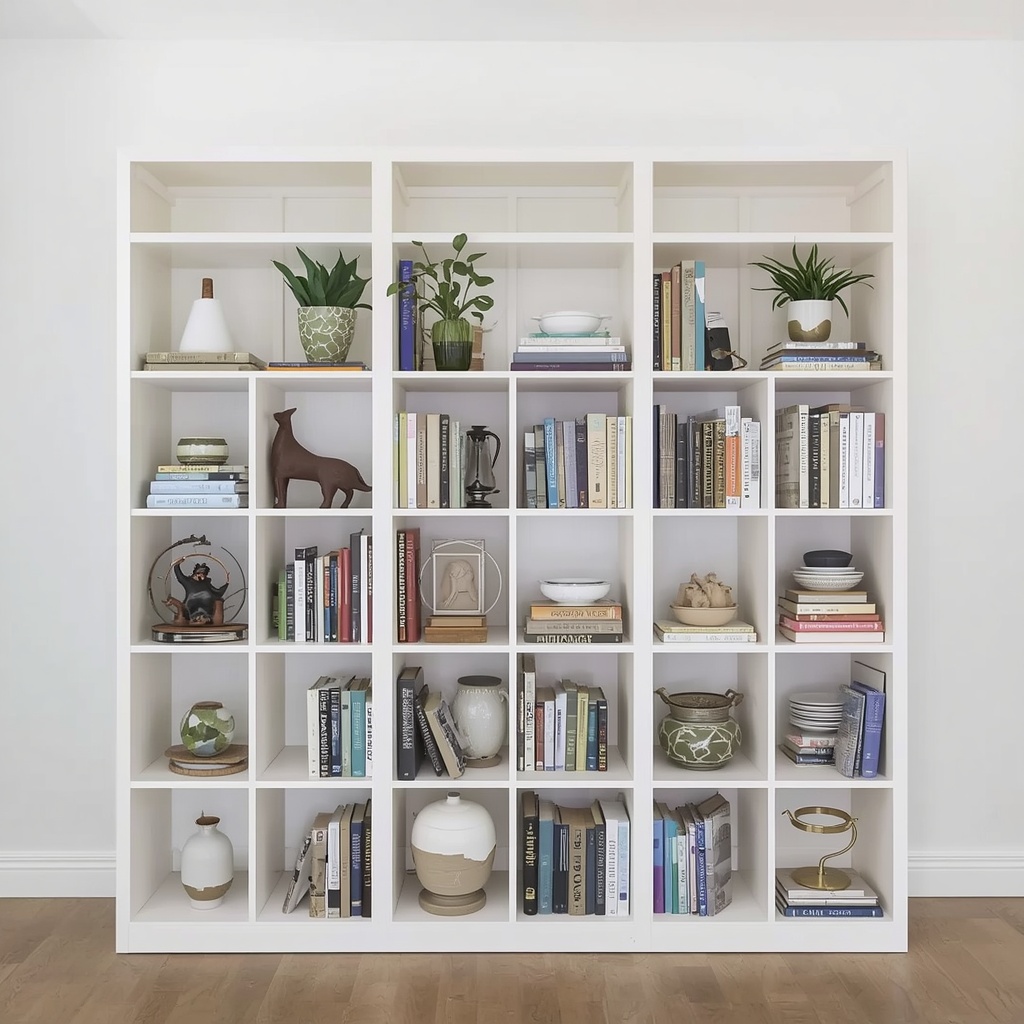
A simple formula many designers use is the “one full, one half, one empty” method: fill one section generously with books and objects, style the adjacent section more sparsely, and leave a nearby section almost entirely empty except for a single statement piece. Repeat this pattern across the entire unit to create a sense of intentional asymmetry rather than random clutter.
Common Bookshelf Styling Mistakes to Avoid
Even well-intentioned shelf styling can go wrong. Here are the mistakes that instantly signal an unfinished or cluttered look:
| Mistake | Why It Happens | Quick Fix |
|---|---|---|
| Overcrowding every shelf | Trying to display everything at once | Store 30% of items, rotate seasonally |
| No negative space | Fear of “empty” looking unfinished | Leave visual breathing room on each shelf |
| All books upright, same height | Defaulting to library-style rows | Mix vertical stacks with horizontal ones |
| Ignoring scale | Placing tiny objects on oversized shelves | Use larger anchor pieces per section |
| Matching everything perfectly | Overthinking coordination | Embrace curated imperfection and texture |
| Forgetting lighting | Styling without considering shadows | Add a small battery-powered puck light or clip lamp |
Step 8: Add Lighting for Dimension
Lighting transforms a bookshelf from a daytime-only feature into an evening focal point. Battery-operated LED puck lights, plug-in picture lights, or a slim clip-on lamp tucked into an upper shelf can dramatically change how the arrangement reads after dark.
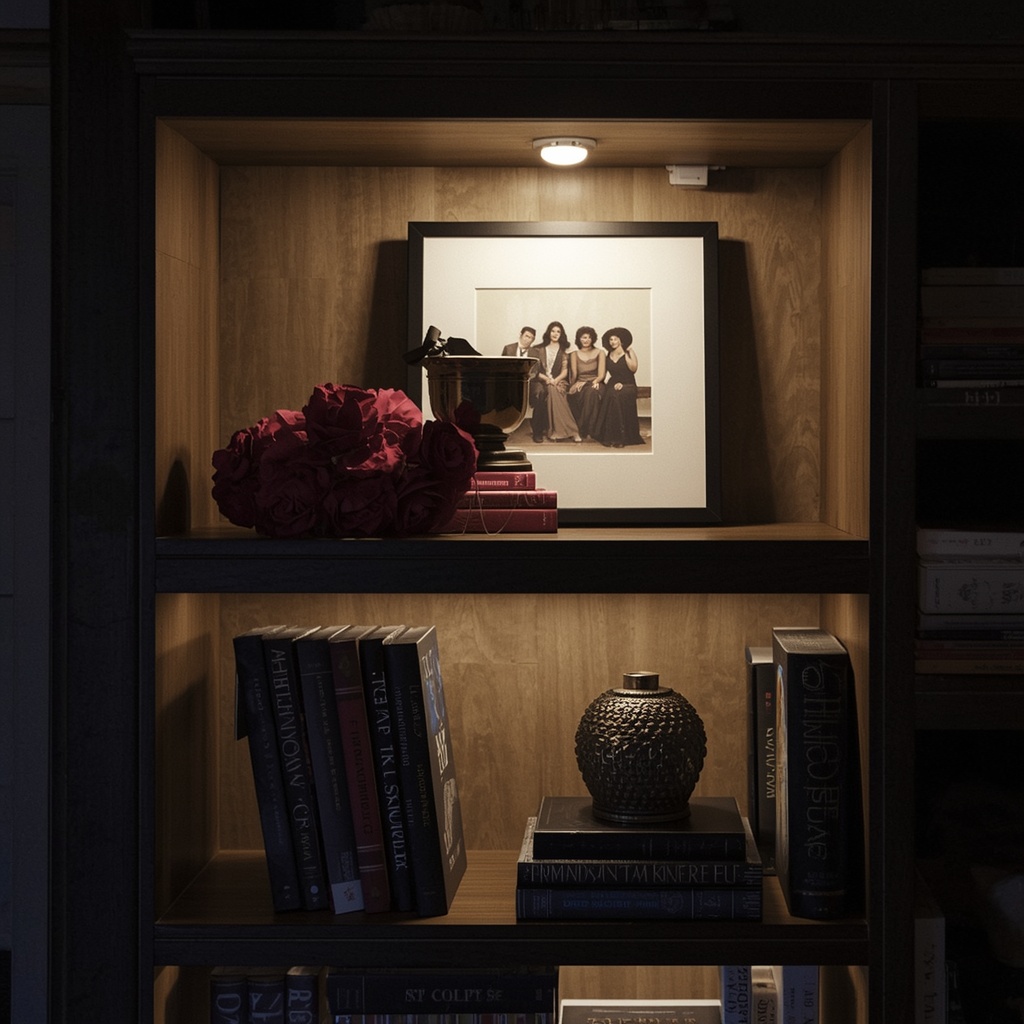
Warm white bulbs (around 2700K–3000K) tend to flatter wood tones, book spines, and ceramics far better than cool white light, which can feel clinical in a residential space.
Step 9: Style by Room Type
Not every bookshelf serves the same purpose, and styling should reflect the room it lives in.
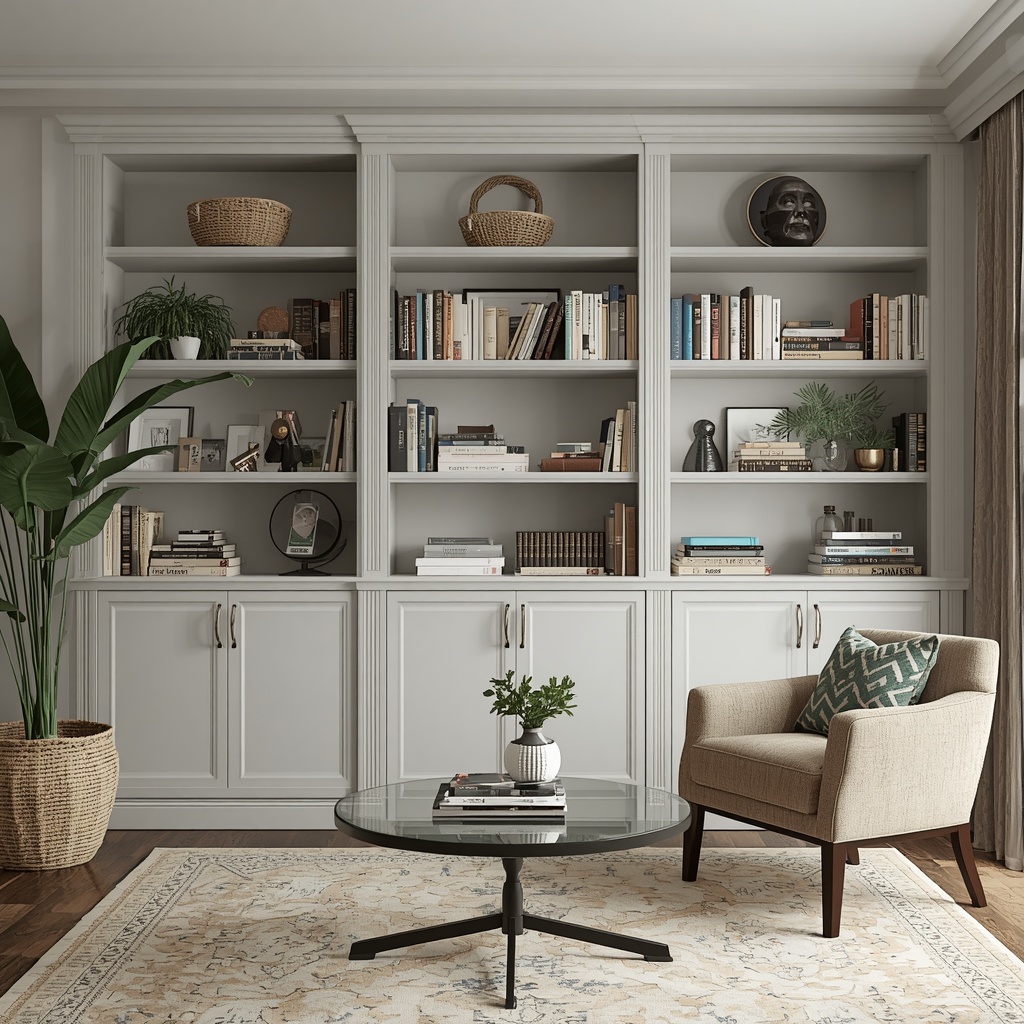
- Living room bookcases: Prioritize conversation-starting objects, framed art, and a mix of coffee table books
- Home office shelves: Balance functional storage (binders, files) with a few personal or motivational objects
- Bedroom shelving: Keep the palette soft and calming; favor candles, personal photos, and fewer books
- Entryway or hallway shelves: Use these as a rotating “gallery” for seasonal decor and fresh flowers
- Kids’ room bookshelves: Prioritize accessibility and durability over strict symmetry; let color be playful
A Simple Weekend Styling Checklist
Use this quick-reference list when you’re ready to actually style your shelf:
- Empty and clean the entire shelf unit
- Edit down to your favorite 60–70% of items
- Choose a 3–5 color palette that complements the room
- Group items in odd numbers (3, 5, or 7)
- Build layers front to back on each shelf, not just side to side
- Mix vertical book stacks with horizontal “pedestal” stacks
- Add at least one plant and one personal or sentimental object per section
- Leave 20–30% negative space on every shelf
- Step back, photograph the shelf, and adjust based on the photo (the camera reveals imbalance faster than the eye)
- Add a light source for evening ambiance
Final Thoughts
Styling a bookshelf isn’t about following a rigid formula — it’s about applying a few flexible principles consistently: edit ruthlessly, group in odd numbers, layer with intention, and leave room for the eye to rest. Once you internalize these habits, you’ll find yourself instinctively rearranging shelves in guest rooms, offices, and even rental apartments with the same confidence a professional stylist brings to a client’s living room.

The best-styled bookshelves aren’t perfect — they’re personal. Mix in the objects that tell your story, rotate them seasonally, and don’t be afraid to leave a little empty space. That negative space is doing just as much design work as everything you choose to put on display.