
There’s a moment every homeowner knows: you step onto the patio, drink in hand, and realize something is missing. The furniture is there. The string lights are up. But the space still feels like a parking lot for chairs instead of a room. Nine times out of ten, the missing piece is underfoot.
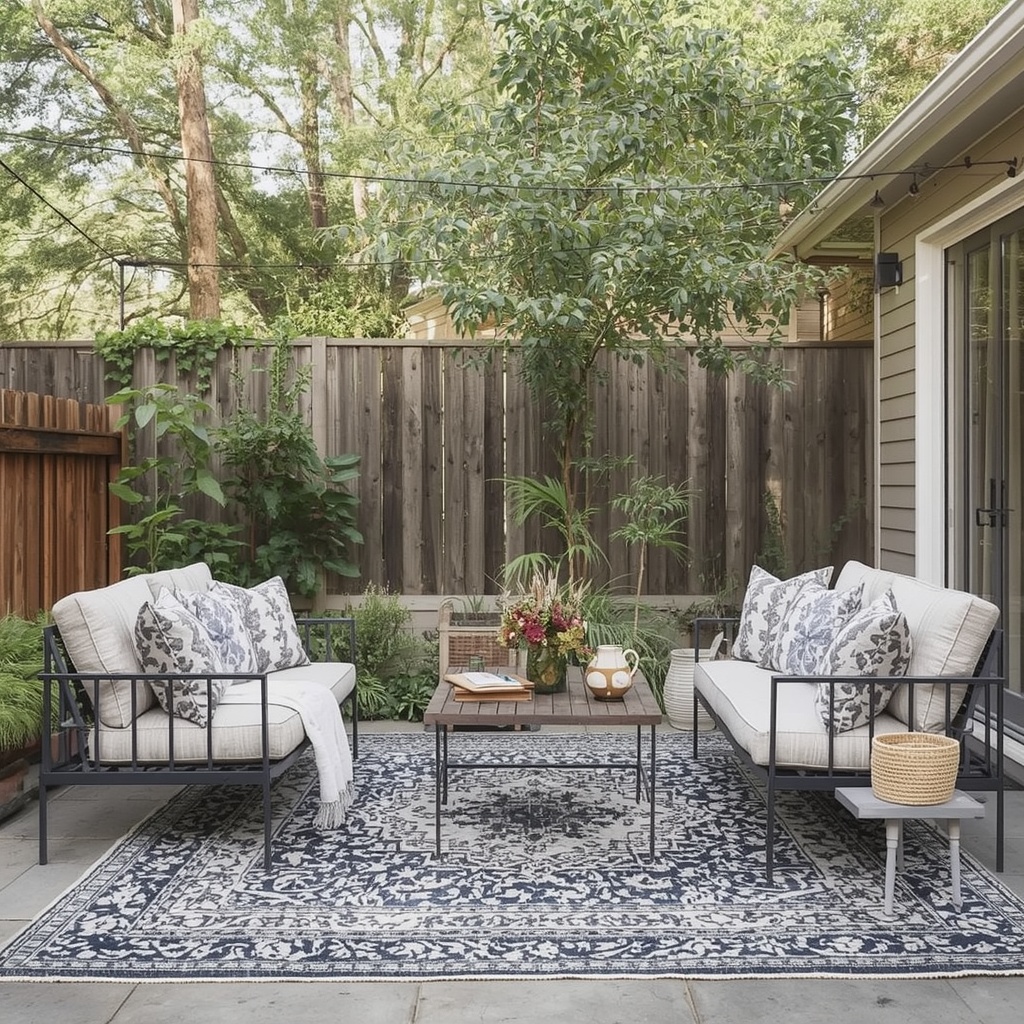
An outdoor rug is the single fastest way to turn a slab of concrete or a stretch of decking into a genuine “al fresco living room.” It anchors your furniture, softens hard surfaces, and signals to anyone who walks outside: relax, this is a space designed on purpose. As an interior designer who works almost exclusively with US homeowners on indoor-outdoor living, I can tell you this is the most underrated investment in patio design.
This guide covers everything you need — from choosing the right material and size to layering patterns, and keeping your rug looking showroom-fresh through rain, UV rays, and backyard barbecues.
Why Every Outdoor Living Space Needs a Rug
Think of your patio furniture as floating islands. Without a rug, a sofa and two chairs on a bare deck can feel scattered, no matter how nice the pieces are. A rug creates a visual boundary — a “room” — that tells the eye where the seating area begins and ends.
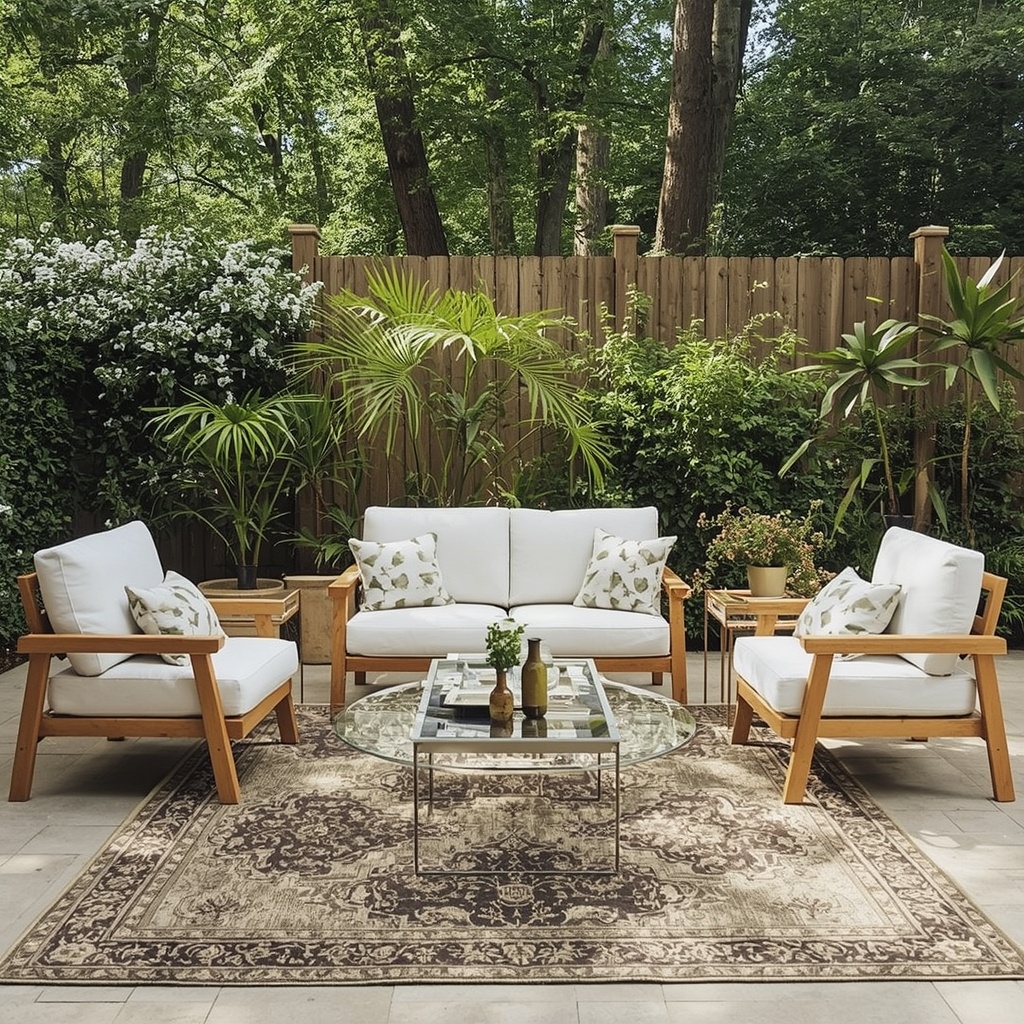
Rugs also solve practical problems. They reduce glare from stone or concrete on sunny afternoons, add a layer of cushioning underfoot, and muffle the scrape of chair legs. In homes with kids or pets, a textured rug adds grip and softens falls in a way that pavers never will.
“A great outdoor rug does for a patio what a great area rug does for a living room — it defines the space, ties the palette together, and makes the whole area feel finished.” — a principle every seasoned designer builds their outdoor layouts around.
Semantic keywords woven throughout this guide: outdoor living room, patio rug, weather-resistant rugs, al fresco decor, indoor-outdoor rugs, polypropylene rugs, deck styling, backyard design, UV-resistant fabric, mildew-resistant rugs.
Choosing the Right Material for Your Climate
Not all outdoor rugs are created equal, and the material you choose should match your regional weather more than your Pinterest board. A rug that thrives in dry Arizona heat may mildew within a season in humid Florida.
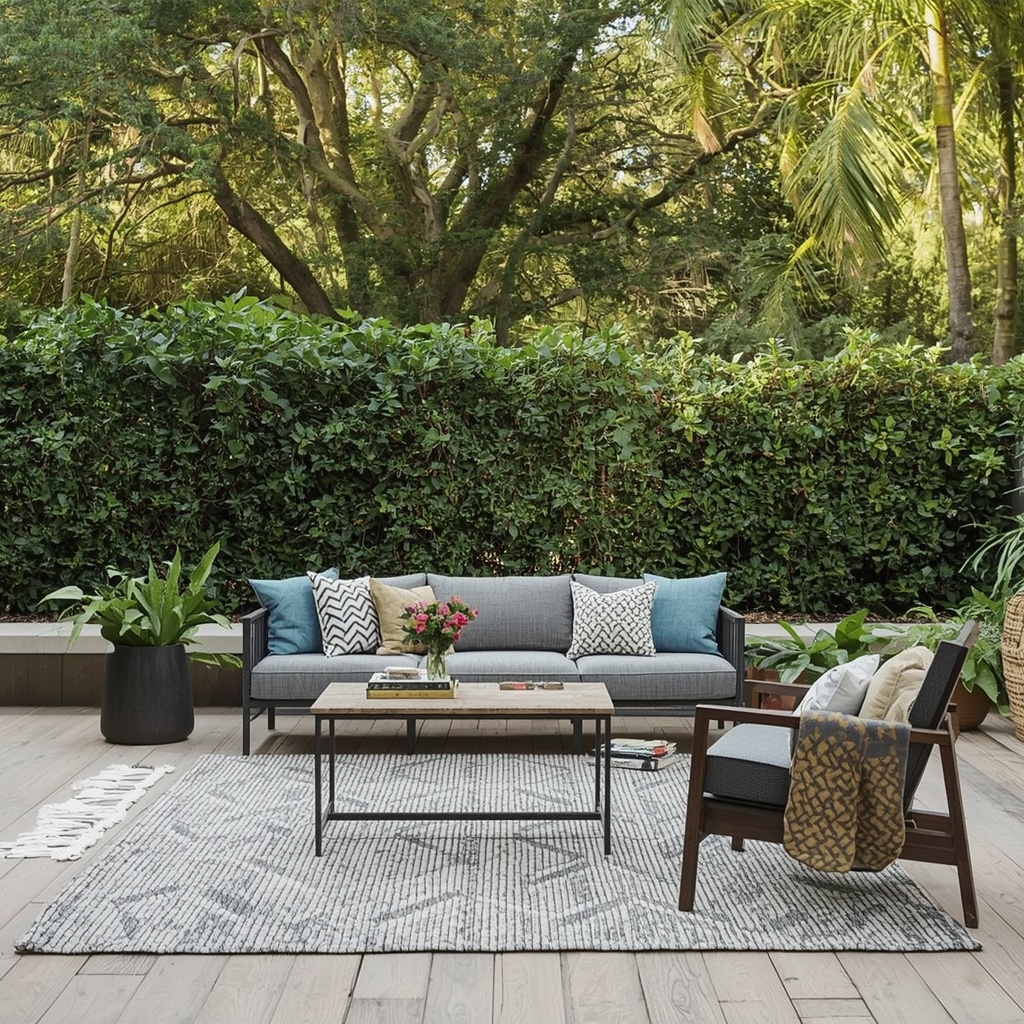
Here’s a quick breakdown of the most common outdoor rug materials and where they perform best:
| Material | Best For | Pros | Watch Out For |
|---|---|---|---|
| Polypropylene | Most climates, high traffic | Affordable, fade-resistant, easy to hose down | Can feel plasticky underfoot |
| Polyester | Covered patios, moderate sun | Soft texture, good color retention | Less durable in direct, harsh sun |
| Recycled PET (plastic bottle rugs) | Eco-conscious households | Sustainable, surprisingly soft, machine washable in small sizes | Limited pattern variety in some brands |
| Bamboo or sisal-look synthetic | Covered porches, dry regions | Natural aesthetic, breathable | Not ideal for standing water or humid zones |
| Braided outdoor cotton blends | Sunrooms, screened porches | Cozy, casual look | Needs a covered space; not fully waterproof |
Pro Tip: If you live somewhere with real seasons — hot, humid summers and wet winters — polypropylene is the safest all-around choice. It resists mold, dries quickly, and holds color better than natural fiber look-alikes, making it the workhorse of durable patio decor.
Sizing and Placement: Getting the Proportions Right
Undersized rugs are the number one styling mistake I see on outdoor patios. A rug that’s too small makes an expensive furniture set look like it’s perched on a postage stamp.

The rule of thumb: your rug should extend at least a few inches beyond the front legs of your seating, and ideally all the legs should sit fully on the rug. For a standard patio sofa and two chairs around a coffee table, aim for a rug no smaller than 8 by 10 feet. For larger lounge areas or combined dining-and-lounge layouts, 9×12 or 10×14 feet creates a properly grounded look.
A few placement principles worth remembering:
- Leave 18 to 24 inches of bare space between the rug’s edge and the outer boundary of the patio or deck for visual breathing room.
- If your outdoor space is multi-zone (dining plus lounging), use two separate rugs rather than one giant one — it helps define each “room.”
- Rectangular rugs suit linear furniture layouts; round rugs work beautifully under circular dining tables or fire pit seating.
- On uneven surfaces like gravel or grass, choose a rug with a firm weave that won’t shift or bunch.
Color, Pattern, and Layering Like a Designer
Outdoor rugs give you permission to be bolder than you might be indoors. Sun-washed environments tend to mute colors slightly, so patterns and hues that might feel loud inside often look balanced outdoors.
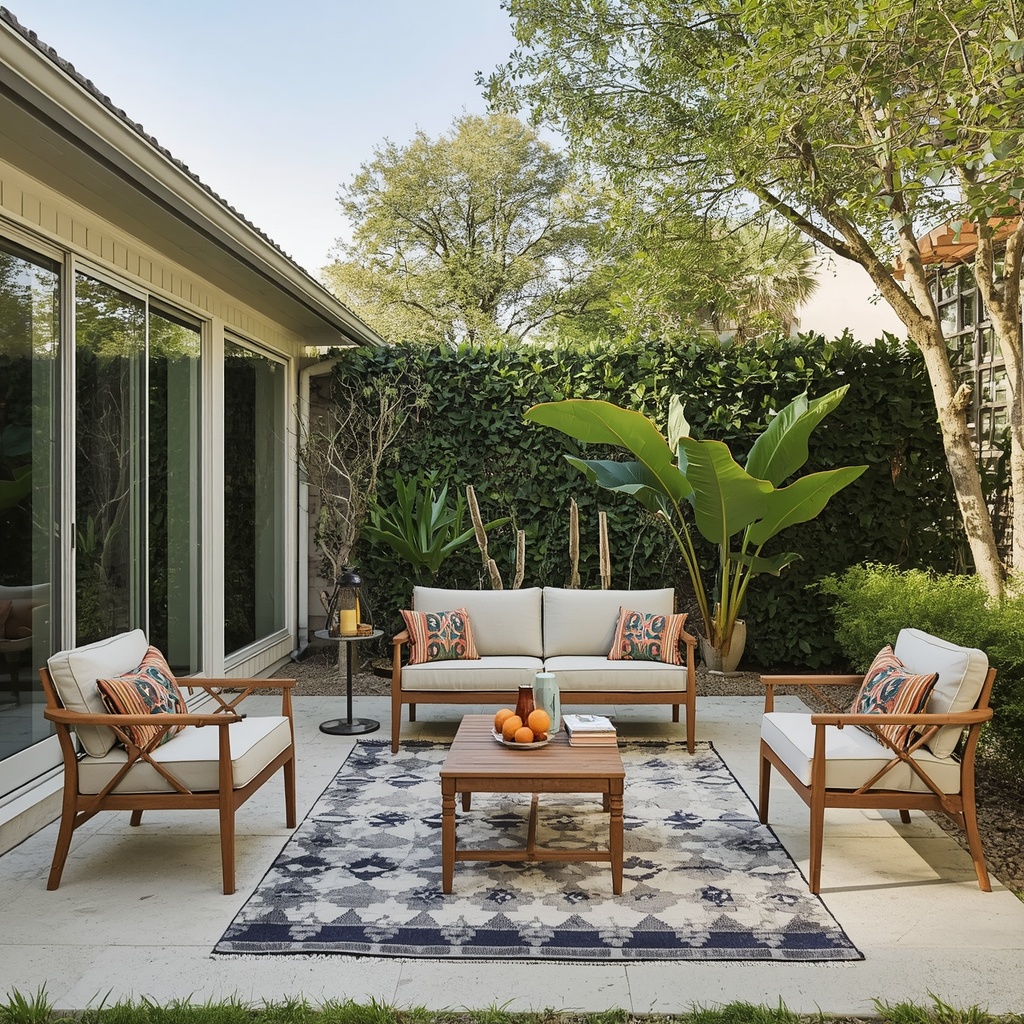
A few style approaches that consistently work across US homes, from coastal cottages to desert modern builds, include tonal neutrals for a calm, resort-like feel, bold geometric or Moroccan-inspired prints for a bohemian courtyard vibe, and striped rugs for coastal or nautical-themed decks. Layering a smaller patterned rug over a larger neutral one adds depth the same way it does indoors, and it’s an easy trick for making a rented or builder-grade patio feel custom.
Pro Tip: Match your rug’s undertone to your hardscape, not your furniture. A warm-toned concrete patio pairs beautifully with terracotta, rust, or sandy neutrals, while cooler bluestone or gray pavers look sharper with charcoal, navy, or crisp white patterns.
Styling the Full Al Fresco Living Room
Once the rug is down, build the rest of the space around it the way you would an indoor living room. Furniture placement should follow the rug’s edges, with a sofa or sectional anchoring one side and chairs completing a conversational U-shape or square around a central coffee table.
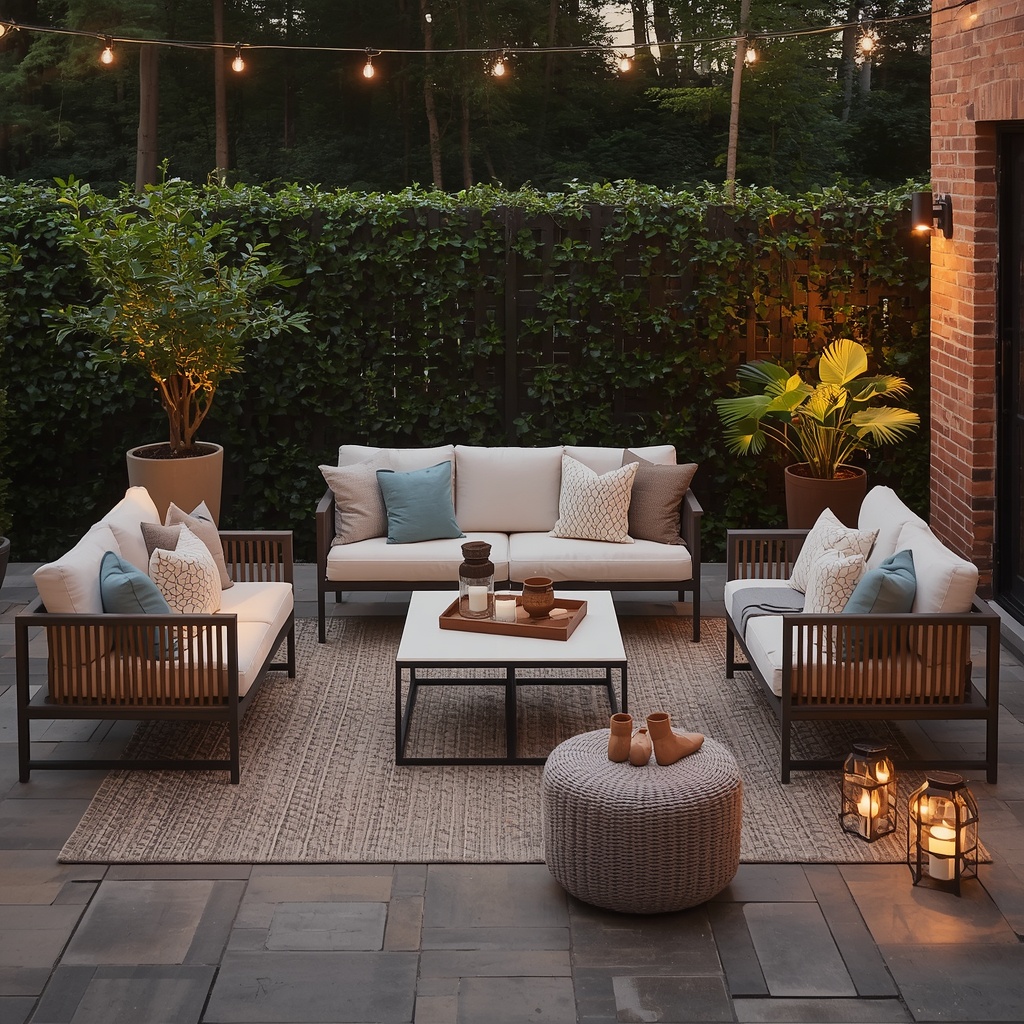
Layer in the finishing touches: outdoor throw pillows in a mix of solids and patterns, a low-profile lantern or solar light cluster, a woven pouf for extra flexible seating, and potted plants at varying heights to soften hard edges. Lighting matters more than most people expect outdoors — warm, dimmable string lights or lanterns placed at eye level make the rug and furniture feel intentional after sunset rather than abandoned.
If your patio is covered or partially covered, you can push materials further with woven textures and layered throws, since exposure to direct rain and sun is limited. Fully exposed patios should stick to weatherproof textiles rated for UV and moisture resistance throughout.
Maintaining Your Outdoor Rug Through the Seasons
An outdoor rug is an investment, and like any investment, it rewards a little routine care. The good news is that maintenance is dramatically simpler than indoor rugs — most outdoor materials are built to be hosed down and air-dried.
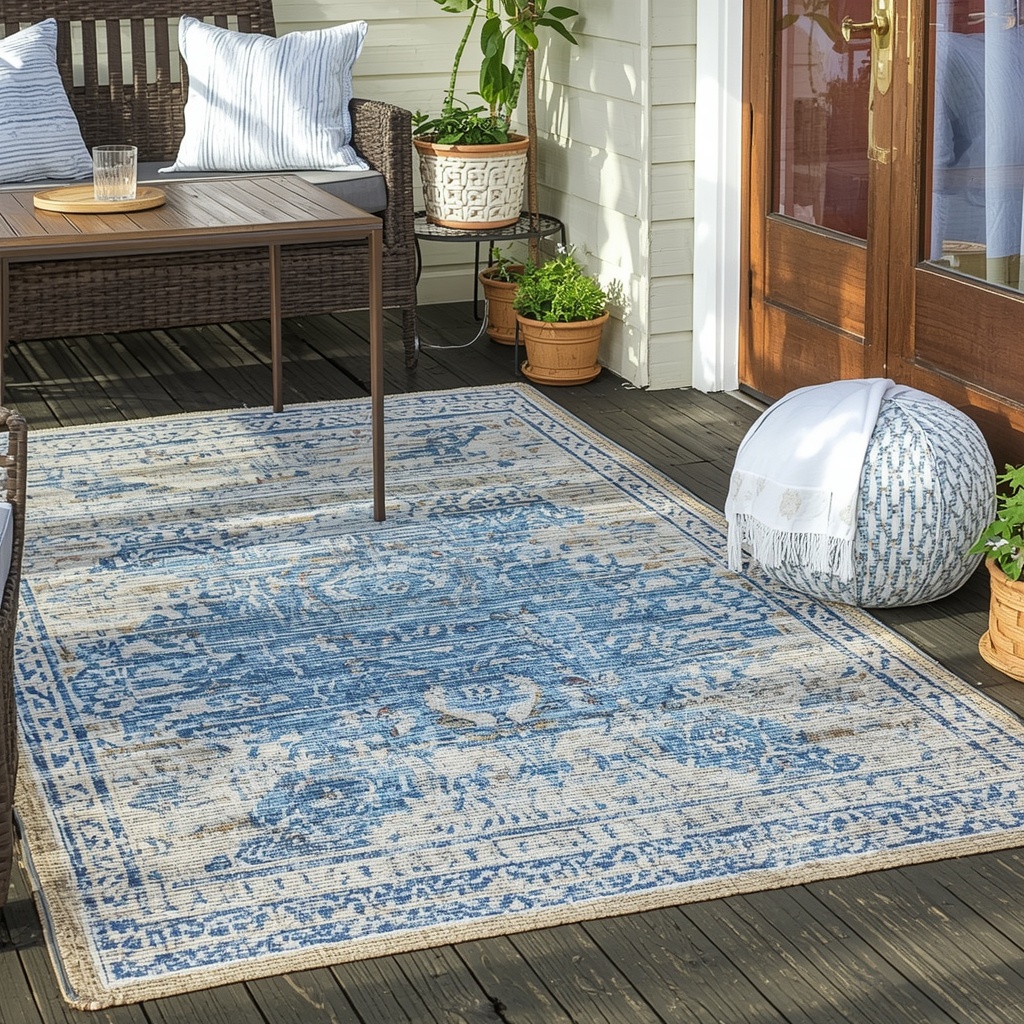
Here’s a simple maintenance rhythm that keeps rugs looking new for years:
- Weekly: Shake out or sweep off loose debris, leaves, and dirt.
- Monthly: Hose down the rug and scrub lightly with a mix of mild soap and water for surface grime.
- Seasonally: Flip the rug to check for trapped moisture or mildew underneath, especially after heavy rain.
- Before storage: Fully dry the rug in direct sun before rolling and storing it for winter in colder climates.
- Spot treatment: Blot spills immediately with a clean cloth; avoid harsh bleach on colored synthetic fibers.
For stubborn mildew, a diluted vinegar-and-water solution works well on most synthetic outdoor rugs without damaging fibers or fading color. Always let the rug dry completely in the sun after cleaning — UV exposure naturally kills residual mold spores.
Pro Tip: Rotate your rug 180 degrees every few months if it sits in direct sun. Even fade-resistant fibers can develop a slightly uneven tone over a full season, and rotating keeps wear and color exposure balanced.
Common Mistakes to Avoid
Even well-intentioned homeowners fall into a few predictable traps when styling outdoor spaces. Choosing an indoor rug for outdoor use is the most costly one — natural fibers like jute or wool break down quickly when exposed to humidity and rain, no matter how good they look in the showroom. Skipping a rug pad is another; while it seems optional outdoors, a breathable, mold-resistant outdoor pad prevents slipping and helps airflow underneath, which reduces mildew buildup.
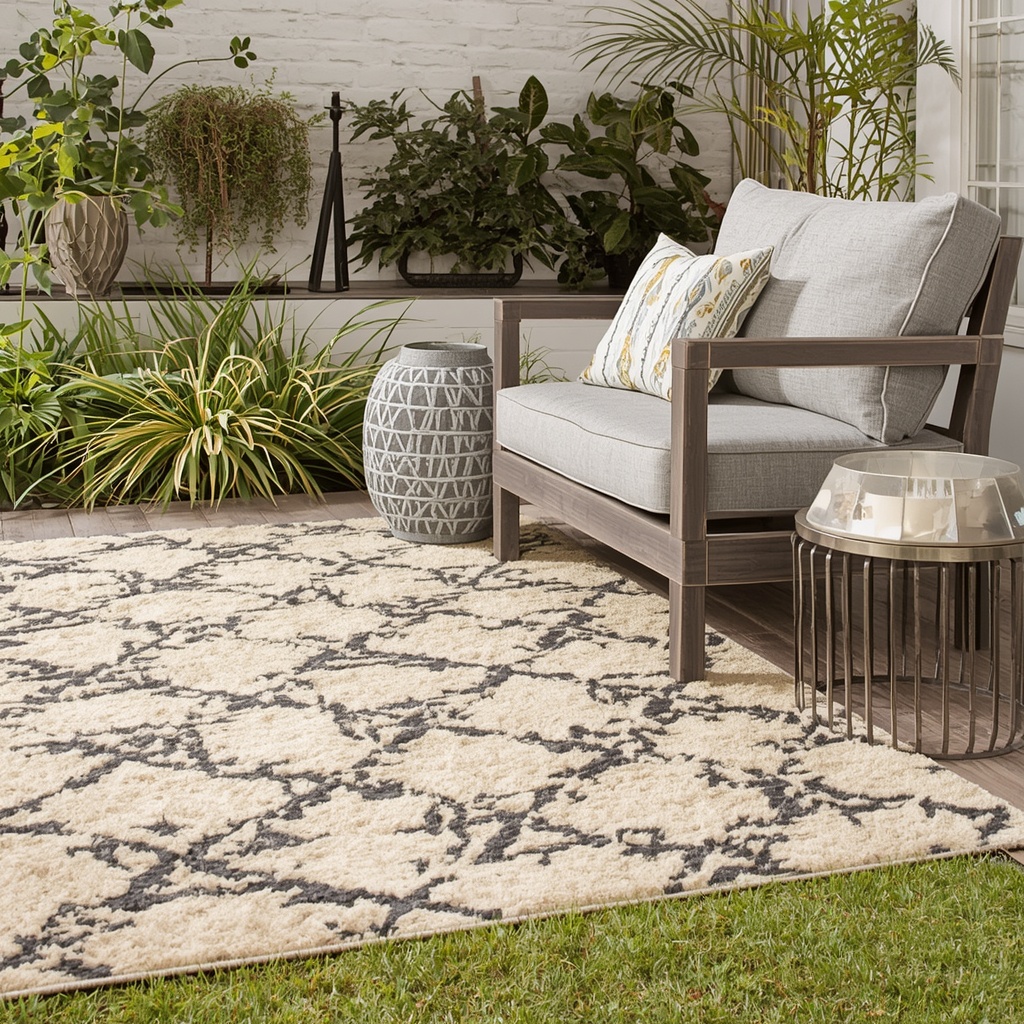
Over-layering patterns without a common color thread can make a patio feel chaotic rather than curated. And forgetting drainage is a subtle but real issue: if your rug sits over concrete or decking without gaps, standing water after storms can get trapped and cause staining or odor. Choosing a flat-weave, quick-dry rug solves most of this automatically.
Quick Reference: Outdoor Rug Shopping Checklist
| Consideration | What to Look For |
|---|---|
| Material | Polypropylene or recycled PET for full sun/rain exposure |
| UV Resistance | Look for “fade-resistant” or “UV-stabilized” labeling |
| Size | Rug extends past furniture legs; 8×10 minimum for a full seating set |
| Drainage | Flat weave, quick-dry construction over covered patterns |
| Cleaning | Hose-washable, mildew-resistant, colorfast |
| Style | Undertone matched to hardscape, not just furniture |
Bringing It All Together
An outdoor rug is a small line item on a patio budget that delivers an outsized visual return. It’s the difference between a backyard that functions and one that feels like a genuine extension of your home — an al fresco living room people actually want to linger in.

Start with the right material for your climate, size it generously, and build your color story around your hardscape rather than your furniture alone. Keep up a light maintenance routine, and a good outdoor rug will easily outlast several seasons of dinners, movie nights, and lazy Sunday mornings spent right where the indoors meets the outdoors.
For further reading on materials and durability ratings, the Outdoor Furniture and Rug Care guide from the Better Business Bureau’s consumer resources and manufacturer care labels remain the most reliable sources — always check the specific fiber content and care instructions listed by your rug’s manufacturer before deep cleaning.