
Walk into any showroom today and you’ll notice something that would have made a decorator wince a decade ago: brushed gold faucets sitting beside matte black cabinet pulls, chrome shower systems paired with brass towel bars. Mixed metals have officially graduated from design “don’t” to design “do,” and for good reason. Done well, it adds depth, personality, and a collected-over-time feel that an all-matching kitchen or bath simply can’t replicate.
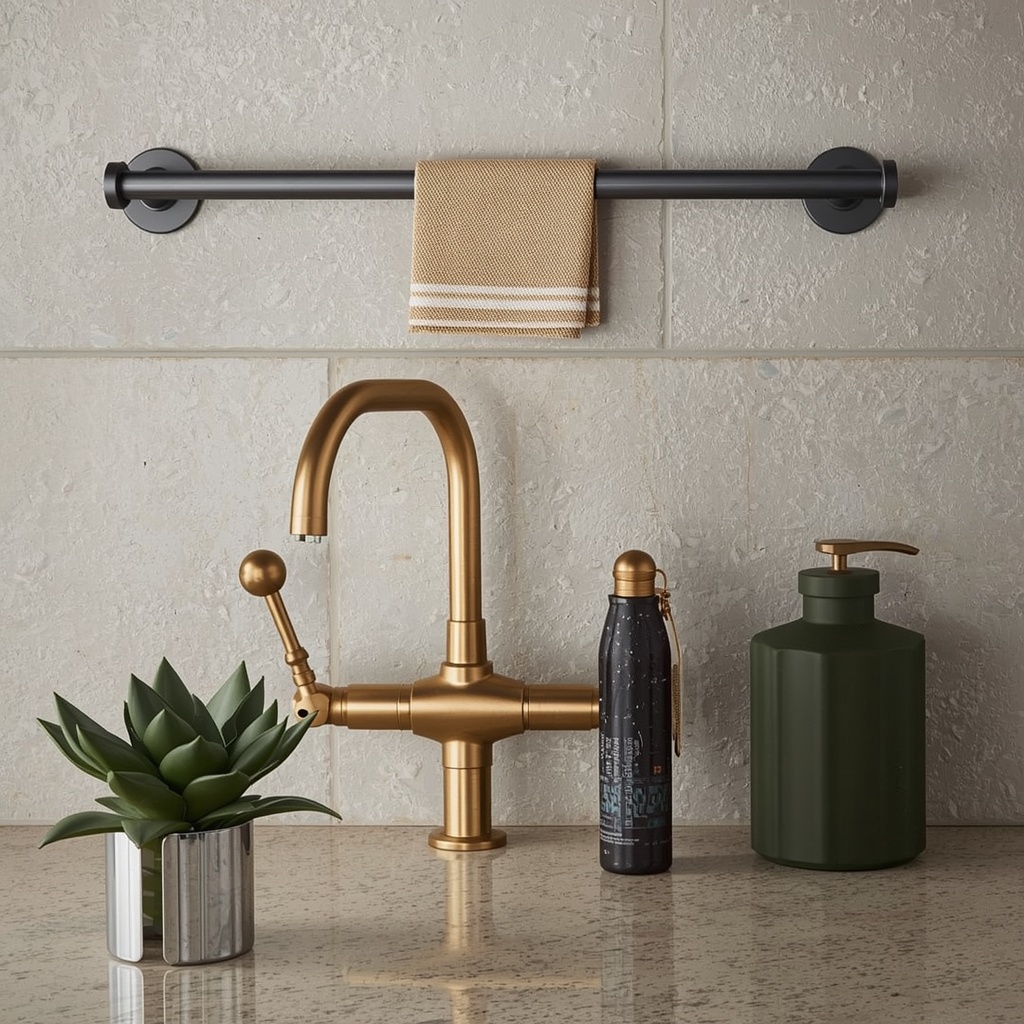
But mixing metals is a little like seasoning a dish — a pinch too much of one element and the whole thing feels off. As an interior designer who works with US homeowners on kitchens and baths every week, I can tell you the difference between a mixed-metal space that looks intentional and one that looks like a hardware store display isn’t luck. It’s a formula. Let’s break it down.
Why Mixed Metals Work (When Done Right)
Metal finishes function the same way accent colors do in a room. A single dominant metal keeps a space safe but sometimes flat, while a thoughtful mix introduces visual rhythm — your eye moves around the room instead of settling on one note. Mixed metals also solve a very practical problem: appliances, plumbing, and lighting rarely all come in a single finish, so allowing intentional variation actually reduces stress during a renovation rather than adding to it.
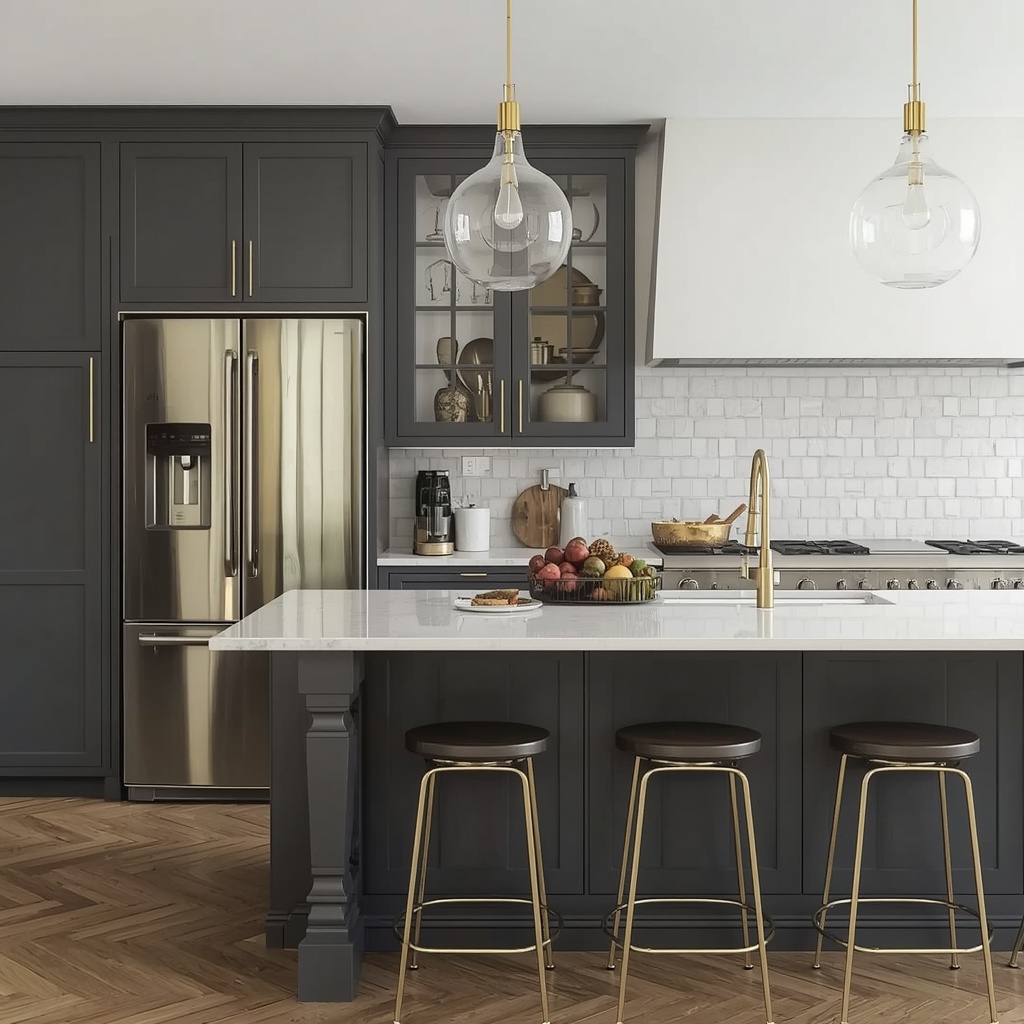
There’s also a functional argument. Matte black hardware hides fingerprints better than polished chrome, while brushed nickel resists water spots more forgivingly than unlacquered brass. Choosing finishes by room function first, then layering in aesthetics, tends to produce spaces that hold up beautifully over years of daily use.
The 60-30-10 Rule for Metal Finishes
If you remember one framework from this article, make it this one. Borrowed from color theory, the 60-30-10 rule keeps a mixed-metal room from feeling chaotic:
| Proportion | Role | Example |
|---|---|---|
| 60% | Dominant metal | Cabinet hardware, larger fixtures |
| 30% | Secondary metal | Faucet, lighting fixtures |
| 10% | Accent metal | Small hardware, decor, mirror frames |
Think of the dominant metal as your “quiet” finish — the one repeated most often so the eye has a resting point. The secondary metal shows up in a smaller but still noticeable way, and the accent metal is your moment of surprise: a single statement piece, not a repeated element.
“The rooms that feel most curated are rarely the ones with the most metals — they’re the ones with the clearest hierarchy between them.” That’s the principle I return to with every client: pick a lead, a support, and a spark, and resist the urge to give all three equal weight.
Understanding Warm vs. Cool Metal Undertones
Before you start combining finishes, it helps to sort them by temperature. This single step prevents most mixed-metal mistakes before they happen.
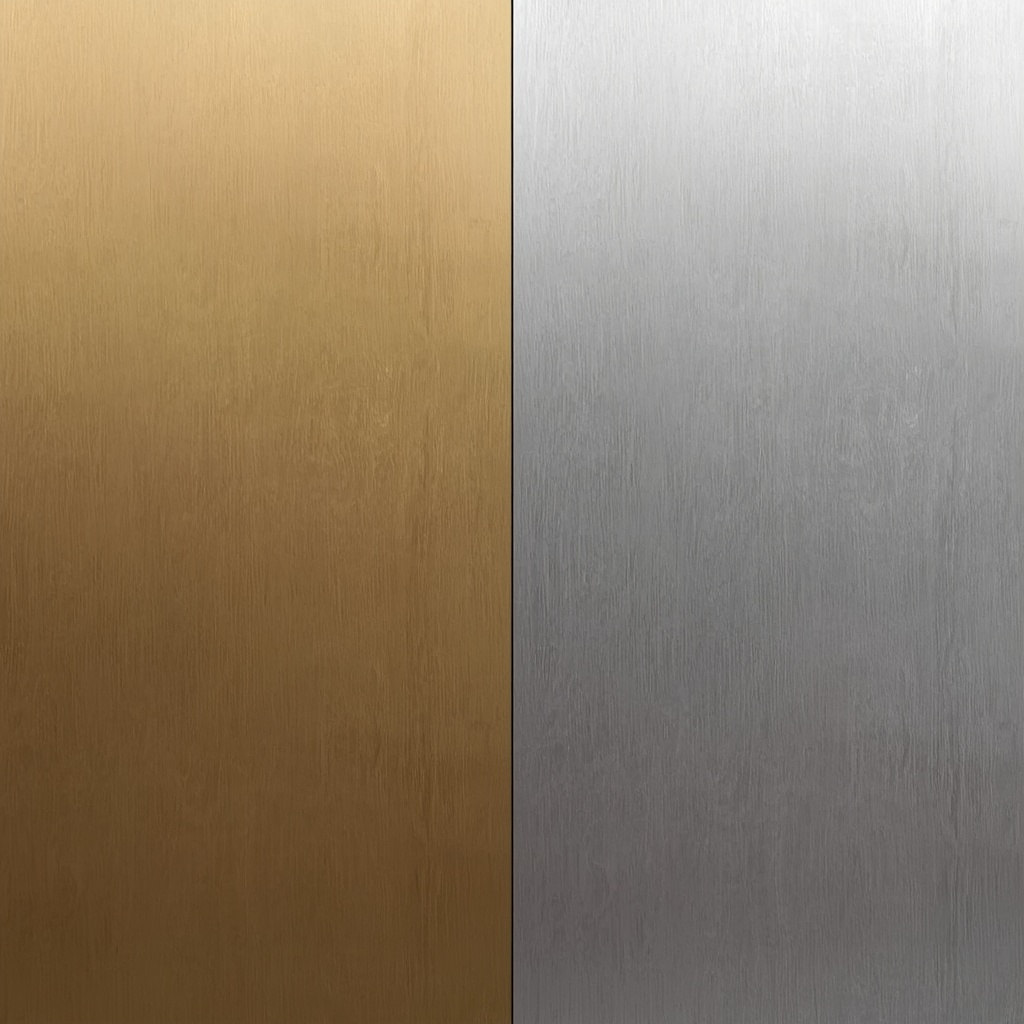
Warm metals:
- Brass (polished or unlacquered)
- Brushed gold
- Copper
- Bronze
- Rose gold
Cool metals:
- Chrome
- Stainless steel
- Nickel (polished or brushed)
- Pewter
Neutral, flexible metals:
- Matte black
- Oil-rubbed bronze (leans warm but reads as neutral)
- Gunmetal
A helpful shortcut: pair one warm metal with one cool metal, and let a neutral like matte black act as the connective tissue between them. This is why matte black hardware has become the design world’s favorite “peacemaker” finish — it makes almost any warm-cool combination feel deliberate.
Best Metal Combinations for the Kitchen
Kitchens tend to have more visible metal surfaces than any other room — cabinet hardware, faucet, lighting, appliances, and often open shelving brackets. That’s a lot of opportunity, but also a lot of room for error if finishes aren’t coordinated.
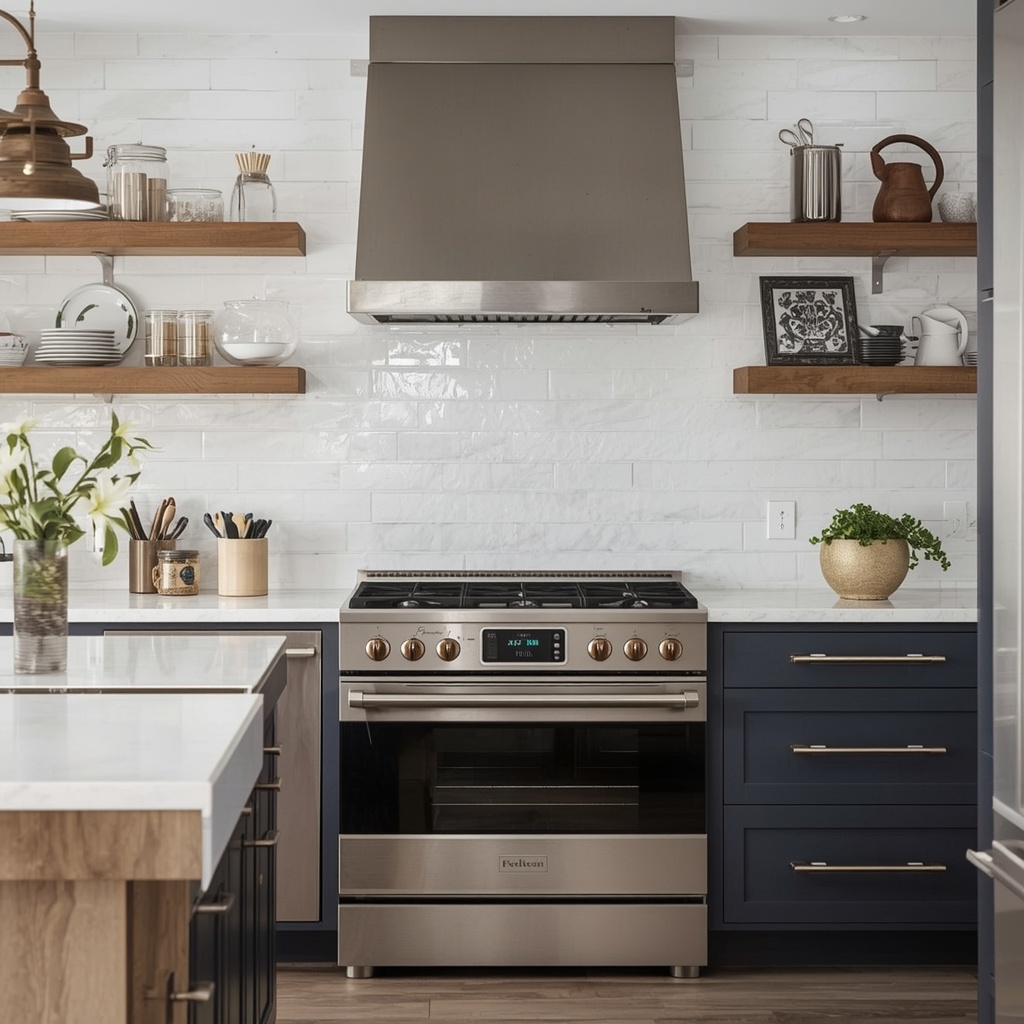
Here are combinations that consistently work in real US kitchens, from builder-grade renovations to high-end custom builds:
- Matte black + brushed brass — A modern-industrial pairing that works especially well with white or navy cabinetry.
- Brushed nickel + oil-rubbed bronze — A softer, more traditional combination suited to farmhouse and transitional kitchens.
- Stainless steel appliances + matte black hardware — Arguably the most forgiving combination for resale value, since stainless remains the most common US appliance finish.
- Polished chrome + unlacquered brass — A classic pairing for kitchens leaning into an English or coastal aesthetic, with brass developing a lived-in patina over time.
<div style=”border-left: 4px solid #b08d57; padding: 12px 16px; background: #faf7f2; margin: 20px 0;”> <strong>Pro Tip:</strong> Match your faucet finish to your lighting fixtures first, then let cabinet hardware follow. Faucets and pendant lights sit at eye level and anchor the room visually, so coordinating those two first makes the rest of the plan fall into place faster. </div>
Appliances deserve a special note here. Because replacing a refrigerator or range is a far bigger investment than swapping a faucet, treat your appliance finish as the fixed point and build your metal palette around it, not the other way around.
Best Metal Combinations for the Bathroom
Bathrooms offer a slightly more controlled environment for mixed metals since there are typically fewer large-scale metal surfaces — faucet, showerhead, towel bar, mirror frame, and lighting. That makes precision even more important, since each choice carries more visual weight.
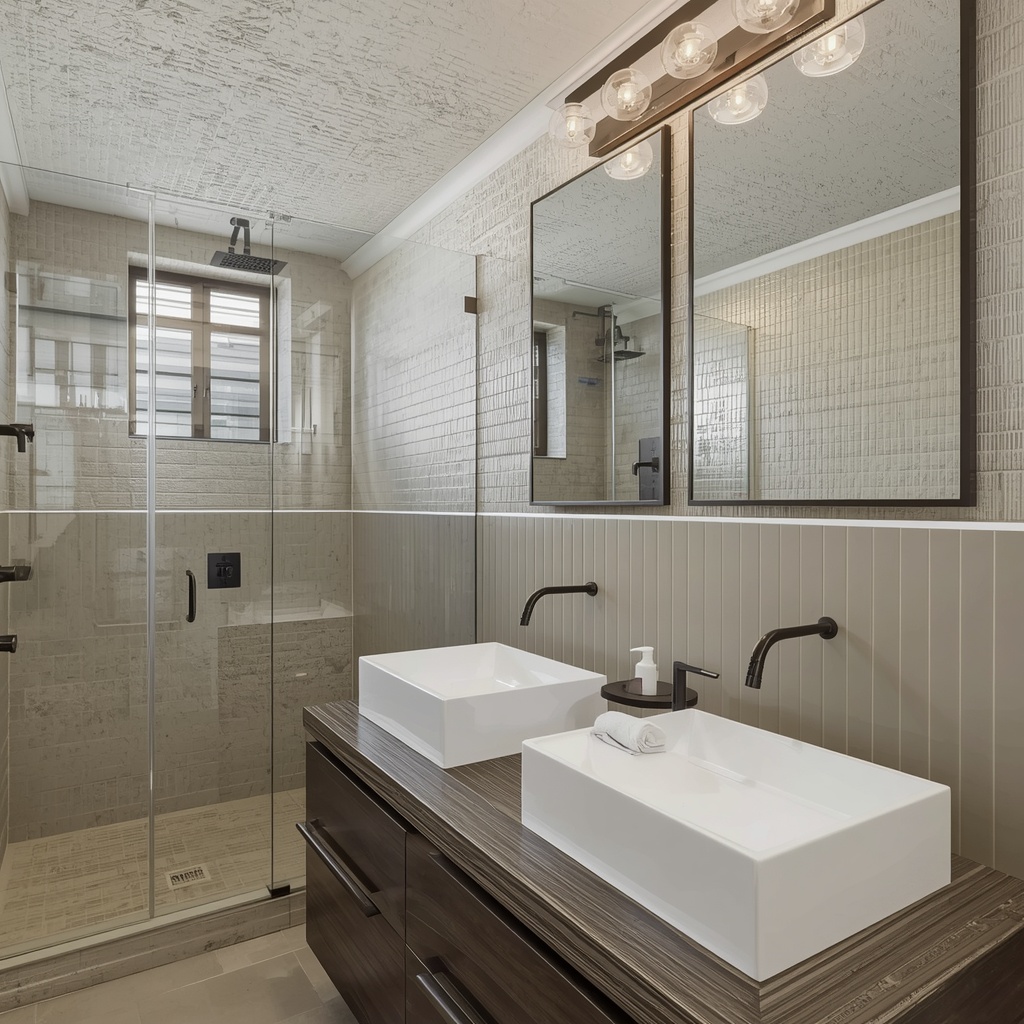
| Bathroom Style | Dominant Metal | Secondary Metal | Accent Metal |
|---|---|---|---|
| Modern minimalist | Matte black | Brushed nickel | Polished chrome |
| Warm transitional | Brushed gold | Matte black | Polished nickel |
| Coastal / relaxed | Polished nickel | Unlacquered brass | Chrome |
| Traditional | Oil-rubbed bronze | Brushed nickel | Aged brass |
A common question I get from homeowners: does the shower system have to match the vanity faucet? The honest answer is no, but they should belong to the same “temperature family.” A cool-toned chrome shower can absolutely coexist with a warm brushed-gold vanity faucet, especially if a neutral finish like matte black shows up in both spaces to tie them together — think a black-framed mirror echoing a black shower door frame.
Quick bathroom mixing checklist:
- Choose your shower system finish first (it’s the most expensive to change later)
- Select a vanity faucet in a complementary temperature
- Use cabinet and drawer hardware as your neutral connector
- Save the boldest finish for a single low-cost item, like a towel ring or light fixture
Common Mixed-Metal Mistakes to Avoid
Even confident renovators trip up here, so it’s worth naming the pitfalls directly.
Using too many metals at once. Three finishes is the practical ceiling for most kitchens and baths. Beyond that, a room stops feeling curated and starts feeling accidental.
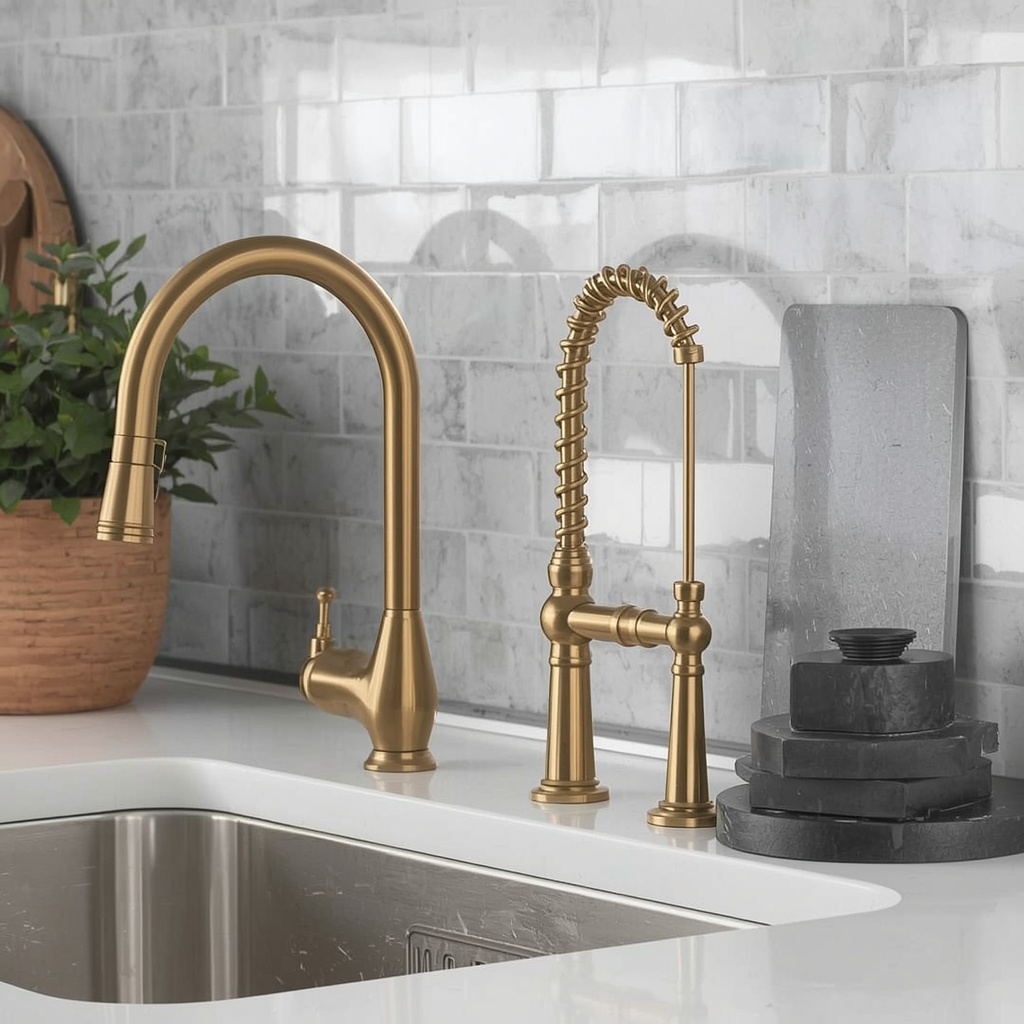
Ignoring sheen alongside color. A polished brass and a brushed brass are technically the “same” metal but read as two different finishes. Mixing sheens unintentionally is one of the most overlooked causes of a mismatched room.
Forgetting door and drawer hinges. Homeowners often coordinate faucets and hardware but forget that hinges are visible metal too, especially on glass-front or open cabinetry.
Letting trend override function. Unlacquered brass develops a beautiful patina over time, but it requires more maintenance than a PVD (physical vapor deposition) finish. If low maintenance matters more to your household than the aged look, choose a lacquered or PVD brass instead, which resists tarnishing and water spots.
A Simple Room-by-Room Planning Table
Use this as a starting worksheet before you order a single fixture:
| Item | Finish Decision | Notes |
|---|---|---|
| Faucet | Choose first in kitchen; second in bath | |
| Cabinet hardware | Should repeat most often (60% rule) | |
| Lighting | Coordinate with faucet finish | |
| Appliances | Treat as fixed point if already owned | |
| Mirror/decor frames | Good spot for accent metal | |
| Door hinges | Easy to forget, easy to fix |
Filling this out room by room, before browsing, keeps impulse purchases from derailing an otherwise well-planned palette.
Frequently Asked Questions
Do all the metals in my house need to match? No. It’s reasonable, and common, for a kitchen and a powder room to have entirely different metal palettes, since they’re rarely seen together. Within a single open-concept space, however, keep finishes consistent for visual flow.
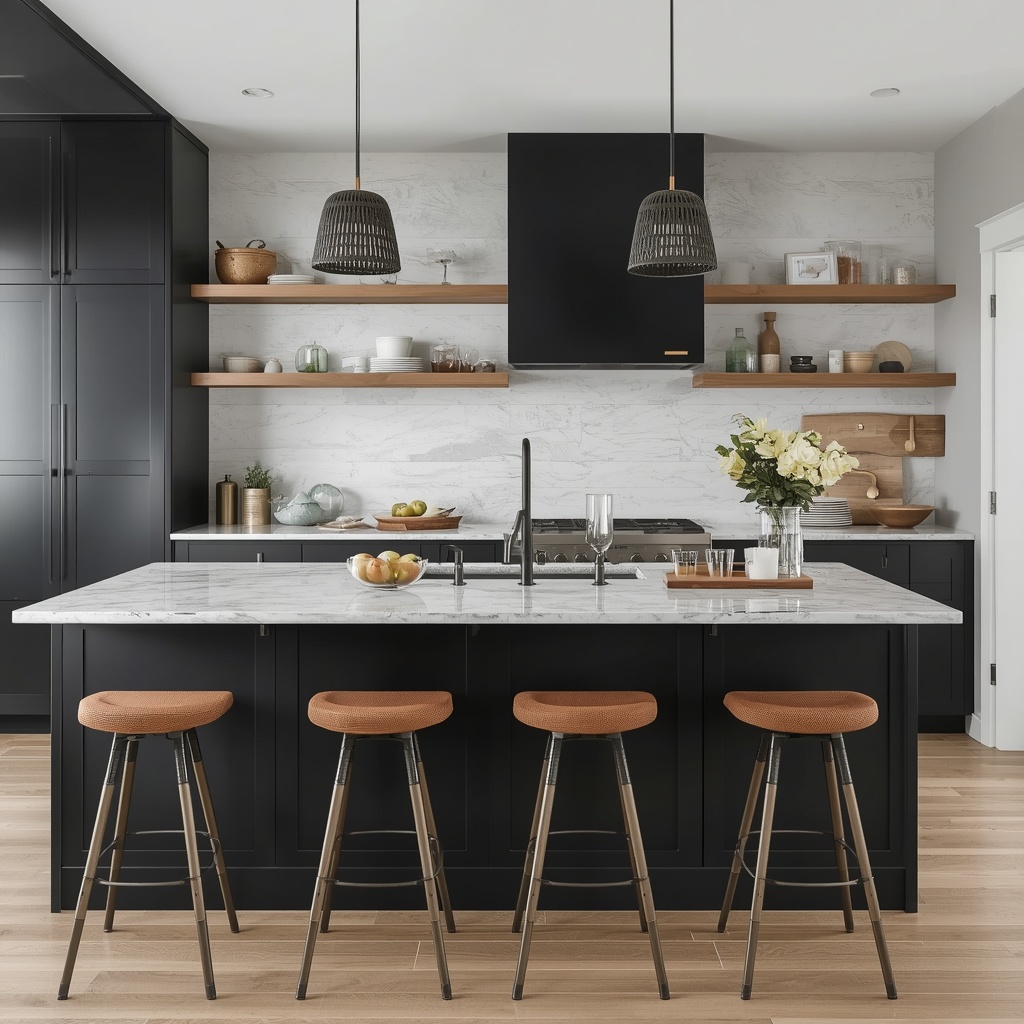
Is mixing metals still in style for 2026, or is it already fading? Mixed metals have moved from trend to design fundamental, similar to layering textures or mixing patterns in textiles. The specific finishes in fashion evolve — matte black surged over the last several years, warm brass and gold are currently rising again — but the underlying principle of intentional variation has staying power.
What’s the most resale-friendly metal combination? Brushed nickel or stainless steel as the dominant finish, paired with matte black accents, tends to appeal to the widest range of buyers in the US market while still feeling current.
Can I mix metals on a budget? Yes. Because hardware and small fixtures cost far less than plumbing fixtures or appliances, budget-conscious homeowners can achieve a mixed-metal look primarily through cabinet pulls, light fixtures, and mirror frames while keeping the faucet and appliance finishes simple.
Bringing It All Together
Mixing metals isn’t about breaking rules for the sake of it — it’s about applying a different, slightly more advanced rule than “match everything.” Start with the 60-30-10 proportion, sort your finishes by warm and cool undertone, and let a neutral like matte black or oil-rubbed bronze do the quiet work of tying the room together. Choose your most expensive or hardest-to-replace item first, whether that’s a shower system or an appliance suite, and build outward from there.
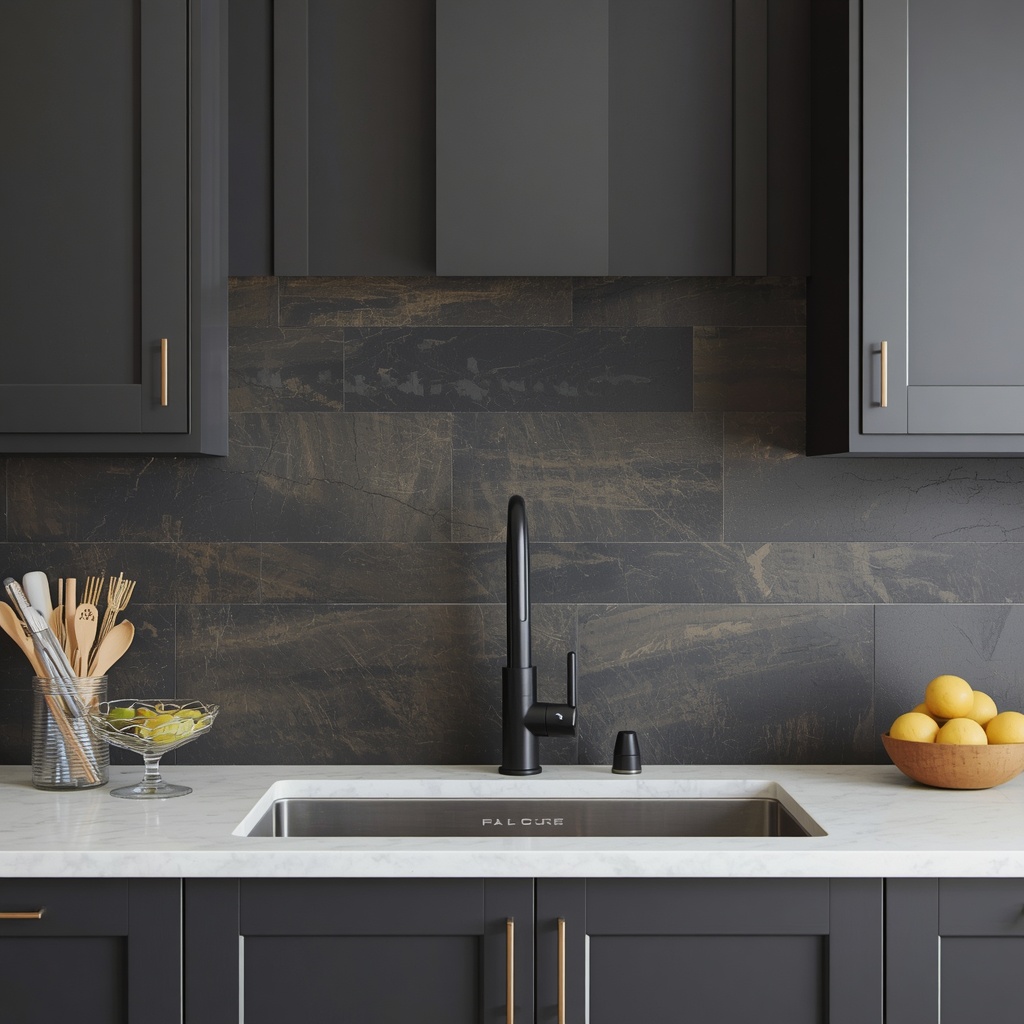
The kitchens and bathrooms that feel the most timeless aren’t the ones with a single uniform finish; they’re the ones where every metal choice looks like it was made on purpose. With a clear hierarchy and a little restraint, that’s a look any homeowner can achieve.