
The most beautiful homes don’t shout — they whisper. Discover the interior design principles that make a space feel genuinely elevated without a celebrity budget.
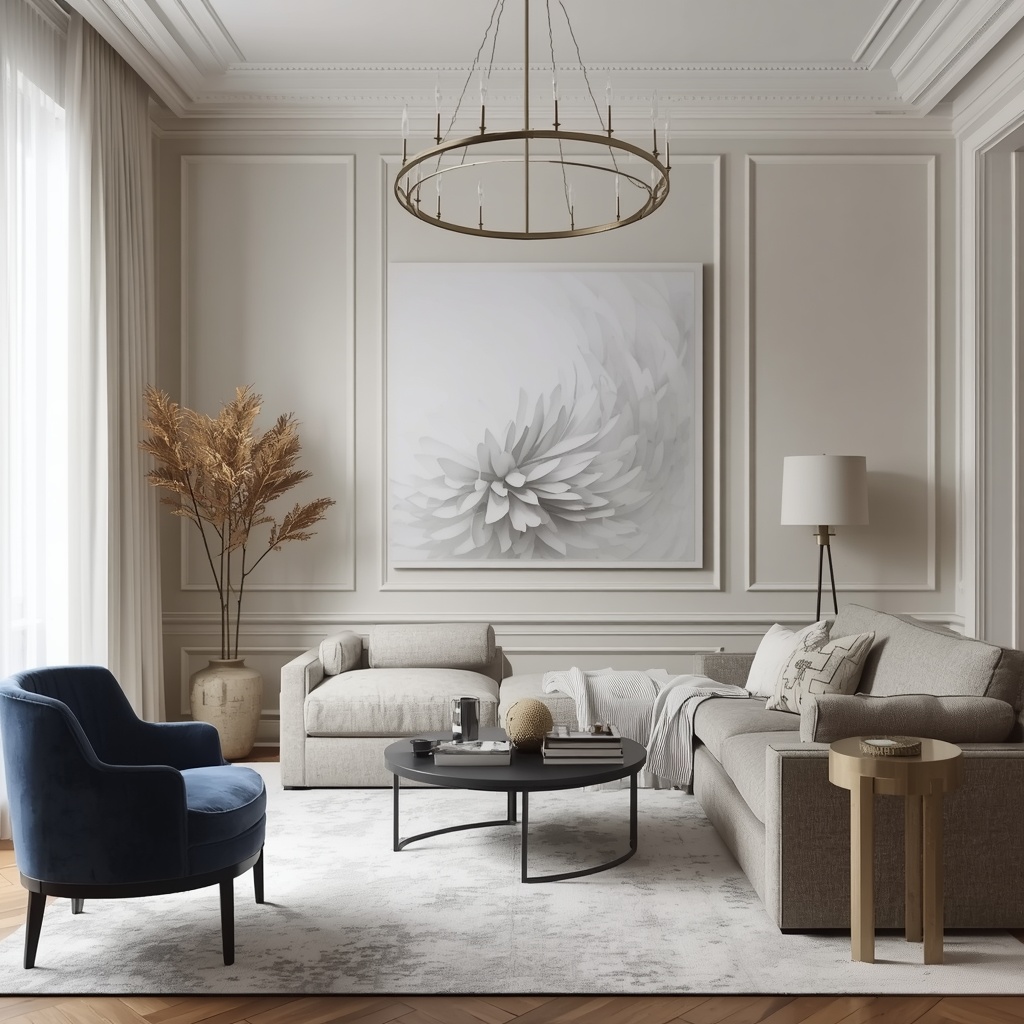
You’ve probably scrolled past those pristine, impossibly calm interiors on Pinterest and wondered: how do people actually live like that? The secret isn’t a six-figure renovation budget or a personal stylist on speed-dial. It’s an approach to design that the fashion world has already mastered — quiet luxury. In home decor, quiet luxury means investing in intentionality over excess. It’s the art of curating a space that feels undeniably refined without a single ostentatious detail giving it away.
As an interior designer who has worked with clients from Brooklyn brownstones to Austin farmhouses, I can tell you with certainty: the homes that stop people in their tracks are almost never the ones stuffed with expensive things. They’re the ones where every element earns its place, materials feel honest and real, and there isn’t a single piece of visual clutter competing for your attention. This guide will walk you through exactly how to achieve that look — room by room, principle by principle — even on a modest budget.
What Is Quiet Luxury in Interior Design?
Quiet luxury is a design philosophy rooted in restraint, quality, and timelessness. It borrows heavily from the old money aesthetic — think the understated elegance of a Connecticut country home versus the maximalist flash of a Vegas penthouse. In interior design terms, it’s characterized by a neutral, tonal color palette, natural materials like linen, marble, solid wood, and brass, and an intentional absence of trend-chasing decor.
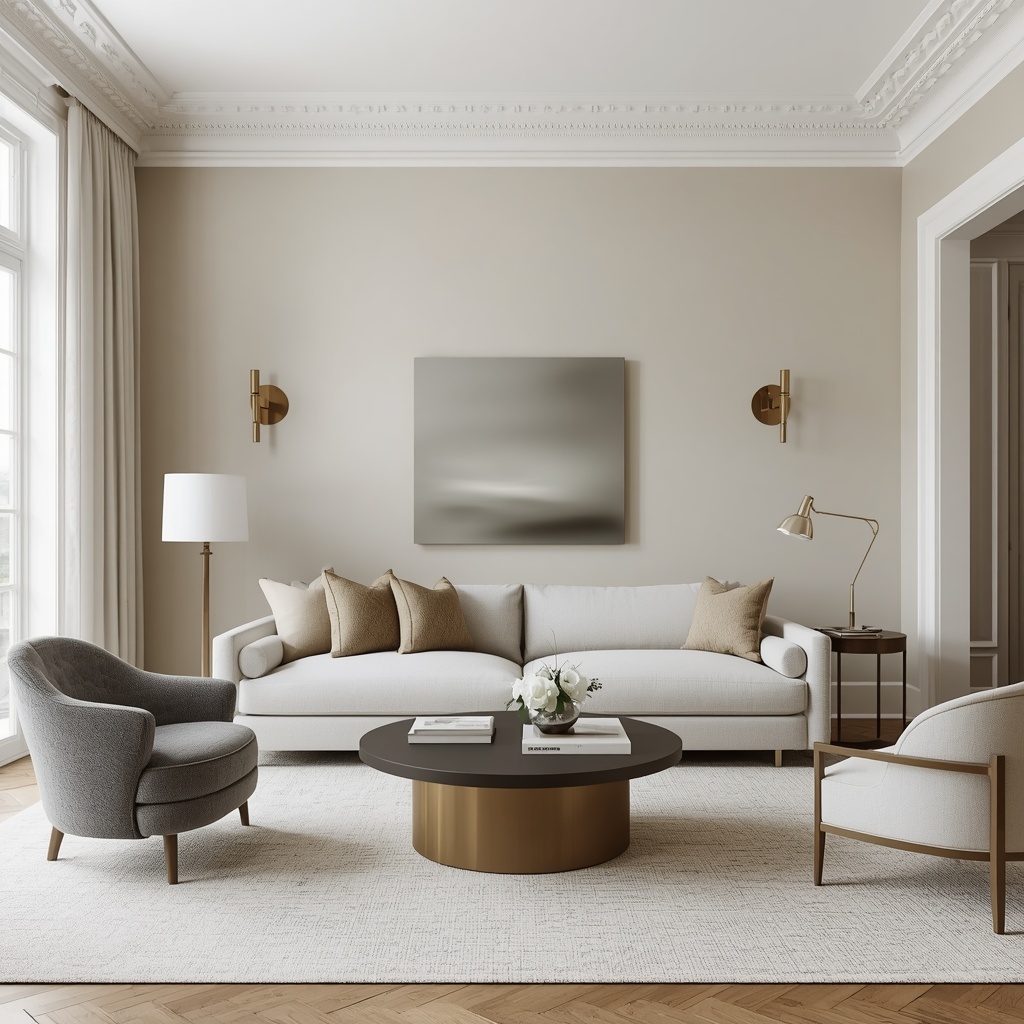
Unlike maximalism or fast-furniture design, quiet luxury prioritizes longevity. Every piece is chosen to last both physically and aesthetically. The goal isn’t to impress — it’s to feel impressive. Organic textures, thoughtful layering, and masterful editing are the core tools. This style also aligns beautifully with sustainable interior design, since buying fewer, better things is inherently more eco-conscious than rotating seasonal decor every three months.
“Elegance is not about being noticed. It’s about being remembered.”— Giorgio Armani
The Quiet Luxury Color Palette
Color is where quiet luxury either lives or dies. The palette is always tonal, always grounded, and almost always warm. We’re talking soft whites, warm greiges, dusty taupes, muted sage, and deep charcoal — never bright primary colors, never trendy millennial pink. The goal is a palette that recedes into the background so that texture, light, and form do the heavy lifting.
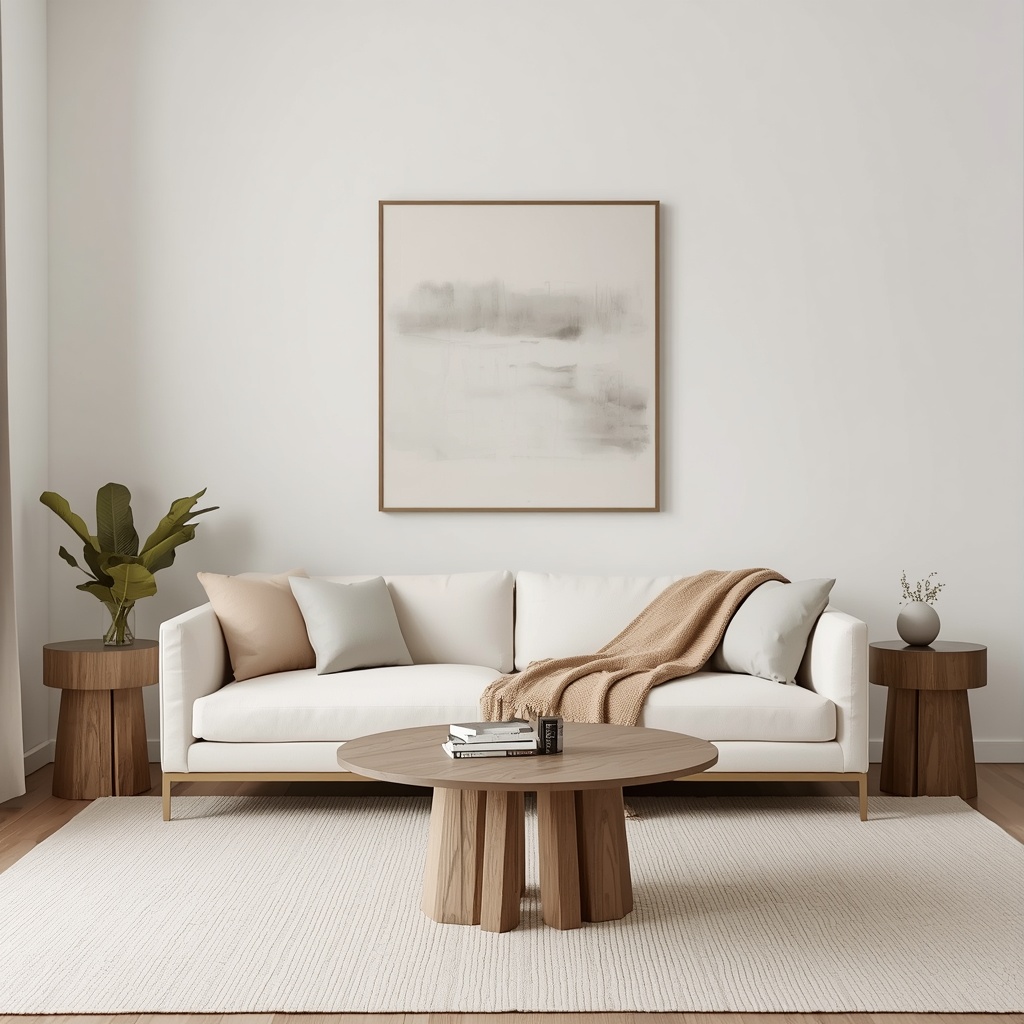
The most powerful trick in quiet luxury color design is monochromatic layering: using multiple shades of the same hue throughout a room so it reads as deeply intentional rather than mismatched. Think a warm white linen sofa against an ecru wall, topped with a cashmere throw in pale camel and accented with raw oak side tables. Every element reads as belonging to the same family.
| Color Category | Examples | Best Used For |
|---|---|---|
| Warm Whites | Alabaster, Bone, Ivory | Walls, large upholstery |
| Warm Neutrals | Greige, Mushroom, Camel | Rugs, throws, pillows |
| Earthy Tones | Rust, Terracotta, Clay | Accent chairs, art, pottery |
| Deep Neutrals | Charcoal, Slate, Navy | Furniture anchors, drapery |
| Muted Botanicals | Sage, Dusty Olive, Eucalyptus | Plants, pillows, art |
Pro Tip
When choosing a wall color, always test it in both natural morning light and evening lamplight before committing. Quiet luxury neutrals can shift dramatically depending on exposure. Benjamin Moore’s White Dove OC-17 and Sherwin-Williams’ Accessible Beige SW 7036 are two industry favorites for warm, elevated neutrals that work in virtually any room.
Natural Materials: The Foundation of Expensive-Looking Spaces
If there’s one thing that separates a truly luxurious home from a “trying too hard” home, it’s the materials. Nothing reads as cheap faster than shiny plastics, hollow-sounding furniture, or paper-thin textiles. Quiet luxury rooms are built on natural, tactile materials that patina beautifully over time and signal authenticity to anyone who enters the space.
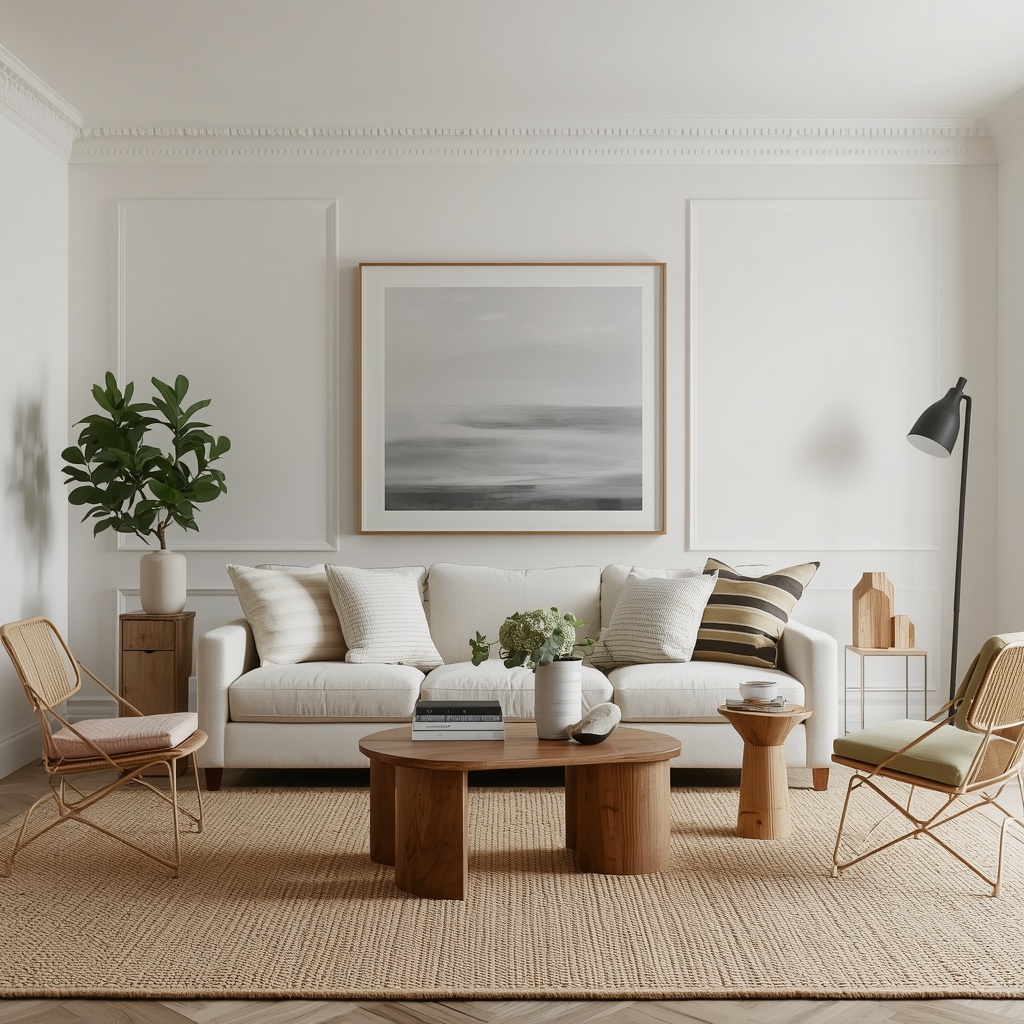
You don’t have to buy a hand-knotted Persian rug or solid marble countertops to achieve this (though I’d never stop you). Strategic investments in natural materials in high-touch areas go a surprisingly long way. Replace a synthetic area rug with a jute or wool blend. Swap out polyester throw pillows for linen or cotton velvet. Choose solid wood furniture over particle board, even if it means buying secondhand. These targeted upgrades elevate everything around them.
- Linen & Cotton: Upholstery, drapery, and bedding — these natural fibers breathe, wrinkle beautifully, and get better with age.
- Solid Wood: Oak, walnut, and ash are the quiet luxury staples. Look for secondhand pieces on Facebook Marketplace to save significantly.
- Stone & Marble: Even a small marble tray or stone coaster signals quality. You don’t need the full countertop installation.
- Brass & Bronze Hardware: Swap out chrome faucets and pulls for unlacquered brass — it develops a gorgeous patina over years of use.
- Wool & Jute Rugs: The texture and warmth of natural fiber rugs anchor a room in a way synthetic versions simply cannot replicate.
- Ceramic & Pottery: Handmade pottery with organic, imperfect glazes reads as artisanal and curated — far more elevated than mass-produced ceramics.
Furniture: Less Is More, But Make It Count
One of the biggest mistakes I see in homes that are trying to feel expensive is furniture overcrowding. Every square inch is occupied, every surface decorated, every corner filled. Quiet luxury operates on a completely different principle: deliberate negative space. A room that breathes is a room that feels expensive. The white space isn’t emptiness — it’s confidence.
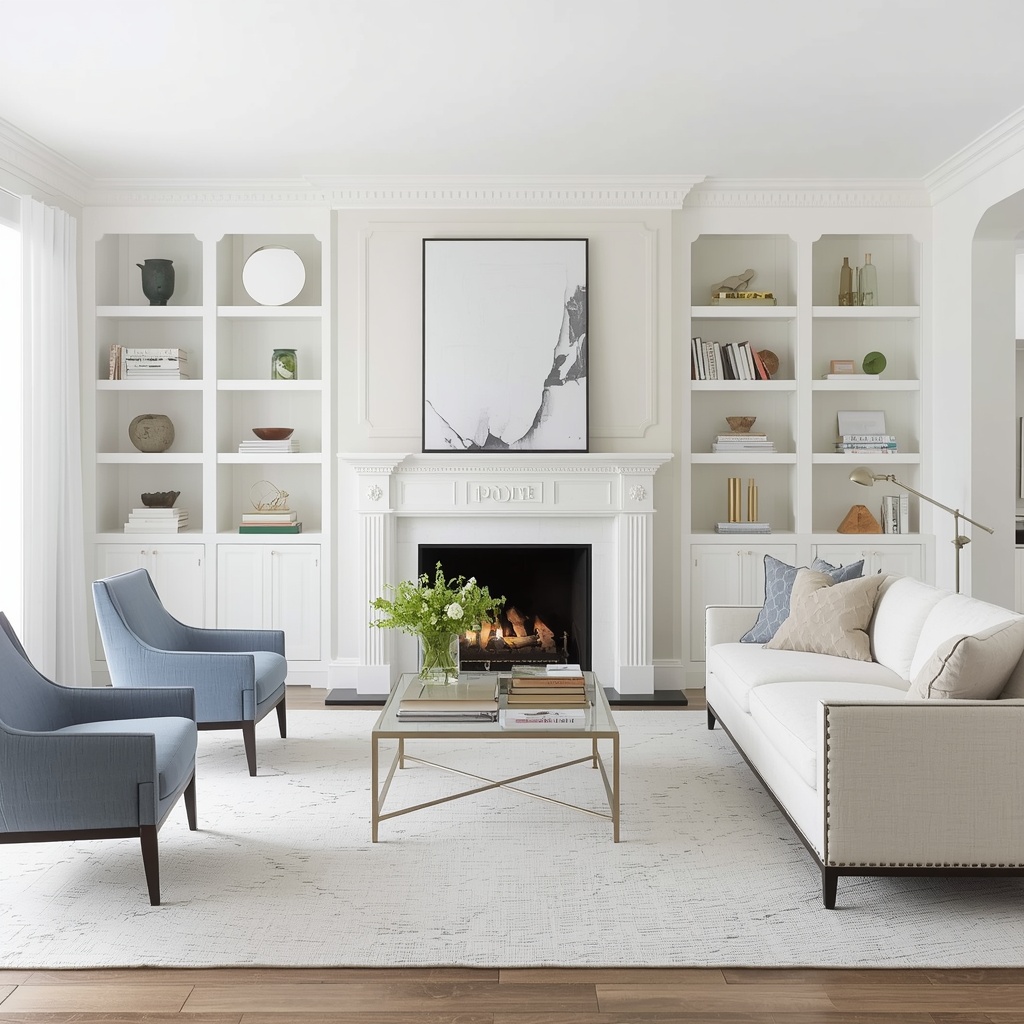
When selecting furniture for a quiet luxury interior, focus on silhouette over ornamentation. Clean lines, subtle curves, and understated profiles almost always outperform carved details, nailhead trim, or overly ornate forms. A simple, well-proportioned linen sofa will age better — visually and physically — than a trendy velvet sectional in a statement color. Also consider scale: oversized furniture in a small room creates visual tension. Opt for appropriately scaled pieces that allow the room to feel spacious even when furnished.
Pro Tip
Legs matter more than people realize. Furniture with exposed legs — whether solid wood, tapered, or metal — makes a room feel lighter and more airy than pieces that go all the way to the floor. If your current sofa has a skirt covering its base, consider having it altered or replaced. This single change can make a room feel 20% more spacious instantly.
Lighting: The Most Underestimated Luxury Upgrade
No single element transforms the perceived value of a home more dramatically than lighting — and no single element is more consistently neglected by American homeowners. Overhead can lights with generic bulbs cast a flat, institutional glow that makes even beautiful furniture look ordinary. Layered lighting — combining ambient, task, and accent sources — creates the warm, dimensional glow that makes high-end hotel lobbies and designer showrooms feel so irresistible.
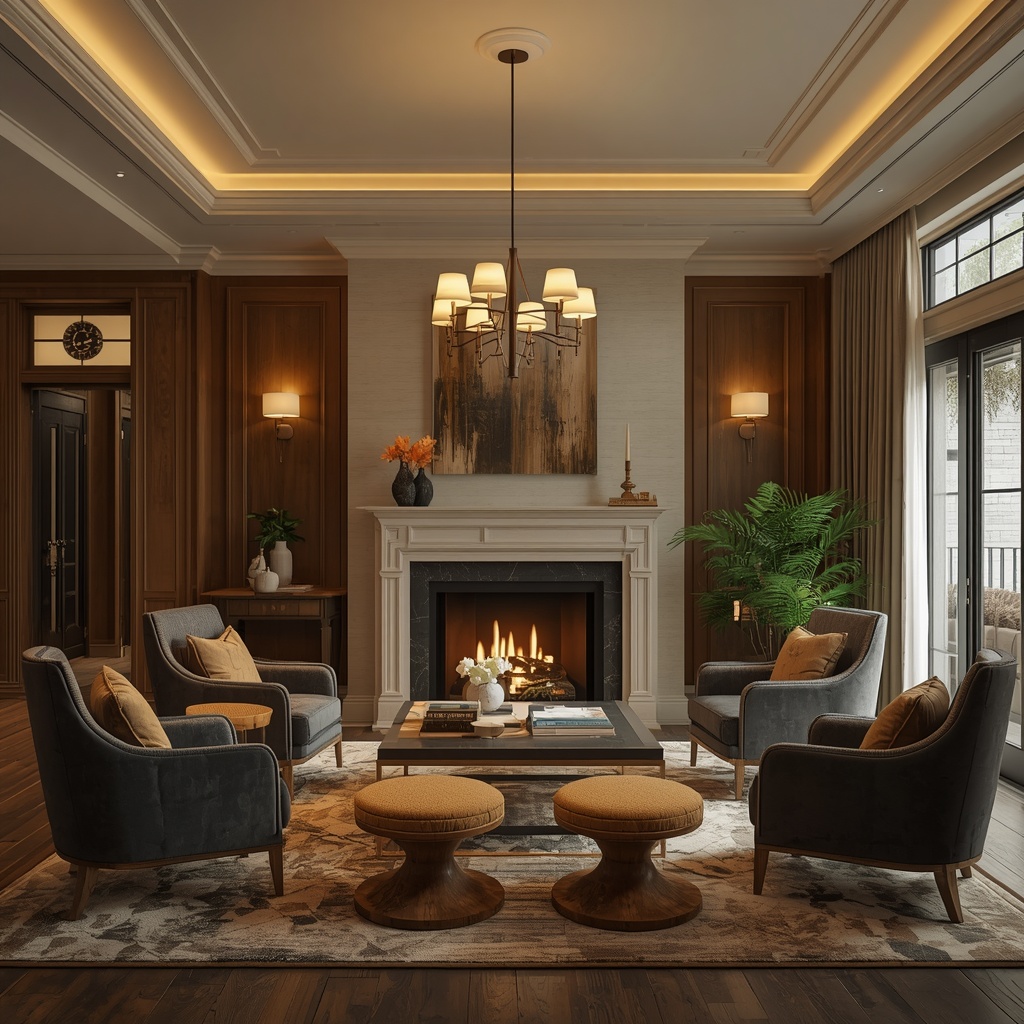
The quiet luxury lighting formula is simple: eliminate harsh overhead lighting as your primary source and replace it with multiple layers at different heights. A floor lamp in the corner, a table lamp on the console, sconces flanking a mirror, and under-cabinet lighting in the kitchen collectively create a quality of light that no recessed can could ever achieve. Warm bulbs (2700K–3000K) are non-negotiable. Use smart dimmers wherever possible so you can shift the mood of the room with a single touch.
| Lighting Type | Function | Quiet Luxury Choice |
|---|---|---|
| Ambient | General room illumination | Chandelier or flush-mount with warm bulbs |
| Task | Focused activity lighting | Articulated table or floor lamp |
| Accent | Highlight architectural features | Wall sconces, picture lights, candles |
| Decorative | Jewelry for the room | Sculptural pendant, organic lamps |
The Art of Thoughtful Editing
Editing is the most powerful and most underused design skill available to homeowners. It costs nothing — and it can transform a cluttered, chaotic space into one that looks like it belongs in an architectural magazine. The principle is simple: remove everything that isn’t earning its place. What remains should be either beautiful, functional, or deeply meaningful. Ideally, all three.
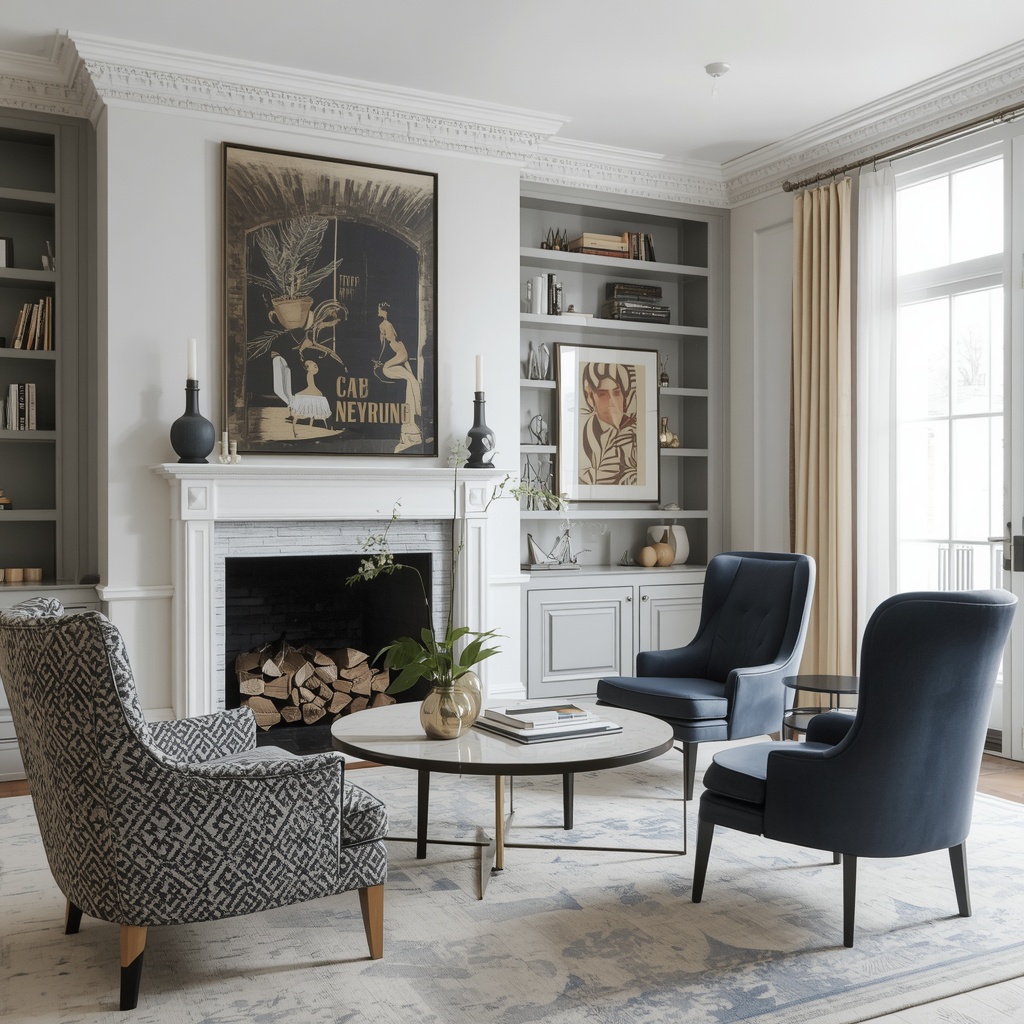
Walk through your home right now with fresh eyes. How many surfaces have accumulated objects by default — things that landed there and never left? Bedside tables stacked with forgotten books, kitchen counters crowded with appliances, shelves lined with objects collected rather than curated. Quiet luxury editing asks you to be ruthless. Clear the surface entirely, then add back only what genuinely belongs. Less is almost always more, but the things you keep should be exceptional.
- 1Clear every surface entirely and start from zero — add back only intentional objects.
- 2Group objects in odd numbers (3 or 5) at varying heights for visual interest.
- 3Contain clutter with beautiful vessels — trays, boxes, baskets — rather than leaving it exposed.
- 4Apply the “one in, one out” rule: adding a new decor item means removing an existing one.
- 5Hide cords, chargers, and technology wherever possible to maintain visual calm.
The Role of Nature & Living Elements
One of the most universally agreed-upon markers of a beautifully designed home is the presence of life — real, living, breathing plants. Not artificial greenery (please), not plastic botanicals, but actual plants that require care and reward you with oxygen, movement, and an organic quality no manufactured object can replicate. Biophilic design, the practice of connecting interior spaces to the natural world, is deeply embedded in quiet luxury aesthetics.
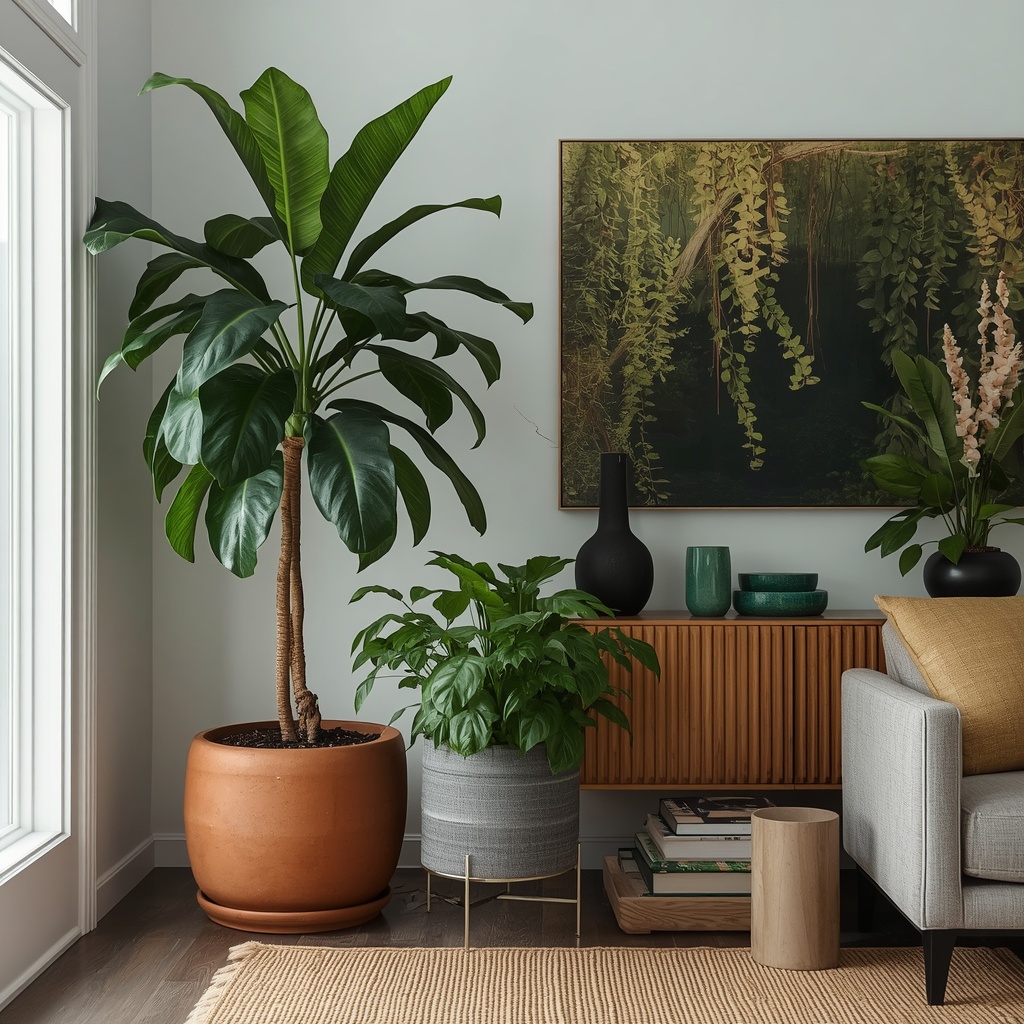
You don’t need a dedicated conservatory or an elaborate indoor garden. A single, sculptural fiddle leaf fig in a matte terracotta pot can anchor a living room corner with more presence than a $2,000 floor lamp. A cluster of trailing pothos on a shelf introduces movement and softness. Fresh flowers — particularly simple stems like tulips, ranunculus, or eucalyptus — on a dining table speak of a home that is genuinely lived in and cared for. These living elements bring a quality of warmth and authenticity that no amount of styling can fake.
Best statement plant
Fiddle Leaf Fig
Fresh florals to rotate
Tulips & Ranunculus
Low-maintenance option
Trailing Pothos
Architectural choice
Olive Tree
Budget Breakdown: Where to Splurge and Where to Save
Quiet luxury doesn’t require a blank check — it requires a smart one. The principle of strategic investment means spending meaningfully on the elements that carry the most visual weight and sensory impact, while being resourceful everywhere else. The sofa you sit on for ten years deserves a larger budget than the throw pillow you’ll replace in two seasons. Here’s how I advise clients to allocate their renovation or redecorating dollars:
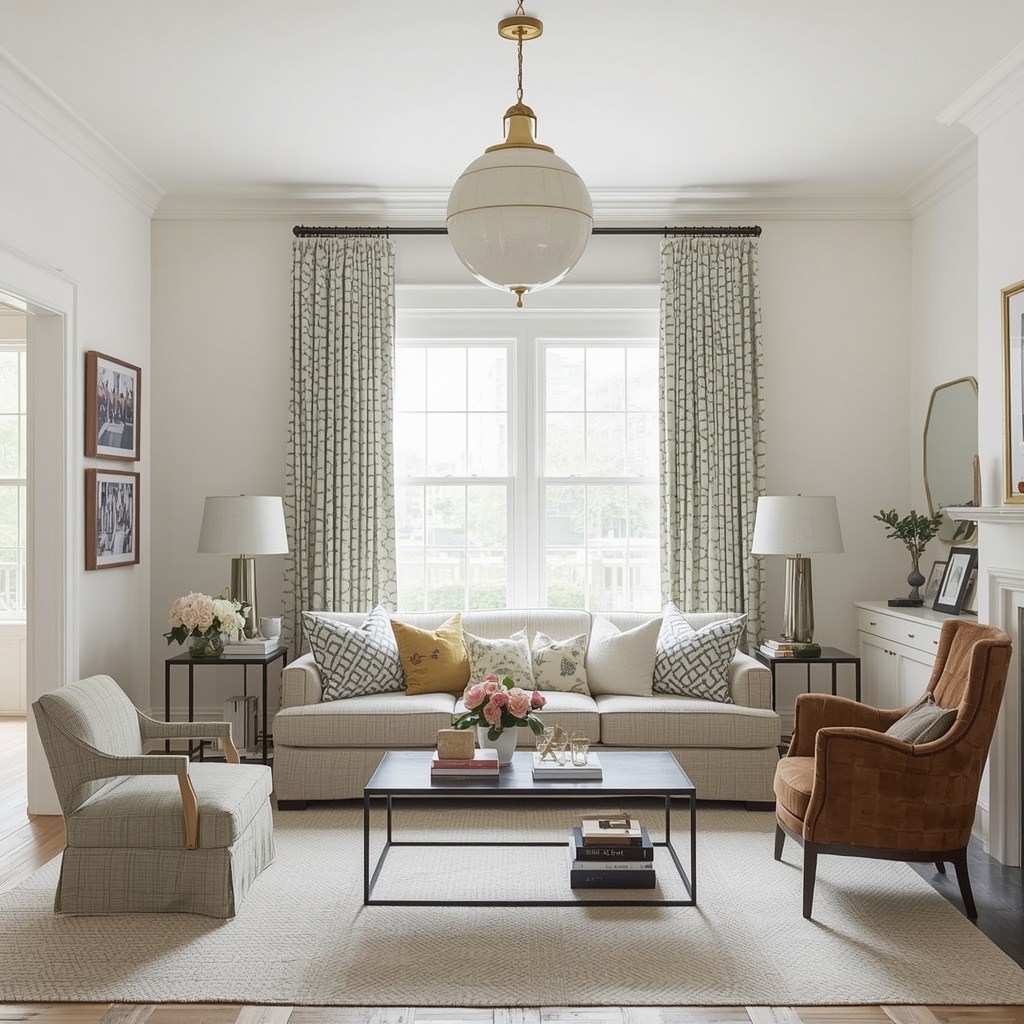
Secondhand shopping is also an enormously underutilized resource in the pursuit of quiet luxury. High-quality, solid wood furniture from 20 or 30 years ago is often far superior in construction to contemporary options at the same price point. Platforms like Chairish, 1stDibs, and Facebook Marketplace are treasure troves for exactly the kind of pieces quiet luxury demands: classic silhouettes, real materials, and genuine history.
Quality sofa / upholstered seatingSPLURGE$1,200–$3,500
Natural fiber area rugSPLURGE$400–$1,200
Window treatments (linen drapery)SPLURGE$300–$800
Accent chairs & side tablesSAVE$80–$300 (thrift & resale)
Throw pillows & blanketsSAVE$30–$120 per piece
Decorative objects & potterySAVE$15–$80 (Etsy, antique stores)
Room-by-Room Quiet Luxury Checklist
Now that we’ve covered the foundational principles, here’s a practical room-by-room checklist you can use as a roadmap. Bookmark this page and tackle one room at a time — quiet luxury isn’t a weekend project, it’s a deliberate, ongoing refinement. Think of it as slowly tuning an instrument until the whole house plays in harmony.
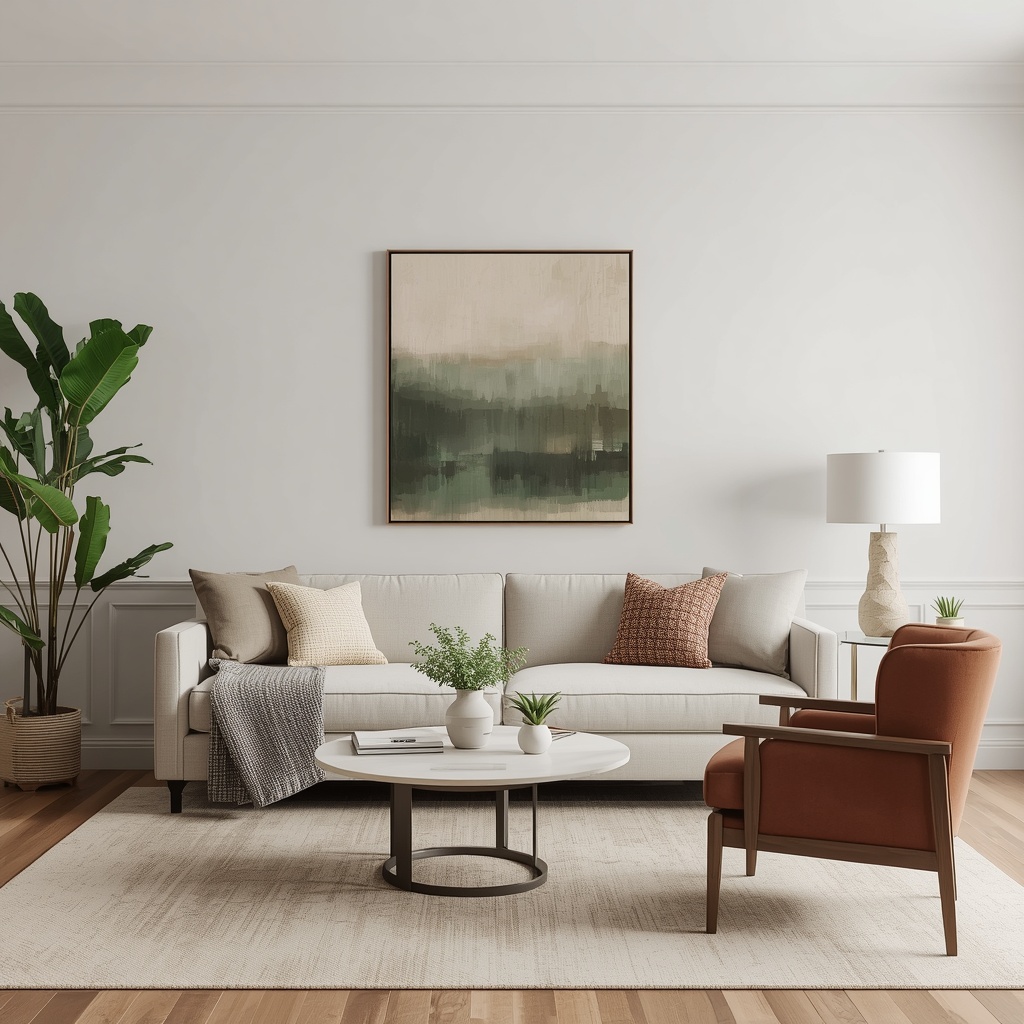
Remember: consistency across rooms is what creates that effortlessly elevated whole-home feel. When your living room whispers quiet luxury and your bedroom shouts fast-furniture, the dissonance is immediately felt — even if a guest can’t articulate why. A cohesive thread of color, material, and energy running through your home is what separates good design from genuinely great design.
- Living Room: Neutral linen sofa, natural fiber rug, dimmable lighting, one large plant, edited shelving.
- Bedroom: High-thread-count cotton or linen bedding, minimal nightstands, blackout linen curtains, no visible cords.
- Kitchen: Clear countertops, quality cutting board displayed, fresh herbs on the windowsill, unlacquered brass hardware.
- Bathroom: Rolled linen towels, stone or marble tray, quality hand soap decanted into glass, a single candle.
- Entryway: A statement mirror, a beautiful hook or console, fresh flowers or a plant — first impressions are everything.
“The details are not the details. They make the design.”— Charles Eames
Quiet luxury at home isn’t a destination you arrive at — it’s a sensibility you develop. With each intentional choice, each edited surface, each natural material you introduce, your home inches closer to that elusive quality that so many people try to buy and so few actually achieve: effortless elegance. The most expensive-looking homes are almost never the most expensive homes. They’re the most considered ones.
Start small. Paint one room in a warm, enveloping neutral. Replace your synthetic rug with a jute or wool option. Invest in a single beautiful lamp. Edit one surface down to three objects. You’ll be amazed how quickly the quiet luxury philosophy takes hold — and how good it feels to live in a home that finally feels like you.
Ready to Start Your Quiet Luxury Journey?
Save this guide as your personal roadmap and revisit it room by room. Great design is a practice, not a project — and every intentional choice brings you closer to the home you deserve.