
Textured Bedding for Restful Retreats: Transform Your Bedroom Into a Cozy Sanctuary
By a Certified Interior Designer.
Textured bedding cozy bedroom ideas waffle weave duvet linen bedding bedroom sanctuary layered bedding tactile comfort sleep environment.

Walk into any beautifully designed bedroom and the first thing you notice — before the wall color, before the furniture — is the bed. Specifically, how it feels with your eyes. That visual softness, that layered depth, that irresistible invitation to dive in — it almost always comes from one thing: textured bedding.
As an interior designer who has helped hundreds of American homeowners transform their bedrooms into true restful retreats, I can tell you that texture is the most underutilized tool in the bedroom design toolkit. People obsess over thread count (which matters far less than you think), but overlook the magic of a chunky knit throw draped across a nubby linen duvet layered over smooth percale sheets. That combination of tactile contrasts is what makes a bed look like it belongs in a boutique hotel — or a layout from Architectural Digest.
Whether you’re starting from scratch or simply looking to refresh your current setup, this guide will walk you through everything you need to know about choosing, layering, and styling textured bedding for a bedroom that truly restores you.
Why texture matters more than thread count
The home bedding industry has conditioned American consumers to chase high thread counts as the ultimate marker of quality sleep. But here’s what the research — and my years of experience — actually shows: a 300-thread-count linen sheet can feel more luxurious than a 1,000-thread-count polyester blend, simply because of its texture and breathability.
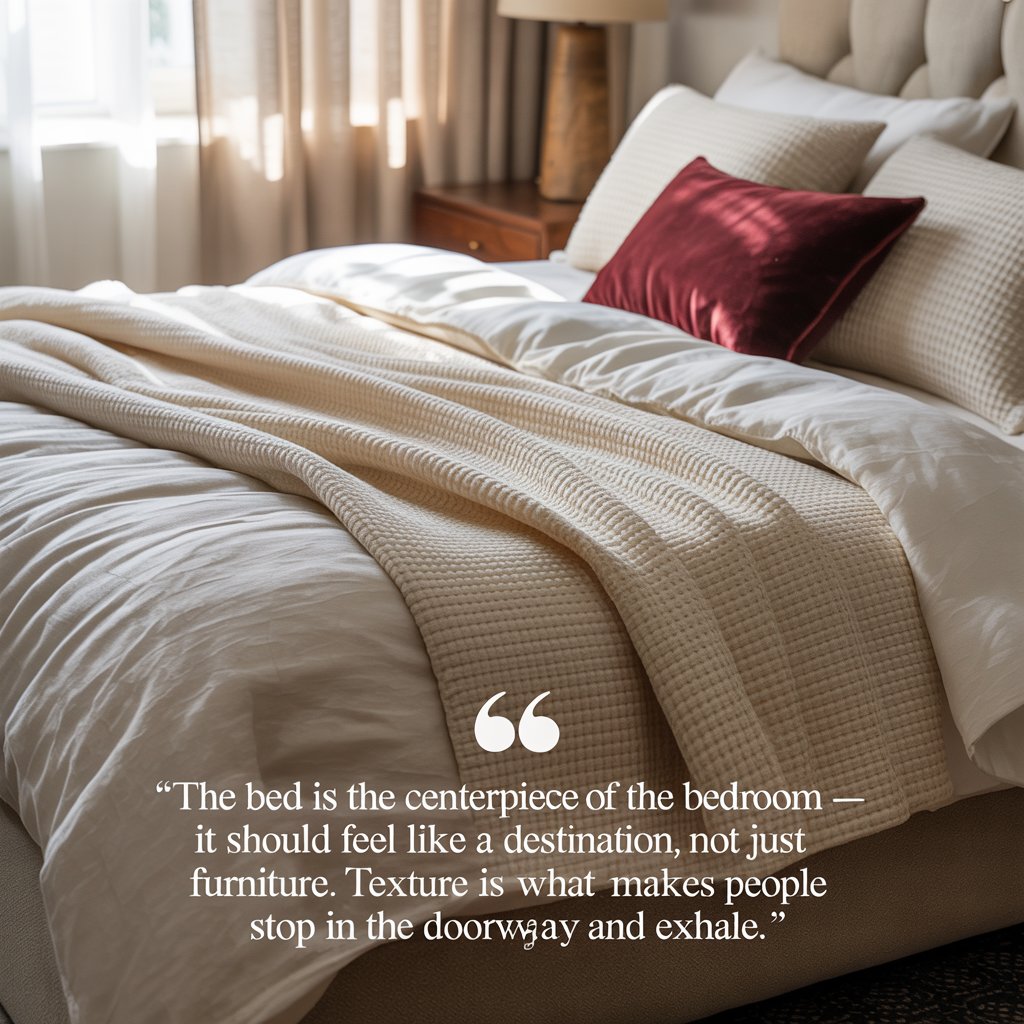
Texture engages your senses on a deeper level. When you slide into a bed layered with a waffle weave coverlet, a matelassé duvet cover, and a velvet throw pillow, your nervous system receives a rich array of tactile signals that psychologists link to comfort, warmth, and security. This sensory richness isn’t accidental — it’s the design principle known as tactile layering, and it’s the cornerstone of every restful retreat I’ve designed.
“The bed is the centerpiece of the bedroom — it should feel like a destination, not just furniture. Texture is what makes people stop in the doorway and exhale.”— Interior design principle embraced by top hospitality designers
Beyond aesthetics, textured bedding also offers real functional benefits. Waffle-weave fabrics trap warmth more efficiently than flat-woven ones. Linen’s natural crimp wicks moisture away from the body. Bouclé and chenille throws add insulating loft without weight. Choosing the right textures isn’t just about looks — it’s about sleep science.
The goal of any restful bedroom retreat is to create an environment that signals to your brain: this is a place of rest. Multi-layered, tactile bedding sends that signal powerfully and repeatedly, every single night.
The top textured bedding materials to know
Not all textures are created equal, and different materials serve different purposes in a layered bedding scheme. Here’s a quick reference guide to the most popular options available at US retailers right now:
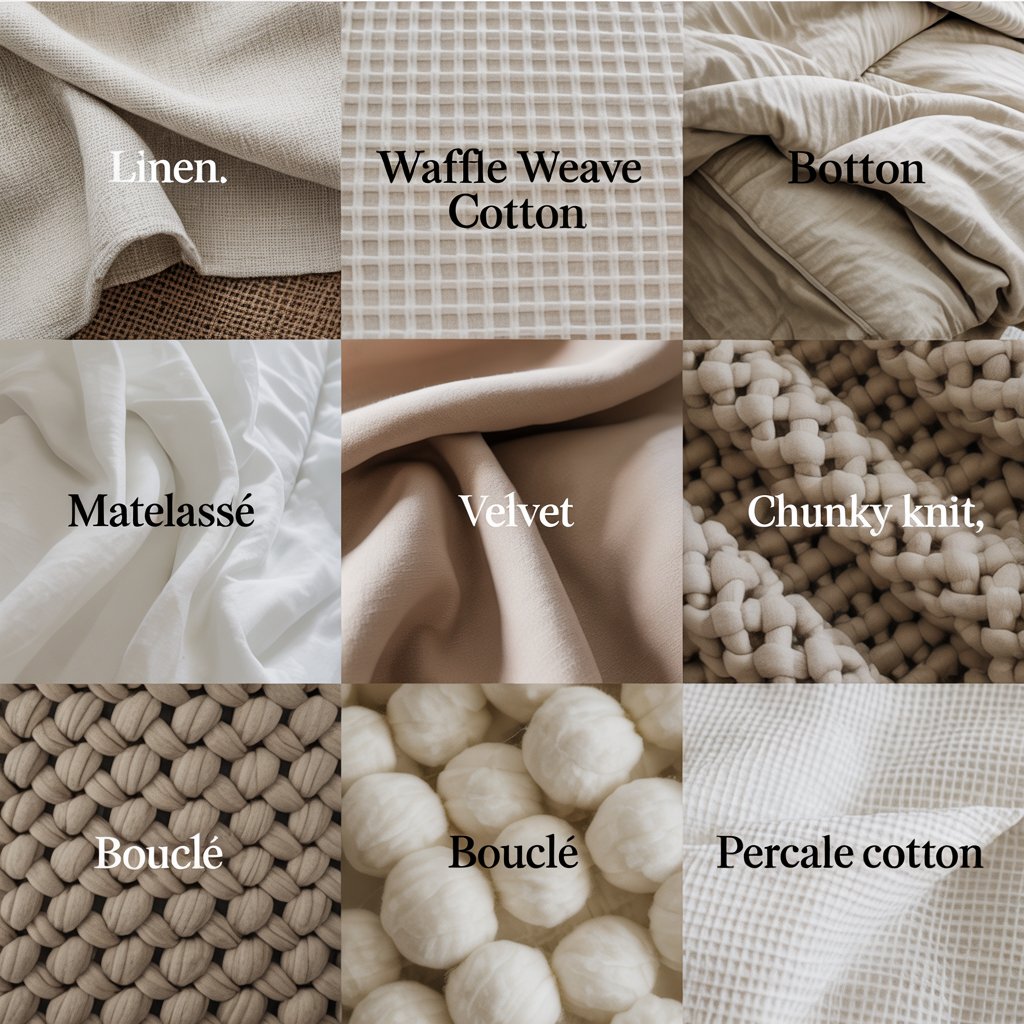
| Material | Texture feel | Best for | Season | Price range |
|---|---|---|---|---|
| Linen | Crisp, slightly rough, softens with washing | Hot sleepers, relaxed aesthetic | Year-round | $$–$$$ |
| Waffle weave cotton | Grid-like, airy, cozy | Coverlets, lightweight layers | Spring/Summer | $–$$ |
| Matelassé | Quilted, raised pattern, structured | Bedspreads, formal look | Year-round | $$–$$$ |
| Velvet / Velveteen | Plush, directional, luxurious | Throw pillows, accent layers | Fall/Winter | $$ |
| Chunky knit | Thick, loopy, ultra-soft | Throws, footboard draping | Fall/Winter | $–$$ |
| Bouclé | Looped, pillowy surface | Shams, decorative pillows | Year-round | $$–$$$ |
| Percale cotton | Crisp, smooth, cool | Base sheets underneath layers | Year-round | $–$$ |
Pro Tip
Always start with smooth percale or sateen sheets as your foundation layer. Textured materials shine when placed on top of something smooth — the contrast is what creates visual and tactile interest. Avoid layering two rough textures directly against each other (like linen on waffle weave) without a smooth base; it can feel visually busy and physically scratchy.
How to layer textured bedding like a designer
Layering is an art form, but it follows a surprisingly simple structure. Think of it like getting dressed: you start with the foundational pieces and add personality on top. Here is the exact five-layer formula I use for every bedroom retreat project:
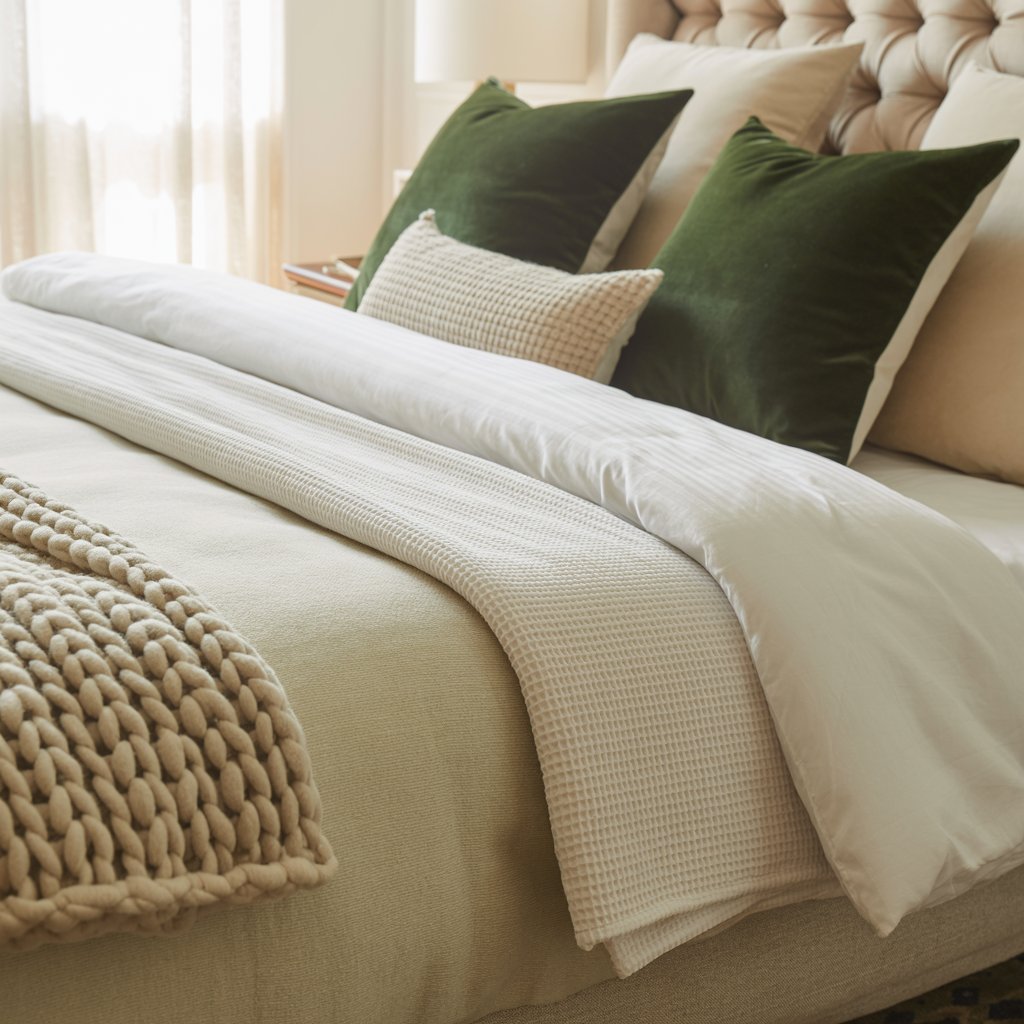
- Base sheets — Start with smooth, breathable fitted and flat sheets in percale or sateen cotton. These set the clean canvas for your texture story.
- First layer coverlet — Add a waffle weave or matelassé coverlet for subtle texture. This can be folded down at the foot of the bed for a styled look.
- Duvet or comforter — Choose a textured duvet cover in linen, jacquard, or bouclé. This is your dominant texture piece and your biggest visual statement.
- Pillow arrangement — Layer sleeping pillows in smooth shams, then add decorative pillows in contrasting textures: velvet, bouclé, or even faux fur for winter.
- Throw blanket — Drape a chunky knit or cashmere-blend throw casually across one corner of the bed. This final touch adds warmth, dimension, and a relaxed, lived-in elegance.
The key design principle at work here is contrast through combination. Your eye — and your nervous system — respond to variety. Pairing a crisp percale sheet with a nubby linen duvet with a velvety throw creates a sensory journey that feels intentional, curated, and deeply comfortable.
Color plays a supporting role here. For restful retreats, I almost always lean toward a tonal palette: varying shades of the same hue (all warm whites, all dusty blues, all sage greens) with texture providing the visual variation. This approach keeps the room feeling calm and cohesive while still being visually rich. You can explore excellent tonal bedding palettes at retailers like Pottery Barn and Anthropologie Home.
🛏
Layer 1: Smooth base
Percale or sateen fitted sheet — the invisible foundation
🔲
Layer 2: Coverlet
Waffle weave or matelassé for quiet texture
☁️
Layer 3: Duvet
Linen or jacquard cover — your main texture statement
🧸
Layer 4: Pillows
Mix velvet, bouclé & smooth for contrast
🧶
Layer 5: Throw
Chunky knit or cashmere draped casually at footasonal swaps: keeping your bedroom retreat fresh all year
One of the smartest investments you can make in textured bedding is building a small seasonal rotation. American homes experience dramatic temperature swings across the year, and your bedding should adapt accordingly. The good news: because texture does so much of the visual heavy lifting, you can maintain a cohesive, designed look through the seasons simply by swapping materials rather than entire color palettes.
For spring and summer, lean into waffle weave coverlets, crisp linen duvets, and light cotton throws. These materials breathe beautifully and keep hot sleepers comfortable without sacrificing the layered look. In fall and winter, swap to velvet duvet covers, chunky knit throws, and faux-fur accent pillows — the visual warmth alone will make your bedroom feel ten degrees cozier before you’ve even touched the thermostat.
| Season | Duvet cover | Coverlet | Throw | Pillow accents |
|---|---|---|---|---|
| Spring | Washed linen | Waffle weave | Light cotton gauze | Linen sham + cotton floral |
| Summer | Percale / Voile | Matelassé | Skip or lightweight muslin | Smooth satin + rattan |
| Fall | Jacquard / Bouclé | Quilted cotton | Wool blend | Velvet + embroidered |
| Winter | Velvet / Heavy linen | Sherpa or flannel | Chunky knit / Faux fur | Faux fur + cable knit |
Pro Tip
Store off-season bedding in breathable cotton storage bags — never plastic, which traps moisture. Vacuum-sealed bags work for throws but can compress down insulation in duvets. A cedar chest or under-bed cotton bin is ideal. This also protects your investment: quality textured bedding, properly stored, can last 8–12 years.
Common textured bedding mistakes to avoid
Even design-savvy homeowners fall into predictable traps when it comes to textured bedding. After years of client consultations, these are the mistakes I see most often in American bedrooms — and exactly how to fix them:
- Buying all the same texture: An all-waffle-weave bed looks flat, not layered. Mix at least three distinct textures for visual depth.
- Ignoring scale: Pair large-scale textures (chunky knit) with fine-scale ones (sateen). Two competing large textures fight for attention.
- Overstuffing pillows: More than 5–6 pillows on a queen bed tips from “designed” to “cluttered.” Edit ruthlessly.
- Matching everything perfectly: Slight color variation within a tonal palette adds sophistication. An exact match reads as stiff and catalog-like.
- Forgetting care requirements: Linen, velvet, and chunky knit all have different washing needs. Always check care labels before buying — some beautiful textured pieces are dry-clean only.
- Neglecting the throw drape: How you drape a throw is a micro-styling moment. A casually asymmetric fold across one corner of the bed looks intentional and relaxed; a perfectly centered, squared-off fold looks stiff.
“The most common mistake I see is people treating the bed like a display case. Textured bedding should look lived-in, soft, and slightly imperfect — that’s what makes it inviting rather than intimidating.”— A guiding principle for approachable bedroom styling
Where to shop for textured bedding in the US
The American market for textured bedding has never been better. Whether you’re shopping at a luxury price point or on a tight budget, there are excellent options available across all tiers. Here are my tried-and-tested picks by category:
| Retailer | Best for | Price tier | Standout texture |
|---|---|---|---|
| Parachute Home | Premium linen & waffle | $$$ | Washed linen duvet covers |
| Pottery Barn | Wide selection, classic style | $$–$$$ | Matelassé bedspreads |
| Anthropologie Home | Eclectic, artisan textures | $$–$$$ | Bouclé shams & embroidered duvets |
| Target (Threshold) | Budget-friendly layering basics | $ | Waffle weave coverlets |
| Z Gallerie | Glam textures, velvet | $$ | Velvet duvet covers & throws |
| Amazon Basics / Stone & Beam | Value picks, chunky knits | $ | Chunky knit throws |
Pro Tip
Before investing in an expensive linen duvet, order a single linen pillowcase first. Sleep on it for a week. Linen softens significantly with every wash, but some people find the initial texture too scratchy. Testing with a pillowcase saves you the hassle of returning a full bedding set.
The bottom line: texture is the soul of the bedroom retreat
Creating a truly restful bedroom retreat isn’t about spending a fortune or following the latest trend. It’s about understanding that your bedroom is a sensory environment — and that texture is the primary language through which that environment speaks to you every night.
By thoughtfully layering different textured bedding materials, choosing the right fabrics for each season, and resisting the urge to over-match or over-stuff, you can create a bed that looks like it was styled by a designer and feels like the most comfortable place on earth. Start with one great textured piece — a waffle-weave coverlet, a washed linen duvet, or a chunky knit throw — and build from there.
Your bedroom should be the room in your home that works the hardest for you. With the right textured bedding, it will welcome you every evening with exactly what you need most: warm