
If you’ve ever scrolled through Pinterest or wandered the aisles of West Elm and felt drawn to those clean-lined sofas, tapered wooden legs, and that perfect balance of form and function — you’ve already fallen for mid-century modern design. This iconic aesthetic, born in America between the 1940s and 1960s, is not just a trend. It’s a timeless design philosophy that continues to dominate living rooms from New York lofts to California bungalows. And the best part? You don’t need to hire a high-end decorator or blow your entire budget to nail the look. Whether you’re starting from scratch or refreshing your current space, this ultimate guide will walk you through everything you need to create a stunning mid-century modern living room that feels authentic, livable, and completely you.
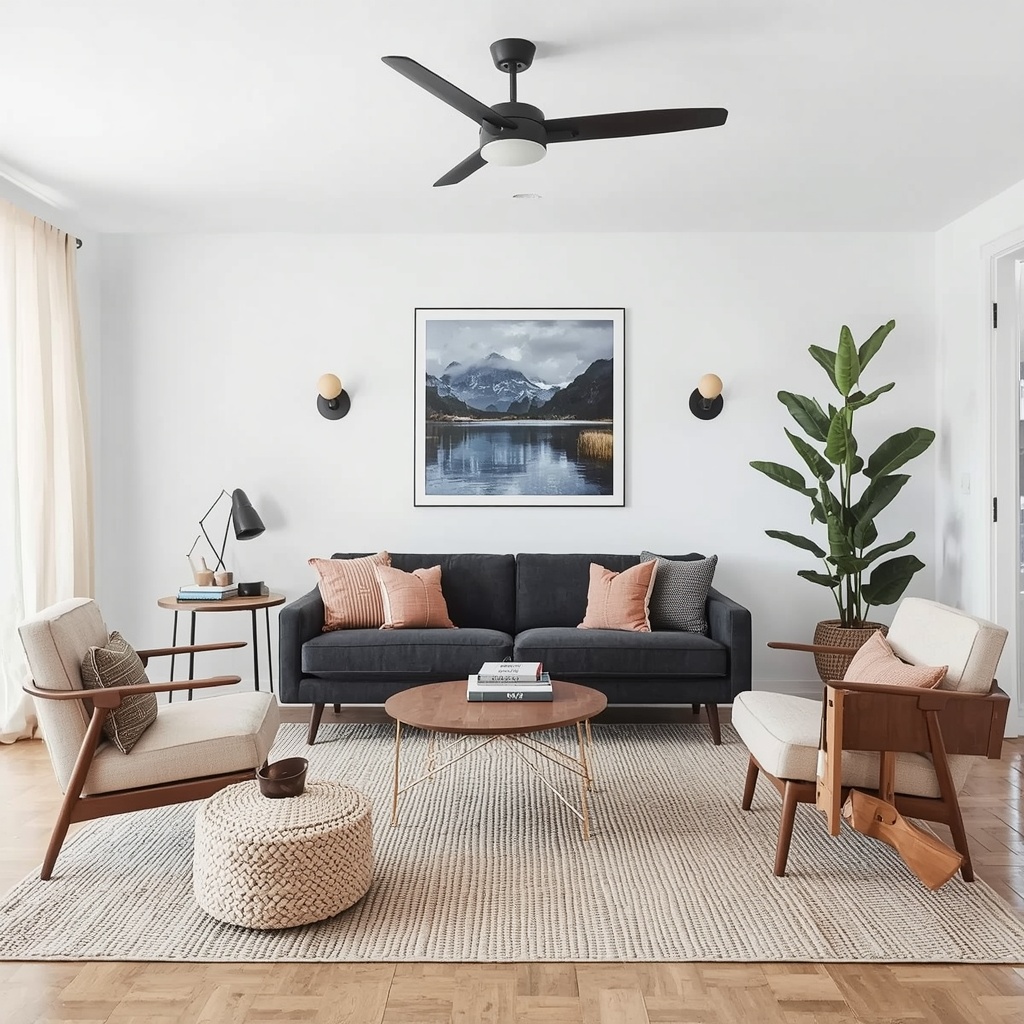
What Is Mid-Century Modern Design? A Quick Style Overview
Before you start shopping, it helps to understand what mid-century modern (MCM) actually means. The style emerged in post-World War II America, influenced by the Bauhaus movement and Scandinavian design traditions. Designers like Charles and Ray Eames, Eero Saarinen, and Florence Knoll championed the idea that good design should be accessible to everyday Americans — not just the elite. The result was furniture and interiors that married beauty with practicality.
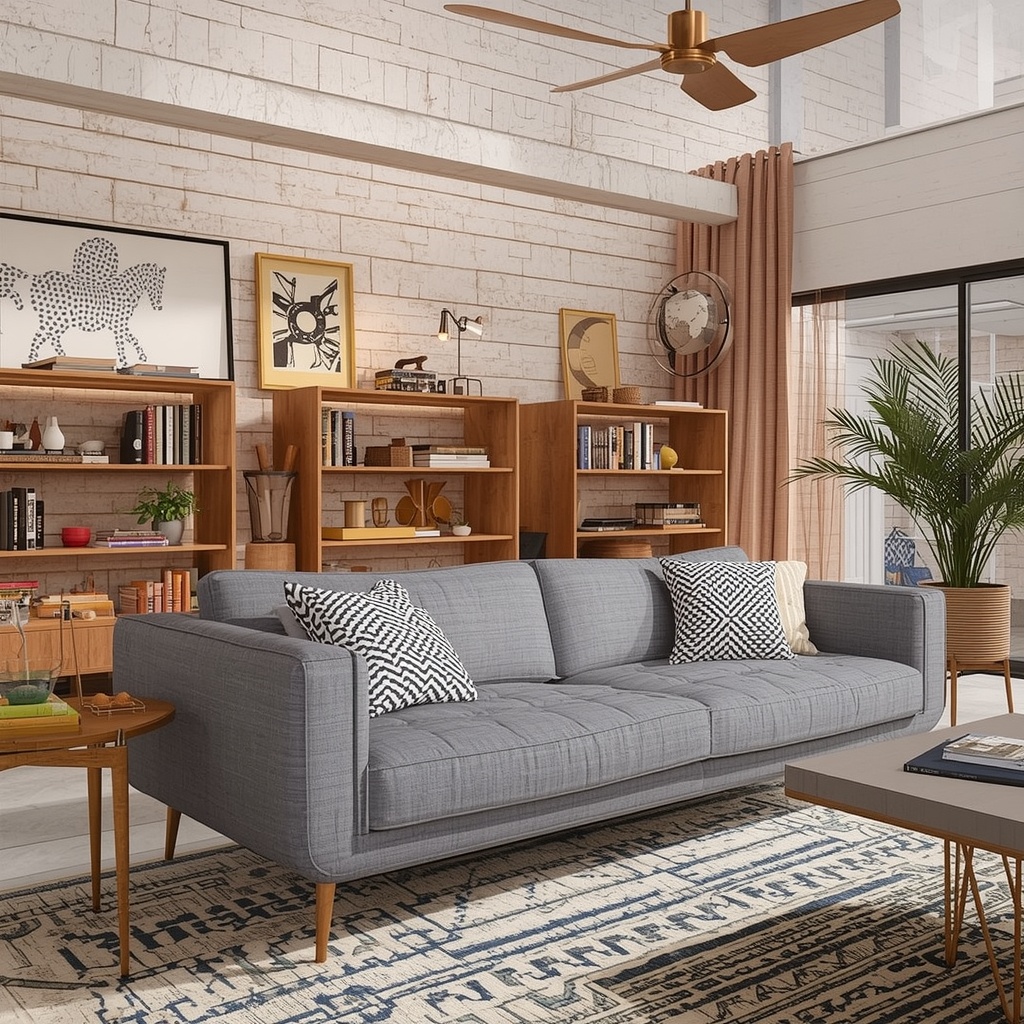
Mid-century modern design is defined by a set of visual principles that are surprisingly easy to apply today. Organic shapes inspired by nature, a warm but restrained color palette, and the seamless blending of indoor and outdoor spaces are at the heart of this style. It celebrates materials like teak, walnut, molded plastic, and fiberglass — all of which were considered cutting-edge in the mid-20th century. Understanding these roots will help you make smarter, more intentional choices as you design your space.
“Mid-century modern is the rare design movement that feels both nostalgic and completely forward-thinking at the same time. That’s why it never goes out of style.” — Interior Design Quarterly
The Core Principles of Mid-Century Modern Interiors
| Principle | What It Means | How to Apply It |
|---|---|---|
| Form Follows Function | Every piece must serve a purpose | Choose furniture with clean lines and practical use |
| Organic Shapes | Curves inspired by nature | Look for kidney-shaped tables, tulip chairs |
| Natural Materials | Wood, leather, wool, stone | Prioritize walnut, teak, and natural fibers |
| Indoor-Outdoor Flow | Connection to the natural world | Use large windows, plants, earthy tones |
| Minimal Ornamentation | No clutter or excess decoration | Edit ruthlessly; less is more |
| Bold but Restrained Color | Pops of color against neutral bases | Mustard, olive, burnt orange as accents |
Keeping these principles in mind will serve as your north star throughout the decorating process. When you’re standing in a furniture store debating between two sofas, ask yourself: does this piece feel functional yet beautiful? Does it connect to the natural world? Is it free of unnecessary frills? If yes, it probably belongs in your MCM living room.
Choosing the Right Color Palette for a Mid-Century Modern Living Room
Color is one of the most powerful tools in any interior designer’s kit, and in mid-century modern design, it’s used with confident restraint. The palette isn’t minimalist in the cold, all-white Scandinavian sense — it’s warm, rich, and grounded. Getting your colors right sets the tone for everything else that follows.
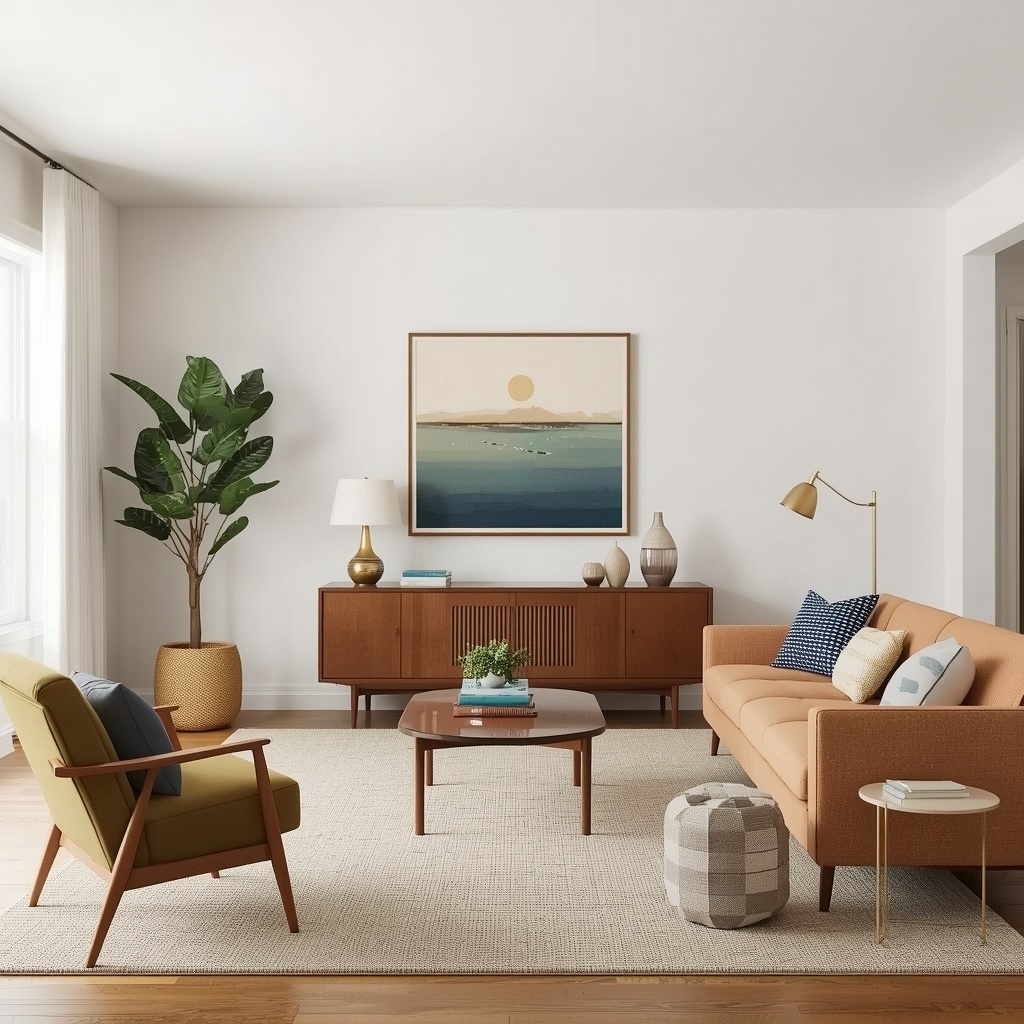
Start with a warm neutral as your base — think creamy whites, soft beiges, warm grays, or greige tones for walls and large surfaces. From there, layer in earthy mid-tones like walnut brown, olive green, and slate blue through furniture and rugs. Finally, add accent pops of the era’s signature bold hues: mustard yellow, burnt orange, avocado green, and teal. These accent colors were practically the mascots of 1950s and 1960s American homes, and they translate beautifully into modern spaces when used thoughtfully.
Top MCM Color Combinations for Living Rooms:
- Warm white walls + walnut furniture + mustard yellow throw pillows
- Warm gray walls + teak credenza + burnt orange accent chair
- Greige walls + olive green sofa + terracotta ceramic accents
- Charcoal accent wall + natural wood tones + cream upholstery
💡 Pro Tip: If you’re nervous about committing to a bold accent color on large furniture pieces, start with textiles. A mustard throw blanket or a set of burnt orange cushions can introduce MCM color without any long-term commitment — and they’re easy to swap out seasonally.
Selecting Mid-Century Modern Furniture: The Pieces That Define the Look
The furniture is where mid-century modern design truly shines. The silhouettes are so distinctive that even a single well-chosen piece can anchor an entire room in the style. When sourcing MCM furniture, you have three main options: authentic vintage pieces (found at estate sales, antique markets, and sites like Chairish or 1stDibs), licensed reproductions from brands like Herman Miller and Knoll, and MCM-inspired contemporary pieces from retailers like Article, West Elm, and AllModern.
The Essential MCM Living Room Furniture Checklist
- Sofa: Low-profile, tight back, tapered wooden or hairpin legs. Look for channel tufting or a simple biscuit-tufted design. Avoid overstuffed or roll-arm styles.
- Lounge Chair: The Eames Lounge Chair is the gold standard, but there are excellent alternatives. Look for chairs with organic, molded shapes or a Barcelona Chair silhouette.
- Coffee Table: Walnut or teak with tapered legs, or a sculptural tulip-style table. Oval and kidney shapes are very MCM.
- Credenza or Sideboard: A long, low credenza with sliding doors or caned panels is a hallmark MCM storage piece — and doubles as a media console.
- Accent Chair: A tulip chair, egg chair, or Saarinen-style pedestal chair adds a sculptural focal point.
💡 Pro Tip: Don’t skip the credenza. In mid-century modern living rooms, a low-profile sideboard or credenza serves multiple purposes — it provides storage, grounds the space visually, and is the perfect surface for a lamp, ceramics, and a record player. It’s arguably as important as the sofa.
Flooring and Rugs: Grounding the Mid-Century Modern Living Room
Hardwood floors are the ideal foundation for a mid-century modern living room. Light-to-medium wood tones in oak, walnut stain, or teak work beautifully. If you have existing floors that don’t fit the aesthetic — carpet, tile, or very dark wood — a well-chosen area rug can bridge the gap and define the conversation area.
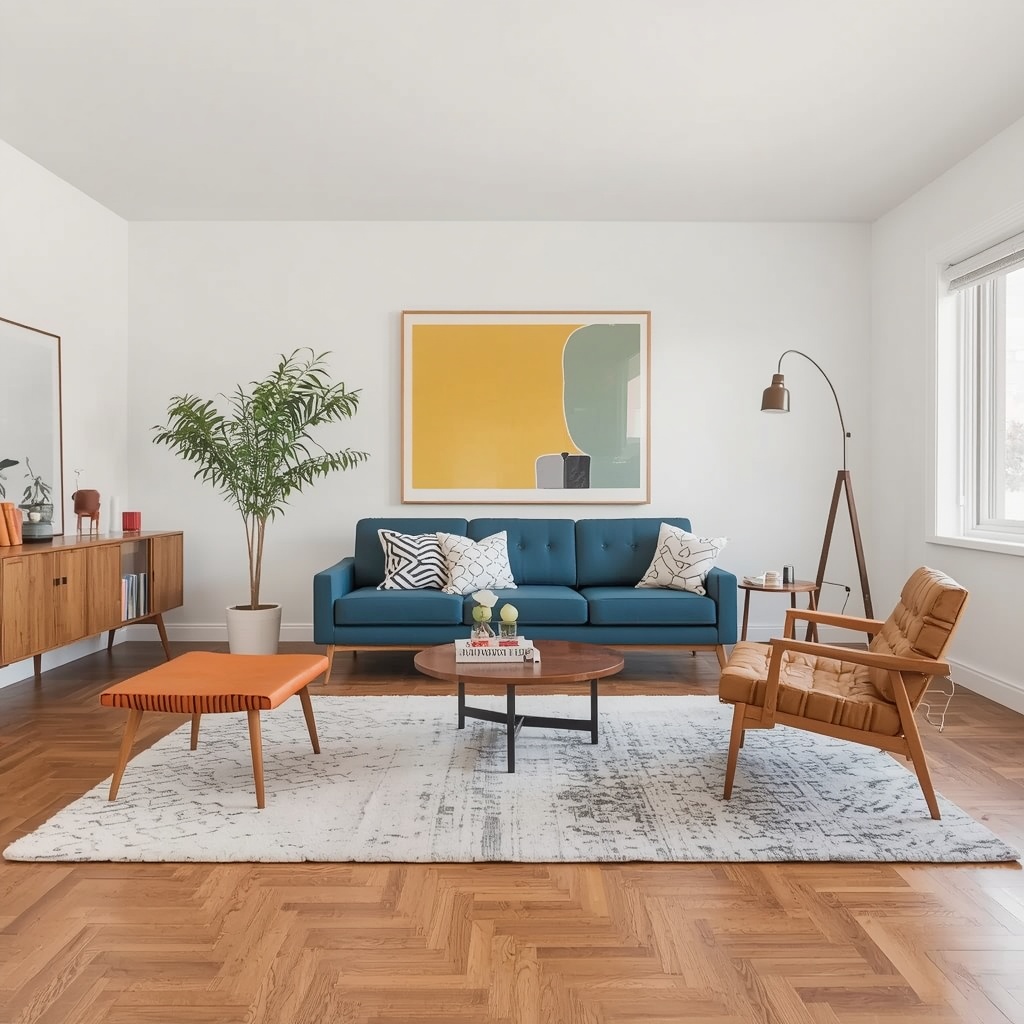
For rugs, look for these styles that feel authentically MCM:
- Abstract geometric patterns in muted, earthy tones
- Solid or low-pattern wool rugs in warm neutrals or a bold MCM color
- Scandinavian-inspired designs with simple geometric motifs
- Vintage-style flatweave rugs in terracotta, mustard, or olive
Avoid overly ornate Persian or traditional-style rugs, ultra-plush shag (unless going for a 1970s-adjacent look), and anything with florals or highly realistic motifs.
Mid-Century Modern Lighting: Let There Be (the Right) Light
Lighting is where mid-century modern design gets truly sculptural. The fixtures themselves are meant to be seen — they’re art objects as much as functional tools. MCM lighting embraces geometric shapes, exposed bulbs, Sputnik-style burst designs, and warm, amber-toned light that feels intimate and human.
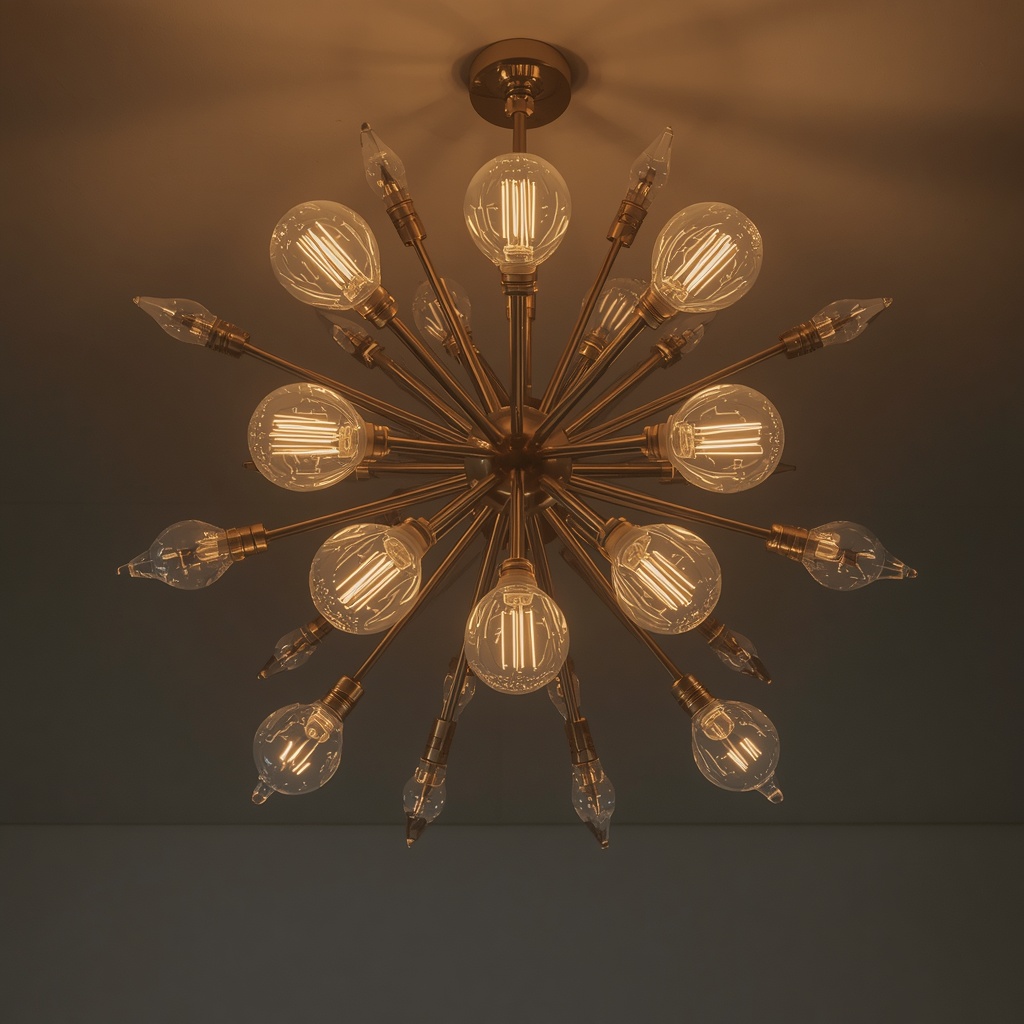
MCM Lighting by Category:
| Light Type | MCM Style to Look For | Where to Place It |
|---|---|---|
| Pendant | Sputnik burst, globe, cone shade | Over a reading nook or conversation area |
| Floor Lamp | Arc lamp with marble base, tripod | Next to lounge chair or sofa corner |
| Table Lamp | Ceramic base, drum shade | On credenza or end table |
| Sconce | Plug-in swing arm | On either side of a gallery wall |
Always opt for warm white bulbs (2700K–3000K) over cool daylight bulbs. MCM interiors are meant to feel warm and inviting, not clinical.
Incorporating Natural Materials and Textures
One of the most beloved qualities of mid-century modern design is how it honors natural materials. Wood is the star — walnut and teak were the premium choices of the era, and they remain so today. But natural materials go beyond just the furniture. Think about how you can weave organic textures throughout the entire room to create that signature warm, tactile quality.
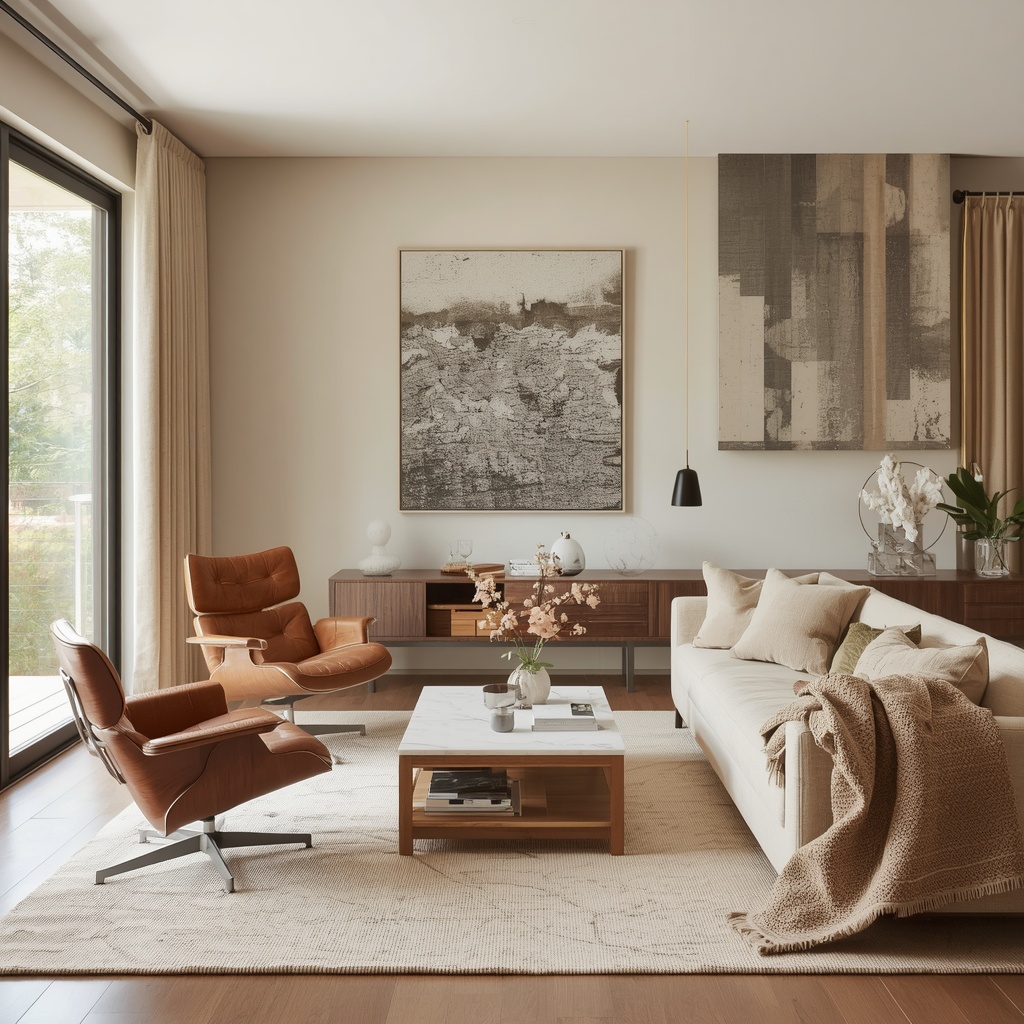
Layer wool, leather, and natural linen across your upholstery and textiles. A leather Eames-style lounge chair, a wool throw draped over the sofa arm, and linen curtains filtering afternoon light — these combinations create the kind of sensory richness that makes an MCM living room feel truly special. Stone elements, like a marble or travertine coffee table or a slate fireplace surround, also fit beautifully within this aesthetic.
Natural Materials Checklist:
- Walnut or teak furniture
- Wool area rug
- Leather or boucle upholstery
- Linen or cotton curtains
- Ceramic and stoneware decorative objects
- Jute or rattan accent pieces
- Marble or travertine surfaces
Wall Decor and Art: What Belongs on an MCM Wall
Mid-century modern walls should feel curated, not cluttered. The goal is to let a few impactful pieces breathe rather than covering every inch. Abstract art from the 1950s and 1960s — think color fields, bold geometric prints, and organic abstracts — is the most authentic choice, but you don’t need originals. Affordable prints from Society6, Etsy, or Desenio can give you the same visual effect.
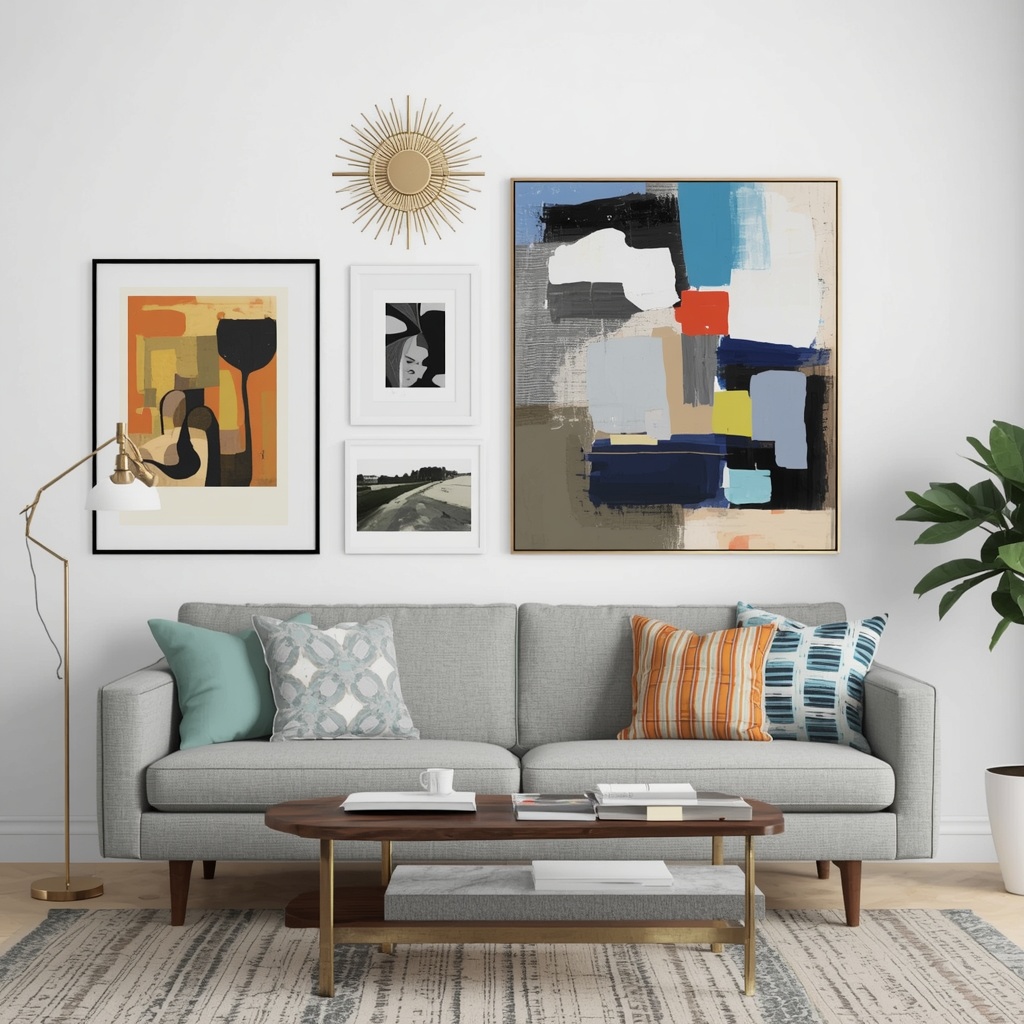
A sunburst clock is one of the most iconic MCM wall pieces and instantly telegraphs the style. A single large abstract canvas in a bold MCM color can serve as a dramatic focal point above the sofa. Gallery walls work in MCM spaces, but keep them restrained: five to seven pieces maximum, with consistent framing in black, walnut, or brass.
💡 Pro Tip: Swap out your light switch covers and outlet plates for brushed brass or matte black versions. It takes ten minutes and costs under $20, but it’s one of those tiny details that makes a room feel like a designer actually touched it.
Plants and Greenery: The Living Element of Mid-Century Modern Rooms
No mid-century modern living room is truly complete without plants. The style’s emphasis on the connection between indoors and outdoors makes greenery not just an accessory, but an essential design element. Large statement plants like a fiddle-leaf fig, bird of paradise, or monstera are classics for a reason — their sculptural quality echoes the organic shapes found throughout MCM design.
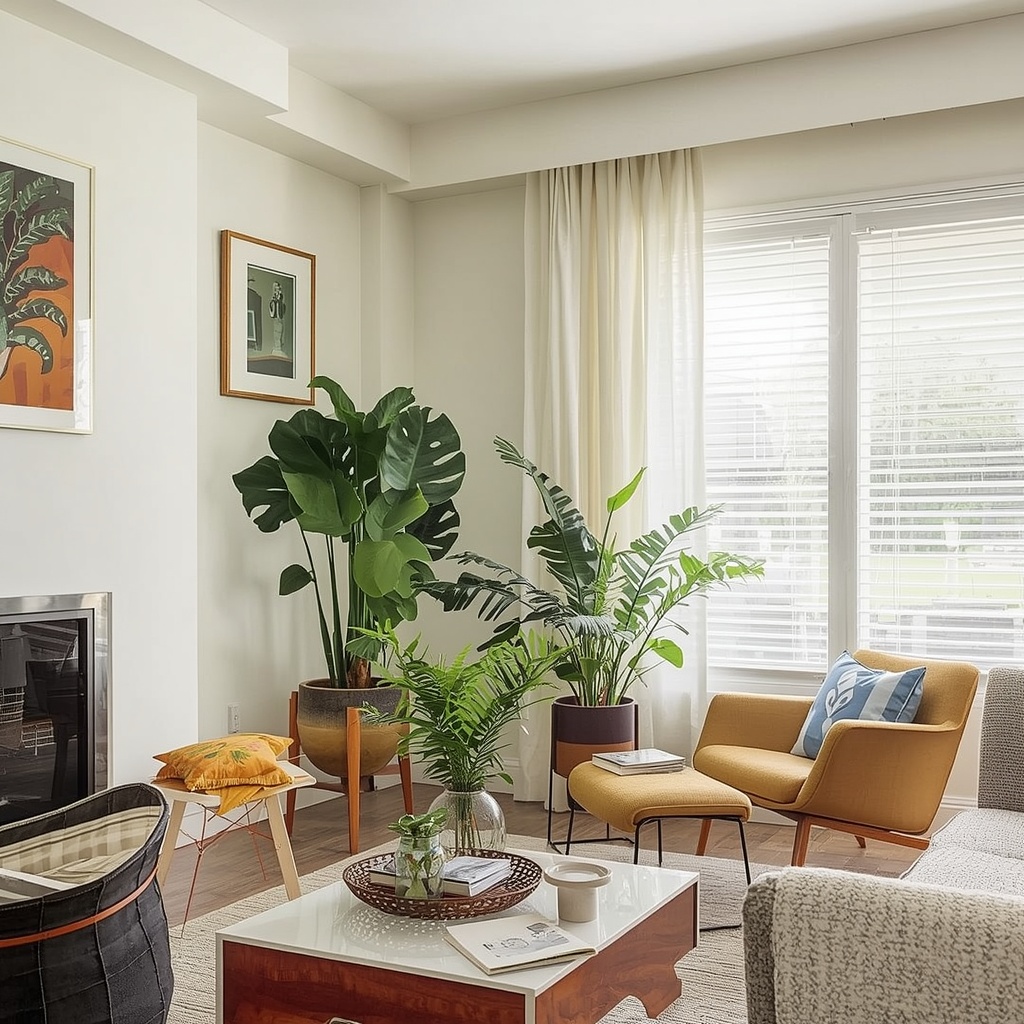
Choose planters that reinforce the aesthetic: ceramic pots in matte earthy tones, teak plant stands with tapered legs, or classic Eames-era fiberglass planters. Group plants in odd numbers and vary the heights for visual interest. A tall floor plant in one corner, a medium plant on the credenza, and a small succulent on the coffee table create a layered, intentional look.
Common Mid-Century Modern Decorating Mistakes to Avoid
Even with the best intentions, it’s easy to veer off course. Here are the pitfalls that most often derail an MCM living room:
- Overcrowding the space. MCM interiors need breathing room. If you can’t walk freely around every piece of furniture, edit the room.
- Mixing too many wood tones. Two, maximum three wood tones in a room. More than that feels chaotic.
- Choosing furniture that’s too heavy. Chunky, upholstered sofas with no visible legs kill the MCM vibe. Tapered legs are non-negotiable.
- Using cool-toned neutrals. Gray-whites and blue-grays feel modern contemporary, not MCM. Stick to warm neutrals.
- Neglecting the ceiling. A statement pendant or an arc floor lamp that draws the eye upward adds architectural interest.
- Over-accessorizing. Resist the urge to fill every surface. A well-curated credenza with three objects is infinitely more stylish than ten.
Shopping Guide: Where to Find Mid-Century Modern Furniture and Decor in the US
| Budget Level | Best Sources |
|---|---|
| Budget-Friendly | IKEA, Target, AllModern, Wayfair |
| Mid-Range | West Elm, Article, Joybird, CB2 |
| High-End | Herman Miller, Knoll, Design Within Reach |
| Vintage/Authentic | Chairish, 1stDibs, local estate sales, Facebook Marketplace |
For authentic vintage finds, Chairish is the best curated marketplace in the US, while Facebook Marketplace and local estate sales remain the best places to score genuine MCM pieces at bargain prices.
Final Thoughts: Making Mid-Century Modern Your Own
Mid-century modern design is not a rigid formula — it’s a philosophy. The original designers of this movement were rebels who broke from tradition and created something entirely new. In that spirit, don’t be afraid to make the style your own. Mix in a contemporary piece that speaks to you. Hang a painting that doesn’t follow the rules. Add a family heirloom that technically doesn’t belong but feels right. The most beautiful MCM living rooms are the ones that feel personal, lived-in, and genuinely human.
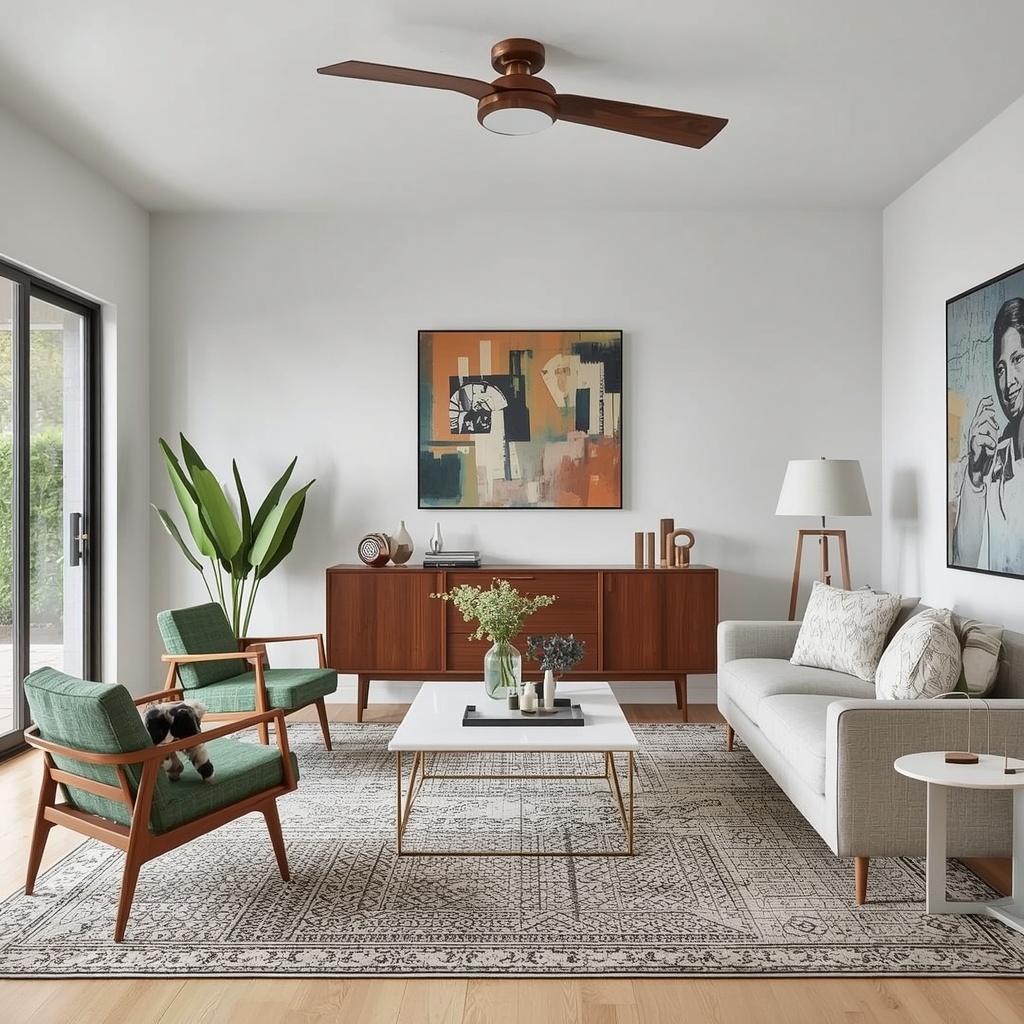
Start with the foundational elements — the furniture silhouettes, the warm color palette, the natural materials — and then layer in your own personality. Whether you lean toward a more spare, Scandinavian interpretation or a warmer, Hollywood Regency-inflected version, the bones of mid-century modern design are flexible enough to accommodate your vision. Invest in a few key pieces that will last decades, shop vintage when you can, and remember that good design, as the masters of the mid-century understood, is always about creating a more beautiful, more livable life.
Related Reading: How to Style a Scandinavian Living Room | The Best Accent Chairs for a Mid-Century Modern Home | How to Mix Vintage and Modern Furniture Like a Pro
Keywords covered in this article: mid-century modern living room, MCM interior design, mid-century modern furniture, mid-century modern decor, retro living room ideas, organic modern design, walnut furniture living room, MCM color palette, Eames lounge chair, mid-century modern sofa, vintage modern home decor, tapered leg furniture, 1950s interior design, retro modern style, home decor ideas US.