If you’ve ever stood in front of a chaotic bookshelf wondering whether to sort by rainbow or by last name, you’re not alone. As an interior designer who works with home libraries and living room built-ins every week, this is one of the most common questions clients ask me. It sounds like a small decision, but it actually shapes how a room feels, how functional your space is, and how often you’ll actually use your books instead of just displaying them.
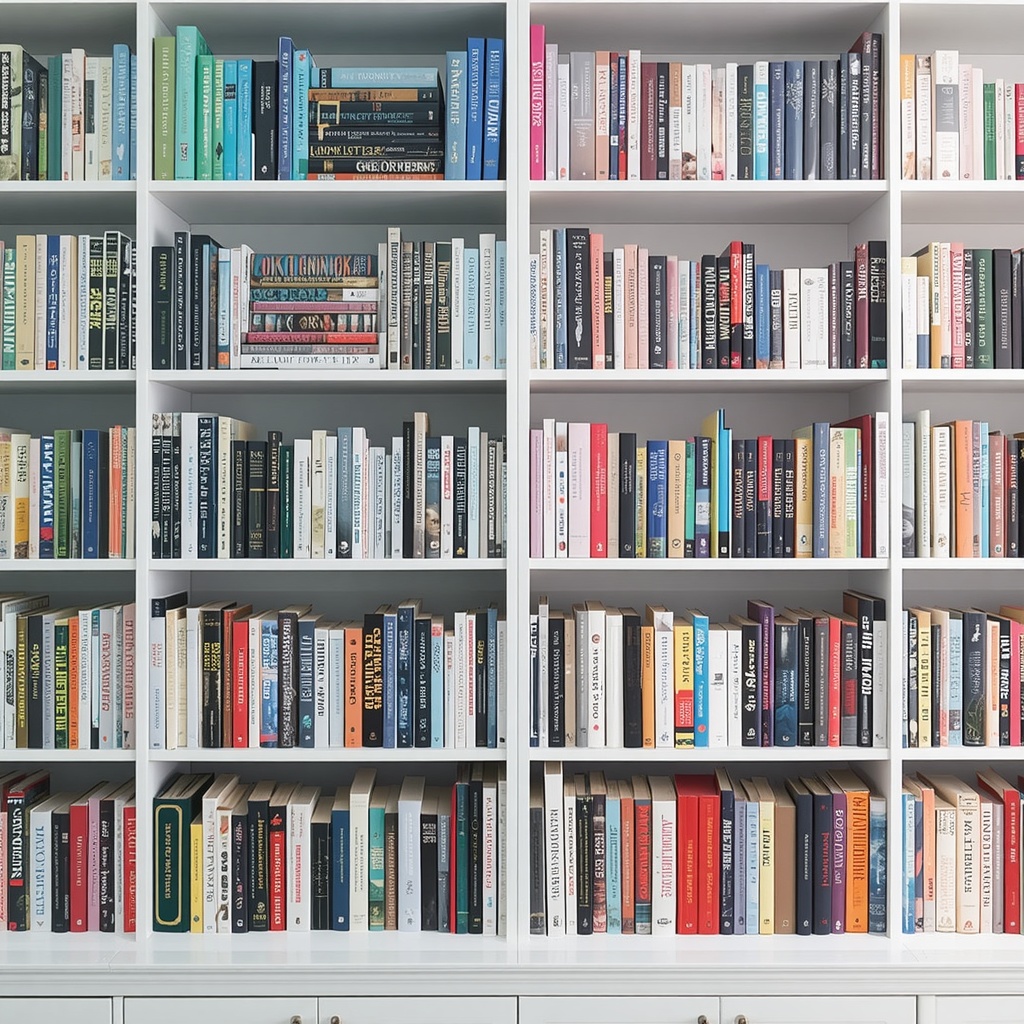
Bookshelf organization sits at the intersection of interior styling and everyday usability. A shelf that looks stunning in photos but drives you crazy every time you search for a title isn’t doing its job. In this guide, I’ll walk you through the two most popular systems — color-coded shelves and author-based shelves — plus a few hybrid methods I use in real client homes, so you can pick the system that actually fits your lifestyle and your space.
Why Bookshelf Organization Matters More Than You Think
Your bookshelf is rarely just storage. In most American living rooms, home offices, and reading nooks, it’s a focal point — often the first thing guests notice when they walk in. A well-organized bookshelf contributes to your overall home decor scheme, supports your color palette, and reflects your personality in a way few other furniture pieces can.

At the same time, a bookshelf has a job to do. It needs to store books efficiently, protect spines from sun damage, and let you find what you’re looking for without pulling out ten titles first. Balancing aesthetics with function is the real design challenge, and it’s exactly why the “color vs. author” debate exists in the first place.
“A bookshelf should tell two stories at once — who you are and how you live. Organize for beauty, but never sacrifice usability completely.” — a principle I share with every client who wants a magazine-worthy shelf that still works day to day.
Color-Coded Bookshelves: The Instagram Favorite
Color organization arranges books by spine color rather than genre or author, creating a gradient or block effect across your shelving unit. It’s become massively popular on Pinterest and Instagram because it turns your bookshelf into a genuinely artistic feature wall.
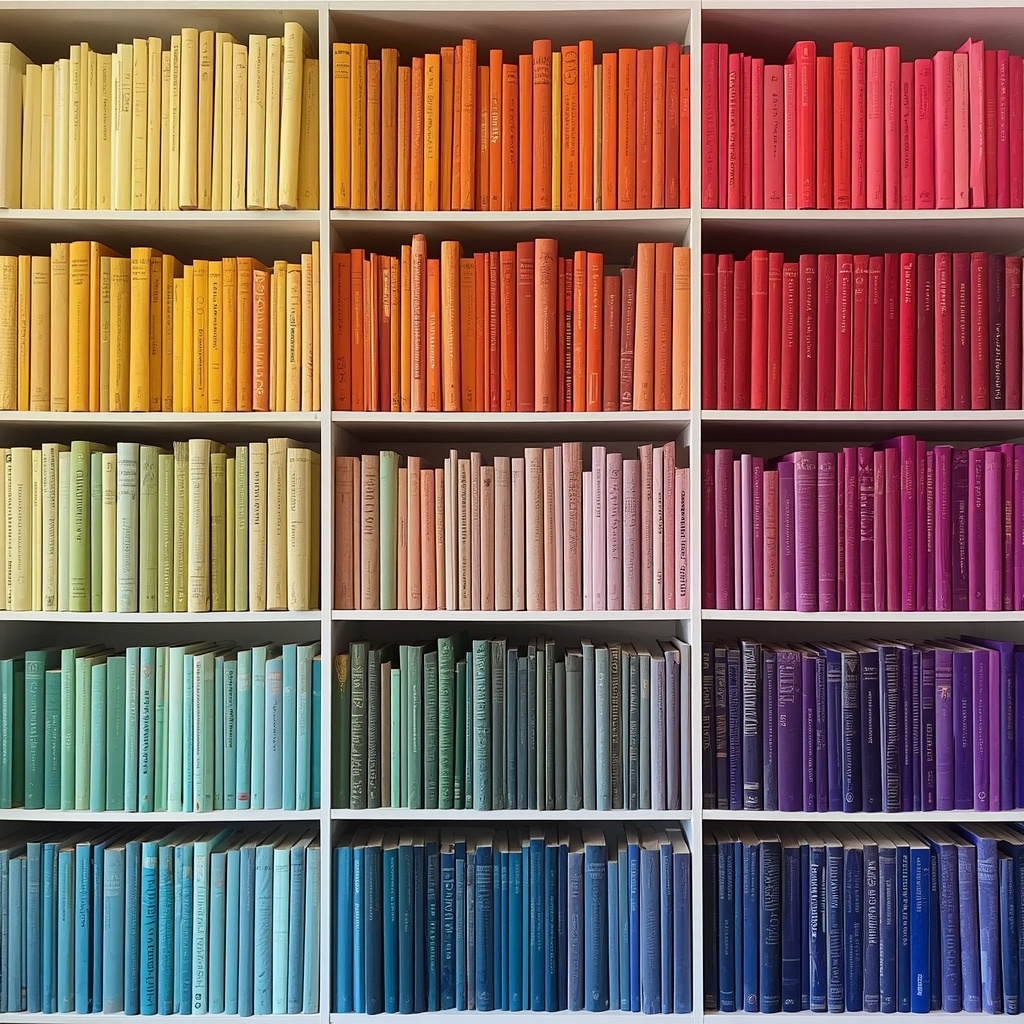
Color-coded shelves work beautifully as a styling technique, but they come with real trade-offs. Below is a quick breakdown to help you weigh the pros and cons before committing your whole collection to this method.
Pros of color-coded shelves:
- Creates an eye-catching, gallery-like visual effect
- Doubles as functional wall art in open-concept living rooms
- Works well with monochromatic or curated color-palette interiors
- Great for styling coffee table books and decorative volumes
Cons of color-coded shelves:
- Makes finding a specific title frustrating and slow
- Not practical for large personal libraries or frequent readers
- Can look chaotic with mismatched publisher spine colors
- Requires ongoing maintenance as new books are added
Pro Tip
When I design color-coded shelves for clients, I never sort their entire collection this way. Instead, I reserve one or two statement shelves — usually at eye level — for the color gradient, and keep working reference books, cookbooks, or frequently used titles organized elsewhere by category. This gives you the visual payoff without sacrificing daily usability.
If you’re drawn to this look, start with a simple rainbow gradient (ROYGBIV) or a tonal approach using two or three complementary colors that match your room’s existing palette. Neutral tones — white, black, cream, and wood-toned spines — are the easiest starting point because they blend into almost any decor style, from farmhouse to modern minimalist.
Author-Based Bookshelves: The Traditional Librarian Method
Organizing by author’s last name is the tried-and-true system used in libraries, bookstores, and serious home libraries across the country. It prioritizes function over form, making it the go-to choice for avid readers, book collectors, and anyone with a sizable personal library.
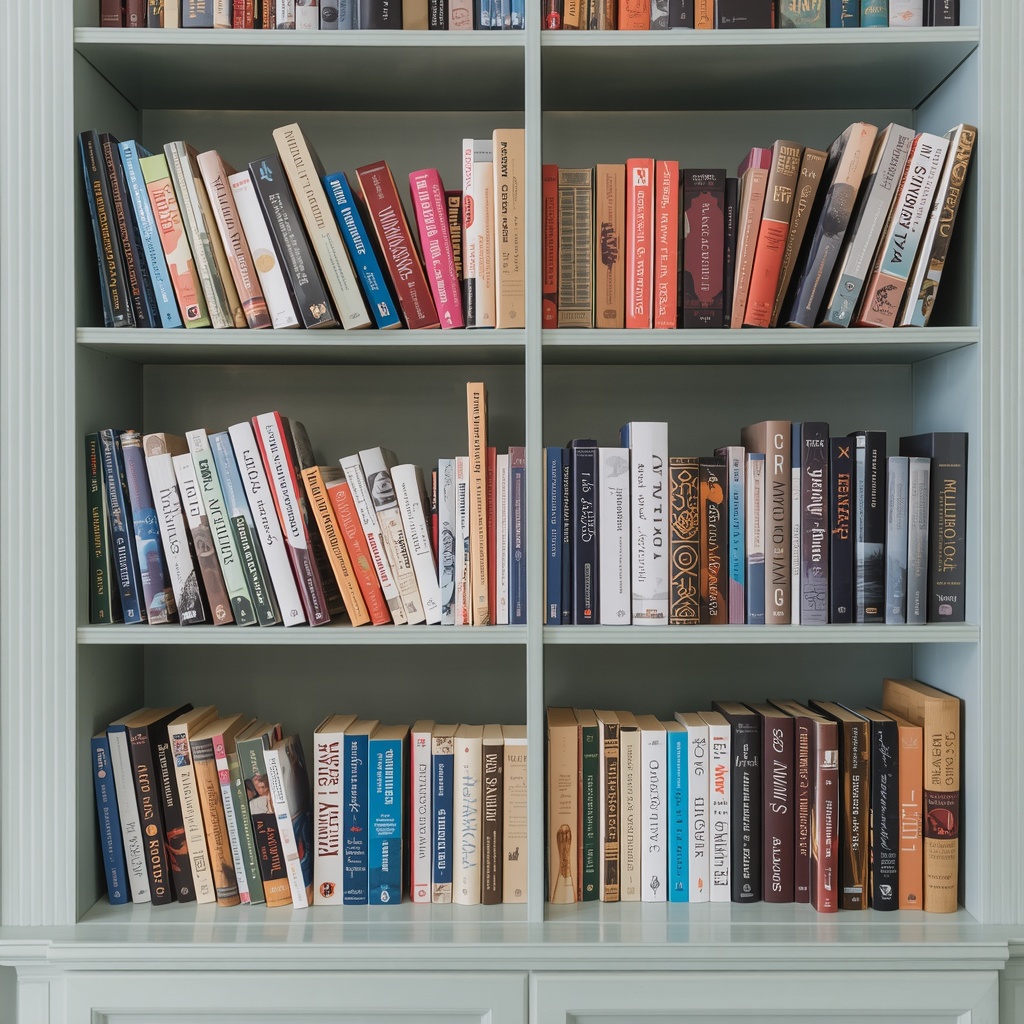
This method groups every title by the same author together, typically alphabetized A to Z. It’s intuitive, searchable, and scales well no matter how large your collection grows over time.
Pros of author-based shelves:
- Fast and intuitive to locate any specific book
- Scales effortlessly as your collection grows
- Ideal for book clubs, collectors, and researchers
- Keeps entire series and author collections together
Cons of author-based shelves:
- Less visually dynamic than color-based systems
- Can look busy or mismatched without added styling touches
- Requires you to know the author’s name, not just the title
- Doesn’t naturally separate genres or reading moods
Pro Tip
Alphabetizing doesn’t have to mean boring. I always recommend adding “bookends of interest” — a sculptural object, a small plant, or a framed print every few feet — to break up long runs of spines and keep the shelf visually balanced while preserving the alphabetical logic underneath.
Color vs. Author: A Side-by-Side Comparison
Here’s a quick-reference table I share with clients when they’re deciding which system fits their home and reading habits best.
| Factor | Color-Coded | Author-Based |
|---|---|---|
| Visual impact | Very high, gallery-like | Moderate, needs styling accents |
| Ease of finding a book | Difficult | Easy and intuitive |
| Best for | Display shelves, styled living rooms | Home libraries, avid readers |
| Maintenance effort | High (regrouping needed often) | Low to moderate |
| Ideal collection size | Small to medium (decorative) | Any size, scales well |
| Family-friendly | Confusing for kids and guests | Easier for shared households |
Hybrid Systems: The Designer’s Secret Weapon
In real client homes, the most functional and beautiful bookshelves rarely use just one method. As a designer, my go-to approach is a hybrid system that borrows the visual appeal of color sorting and the practicality of categorical organization.
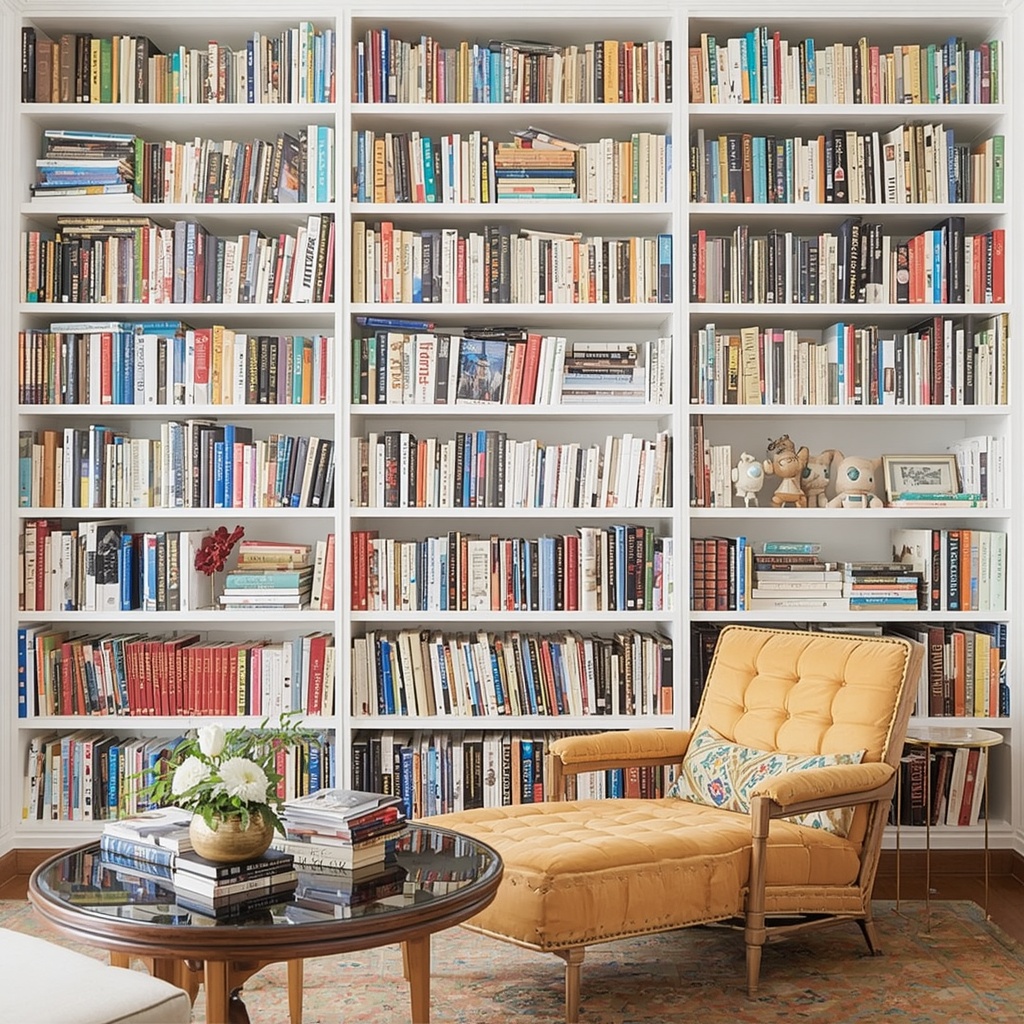
Here are the hybrid methods I use most often on projects across different home styles:
- Category first, color second — Group books by genre or subject (fiction, design, cookbooks), then arrange each category by color within its section.
- Author first, color as accent — Alphabetize your core library, then dedicate one accent shelf to a color-coded display of coffee table books.
- Size and color blocking — Group by height for a clean silhouette, then layer in color transitions within each height group.
- Vertical and horizontal stacking mix — Alternate upright rows with horizontal stacks topped by small decor objects to add rhythm and break monotony.
This layered approach is especially effective in open shelving, built-in bookcases, and floor-to-ceiling library walls, where a single system can start to feel flat or repetitive across a large surface area.
Styling Tips Beyond the Sorting System
Regardless of which organizational method you choose, a few universal styling principles will elevate any bookshelf from “storage” to “design feature.” These techniques work with color-based, author-based, or hybrid systems equally well.
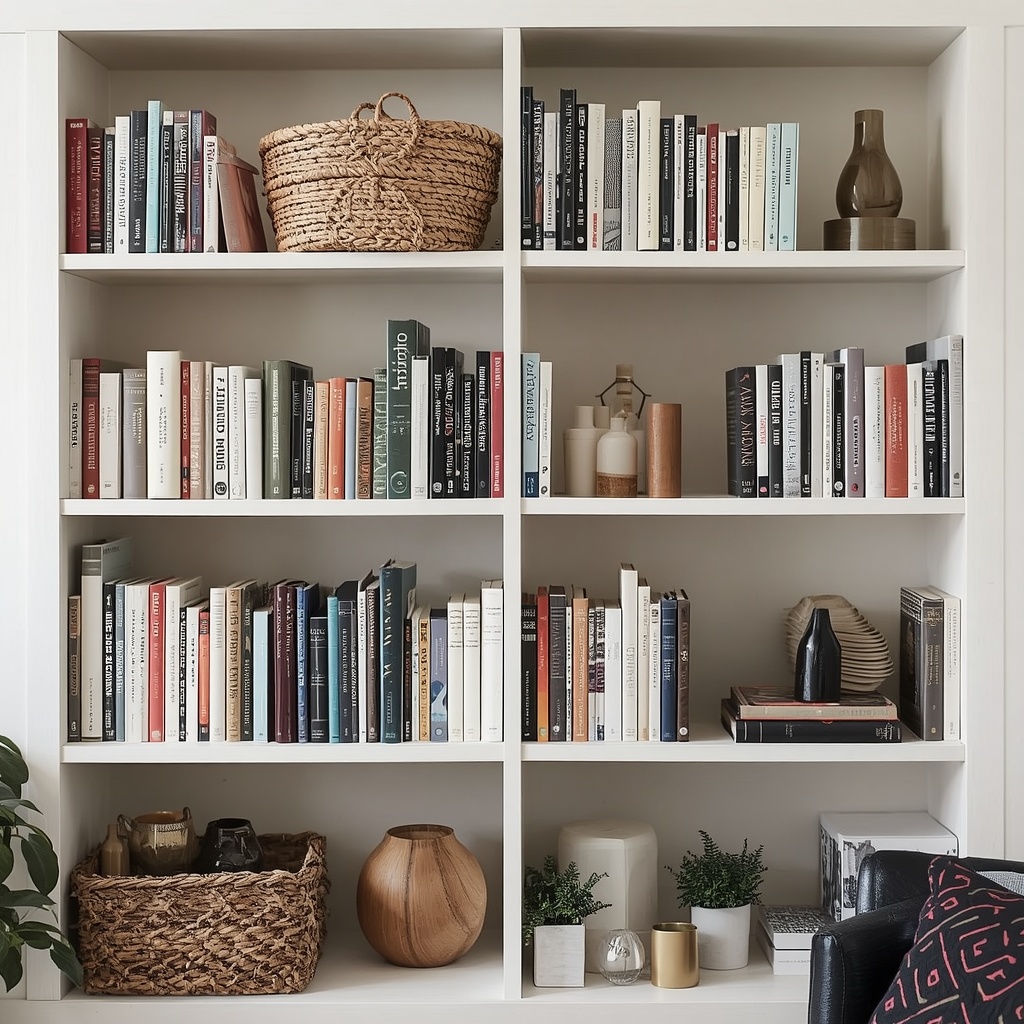
Negative space is your best friend. Avoid packing shelves edge to edge; instead, fill each shelf to roughly 70-80% capacity, leaving room for decorative objects, small plants, or framed art. Mixing vertical and horizontal stacks adds visual rhythm, and incorporating varied textures — ceramics, woven baskets, brass bookends — keeps the shelf from feeling one-dimensional.
Lighting also matters more than most homeowners realize. Built-in shelf lighting or a simple plug-in LED strip can transform a bookshelf into a genuine architectural feature, especially in dim corners or reading nooks common in many American living rooms.
Common Questions Homeowners Ask
Does color-coding damage or fade book spines faster? Not the organization method itself, but direct sunlight exposure will fade spines over time regardless of how they’re sorted. Position shelves away from south-facing windows or use UV-filtering window film if your bookshelf sits in direct light.
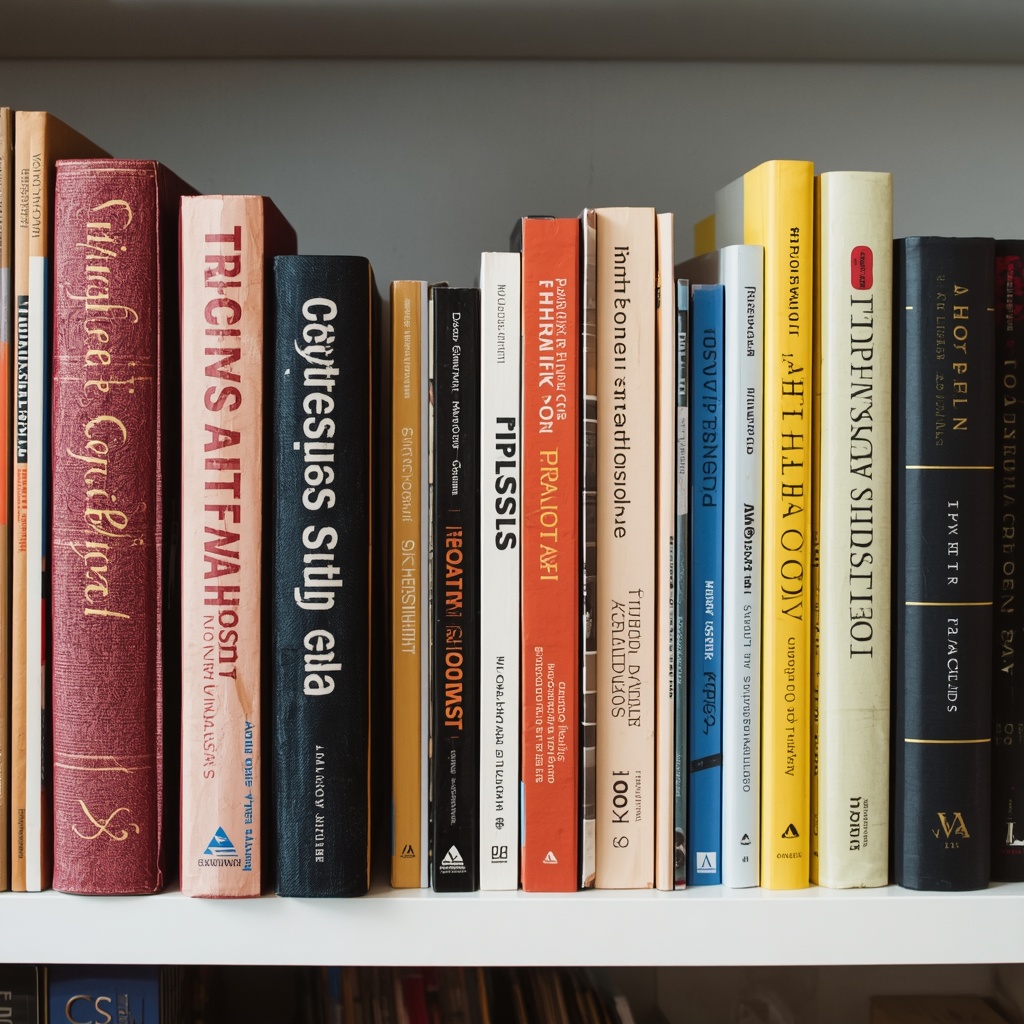
What if I have a mix of paperbacks and hardcovers? Group by format within your chosen system. Hardcovers on lower, sturdier shelves and paperbacks higher up creates better visual balance and protects your shelving unit from sagging under uneven weight.
Is there a best system for kids’ bookshelves? For children’s rooms, sort by size or subject rather than color or author, since young readers typically recognize books by cover image rather than spine text or alphabetical order.
Choosing the Right System for Your Lifestyle
Ultimately, the best organizational method depends on how you actually use your books. Ask yourself a few honest questions before committing to a full reorganization project.

- Do you read frequently and need to locate titles quickly?
- Is this shelf primarily decorative, or is it a working library?
- How large is your current collection, and how fast is it growing?
- Do other household members need to find books independently?
- Is this shelf in a high-visibility area like a living room or entryway?
If function tops your list, author-based sorting will serve you better long-term. If your bookshelf is more of a decorative feature in an already curated space, color-coding delivers stronger visual impact. And if you want the best of both, a hybrid system gives you room to enjoy both worlds without fully compromising on either.
Final Thoughts
There’s no universally “correct” answer in the color-versus-author debate — only the right answer for your specific home, habits, and collection. As a designer, I encourage clients to think of their bookshelf as a living design element that can evolve. Start with the system that matches your daily needs, then layer in styling touches that reflect your personal taste over time.

Whether you land on a rainbow gradient, a strict alphabetical library, or a thoughtful hybrid, the goal is the same: a bookshelf that looks good, functions well, and genuinely feels like your hom