
If you’ve ever stood in front of a packed closet insisting you have “nothing to wear,” you already know the problem isn’t quantity — it’s organization. As an interior designer who works with homes across the country, from cozy city apartments to suburban starter homes, I can tell you that small closets are one of the most common frustrations homeowners bring to me. The good news? You don’t need a walk-in closet to have a wardrobe that feels calm, curated, and functional. You need a system.
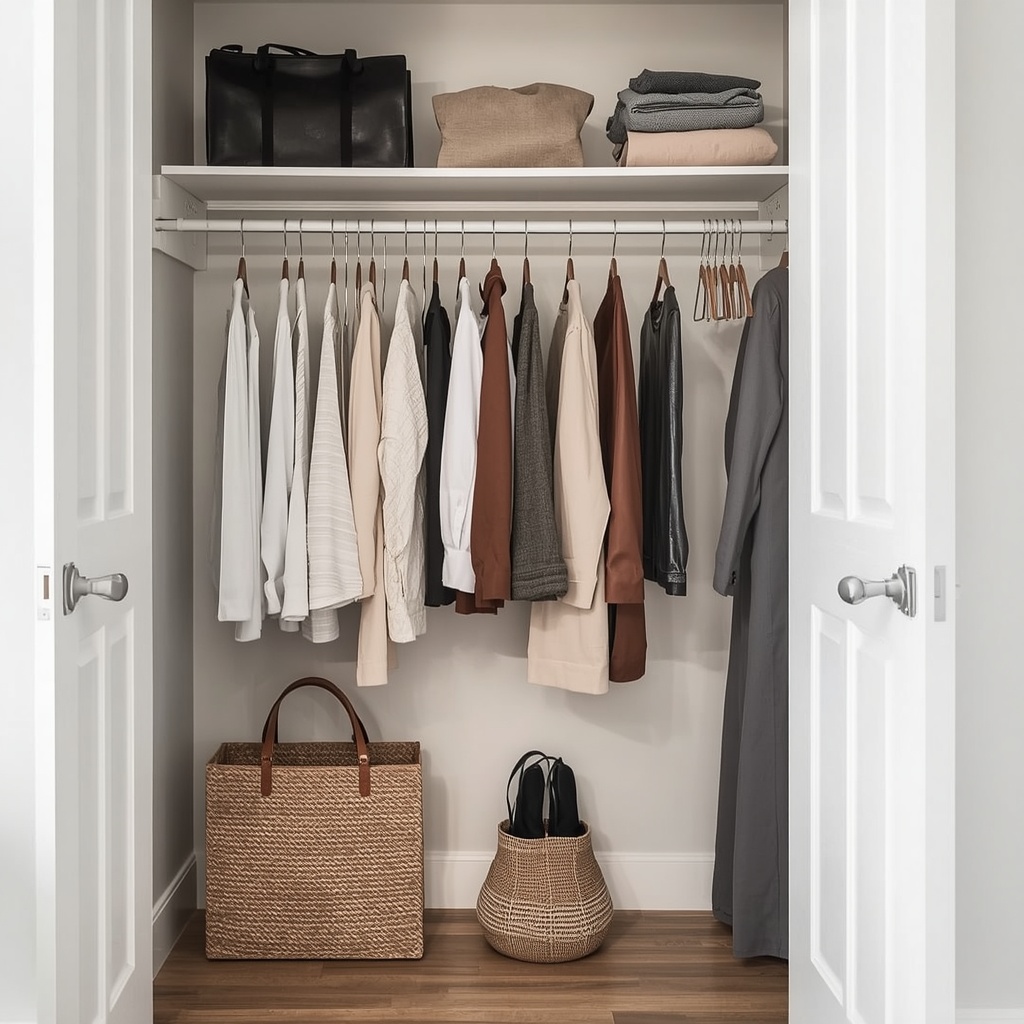
Minimalist wardrobe organization isn’t about owning fewer clothes for the sake of deprivation. It’s about intentional storage, smart use of vertical space, and a closet that actually works with your daily routine instead of against it. In this guide, I’ll walk you through the exact strategies I use with clients to transform cramped, chaotic closets into efficient, visually calming spaces — no renovation required.
Why Small Closets Feel So Overwhelming
Small closets aren’t inherently bad. In fact, some of the most beautifully organized wardrobes I’ve designed live in closets under 20 square feet. The overwhelm usually comes from three things: too many items competing for too little space, poor use of vertical real estate, and a lack of a “home” for every category of clothing.
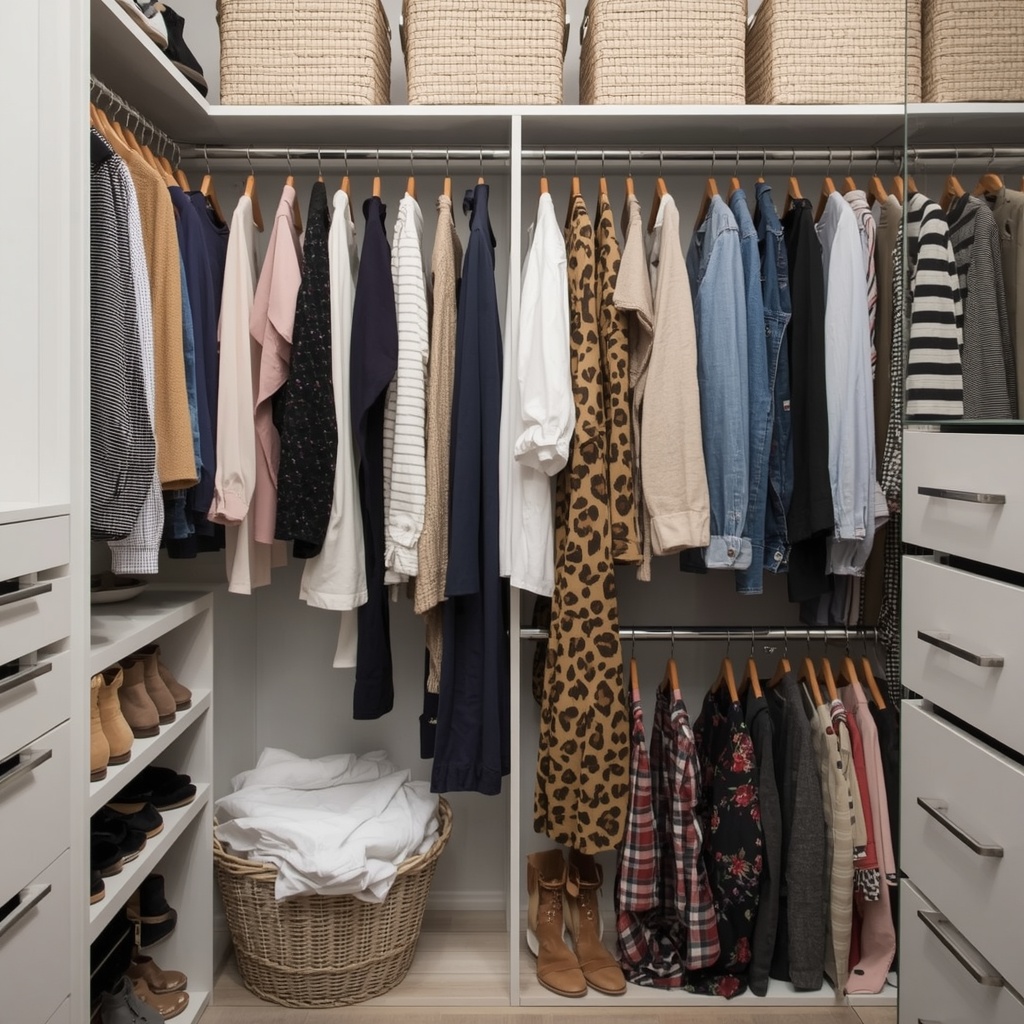
Think about your closet the way you’d think about a small kitchen. A tiny kitchen with smart cabinet organization can outperform a large kitchen with no system at all. The same logic applies to your closet space. When every hanger, shelf, and drawer has a defined purpose, even a 4-foot-wide reach-in closet can hold a fully functional, minimalist wardrobe.
“A closet is not a storage unit — it’s a daily tool. If it doesn’t support your morning routine, it’s not doing its job.” — This is the principle I share with nearly every client during a closet consultation.
Start With a Full Closet Audit
Before you buy a single organizer, bin, or hanger, you need to understand exactly what you own. This step is non-negotiable, and it’s where most DIY organization projects fail — people jump straight to buying storage products before decluttering.
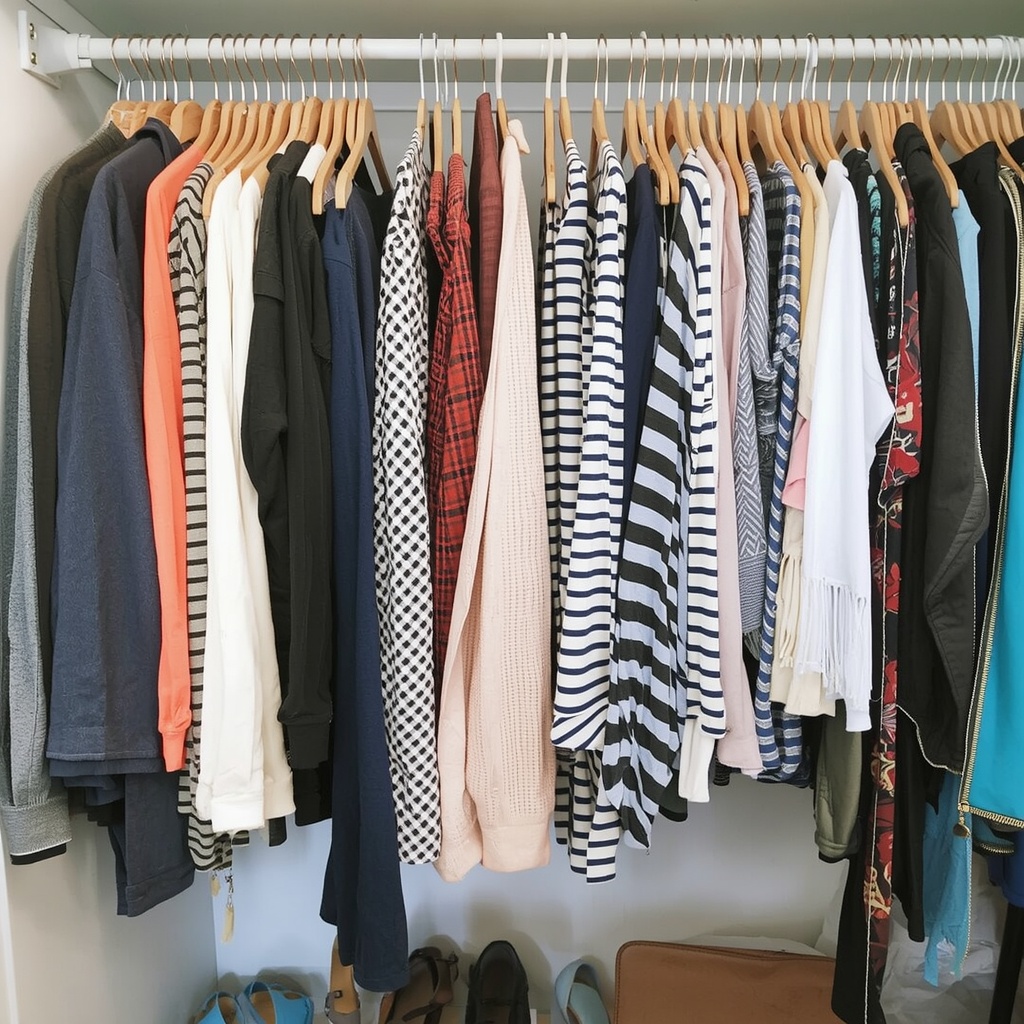
Pull every single item out of your closet, including shoes, accessories, and anything stored on the floor. Sort everything into four piles: keep, donate, repair, and discard. Be honest with yourself about the last time you actually wore each piece — if it’s been longer than a year (excluding seasonal or formal wear), it’s a strong candidate for the donate pile.
A quick audit checklist:
- Have I worn this in the last 12 months?
- Does it fit my current body and lifestyle?
- Would I buy this again today?
- Is it damaged beyond a quick repair?
- Do I own a near-duplicate of this item?
💡 Pro Tip
Use the “hanger trick” to track actual wear over the next 90 days: turn every hanger backward. Each time you wear an item, return the hanger facing the correct direction. After three months, anything still facing backward is clothing you genuinely don’t reach for — and it’s telling you something.
Building a Capsule-Style Foundation
A minimalist wardrobe works best when it’s built around a small, flexible core of pieces that mix and match easily. This is often called a capsule wardrobe, and it’s the backbone of nearly every small-closet design I create for clients. You don’t need 40 tops and 15 pairs of jeans — you need pieces that layer, coordinate, and serve multiple occasions.
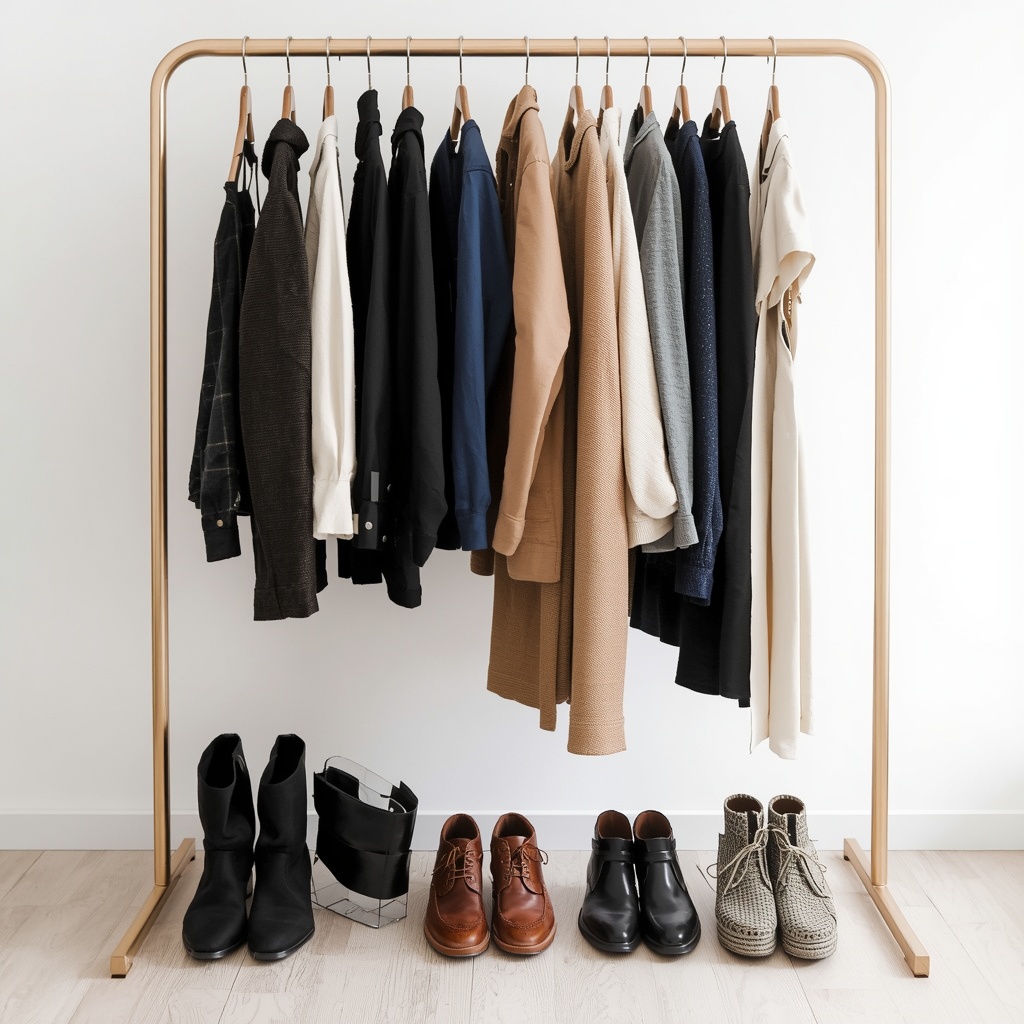
Focus on a neutral color palette as your base, then add two or three accent colors you genuinely love wearing. This approach does double duty: it simplifies your closet’s visual organization system, and it makes getting dressed each morning significantly faster because everything already works together.
| Wardrobe Category | Suggested Item Count | Notes |
|---|---|---|
| Tops | 10–12 | Mix of basics and 2–3 statement pieces |
| Bottoms | 5–7 | Include one dress option if needed |
| Outerwear | 3–4 | Seasonal layering pieces |
| Shoes | 5–6 pairs | Cover casual, work, and formal needs |
| Accessories | Curated selection | Bags, belts, scarves stored separately |
Keep in mind these numbers are a starting framework, not a strict rule. A parent with an active lifestyle will need different proportions than someone who works from home. The goal is a wardrobe that fits your real life, not an arbitrary number on a list.
Maximize Vertical Space First
In a small closet, the floor and single hanging rod are only a fraction of your available storage. Vertical space is where most closet organization potential goes untapped. I always tell clients: look up before you look for more square footage.
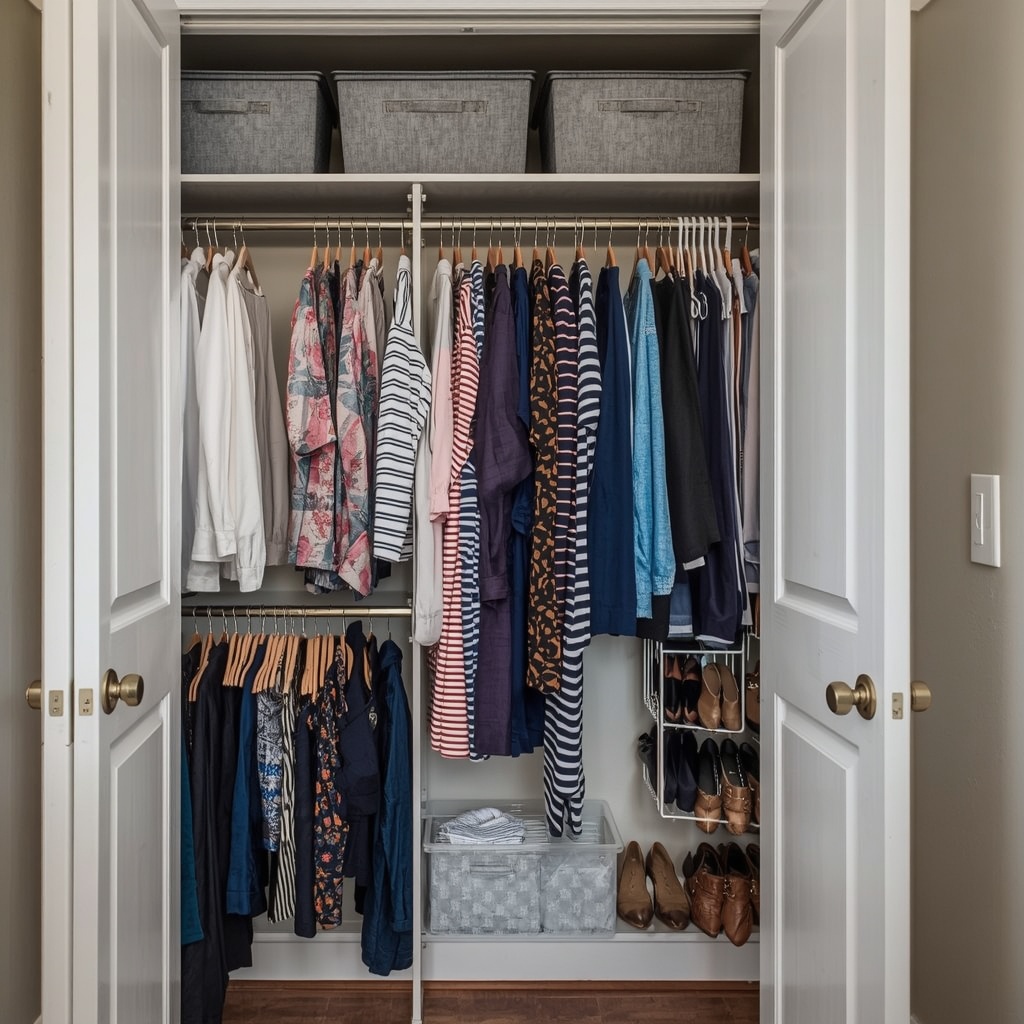
Adding a second, lower hanging rod beneath your existing one instantly doubles hanging capacity for shorter items like shirts, folded pants on hangers, and skirts. Above that, closet shelving or stackable bins can house off-season clothing, extra linens, or accessories you don’t need daily access to. Even a narrow gap beside your closet door can accommodate a slim, over-the-door shoe organizer or a hanging jewelry rack.
Vertical space upgrade ideas:
- Install a double hang rod system for tops and bottoms
- Add closet shelving above the top rod for bins and baskets
- Use an over-the-door organizer for shoes or accessories
- Mount hooks on the inside of the closet door for bags or robes
- Use stackable, labeled bins on the closet floor instead of loose piles
If you’re not ready for a full closet system installation, even a set of tension rods or an affordable closet organizer kit from a home goods retailer can make a noticeable difference within a weekend.
Choose the Right Hangers (Yes, It Matters)
This might seem like a small detail, but hanger consistency is one of the fastest ways to make any closet — small or large — look instantly more organized. Mismatched wire, plastic, and wooden hangers create visual clutter even when your clothing itself is neatly arranged. Slim, uniform hangers also take up significantly less rod space than bulky ones, which is critical in a compact closet.
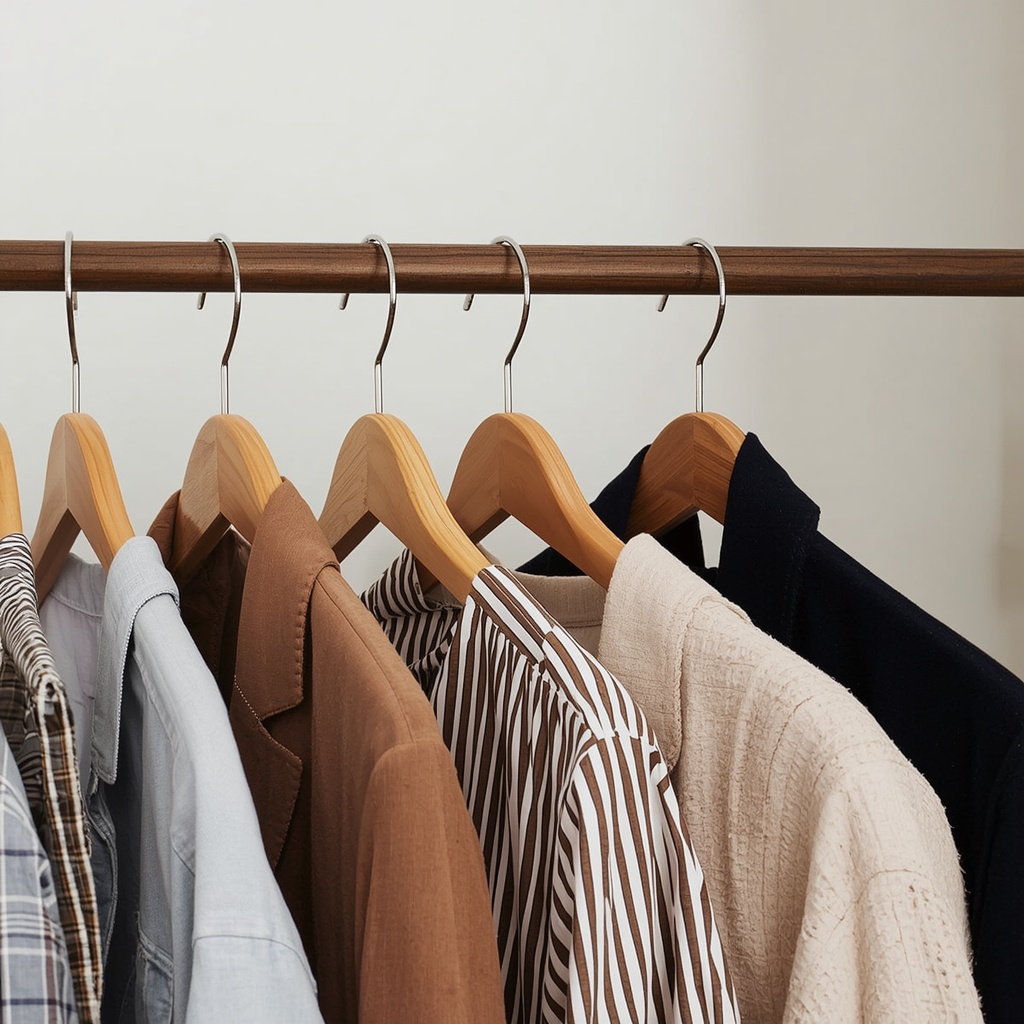
I recommend velvet-flocked slim hangers for most closets. They’re inexpensive, grip clothing well so items don’t slide off, and their thin profile can free up several extra inches of hanging space compared to standard plastic hangers. For heavier items like coats or blazers, a sturdier wooden hanger helps maintain the garment’s shape.
💡 Pro Tip
Swapping to matching slim hangers throughout your entire closet is one of the highest-impact, lowest-effort upgrades you can make. Clients are consistently surprised at how much more spacious their closet feels after this single change — often before anything else has even been reorganized.
Fold, Don’t Just Hang: The Vertical Folding Method
Not everything belongs on a hanger, and drawer space is precious in a small closet setup. This is where the vertical folding method — popularized by decluttering expert Marie Kondo — becomes especially useful. Instead of stacking folded clothes horizontally, where only the top item is visible, fold each piece into a small rectangle and stand it upright in the drawer.
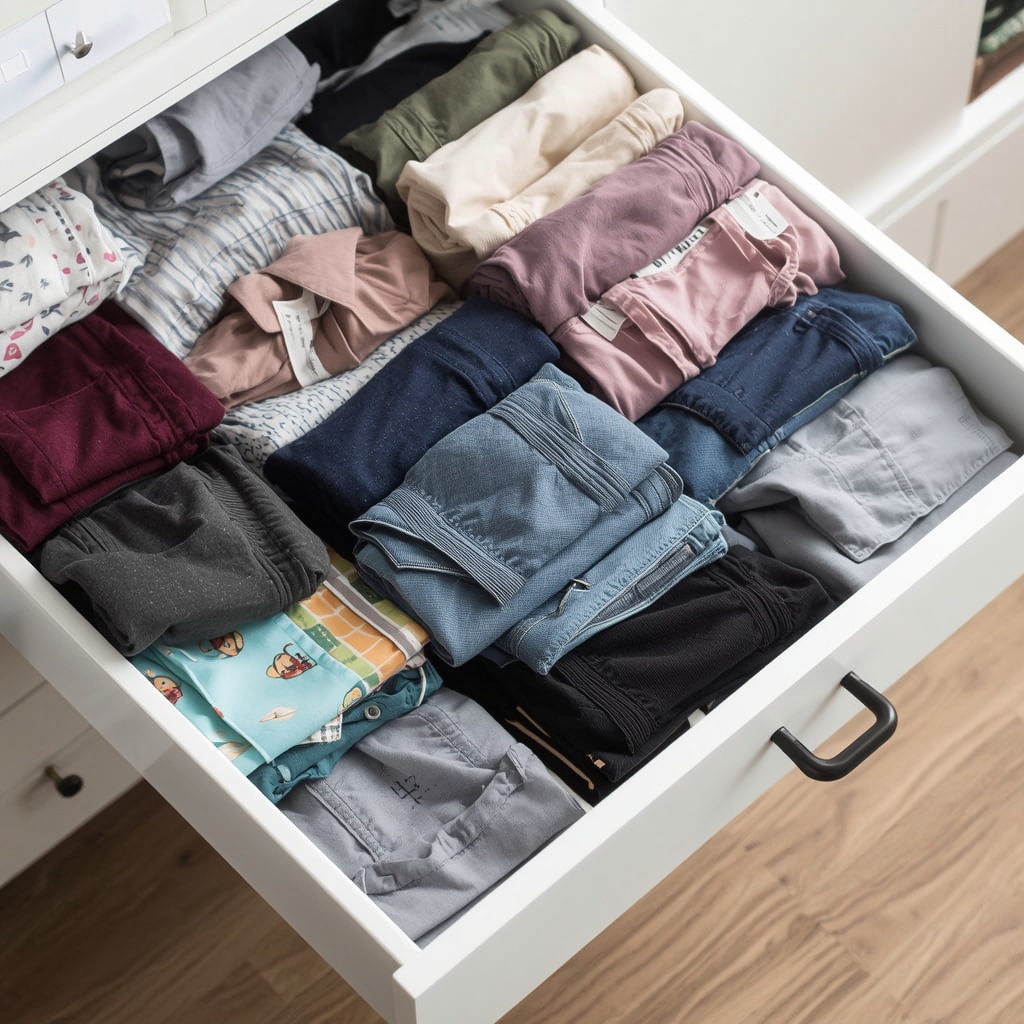
This method has two major benefits for minimalist wardrobe organization. First, you can see every single item at a glance instead of digging through a stack. Second, it actually increases drawer capacity because you’re using the full depth of the drawer rather than just the height.
Best candidates for vertical folding:
- T-shirts and casual tops
- Leggings and athletic wear
- Sweaters (to prevent shoulder stretching from hangers)
- Pajamas and loungewear
- Jeans and casual pants
Use Drawer Dividers and Bins for Small Items
Loose socks, underwear, scarves, and jewelry are often the biggest source of visual chaos in an otherwise organized closet. Without dividers, small items shift around, mix together, and make drawers look messy even right after you’ve tidied them. Simple fabric or acrylic drawer dividers solve this problem almost instantly.
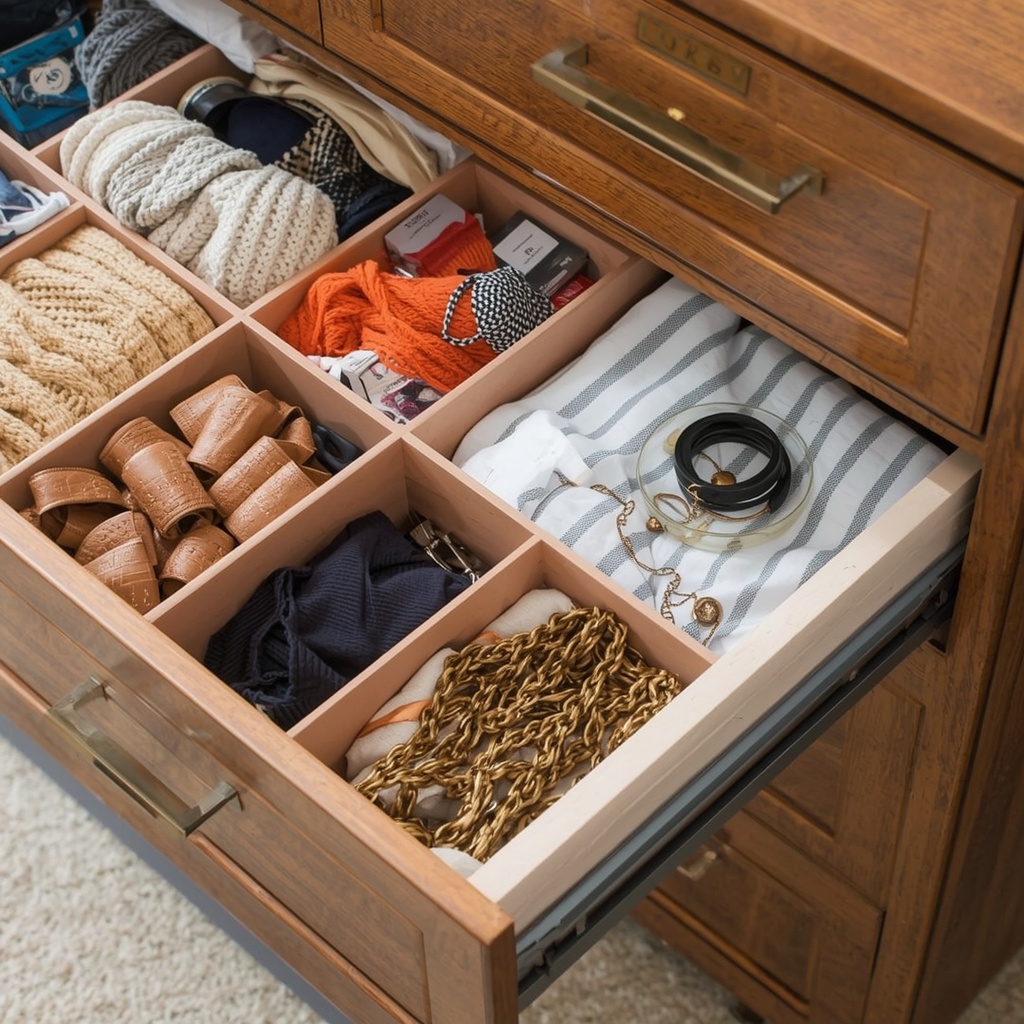
Group similar items together within labeled sections: one compartment for socks, one for undergarments, one for smaller accessories like belts or scarves. This categorization mirrors the same principle interior designers use in kitchen drawer organization — everything has an assigned zone, so nothing ends up wandering into the wrong space.
Color-Code and Categorize by Type
Once your closet has a functional structure, the final layer of minimalist organization is visual arrangement. Grouping clothing first by category (tops, bottoms, dresses, outerwear) and then by color within each category creates a closet that’s not only easier to navigate, but genuinely calming to look at. This is a technique borrowed directly from boutique visual merchandising, and it works beautifully in home closets too.
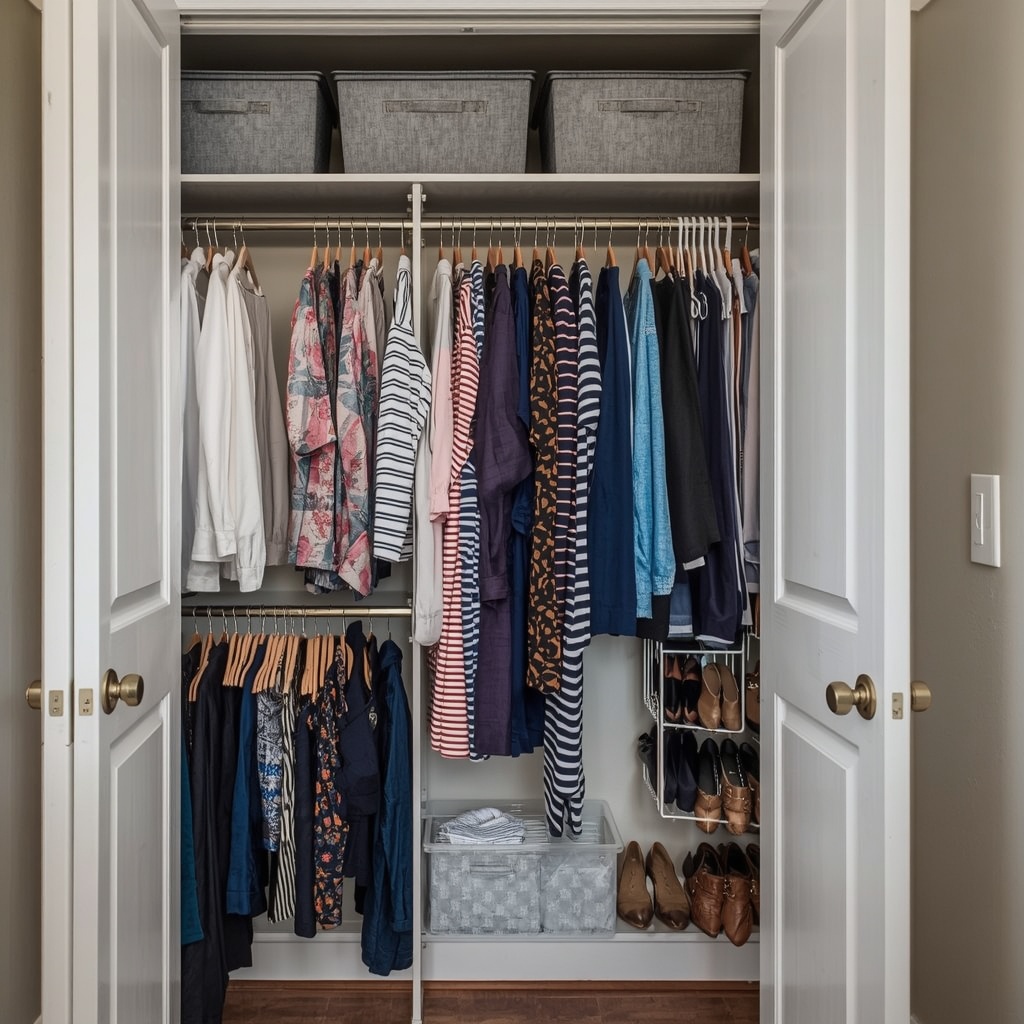
A color-graduated arrangement — light to dark, or arranged like a rainbow — also makes it immediately obvious when an item is missing or out of place, which helps maintain the system long after your initial organizing session. For a deeper dive into color theory in home spaces, resources like Houzz’s design guides offer helpful visual references you can apply to closet styling as well.
Rotate Seasonal Items Out of Sight
One of the biggest space-wasters in a small closet is keeping every season’s wardrobe accessible at once. You don’t need your heavy winter coats taking up prime hanging space in July. A seasonal rotation system frees up meaningful room for the clothing you’re actually wearing right now.
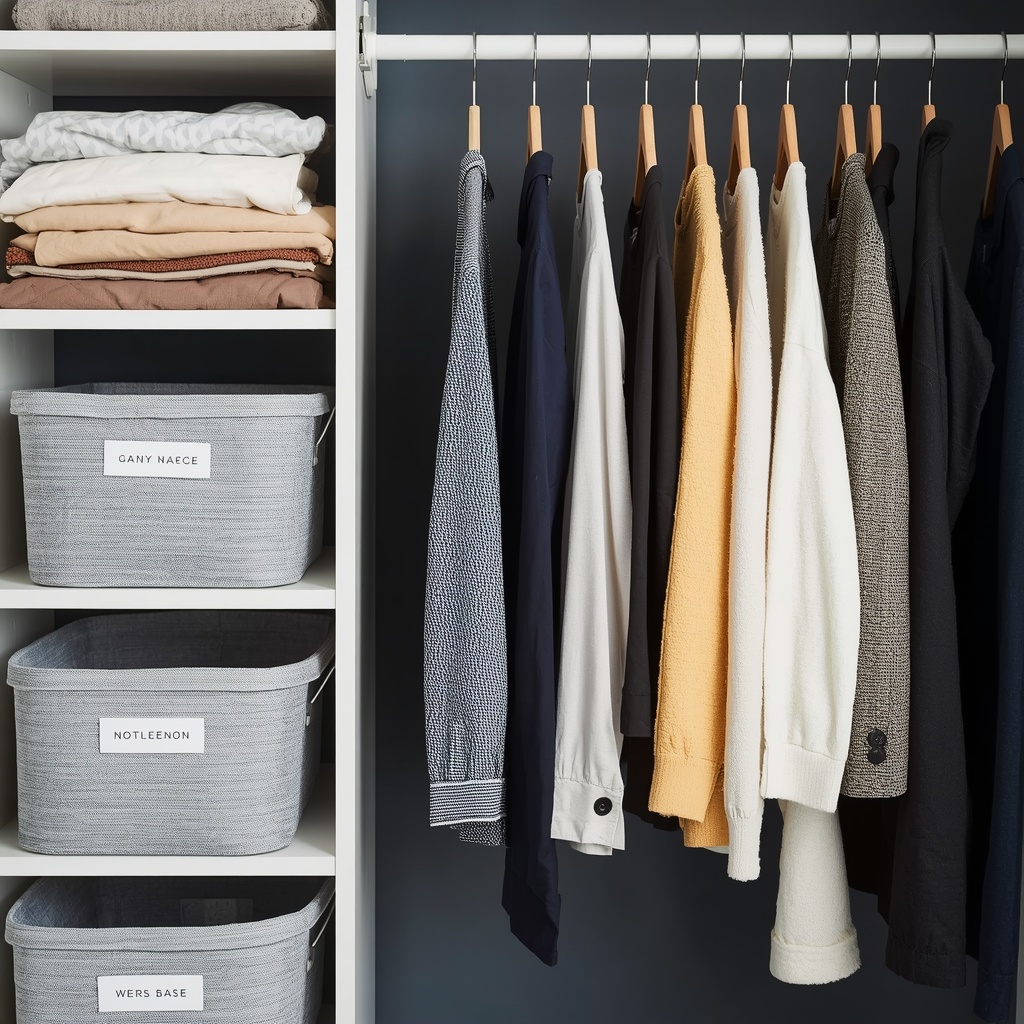
Store off-season items in labeled, breathable storage bins on a closet’s top shelf, under the bed, or in another storage area of your home. Rotate them in as the seasons change. This single habit can reduce your active closet inventory by 20–30%, which makes an enormous difference in a small space.
| Storage Zone | Best For |
|---|---|
| Top shelf bins | Off-season bulky items (coats, sweaters) |
| Under-bed storage | Extra shoes, seasonal bedding-adjacent clothing |
| Closet floor baskets | Everyday shoes, workout gear |
| Door-mounted organizer | Accessories, small daily-use items |
Maintain the System With a Simple Habit
Organizing your closet once is the easy part — keeping it that way is where most people struggle. The secret isn’t more willpower; it’s building maintenance into an existing habit. I recommend a “one in, one out” rule: for every new clothing item that enters your closet, one item leaves through donation, resale, or discard.
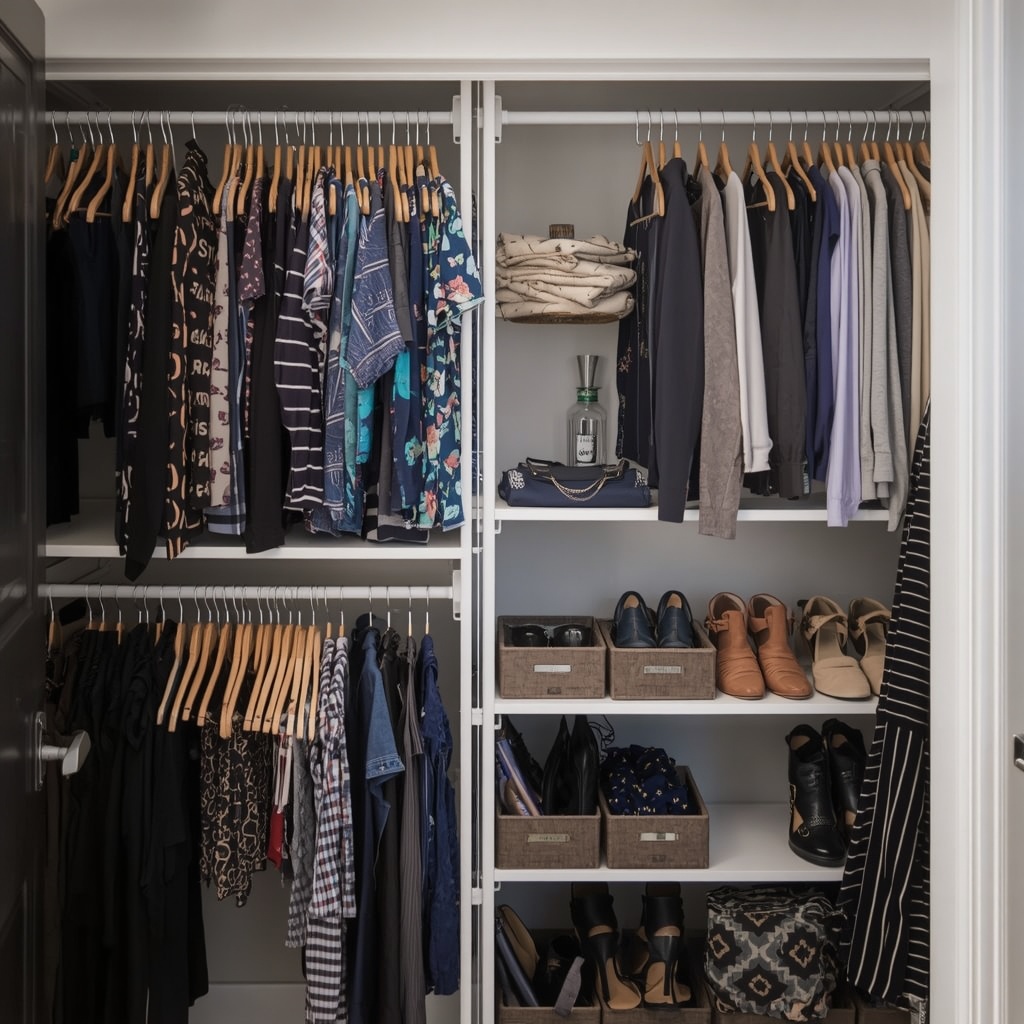
Set a recurring 10-minute closet reset every Sunday to rehang anything that’s ended up on a chair, refold items that have slipped in a drawer, and do a quick visual check that everything is still in its designated zone. This tiny weekly habit prevents the slow creep of clutter that eventually leads to another full overhaul.
💡 Pro Tip
Keep a small donation bag or bin inside or near your closet at all times. When you notice an item you no longer want, drop it in immediately rather than letting it pile back into your closet system. This removes friction from the decluttering process entirely.
Final Thoughts
A minimalist, well-organized closet isn’t about how much square footage you have — it’s about how intentionally you use the space available to you. Whether you’re working with a narrow reach-in closet or a shared bedroom wardrobe, the principles stay the same: audit honestly, maximize vertical space, use consistent storage tools, and build a maintenance habit that sticks.
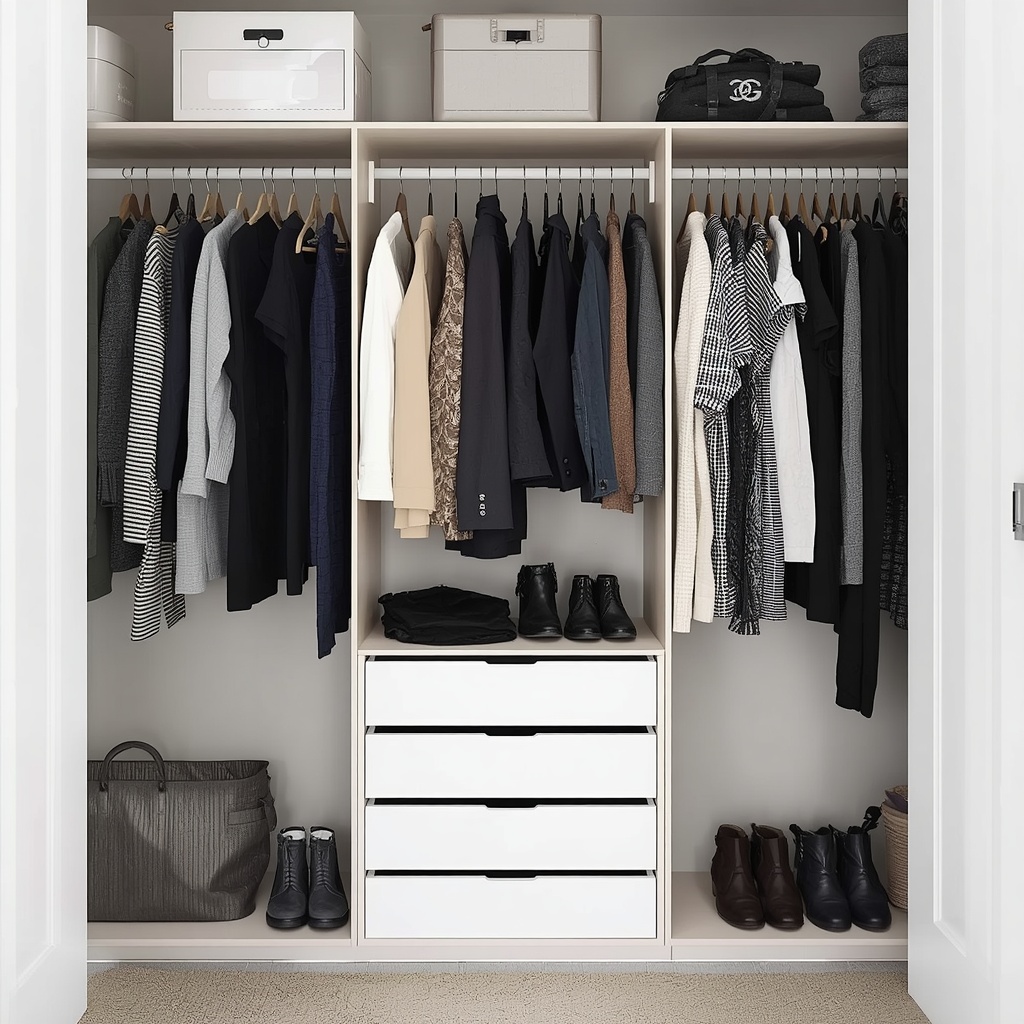
Small closets have real constraints, but they also force a level of intentionality that larger, cluttered closets often lack. With the right system in place, your closet can become one of the most functional, satisfying spaces in your entire home — proof that good design isn’t about size, but about how thoughtfully a space is put together.