
Walk into any high-end bathroom showroom today and you’ll immediately notice one thing: flat, glossy vanity tops are sharing shelf space — and losing ground — to richly textured surfaces that beg to be touched. Whether it’s a honed limestone with a subtle grain, a leathered quartzite with a three-dimensional feel, or a concrete-look porcelain with micro-ridges you can trace with a fingertip, textured finishes on vanity tops have become one of the most sought-after design choices for American homeowners and beyond.
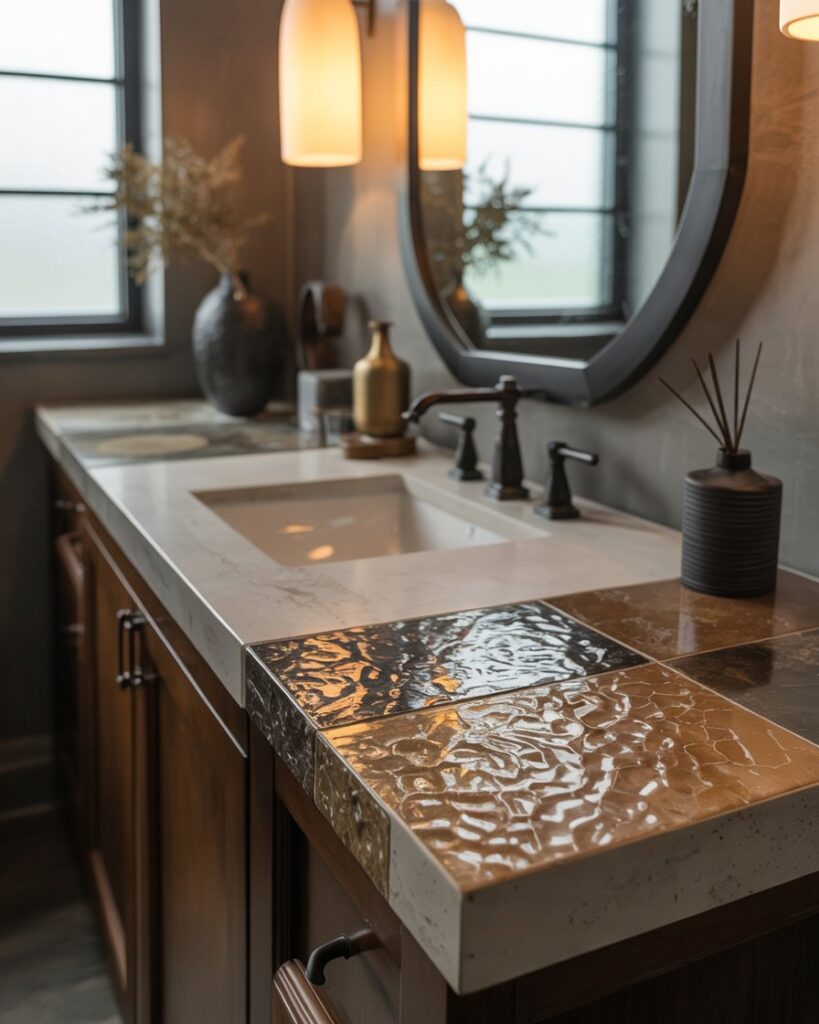
As an interior designer who has helped hundreds of US homeowners transform their bathrooms from purely functional spaces into personal sanctuaries, I can tell you that the surface finish of your vanity top is one of the most impactful decisions you’ll make. It sets the tactile tone, affects how light moves through the room, dictates your maintenance routine, and — most importantly — tells a story about your personal style. A leathered granite whispers rustic luxury; a brushed concrete finish shouts urban cool.
In this comprehensive guide, I’m walking you through everything you need to know about textured finishes for vanity tops: from understanding the different finish types and their real-world performance, to choosing the right texture for your specific bathroom style, to maintaining these surfaces so they stay gorgeous for decades. Bookmark this — it’s the only resource you’ll need.
What Are Textured Finishes — and Why Are They Having a Moment?
In interior design terminology, a “finish” refers to the surface treatment applied to a stone, engineered material, or tile after it has been cut or formed. Polished finishes create a mirror-like sheen by grinding the surface with progressively finer abrasives. Textured finishes, by contrast, intentionally interrupt that smooth surface — either by stopping the polishing process early, using abrasive brushing, sandblasting, or applying chemical treatments that reveal the raw character of the material beneath.
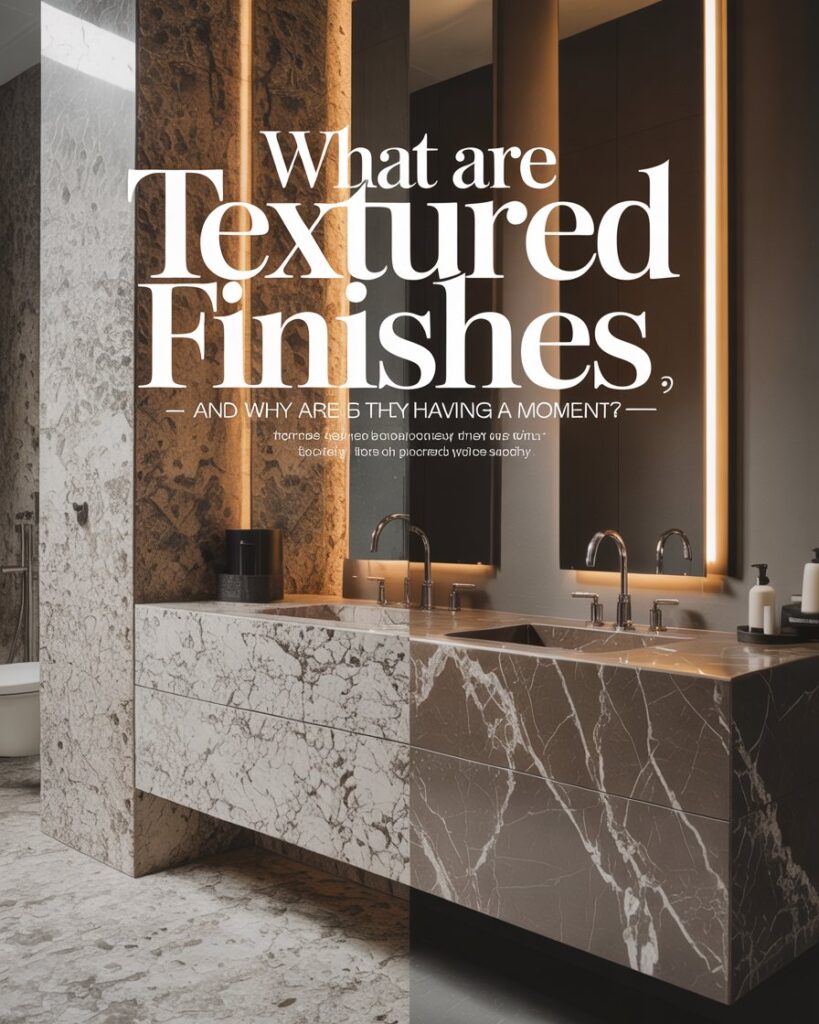
The resurgence of textured finishes is not accidental. American design sensibility has been moving away from the cold perfection of high-gloss surfaces and toward what designers call “organic warmth” — materials that feel handcrafted, aged, and alive. Influenced by Japanese wabi-sabi philosophy, Scandinavian minimalism, and the farm-to-table aesthetic that has swept interior design over the past decade, homeowners increasingly want their spaces to feel authentic rather than showroom-perfect. A honed marble vanity top with its soft, chalky depth achieves this in a way no polished slab can.
There is also a practical dimension. Textured finishes are significantly more forgiving in a bathroom environment than their glossy counterparts. Polished surfaces show every water spot, fingerprint, and soap smear with unforgiving clarity. A leathered or brushed surface, by contrast, disguises everyday wear and requires far less moment-to-moment maintenance — a point that resonates strongly with busy American households.
Finally, there is the matter of safety. Textured surfaces offer better grip when wet, a consideration that matters enormously in a space where slip hazards are real. Several of my clients with young children or elderly family members have chosen textured vanity tops specifically for this reason, and the added aesthetic benefit is simply a welcome bonus.
“The bathroom is the one room where material authenticity matters most — it’s where we begin and end each day, stripped of pretense. A textured vanity top acknowledges that.”— Interior designer perspective on sensory-first bathroom design
The Main Types of Textured Finishes for Vanity Tops
Not all textured finishes are created equal. Each technique produces a distinctly different look and feel, and each has its own performance profile in a wet bathroom environment. Here is a breakdown of the most popular options you’ll encounter when shopping for a new vanity top.
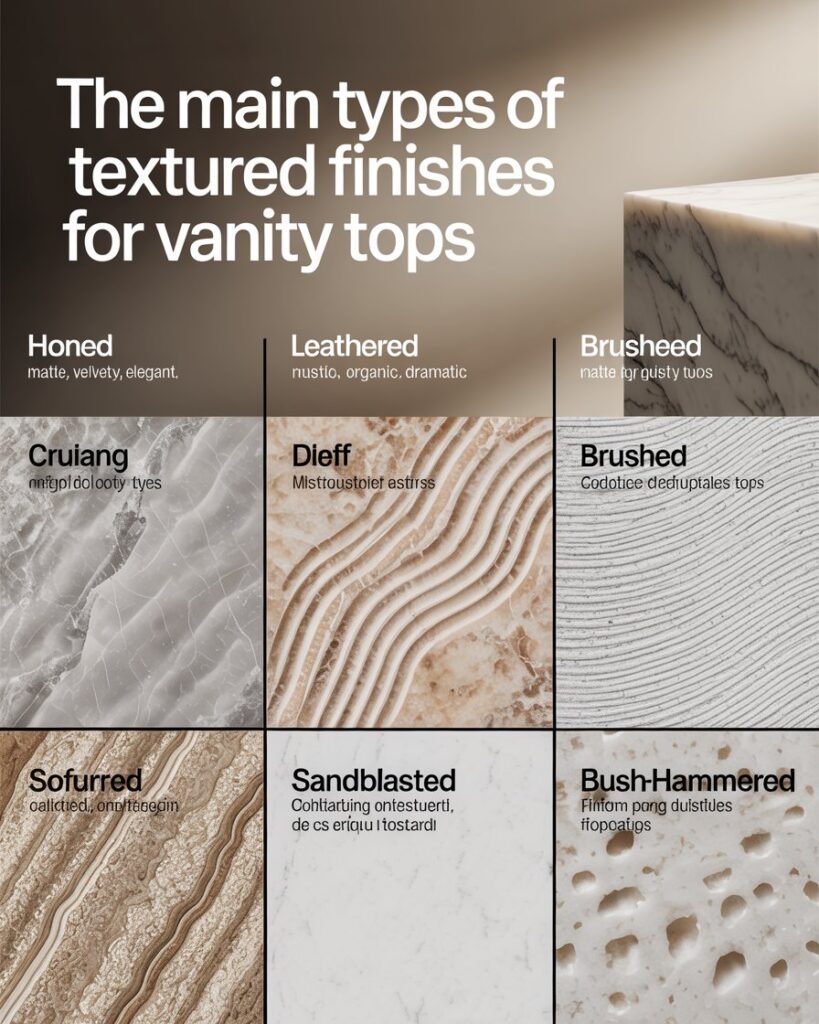
Honed
Matte, velvety, elegant. The most versatile textured finish.
Leathered
Rustic, organic, dramatic. Hides fingerprints beautifully.
Brushed
Linear texture with soft sheen. Great for modern looks.
Sandblasted
Uniform matte, aged feel. Ideal for rustic or industrial styles.
Bush-hammered
Rough, pitted surface. Bold industrial or spa character.
Honed finish is achieved by stopping the polishing process before a full shine develops, leaving the stone with a smooth but non-reflective, matte surface. Think of it as the difference between buffed leather shoes and suede — honed is the suede. It is the most popular textured vanity top finish in the US market right now, particularly for marble and limestone.
Leathered finish is created by running diamond-tipped brushes across the surface of natural stone, raising its crystalline structure into a subtle, undulating texture. It produces a finish that looks like aged leather and feels like dragging your hand over a very fine canvas. It works particularly well with granite and quartzite because these denser stones respond beautifully to the brushing process.
Brushed finish uses wire or abrasive brushes to create fine, consistent linear striations across the surface. The result is a controlled texture with a soft, directional quality — like the grain of brushed steel but warmer. This finish is popular for engineered quartz and porcelain vanity tops as well as natural stone.
Sandblasted and bush-hammered finishes are the bolder end of the texture spectrum, creating highly tactile, almost raw surfaces that work beautifully in industrial, spa-inspired, or resort-style bathroom designs. They are less common on residential vanity tops but increasingly appear in high-end custom projects.
Comparing Textured Finishes: Performance, Maintenance, and Cost
Choosing the right textured finish is not only about aesthetics — it’s about how the surface will actually perform over years of daily use in a humid, splash-prone environment. Here is a practical comparison of the main finish types across the criteria that matter most to American homeowners.
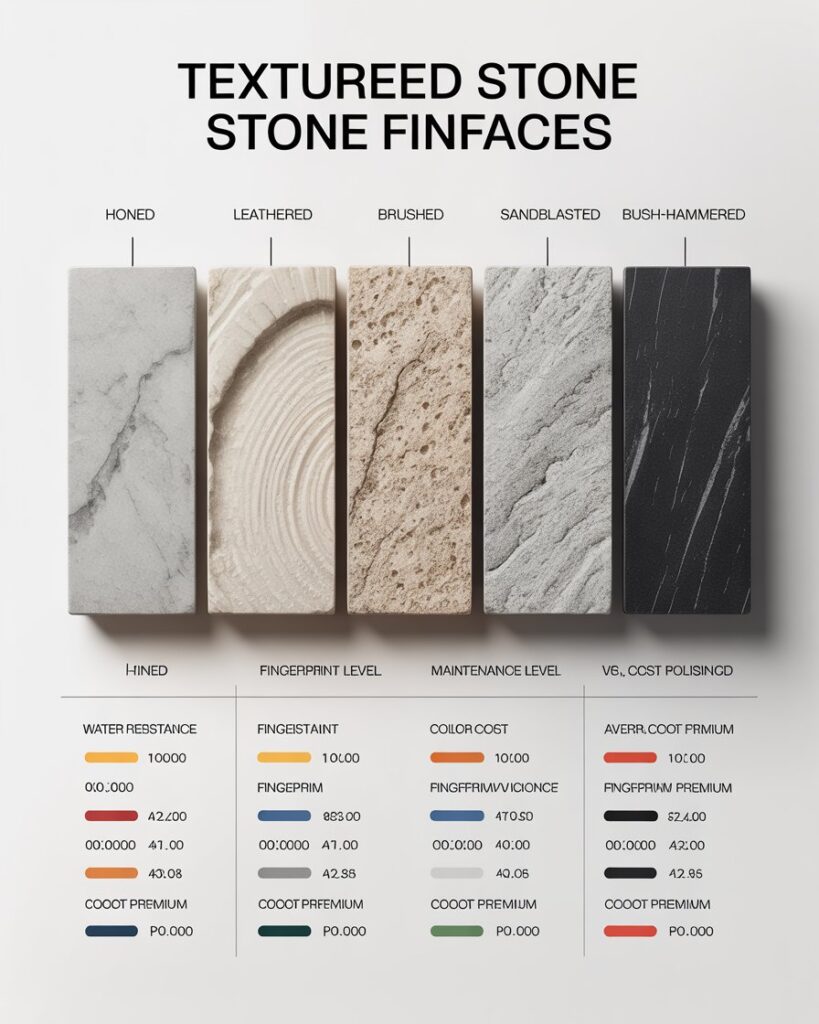
| Finish Type | Water Resistance | Fingerprint/Smear Visibility | Maintenance Level | Avg. Cost Premium vs. Polished |
|---|---|---|---|---|
| Honed | Moderate (needs sealing) | Low | Easy — wipe clean | +5–15% |
| Leathered | Good (less porous than honed) | Very Low | Easy — highly forgiving | +15–25% |
| Brushed | Good | Low–Moderate | Easy | +10–20% |
| Sandblasted | Lower (open pores) | Very Low | Moderate (regular sealing needed) | +20–35% |
| Bush-hammered | Lower (rougher surface traps moisture) | Very Low | Moderate–High | +25–40% |
Pro Tip
Always ask your stone supplier for a physical sample of the actual finish — not a photograph — before committing to any textured vanity top. Textures read completely differently in photos versus in person, and the way a finish interacts with your bathroom’s specific lighting (natural vs. recessed vs. sconce) can be the difference between a surface that glows warmly and one that looks flat and dull. I always bring samples to my clients’ bathrooms and hold them under the existing light fixtures before making a final recommendation.
Best Textured Finish Pairings by Bathroom Style
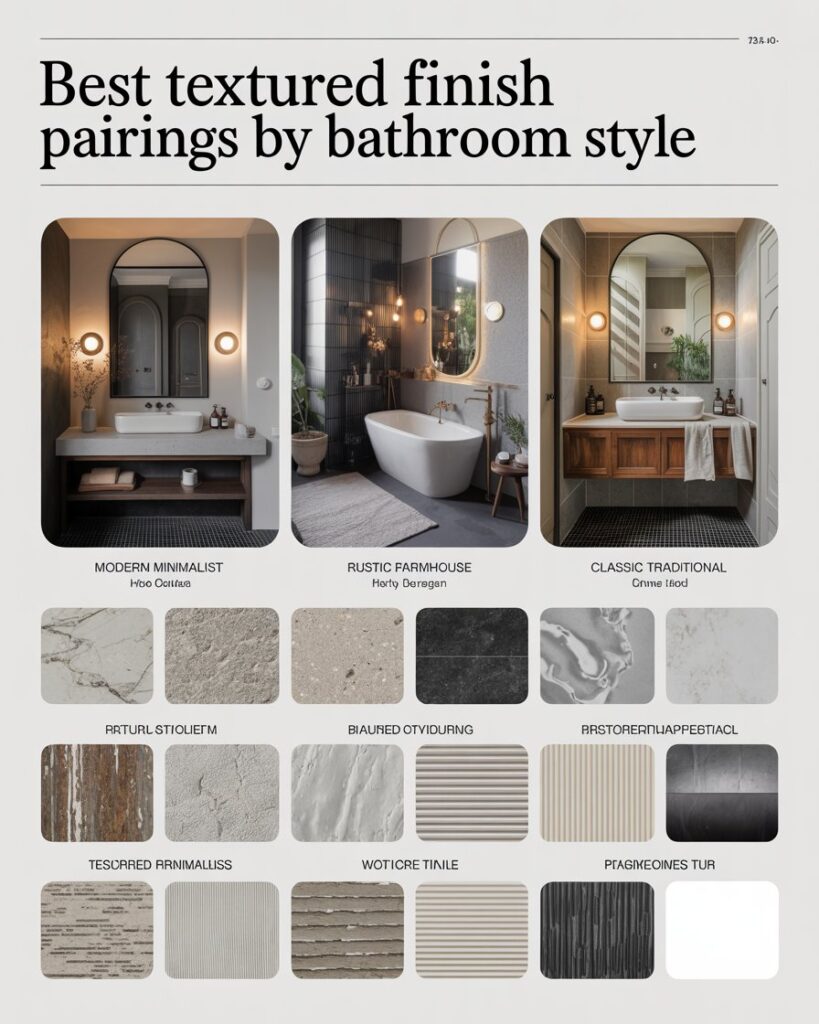
One of the most common questions I get from clients is: “Which textured finish goes with my bathroom style?” The answer is always nuanced — a great designer can make almost any finish work in almost any setting — but there are natural pairings that make the decision easier. Below are my most-recommended combinations after years of designing bathrooms across the US.
| Bathroom Design Style | Recommended Finish | Best Material | Color Palette |
|---|---|---|---|
| Modern Farmhouse | Honed | White marble or soapstone | Warm whites, blacks, warm grays |
| Contemporary / Minimalist | Brushed or honed | Concrete-look porcelain or quartz | Cool whites, charcoal, greige |
| Industrial / Urban Loft | Sandblasted or bush-hammered | Granite or concrete | Charcoal, steel, warm amber |
| Rustic / Cabin | Leathered | Quartzite or slate | Earth tones, warm browns, forest greens |
| Spa / Resort Style | Honed or leathered | Travertine or limestone | Sand, taupe, soft stone, white |
| Traditional / Classic | Honed | Marble or limestone | Warm whites, soft creams, navy |
How to Choose the Right Textured Vanity Top Finish for Your Bathroom
Selecting the perfect textured finish for your vanity top comes down to four key factors that I walk every client through before we make a final decision. Think of this as your personal decision framework — your shortcut to avoiding the regret that comes from choosing a surface based purely on how it looks in a magazine photo.
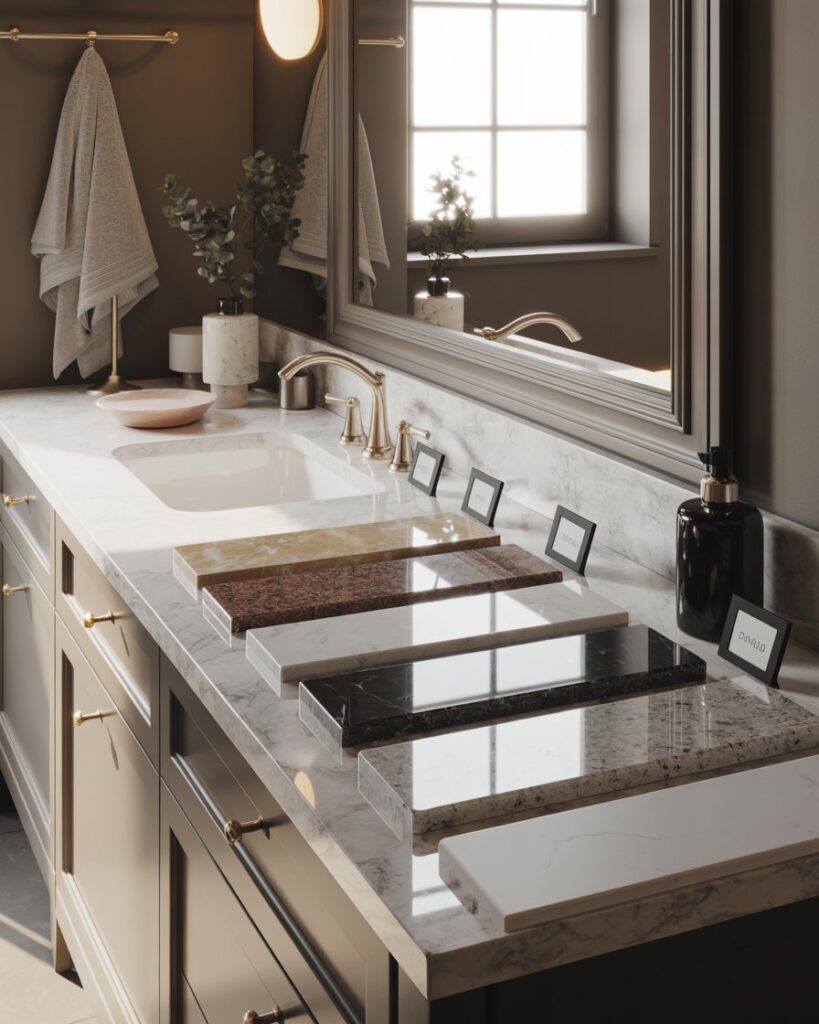
First, consider your household’s daily use patterns. Do you have kids who will leave toothpaste splatter on every surface? Do you or your partner wear makeup and use a lot of product near the sink? High-traffic, high-mess bathrooms benefit enormously from leathered or brushed finishes, which camouflage the evidence of daily life far better than any polished surface ever could. A honed marble, while beautiful, will show watermarks and require more frequent wiping — a trade-off that is perfectly acceptable for a guest bath but can become frustrating in a primary bathroom used by three kids under twelve.
Second, think carefully about your lighting environment. Textured finishes absorb and scatter light rather than reflecting it, which means they tend to make a space feel warmer, more intimate, and slightly more enclosed. In a small bathroom with limited natural light, a highly textured surface can deepen shadows and make the room feel smaller. In a large, well-lit master bath, that same finish creates a luxurious, cave-like depth that feels intentional and spa-like. My general rule: the smaller and darker the bathroom, the lighter and more subtly textured the vanity top should be.
Third, consider long-term sealing and maintenance commitments. Natural stone in almost any finish will need to be sealed periodically — typically once a year for honed marble and limestone, and less frequently for denser stones like granite in a leathered finish. If the idea of remembering annual maintenance tasks makes you anxious, engineered quartz or porcelain in a textured finish gives you the visual character of natural stone with none of the sealing requirements. Many of my clients are surprised to learn that a brushed quartz vanity top can look remarkably close to natural stone while being virtually maintenance-free.
Fourth and finally, think about resale value and design longevity. Textured finishes — particularly honed marble and leathered granite — have proven their staying power in the design market. Unlike some finish trends that peak and fade quickly, these surfaces have been prized in high-end homes for decades. If you are renovating with an eye toward resale, a well-chosen textured vanity top in a neutral palette is consistently one of the features that buyers notice and value most.Textured Finish Maintenance: Keeping Your Vanity Top Beautiful for Decades
The number one concern I hear from homeowners considering a textured vanity top is maintenance. Will a honed marble show every water spot? Will a leathered granite be impossible to clean? These are legitimate questions, and the honest answer is: textured finishes are generally easier to maintain than polished ones, but they require the right approach. Here is your complete maintenance guide.
- Seal natural stone annually — use a penetrating, impregnating sealer designed specifically for the stone type. For honed marble, apply sealer after the surface has been completely dried and cleaned. Leathered granite typically needs sealing less frequently due to its reduced porosity compared to honed surfaces.
- Wipe spills immediately — this applies to all stone finishes, but especially to honed limestone and travertine, which are more porous and more susceptible to staining from acidic substances like lemon juice, vinegar-based cleaners, and even toothpaste.
- Use pH-neutral cleaners only — avoid bleach, ammonia, and vinegar on any natural stone surface. A mild dish soap diluted in warm water is perfect for daily cleaning of textured vanity tops. For tougher stains, a stone-specific cleaner from brands like Miracle Sealants or StoneTech is your best option.
- Use soft microfiber cloths — abrasive scrubbers can gradually alter the texture of softer stone finishes like honed marble. A soft microfiber cloth is all you need for daily wiping.
- Avoid standing water — while all textured finishes handle incidental splashing well, leaving standing water on the surface for extended periods (especially around the faucet base) can lead to mineral deposits and, in the case of unsealed stone, surface staining.
Pro Tip
Before sealing a new honed or leathered natural stone vanity top for the first time, do the “water droplet test” — drop a small amount of water on the surface and watch what happens. If the water beads up, the stone is still protected. If it soaks in and darkens the surface within 3–4 minutes, it’s time to seal. This simple test takes 5 seconds and tells you exactly where your stone stands without any guesswork.
Trending Textured Vanity Top Materials
The US bathroom design market is seeing several textured finish materials rise to prominence as we move into the latter half of the decade. These materials are showing up in showrooms from New York to Los Angeles, and in the portfolios of top interior designers across the country.
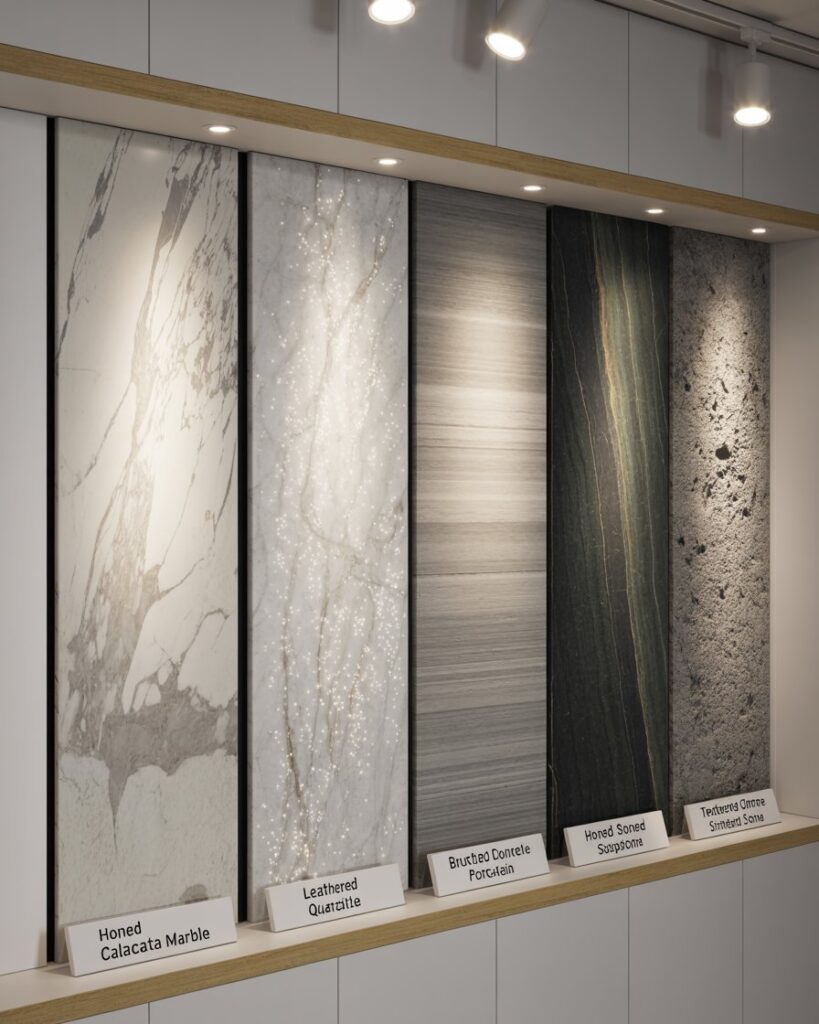
- Honed Calacatta marble — the all-time classic stone in its most wearable finish. The soft matte surface takes the high-contrast drama of Calacatta’s bold veining and gives it a quiet, approachable quality that works in both traditional and contemporary bathrooms.
- Leathered quartzite — quartzite has been gaining serious market share over marble because of its superior hardness and stain resistance, and the leathered finish brings out its natural crystalline shimmer in a subtle, three-dimensional way that polished quartzite simply cannot match.
- Brushed concrete-look porcelain — large-format porcelain tiles with a brushed, concrete-look finish are increasingly being fabricated into vanity tops, offering the industrial aesthetic of real concrete without any of the porosity, staining risk, or maintenance burden.
- Honed soapstone — soapstone has seen a remarkable resurgence in American kitchen and bathroom design. Its naturally matte surface, deep charcoal-to-green color palette, and near-impervious resistance to staining make it an exceptional vanity top choice that only improves with age.
- Textured sintered stone (Dekton and Neolith) — ultra-compact sintered stone panels are available in a growing range of textured surface finishes that mimic leathered granite, honed marble, and rough concrete, while offering a surface that is essentially impervious to heat, scratches, and staining.
Final Thoughts: Texture as a Design Philosophy
The choice to add texture to your vanity top is ultimately a choice to bring more of the physical world into your bathroom — more depth, more warmth, more of the sensory richness that makes a space feel inhabited and personal rather than staged and sterile. In a culture that has become increasingly dominated by smooth, glowing screens and perfectly finished surfaces, there is something profoundly satisfying about a material that pushes back against your fingertips and reminds you that it came from the earth.
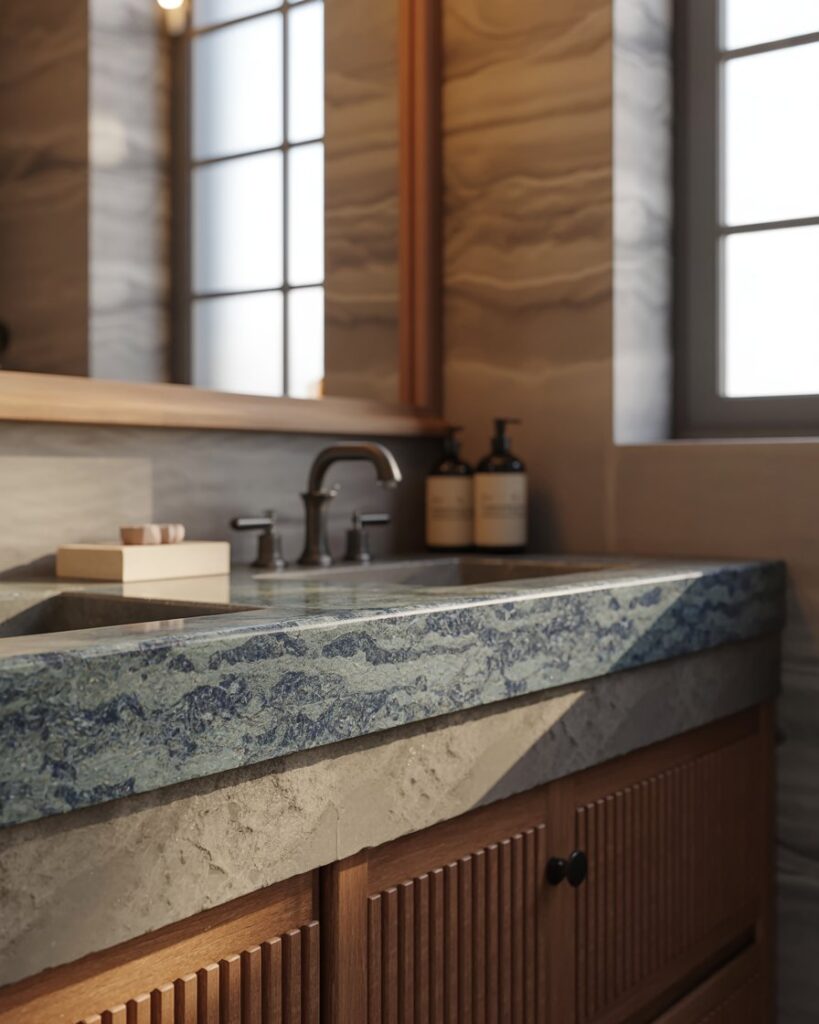
Whether you choose the chalky velvet of a honed Carrara marble, the rugged character of a leathered Blue Bahia granite, or the understated cool of a brushed concrete-look porcelain, you are making a statement that your bathroom is a place of intention and considered beauty. That investment — in material quality, in surface character, in sensory experience — is one that pays dividends every single morning when you walk in and feel the day starting in a space that was designed with care.
If you are ready to explore textured vanity top options, I recommend visiting a stone showroom in person rather than shopping online — ask to see full slabs in natural light, run your hand across the surface, and take a sample home. The right textured finish will feel as right to the touch as it looks to the eye, and that is when you’ll know you’ve found your match.
For further reading, the National Kitchen and Bath Association (nkba.org) publishes annual design trend reports with extensive coverage of surface finish preferences across US markets. The Marble Institute of America (marble-institute.com) is an excellent resource for technical guidance on sealing and maintaining natural stone vanity tops.