
By Sarah Monroe, Interior Designer Home Decor & Wood Finishing words

Wood finishes are one of the most powerful — and most misunderstood — tools in a home designer’s kit. Whether you’re layering a matte oak dining table with a glossy lacquered credenza, or blending warm walnut with a satin-finish fir, knowing how to mix sheens correctly can make your space feel curated and intentional rather than chaotic. This guide walks you through everything you need to know about mixing wood finishes from matte to gloss — confidently.
wood finishes matte finish gloss finish satin sheen interior design home decor trends wood grain furniture styling natural wood tones sheen levels.
Why Mixing Wood Finishes Works — When Done Right
Walk into any high-end home showroom in New York or Los Angeles and you’ll notice something immediately: no two wood pieces are the same. That matte, wire-brushed oak console sits next to a high-gloss lacquered cabinet, and somehow it all feels cohesive. That’s not an accident — it’s intentional finish mixing, one of the most sophisticated techniques in contemporary interior design.
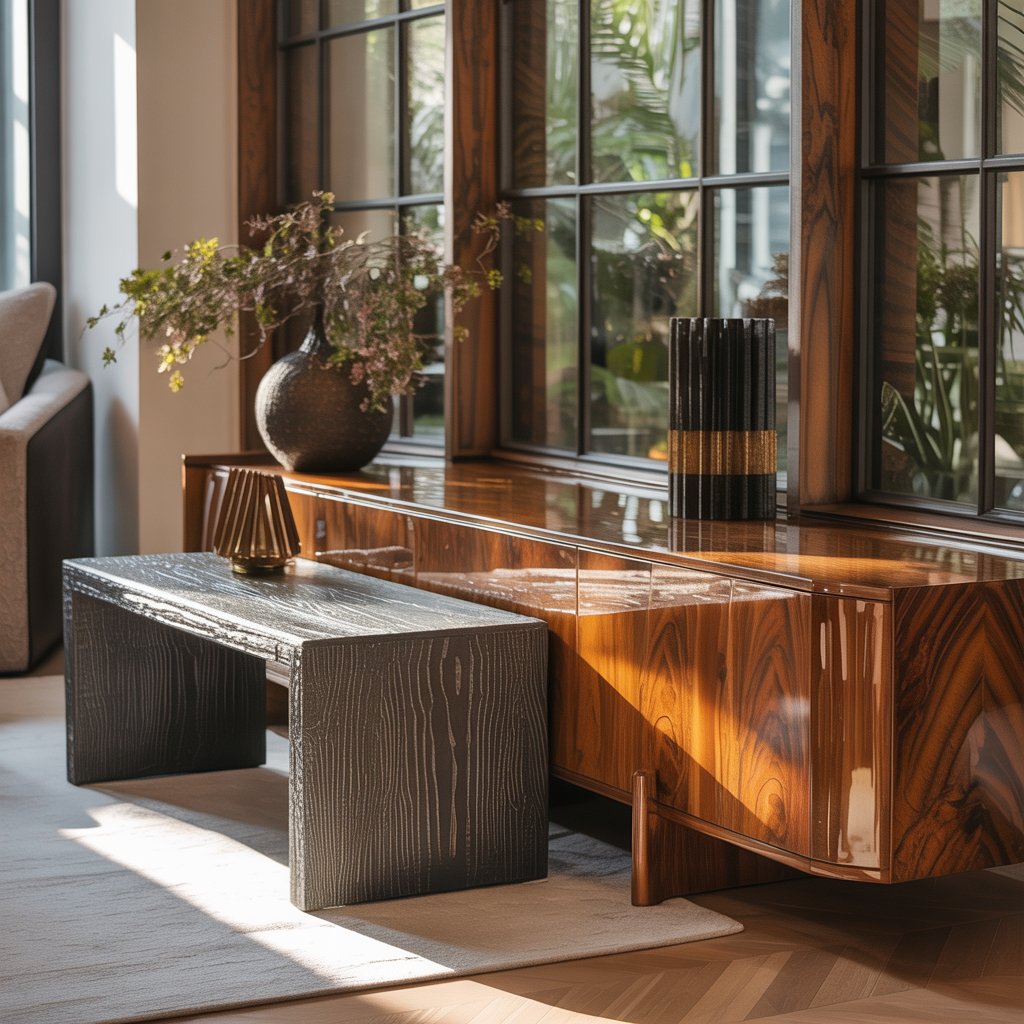
The secret isn’t matching every piece of wood perfectly. It’s understanding how light interacts with different sheen levels and how varying wood tones and grain patterns create visual rhythm throughout a room. When you mix finishes thoughtfully, you add depth, dimension, and personality to a space. When you do it randomly, the result looks cluttered and confusing. The line between the two comes down to a few core principles we’ll cover throughout this guide.
Pro Tip
Before purchasing any new wood furniture or cabinetry, bring a finish sample card home and hold it against your existing pieces under natural light at different times of day. Artificial showroom lighting can completely misrepresent how a sheen will read in your actual space.
Understanding the Wood Finish Spectrum: Matte, Satin, Semi-Gloss, and High Gloss
Wood finishes are classified by their sheen level — essentially how much light they reflect. The spectrum runs from flat matte at one end to ultra-high gloss at the other, with satin and semi-gloss sitting comfortably in between. Each finish has a distinct visual personality and practical profile, and understanding this range is step one to mixing them successfully.

In residential design, the most common finishes you’ll encounter are matte/flat, satin, semi-gloss, and high gloss. Each one interacts differently with natural and artificial light, affects the perceived warmth of wood grain, and creates its own maintenance demands. A matte walnut floor, for example, reads as earthy and relaxed, while a high-gloss lacquered walnut cabinet in the same room reads as bold and modern — yet together, they create a compelling contrast that elevates the space.
0–10%
Matte / Flat
No light reflection. Soft, natural look.
10–25%
Eggshell
Very slight sheen. Warm and subtle.
25–35%
Satin
Soft glow. Most versatile finish.
35–55%
Semi-Gloss
Noticeable shine. Easy to clean.
55–85%
High Gloss
Mirror-like. Bold, dramatic impact.
| Finish Type | Sheen Level | Best Used For | Maintenance | Mood |
|---|---|---|---|---|
| Matte / Flat | 0–10% | Floors, large furniture, accent walls | Harder to clean; shows fewer scratches | Relaxed, natural, Scandinavian |
| Eggshell | 10–25% | Dining tables, bedroom furniture | Moderate; wipes down easily | Warm, lived-in, farmhouse |
| Satin | 25–35% | Kitchen cabinetry, built-ins | Easy to clean; very durable | Classic, transitional, elegant |
| Semi-Gloss | 35–55% | Trim, accent pieces, shelving | Very easy to wipe clean | Polished, contemporary |
| High Gloss | 55–85% | Statement furniture, lacquered cabinets | Shows every fingerprint; high upkeep | Bold, modern, dramatic |
The Golden Rule: Anchor One Finish, Accent with Another
One of the most common mistakes American homeowners make when mixing wood finishes is treating every piece in a room as an equal. This creates visual competition — your eye doesn’t know where to land, and the room feels unresolved. The better approach is the anchor-and-accent method: choose one dominant finish that covers 60–70% of your wood surfaces, and let one or two contrasting finishes serve as intentional accents.

In a typical open-plan living and dining room, this might look like matte-finished wide-plank oak flooring as your anchor, satin-finish cabinetry as the middle ground, and a single high-gloss lacquered sideboard as the star accent piece. This hierarchy gives the room a clear visual narrative — and it makes mixing finishes feel purposeful rather than haphazard. Think of it the same way you’d mix textures in textiles: linen + velvet + leather works; all velvet, all the time, doesn’t.
“The best interiors never match — they coordinate. Give every finish a role to play, just like casting actors in a film. One lead, a strong supporting role, and a few memorable cameos.”— Nate Berkus, Celebrity Interior Designer
How to Mix Matte and Gloss Wood Finishes in Key Rooms
Every room in your home has its own functional demands and aesthetic goals, which means the matte-to-gloss ratio should shift accordingly. A kitchen, bathroom, and living room are completely different environments — they each require a different strategy when it comes to mixing sheens on wood surfaces. Let’s break it down room by room.

In kitchens, durability is king, so a semi-gloss or satin finish on cabinetry makes practical sense — it wipes clean with a damp cloth and stands up to steam and grease. Pairing these cabinets with a matte-finish open shelving unit or a matte island base creates beautiful contrast without sacrificing function. In living rooms, the calculus is reversed: matte finishes on large anchoring pieces like floors and entertainment centers create a grounding, calm effect, while a gloss-lacquered coffee table or accent cabinet adds a glamorous focal point.
Room-by-Room Finish Mixing Guide
- Kitchen: Satin or semi-gloss cabinets + matte open shelving + gloss hardware
- Living Room: Matte floors + satin built-ins + one high-gloss accent piece
- Bedroom: Matte or eggshell bed frame + satin nightstands + gloss mirror frames
- Dining Room: Matte dining table + satin or gloss buffet/credenza
- Home Office: Matte desk + semi-gloss shelving for a clean, modern feel
- Bathroom: Semi-gloss or gloss vanity + matte teak accessories for warmth
Coordinating Wood Tones When Mixing Finishes
Here’s where a lot of DIY designers trip up: they focus entirely on sheen level and forget about wood tone. Mixing a matte light ash with a high-gloss dark espresso walnut creates finish contrast and tone contrast simultaneously — and if not handled carefully, the result can feel jarring rather than curated. The most successful mixed-finish rooms typically stay within one or two wood tone families: light neutrals (ash, maple, birch), warm mid-tones (oak, teak, acacia), or rich darks (walnut, mahogany, ebony).

That doesn’t mean you can’t mix light and dark woods — you absolutely can, and it’s trending heavily in American interiors. But when you’re mixing both tone and sheen, it helps to have at least one unifying element: similar undertones (both pieces lean warm, or both lean cool), a shared grain pattern category (open grain vs. tight grain), or a consistent hardware finish throughout the room. That invisible thread of coherence is what separates a professionally styled space from one that feels accidentally assembled.
| Wood Tone | Examples | Best Finish Pairings | Mixes Well With |
|---|---|---|---|
| Light / Blonde | Ash, Maple, Birch | Matte, eggshell | Warm mid-tones |
| Warm Mid-Tone | Oak, Teak, Acacia | Satin, semi-gloss | Light or dark tones |
| Rich Dark | Walnut, Mahogany | High gloss, semi-gloss | Light tones for contrast |
| Gray/Bleached | Weathered oak, Driftwood | Matte exclusively | Warm mid-tones |
| Ebonized | Ebonized oak, Fumed oak | Gloss for drama, matte for edge | Light tones only |
Pro Tip
When mixing more than two wood tones, pull a unifying accent color from the natural grain of your dominant wood and repeat it in your textiles, hardware, or wall color. This creates visual cohesion even when your finishes and tones are varied. Aged brass hardware, for example, bridges warm oak and dark walnut effortlessly.
Common Mistakes to Avoid When Mixing Wood Sheens
Even experienced designers make these missteps — knowing them in advance saves a lot of expensive do-overs. The most frequent error is mixing too many sheen levels at once. If every piece in your living room is a different finish — matte floor, eggshell coffee table, satin bookshelves, semi-gloss media console, high-gloss side table — the room reads as restless and unresolved. Stick to no more than three sheen levels per room, with a clear hierarchy.
Another common mistake is underestimating how dramatically lighting changes the appearance of finishes. A high-gloss table that looks sleek and sophisticated under a showroom’s recessed LED lighting can look harsh and cold in a dining room with warm incandescent pendants. Always test finish samples in your own space, at different times of day, under the actual lighting you use. And finally, don’t neglect the ceiling and walls when thinking about wood finishes — painted surfaces have their own sheen levels, and a flat matte wall next to a high-gloss wood piece creates a beautiful, intentional contrast that’s deeply satisfying to the eye.
Mistakes to avoid
- Using more than three different sheen levels in one room
- Mixing warm-toned and cool-toned woods without a unifying element
- Choosing finishes under store lighting without testing at home
- Ignoring the sheen of painted surfaces, floors, and hardware
- Placing two high-gloss pieces next to each other — they compete
- Applying a gloss finish on distressed or heavily grained wood (it looks incongruent)
- Forgetting that natural wood darkens with age, shifting the tone relationship
2025 Trends: How American Designers Are Mixing Wood Finishes Right Now
The dominant aesthetic in US interiors right now is what designers are calling “warm minimalism” — spaces that feel clean and uncluttered but deeply human and textural. Wood is central to this look, and the finish mixing happening in these spaces is both bold and considered. The most popular combination we’re seeing in 2025 is matte, wire-brushed white oak as a foundational material (floors, cabinetry, wall panels) paired with a single piece of high-gloss lacquered furniture in a deep tone — forest green, midnight navy, or rich terracotta. The matte wood grounds the space, while the gloss piece acts like a jewel.
Another powerful 2025 trend is the “raw-to-refined” spectrum within a single material. Designers are using unfinished, lightly oiled wood alongside heavily lacquered pieces of the same wood species — say, a raw live-edge walnut dining table next to a high-gloss walnut credenza. This technique celebrates the material itself rather than hiding it, and the finish contrast reveals the wood’s beauty from two completely different angles. It’s sophisticated, sustainable-feeling, and deeply personal — everything American homeowners are gravitating toward right now.
“We’re moving away from the all-matching, all-matchy aesthetic. Today’s American homeowners want spaces that feel collected over time — not bought all at once from one catalog.”— Emily Henderson, Interior Stylist and Author
Practical Tips for Refinishing and Updating Wood Pieces
You don’t have to buy new furniture to mix finishes intentionally — some of the most beautiful results come from refinishing what you already own. A tired, shiny 1990s oak dresser can be transformed with a matte, oil-based finish into a contemporary, textured piece that looks like it came from a Scandinavian design shop. Conversely, a dull, flat-finished thrift store find can be given new life with a few coats of water-based polyurethane in a semi-gloss or gloss sheen. The key is understanding your substrate: open-grain woods like oak and ash take matte finishes beautifully, while tight-grain woods like maple show off gloss finishes best.
When refinishing wood to create a specific sheen, the preparation stage matters as much as the finish itself. Sanding through the grits — starting at 80–100, moving through 150, finishing at 220 — creates the smooth base that allows gloss finishes to read as truly reflective rather than gritty and uneven. For matte finishes, you have more flexibility, but even a matte finish looks better on a properly prepped surface. Always finish with a light 320-grit pass between coats, and remember that gloss finishes typically require more coats than matte to achieve their full, reflective depth.
Designer’s Final Tip
When in doubt, add gloss last. Start with your matte and satin pieces as the foundation of the room, then introduce one bold gloss element at the end. It’s far easier to add drama than to subtract it — and a single well-placed gloss piece will always make more impact than five competing ones.