
Double Islands for Ultimate Kitchen Flow
As a home interior designer, I’ve seen countless kitchen renovations — but nothing transforms a space quite like going double. Here’s your complete guide to designing a two-island kitchen that’s as beautiful as it is functional
Quick Summary: Double kitchen islands are the hottest trend in American home design — and for good reason. They offer unmatched prep space, better traffic flow, and the kind of luxurious functionality that open-concept kitchens demand. This guide covers everything you need to know before you remodel.
In This Article
- What Is a Double Island Kitchen?
- Why Two Islands? The Benefits Explained
- Layout Options and Kitchen Flow Design
- Ideal Dimensions and Spacing
- Countertop Materials: Mixing and Matching
- Lighting Strategies for Double Islands
- Is a Double Island Right for Your Home?
- Budget Guide and Cost Breakdown
- Common Mistakes to Avoid
What Is a Double Island Kitchen?
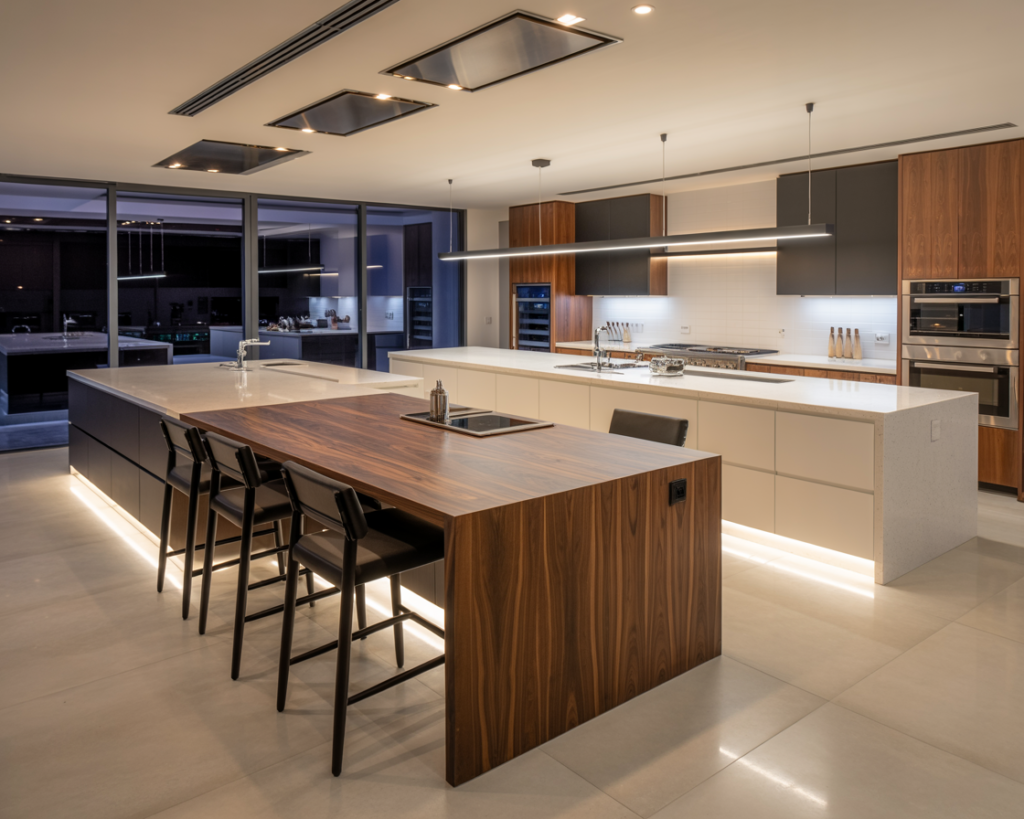
A double island kitchen features two separate freestanding or built-in kitchen islands positioned within the same cooking space. Unlike a traditional single-island layout, this configuration divides the kitchen into distinct functional zones — typically a prep zone and a social or serving zone. It’s the gold standard of kitchen workflow design, and it’s increasingly seen in custom home builds across the United States.
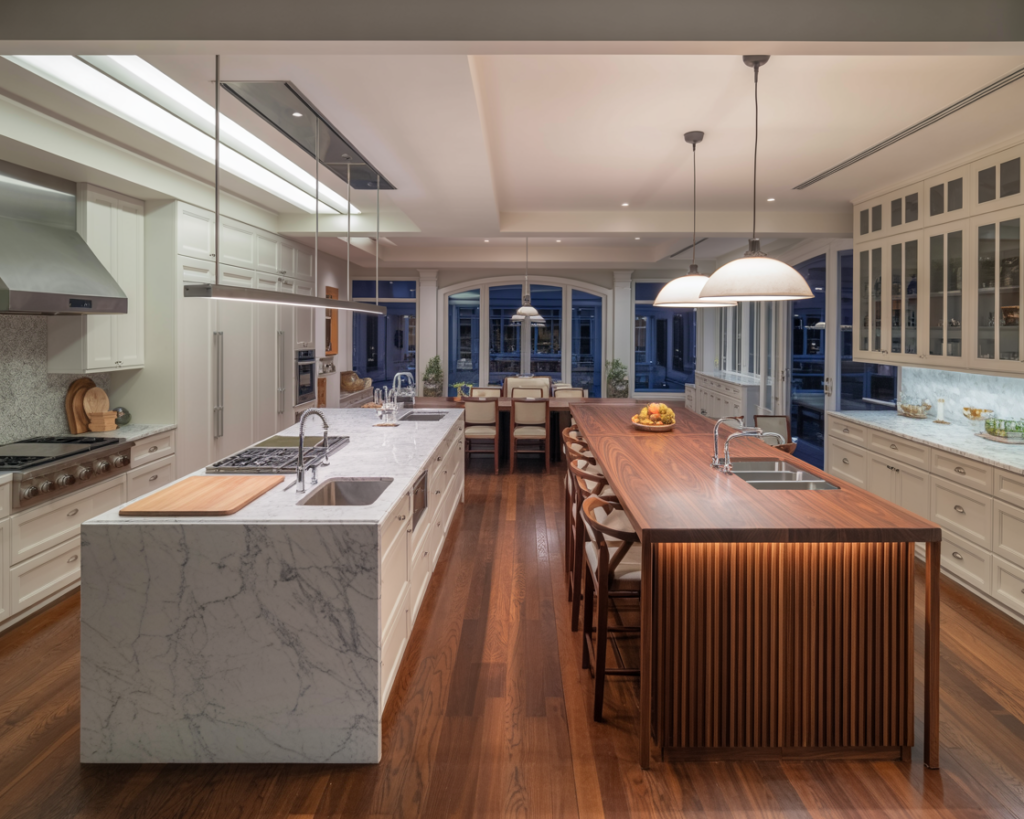
The concept has deep roots in professional restaurant kitchens, where dedicated prep stations and pass-through counters have always been essential for high-volume cooking efficiency. Today, American homeowners are bringing that same professional kitchen logic into their private residences, especially as open-concept floor plans become the dominant architectural style in new construction and luxury renovations.
According to the National Kitchen & Bath Association (NKBA), kitchen islands are now included in over 75% of all kitchen remodels, and the demand for dual-island layouts has grown significantly in homes larger than 2,500 square feet. Whether you’re in a sprawling Texas ranch home or an upscale Chicago townhouse, the two-island kitchen is a statement of both style and serious culinary intent.
The islands themselves can vary dramatically — one might be a sleek waterfall quartz slab for prep, while the other doubles as a breakfast bar with seating. That versatility is exactly what makes this layout so compelling for families, home entertainers, and passionate home cooks alike.
Why Two Islands? The Real Benefits of Double Island Kitchens
Let’s be honest — the idea of two kitchen islands can initially feel indulgent. But once you understand the ergonomic and functional advantages, you’ll realize this layout isn’t just a luxury trend. It’s a genuinely smart design solution for any serious kitchen.
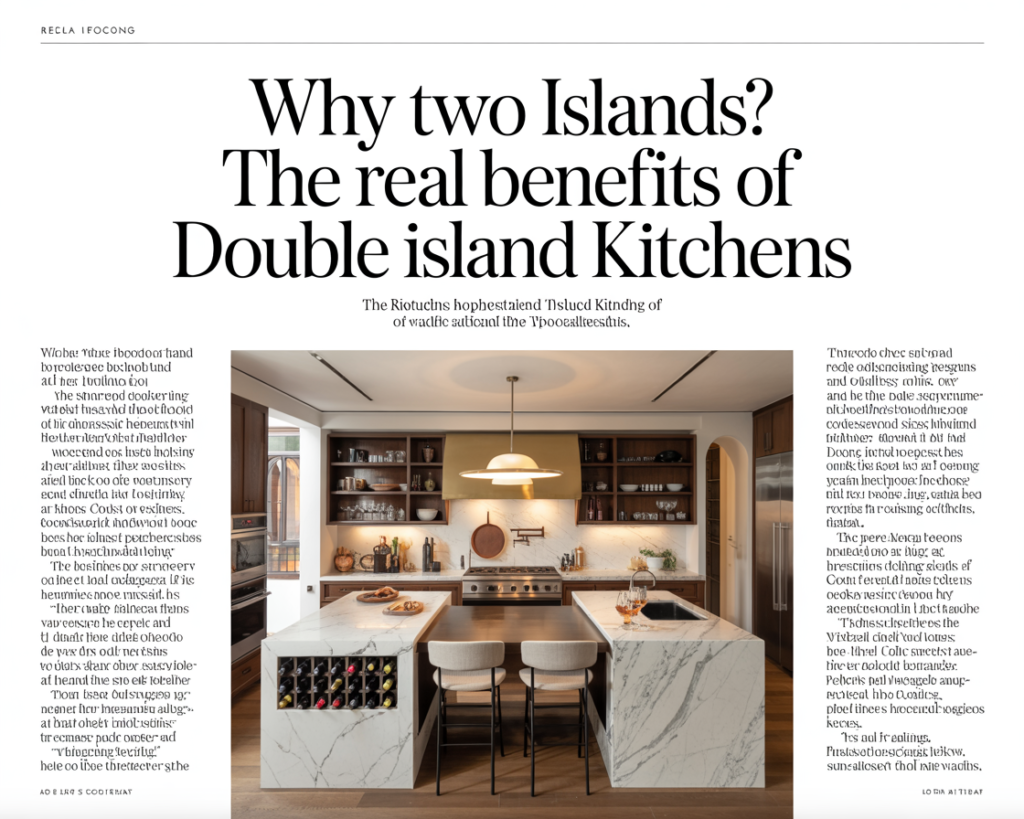
The primary benefit is traffic flow separation. In a single-island kitchen, the cook, the person grabbing a snack, the kids doing homework, and the guest holding a wine glass are all competing for the same surface and aisle. Two islands solve this with a natural division of space — one island stays the cook’s domain while the other becomes a social hub.
🍳
Dedicated Prep Zone
One island stays clean and reserved for cooking tasks — no interruptions.
👨👩👧
Better Family Flow
Kids, guests, and cooks can coexist without colliding in tight aisles.
🍽️
Easy Entertaining
A dedicated serving island keeps appetizers and drinks organized.
🧼
Sink + Appliance Options
Each island can house its own sink, cooktop, or wine fridge.
💎
Elevated Resale Value
Double islands are a premium feature buyers actively seek out.
🎨
Design Flexibility
Mix two countertop materials, heights, or finishes for a custom look.
“The kitchen is the heart of the home — and a double island layout is the most powerful way I know to make that heart beat stronger. It’s not about having more; it’s about working smarter with the space you have.”— Taylor Harmon, Certified Interior Designer, NCIDQ
Layout Options and Kitchen Workflow Design
When it comes to a double kitchen island design, placement is everything. The islands must enhance the kitchen work triangle — the classic relationship between the refrigerator, cooktop, and sink — while also accommodating traffic paths for multiple people simultaneously. Poor island positioning is one of the biggest mistakes I see in remodels, and it can turn a dream kitchen into a daily frustration.
Most designers recommend one of three primary double island configurations based on the shape and square footage of your kitchen space. Each has distinct advantages depending on how you cook, entertain, and live.
| Layout Type | Best For | Minimum Kitchen Size | Aisle Between Islands |
|---|---|---|---|
| Parallel (Side-by-Side) | Large galley or open-plan kitchens | 25 ft × 18 ft | 48–60 inches |
| Staggered (Offset) | L-shaped or irregular floor plans | 20 ft × 16 ft | 42–48 inches |
| Perpendicular (T-Shape) | Great room integration & entertaining | 22 ft × 20 ft | 48 inches minimum |
💡
Pro Tip from Taylor
Always work with your kitchen’s natural traffic paths before choosing your island layout. Tape out the island footprints on your existing floor using painter’s tape and live with them for 48 hours before committing. You’ll quickly discover if your planned aisle width feels cramped during cooking or if the positioning blocks a door swing. This simple trick has saved countless clients from expensive design regrets.
Ideal Dimensions and Spacing for Two-Island Kitchens
Sizing is where many double island plans fall apart. People tend to design their islands too large for the room, resulting in cramped walkways that violate building code clearances and create daily frustration. The NKBA kitchen design guidelines provide the clearest standards for safe and functional kitchen layouts.
As a general rule for double island kitchens, the two islands should not occupy more than 35–40% of the total kitchen floor space. Each island typically ranges from 36 to 48 inches wide and 72 to 120 inches long, though your specific dimensions should be tailored to your kitchen’s square footage and functional needs.
| Space Requirement | Minimum | Recommended | Luxury/Commercial |
|---|---|---|---|
| Aisle between islands | 42 inches | 48–54 inches | 60+ inches |
| Island to perimeter counter | 42 inches | 48 inches | 54–60 inches |
| Standard island height | 36 inches | 36 inches | 36 inches (ADA: 34″) |
| Bar seating overhang | 12 inches | 15 inches | 18–24 inches |
| Bar height (for stools) | 42 inches | 42–45 inches | 42–45 inches |
⚠️ Code Alert: Many U.S. municipalities require a minimum 42-inch clearance in kitchen work zones. If your kitchen has two or more cooks regularly, 48 inches is not just recommended — it’s essential for safety. Always check local building codes before finalizing your layout, especially if you’re adding a cooktop to one of the islands.
Countertop Materials: The Art of Mixing and Matching
One of the most exciting creative opportunities in a double island kitchen is using two different countertop materials — one for each island. This design strategy adds visual depth and clearly communicates the different function of each surface, all while keeping the overall kitchen aesthetic cohesive.
The most popular pairing I recommend to American clients is quartz for the prep island (durable, non-porous, easy to clean) and natural marble or butcher block for the serving/social island (warmer, more decorative, with a lived-in aesthetic that invites people to gather). However, the possibilities are nearly endless depending on your kitchen’s design style.
| Material | Best Island Use | Durability | Avg. Cost/sq ft | Maintenance |
|---|---|---|---|---|
| Quartz | Prep island | ★★★★★ | $50–$120 | Low |
| Marble | Serving/social island | ★★★☆☆ | $75–$250 | High |
| Butcher Block | Prep or social island | ★★★★☆ | $40–$100 | Medium |
| Granite | Either island | ★★★★★ | $45–$200 | Low–Medium |
| Concrete | Social/statement island | ★★★★☆ | $65–$135 | Medium |
| Soapstone | Either island | ★★★★☆ | $70–$150 | Low |
For design continuity, keep your cabinet colors or finishes consistent across both islands even when you vary the countertop material. If both islands share the same painted base — say, a deep navy or classic white shaker — two different countertop materials will feel intentional and sophisticated rather than disjointed.
Explore resources like Houzz Kitchen Design Gallery or Architectural Digest for real-world mixed countertop inspiration before committing to your material pairing.
Lighting Strategies That Make Double Islands Shine
Lighting a double island kitchen is a whole different challenge compared to a single island setup — and it’s an area where even experienced homeowners tend to underinvest. Great kitchen island lighting must accomplish three goals simultaneously: provide functional task illumination, create visual hierarchy between the two islands, and add ambience to the overall space.
The most effective approach is to use pendant lighting over both islands but vary the style, scale, or height to differentiate them visually. For the prep island, cluster three to five smaller pendants at a consistent height for focused task lighting. For the social or serving island, consider a pair of larger statement pendants hung slightly higher, which feels more relaxed and bar-like.
Lighting Checklist for Double Islands
- Mount pendant lights 30–36 inches above the countertop surface for task lighting
- Space pendants 24–30 inches apart along the length of each island
- Install separate dimmer switches for each island’s lighting circuit
- Combine overhead recessed lighting with pendants for layered light
- Consider under-island LED strip lighting for added ambience and nighttime navigation
- For islands with seating, raise pendant height to 60–66 inches above floor level
- Match pendant metal finish to cabinet hardware for a cohesive look
Design Insight
Many clients ask whether the pendants over both islands need to match. My answer: they absolutely don’t — but they must relate. Sharing the same metal finish (brass, matte black, chrome) while varying the shade shape or size creates beautiful intentional contrast without visual chaos.
Is a Double Kitchen Island Right for Your Home?
A double island kitchen is not right for every home — and that’s an important truth that some designers won’t tell you. Before committing to this layout, honestly assess the size of your space, your cooking habits, and your household’s lifestyle. A cramped double island setup is far worse than a well-designed single island.
The ideal candidate for a two-island kitchen is a homeowner with a kitchen that is at minimum 350 to 400 square feet, an open-concept layout connecting the kitchen to a living or dining area, and a genuine need for multi-zone cooking and entertaining. This typically describes families with children, couples who both love to cook, or homeowners who frequently host dinner parties or holiday gatherings.
Double Island Kitchen: Pros and Cons at a Glance
| Advantage | Consideration |
|---|---|
| ✔ Exceptional prep and serving space | ✘ Requires large kitchen footprint |
| ✔ Separates cook and social zones | ✘ Higher renovation cost |
| ✔ Increases home resale value | ✘ More electrical/plumbing runs needed |
| ✔ Supports multi-cook household | ✘ Can feel imposing in smaller rooms |
| ✔ Design flexibility with materials | ✘ Requires careful lighting plan |
Budget Guide: What Does a Double Island Kitchen Cost.
Budget planning for a dual-island kitchen remodel requires understanding the wide range of costs associated with each component. Material quality, labor markets in your region, whether you’re adding plumbing or electrical to the islands, and cabinetry choices all have a significant impact on your final number.
On the lower end, a functional double island remodel using stock cabinetry and engineered quartz countertops might come in around $20,000–$35,000 for the island work itself. Mid-range custom builds typically run $40,000–$70,000, while high-end custom kitchens with integrated appliances, premium stone countertops, and bespoke cabinetry can exceed $100,000 for the island components alone.
| Budget Tier | Island Cabinetry | Countertops | Plumbing & Electrical | Estimated Total |
|---|---|---|---|---|
| Entry-Level | Stock / Semi-custom | Laminate / Basic Quartz | Minimal changes | $15,000–$28,000 |
| Mid-Range | Semi-custom | Quartz / Granite | Sink + outlets added | $35,000–$65,000 |
| High-End | Full custom | Marble / Premium stone | Full plumbing relocation | $75,000–$150,000+ |
💡
Pro Tip from Taylor
One of the smartest budget moves I recommend is using full custom cabinetry for the island that faces guests and your living area — the one people see — and choosing semi-custom or stock cabinetry for the working prep island. Most guests will never open those cabinets or look closely at the island they can’t see directly. You get the high-end visual impact where it counts, while keeping costs under control on the back-of-house island. Allocate your budget to what’s visible first.
Common Mistakes to Avoid in Double Island Kitchen Design
Over a decade of designing kitchens for American homeowners has given me an intimate knowledge of what goes wrong — and how to avoid it. With double island kitchens especially, there are several recurring errors I see that can undermine even the most beautiful renovation.
The most common mistake is sizing the islands too large relative to the room, creating aisles so narrow they violate safety clearances. The second most common? Forgetting to plan adequate storage. Both islands need purposeful cabinet, drawer, and shelf configurations — not just counter space. A beautiful island with no functional storage becomes a cluttered surface within weeks.
Top Mistakes and How to Fix Them
- Oversized islands in a small kitchen — Use the painter’s tape test before finalizing dimensions
- Identical heights on both islands — Vary one island to bar height (42″) for visual interest and seating flexibility
- Poor electrical planning — Plan outlets on every island side and include USB ports for modern convenience
- Skipping the seating island — At least one island should accommodate 3–5 bar stools for daily use
- No storage differentiation — Assign each island specific storage: one for cooking tools, one for tableware and entertaining supplies
- Matching both islands exactly — Identical twin islands are a missed design opportunity; vary materials or height
- Ignoring ventilation — If your prep island has a cooktop, a ceiling-mounted range hood or downdraft system is non-negotiable
“Design is not just about what looks beautiful in a showroom — it’s about what works for your life every single morning. The best double island kitchen is the one that fits how your family actually moves through the space.”— Taylor Harmon, Interior Designer
If you’re ready to start planning your double island kitchen, I recommend exploring NKBA’s Find a Pro directory to connect with a certified kitchen designer in your area. You can also use planning tools from resources like IKEA’s Kitchen Planner or consult a licensed contractor through Houzz Pro to get accurate estimates before committing to your design.
The double island kitchen isn’t just a design trend — it’s a thoughtful investment in how you live, cook, and connect with the people you love. Done right, it will be the most-used and most-admired space in your home for decades to come.
🏷 Tags: kitchen design, island layout, home remodel, kitchen workflow, interior design tips Taylor Harmon Interiors.