
There’s something deeply seductive about a room that looks like it belongs to a Victorian-era scholar — shelves sagging with leather-bound books, candlelight casting amber warmth over dark wood, a velvet reading chair positioned just so near a rain-streaked window.

If you’ve ever felt that pull, you’re not alone. Dark Academia decor has quietly moved from Tumblr mood boards and college dorm rooms to become one of the most sought-after interior design aesthetics in the US — and for good reason. It marries intellectual romance with tactile luxury, creating spaces that feel lived-in, layered, and deeply personal.
As an interior designer who specializes in home decor, I’ve helped dozens of clients create their own version of this moody, scholarly retreat — from cozy studio apartments in Chicago to sprawling brownstones in Brooklyn. In this guide, I’ll walk you through everything you need to know to bring the Dark Academia aesthetic home, without it feeling like a costume or a cliché.
What Exactly Is Dark Academia Decor?
Dark Academia is an aesthetic rooted in a romanticized vision of academic life — think old European universities, ancient libraries, candlelit studies, and the pursuit of knowledge as a near-spiritual act. As a decor style, it draws from Gothic Revival architecture, Victorian interiors, and the warm, worn-in feeling of an old English country house.
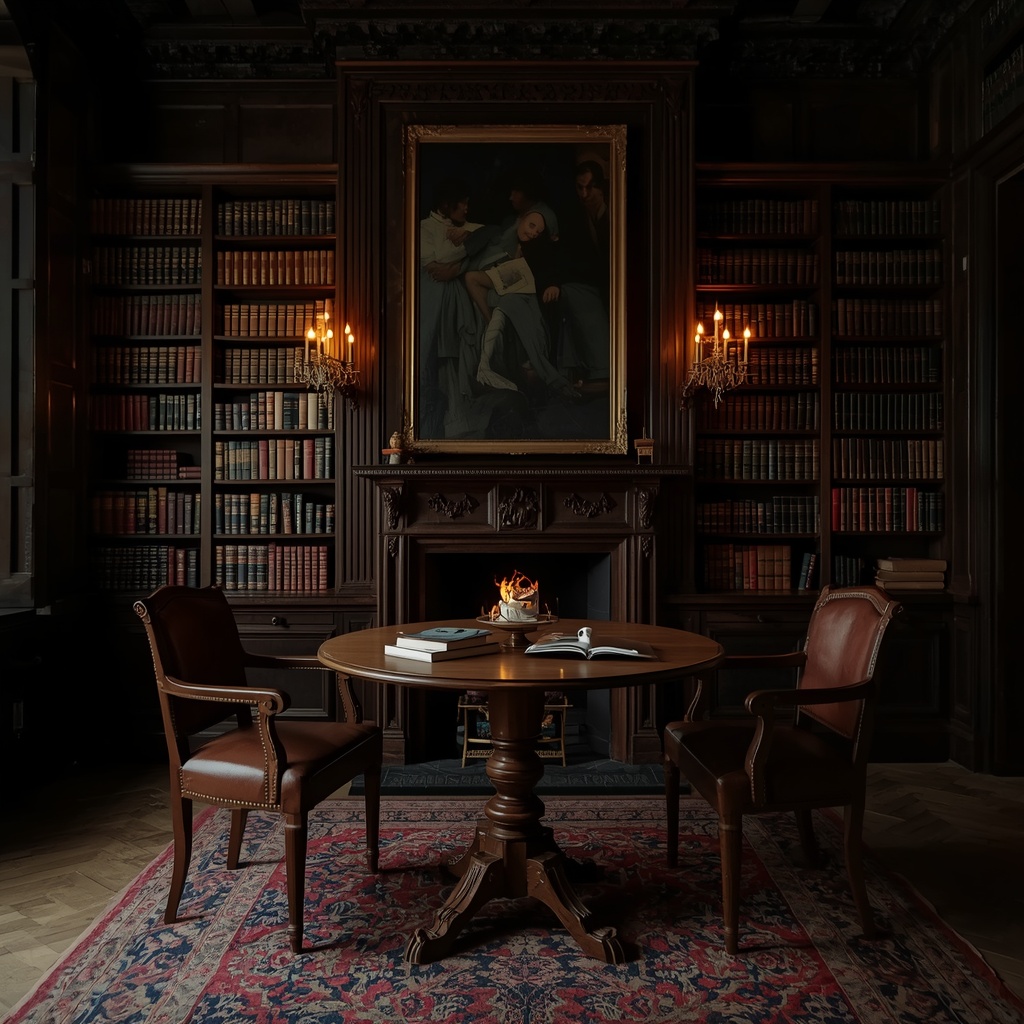
Unlike maximalism or cottagecore, Dark Academia has a very specific emotional register: intellectual melancholy, timeless elegance, and a touch of the dramatic. It’s the aesthetic equivalent of reading Donna Tartt’s The Secret History by firelight — atmospheric, erudite, and a little mysterious.
Semantically, the style sits at the intersection of Gothic home decor, moody interior design, vintage academic aesthetic, and library-inspired interiors. If any of those phrases resonate with you, Dark Academia may be exactly what your home has been waiting for.
“A room should be like a good book — it should invite you in, keep you absorbed, and leave you feeling like you’ve been somewhere real.”— Elsie de Wolfe, America’s first professional interior decorator
The Dark Academia Color Palette: Shadows, Warmth & Depth
Color is the foundation of any Dark Academia room. Forget the clean whites and cool grays of Scandinavian minimalism — this aesthetic lives in the warm, shadowy end of the spectrum. Think of the colors of aged manuscripts, candlelit stone, autumn forests, and weathered leather.
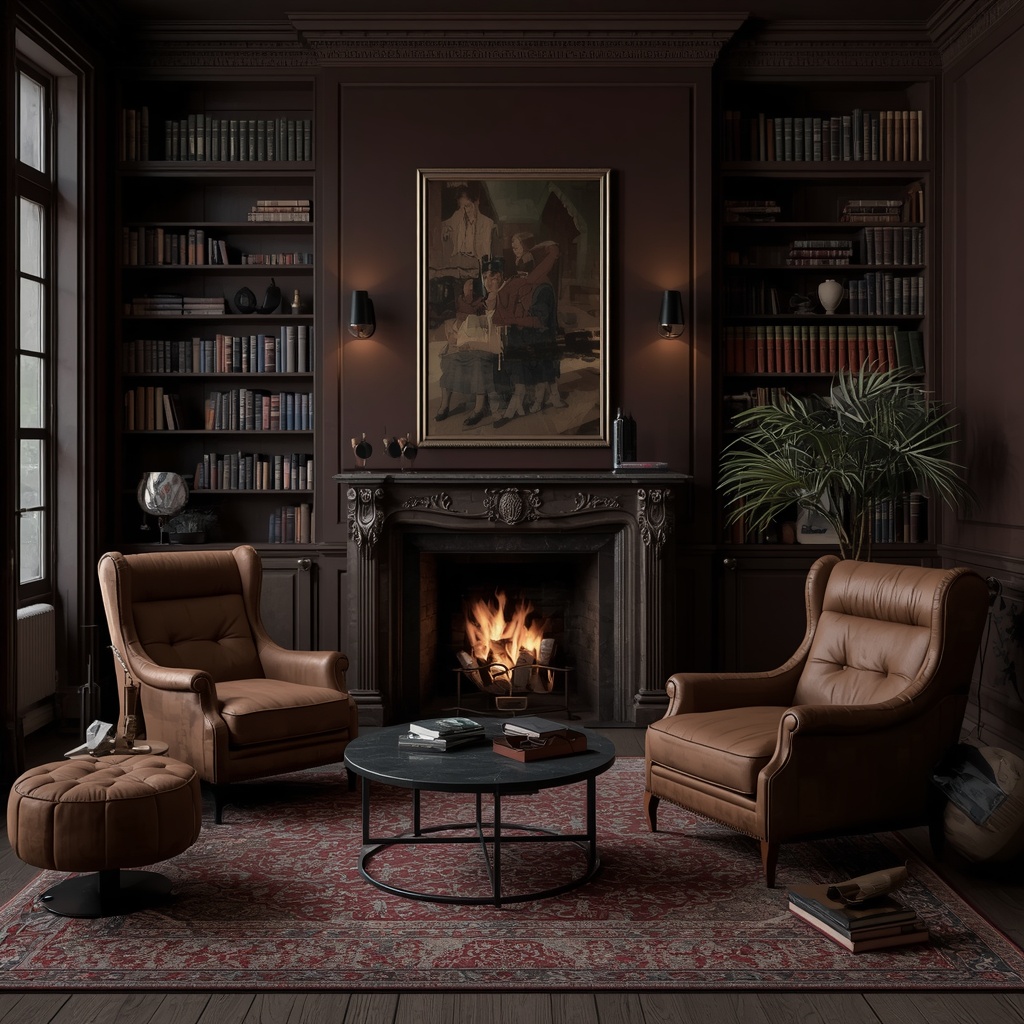
The palette is rich but restrained. You’re working with depth and shadow, not darkness for its own sake. Every color should feel like it has a story behind it — like it’s been there for decades and has absorbed the warmth of a thousand evenings by the fire.
Espresso BrownWalls, wood furniture
Aged MahoganyBookshelves, frames
Amber GoldAccents, lamplight
Dark ForestVelvet, botanicals
Parchment TanLinen, aged paper
Midnight InkCeilings, drama
Pro Tip from My Design Studio
Don’t paint all four walls the same dark color — this is the number one mistake I see. Instead, use a deep espresso or forest green on a single accent wall (ideally behind a bookshelf), and warm it up with a lighter parchment or antique linen tone on the remaining walls. This creates depth and drama without making a small room feel like a cave. For paint recommendations, I love Benjamin Moore’s Newburyport Blue HC-155, Sherwin-Williams’ Iron Ore SW 7069, and Farrow & Ball’s Studio Green No.93.
Essential Dark Academia Furniture: The Bones of a Scholarly Space
Furniture is where Dark Academia gets truly tactile. The style favors pieces that look inherited, discovered at an estate sale, or salvaged from a dissolving Oxford don’s study. Heavy, dark wood is the cornerstone — mahogany, walnut, and ebonized oak all fit the bill beautifully.
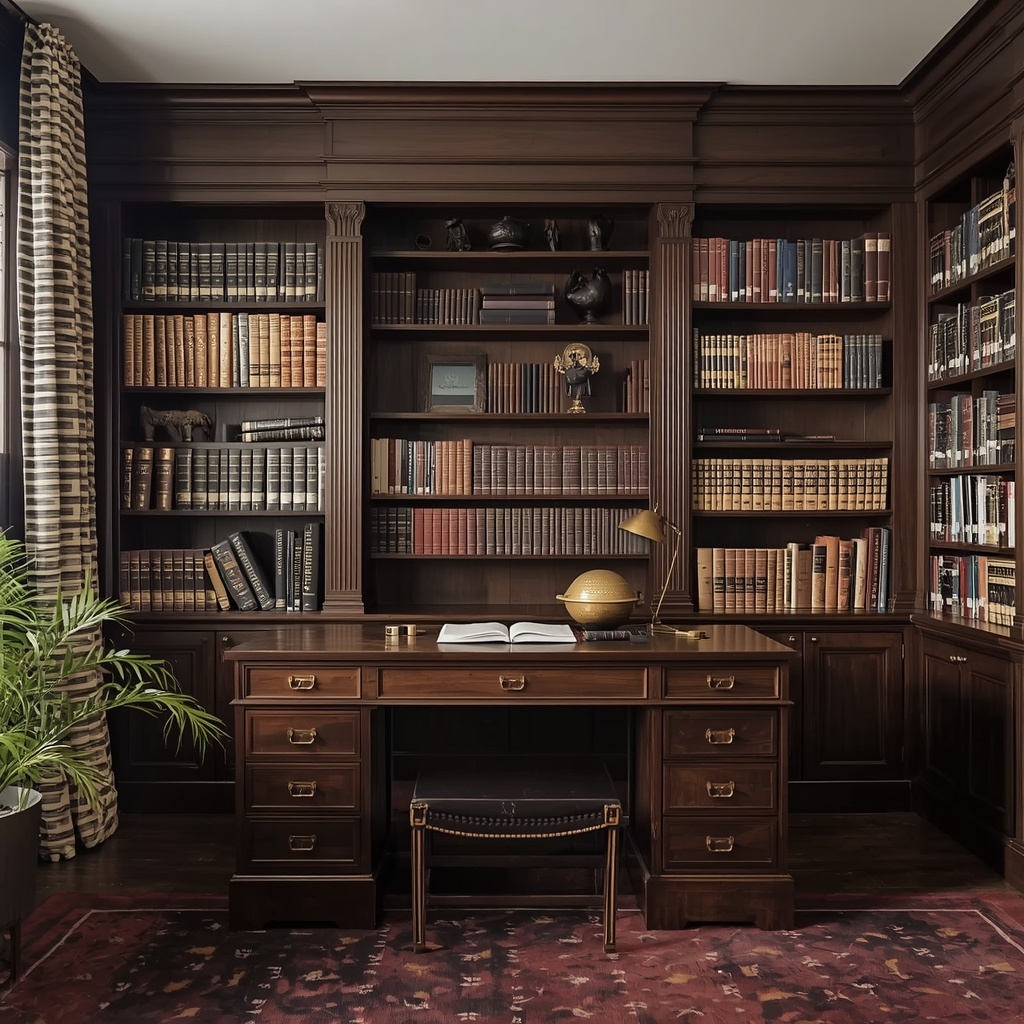
When sourcing furniture for a Dark Academia interior, I always tell my clients: prioritize age over perfection. A battered Victorian writing desk with tarnished brass pulls will do more for this aesthetic than a brand-new replica ever could. Estate sales, Facebook Marketplace, and antique malls are your best friends here.
| Furniture Piece | What to Look For | Where to Find It | Budget Range |
|---|---|---|---|
| Writing Desk | Dark wood, leather inlay, brass hardware | Chairish, estate sales, Etsy vintage | $200 – $1,800 |
| Tufted Armchair | Velvet or leather, oxblood or forest green | Article, Anthropologie, vintage shops | $400 – $2,500 |
| Floor-to-Ceiling Bookshelf | Dark wood, ladder rail preferred | IKEA Billy hack, custom carpentry, antique | $150 – $5,000+ |
| Chesterfield Sofa | Deep button-tufting, aged leather or velvet | Wayfair, Restoration Hardware, Craigslist | $800 – $6,000 |
| Nightstand / Side Table | Carved wood, dark finish, drawer storage | Target, HomeGoods, thrift stores | $50 – $400 |
| Persian or Oriental Rug | Jewel tones, intricate pattern, wool | RugsUSA, Overstock, estate sales | $100 – $3,000 |
Layering Textures: How to Make a Room Feel Centuries Old
If color is the soul of Dark Academia, texture is its body. The aesthetic is defined by an almost compulsive layering of tactile surfaces — rough linen against polished leather, velvet curtains pooling on worn hardwood, a cashmere throw draped over a cracked-leather chair. The effect should feel accumulated rather than arranged.
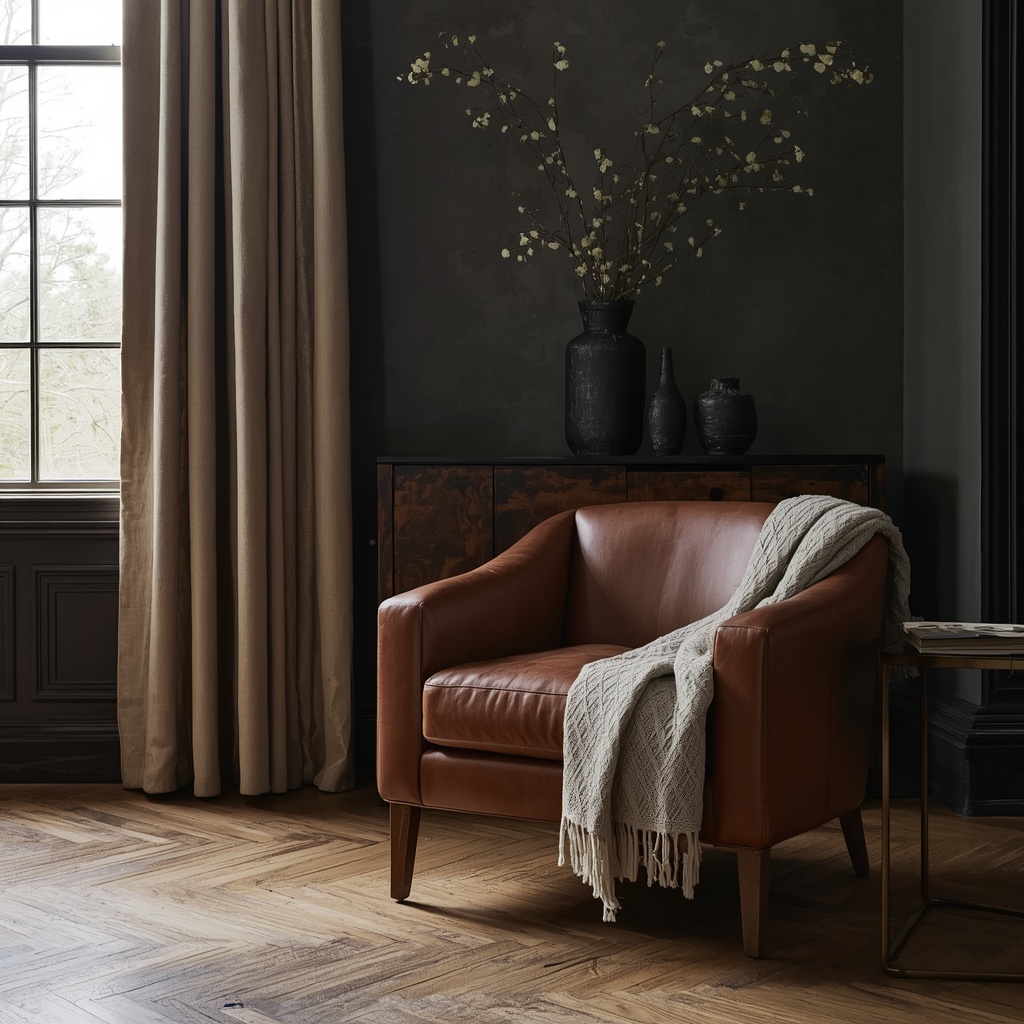
In my design practice, I think of texture in three tiers: foundation, middle, and accent. Your foundation textures are the large surfaces — floors, walls, and upholstery. The middle tier includes curtains, rugs, and throw pillows. Accents are the small but crucial details that pull the whole room together: a tasseled bookmark left on the arm of a chair, a worn globe on the desk, a stack of books with cracked spines.
- Velvet— Use it on armchairs, ottomans, and curtains in deep jewel tones: oxblood, forest green, navy, plum.
- Aged leather— Look for cracked, patinated leather in cognac, tobacco, or near-black. Avoid anything that looks factory-fresh.
- Linen and wool— Layer natural, undyed linen as throw blankets, pillow covers, or desk runners for warmth without visual noise.
- Dark hardwood or herringbone floors— If you’re choosing flooring, go dark walnut or ebonized oak. Layer with a large Persian rug to soften the space.
- Stone and marble— Candleholders, bookends, and small accent pieces in aged stone or dark marble add gravitas and tactile contrast.
- Brass and tarnished metal— Avoid polished chrome. Look for aged brass, unlacquered metal, and patinated bronze in fixtures and hardware.
Lighting: The Secret Weapon of Dark Academia Design
Nothing kills the Dark Academia mood faster than overhead LED panels flooding a room with blue-white light. Lighting is where this aesthetic lives or dies — and the goal is always warmth, intimacy, and a sense that the room is lit by something slightly older than electricity.
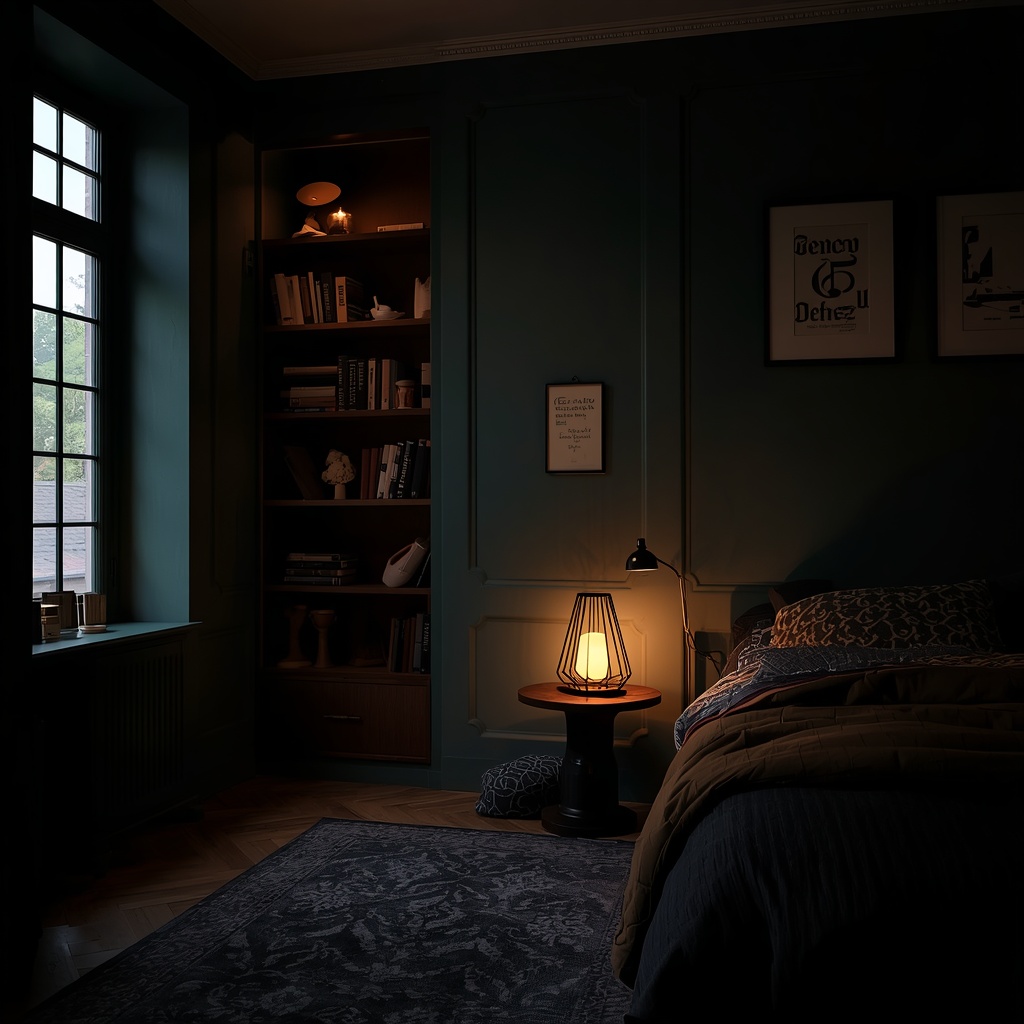
Layered lighting is non-negotiable in moody interior design. You want at least three light sources in any given room: ambient (the softest general light), task (a reading lamp or desk light), and accent (candles, fairy lights tucked into bookcases, picture lights over artwork). The overall effect should feel like golden hour at dusk, all day long.
Pro Tip from My Design Studio
Switch every bulb in your Dark Academia space to a warm-toned Edison or vintage filament bulb in the 2200K–2700K range. This single change — which costs under $30 total for most rooms — will do more for your moody aesthetic than almost any piece of furniture. I love Feit Electric’s vintage Edison LED collection and Bulbrite’s filament bulbs. Pair them with amber-glass or smoked-glass fixtures to amplify that candlelight quality.
Dark Academia Decor Room by Room: A Practical Breakdown
One of the questions I get most from clients is: “Do I have to commit the entire house to this aesthetic?” The answer is absolutely not — though once you start, you may find it hard to stop. Dark Academia scales beautifully from a single reading nook to a full home. Here’s how to approach each room.
Living Room
Start Here
Anchor the space with a floor-to-ceiling bookshelf, a tufted sofa or armchair, and layered lighting. Add a Persian rug and dark curtains for instant transformation.
Home Office
Most Impactful
A vintage writing desk, brass desk lamp, leather accessories, and a gallery wall of maps and botanical prints create the ultimate scholarly workspace.
Bedroom
Most Intimate
Deep bedding in jewel tones, a dark wood headboard, bedside stacks of books, and warm lamplight make the bedroom feel like a private sanctuary.
Reading Nook
Easiest Win
Even a small corner can become a Dark Academia haven with an armchair, a floor lamp, a small side table, and a surrounding wall of shelved books.
The Dark Academia Bookshelf: Your Most Important Decor Element
In Dark Academia design, books are not decoration — they are the decoration. The bookshelf is the altar of this aesthetic, and how you style it matters enormously. The goal is not the perfectly color-coordinated Instagram shelfie; it’s the feeling of a real, working collection that has grown organically over years of reading and accumulating.
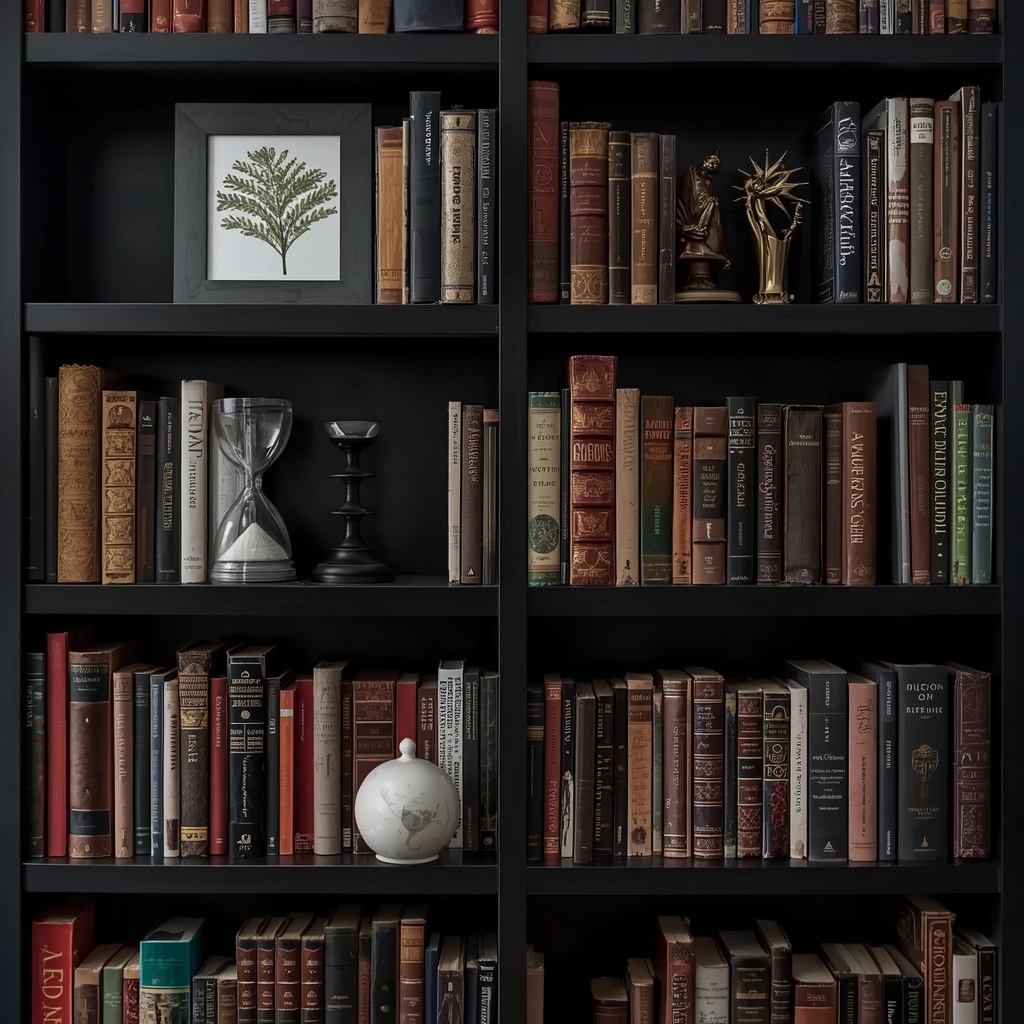
Mix leatherbound classics with paperback novels. Let books lean at angles and face different directions. Tuck in small objects between stacks — a brass magnifying glass, an hourglass, a small globe, a pressed fern in a frame. Vary the heights of your stacks. The organized chaos of a real scholar’s shelf is exactly what you’re after.
- Layer depth— Place smaller objects in front of books, creating a second visual plane. Globes, inkwells, and candle holders work beautifully.
- Mix old and new— A vintage anatomy illustration beside a contemporary novel signals that this is a living collection, not a prop.
- Include non-book objects— Framed pressed botanicals, old maps, small busts, magnifying glasses, compasses, and hourglasses are all quintessential Dark Academia shelf objects.
- Use strategic lighting— A small picture light above the bookshelf or LED tape lighting inside the shelves creates a warm, gallery-like glow that elevates the whole room.
- Allow imperfection— Don’t over-style. Leave a few books splayed open or dog-eared. This is a working library, not a showroom.
Dark Academia Decor on a Budget: Making the Aesthetic Accessible
One of the most persistent myths about Dark Academia interior design is that you need to spend a fortune on antiques and custom furniture. In my experience as a designer, this couldn’t be further from the truth. Some of the most compelling Dark Academia spaces I’ve seen have been assembled almost entirely from thrift stores, IKEA, and the depths of Facebook Marketplace.
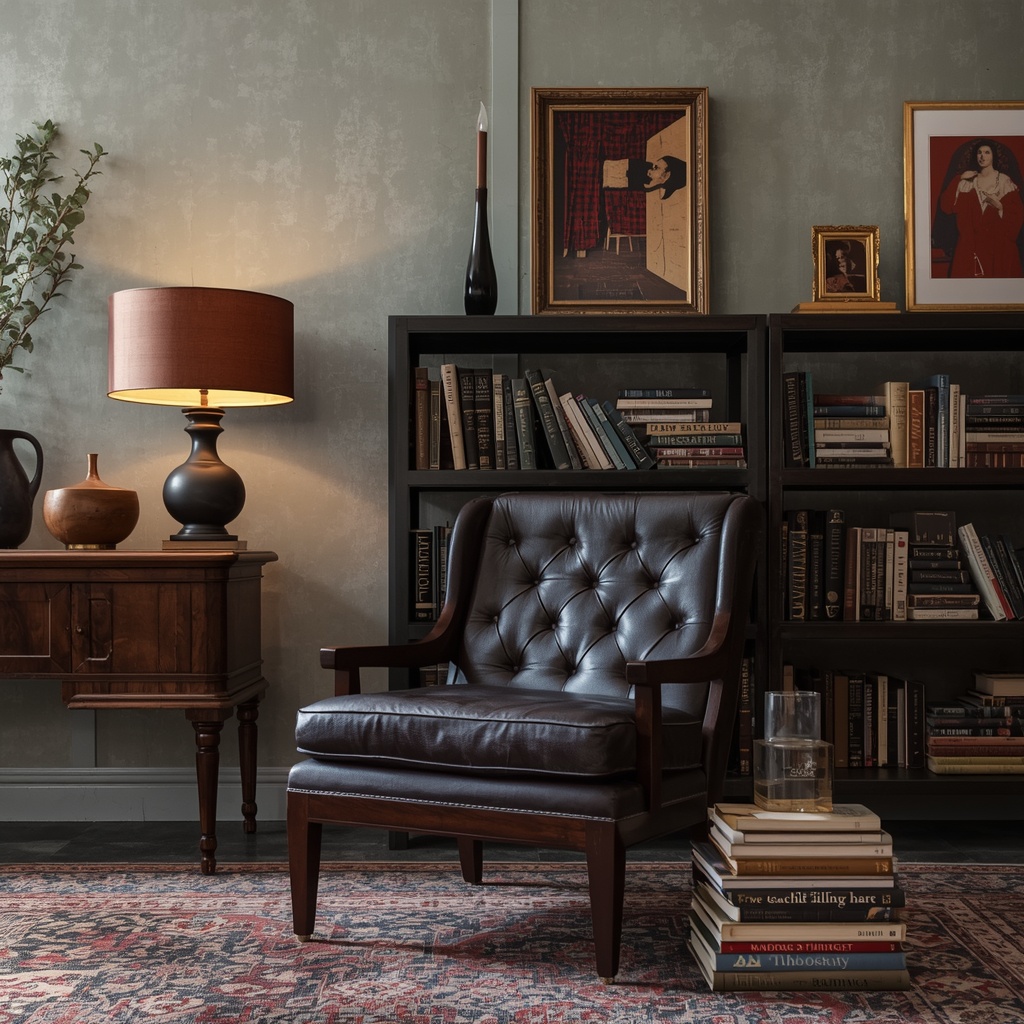
The key insight is this: Dark Academia is fundamentally about atmosphere, not price points. A $15 candleholder from HomeGoods placed on a stack of secondhand books beside an amber-lit lamp creates more authentic atmosphere than a $500 designer objet placed on a barren shelf. It’s the layering and the intention that matter — not the price tags.
| Item | Budget Option | Mid-Range Option | Investment Piece |
|---|---|---|---|
| Armchair | Facebook Marketplace ($50–$150) | Article or Wayfair ($400–$800) | Anthropologie or RH ($1,500+) |
| Area Rug | RugsUSA or Overstock ($80–$200) | World Market ($200–$500) | Loloi or vintage Persian ($800+) |
| Wall Art | Printed museum maps, thrifted frames ($10–$40) | Society6 or Etsy prints ($40–$150) | Original artwork or antique ($200+) |
| Lighting | IKEA + Edison bulbs ($30–$80) | Schoolhouse Electric ($150–$300) | Vintage or artisan fixture ($400+) |
| Bookshelf | IKEA Billy hacked with dark stain ($80–$200) | Target threshold or West Elm ($300–$700) | Custom built-ins ($1,500+) |
Dark Academia Wall Decor: Building Your Gallery of Knowledge
Walls in a Dark Academia space should feel like the pages of an encyclopedia — layered, varied, and quietly educational. The key word here is gallery, not grid. Forget symmetrical arrangements with matching frames; think instead of how prints and paintings accumulate on the walls of an old house over generations.
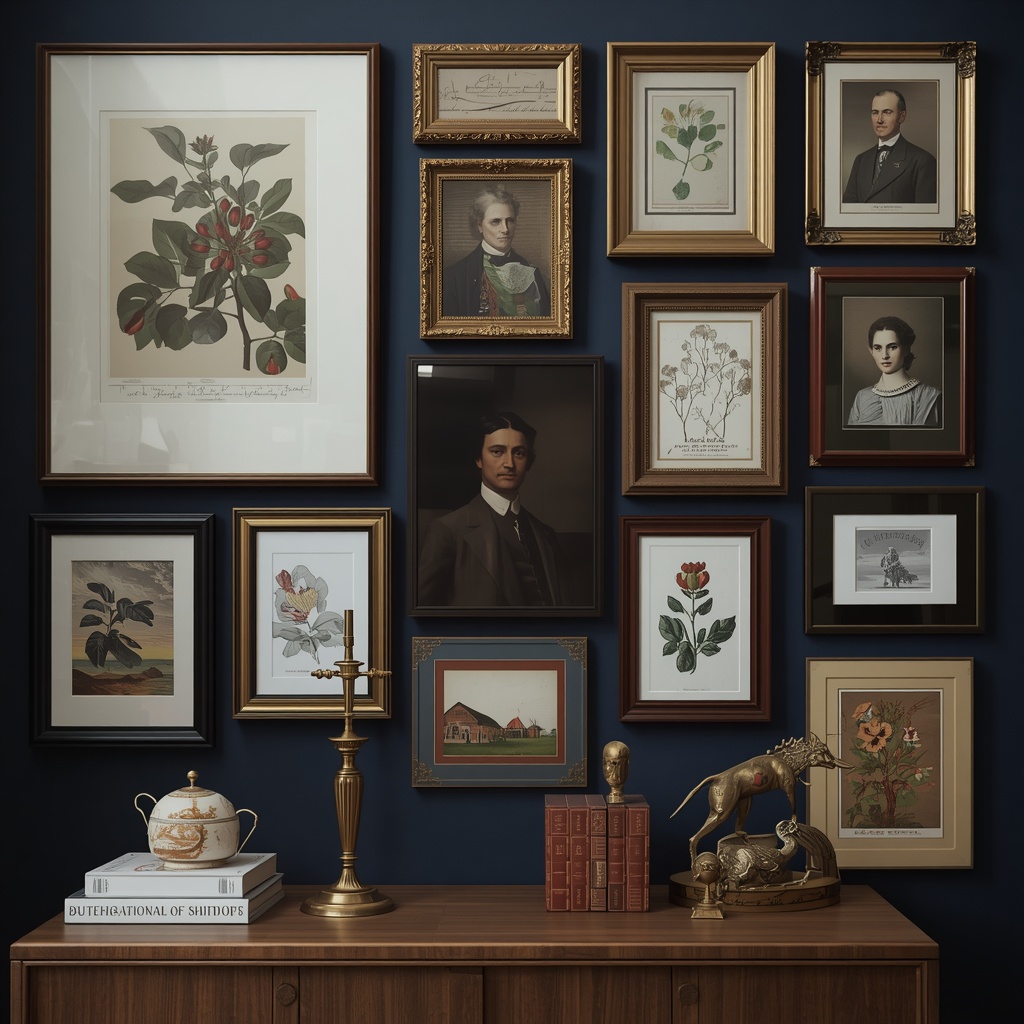
The most effective Dark Academia gallery walls mix scales and mediums: a large framed botanical illustration beside a small portrait in an ornate gilded frame, a hand-drawn map next to a page from an old anatomy textbook. The frames themselves should be mismatched — wood, brass, gilded, black — unified only by their dark or aged finish.
Pro Tip from My Design Studio
Before hammering a single nail, lay your gallery wall pieces out on the floor and photograph them from above. This lets you experiment with arrangement without putting holes in the wall. For print sourcing, I recommend the Smithsonian Open Access collection and the Library of Congress Free to Use archive — both offer thousands of historical maps, botanical illustrations, and archival photographs that are completely free to download and print. Take them to a local print shop and have them printed on matte paper for the most authentic look.
Bringing Nature In: Botanicals, Specimens & the Dark Academia Garden
Dark Academia has a complicated relationship with nature — it loves it, but always through the lens of study and observation. The botanicals and natural elements in this aesthetic aren’t whimsical or cheerful; they’re specimen-like, slightly melancholic, and deeply beautiful. Think pressed ferns mounted in antique frames, dried florals in dark glass vases, a taxidermied bird beneath a glass cloche, or a moss terrarium on a windowsill.
Live plants are absolutely welcome in Dark Academia spaces, but lean toward varieties that feel slightly dramatic: trailing pothos in a dark planter, a large fiddle leaf fig in a terracotta pot, or a collection of air plants arranged on a piece of driftwood. The potting vessels matter enormously — look for dark-glazed ceramics, aged terracotta, or brass planters over bright-colored plastic.
Common Dark Academia Decor Mistakes to Avoid
- Going too dark without warmth— Pure black and gray rooms feel cold, not scholarly. Always balance dark tones with warm amber lighting and natural wood.
- Overdoing the skulls and gothic props— Dark Academia is not Halloween decor. A single small skull or memento mori object is intriguing; a collection of them veers into costume territory.
- Ignoring the books— You cannot do Dark Academia without books. If you don’t own many, thrift stores sell them by the pound. Their presence is non-negotiable.
- Buying everything new— The aesthetic depends on a sense of history and accumulation. At least 30–40% of your pieces should feel found, inherited, or aged.
- Forgetting scent— Dark Academia is a fully sensory aesthetic. Candles or diffusers with notes of tobacco, leather, old books, sandalwood, or dark florals complete the atmosphere in a way that no decor piece can.
- Over-styling the shelves— Resist the urge to make everything look perfect. Imperfection, density, and visible wear are features, not bugs.
“The details are not the details. They make the design.”— Charles Eames
Final Thoughts: Your Home as a Living Library
Dark Academia decor, at its best, is not just an aesthetic — it’s an invitation to slow down, to surround yourself with objects that have meaning and history, and to create a space that honors the life of the mind. It asks you to be intentional about your surroundings in a way that feels increasingly radical in a world of flat-pack furniture and algorithmic interiors.
Whether you’re transforming a single reading corner or committing an entire home to the aesthetic, the principles remain the same: choose dark, warm colors that feel aged rather than stark; layer textures with generosity and a sense of accumulation; fill your shelves with books and objects that carry meaning; and above all, let the lighting do the heavy lifting. Warm, layered, amber light is the single most powerful tool in the Dark Academia designer’s kit — and it costs almost nothing to achieve.
The room you’re imagining — shadowy, warm, lined with books, smelling faintly of old paper and candlewax — is closer than you think. You don’t need a Victorian mansion or an unlimited budget. You need intention, patience, and a willingness to let your space tell the story of who you are and what you love.
Now light a candle, pour yourself something warm, and start building your own scholarly retreat. The books are waiting.