
By a Home Décor Specialist | Interior Design | Updated

If you’ve been scrolling through Pinterest boards or flipping through Architectural Digest lately, you’ve probably noticed a quietly glamorous revival happening in American interiors. Brass rods and ogee moulding details — once fixtures of Victorian parlors and stately manor libraries — are making a bold, sophisticated comeback in homes across the country. Whether you’re renovating a Colonial in Connecticut, refreshing a Craftsman bungalow in Portland, or adding layered character to a new build in Austin, these two design elements can do more for your space than almost anything else at their price point.
I’ve been designing residential interiors for over a decade, and I can tell you with complete confidence: understanding how to use brass curtain rods, brass hardware accents, and ogee profile moulding is one of the most impactful upgrades a homeowner can make. In this guide, I’ll walk you through everything — from what ogee moulding actually is, to how to pair it with brass rod finishes for a look that feels curated, layered, and deeply livable.
What Is Ogee Moulding? A Quick Primer for the Design-Curious
Before we dive into the pairing possibilities, let’s make sure we’re on the same page about what ogee moulding actually is. The term “ogee” refers to a specific S-shaped profile — a curve that bends in two directions, creating a flowing silhouette that is both elegant and structurally graceful. The word itself comes from the French ogive, and the profile has been a cornerstone of classical architecture since the Gothic period.

In modern American homes, ogee moulding appears most often as:
- Crown moulding at the ceiling-wall junction
- Baseboard moulding at the floor
- Door and window casing trim
- Chair rail moulding at mid-wall height
- Cabinet door edge profiles in kitchens and bathrooms
- Picture frame moulding on walls and ceilings
The ogee profile is defined by its concave-to-convex sweep — unlike a simple cove or round-over, it creates shadow lines that catch natural and artificial light beautifully. This interplay of light and shadow is exactly why ogee moulding pairs so well with the warm, reflective quality of brass.
“Moulding is the jewelry of a room. Without it, even the most beautiful furniture and textiles can feel unfinished — like getting dressed without accessories.” — Kelly Wearstler, Interior Designer
The Brass Renaissance: Why This Metal Finish Is Everywhere Right Now
Brass fell out of fashion in the 1990s and early 2000s when chrome and brushed nickel took over American bathrooms and kitchens. But today, unlacquered brass, antique brass, and satin brass finishes are dominating design trends — and for excellent reasons.
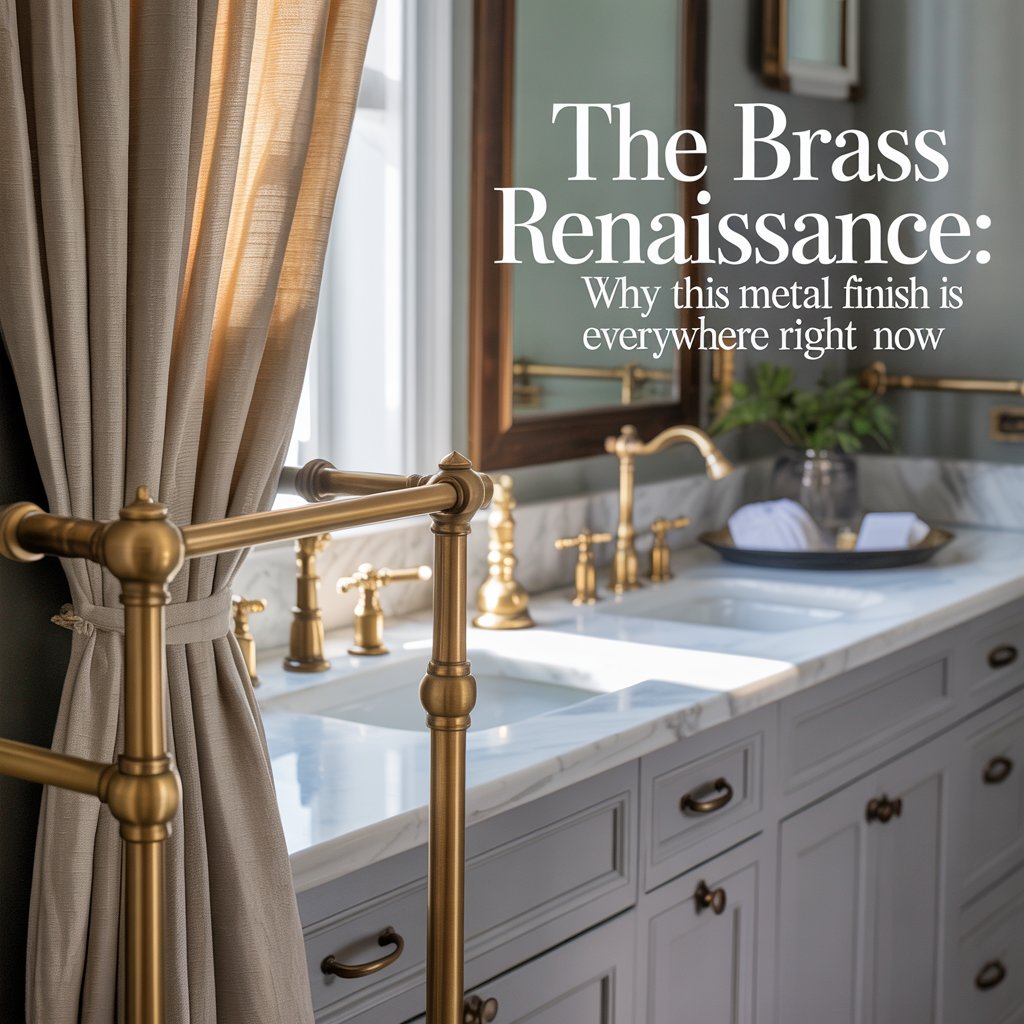
Unlike chrome, which reads as cold and clinical, brass brings warmth and depth to a space. It evolves beautifully over time, developing a natural patina that adds character rather than looking dated. Interior designers call this quality “living” — the finish becomes more interesting, not less, as it ages.
When it comes to decorative brass rods, specifically, the options available to American homeowners today are exceptional:
| Brass Rod Type | Best Use | Aesthetic | Price Range |
|---|---|---|---|
| Unlacquered Solid Brass | Drapery, curtain rods | Antique, warm | $40–$120/rod |
| Satin Brass | Stair railings, tension rods | Modern transitional | $30–$90/rod |
| Antiqued Brass | Library shelving, bed canopy | Old-world, romantic | $50–$150/rod |
| Polished Brass | Formal rooms, dining spaces | Glamorous, bold | $60–$200/rod |
| Brushed Brass | Contemporary kitchens | Matte, understated | $35–$100/rod |
Pro Tip: If you’re new to brass and worried about committing, start with satin brass curtain rods. They offer the warmth of the metal without being too high-contrast, and they work beautifully against both white walls and deep, saturated colors like navy, forest green, or charcoal.
How Brass Rods and Ogee Moulding Work Together: The Design Science
Here’s the secret that most design guides skip over: brass rods and ogee moulding work together because they share a visual language of curves and reflected light. The S-shaped profile of ogee trim echoes the cylindrical sweep of a brass rod. The warm gold tones of brass pick up the shadow play that ogee moulding creates on walls and ceilings. Together, they create what designers call visual harmony — the sense that a room was thoughtfully put together, not randomly assembled.

This pairing works across a wide range of interior styles:
- Traditional & Colonial: Polished or antique brass rods with wide ogee crown moulding painted in crisp white or classic ivory
- Transitional: Satin brass rods with slim ogee door casing in a soft greige or pale sage
- Modern Maximalist: Unlacquered brass rods with painted ogee moulding in deep jewel tones — think Benjamin Moore’s Hale Navy or Farrow & Ball’s Railings
- Art Deco Revival: Polished brass rods with gilded ogee picture frame moulding on dark walls
- Farmhouse Chic: Brushed brass rods with simple ogee baseboard moulding in clean white
“The rooms I always return to in my portfolio are the ones where the hardware and the architecture are in conversation with each other. Brass and ogee moulding have that dialogue built in.”
Installing Brass Curtain Rods with Ogee Moulding: What You Need to Know
One of the most common questions I get from homeowners is: “How do I hang curtain rods when I have decorative crown moulding?” This is especially relevant when you have bold ogee crown moulding that projects significantly from the wall.
Here’s a practical breakdown of your mounting options:
Option 1: Wall-Mount Above the Moulding
Mount your brass rod bracket directly to the wall above the crown moulding line. This works well when you have at least 4–6 inches of wall space between the top of the moulding and the ceiling. The curtain will hang alongside the moulding without touching it.
Best for: Rooms with 9-foot or higher ceilings, formal living rooms, dining rooms.
Option 2: Ceiling Mount
Install ceiling-mounted brass rod brackets directly into the ceiling joists, dropping the rod down to the desired height. This is the cleanest solution when wall mounting above the moulding isn’t possible.
Best for: Rooms with elaborate moulding profiles, bay windows, or rooms where you want to maximize the appearance of ceiling height.
Option 3: Extended Projection Brackets
Use extended projection curtain rod brackets (typically 3.5–4.5 inches of projection from the wall) that allow the rod to clear the face of the moulding entirely.
Best for: Rooms where you want curtains to extend beyond the window frame and cover some of the moulding detail for a streamlined look.
Choosing the Right Ogee Moulding Scale for Your Space
One of the most common mistakes homeowners make is choosing moulding that’s either too small or too large for their room’s proportions. Here’s a quick reference guide:
| Ceiling Height | Recommended Crown Moulding Height | Ogee Profile Width |
|---|---|---|
| 8 feet | 3.5 to 4.5 inches | Slim ogee (3/4″ reveal) |
| 9 feet | 4.5 to 5.5 inches | Standard ogee (1″ reveal) |
| 10 feet | 5.5 to 7 inches | Wide ogee (1.5″ reveal) |
| 10+ feet | 7 to 10+ inches | Grand ogee or stacked moulding |
Pro Tip: When in doubt, go slightly larger with your moulding. A common beginner error is choosing a moulding that “disappears” against the wall. Ogee profiles cast shadow lines — you want them to be visible and impactful. If your budget allows, consider stacking mouldings: a flat bed moulding beneath the ogee crown creates a layered, high-end custom look for a fraction of the cost of custom millwork.
Painting Ogee Moulding: The Finish Options That Work with Brass
The relationship between your moulding paint finish and your brass rod finish matters more than most people think. Here are the combinations that consistently deliver stunning results:
Classic High-Contrast:
- Moulding: Bright White semi-gloss (Benjamin Moore Chantilly Lace or Sherwin-Williams Extra White)
- Brass: Polished or antique brass rods
- Wall Color: Deep navy, hunter green, or charcoal
- Effect: Dramatic, formal, magazine-worthy
Tonal Warmth:
- Moulding: Warm off-white or cream (Benjamin Moore White Dove)
- Brass: Satin or brushed brass rods
- Wall Color: Warm beige, caramel, or soft blush
- Effect: Layered, cozy, transitional
Monochromatic Elegance:
- Moulding: Same color as walls (tonal approach)
- Brass: Unlacquered brass rods as the focal accent
- Wall Color: Dusty blue, sage green, or warm taupe
- Effect: Sophisticated, architectural, gallery-like
Painted Moulding Statement:
- Moulding: Deep contrasting color matching the walls or darker
- Brass: Polished or antiqued brass rods
- Wall Color: Matching the moulding or lighter
- Effect: Bold, maximalist, deeply designed
Semantic Design Keywords to Know
Understanding the vocabulary of trim and hardware will help you communicate with contractors, shop more precisely online, and make better design decisions. Here are the key terms related to this topic:
- Ogee profile — the S-curve architectural detail
- Crown moulding — ceiling-to-wall decorative trim
- Casing moulding — trim around doors and windows
- Base cap moulding — decorative top edge of baseboard
- Cornice detail — architectural term for crown and frieze combined
- Drapery hardware — rods, rings, finials, and brackets
- Finial — the decorative end cap of a curtain rod
- Projection bracket — holds the rod away from the wall
- Unlacquered brass — living finish that develops natural patina
- Chair rail — horizontal moulding at roughly chair-back height
- Millwork — custom or pre-made architectural wood trim and details
- Wainscoting — lower wall paneling, often paired with chair rail
- Picture frame moulding — decorative rectangular trim applied to walls
Where to Shop: Trusted Sources for Brass Rods and Ogee Moulding
Finding quality brass rods and ogee moulding doesn’t require a designer’s trade account. Here are my go-to resources for American homeowners:
For Brass Curtain Rods:
- Pottery Barn — great mid-range brass rod collections
- Restoration Hardware (RH) — investment-level brass hardware
- Wayfair — budget-friendly options with huge selection
- Anthropologie — unique, artisan-style brass rods
- Amazon — search “satin brass curtain rod” for budget finds
For Ogee Moulding:
- Home Depot — wide selection of pre-primed ogee profiles
- Lowe’s — solid selection, often in stock same-day
- Metrie — premium moulding brand available at most big box stores
- Local millwork shops — for custom profiles, wider widths, or exotic wood species
Final Design Thoughts: Bringing It All Together
Brass rods and ogee moulding details are not trends — they are timeless design tools that have appeared in beautiful American homes for centuries and will continue to do so. What makes them feel fresh right now is how modern designers are using them: pairing bold ogee moulding in dramatic painted colors with unlacquered brass rods that warm up a space without over-shining.
The rooms that resonate most deeply with us are the ones that feel like they were built by people who cared — spaces where the architecture and the details are in conversation with each other. Installing even a single run of ogee crown moulding in a main living space, paired with elegant brass curtain rods, can shift a room from forgettable to genuinely beautiful. And that, at the end of the day, is what good interior design is all about.
Start small if you’re nervous. Add a brass rod to your living room window first. Run a single length of ogee baseboard along one feature wall. See how it makes you feel. I’d bet you’ll be ordering more by the weekend.
Have questions about your specific space? The details always matter in interior design — feel free to explore more guides on crown moulding installation, drapery layering, and hardware mixing on this site.
Related Reading:
- How to Mix Metal Finishes Without Clashing
- Crown Moulding 101: Profiles, Installation, and Paint Finishes
- The Best Curtain Rod Styles for Every Interior Design Aesthetic
- Wainscoting and Chair Rail: A Complete Homeowner’s Guide