
Moving into a rental doesn’t mean surrendering your sense of style. With smart, budget-friendly choices and renter-safe techniques, you can create a warm, personal, and beautifully designed space — without losing your security deposit. Here’s how to do it.
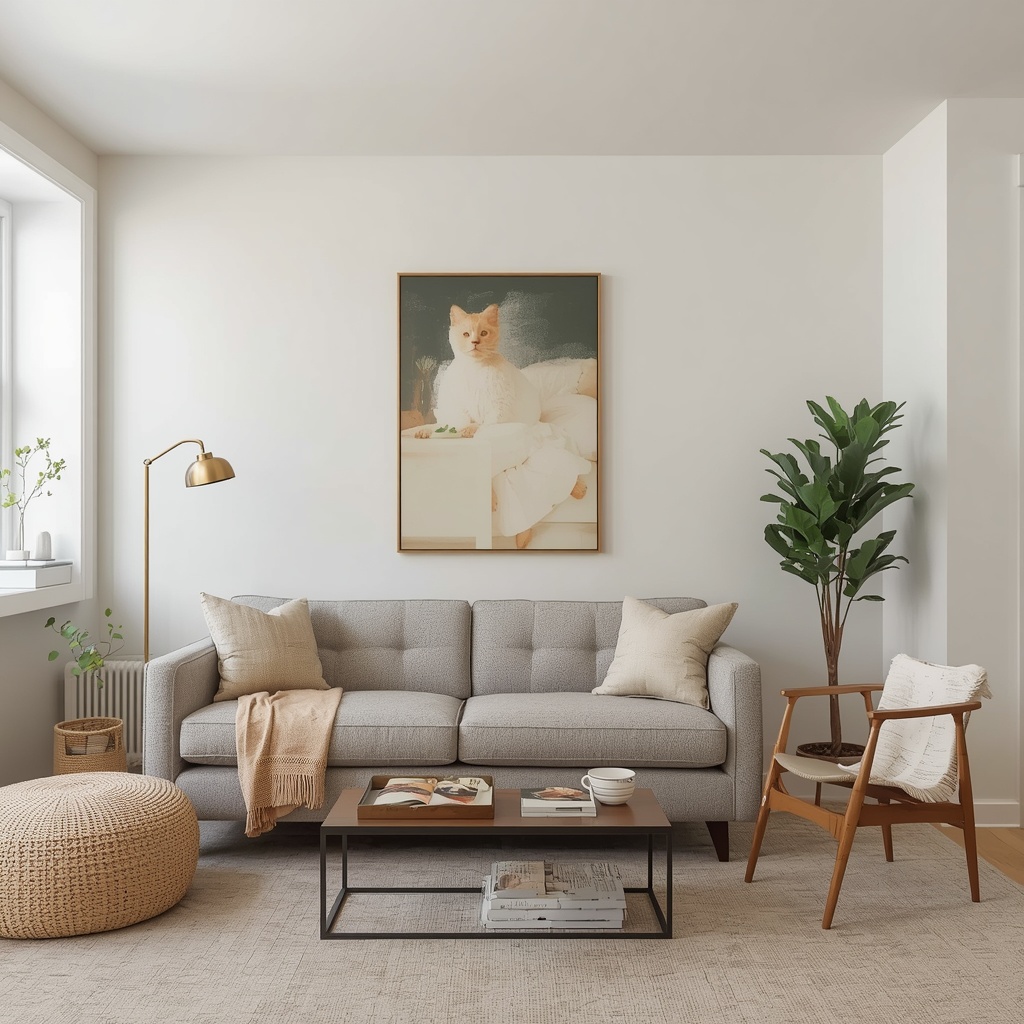
Let’s be honest: most rental apartments come with beige walls, basic fixtures, and a landlord clause that says “no permanent changes.” For renters across the U.S. — whether you’re in a New York City studio or a suburban apartment in Austin — that can feel creatively suffocating. But as an interior designer who has helped hundreds of renters transform their temporary spaces into true sanctuaries, I can tell you this: limitations spark creativity.
The rental decor market in the United States is booming, with renter households reaching over 44 million as of recent estimates. That’s millions of people who want stylish, cozy interiors without the permanence of homeownership. The good news? You don’t need to own the walls to own the room. From peel-and-stick wallpaper to strategic furniture placement, the right apartment decorating ideas can completely transform how a space feels — and how it feels to live in it.
This guide covers the most practical, affordable, and landlord-friendly ways to make your rental apartment feel like home. We’ll talk about temporary decor solutions, budget home styling tips, and small apartment decorating hacks that actually work. And yes — you’ll get my professional tips along the way.
Start With What You Can’t Change — and Work With It
Before spending a single dollar, walk through your rental and take stock of the permanent features: the flooring, the natural light, the ceiling height, the layout. These aren’t obstacles — they’re your design foundation. A north-facing apartment with limited light? That’s your cue to lean into warm, earthy tones and layered lighting. Laminate flooring that looks cold? A few well-placed area rugs will transform the entire mood of the room.
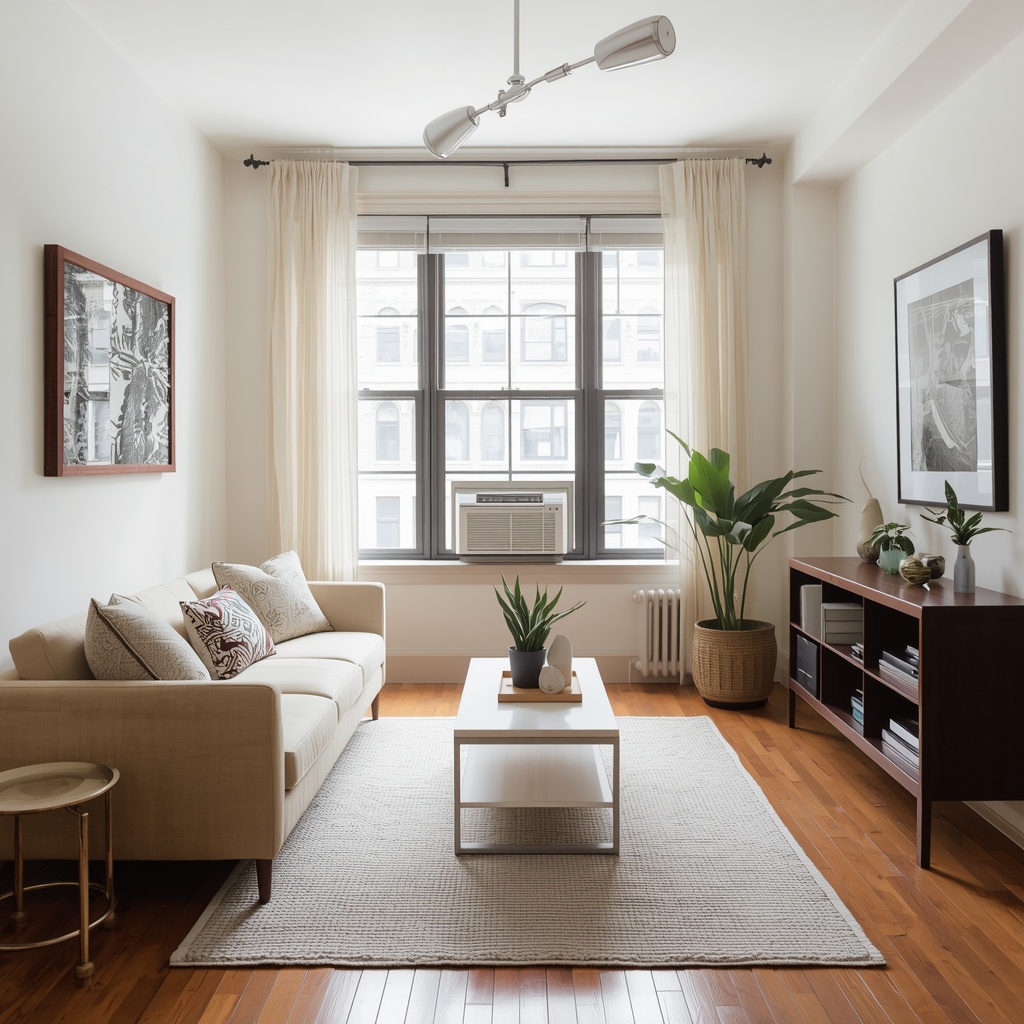
Understanding the bones of your space is step one of any design process, and renters often skip it in their rush to hang things up or buy furniture. Instead, live in the space for a week or two before making major decor decisions. Notice where the sun hits in the morning, where the drafts come from, and which wall naturally draws your eye when you walk in. These observations will save you time, money, and the headache of rearranging furniture three times before landing on what works.
“A rental is just a blank canvas with someone else’s primer. Your job is to paint over it — beautifully and reversibly.”— Interior Designer, Apartment Therapy contributor
Use Removable Wallpaper to Add Color and Pattern
One of the most powerful — and most underused — tools in a renter’s decor arsenal is peel-and-stick wallpaper. Modern removable wallpaper has come a long way from the cheap, bubbling versions of the past. Today’s options from brands like Tempaper, Chasing Paper, and Spoonflower offer stunning patterns, textures, and colors that rival traditional wallpaper — without the paste, the permanence, or the landlord panic.
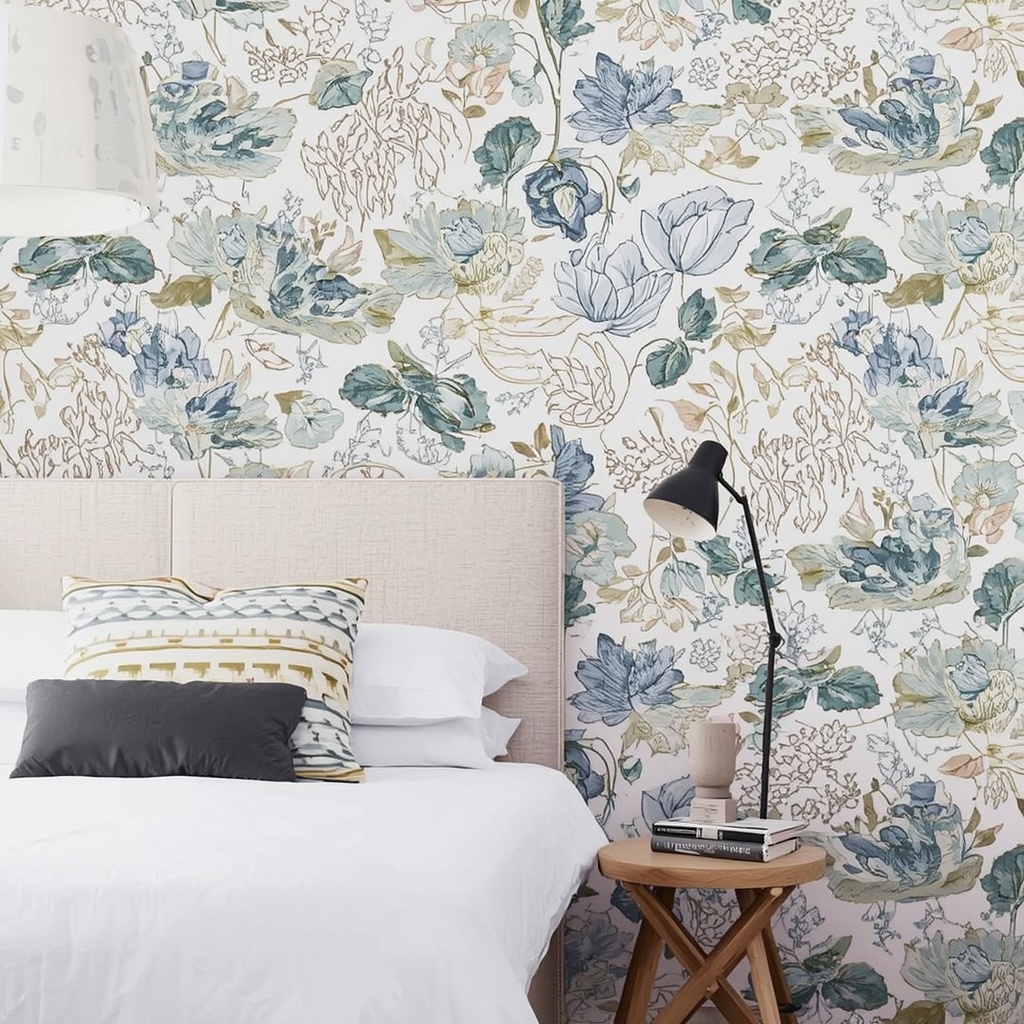
The impact a single accent wall can have on a room’s personality is extraordinary. A botanicals-print removable wallpaper behind your bed headboard can turn a bland bedroom into a lush, hotel-worthy retreat. A geometric pattern in the kitchen or dining nook creates visual interest without touching a cabinet. And when your lease is up? It peels off cleanly, leaving no residue. For renters in smaller apartments, use it strategically — one statement wall is always more effective than all four, especially in compact spaces.
Pro Tip
Before applying peel-and-stick wallpaper, clean the wall with a slightly damp cloth and let it dry completely. For best adhesion and easy removal, choose wallpaper specifically labeled “renter-safe” or “peel-and-stick.” Brands like Tempaper offer a wide range of rental-friendly designs under $3 per square foot.
Layer Your Lighting for a Custom Ambiance
Nothing reveals a rental faster than flat overhead lighting. That single flush-mount fixture in the middle of the ceiling is the design equivalent of a dead giveaway. Layered lighting — the professional technique of combining ambient, task, and accent light sources — is your secret weapon for making any rental feel intentional and warm. And the best part: all of it is completely removable.
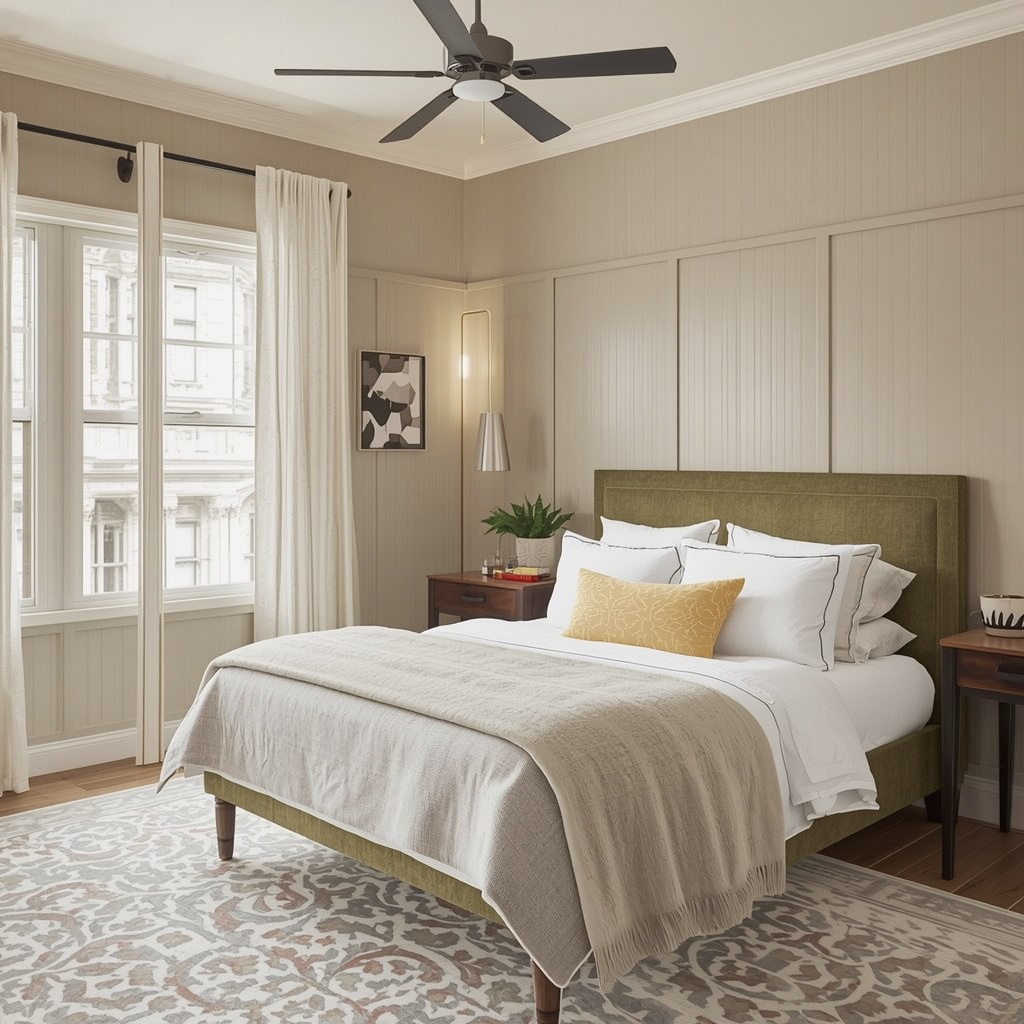
Start by replacing harsh white bulbs with warm-toned LED bulbs (look for 2700K–3000K on the packaging) in existing fixtures. Then add floor lamps in dark corners, plug-in sconces on either side of the bed instead of a hardwired headboard light, and string lights or LED strips behind furniture for that subtle glow. Battery-operated candles, table lamps, and smart bulbs controlled by your phone give you full control of mood without any electrical work. Great lighting can make a 500-square-foot studio feel like a boutique hotel suite.
| Lighting Type | Best For | Renter Friendly? | Avg. Cost |
|---|---|---|---|
| Floor lamp | Living room corners, reading nooks | ✅ Yes | $30–$120 |
| Plug-in wall sconce | Bedside lighting | ✅ Yes | $25–$80 |
| LED strip lights | Under shelves, behind TV | ✅ Yes | $15–$40 |
| Smart bulbs (Philips Hue, etc.) | Existing sockets | ✅ Yes | $12–$50 each |
| Pendant light with plug | Dining areas | ✅ Yes | $40–$150 |
Bring the Outdoors In With Houseplants
Houseplants are one of the most affordable, universally effective, and lease-safe tools in interior design. They add color, texture, life, and even improve air quality — and they move with you when you go. From sculptural fiddle-leaf figs in the corner of a living room to trailing pothos on a bookshelf, plants contribute an irreplaceable organic warmth that no piece of furniture can replicate.
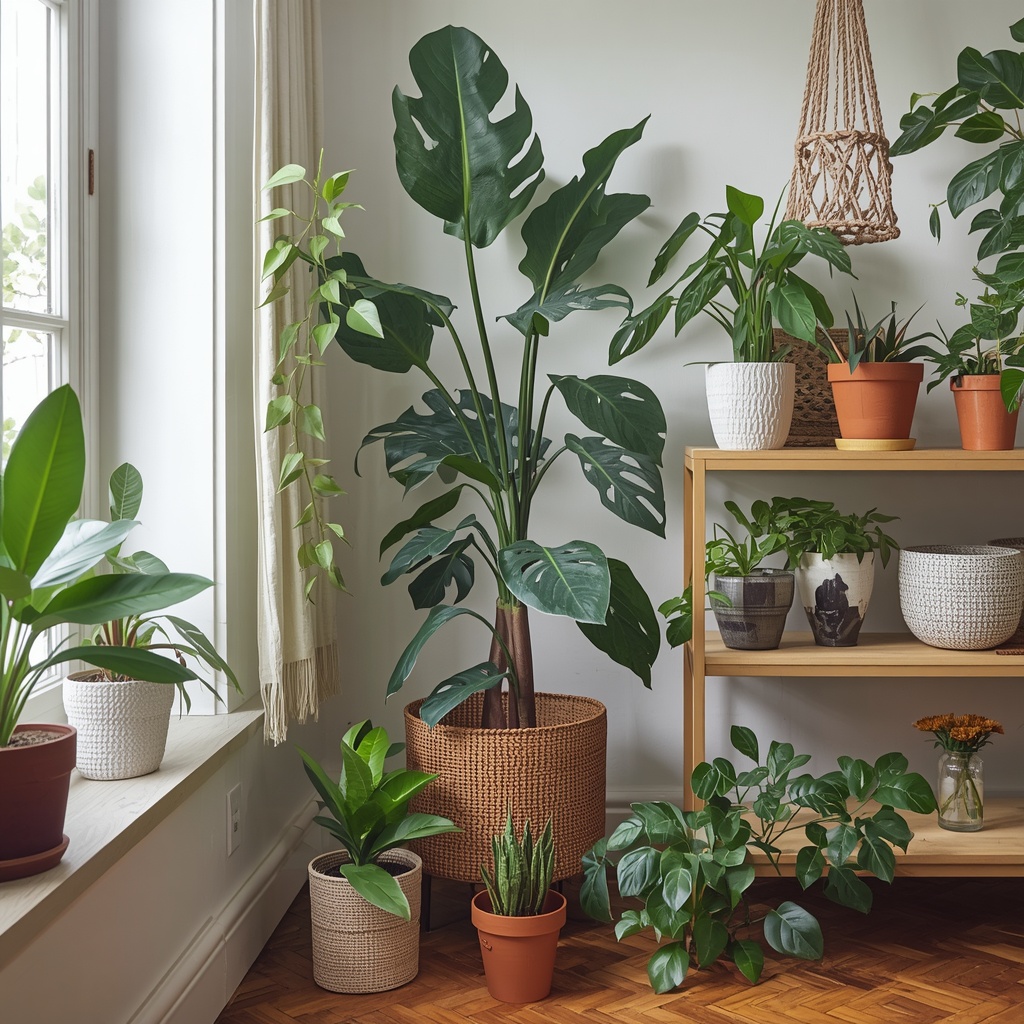
For renters who worry about watering schedules or low-light conditions, the good news is that the most visually impactful plants tend to be the most forgiving. Snake plants, ZZ plants, pothos, and rubber trees thrive in a wide range of conditions and need minimal attention. Cluster plants in groups of odd numbers — threes and fives — for a more styled, intentional look. Use pots and planters as decor in their own right: a terracotta cluster on the kitchen windowsill, a woven basket planter in the living room, or a hanging macramé planter by the window all add texture and personality without touching a single wall.
Low-light plants
Snake plant, ZZ plant, pothos, peace lily — perfect for dim apartments
Bright-light plants
Fiddle-leaf fig, bird of paradise, succulents, rubber tree
Invest in Textiles — They Do the Heavy Lifting
If there’s one area where renters consistently under-invest, it’s textiles. Throw pillows, blankets, curtains, and area rugs are the fastest, most affordable way to shift the entire aesthetic of a room. Textiles add warmth, reduce echo (important in apartments with hard floors), and create a cohesive visual language across your space. A linen throw draped over a basic IKEA sofa suddenly looks intentional and editorial.
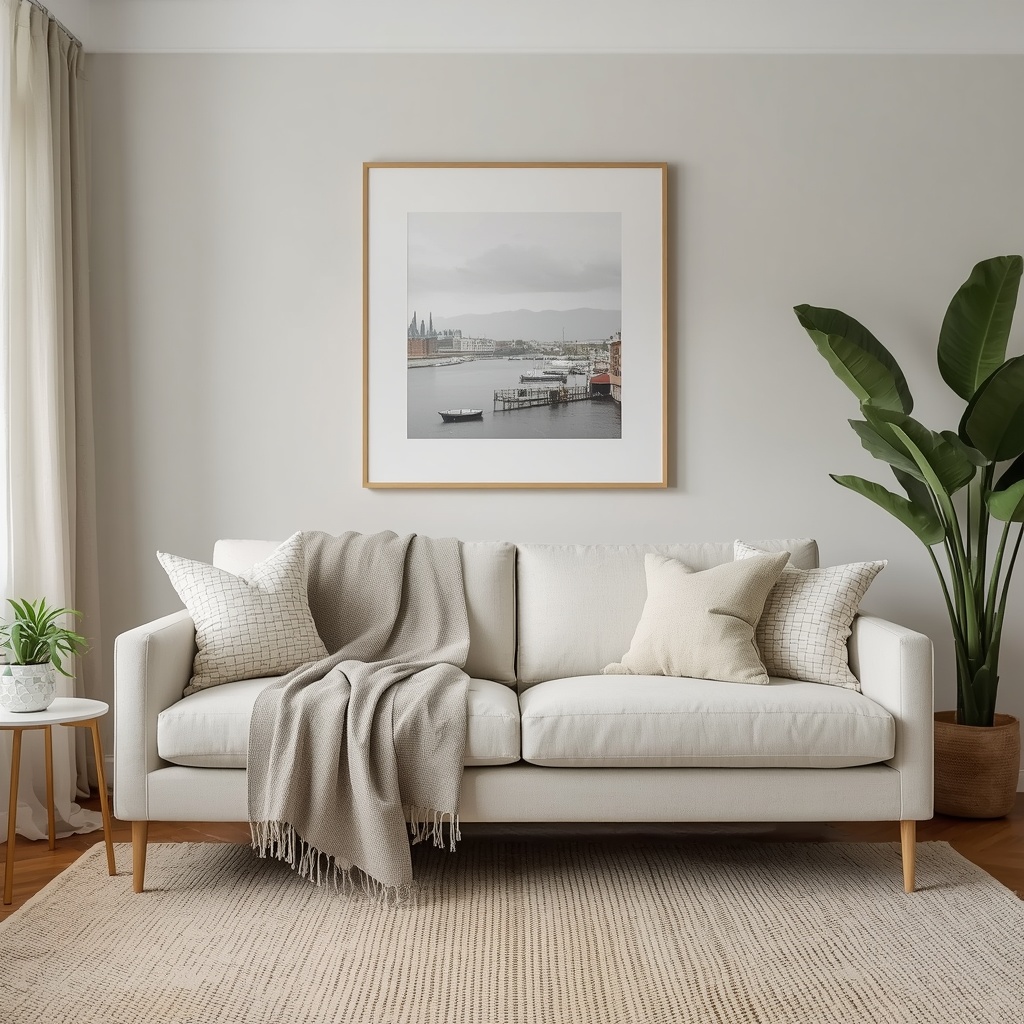
Curtains deserve special attention. Most rental apartments come with basic horizontal blinds, if anything at all. Replacing these with floor-length curtains — hung from a removable tension rod or a command-strip curtain rod — immediately makes a room feel taller, warmer, and more luxurious. The rule of thumb: hang curtains as close to the ceiling as possible and let them pool slightly on the floor. Linen, velvet, and cotton canvas are all great options at varying price points. For an affordable source, IKEA’s MAJGULL and H&M Home’s curtain selections offer excellent quality at renter-friendly prices.
“Curtains are the fastest way to make a rental bedroom feel like a primary suite. Go long, go high, and go linen.”— Studio McGee Design Philosophy, as paraphrased in Architectural Digest
Pro Tip
Layer two rugs for a boho-chic effect and extra warmth on cold floors: a flat jute base rug topped with a smaller printed or plush rug. This also lets you use budget-friendly rugs from Wayfair or Target and still achieve a designer look through layering and composition.
Create a Gallery Wall Without Putting Holes in the Wall
Gallery walls are one of the most searched apartment decorating trends in the U.S., and for good reason — they personalize a space instantly. But many renters assume they require drilling dozens of holes. Not so. Command strips rated for picture frames have advanced significantly and can hold frames weighing up to 16 pounds without damaging painted walls, as long as you follow the removal instructions carefully.
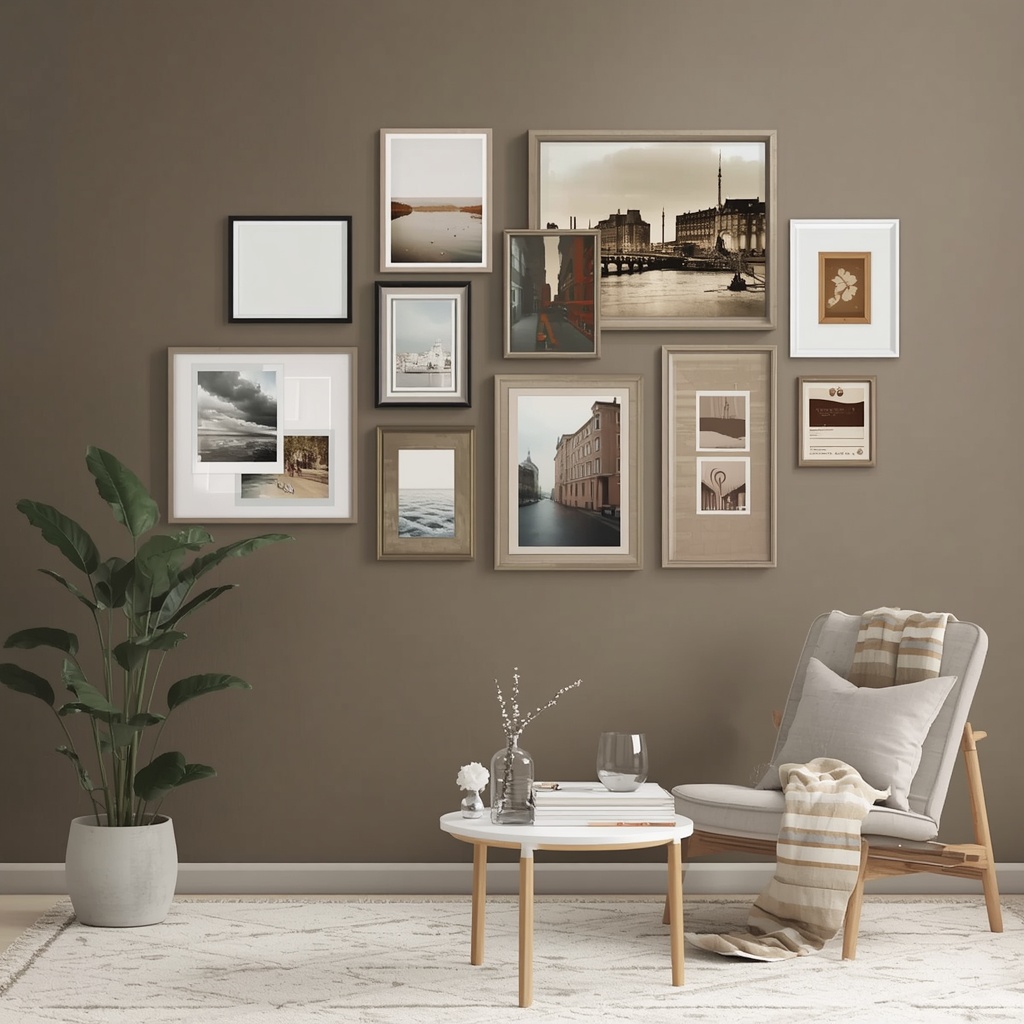
Plan your gallery wall layout on the floor first, photographing the arrangement before you start hanging. Mix art prints, personal photos, small mirrors, and decorative objects at varying heights and orientations. For a cohesive look, stick to a consistent frame color (all black, all natural wood, or all white) even if the art inside varies. IKEA’s RIBBA and HOVSTA frames are affordable, reliable, and Command-strip compatible. You can also lean large frames against the wall on a floating shelf or directly on the floor for a no-hang editorial look that’s incredibly popular in modern boho and Japandi-inspired interiors.
Gallery Wall Essentials — Checklist
- Command strips rated for your frame weight (check the package)
- Level app on your phone — free and accurate
- Paper template trick: trace frames on kraft paper, tape to wall first
- Mix of art sizes: one anchor piece (16″x20″+), several mediums, and small fillers
- Consistent frame color or material for cohesion
- At least one mirror to add depth and reflect light
Furniture Arrangement: The Free Upgrade Nobody Talks About
Before you buy a single new piece of furniture, try rearranging what you have. Furniture arrangement is one of the most powerful — and completely free — interior design tools available to renters. The way you orient your sofa relative to your TV, the distance between your dining table and the kitchen, the placement of your bed in relation to the window: these decisions shape how a room feels to live in every single day.
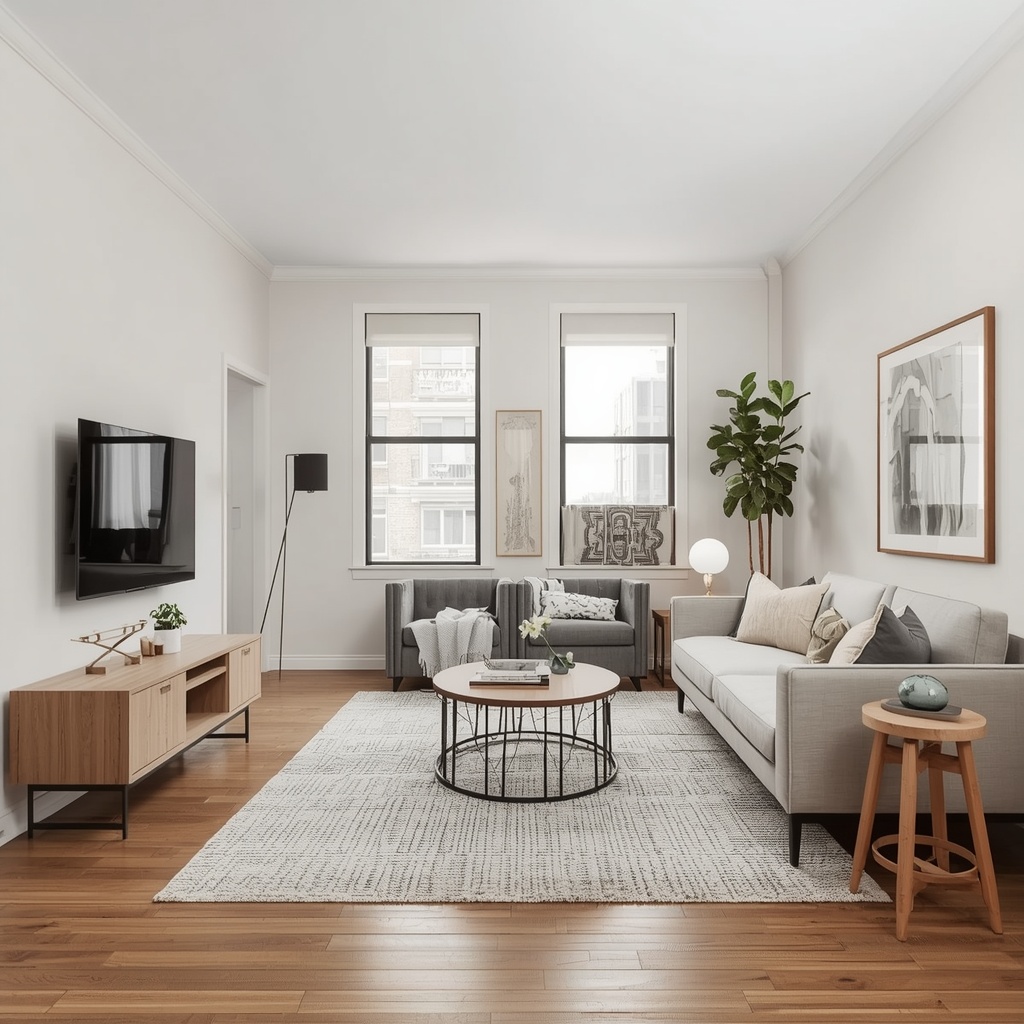
In small rental apartments, avoid pushing all furniture against the walls — a common mistake that actually makes rooms feel smaller. Instead, float your sofa a few inches from the wall and anchor it with an area rug that defines the seating zone. In studio apartments, use furniture to divide the space visually: a bookcase or a sofa positioned perpendicular to a wall can create a “bedroom zone” without any construction. For dining areas, round tables are almost always better in small spaces than rectangular ones — they allow traffic flow from all sides and feel less space-consuming.
| Space Challenge | Renter Design Solution |
|---|---|
| Open-plan studio | Use a sofa, bookcase, or curtain to divide zones visually |
| Small living room | Float furniture off walls; anchor with a large area rug |
| Tiny bedroom | Place bed against the longest wall; use under-bed storage |
| Narrow dining area | Use a round table and backless stools to save space |
| Dark apartment | Place mirrors across from windows to bounce natural light |
Smart Storage as Decor — Style Meets Function
Rental apartments rarely have enough storage, and clutter is the enemy of a designed space. The solution is to treat storage as a decorating opportunity rather than a problem to hide. Open shelving, decorative baskets, and styled bookshelves can be as visually interesting as any piece of art — while doing genuine organizational work. The key is curation: every shelf or surface should feel considered, not crammed.
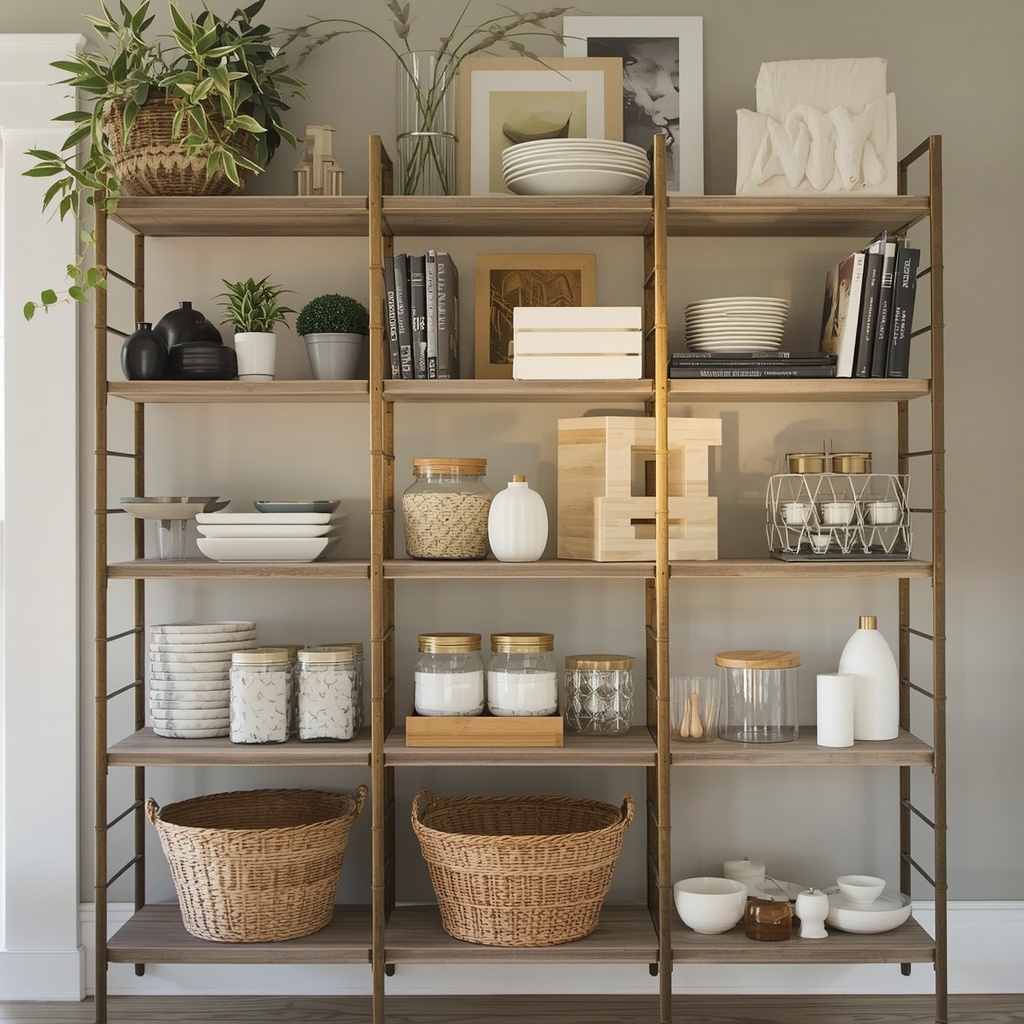
Floating shelves installed with Command Strips (for lighter loads) or removable adhesive anchors are a game-changer in rental kitchens and living rooms. Ladder shelves require no installation at all and are among the most versatile, affordable storage pieces available. Use the one-third rule on open shelves: one-third books or functional items, one-third decorative objects (vases, candles, sculptures), and one-third negative space. That empty space is not wasted — it’s what makes the styled items look intentional rather than cluttered.
Pro Tip
Decant pantry staples, laundry detergent, and cleaning supplies into matching containers to instantly elevate your kitchen and bathroom. Brands like OXO, Brabantia, and Amazon Basics offer affordable sets. This simple switch alone makes rental kitchens feel dramatically more custom and designed. See more ideas at Apartment Therapy.
Add Personal Touches That Tell Your Story
A beautifully decorated space is one thing — a home is another. The difference is personal meaning. No matter how stylish your rental becomes, it won’t feel truly yours until it reflects your life, your travels, your memories, and your personality. This doesn’t require expensive art or custom furniture. A shelf of well-loved books, a collection of vintage ceramics from a flea market, a framed photo from your favorite trip, or a handmade throw from a local artisan — these are the details that transform a decorated apartment into a lived-in, loved home.
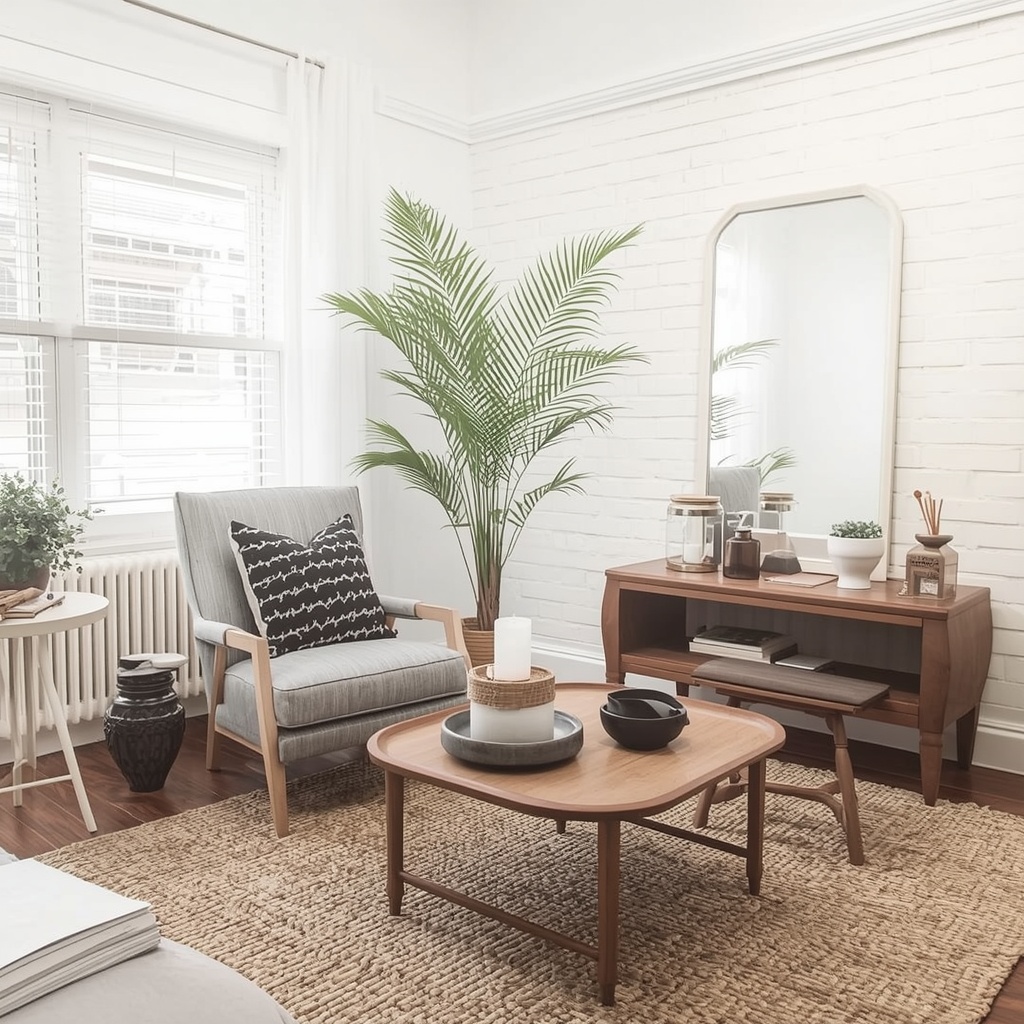
Scent is also a powerful and often overlooked design element. A signature home fragrance — whether from a soy candle, a reed diffuser, or an essential oil blend — creates a sensory identity for your space that guests remember. Choose one or two complementary scents (vetiver and cedar for a grounded, earthy feel; jasmine and vanilla for something soft and warm) and use them consistently. The emotional connection we form with scent is immediate and lasting. It’s the cheapest, most transportable form of home decor there is — and it goes with you wherever you move next.
Quick wins: renter-safe updates under $50
- Replace builder-grade switch plates and outlet covers ($1–2 each at hardware stores)
- Swap the shower curtain and rings for something styled ($20–35 at Target or TJ Maxx)
- Add a doormat with personality at your front entrance ($15–30)
- Place a small tray on the coffee table to corral remotes and organize surfaces ($10–20)
- Put a full-length leaning mirror in the bedroom or entryway ($40–50)
- Add a few scented candles or a reed diffuser ($12–20)
Final Thoughts: Home Is a Feeling, Not a Lease
Making a rental apartment feel like home is less about the square footage you own and more about the intentionality you bring to your space. Every rental, no matter how plain or small, has potential waiting to be unlocked. It starts with seeing your apartment not as a temporary inconvenience but as a real home that deserves real care, creativity, and investment — even on a budget.
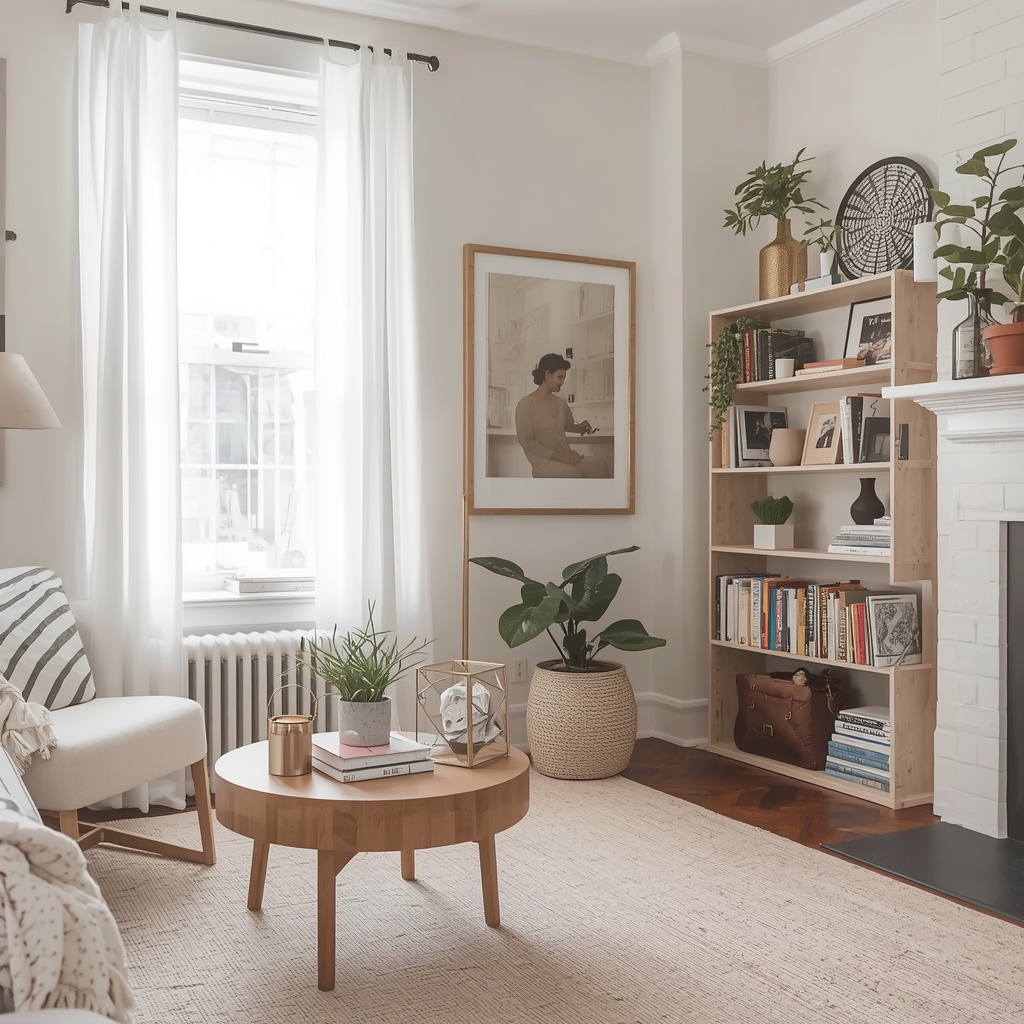
The best rental interiors I’ve ever seen weren’t the biggest or most expensive. They were the ones where the person who lived there clearly paid attention — to the light, the layers, the personal objects on the shelves. They understood that a home isn’t something you find. It’s something you make, one affordable, thoughtful, reversible choice at a time. So go ahead: hang those curtains high, layer those rugs, and let your rental become the home you deserve.
Final Pro Tip
Before you move out, photograph every Command Strip removal and wall repair for your records. Keep your original move-in photos and document any changes you made. A little organization now protects your full security deposit — and lets you decorate confidently throughout your lease. For more renter-friendly design inspiration, visit Apartment Therapy, Houzz, and Architectural Digest.