
If there’s one houseplant that has earned a permanent spot in modern American homes, it’s the snake plant. With its architectural leaves, low-maintenance reputation, and effortless ability to elevate any room, this plant has become a go-to for interior designers and first-time plant parents alike.
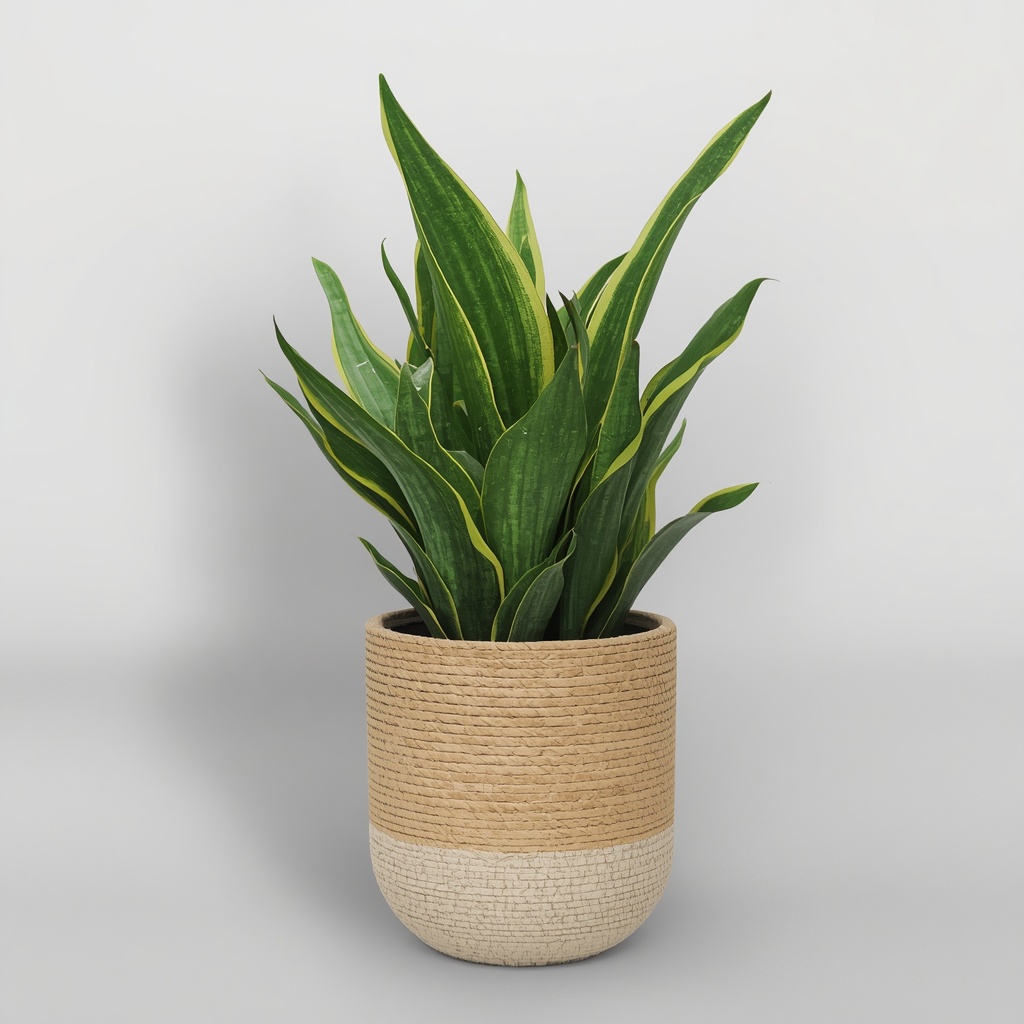
Whether you’re decorating a minimalist studio apartment, a cozy farmhouse living room, or a sleek corporate office, the snake plant (botanically known as Dracaena trifasciata, formerly Sansevieria) delivers style and substance in equal measure. In this guide, we’ll cover everything you need to know: how to style it like a pro, how to keep it thriving, and why it deserves a spot in your home decor lineup.
What Is a Snake Plant?
Native to West Africa, the snake plant is a succulent known for its stiff, upright leaves that grow in striking vertical patterns. The leaves often feature variegated bands of green, yellow, or silver, which is where the nickname “mother-in-law’s tongue” comes from — a nod to its sharp-edged, tongue-shaped foliage.
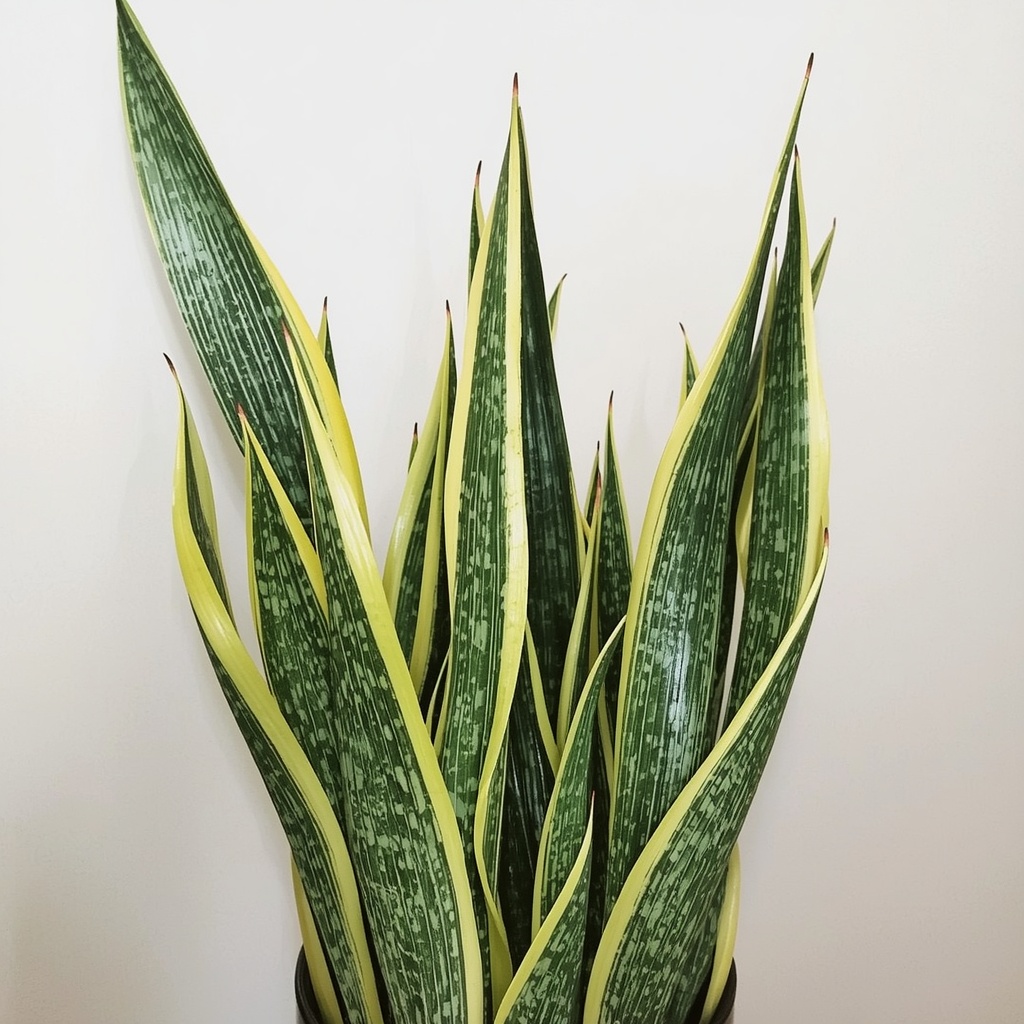
Unlike leafy tropical plants that demand constant attention, snake plants store water in their thick leaves, making them remarkably drought-tolerant. This resilience, paired with a sculptural silhouette, is exactly why designers treat it as a decor staple rather than just another houseplant.
Why Designers Love Snake Plants
As an interior stylist, I recommend snake plants to clients more than almost any other greenery. Here’s why they consistently earn their place in a well-designed room:
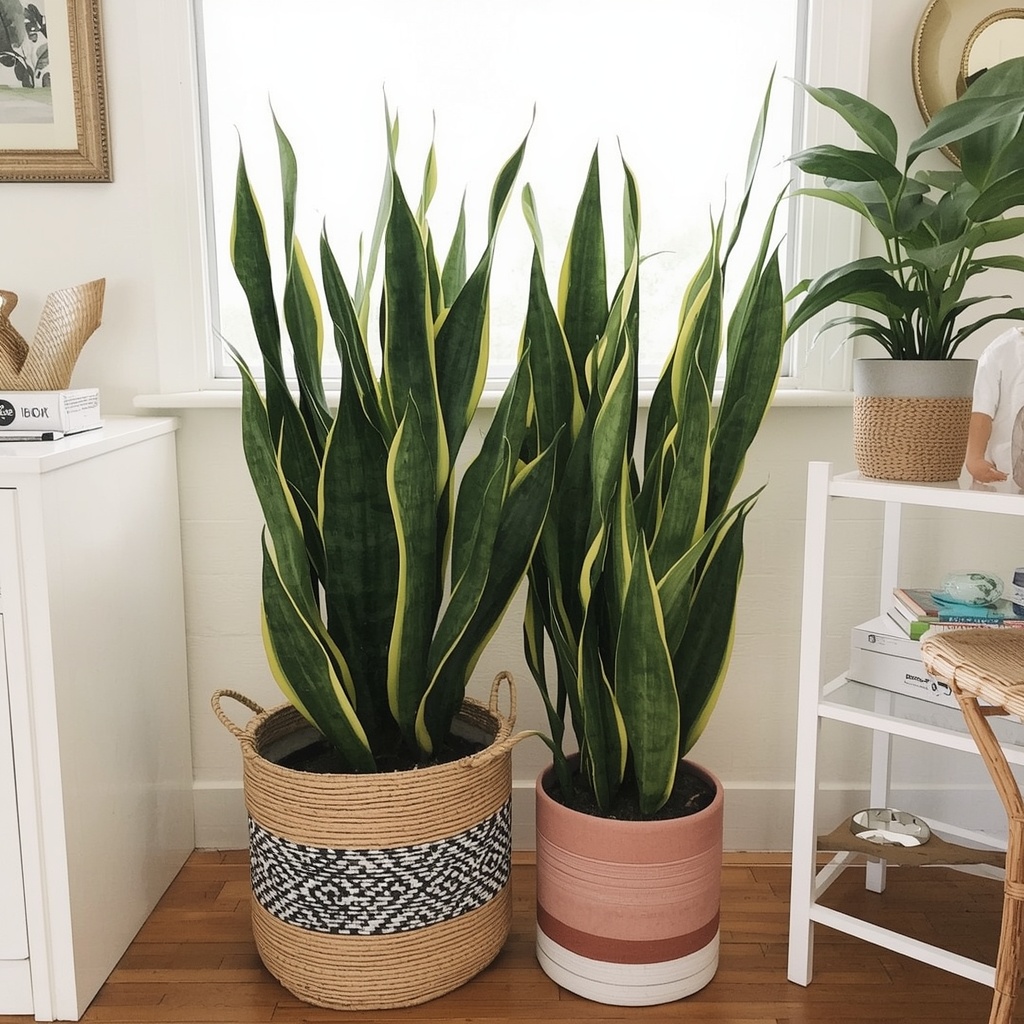
- Architectural structure – Their vertical lines add height and drama without visual clutter
- Versatile aesthetic – They complement bohemian, mid-century modern, industrial, and minimalist styles equally well
- Low light tolerance – Perfect for apartments, hallways, and offices with limited natural light
- Air-purifying qualities – A functional bonus that pairs beauty with wellness
- Year-round green – No seasonal die-back, so your styling stays consistent
“A single snake plant in a sculptural planter can do more for a room’s visual balance than three smaller plants combined. It’s the exclamation point every neutral space needs.” — common design philosophy among plant stylists
Popular Snake Plant Varieties for Home Styling
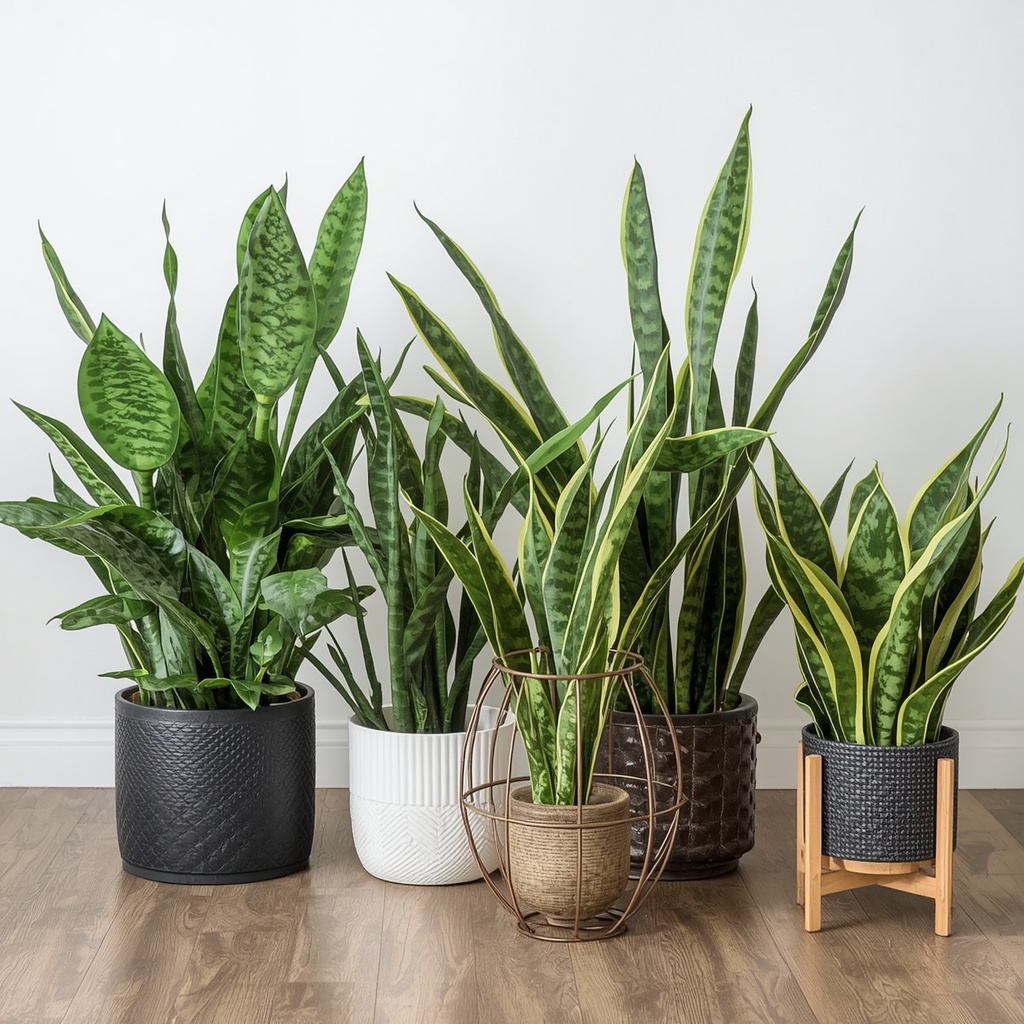
Not all snake plants look alike, and choosing the right variety can dramatically change the mood of a room. Here’s a quick comparison of the most popular types:
| Variety | Leaf Appearance | Height | Best Styling Use |
|---|---|---|---|
| Laurentii | Green with yellow edges | 2–4 ft | Bold statement corners |
| Moonshine | Solid silvery-green | 1.5–2 ft | Modern, monochrome interiors |
| Cylindrica | Round, spear-like leaves | 2–3 ft | Sculptural accent tables |
| Whale Fin | Single wide paddle leaf | 1–2 ft | Minimalist shelving |
| Hahnii (Bird’s Nest) | Compact rosette | 6–8 in | Desks and small side tables |
| Black Coral | Deep green, dark bands | 2–3 ft | Contemporary, dark-toned rooms |
Choosing a variety that echoes your existing color palette — silver-blue tones for a cool-toned room, or deep green for warmer interiors — is one of the simplest ways to make your plant decor feel intentional rather than accidental.
How to Style Snake Plants in Every Room
One of the biggest advantages of the snake plant is its adaptability. It doesn’t just survive in different rooms — it enhances them. Here’s how to use it room by room.
Living Room
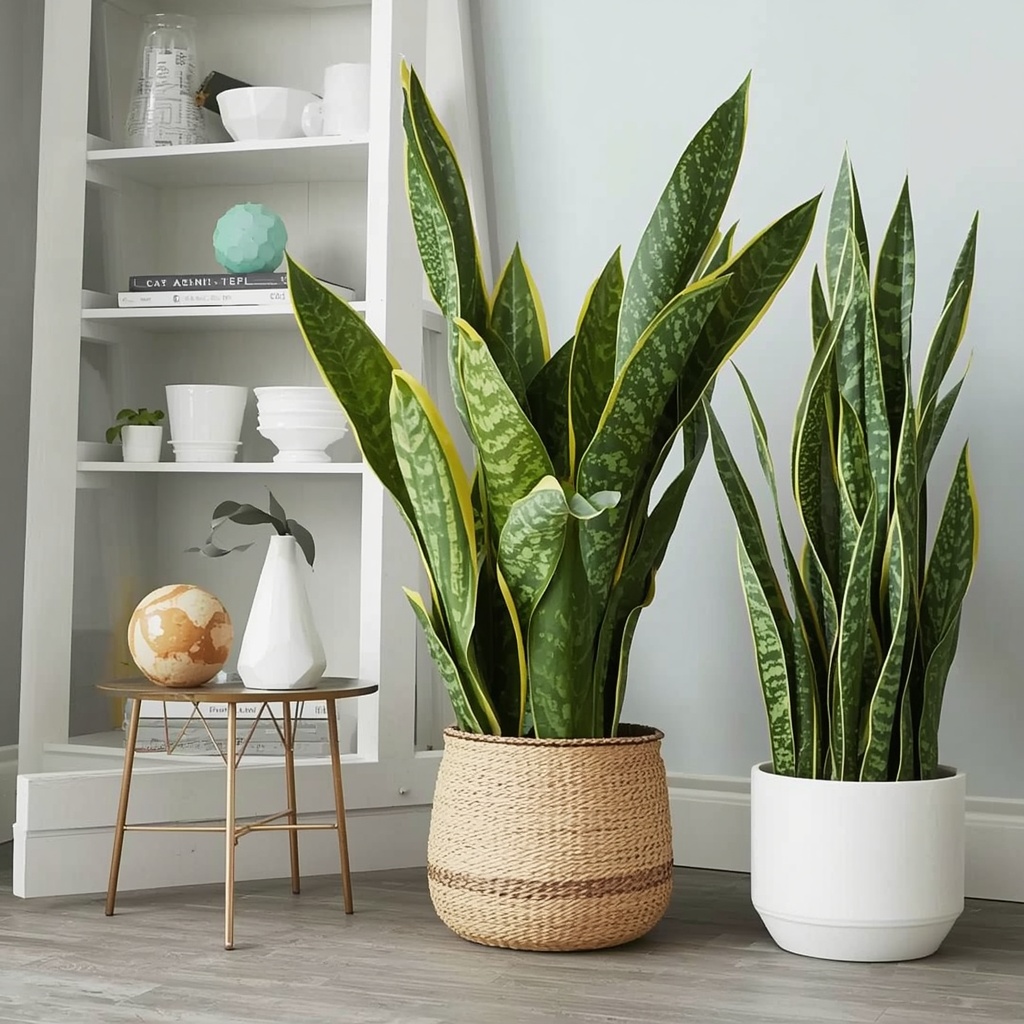
In the living room, snake plants work best as floor-standing statement pieces. Place a tall variety like Laurentii in an empty corner to break up negative space, or cluster three different heights together for a layered, gallery-like effect.
Bedroom
Contrary to old myths, snake plants are actually a smart bedroom choice because they release oxygen at night. A compact Hahnii on a nightstand or a medium Moonshine near the window softens the room without overwhelming it.
Home Office
For desks and workspaces, choose a smaller variety in a matte ceramic pot. The clean vertical lines create a calming visual anchor during video calls — a detail more people are styling for as remote work continues.
Bathroom
Snake plants tolerate humidity and low light exceptionally well, making bathrooms an underrated styling opportunity. A cylindrica variety on a floating shelf adds texture where few other plants can survive.
Kitchen
On open shelving or a sunny windowsill, a small snake plant softens hard surfaces like stainless steel and stone countertops, bridging the gap between functional and decorative.
Choosing the Right Planter
The pot you choose matters just as much as the plant itself. Here’s a quick styling cheat sheet:
| Design Style | Recommended Planter | Material |
|---|---|---|
| Minimalist | Cylindrical, matte white | Ceramic or concrete |
| Bohemian | Woven basket cover | Rattan or seagrass |
| Industrial | Raw or blackened metal | Steel or iron |
| Mid-Century Modern | Tapered leg planter | Wood and ceramic |
| Coastal | Textured white or sand tone | Terracotta |
Pro Tip: Always choose a planter with drainage holes, even if it means using a decorative outer pot with a hidden nursery pot inside. This protects both your plant’s roots and your styling investment — a cracked or root-bound plant rarely photographs well.
Snake Plant Care 101
Part of what makes the snake plant a designer favorite is how forgiving it is. Still, a little know-how goes a long way toward keeping your styling investment looking sharp.
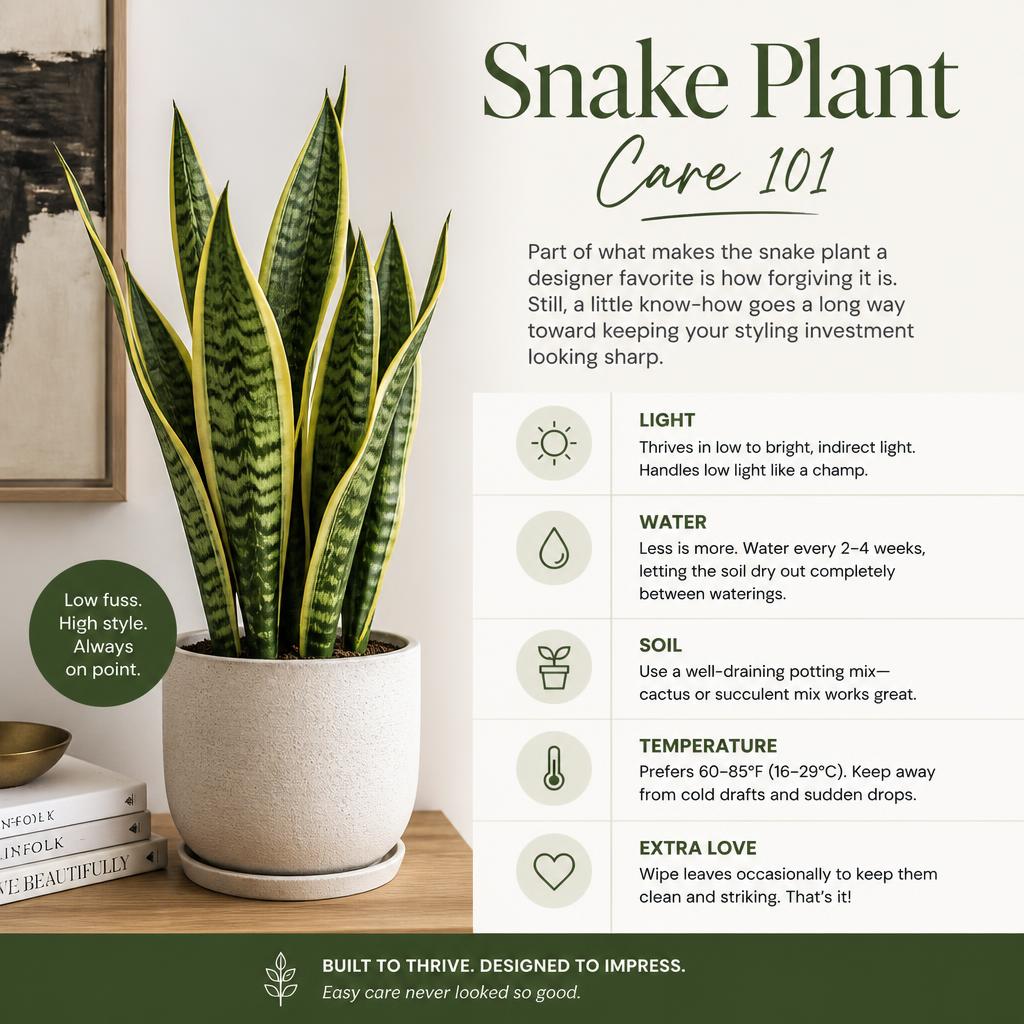
| Care Factor | Requirement |
|---|---|
| Light | Low to bright indirect light; tolerates fluorescent lighting |
| Water | Every 2–6 weeks; allow soil to dry out completely |
| Soil | Well-draining cactus or succulent mix |
| Temperature | 55–85°F (avoid frost and cold drafts) |
| Humidity | Adapts to average indoor humidity |
| Fertilizer | Light feeding once a month during spring/summer |
| Repotting | Every 2–3 years, or when roots outgrow the pot |
Watering Do’s and Don’ts
Overwatering is the single most common reason snake plants decline, and it’s almost always a styling issue in disguise — people water on a schedule instead of checking the soil.
- Do let the soil dry out completely between waterings
- Do water less frequently in winter
- Don’t let the plant sit in standing water
- Don’t mist the leaves; humidity isn’t a requirement
Common Styling and Care Mistakes to Avoid
Even seasoned plant owners fall into a few predictable traps. Avoiding these keeps your snake plant looking gallery-worthy year-round.
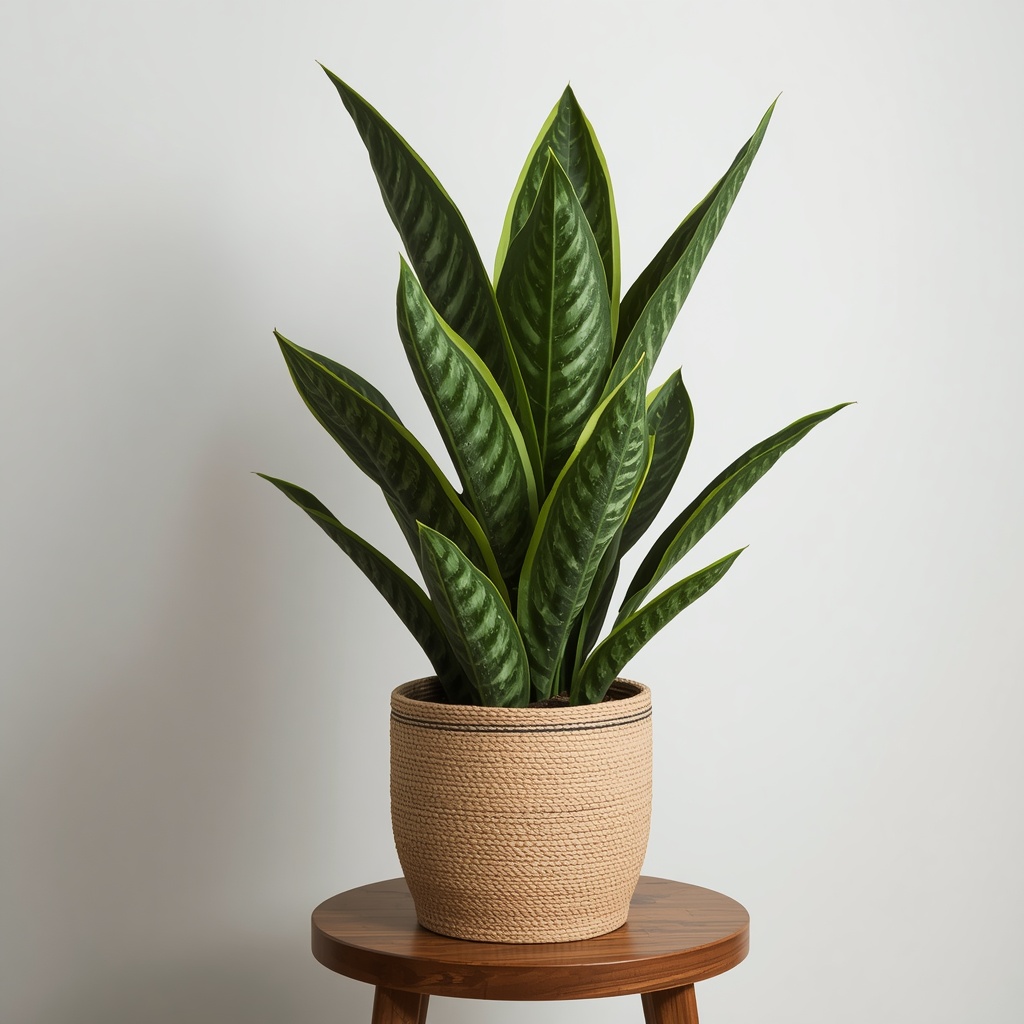
- Overcrowding the pot – Snake plants actually prefer being slightly root-bound; oversized pots hold excess moisture
- Placing it in a decorative pot with no drainage – This is the fastest path to root rot
- Choosing a planter that clashes with leaf tone – Match warm or cool undertones for a cohesive look
- Ignoring leaf direction – Rotate the plant occasionally so growth stays symmetrical
- Ordinary potting soil – Standard soil retains too much moisture for this succulent
The Wellness Benefits of Snake Plants
Beyond aesthetics, snake plants offer genuine functional value, which is part of why they’ve become a wellness-decor crossover favorite.
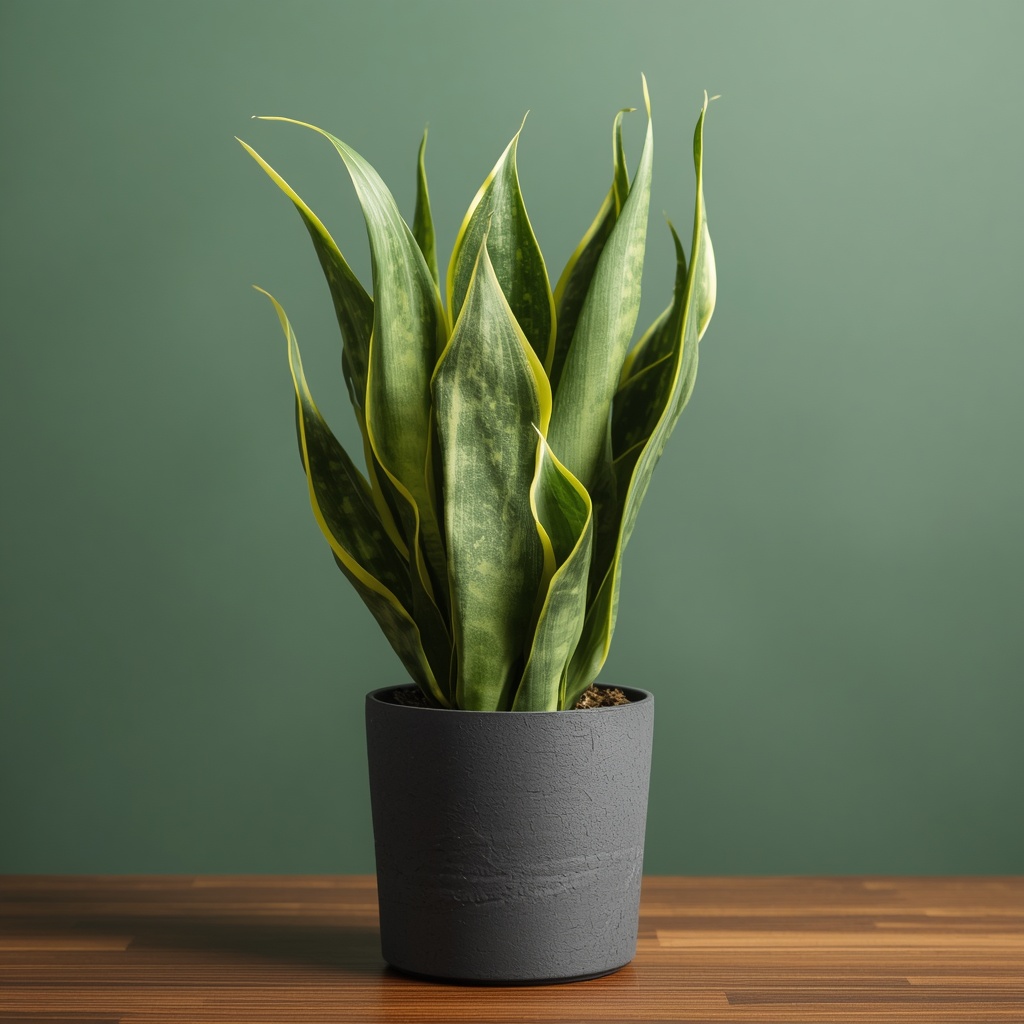
Research often cited in indoor air quality discussions, including NASA’s Clean Air Study, has pointed to certain houseplants’ ability to filter common indoor toxins from the air. Snake plants are also part of a small group of plants known to continue releasing oxygen at night through a process called CAM photosynthesis, which is why they’re frequently recommended for bedrooms.
Pro Tip: Group three to five snake plants together in a home office or bedroom for a more noticeable air-quality and visual impact — a single plant is decorative, but a cluster starts to function like a mini indoor garden.
Propagating Snake Plants for More Free Decor
If you love the look, propagation is an easy way to fill more of your home without buying additional plants.
- Leaf cuttings – Cut a healthy leaf into sections and place in water or soil until roots form
- Division – Separate rhizomes at the root when repotting to create two full plants
- Offsets (pups) – Small new shoots can be gently separated and repotted directly
Division is the fastest method and typically produces a mature-looking plant within a few months, making it ideal if you’re styling multiple rooms on a budget.
Frequently Asked Questions
Are snake plants pet-friendly? Snake plants are mildly toxic to cats and dogs if ingested, so place them out of reach in pet-friendly households.
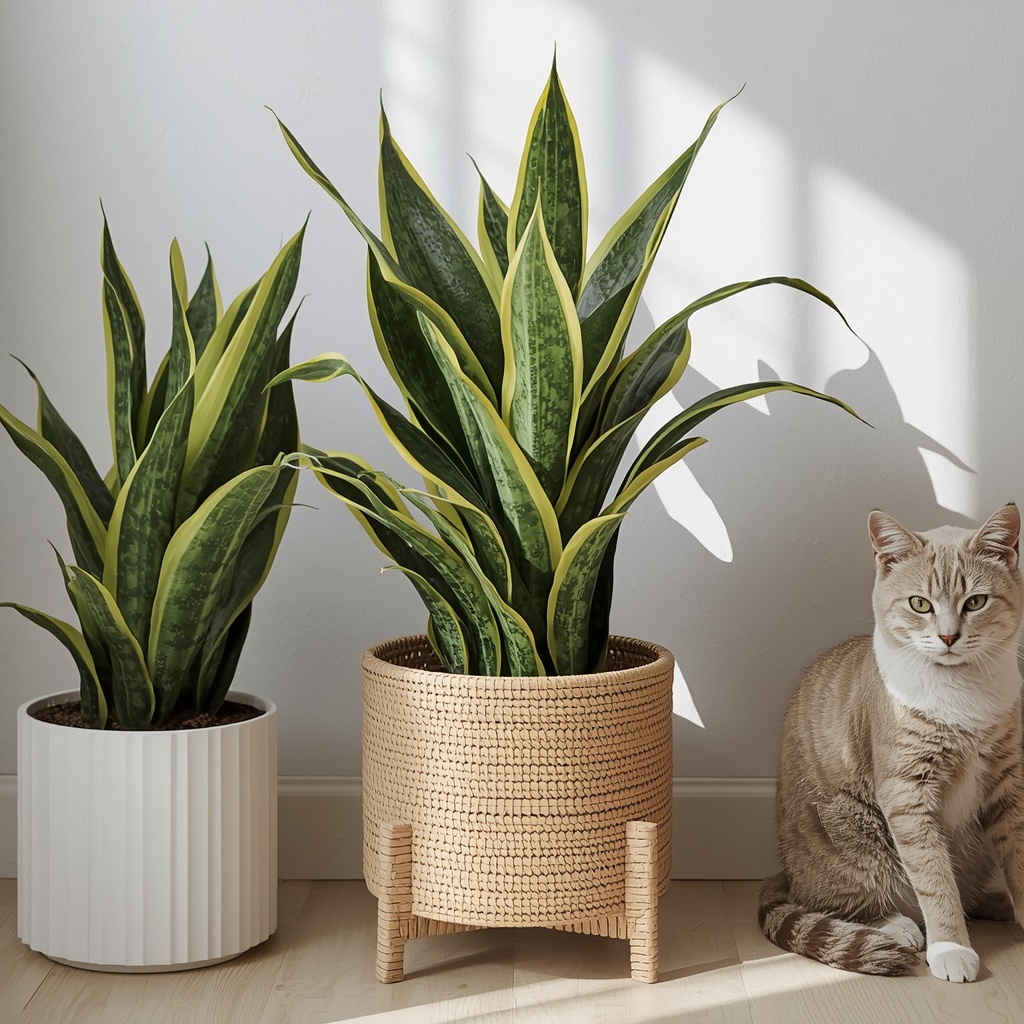
How long do snake plants live? With proper care, snake plants can live for decades, often outlasting several rounds of home redecorating.
Can snake plants survive in a windowless room? Yes, though growth will slow significantly; supplement with a grow light for healthier long-term appearance.
Why are the leaves drooping or curling? This is typically a sign of overwatering, root rot, or insufficient light — check the soil moisture first.
Final Thoughts
The snake plant proves that good design doesn’t have to be complicated. With its sculptural form, adaptability to nearly any room, and genuinely low-maintenance care routine, it’s earned its place as a modern home decor essential rather than a passing trend.
Whether you’re styling a single statement plant in a sunlit living room or building an entire indoor jungle across your apartment, the snake plant offers a rare combination: it looks intentional with almost no effort. Start with one variety, learn its rhythm, and you’ll likely find yourself adding more to nearly every room in your home.