
If you’ve ever torn apart your kitchen looking for a bill you know you didn’t throw away, you already understand the quiet chaos of paper clutter. As an interior designer who specializes in home decor and functional living spaces, I can tell you this: paper is one of the most underestimated culprits behind a home that never quite feels “done.” It sneaks onto countertops, hides in drawers, and slowly erodes the calm, curated look you’ve worked so hard to create.
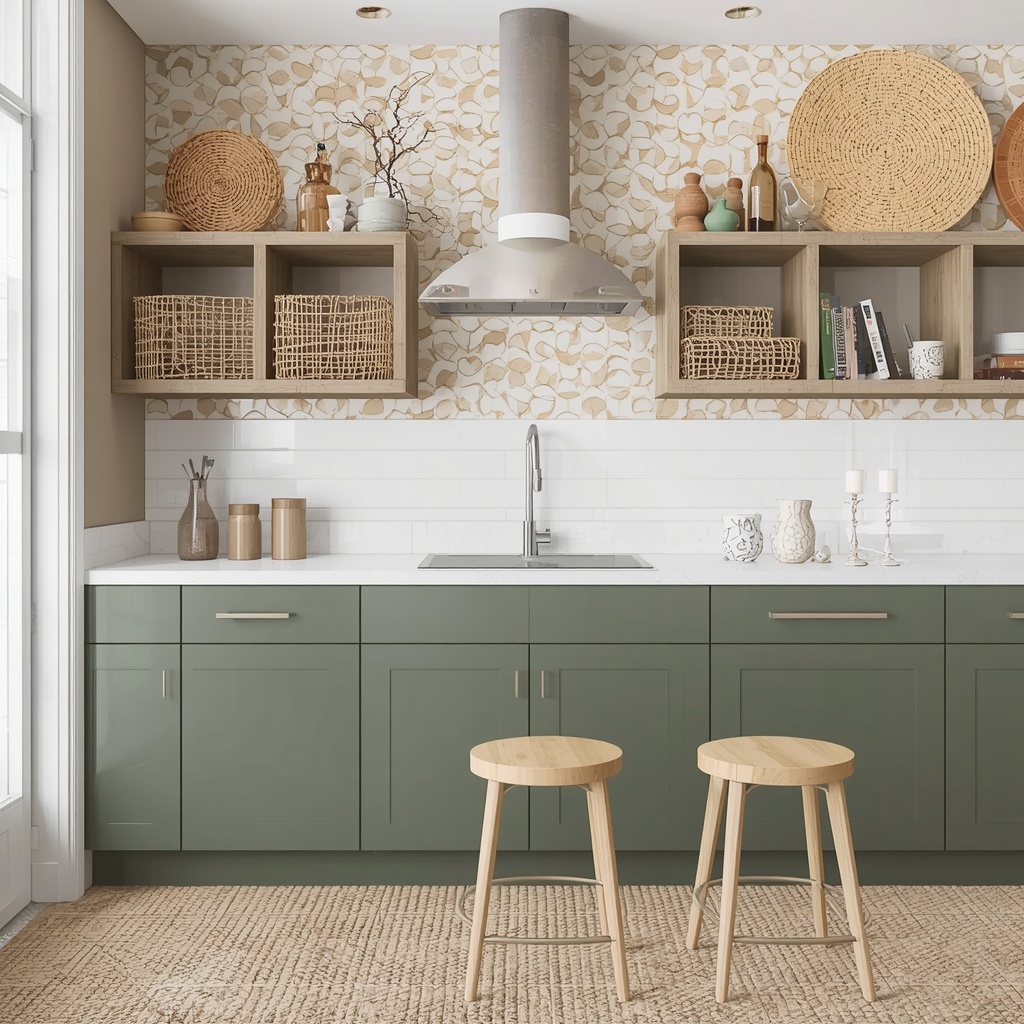
The good news? Paper clutter is one of the most fixable problems in your home. Unlike a room that needs a full renovation, taming paper mostly requires a smart system, the right storage solutions, and a few sustainable habits. In this guide, we’ll walk through a designer-approved, room-by-room approach to paper organization that blends function with beautiful home decor — so your space stays both stylish and stress-free.
Why Paper Clutter Piles Up (and Why It’s Not Your Fault)
Paper clutter isn’t a character flaw — it’s a design flaw. Most homes simply weren’t built with a dedicated system for managing mail, receipts, school forms, and warranties. Without a designated “paper zone,” these items land wherever is closest: the kitchen counter, the entry table, the junk drawer.
There’s also a psychological piece. Many people hold onto paper because they’re afraid of losing something important, which leads to over-saving “just in case.” Add in the constant influx of new mail and printed material, and clutter becomes less about laziness and more about missing infrastructure. Once you understand that the problem is systemic, not personal, it becomes much easier to solve.
The True Cost of Paper Clutter in Your Home
Paper clutter does more than look messy — it actively works against your home’s design and your peace of mind. Cluttered surfaces disrupt sightlines, making even a beautifully decorated room feel chaotic. It also creates a mental “to-do” reminder every time you walk past it, which contributes to low-grade daily stress.
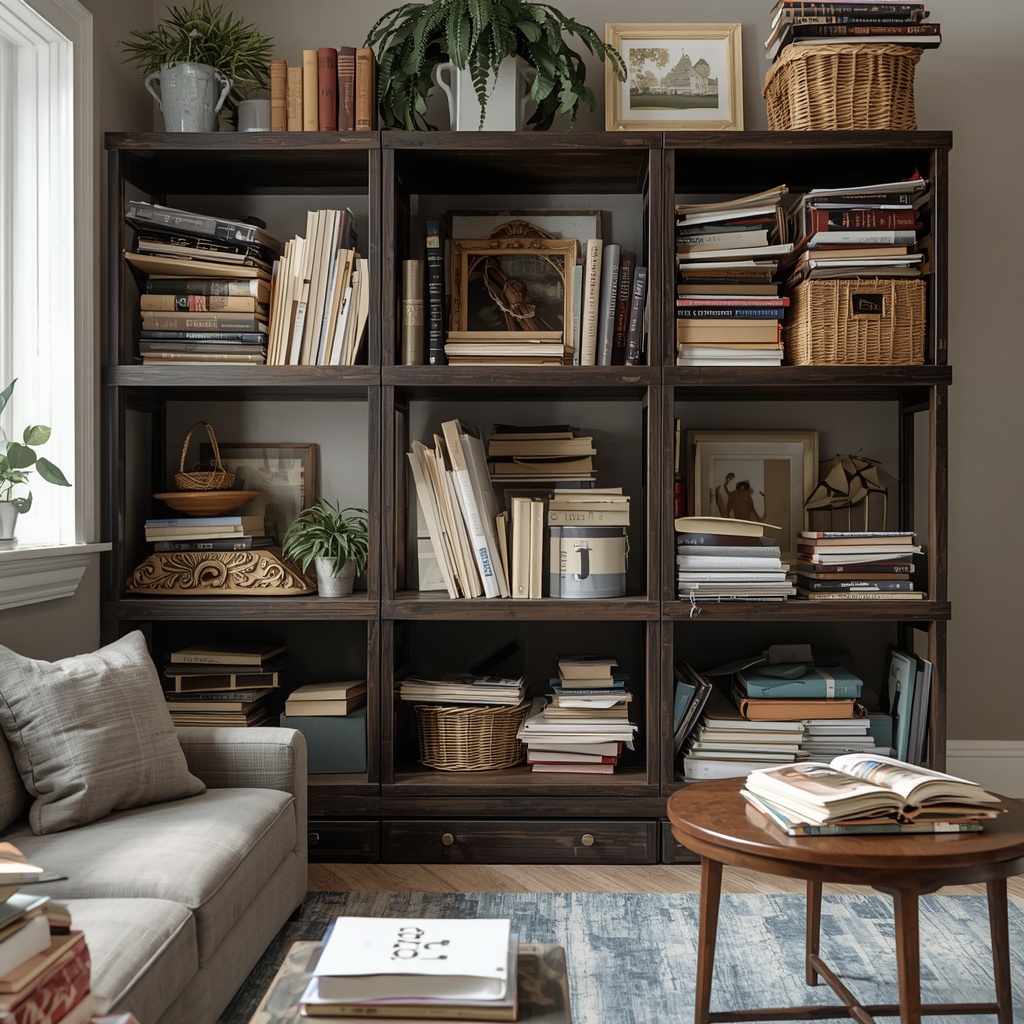
There’s a functional cost too. Important documents get lost among junk mail, deadlines get missed, and horizontal surfaces meant for decor — console tables, kitchen islands, home office desks — become storage dumps instead. From a design perspective, paper clutter is often the single biggest reason a well-decorated home doesn’t photograph or feel as polished as it should.
“A home can have gorgeous furniture and flawless paint colors, but if the counters are buried in paper, none of it reads as designed. Clutter is the enemy of good decor.” — a principle every professional organizer and designer lives by
The 4-Box Method: A Designer’s First Step
Before you buy a single organizer or storage bin, you need to sort. I recommend the 4-box method, a simple decluttering framework that works for paper just as well as it does for clothes or kitchen gadgets.
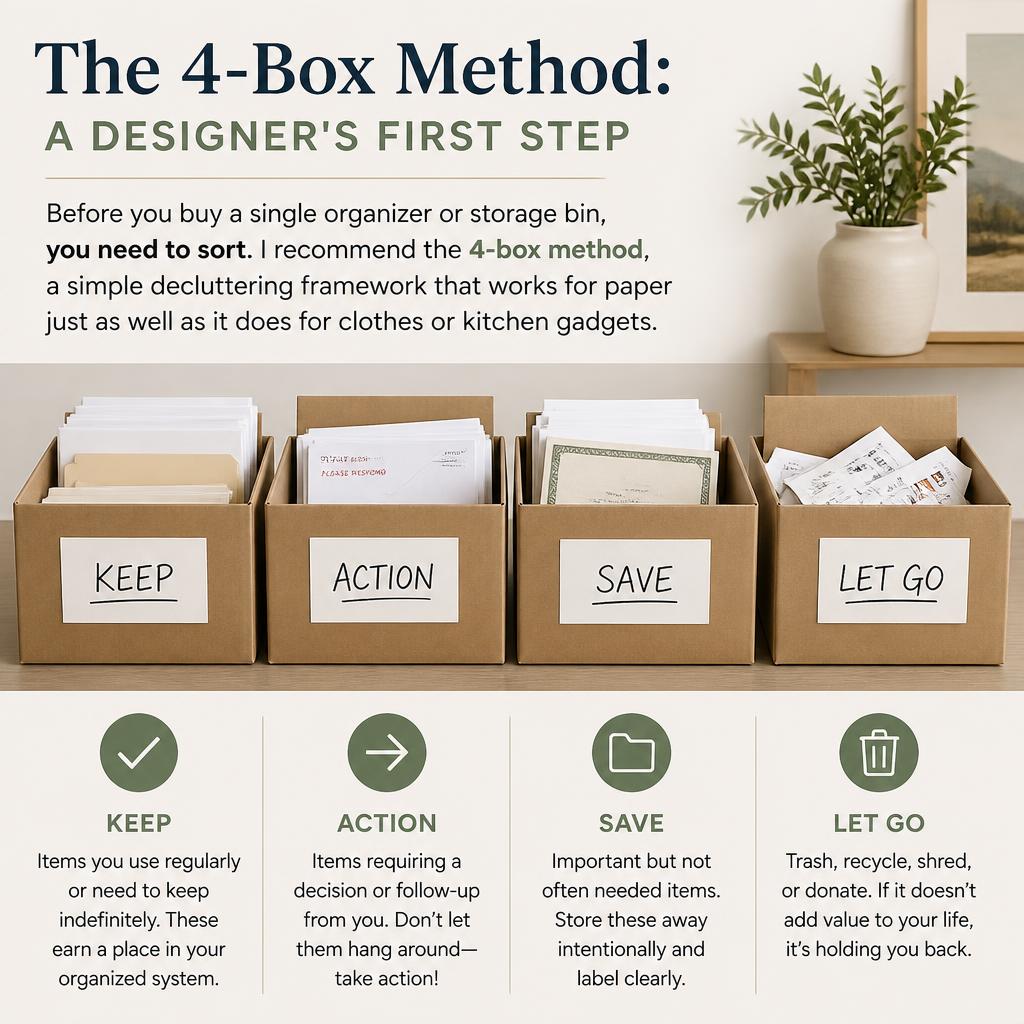
Grab four boxes or bags and label them: Keep, Recycle, Shred, and Digitize. Go through every pile of paper in your home — yes, all of it — and sort each item into one category without overthinking it. This first pass isn’t about creating a permanent system; it’s about reducing volume so you can see what you’re actually working with.
| Category | What Goes Here | Examples |
|---|---|---|
| Keep | Legally or financially essential documents | Birth certificates, tax records, deeds, insurance policies |
| Recycle | No longer needed, no personal data | Old flyers, expired coupons, packaging inserts |
| Shred | Contains sensitive personal information | Old bank statements, pay stubs, pre-approved credit offers |
| Digitize | Useful reference, but doesn’t need to be physical | Manuals, receipts for warranties, recipes, kids’ artwork |
Pro Tip
Set a timer for 20 minutes when sorting. Paper decluttering can feel emotionally draining because it forces small decisions constantly. Short, timed sessions prevent burnout and keep momentum going — you can always come back for another round tomorrow.
Creating a Paper Command Center That Actually Works
Every organized home needs a “landing zone” — a single, designated spot where incoming paper is processed the moment it enters your house. This is one of the most important home organization principles I teach clients, and it doubles as a home decor opportunity if you design it well.
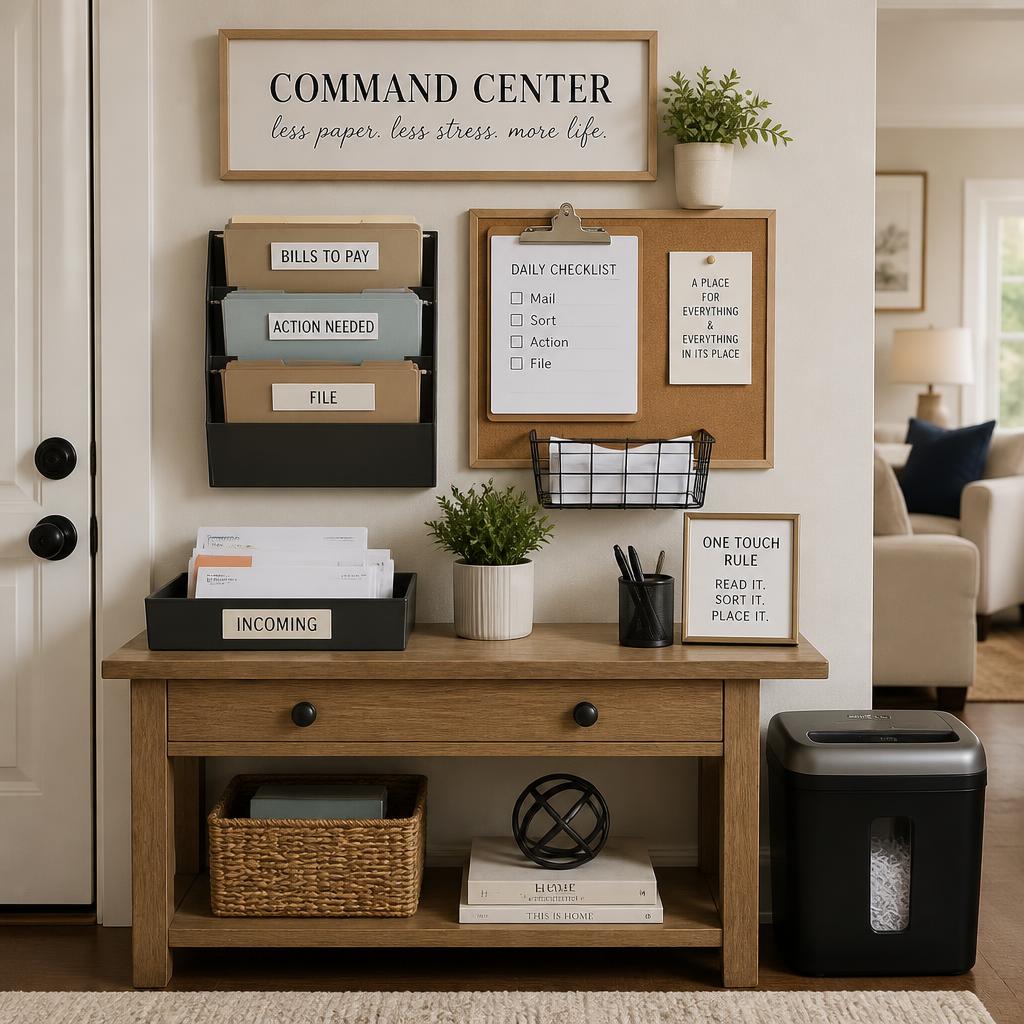
Your command center should live near your main entry point, since that’s where mail and school papers naturally accumulate. Outfit it with a small tray for incoming items, a shredder or shred bin nearby, and clearly labeled folders for categories like “Bills to Pay,” “Action Needed,” and “File.” The goal is to touch each piece of paper only once: read it, sort it, and place it in its home immediately.
Choose decor-forward storage rather than generic plastic bins. A woven basket, a brass letter tray, or a wall-mounted file organizer in a finish that matches your hardware can make this functional zone feel like an intentional part of your interior design, not an afterthought bolted onto the wall.
Best Storage Solutions for Every Paper Type
Not all paper needs the same treatment, and matching the right storage solution to the right document type is where organization meets home decor. Here’s a breakdown of what tends to work best for each category.
| Paper Type | Best Storage Solution | Style Tip |
|---|---|---|
| Bills & receipts | Accordion file or labeled folder system | Choose linen or leather-look covers for open shelving |
| Legal & tax documents | Fireproof filing box, stored in a closet | Keep out of sight in a closed cabinet |
| Kids’ school papers | Rotating bin, one per child, cleared quarterly | Use color-coded labels for easy scanning |
| Warranties & manuals | Digital scan + one physical folder | A slim binder tucked in a home office drawer |
| Sentimental items | Archival box, not a random drawer | Store in a closet, not a display shelf |
Investing in matching, labeled containers isn’t just about aesthetics — it also makes the system sustainable long-term, since a beautiful setup is one you’ll actually maintain.
The Digital Detour: Going Paperless Where It Counts
You don’t need to digitize everything, but reducing physical volume through smart digitizing can eliminate a huge percentage of household paper clutter. Scanning apps on your phone can turn manuals, receipts, and kids’ artwork into searchable digital files in seconds.

Focus your digitizing efforts on paper you need for reference but not for legal purposes — think warranty information, recipes clipped from magazines, or take-out menus. Cloud storage with clearly labeled folders (mirroring your physical filing categories) keeps digital clutter from becoming its own new problem. Many people also switch to paperless billing at this stage, which cuts off a major source of incoming paper before it even reaches your home.
Pro Tip
Create a simple digital folder structure before you start scanning: Home, Finance, Medical, Kids, and Warranties. Having the system ready in advance means you won’t end up with a chaotic “Downloads” folder full of unsorted PDFs — the digital equivalent of a junk drawer.
Room-by-Room Paper Zones
Paper doesn’t just collect in one spot — it spreads. Setting up small, dedicated zones throughout the home prevents it from taking over surfaces that are meant for decor.
- Entryway: A tray or small drawer for mail, keys, and outgoing items only.
- Kitchen: A slim vertical file for menus, invitations, and this week’s action items.
- Home office: A full filing system for financial, legal, and work documents.
- Kids’ rooms: A rotating memory bin for artwork and school projects, cleared each season.
- Bedroom: Ideally, no paper at all — keep this space reserved for rest.
Being intentional about which rooms allow paper (and which don’t) protects the visual calm of spaces like bedrooms and living rooms, where clutter has the biggest negative impact on how the room feels.
Maintaining a Paper-Free Home Long Term
Getting organized once is easy; staying organized is the real challenge. The key to lasting results is building small, low-effort habits into your routine rather than relying on occasional deep-cleaning sessions.

Process mail standing at your command center rather than carrying it further into the house — recycling and shredding immediately prevents buildup before it starts. Set a recurring 10-minute weekly reset to clear folders, file loose papers, and empty the shred bin. Finally, do a seasonal deep review every three months to reassess what’s accumulated and adjust your system as your family’s needs change.
Quick-Reference Checklist
Use this simple checklist to keep your paper system running smoothly:
- Sort incoming mail immediately using the 4-box method categories.
- Recycle or shred anything without long-term value the same day.
- File “keep” items in their designated storage solution weekly.
- Digitize reference-only paper and delete the physical copy.
- Do a full command center reset every Sunday.
- Conduct a seasonal purge of kids’ papers, warranties, and receipts.
Final Thoughts
Paper clutter is rarely about having too much stuff — it’s about not having a system designed for how paper actually enters your home. By combining a clear sorting method, decor-friendly storage solutions, and a few sustainable weekly habits, you can transform chaotic counters into calm, functional surfaces that support your home’s overall design.
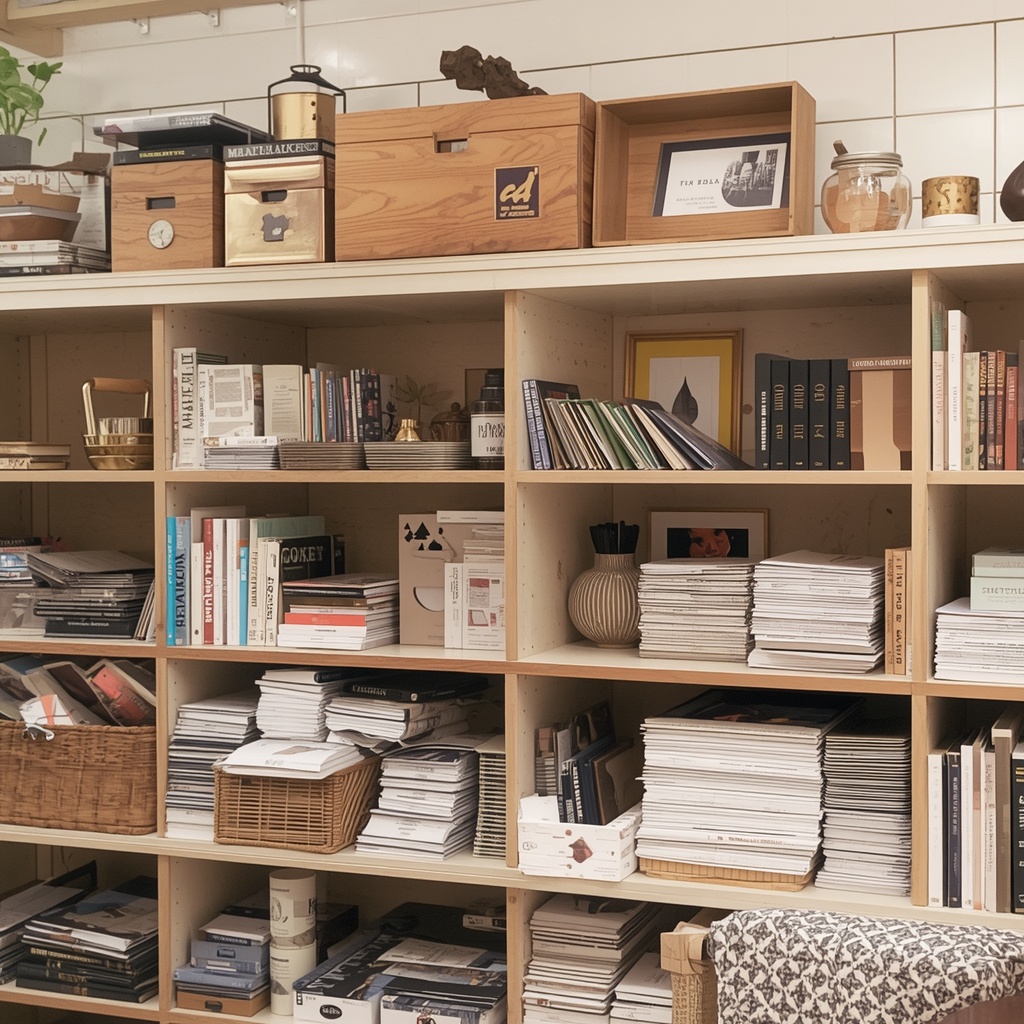
The most beautiful, well-decorated homes aren’t the ones with zero mail ever — they’re the ones with a system so seamless that paper never has the chance to pile up in the first place. Start small, stay consistent, and your home will feel lighter almost immediately.