
There’s something undeniably magnetic about a room that whispers of candlelit parlors, velvet-draped windows, and the quiet mystery of a Victorian manor. Gothic romance in interior design isn’t about cobwebs or Halloween kitsch — it’s about creating spaces that feel hauntingly beautiful, emotionally rich, and deeply personal. And the best part? You don’t have to live in a 19th-century brownstone to pull it off.
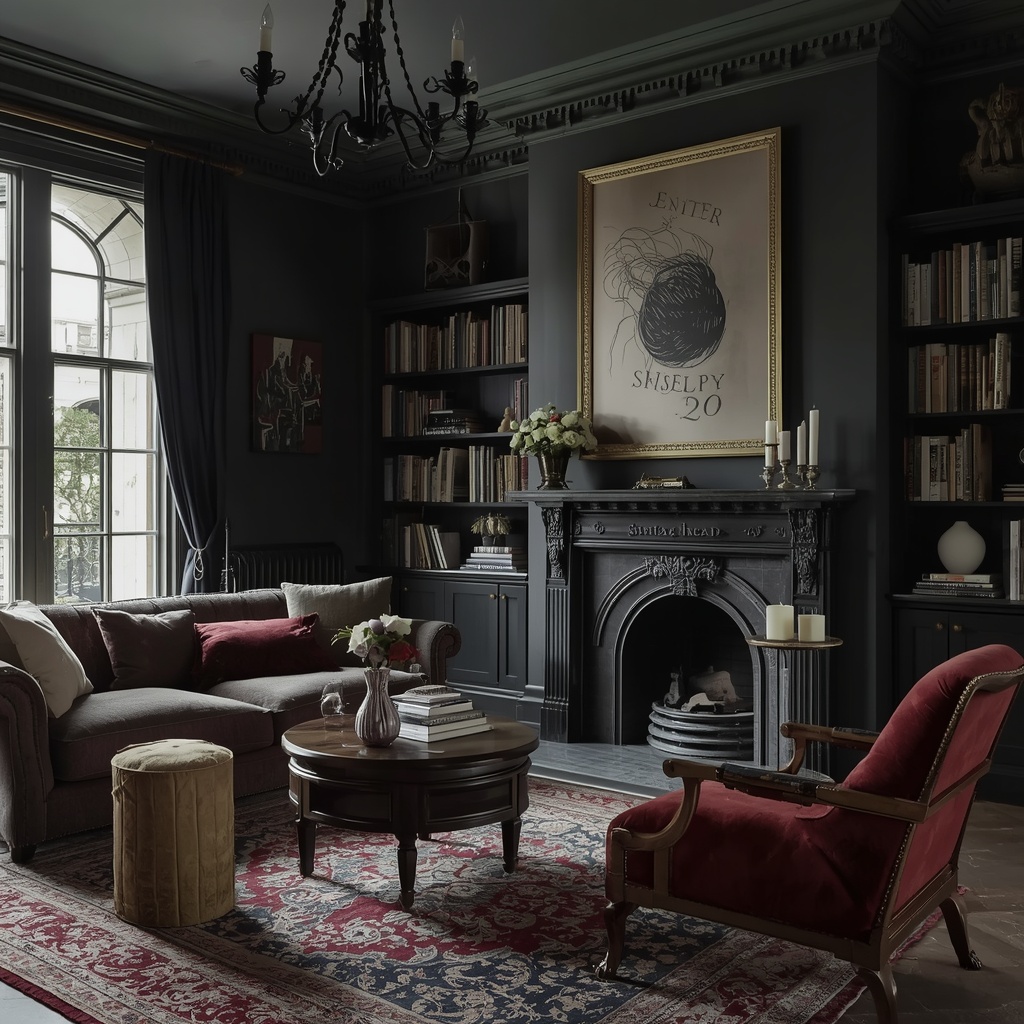
As a home decor specialist who has helped hundreds of American homeowners reimagine their spaces, I’ve watched Gothic-inspired interior design evolve from a niche aesthetic into one of the most coveted moody home decor trends of the decade. Whether you’re drawn to dark academia vibes, Victorian Gothic styling, or simply want to add dramatic depth to a neutral home, this guide will show you exactly how to layer, style, and live beautifully within the Gothic romance aesthetic — without sacrificing comfort or modern functionality.
What Is Gothic Romance Decor — and Why Is It Trending?
Gothic romance decor draws from Victorian-era design principles: ornate architectural details, rich jewel tones, heavy textiles, antique furnishings, and a reverence for the dramatic. Think deep burgundy walls, carved wooden furniture, arched windows adorned with layers of draping fabric, brass candelabras, and shelves lined with leather-bound books and dark botanical prints.
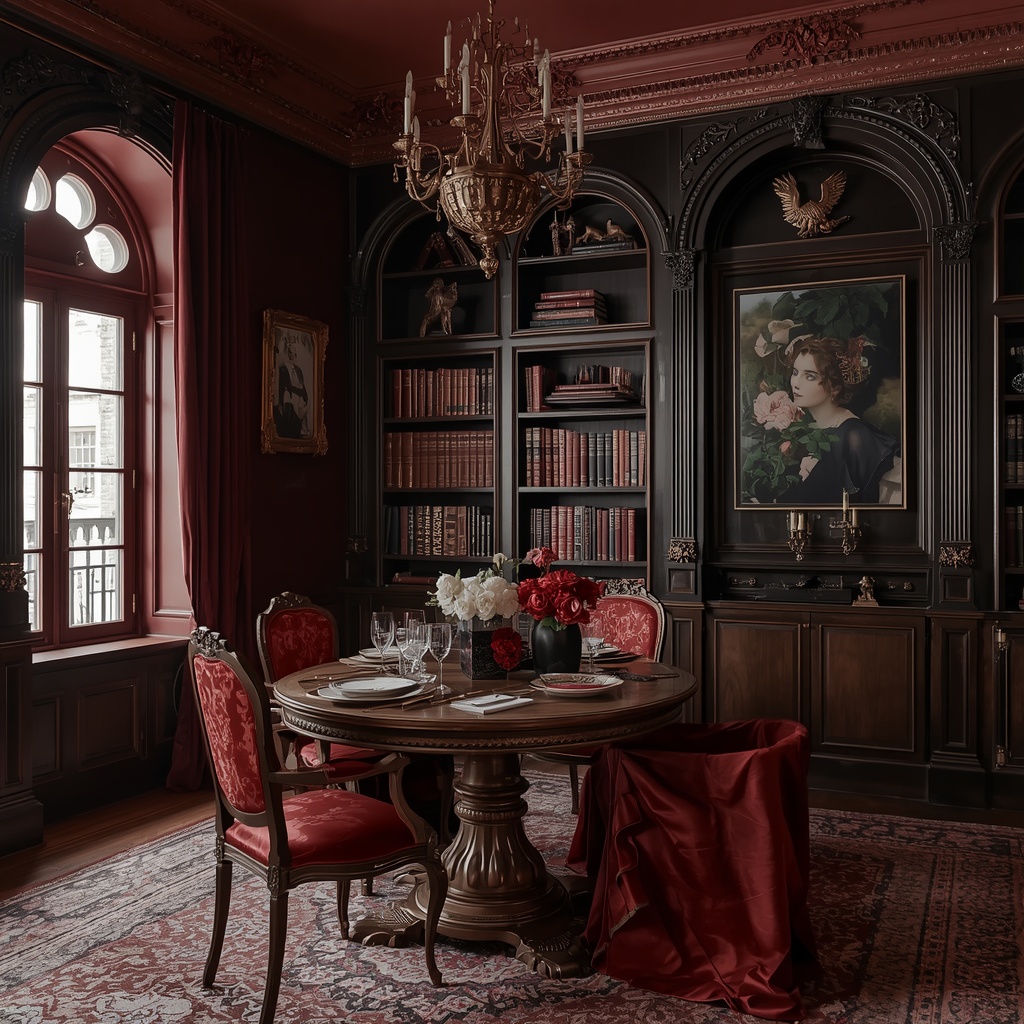
What makes it resonate with modern American homeowners is its emotional intensity. In an era of sterile minimalism and mass-produced furniture, Gothic romance offers something rare — a home that feels like a story. Interior designers increasingly refer to this as “emotional design,” where every object, texture, and color is chosen to evoke feeling rather than simply fill space. The rise of cottagecore, dark academia, and maximalism on social platforms like Pinterest and Instagram has accelerated this trend significantly, with searches for “Gothic home decor” and “moody Victorian interior” increasing by over 200% in the past three years.
“A room should tell the story of who you are and who you aspire to be.”— Alexandra Stoddard, interior designer and author
The Gothic Romance Color Palette: Setting the Mood
Color is the foundation of any Gothic interior design scheme. Unlike traditional Victorian palettes that leaned heavily on wallpaper patterns, modern Gothic romance embraces a more curated, sophisticated approach to dark, moody color. The key is layering — using multiple tones within the same dark family rather than painting everything a single, flat black.
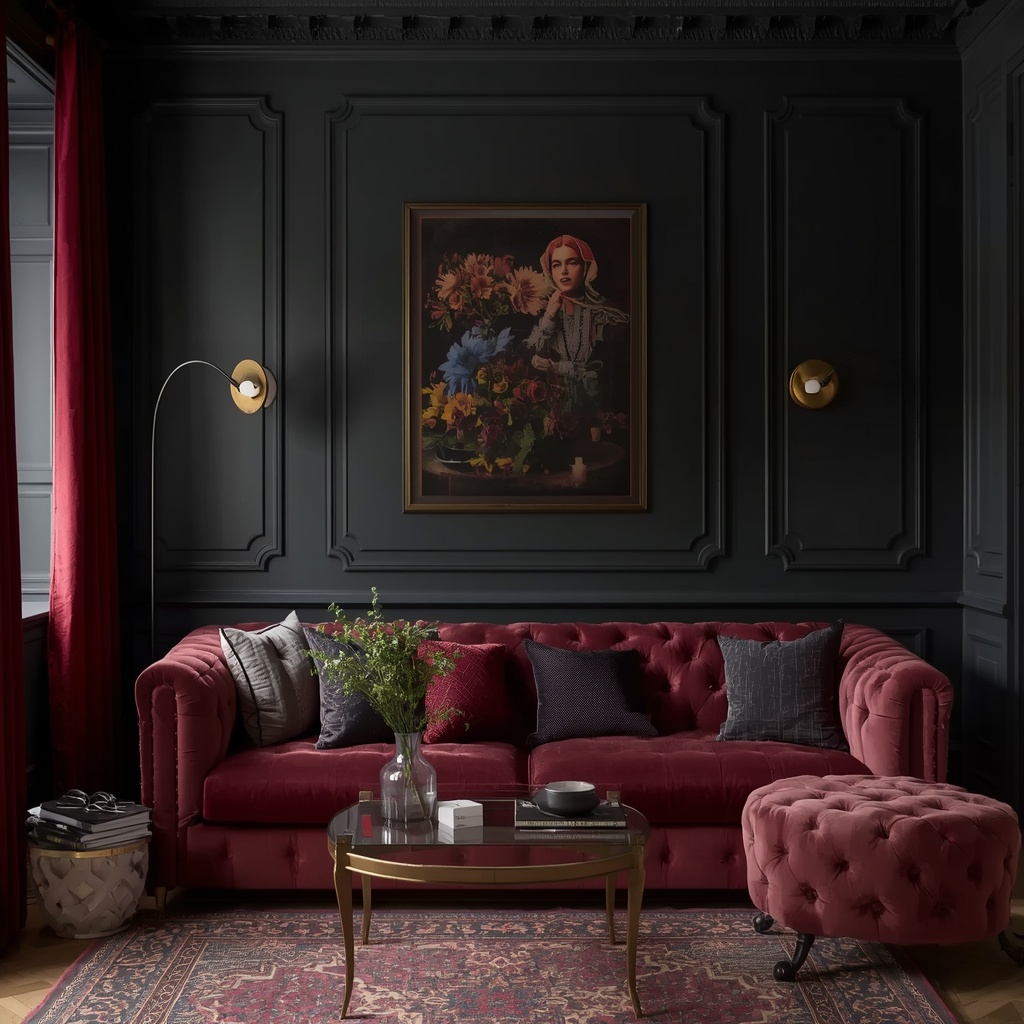
For walls, consider deep plum, midnight navy, hunter green, or oxblood red. These hues create an immersive, enveloping atmosphere that immediately signals you’ve entered a different world. Pair them with warm metallics — aged brass, antique gold, and oil-rubbed bronze — rather than cold silver or chrome. For accent walls or ceilings, don’t shy away from going darker than the room itself; a near-black ceiling painted in Benjamin Moore’s “Wrought Iron” or Farrow & Ball’s “Pitch Black” can be genuinely transformative.
Oxblood
Midnight plum
Forest shadow
Dark mahogany
Antique gold
Aged brass
Warm taupe
💡 Pro Tip
If you’re nervous about going fully dark on all four walls, start with a “moody accent wall” behind your bed or sofa. Pair it with lighter complementary tones on the other three walls — think dusty mauve, warm greige, or antique ivory — to balance the drama while still committing to the aesthetic. This approach also works beautifully in rental apartments where permanent changes aren’t an option; dark removable wallpaper is widely available on sites like Spoonflower and Etsy.
Victorian Furniture: How to Shop Smart for Gothic Pieces
Authentic Victorian furniture — carved mahogany settees, button-tufted Chesterfield sofas, claw-foot tables — can be found at estate sales, antique markets, and platforms like Chairish or 1stDibs. But sourcing antiques isn’t the only way in. Many contemporary furniture brands now produce Gothic-adjacent pieces that honor Victorian silhouettes without the six-figure price tag. Look for dark wood finishes, carved legs, arched backs on chairs, and upholstery in velvet, brocade, or leather.
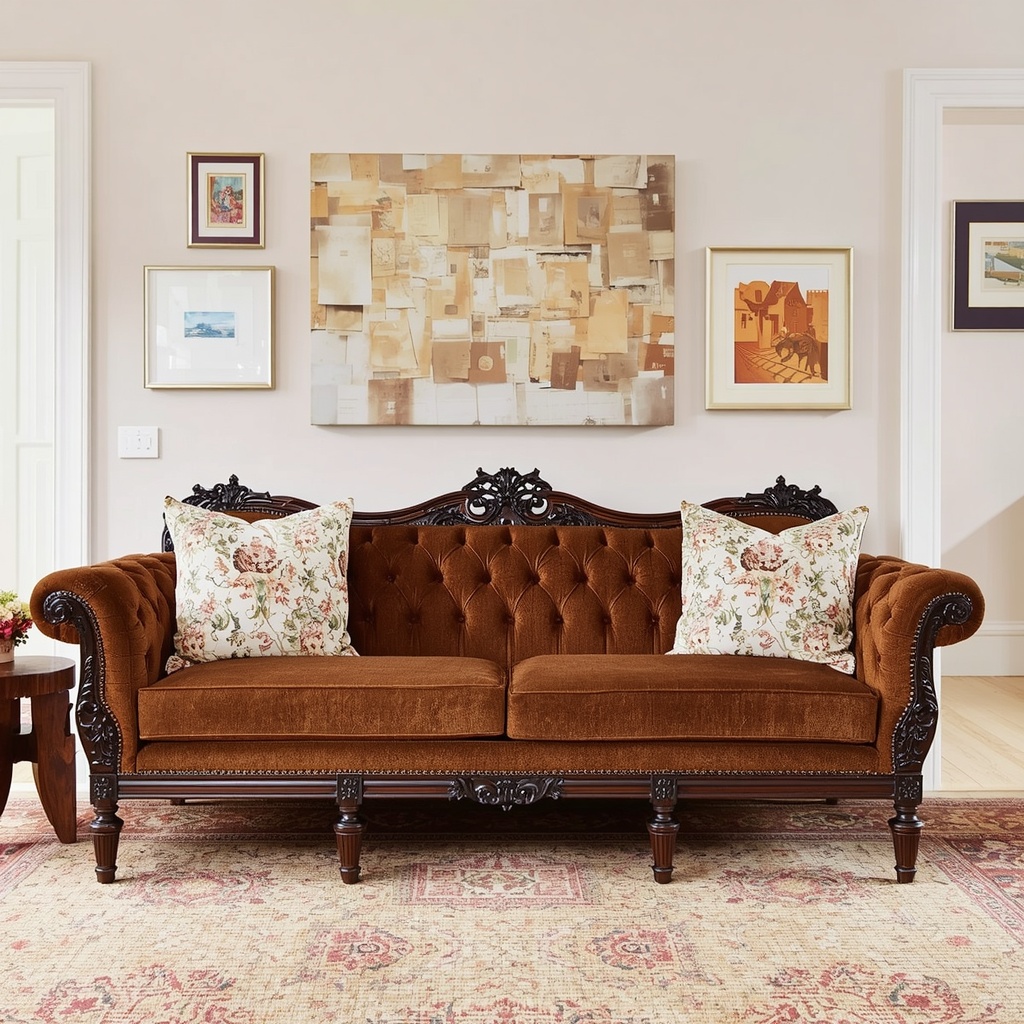
The secret to mixing old and new is contrast without clash. A sleek modern sofa in deep teal velvet can absolutely live alongside an ornate Victorian side table if you give them common ground through color, metal finish, or texture. Always anchor the room with one dominant statement piece — a Gothic canopy bed, an imposing mahogany bookcase, or an intricately carved armoire — and let everything else in the room support rather than compete with it.
| Piece | Where to Find It | Budget Range | Style Notes |
|---|---|---|---|
| Chesterfield sofa | Restoration Hardware, Arhaus, estate sales | $800–$3,500 | Choose oxblood, deep teal, or charcoal velvet |
| Gothic canopy bed | Wayfair, Pottery Barn, Etsy artisans | $600–$2,800 | Wrought iron or dark wood; layer with canopies |
| Victorian armchair | Chairish, 1stDibs, local antique shops | $150–$900 | Button-tufted back; carved wood arms |
| Ornate bookcase | IKEA (hack), antique markets, World Market | $80–$1,200 | Paint IKEA Billy shelves dark + add crown molding |
| Claw-foot bathtub | Vintage tub dealers, Signature Hardware | $1,500–$5,000+ | Paint exterior matte black or deep plum |
Textiles and Layering: The Heart of Moody Home Decor
If Gothic romance design has a love language, it’s textiles. Sumptuous, layered, tactile fabrics are what separate a merely dark room from a truly atmospheric one. Velvet is the undisputed queen of the Gothic interior — on sofas, throw pillows, curtains, and even wall panels, its light-absorbing quality deepens color and adds sensory richness that no other fabric can replicate. Layer it with brocade, raw silk, distressed leather, faux fur, and heavy cotton to create that signature Victorian sense of abundance.
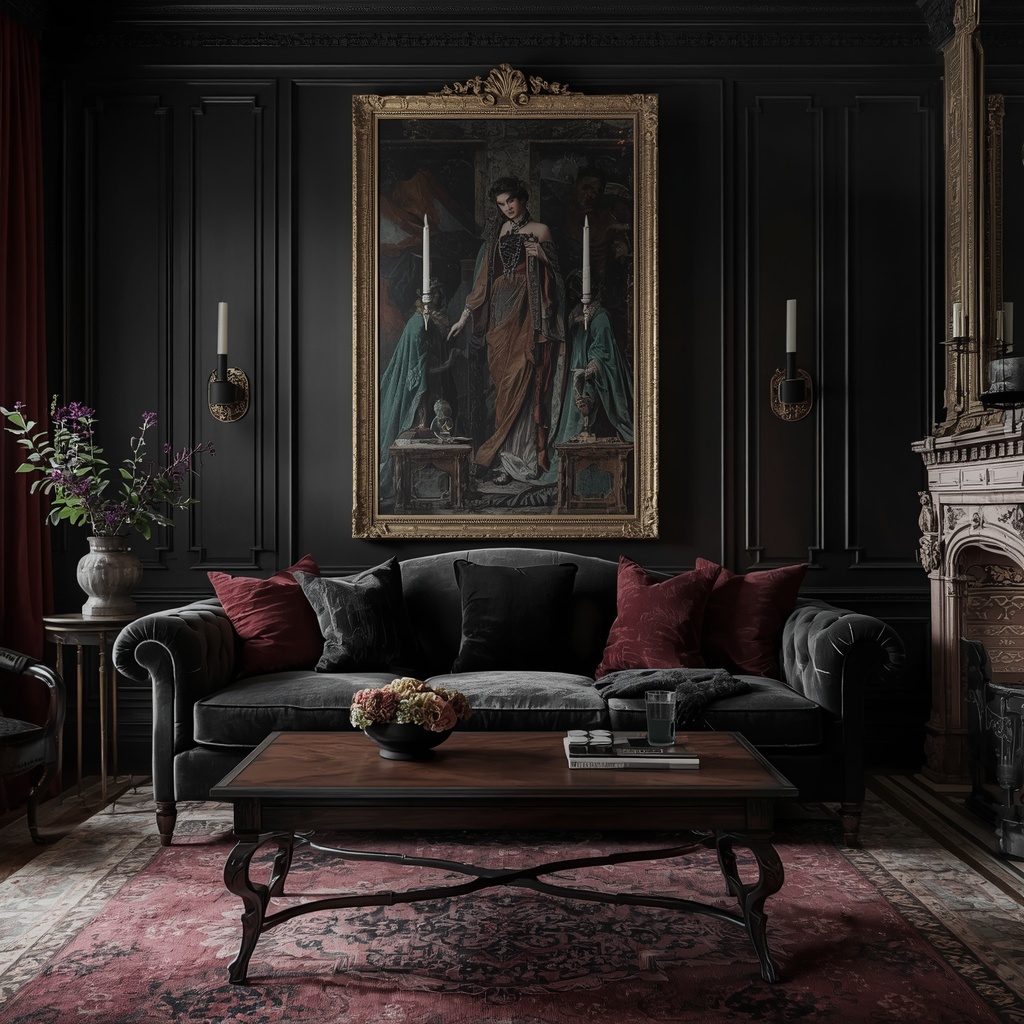
Curtains deserve particular attention in a Gothic interior. Floor-to-ceiling drapery in velvet or heavy linen — installed high above the window frame and extending far beyond its sides — makes any room feel grander, more theatrical, and more enveloping. Choose deep jewel tones: midnight blue, forest green, deep plum, or near-black charcoal. For bedroom windows, consider layering sheer black or charcoal curtains beneath heavier drapes so you can modulate light throughout the day while maintaining the moody atmosphere even when the room is bright.
“Layering is the difference between a room that looks Gothic and a room that feels Gothic. One stops at the eyes — the other reaches somewhere deeper.”— Personal design philosophy
Lighting: Conjuring Atmosphere With Every Fixture
Lighting is arguably the most powerful tool in any Gothic romance interior, and it’s also one of the most budget-friendly places to make a dramatic impact. The goal is warmth, drama, and layered sources — never a single overhead fixture flooding the room with flat, utilitarian brightness. Think of the difference between a bare fluorescent bulb and a cluster of flickering candles reflected in an antique mirror. That sensory shift is exactly what Gothic lighting design is chasing.
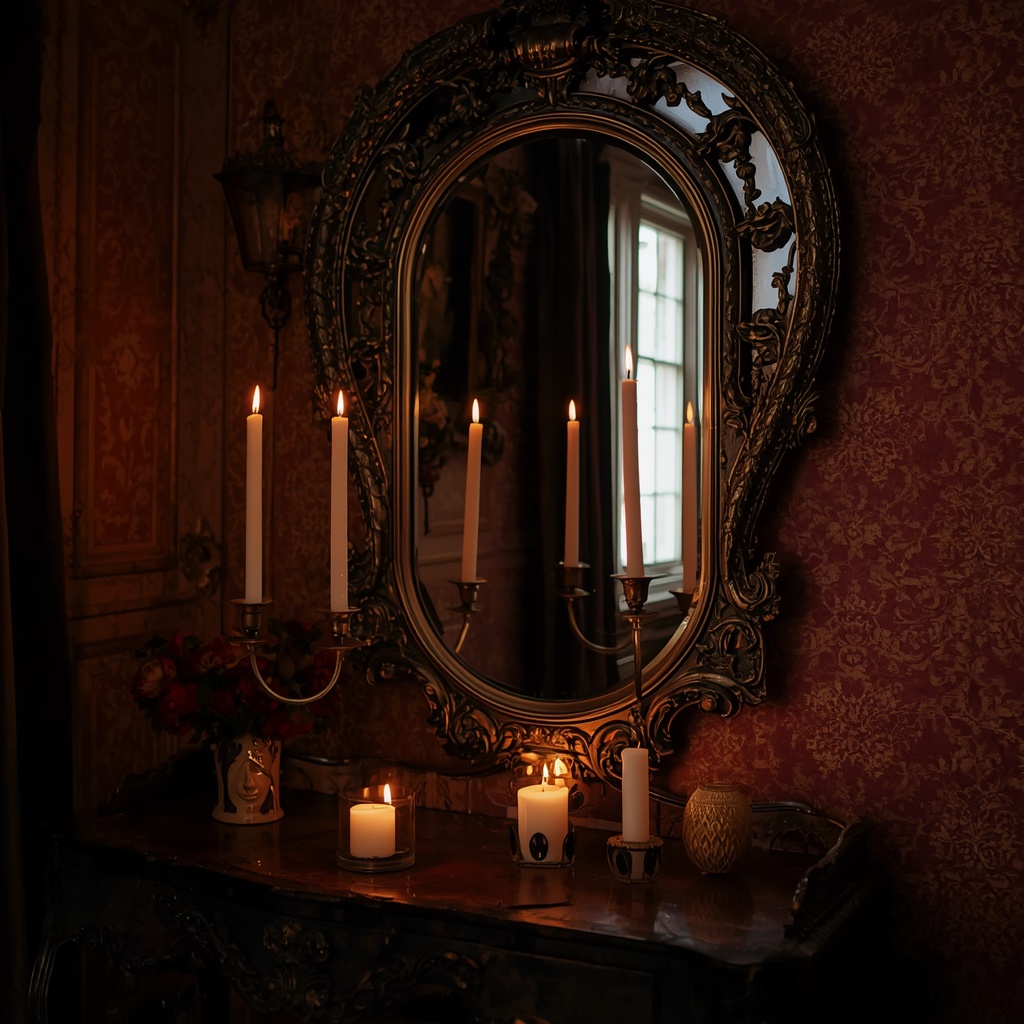
Candelabras — both freestanding floor versions and wall-mounted sconces — are essential. Modern candelabras that use LED flicker-bulbs deliver the same dramatic effect as real candles without fire risk, making them perfect for everyday use. Pair these with a statement chandelier in wrought iron, aged brass, or black-finished metal featuring exposed Edison bulbs. For task lighting, look for table lamps with dark or stained-glass shades; the colored glass of a true Victorian-inspired stained-glass lamp casts pools of jewel-toned light that feel genuinely magical.
Warm bulbs only
Use 2200K–2700K bulbs throughout. Cool white light destroys Gothic atmosphere instantly.
Dimmers are essential
Install dimmer switches on every circuit. Modulating light intensity is how you shift from daytime living to evening drama.
Layer your sources
Combine ceiling fixtures, wall sconces, floor lamps, table lamps, and candles for richly dimensional light.
Reflect and multiply
Antique mirrors and dark-framed mirrors double candlelight and create depth. Position opposite light sources.Gothic Decor Accessories: Curating Your Dark Collections
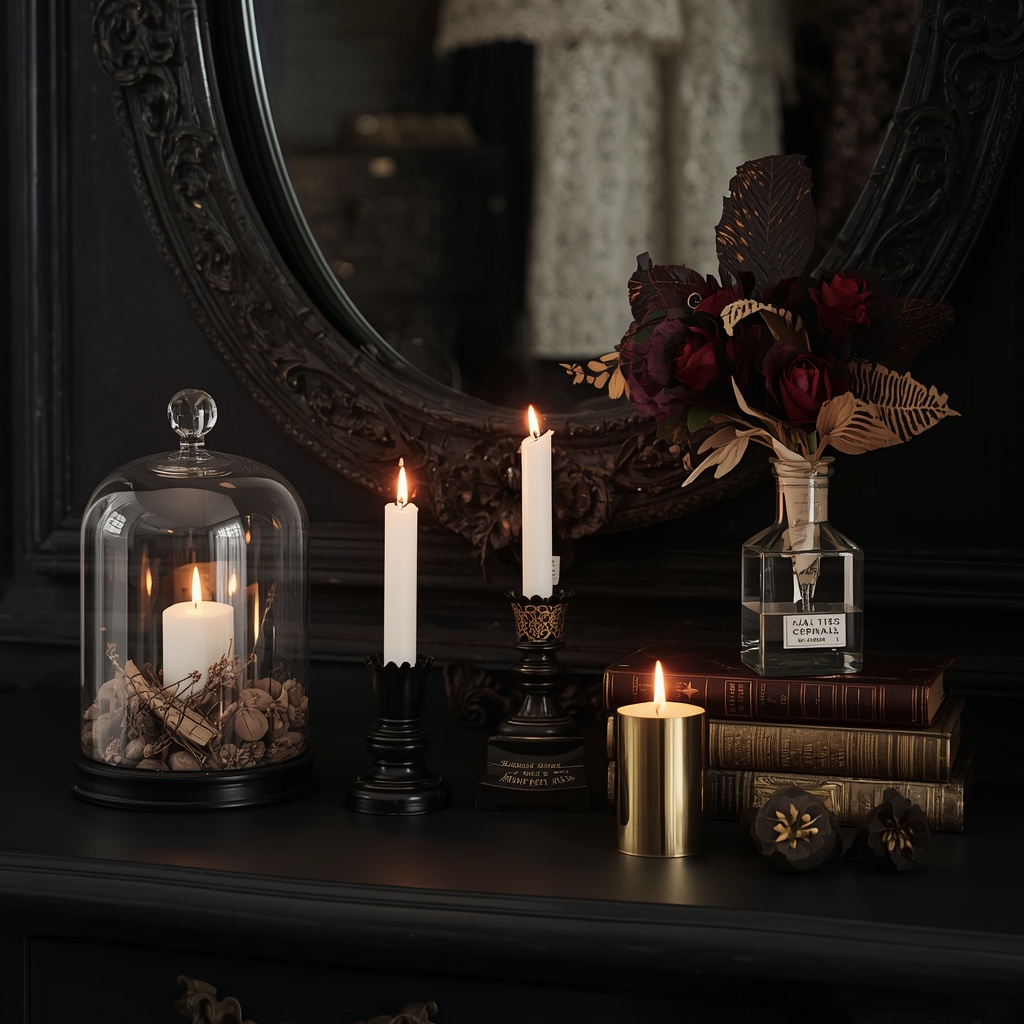
Accessories are where Gothic romance decor becomes deeply personal — and where many designers have the most fun. The Victorian tradition of curio cabinets and “cabinet of curiosities” translates beautifully into modern interiors as a curatorial approach to objects. Rather than scattering generic knick-knacks, curate collections that feel intentional, atmospheric, and slightly otherworldly. Dark botanicals under glass domes, antique apothecary bottles, wax seal collections, taxidermy (ethically sourced), dried flowers, aged maps, and stacked leather-bound books all speak the Gothic aesthetic’s language.
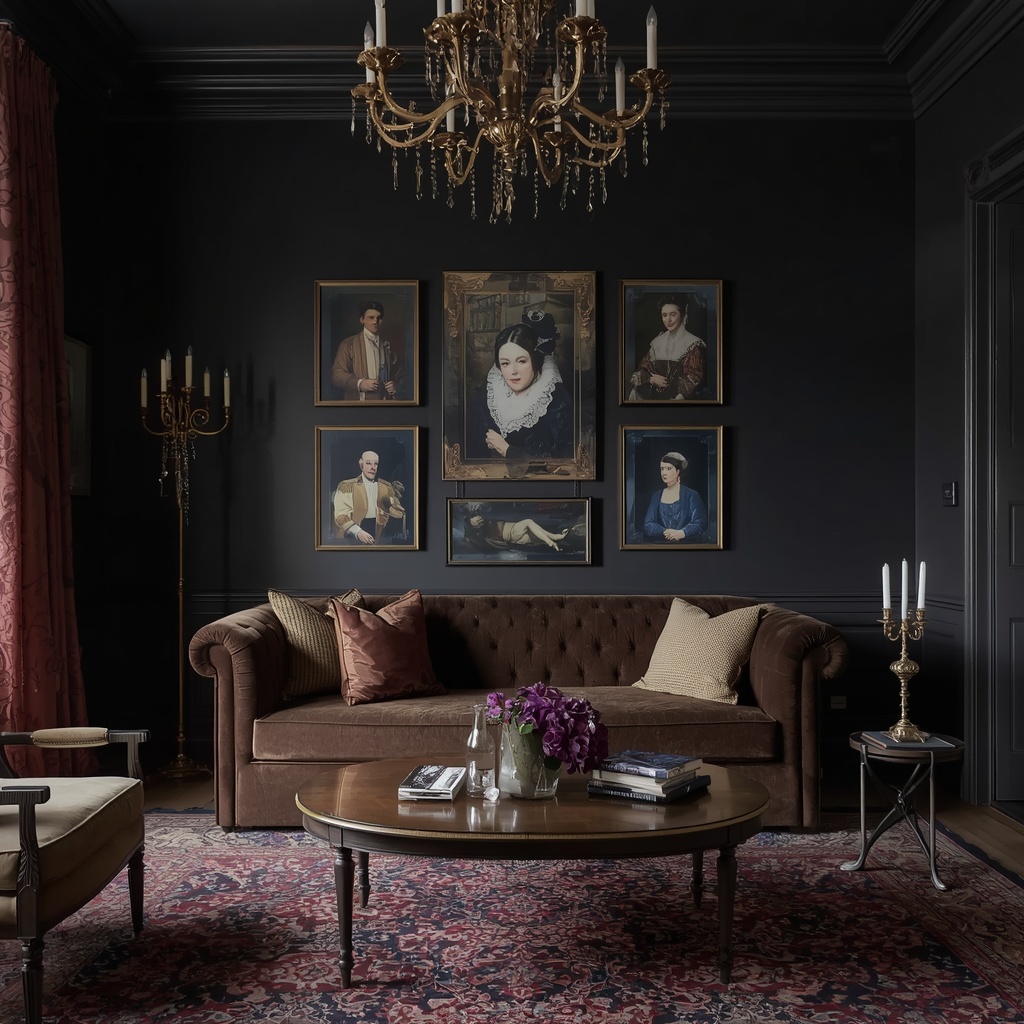
Wall art should be treated as seriously as furniture in a Gothic room. Oversized oil portrait reproductions in ornate gilded frames create an instant ancestral gallery effect — a beloved Gothic interior trick that photographers and artists on Etsy have made surprisingly affordable. Pair portraits with botanical illustrations, Victorian-era anatomical prints, or dark landscape paintings. Gothic architectural prints — arched cathedrals, crumbling abbeys, moonlit forests — are also powerful choices. Layer frames of varying sizes and shapes in a gallery wall arrangement, mixing gold, black, and antique bronze finishes for a collected-over-generations effect.
- Dark botanicals: Pressed flower frames, dried black roses, eucalyptus under glass cloches
- Antique vessels: Apothecary jars, Victorian inkwells, mercury glass vases
- Candles & holders: Pillar candles in black, ivory, and deep red; ornate brass or iron holders
- Books as decor: Stack and arrange by spine color; dark, leather-bound volumes are ideal
- Mirrors: Ornate gilded or black-framed antique mirrors; convex mirrors for drama
- Gothic art prints: Portrait reproductions, Victorian illustrations, dark landscape prints
- Natural curiosities: Crystal clusters, ammonite fossils, geodes, mineral specimens
💡 Pro Tip
The fastest, most budget-friendly way to get the Gothic gallery wall look is to search Etsy for “antique portrait reproduction print” and frame your finds in ornate thrift-store frames painted with Rust-Oleum’s “Oil Rubbed Bronze” spray. A full gallery wall of eight to ten pieces can cost under $150 this way — and the result is genuinely impressive. For frames, check Goodwill, Facebook Marketplace, or Etsy’s Victorian portrait print section.
Room-by-Room Gothic Romance: Where to Start
| Room | Key Gothic Elements | One Power Move |
|---|---|---|
| Bedroom | Canopy bed, velvet bedding, dark walls, draped curtains, candlelight | Install a wrought iron canopy bed and drape with sheer black canopy fabric |
| Living room | Tufted sofa, gallery wall, ornate rug, statement chandelier, curio shelves | Swap your chandelier for a gothic wrought iron fixture with Edison bulbs |
| Home office | Dark wood desk, leather chair, stacked books, antique desk lamp, dark art | Build a floor-to-ceiling dark bookcase wall as your video-call backdrop |
| Bathroom | Dark tiles or paint, brass fixtures, clawfoot tub, dark mirror, candles | Paint the ceiling matte black and add a vintage-style brass faucet set |
| Dining room | Dark table, mismatched Victorian chairs, candelabra centerpiece, dark art | Hang a dramatic chandelier very low over the table for intimate drama |
Modern Gothic vs. Full Victorian: Finding Your Balance
One of the most common questions I hear from clients is how to incorporate Gothic romance decor without having it feel costume-y, oppressive, or impossible to live in day-to-day. The answer lies in intentional restraint and what designers call “contemporary Gothic” — using the vocabulary of Victorian design selectively and pairing it with modern comfort, clean lines, and natural materials that keep the space breathable and liveable.
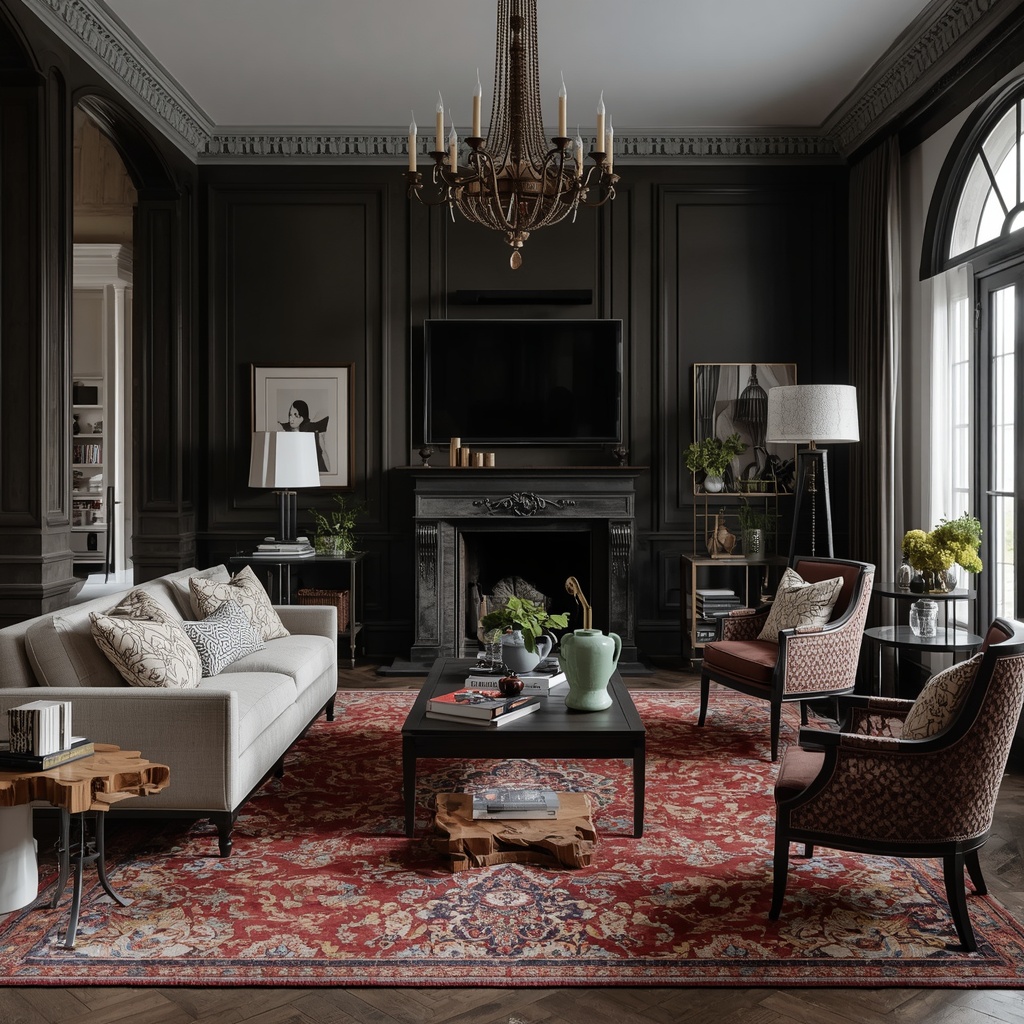
The contemporary Gothic interior is not a museum recreation. It borrows the drama, the color saturation, the love of ornament, and the theatrical use of light, but it leaves behind the claustrophobic stuffiness of a true Victorian parlor. Modern comfort — oversized sofas, weighted blankets, ergonomic chairs — is non-negotiable. Natural materials like raw stone, aged wood, and handthrown ceramics ground the space and prevent it from feeling theatrical in the wrong sense. And moments of restraint — a bare stone wall, a single floating shelf, a deliberately empty corner — give the eye room to rest and the dramatic pieces room to breathe.
“The Gothic interior, at its best, is not a retreat from the modern world — it’s a deeply considered argument about beauty, intimacy, and what it means to feel truly at home.”— Design philosophy shared among contemporary maximalist designers
Budget Breakdown: Gothic Decor at Every Price Point
| Budget Level | Where to Focus | Key Sources |
|---|---|---|
| Under $500 | Paint one wall deep plum or oxblood; swap light bulbs to warm filament; add velvet throw pillows and dark curtains; build a gallery wall with thrift-store frames | Amazon, Target, HomeGoods, thrift stores, Etsy prints |
| $500–$2,000 | Add a statement chandelier; reupholster a sofa or armchair in velvet; purchase a Gothic-inspired area rug; style a curio cabinet with curated objects | Wayfair, World Market, Chairish, Craigslist antiques, eBay |
| $2,000+ | Invest in a statement furniture piece (canopy bed, Chesterfield sofa, carved armoire); commission custom drapery; explore antique dealers for authentic Victorian pieces | Restoration Hardware, 1stDibs, Arhaus, boutique antique dealers |
Final Thoughts: Your Gothic Romance, Your Rules
The Gothic romance aesthetic is ultimately an invitation — to slow down, to surround yourself with beauty that demands attention, to create a home that feels like a sanctuary from the relentlessly fast, bright, and optimized world outside your door. Whether you go all-in with dark walls and candelabras in every room or simply introduce a velvet sofa and a gallery of antique portraits into your otherwise neutral home, you’re making a statement about what you value: atmosphere, history, craftsmanship, and the quiet luxury of a space that genuinely moves you.
As an interior designer, the rooms that stay with me longest are never the most expensive or the most perfectly styled — they’re the ones that feel like someone truly lives in them, loves them, and has made them an extension of who they are. Gothic romance decor, perhaps more than any other interior style, has the power to create exactly that kind of space. Start small, trust your instincts, and let your home become the beautiful, moody story only you can tell.
Explore further reading
- Architectural Digest — Dark & Moody Decor Ideas
- House Beautiful — Gothic Home Decor Inspiration
- Pinterest — Gothic Romance Interior Design Board
- Etsy — Victorian