
Your tiny kitchen doesn’t need a gut renovation — it needs smarter walls. Here’s how to make floating shelves work beautifully in any small kitchen.
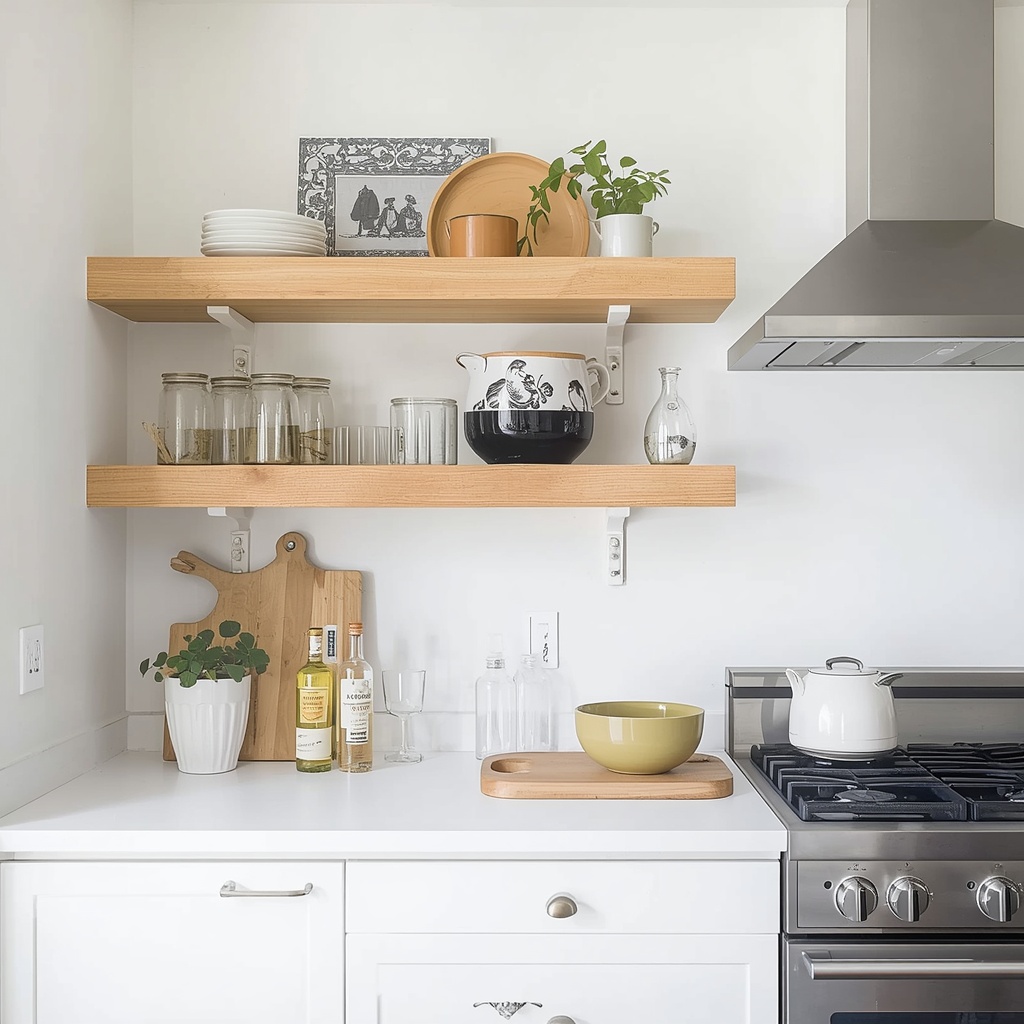
If you’ve ever stood in your kitchen wishing you had just one more drawer or a place to put that beautiful olive oil bottle without it crowding your counter, you’re not alone. Millions of American homes — especially in cities and older suburbs — have kitchens that feel perpetually overloaded. The solution isn’t always a costly remodel. Sometimes, it’s simply about going vertical.
Floating shelves are one of the most effective, budget-friendly upgrades a cramped kitchen can get. But styling them well? That’s a design conversation — and I’m here to walk you through every inch of it, from choosing the right shelf to curating what actually lives on it.
Why Floating Shelves Work So Well in Small Kitchens
Unlike bulky upper cabinets that visually close off a space, open floating shelves create a sense of visual breathing room. They let light pass through, make the room feel taller, and give you direct, unobstructed access to the things you actually use daily. For small kitchen storage solutions, this is a game-changer.
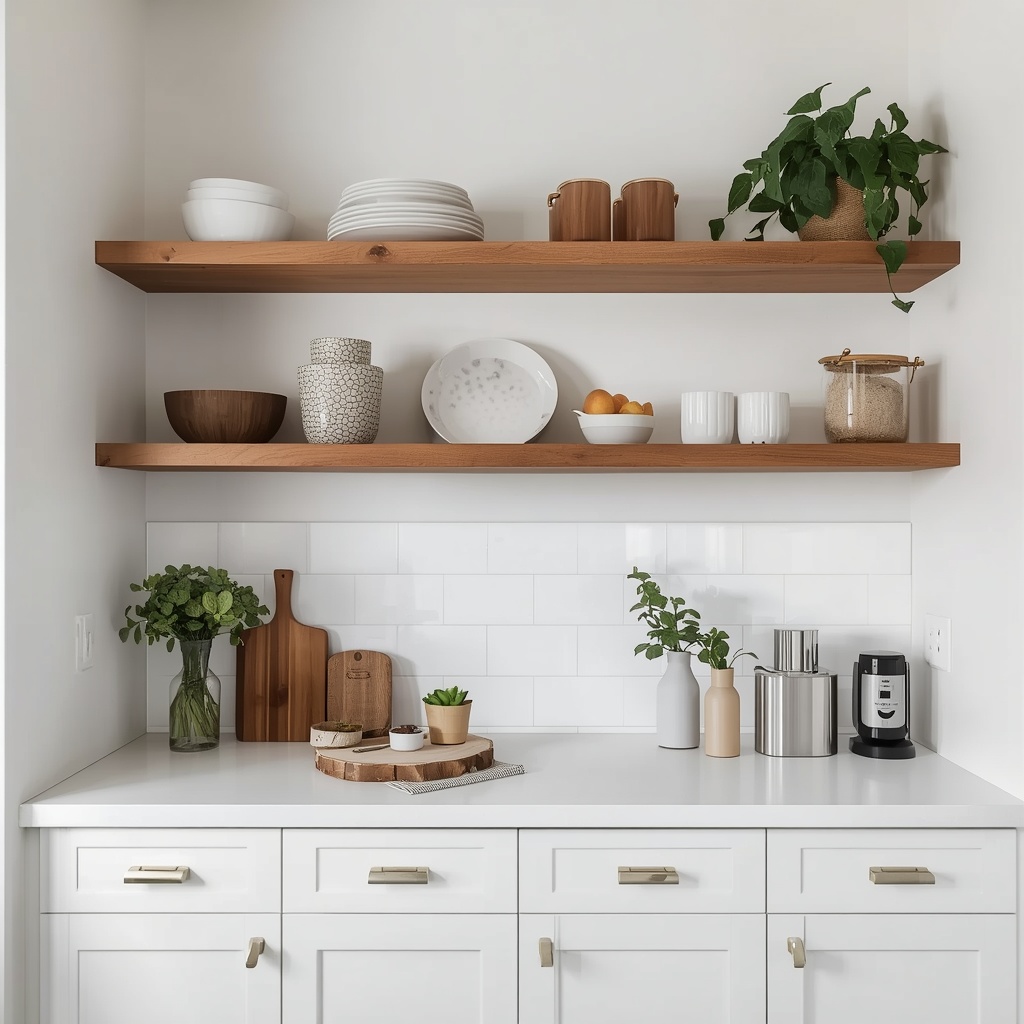
From a design standpoint, floating shelves draw the eye upward, elongating the perceived height of the room. In a cramped galley kitchen or a narrow apartment kitchen, that sense of vertical expansion can genuinely make the space feel twice as livable. Add the right kitchen shelf décor, and you’ve turned a functional fixture into a focal point.
Pro Tip
Install your floating shelves at least 18 inches above the countertop to preserve usable counter space and ensure easy reach. For most ceilings under 9 feet, aim for two to three shelf tiers to maximize vertical real estate without overwhelming the wall.
Choosing the Right Floating Shelf for a Small Kitchen
Not all floating shelves are created equal — and in a cramped kitchen, the wrong choice can make things worse. You want to consider material, depth, weight capacity, and finish, all in relation to your kitchen’s existing aesthetic and your practical storage needs.
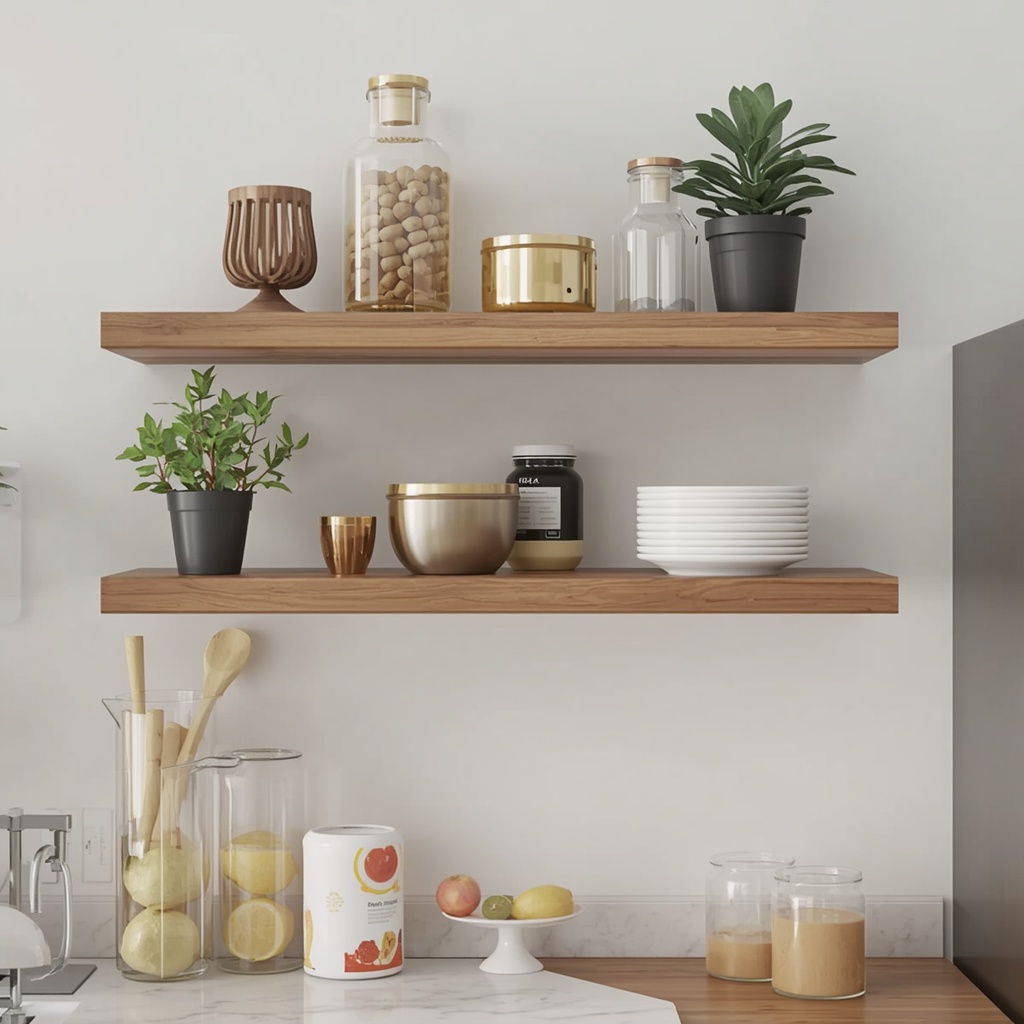
Depth is especially critical in small kitchens. A shelf that’s too deep will obstruct movement and visually crowd the wall. Shelves between 8 and 10 inches deep are ideal for most kitchen items — deep enough for stacked plates or mason jars, shallow enough to maintain airflow and sightlines in the room. When browsing IKEA’s shelf collection or checking out options on Wayfair, always filter by depth first.
| Material | Best For | Ideal Depth | Durability |
|---|---|---|---|
| Solid wood (oak, walnut) | Warm, organic kitchens | 8–10 in | Very high |
| White laminate / MDF | Modern, minimalist kitchens | 8–12 in | Medium |
| Reclaimed wood | Rustic / farmhouse kitchens | 7–10 in | High |
| Metal (iron, steel pipe) | Industrial or loft kitchens | 6–8 in | Very high |
| Marble or stone | Luxury / transitional kitchens | 6–8 in | Very high |
The Golden Rule: Edit Ruthlessly Before You Style
Here’s the interior design truth that nobody puts on Pinterest: a floating shelf is not storage for everything. Before you even think about arrangement or kitchen shelf organization, you need to do a serious edit of what earns a spot on these shelves. Think of each shelf as prime real estate — only the most beautiful and most-used items get a spot.
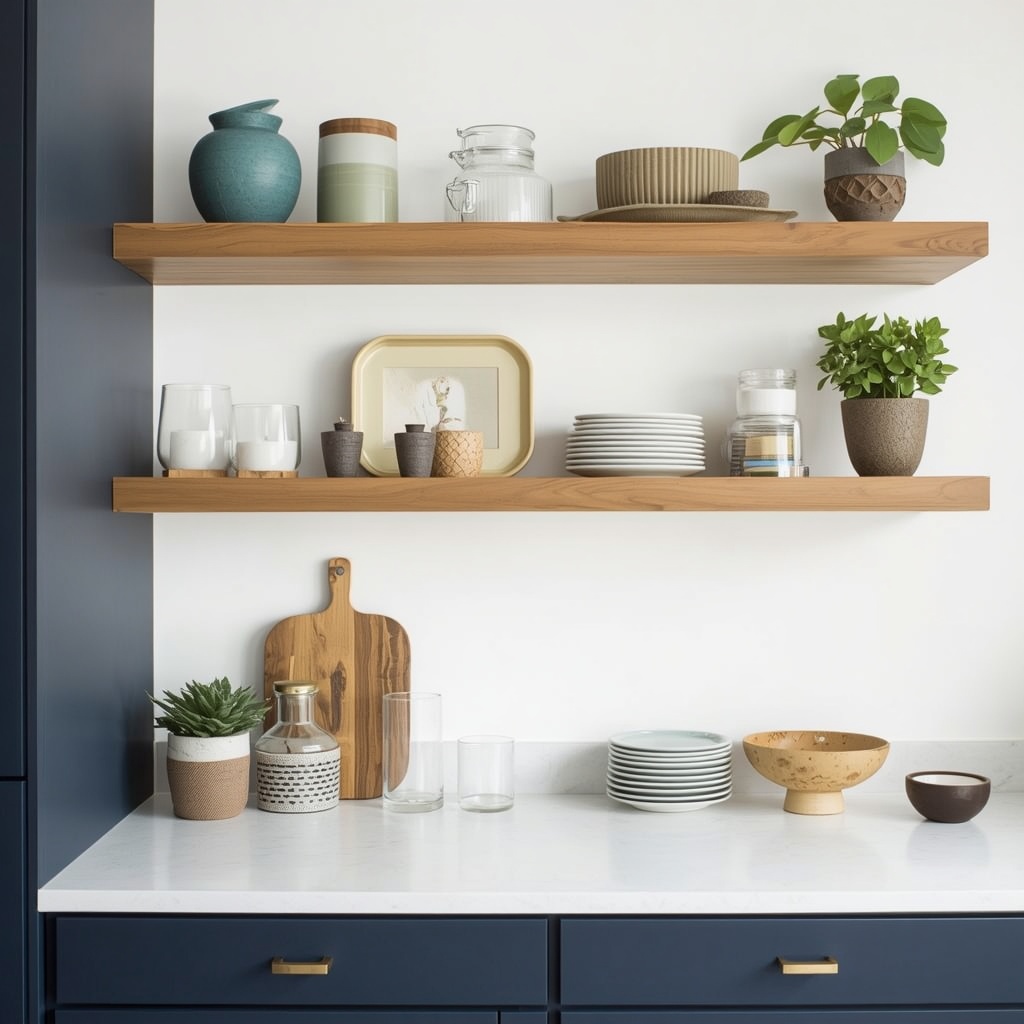
A great rule of thumb is the one-third rule: one-third of your shelf space should be dedicated items (plates, glasses, spice jars), one-third to decorative pieces (small plants, a ceramic bowl, a candle), and one-third left open. Yes, open. That breathing room is what makes styled shelves look intentional rather than cluttered — and in a cramped kitchen, it’s the difference between “cozy” and “chaotic.”
“The biggest mistake homeowners make with open shelving is treating it like a cabinet — filling every inch. Restraint is a design tool.”— Sara Reyes, Interior Designer
How to Style Floating Shelves: A Room-by-Room Approach
Styling kitchen floating shelves isn’t one-size-fits-all. The approach depends on your kitchen’s layout — whether you’re working with a galley, an L-shaped kitchen, or a single accent wall above the range. Below are the core styling principles that apply across all configurations.
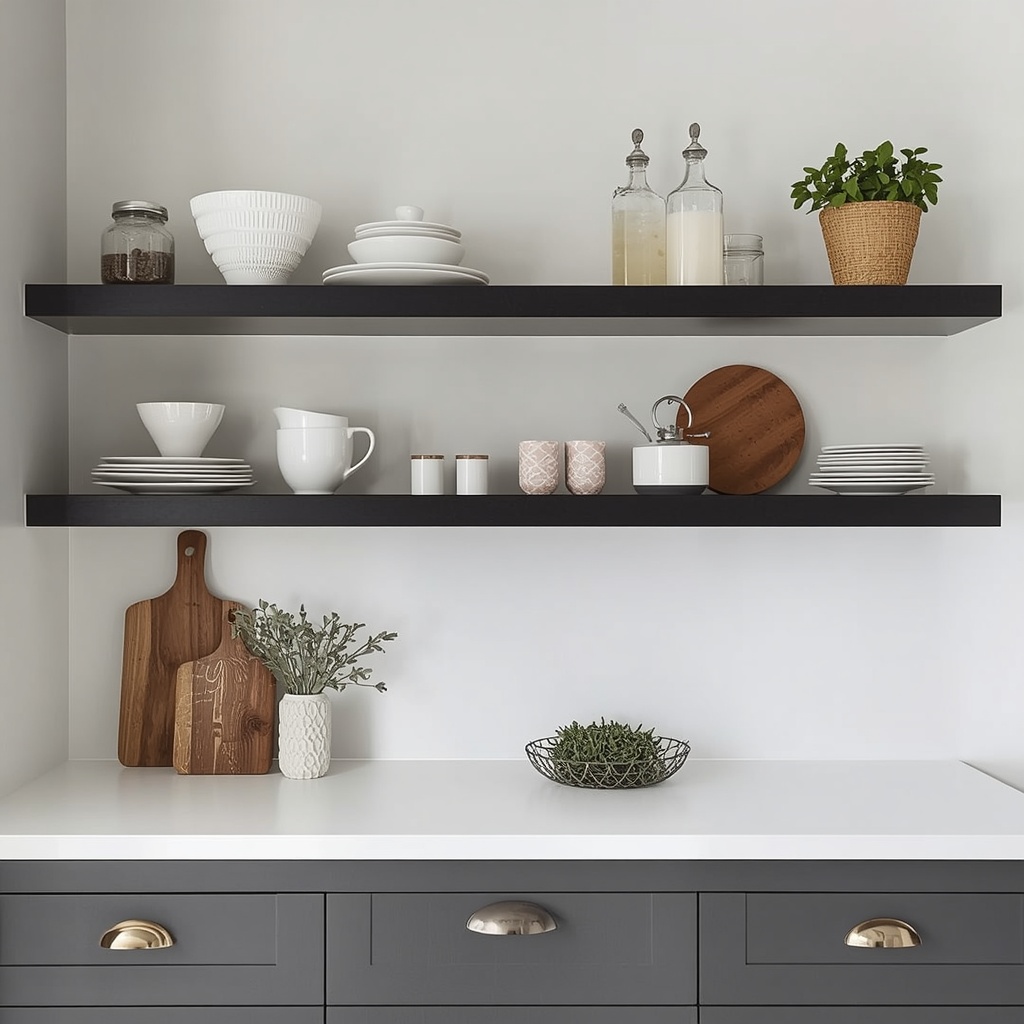
- Vary heights: Mix tall items (wine bottles, a pitcher) with short ones (ramekins, spice tins) to create visual rhythm. Never line up items of the same height — it reads as flat and commercial.
- Group in odd numbers: Three or five items together feel organic and curated. Even numbers can look symmetrical to the point of stiff.
- Use color anchors: Pick two or three colors that recur across the shelf — like cream, terracotta, and green — and make sure items from each color appear on every tier.
- Layer from back to front: Place taller or less-used items toward the wall, and more frequently grabbed pieces in front for easy access.
- Incorporate live plants: Trailing pothos, small herb pots, or a single succulent add life and softness. They’re also functional in an herb garden shelf setup.
- Mix materials: Combine wood, ceramic, glass, and metal for a collected, layered look. All-ceramic or all-glass shelves can feel sterile.
Pro Tip
Don’t underestimate the power of cookbooks as décor. A small stack of two or three beautifully bound cookbooks on your bottom shelf adds color, texture, and personality — and they’re genuinely useful. Stack horizontally with a small ceramic piece on top for a polished editorial feel.
Kitchen Floating Shelf Ideas by Style
Your shelf styling should feel like a natural extension of your kitchen’s personality. Here’s how the approach shifts across popular American kitchen aesthetics — from modern farmhouse to mid-century cool.
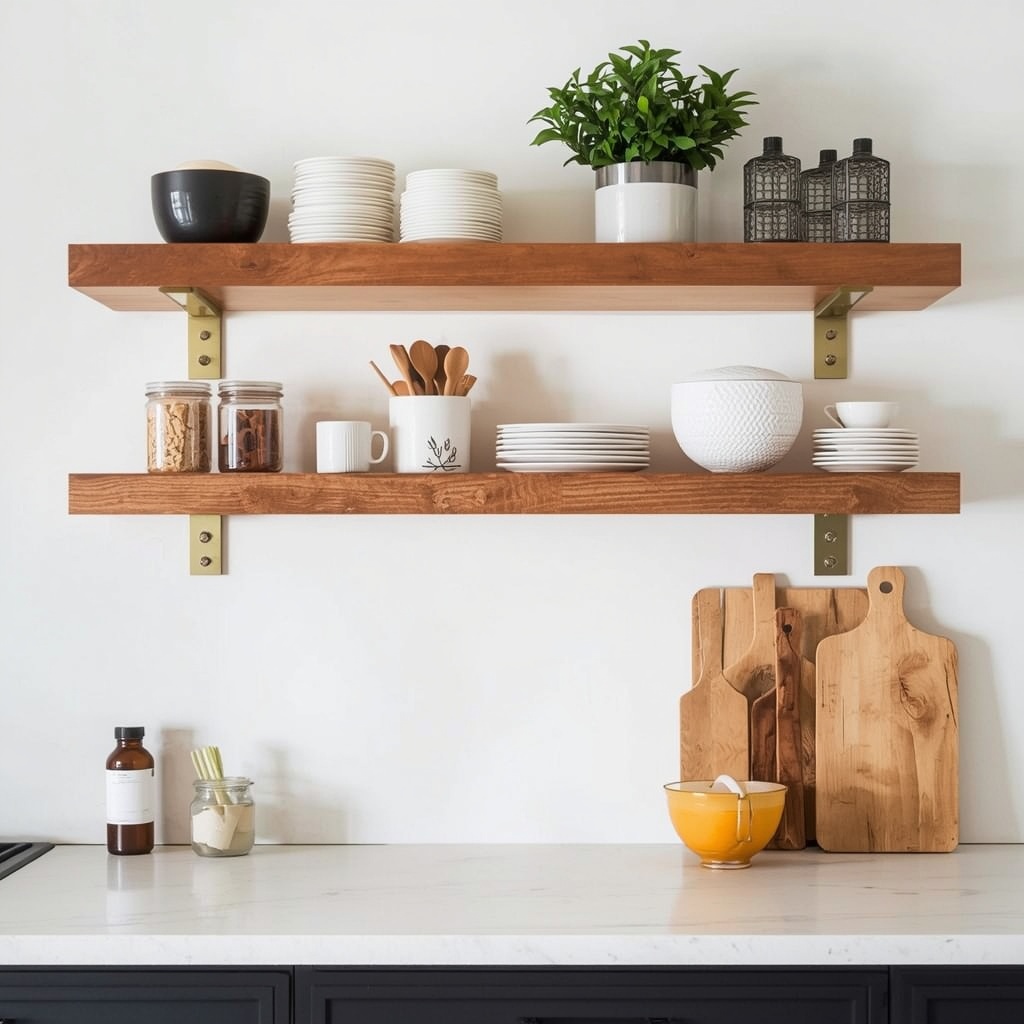
Whether you’re a maximalist who loves every surface singing, or a minimalist who believes negative space is the loudest design statement in the room, floating shelves can be adapted to fit. The key is maintaining internal consistency: every item on the shelf should feel like it belongs to the same family.
| Kitchen Style | Shelf Finish | Décor Items | Color Palette |
|---|---|---|---|
| Modern Farmhouse | Reclaimed wood | Mason jars, linen, vintage signs | White, cream, sage, rust |
| Minimalist / Scandinavian | White MDF or birch | Simple ceramics, single plant, neutral vessels | White, grey, black, natural |
| Boho / Eclectic | Warm walnut or rattan | Macramé, woven baskets, mixed ceramics | Terracotta, cream, teal, gold |
| Industrial Loft | Black iron pipe + raw wood | Vintage tins, copper pots, matte black accessories | Black, charcoal, raw wood |
| Coastal / Nautical | Whitewashed or driftwood | Wicker, white ceramics, blue glass bottles | White, navy, seafoam, sandy beige |
Functional Floating Shelves: Storage That Actually Works
Beauty without function is furniture without purpose — and in a working kitchen, your floating shelves have to earn their keep practically. The good news is that with smart kitchen shelf organization, you can make open shelves more functional than traditional upper cabinets.
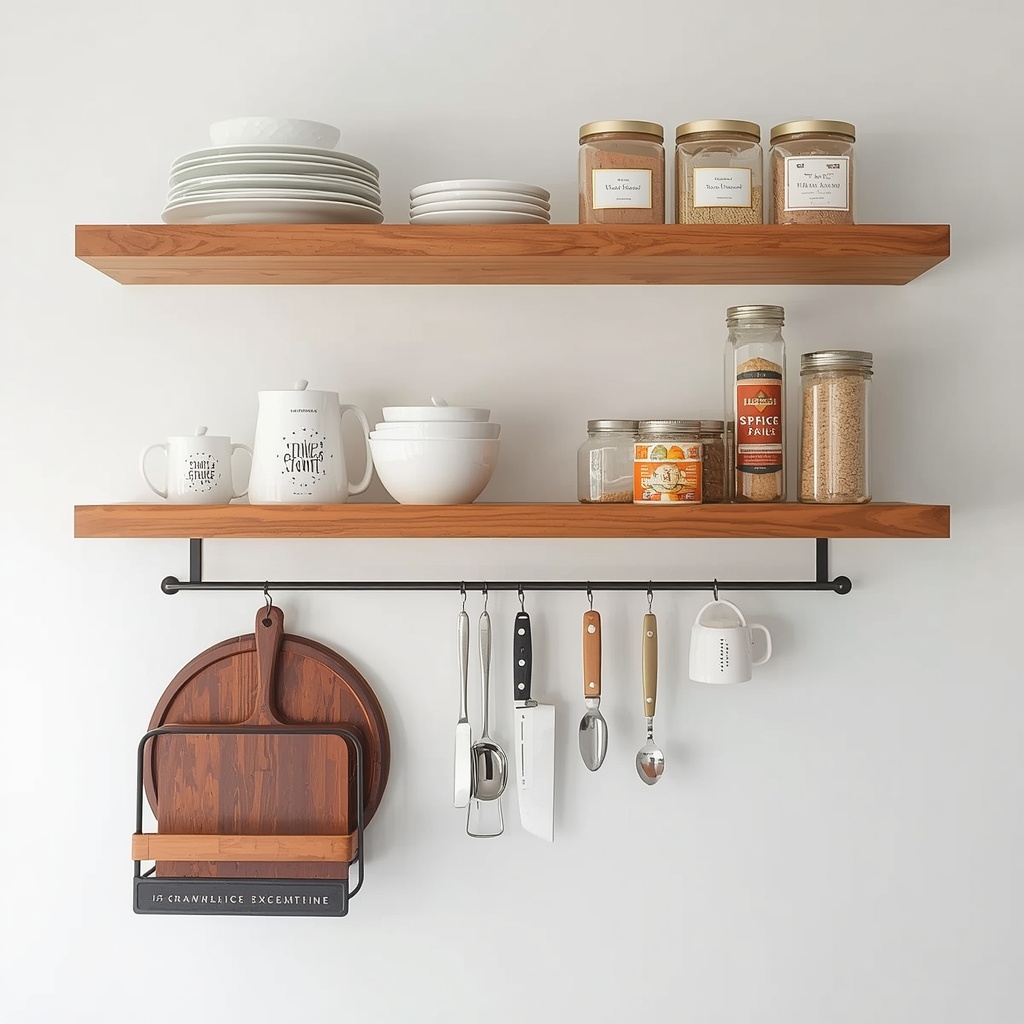
The secret is intentional categorization. Dedicate one shelf entirely to your daily essentials: your most-used mugs, a coffee station setup, or your go-to spices. The next shelf can house items you reach for several times a week — mixing bowls, your favorite cutting board displayed vertically, or a small ceramic utensil holder. Reserve the top shelf for less-frequent items and purely decorative touches.
- ✓Use matching containers for dry goods — uniform jars of rice, pasta, and lentils look organized and beautiful simultaneously.
- ✓Display plates vertically using a simple wire plate stand — it’s storage, display, and easy access in one.
- ✓Keep a small tray or wooden board at the front of one shelf to corral frequently moved items (keys, mail, phone).
- ✓Use S-hooks on the underside of shelves to hang mugs, freeing up shelf space above.
- ✓Install a small rail or magnetic strip below the lowest shelf to hold knives or spice tins, maximizing vertical efficiency.
- ✓For deep shelves, use a tiered spice rack insert so back-row items are always visible and reachable.
Lighting Your Floating Shelves for Maximum Impact
Under-shelf lighting is one of the most underused tools in small kitchen design, and it can completely transform both the mood and the functionality of your floating shelf wall. Even a simple set of plug-in LED strip lights or puck lights tucked under each shelf adds ambient warmth that makes your kitchen feel like a designed space rather than just a cooking room.
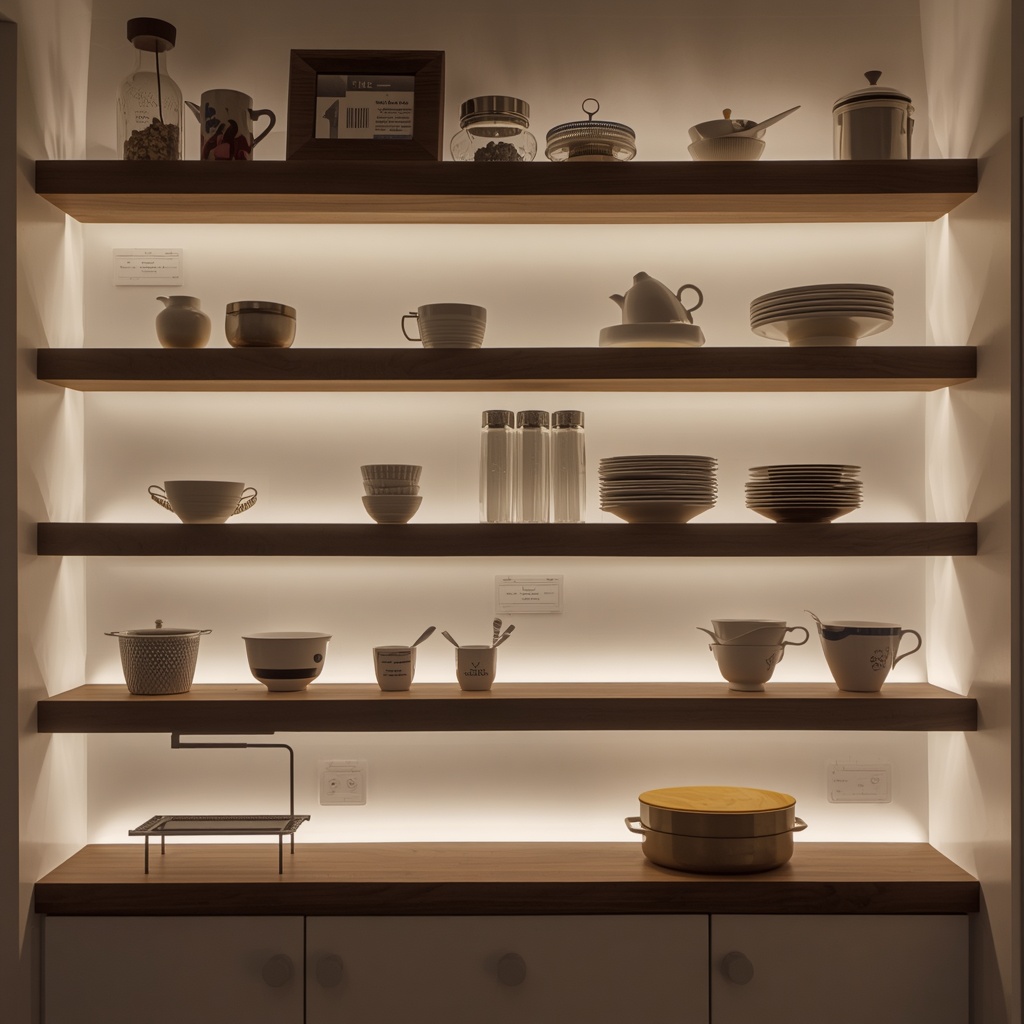
For the most sophisticated look, choose warm white LEDs (2700K–3000K) rather than cool white, which can make food look unappetizing and the room feel clinical. Brands like Philips Hue offer dimmable options that allow you to shift from bright task lighting while cooking to soft ambient glow during dinner. This kind of layered lighting is a hallmark of professionally designed kitchens — and it’s achievable for well under $100.
Pro Tip
Run your LED strips behind a small lip or routed channel on the underside of each shelf to hide the hardware completely. The light should seem to float naturally — you should see the glow, not the source. This approach looks custom-built even on a renter’s budget.
Avoiding the Most Common Floating Shelf Mistakes
I’ve walked through hundreds of kitchens in my years as a designer, and the same mistakes appear again and again on floating shelves. The good news: every single one is fixable without spending a dime.
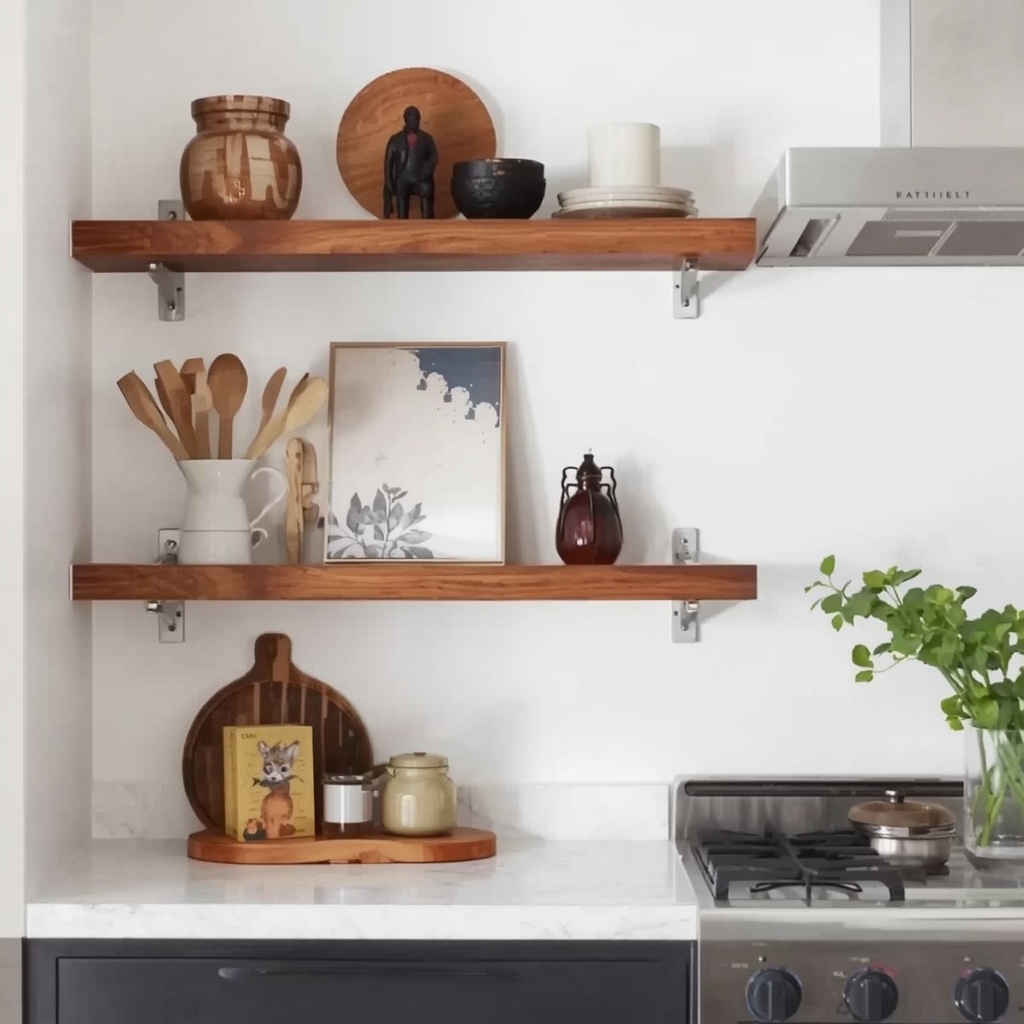
The most frequent offender is overcrowding — when every inch of shelf is filled with items, the eye has nowhere to rest and the whole wall feels agitated rather than curated. The second-most common mistake is inconsistent scale: pairing a tiny ceramic figurine with a massive stock pot on the same shelf creates visual whiplash. Always balance the size of items across a shelf so nothing dominates without intention.
- Avoid displaying items you don’t actually use — dust accumulates fast on open shelves, and rotating purely decorative items just adds upkeep.
- Don’t ignore hardware — visible brackets should complement your kitchen’s finish (matte black with dark kitchens, brushed brass with warm tones, chrome with cool minimalist spaces).
- Skip open shelves directly above the stove unless you want to constantly clean greasy buildup — instead, use that prime spot for a range hood and keep your shelves to the sides.
- Avoid hanging floating shelves too close together — a minimum of 12 inches between shelf tiers allows comfortable reach and breathing room for taller items.
- Don’t neglect the wall behind the shelves — a painted accent color, peel-and-stick tile, or even a simple whitewash can make your shelf wall a genuine feature rather than just a functional fixture.
Seasonal Refresh: Keeping Your Shelves from Going Stale
One of the greatest joys of floating shelves over closed cabinets is how easy they make seasonal refreshing. You don’t have to reorganize your whole kitchen — just rotate two or three decorative items to shift the mood entirely. In fall, swap your green herbs for a small pumpkin and a bundle of dried wheat. In winter, tuck in a small evergreen sprig and swap your cotton napkins for linen. In spring, bring in a fresh pot of basil and a bright ceramic vase.
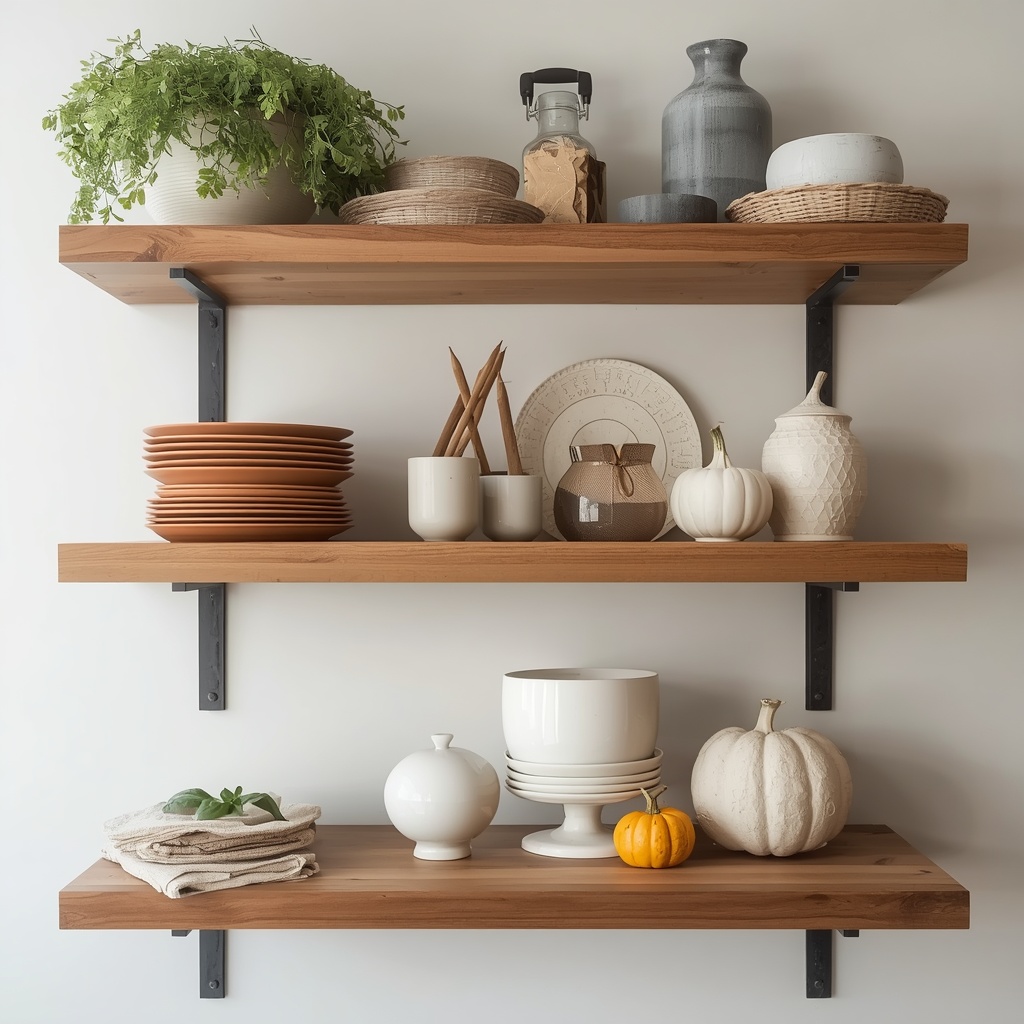
This seasonal styling approach keeps your kitchen feeling alive and intentional year-round — and it costs almost nothing when you already have a curated base of beautiful everyday items. For inspiration on rotating seasonal kitchen shelf décor, resources like Design Sponge and Apartment Therapy regularly feature real-home examples that feel achievable rather than aspirational to the point of intimidation.
“A shelf that changes with the seasons tells the story of a home that’s truly lived in — and that’s the most beautiful kind of design there is.”— Sara Reyes, Interior Designer
Related topicssmall kitchen storage solutions open shelving kitchen kitchen shelf organization floating shelf ideas kitchen wall decor kitchen shelf décor galley kitchen ideas herb garden shelf kitchen renovation tips wall-mounted shelves kitchen.