
By a Certified Interior Designer | Home Décor & Biophilic Design Specialist
There’s something deeply calming about walking into a home that feels alive — where greenery catches the light, natural textures soften every corner, and the air itself feels fresher. As an interior designer who has spent over a decade crafting spaces for American homeowners, I can tell you with certainty: the most beautiful interiors I’ve ever created weren’t filled with expensive furniture. They were filled with nature. And the best part? You can bring the outdoors in without harming the planet in the process.
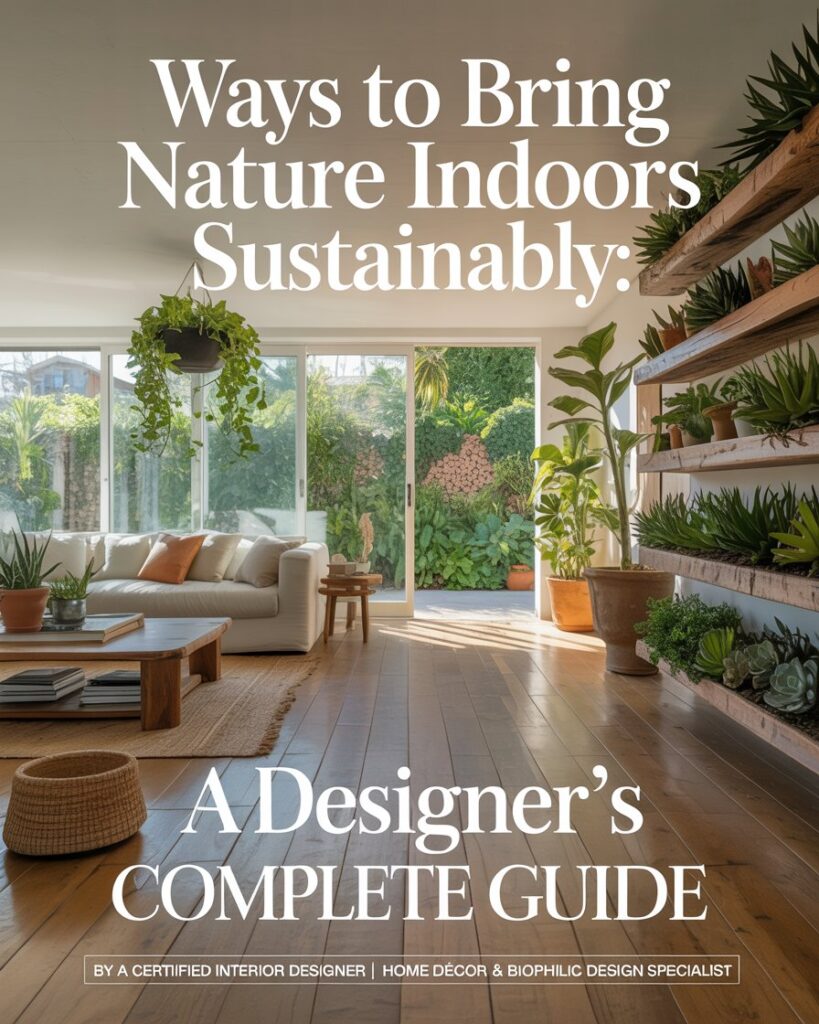
Sustainable interior design isn’t a trend — it’s a mindset shift that’s quietly transforming homes across the country. Whether you live in a sun-soaked ranch in Texas, a compact apartment in Chicago, or a coastal cottage in the Pacific Northwest, there are smart, eco-friendly ways to make your home feel like a natural sanctuary. In this guide, I’ll walk you through the most effective, designer-approved methods to incorporate biophilic design principles into your space — sustainably, beautifully, and affordably.
What Is Biophilic Design and Why Does It Matter?
Biophilic design is the practice of connecting interior spaces with the natural world. The term comes from the concept of “biophilia” — humanity’s innate need to affiliate with other living organisms and natural systems. When applied to home décor, it means intentionally incorporating natural elements like plants, wood, stone, water, and natural light into your living environment.
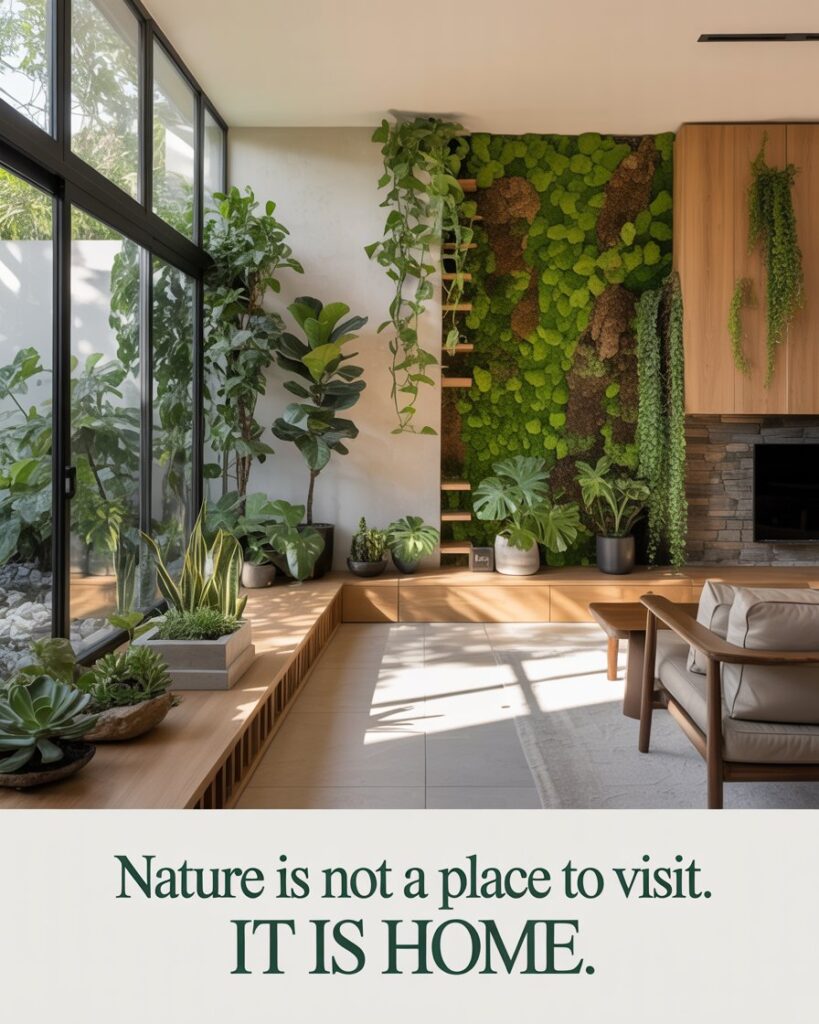
Research from the University of Exeter found that people who lived and worked in spaces with natural elements reported significantly higher well-being and productivity. For American homeowners increasingly spending more time at home, this connection to nature isn’t just aesthetically pleasing — it’s essential for mental and physical health.
“Nature is not a place to visit. It is home.” — Gary Snyder, American poet and environmental activist
Sustainable biophilic design takes this a step further by ensuring that the natural elements we bring inside are sourced, maintained, and curated in ways that are kind to the earth. It’s about making choices that honor both your home and the planet simultaneously.
1. Choose Houseplants Strategically (and Sustainably)
Nothing transforms a room quite like living, breathing greenery. But not all plant choices are created equal — and not all of them align with sustainable values.
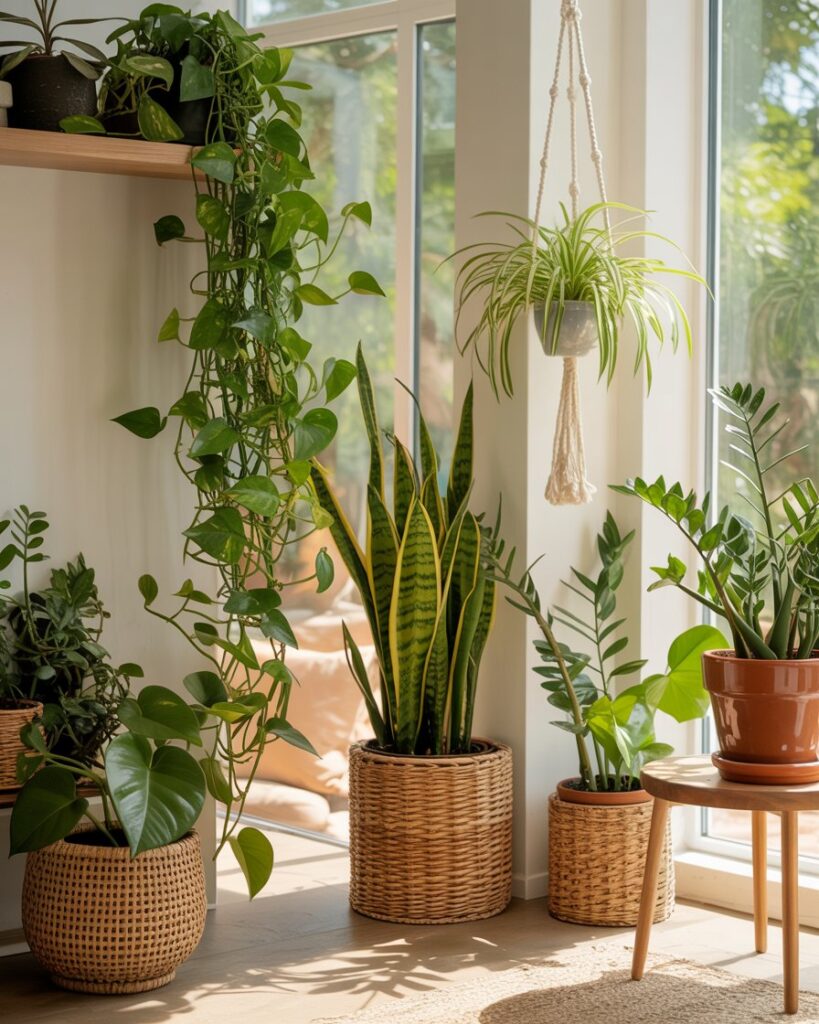
When selecting houseplants for your home, prioritize native or low-maintenance species that thrive in your local climate without needing excessive water, synthetic fertilizers, or pesticides. Plants like pothos, snake plants, spider plants, and ZZ plants are not only incredibly resilient, but they also improve indoor air quality by filtering toxins — a concept popularized by NASA’s Clean Air Study.
For those in warmer climates like the American South or Southwest, succulents and cacti are a stunning drought-tolerant option that requires minimal intervention. In the Pacific Northwest or Northeast, ferns and peace lilies flourish naturally with the ambient humidity.
Pro Tip 🌿: Source your plants from local nurseries or plant swaps in your community rather than big-box stores. Local growers often use fewer pesticides, and you’ll be supporting small businesses while reducing the carbon footprint of long-distance plant shipping. Check platforms like Facebook Marketplace or Nextdoor for free plant cuttings from neighbors — propagating plants from cuttings is the most sustainable method of all.
Best Sustainable Houseplants by Room
| Room | Recommended Plant | Why It Works |
|---|---|---|
| Living Room | Fiddle Leaf Fig | Dramatic visual anchor, air-purifying |
| Bedroom | Snake Plant | Releases oxygen at night, low water needs |
| Bathroom | Boston Fern | Thrives in humidity, no extra watering needed |
| Kitchen | Pothos or Herb Garden | Functional + beautiful, grows in low light |
| Home Office | Peace Lily | Reduces stress, filters toxins |
| Entryway | Cast Iron Plant | Tolerates low light and neglect beautifully |
2. Incorporate Reclaimed and Natural Wood Elements
Wood is one of the most powerful ways to bring warmth and organic texture into any interior space. The grain, the knots, the color variation — these are the marks of nature that no synthetic material can replicate. But here’s where the sustainable interior designer in me gets very intentional: not all wood is created equal.
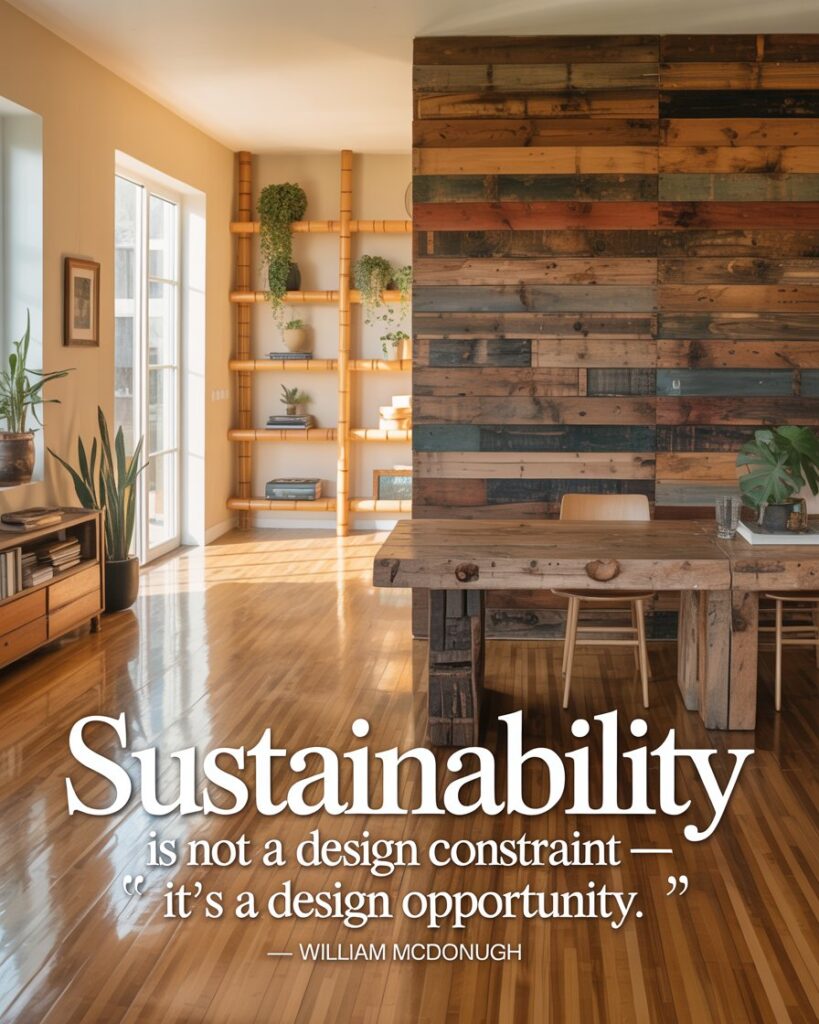
Avoid furniture and flooring sourced from old-growth forests or tropical hardwoods unless they carry FSC (Forest Stewardship Council) certification. Instead, seek out reclaimed wood from barns, old factories, or salvage yards. Reclaimed wood carries a history, a story, and an irreplaceable patina that new wood simply can’t offer — and it keeps perfectly usable material out of landfills.
Bamboo is another exceptional sustainable option. It’s technically a grass that grows to full maturity in just three to five years (compared to decades for most hardwoods), making it one of the most renewable building materials on the planet. Bamboo flooring, shelving, and accent pieces have a clean, modern look that pairs beautifully with almost every design style from Japandi to boho to coastal farmhouse.
“Sustainability is not a design constraint — it’s a design opportunity.” — William McDonough, architect and sustainability pioneer
Look for reclaimed wood accent walls, floating shelves made from salvaged timber, live-edge dining tables from local woodworkers, and bamboo blinds or window treatments. These elements bring nature indoors while honoring the resources from which they came.
3. Maximize Natural Light with Intentional Window Design
Sunlight is the most underrated — and completely free — natural element you can bring into your home. As a designer, I’d argue that optimizing natural light is the single highest-impact change most American homeowners can make to improve both the look and feel of their living spaces.
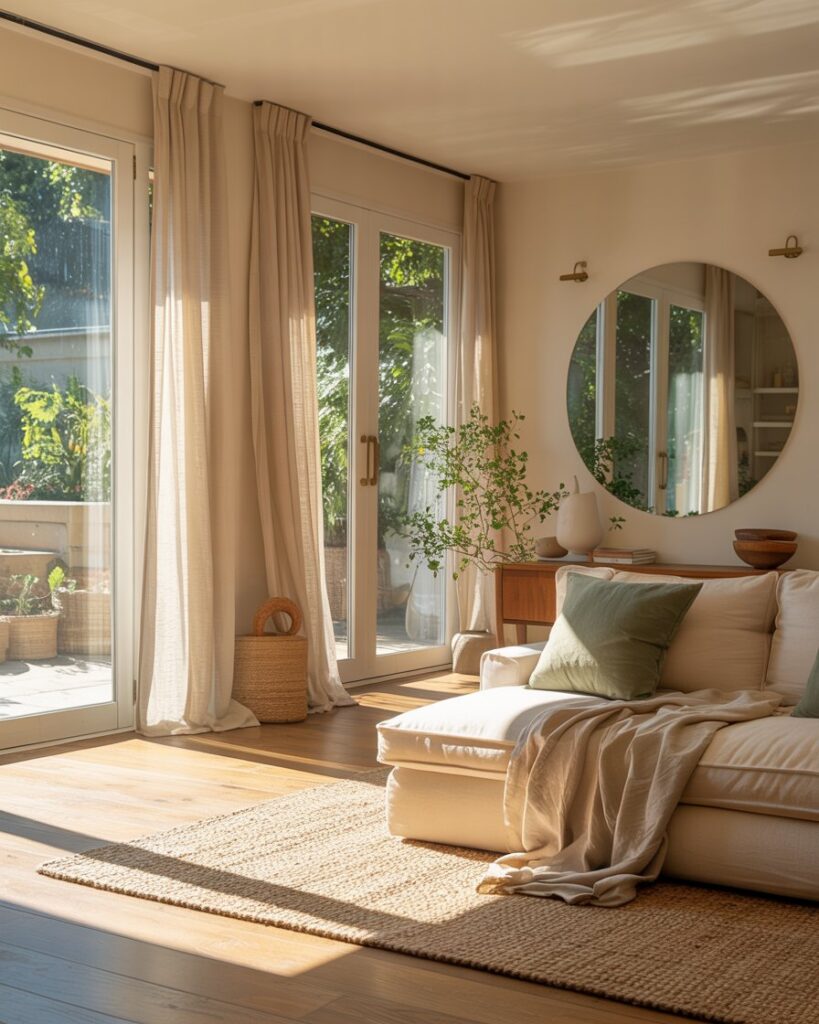
Strategic use of natural light reduces energy consumption, improves mood through increased serotonin production, and creates a dynamic living environment that shifts beautifully throughout the day. It’s the original sustainable design feature.
Ways to maximize natural light sustainably:
- Choose sheer or natural fiber curtains (linen, organic cotton, jute) instead of blackout curtains in main living areas. These diffuse light beautifully while maintaining privacy.
- Use mirrors strategically to bounce natural light deeper into rooms. A large mirror placed across from a window can effectively double the perceived daylight.
- Opt for light-reflective, earth-toned paint colors like warm whites, soft sages, and sandy neutrals that amplify natural light rather than absorb it.
- Keep windowsills clear and trim outdoor hedges or trees blocking windows to maximize light entry without eliminating your outdoor greenery entirely.
- Install skylights or solar tubes in dark hallways, bathrooms, or kitchens where traditional windows aren’t possible.
Pro Tip ☀️: According to the U.S. Department of Energy, daylighting strategies — designing spaces to maximize natural light — can reduce lighting energy use by 50 to 80 percent. This isn’t just beautiful; it’s genuinely good for your utility bill and the planet.
4. Bring in Natural Stone and Mineral Accents
Stone has been a part of human shelter for millennia, and for good reason: it’s durable, timeless, and undeniably beautiful. Incorporating natural stone into your home décor creates an immediate grounding effect — a literal connection to the earth beneath our feet.
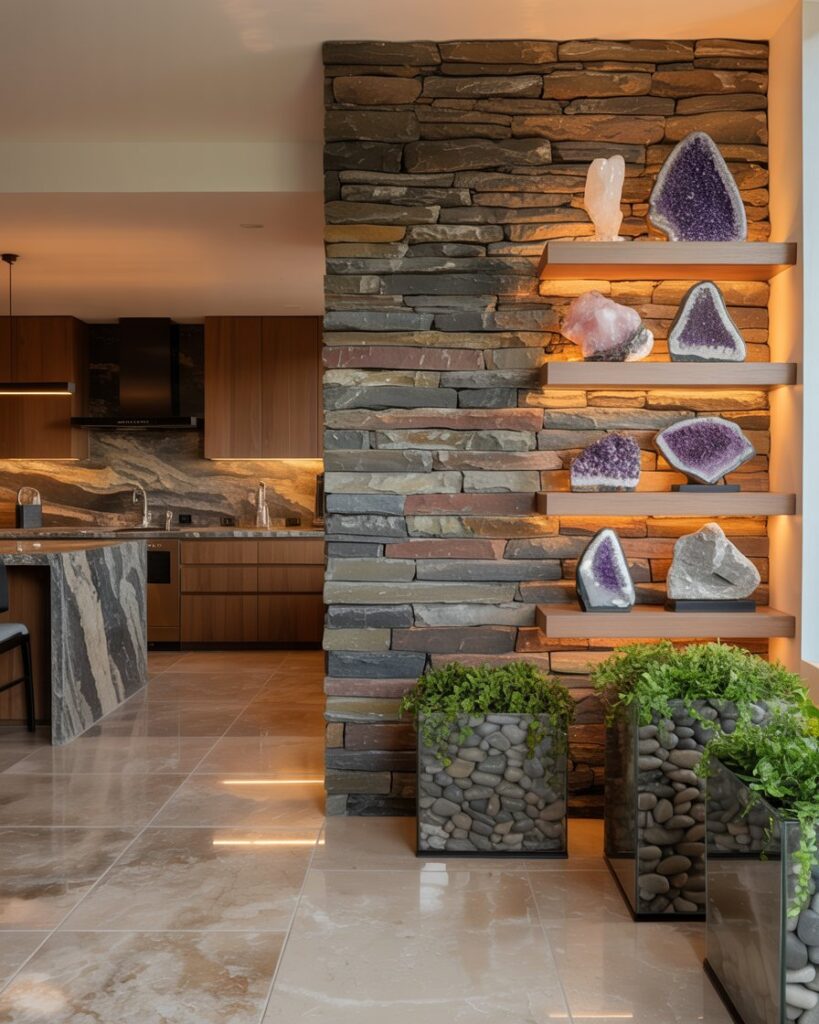
The key to using stone sustainably is sourcing locally and choosing pieces that are long-lasting rather than trend-driven. Slate, travertine, soapstone, and locally quarried fieldstone are all excellent options that require minimal processing compared to exotic imported marbles.
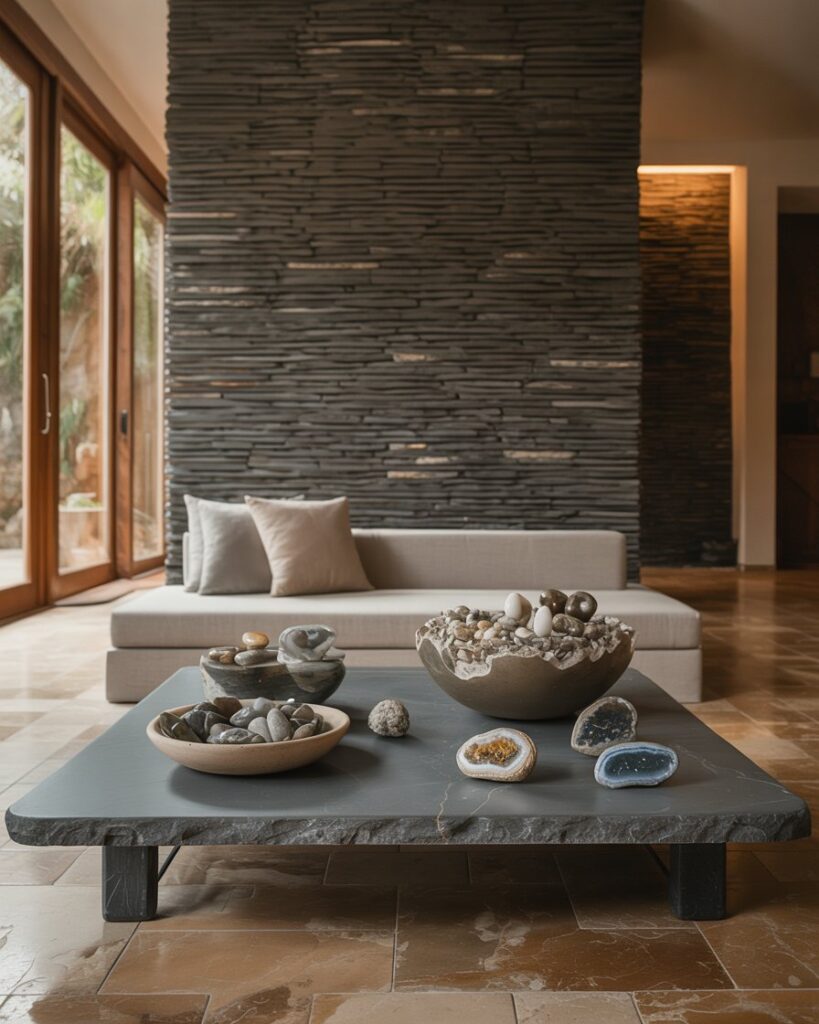
Sustainable ways to incorporate stone indoors include stacked stone feature walls, slate or travertine bathroom tiles, soapstone kitchen countertops (naturally antimicrobial and heat-resistant), river rock accents in planters or decorative bowls, and geode or crystal clusters as sculptural décor pieces.
For those on a budget, stone-look porcelain tiles have come a long way in replicating the natural aesthetic with much lower environmental impact than quarried stone — especially when chosen from manufacturers using recycled content in their production process.
5. Use Natural Fiber Textiles Throughout Your Home
Textiles are often an overlooked vector for bringing natural elements indoors, but they play an enormous role in how a space feels — both visually and physically. Swapping out synthetic fabrics for natural fiber alternatives is one of the easiest, most affordable sustainable design upgrades you can make.
Natural fiber options to consider:
- Jute and sisal rugs: Durable, biodegradable, and incredibly grounding underfoot. Perfect for living rooms and entryways.
- Linen throw pillows and curtains: Breathable, moisture-wicking, and ages beautifully. Linen is made from flax, one of the least water-intensive crops.
- Organic cotton bedding: GOTS (Global Organic Textile Standard) certified cotton ensures your sheets were grown without harmful pesticides.
- Wool blankets and upholstery: A renewable, naturally flame-resistant fiber that insulates in winter and breathes in summer.
- Hemp textiles: Increasingly available, hemp fabric is durable and requires almost no pesticides to grow.
Natural vs. Synthetic Fibers: A Quick Comparison
| Fiber Type | Biodegradable | Environmental Impact | Aesthetic Feel |
|---|---|---|---|
| Jute | ✅ Yes | Very Low | Earthy, rustic |
| Organic Cotton | ✅ Yes | Low | Soft, versatile |
| Linen | ✅ Yes | Very Low | Relaxed, elevated |
| Polyester | ❌ No | High (microplastics) | Synthetic feel |
| Acrylic | ❌ No | Very High | Plastic-like |
6. Incorporate a Living Wall or Vertical Garden
If floor space is at a premium in your home — common in apartments and urban homes across America — a living wall or vertical garden is the most dramatic and space-efficient way to bring nature indoors at scale.
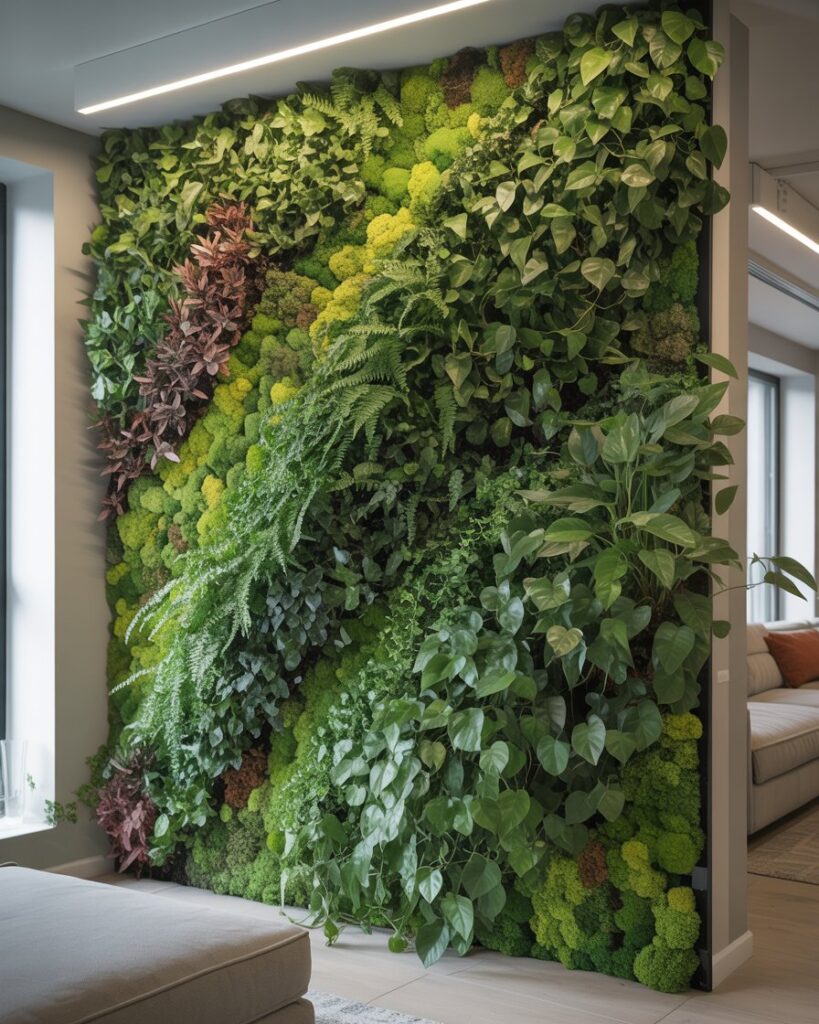
A living wall is essentially a vertical panel system planted with a variety of trailing, creeping, or compact plants. They can cover an entire accent wall, a small section of a kitchen backsplash area, or a bathroom nook. Beyond their extraordinary visual impact, living walls provide meaningful air purification, natural humidity regulation, and significant acoustic dampening in hard-surfaced rooms.
There are DIY-friendly options available through retailers like The Sill and IKEA’s SKÅDIS system that make building a small living wall accessible for most homeowners. For larger installations, working with a local landscape designer who specializes in interior planting systems is well worth the investment.
Pro Tip 🌱: Choose a self-watering vertical planter system to dramatically reduce water waste. Systems with built-in reservoirs can cut watering frequency by 60 to 70 percent while keeping plants consistently hydrated — a win for sustainability and your schedule alike.
7. Bring in Natural Scent Through Plants and Sustainable Aromatics
Scent is one of the most evocative and powerful sensory channels we have, and incorporating natural fragrance into your home is a deeply underutilized biophilic design tool. The smell of eucalyptus, lavender, cedar, or fresh herbs instantly signals “nature” to our brain, triggering the same calming neurological response as being outdoors.
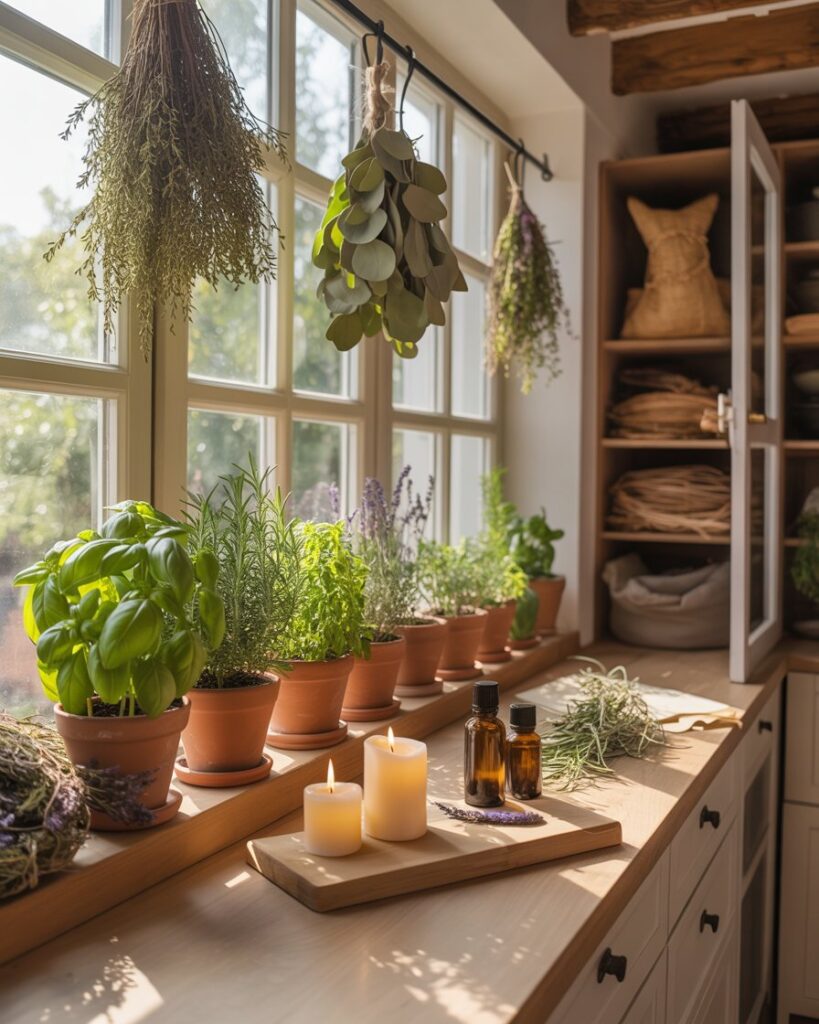
Rather than relying on synthetic air fresheners — which often contain VOCs (volatile organic compounds) linked to indoor air quality problems — opt for these sustainable scent sources:
- Fresh herb gardens on a sunny kitchen windowsill (basil, rosemary, mint, lavender)
- Beeswax or soy candles scented with pure essential oils rather than synthetic fragrance
- Dried botanical bundles — eucalyptus, lavender, dried orange slices — hung in bathrooms or entryways
- Cedar blocks or sachets in closets, which naturally repel moths without toxic mothballs
- Diffusers using pure essential oils from brands committed to sustainable sourcing
8. Use Natural Color Palettes Inspired by the Outdoors
Color is perhaps the most powerful tool in an interior designer’s kit, and a nature-inspired palette is one of the most timeless and psychologically soothing choices you can make for your home. The colors found in forests, coastlines, deserts, and meadows carry an inherent harmony that manufactured color trends simply can’t replicate.
Sustainable color palettes to consider:
- Forest palette: Deep greens, warm browns, muted golds, and earthy terracottas — inspired by woodland floors and canopy light
- Coastal palette: Soft sand, seafoam, driftwood gray, and warm white — perfect for open, airy spaces
- Desert palette: Terracotta, sage, bleached bone, and rust — deeply grounding and increasingly popular in Southwestern-inspired interiors
- Meadow palette: Dusty lavender, soft sage, wildflower yellow, and cream — a softer, more romantic nature palette
When choosing paint, look for zero-VOC or low-VOC formulations from brands like Benjamin Moore Natura, Clare Paint, or Sherwin-Williams Harmony. Conventional paints release volatile organic compounds for years after application, degrading indoor air quality — a concern particularly relevant for families with children or pets.
Final Thoughts: Your Home as an Ecosystem
Bringing nature indoors sustainably isn’t about perfectly curated Instagram aesthetics or spending a fortune on designer furniture. It’s about cultivating a relationship between your living space and the natural world — one that nurtures you while also respecting the planet.
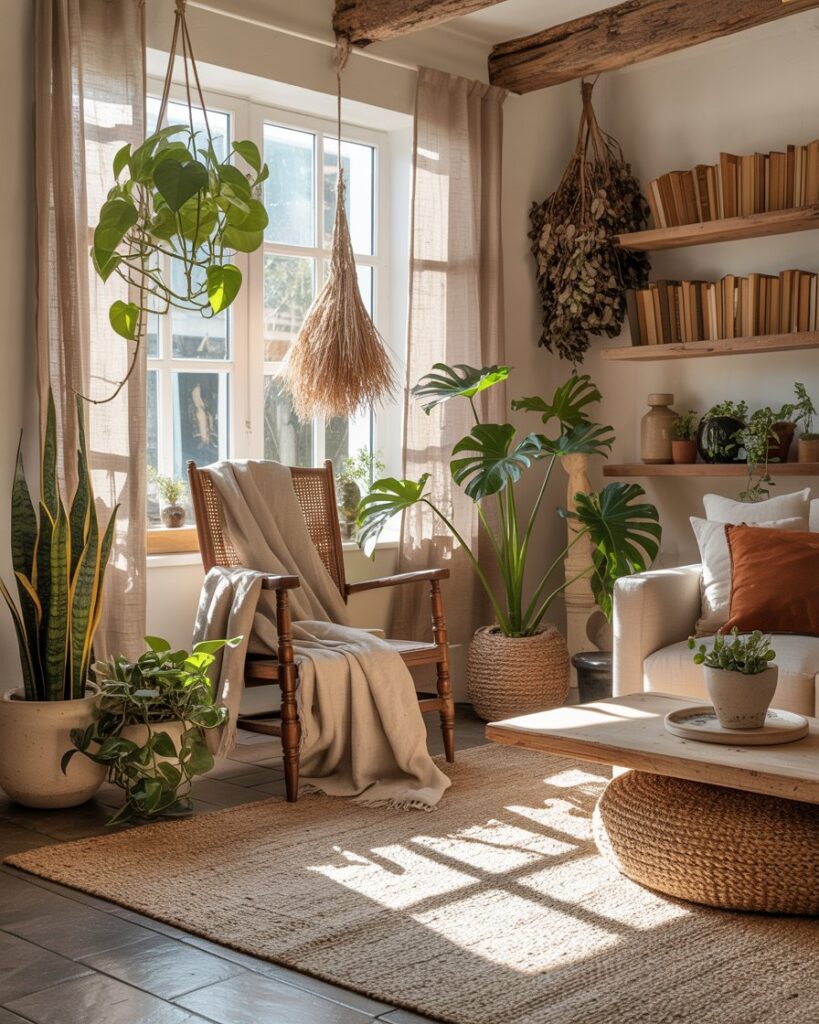
The best sustainable home décor decisions are the ones that are intentional, long-lasting, and layered. Start with one change: add a snake plant to your bedroom, swap your synthetic rug for a jute one, or hang a bundle of dried eucalyptus in your bathroom. Then build from there. Over time, these choices accumulate into something genuinely beautiful — a home that breathes, grounds, and restores.
As I always tell my clients: the most sustainable design is the kind that lasts, both in quality and in how deeply it resonates with the people who live inside it.
Related Reading:
- How to Choose Non-Toxic Paint for Your Home — EPA Guide
- FSC Certified Wood Products Directory
- GOTS Certified Organic Textiles