
If you’ve been scrolling through design inspiration lately, you’ve probably noticed something: stark white bathrooms are giving way to something warmer, softer, and infinitely more inviting. Mocha — that rich, toasty brown-beige that sits somewhere between espresso and cream — is quietly taking over minimalist bathrooms across the US, and for very good reason. It brings the calm of a spa retreat directly into your home without sacrificing an ounce of the clean, clutter-free aesthetic that minimalism promises.
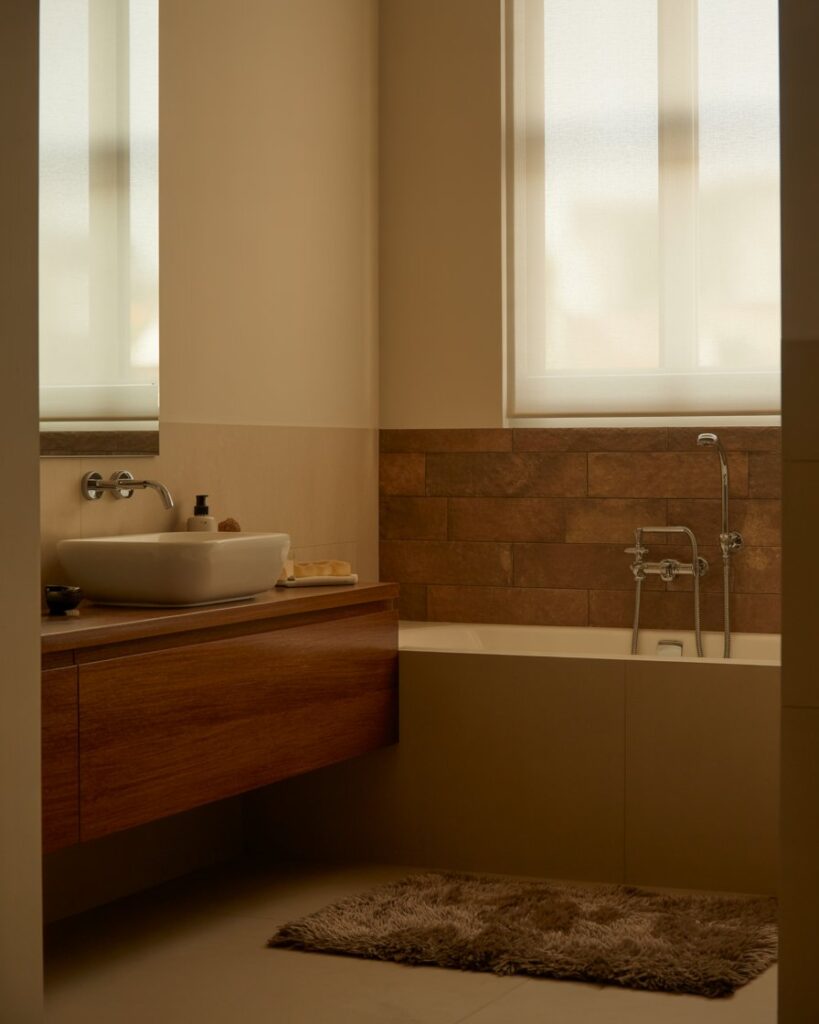
Whether you’re planning a full bathroom renovation or simply refreshing your accessories, this guide will show you exactly how to incorporate mocha accents into a minimalist bath with confidence, intention, and style. From material pairings and fixture choices to lighting and textiles, we’re covering every design decision that transforms a functional room into a restorative sanctuary.
Why Mocha and Minimalism Are a Perfect Pairing
Minimalism in bathroom design is often misread as cold or sterile. The truth is, great minimalist design is about intentional simplicity — every element earns its place, and the space breathes as a result. The challenge, especially in bathrooms, is that “minimal” can easily tip into “uninviting.” That’s exactly where mocha earns its place.
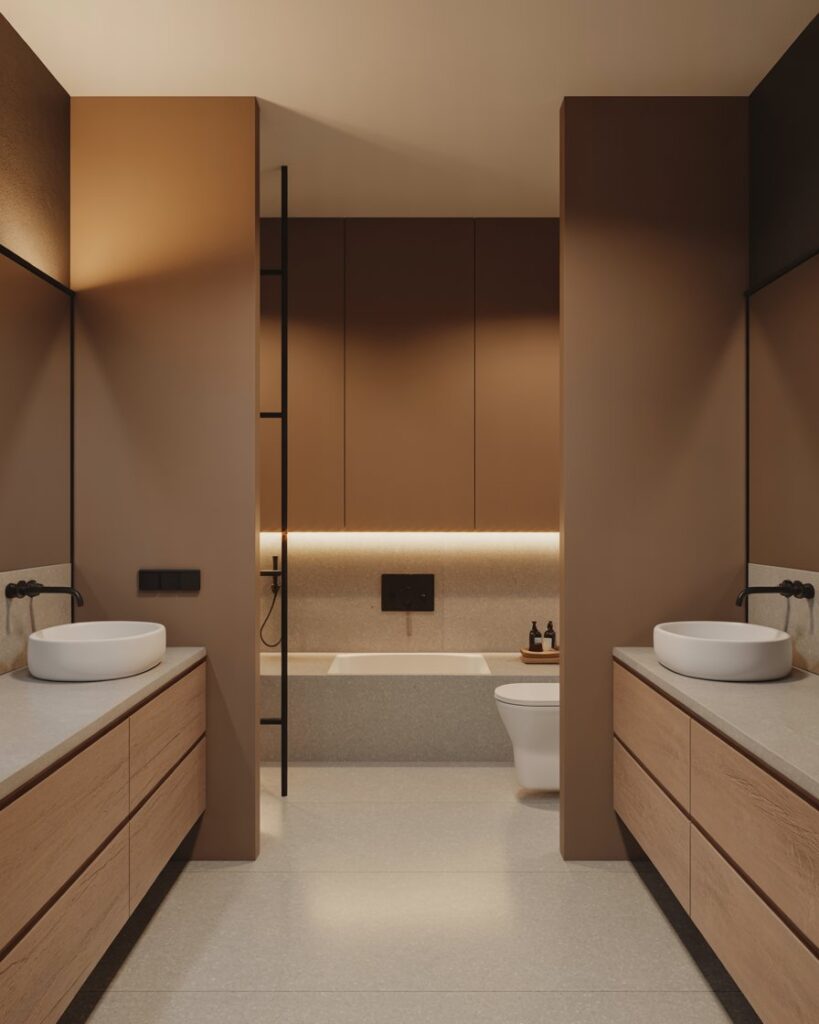
Mocha tones — including warm taupe, café au lait, raw umber, and toasted almond — add visual depth and tactile warmth without adding complexity. They work naturally with the clean lines and restrained palettes that define minimalist aesthetics. Unlike bolder colors that demand attention, mocha recedes gracefully, creating a sense of coziness that makes the space feel intentional rather than sparse.
From a color theory standpoint, mocha occupies that sweet spot between neutral and chromatic. It plays beautifully with whites, soft grays, matte black, and natural wood tones — all staples of contemporary minimalist bath design. And in a post-pandemic world where home sanctuaries have taken on new emotional importance, the grounded warmth of mocha feels deeply relevant.
Interior designers across the country are prescribing this palette for clients who want their bathroom to feel like a boutique hotel room — effortless, serene, and quietly luxurious. The best part? You don’t need a massive budget to pull it off.
“A minimalist bathroom should feel like a held breath — still, warm, and intentional. Mocha gives that stillness a heartbeat.”— Inspired by contemporary American bath design philosophy
The Mocha Color Palette: Understanding Your Tones
Not all mochas are created equal. Before you start shopping for tiles or towels, it helps to understand the range of tones that fall under the mocha umbrella — and how each one performs in a minimalist bathroom context.
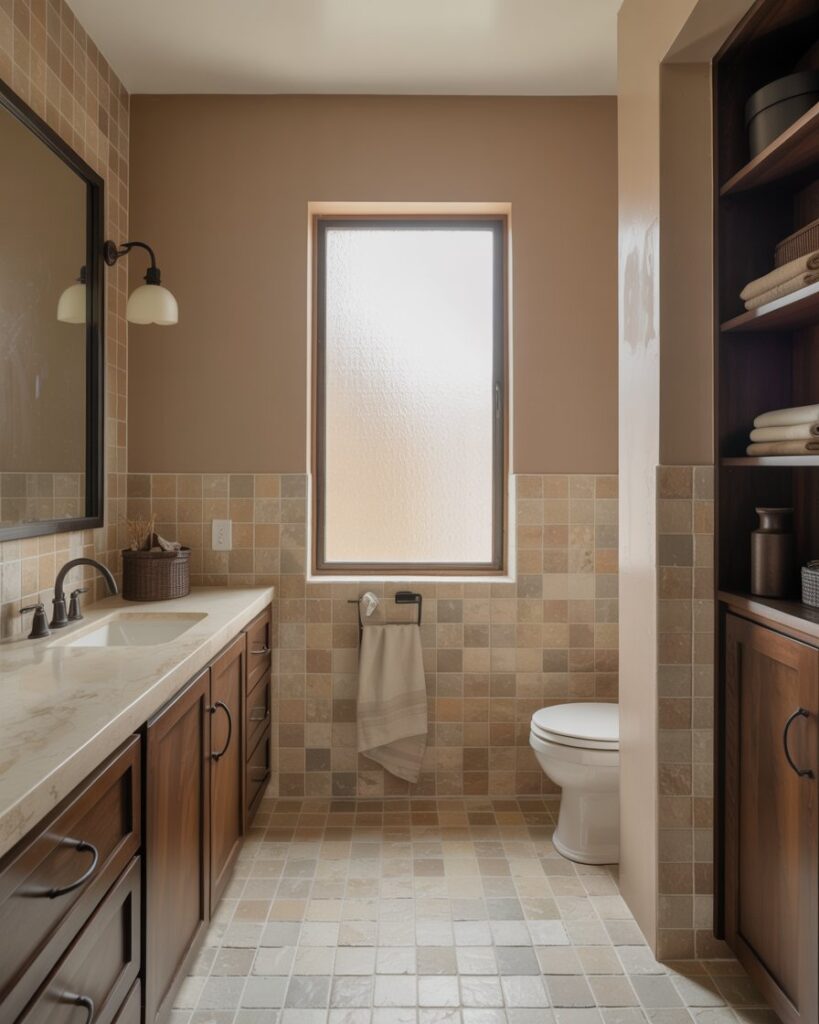
Light mochas like linen, oat, and warm ivory work beautifully as your dominant wall or tile color. They’re airy enough to keep a small bathroom from feeling closed in, while still providing that warm, grounded quality that sets mocha apart from cool whites. Think of these as your foundation — the color that covers the most square footage and sets the overall mood.
Mid-range mochas — café latte, caramel, and desert sand — are your accent workhorses. These tones are rich enough to read as a deliberate color choice while still functioning as neutrals. They shine on vanity cabinets, accent walls, decorative tile borders, or statement fixtures like a freestanding tub.
Deep mochas such as espresso, dark walnut, and chocolate brown function best as grounding accents. A deep mocha vanity against a pale oat wall creates the kind of tonal contrast that feels sophisticated rather than stark. Use these sparingly in a minimalist context — a little goes a long way.
Linen
Oat
Caramel
Café latte
Mocha
Espresso
Pro Tip
When building a mocha palette for your bathroom, follow the 60-30-10 rule: 60% light mocha or warm white (walls, large tile), 30% mid-range mocha (vanity, fixtures, textiles), and 10% deep mocha or contrasting accent (hardware, plants, art). This ratio ensures warmth without overwhelming the minimalist structure.
Tile Choices That Elevate the Mocha Minimalist Bath
Tile is the backbone of any bathroom design, and in a minimalist scheme, your tile choice does the heavy lifting. For a mocha minimalist bath, the goal is to select tiles that introduce texture and warmth without visual clutter — the exact opposite of the intricate, busy patterns that once dominated bathroom design.
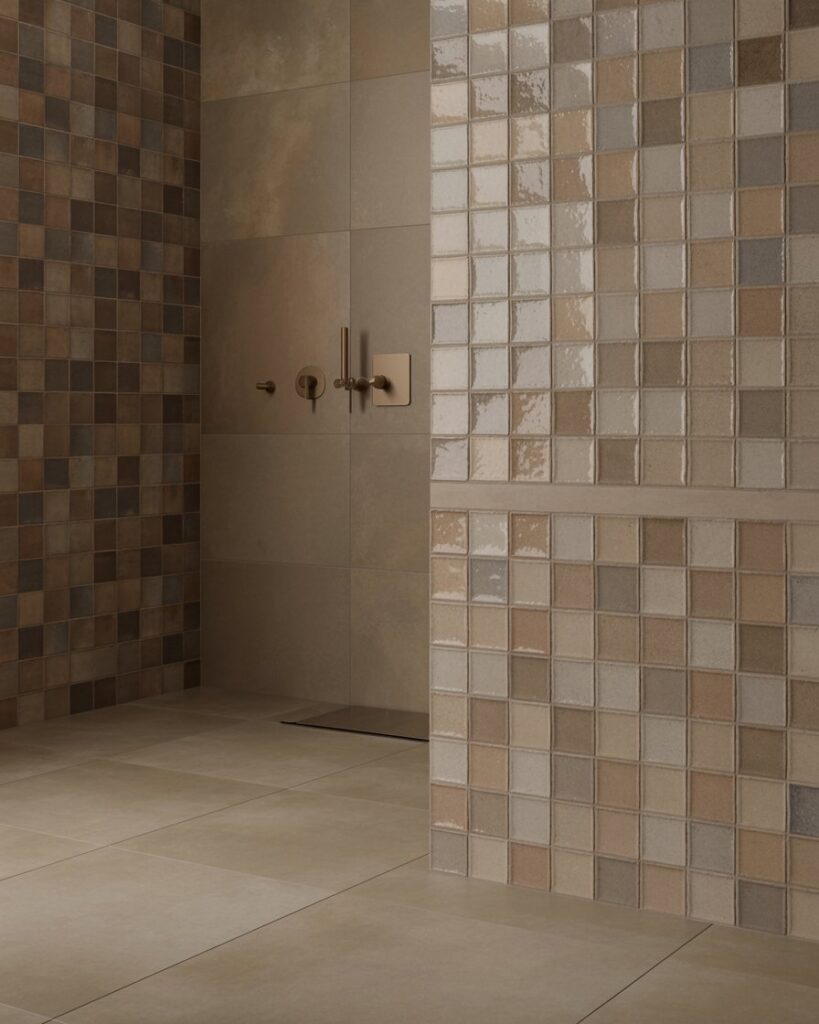
Large-format porcelain tiles in warm greige or mocha tones are a top recommendation for both floors and walls. Their scale means fewer grout lines, which reinforces the clean, seamless look of minimalist design. A matte or honed finish is almost always preferable to high-gloss in this context — it absorbs light softly, reads as more organic, and is far more forgiving to maintain.
Zellige-inspired ceramic tiles are having a major moment in 2025, and they pair exceptionally well with mocha interiors. Their slightly irregular, handmade surface catches light in a way that adds dimension without patterning. Used as an accent on a single shower wall, they deliver artisanal richness that feels collected rather than designed.
For those who prefer a more budget-conscious approach, standard subway tiles in a warm cream or putty tone — laid in a simple stack bond rather than the traditional brick pattern — maintain minimalist discipline while still conveying warmth. Pair with a tone-on-tone grout (slightly deeper than the tile) to avoid the high-contrast grid effect that can feel dated.
| Tile Type | Best Use | Finish | Budget Range |
|---|---|---|---|
| Large-format porcelain | Floors, full-height walls | Matte / honed | $$–$$$ |
| Zellige-inspired ceramic | Shower accent wall | Handmade / varied | $$$ |
| Warm cream subway | Walls, tub surround | Matte | $–$$ |
| Terrazzo (mocha tones) | Floors, vanity top | Polished | $$$–$$$$ |
| Limestone or travertine | Floors, feature wall | Honed | $$$–$$$$ |
Vanity and Storage: The Case for Mocha Cabinetry
In a minimalist bathroom, the vanity is often the single most expressive design element. It’s where you can introduce the deepest mocha tone in the room and use it as a visual anchor. A floating vanity in a warm walnut veneer or a painted finish in a muted café-brown tone is arguably the most impactful single upgrade you can make to a minimalist bath.
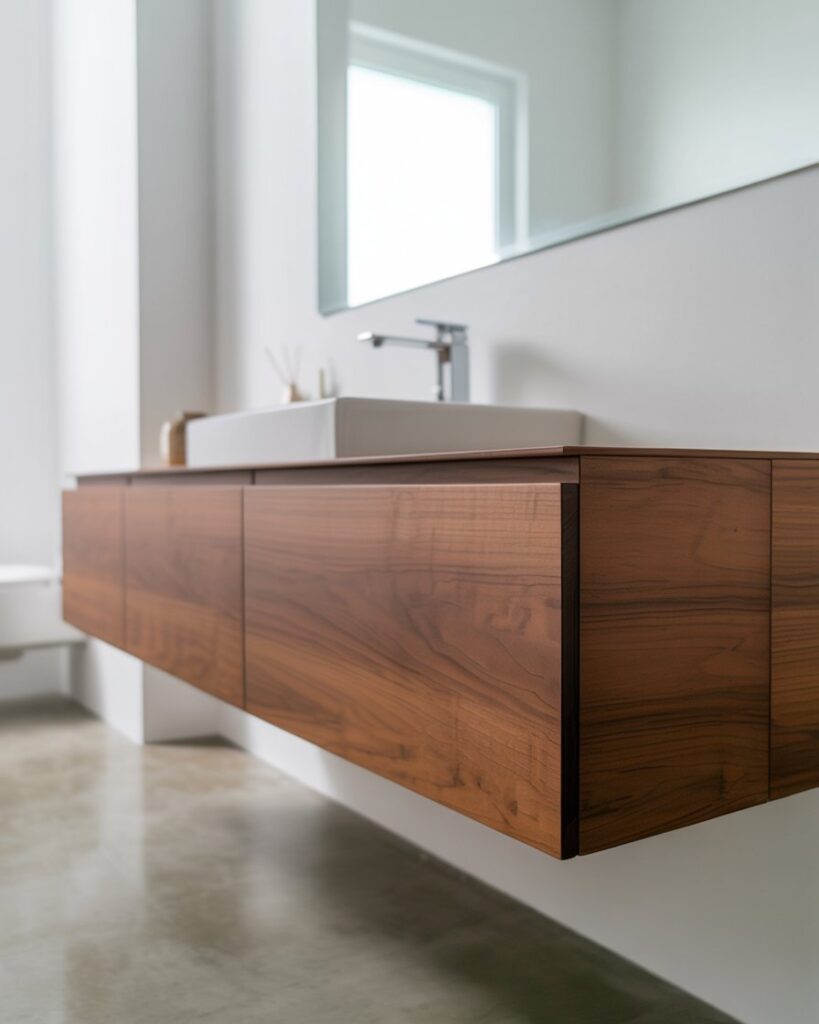
Floating vanities — those mounted off the floor — are a minimalist designer’s favorite for good reason. They create the visual impression of more floor space, keep the room feeling airy, and allow the eye to travel uninterrupted across the room. In mocha tones, they ground the space without weighing it down.
When it comes to hardware, restraint is key. Brushed brass and warm bronze are the ideal metal companions for mocha cabinetry. Both carry enough warmth to complement the palette without competing with it. Matte black is another strong choice — its coolness creates a clean contrast that keeps the overall look from feeling too sweet or monotonous.
Open shelving should be used sparingly in a minimalist bath, but a single shelf in a natural oak or mocha-stained wood can serve dual function: practical storage and warm visual interest. Keep items on display curated and cohesive — a few matching bottles, a small plant, a single candle. Clutter is the enemy of the minimalist mocha aesthetic.
“The best minimalist bathrooms feel edited, not empty. Every object that stays earns its place — both functionally and visually.”— Core principle of contemporary minimalist interior design
Fixtures and Hardware: Warmth in the Details
In minimalist design, hardware and fixtures are the jewelry of the space. They’re small in scale but enormous in impact, and in a mocha bathroom, the right finish choices are what elevate the design from pleasant to polished. The good news is that the fixture market in 2025 has never been better for warm, earth-toned bathroom aesthetics.
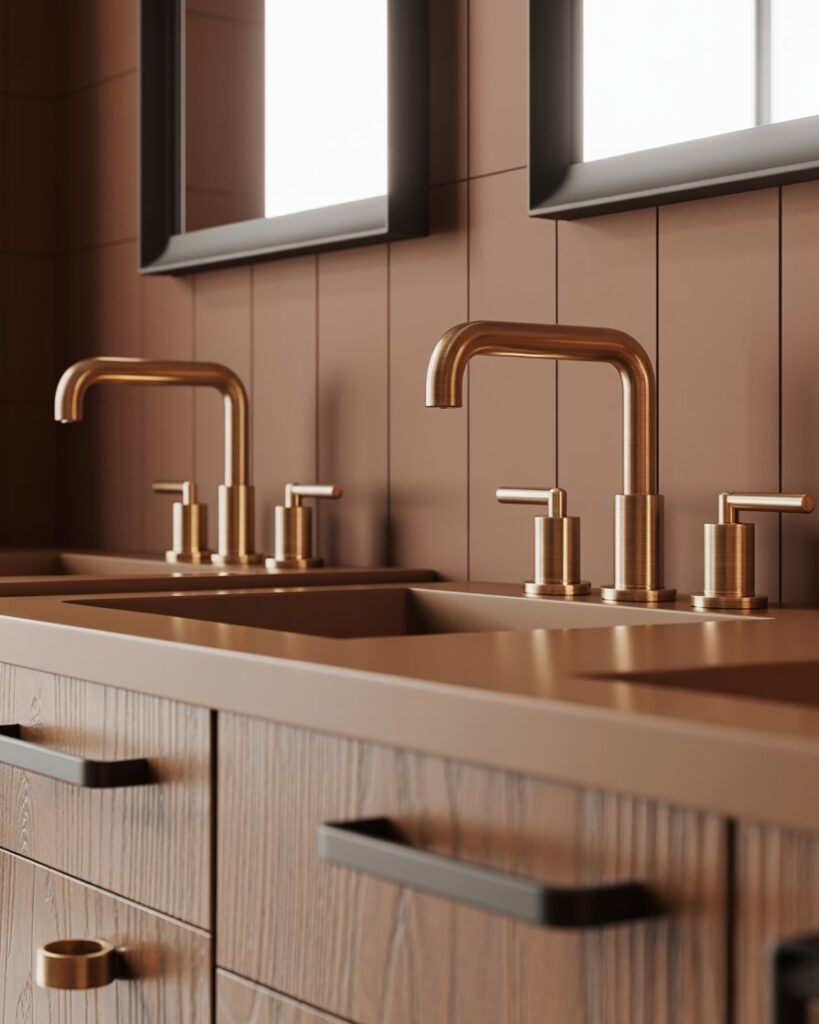
Brushed brass faucets and shower systems have become a modern classic in the warm-neutral bath, and for good reason. The muted gold tone reads as both vintage and contemporary, and it harmonizes naturally with mocha’s brown-amber undertones. Look for designs with clean geometric profiles — cylindrical spouts, lever handles, square bases — to maintain minimalist discipline in the details.
Matte black remains a perennial minimalist favorite and creates stunning contrast against lighter mocha walls and tiles. It’s an especially strong choice when your palette leans toward the lighter, creamier end of the mocha spectrum. A matte black towel bar, toilet paper holder, and mirror frame create a visual thread that ties the room together without adding color complexity.
Warm bronze and oil-rubbed copper are the more adventurous choices in this category — best for homeowners who want their bathroom to feel a little more layered and artisanal. These finishes patina beautifully over time, which aligns well with the organic, natural philosophy of a mocha-inspired space.
| Fixture Finish | Pairs Best With | Vibe |
|---|---|---|
| Brushed brass | Mid to deep mocha walls, warm wood | Modern warm, elevated |
| Matte black | Light mocha, oat, warm white | Clean contrast, contemporary |
| Warm bronze | All mocha tones, terracotta accents | Artisanal, organic |
| Satin nickel | Light mocha, warm gray | Subtle, transitional |
Pro Tip
Mix no more than two metal finishes in a single bathroom. A common mistake is introducing three or four finishes in an attempt to add personality — it reads as accidental rather than intentional. A classic combination for mocha baths: brushed brass faucets + matte black accessories, or warm bronze hardware + natural wood accents.
Lighting Design: How to Warm Up a Minimalist Bath
Lighting in a minimalist bathroom is functional first — you need good visibility for grooming tasks — but in a mocha-toned space, it’s also a critical design tool. The wrong light source can make your carefully chosen mocha palette look gray, muddy, or flat. The right one makes it glow.
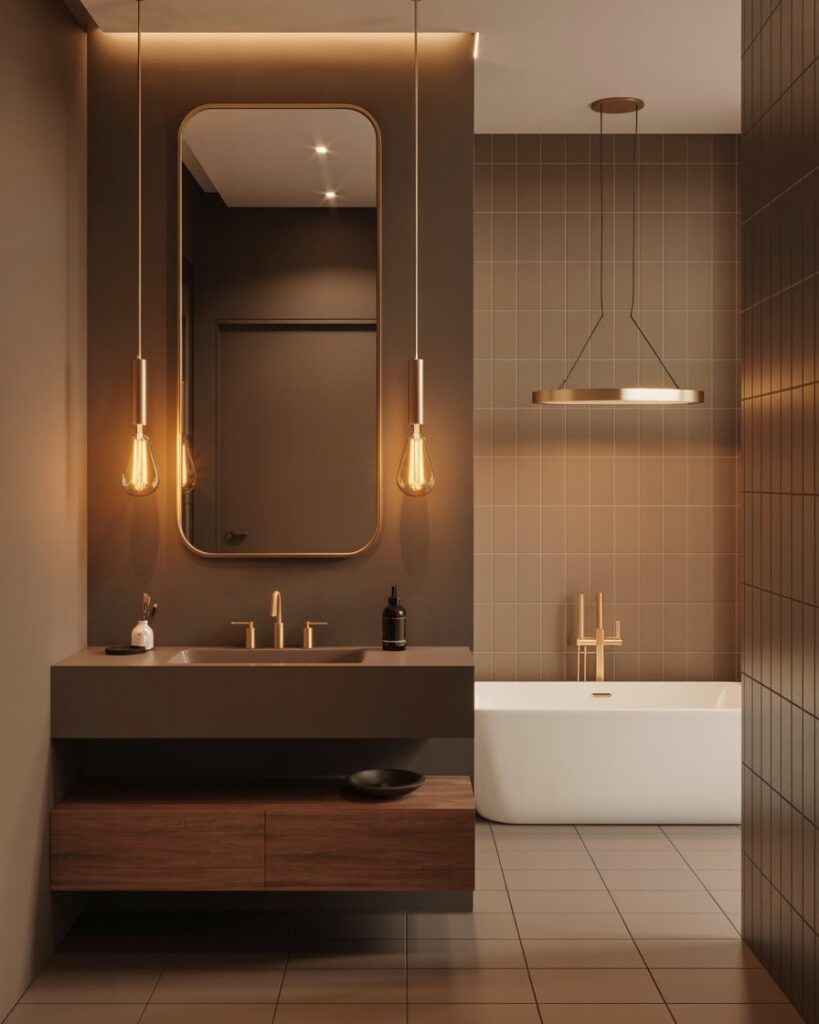
Aim for light sources with a color temperature between 2700K and 3000K in a mocha bath. This range produces the warm, incandescent-adjacent light that flatters skin tones, reads beautifully on warm-neutral surfaces, and reinforces the cozy, spa-like quality that mocha interiors aspire to. Avoid anything above 4000K (cool white or daylight) — it will strip the warmth right out of your palette.
Sconces flanking the mirror are the gold standard for bathroom lighting, and in a mocha minimalist bath, they serve the added purpose of reinforcing the warm, ambient mood. Look for fixtures with warm metal finishes (matching your hardware) and exposed bulb or globe designs that diffuse light softly.
Recessed lighting should be used judiciously — it’s functional but creates minimal warmth on its own. If you rely on recessed cans, supplement with dimmer-controlled ambient sconces or even a small chandelier or pendant over a freestanding tub to layer the light and give the space depth and drama after dark.
Textiles and Accessories: The Finishing Touches That Matter Most
This is where many bathroom renovations fall apart — the bones are beautiful, but the styling feels generic. In a mocha minimalist bath, textiles and accessories are your opportunity to layer tone, texture, and personality within a tightly controlled palette. The key is to vary texture while holding the color story steady.
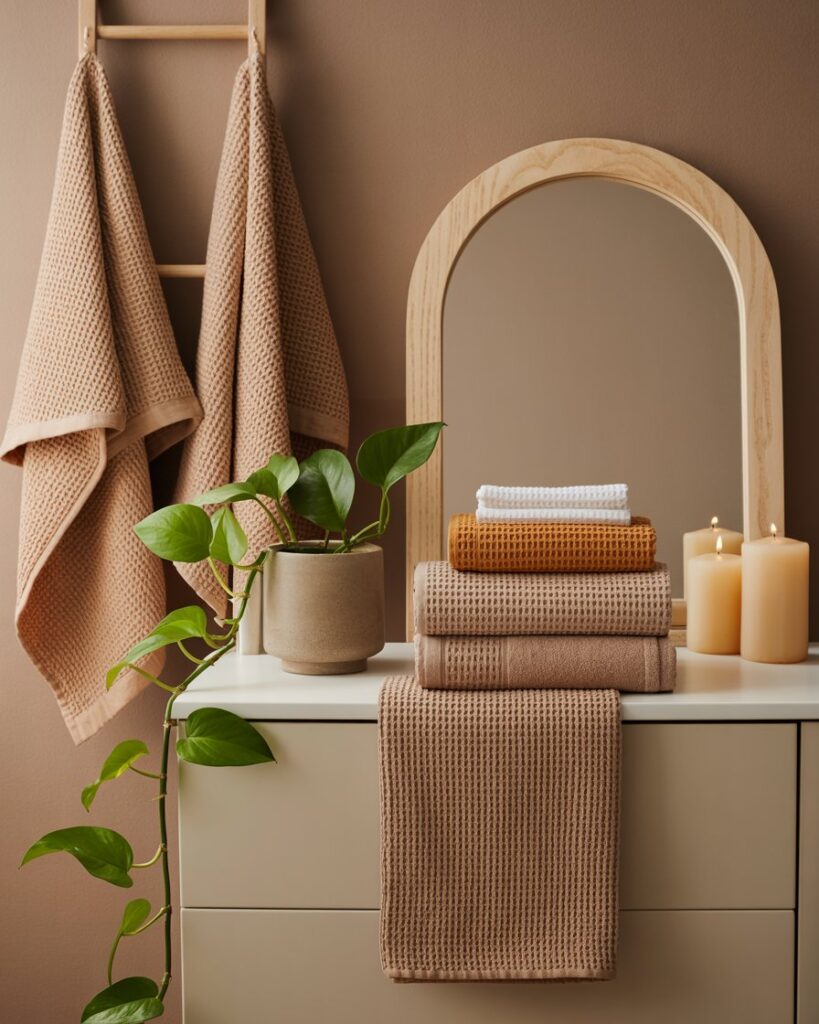
Towels are the single most impactful textile in a bathroom, and in a minimalist scheme, they should be treated like artwork. Choose towels in the same tonal family as your palette — warm whites, oat, linen, or a deeper caramel — and display them folded or rolled with precision. Waffle-weave and Turkish cotton towels photograph beautifully and have a relaxed hotel-spa quality that suits this aesthetic perfectly.
Bath mats are often an afterthought, but in a minimalist bathroom, they’re a key grounding element. A chunky-knit or ribbed cotton bath mat in a warm ivory or warm taupe adds texture at floor level and softens the visual hardness of tile. Avoid mats with decorative borders or motifs — keep them solid and sculptural.
For accessories, think botanical: a single trailing pothos, a snake plant, or a small eucalyptus cutting in a simple ceramic or clay vessel adds organic life to the space. The green of indoor plants is the perfect complement to mocha tones — it’s natural, calming, and ensures the bathroom doesn’t feel like a showroom.
Minimalist mocha accessory checklist
- Towels: Waffle or Turkish cotton in warm white, oat, or caramel tones
- Bath mat: Chunky-knit or ribbed cotton in warm neutral
- Vessels: One or two clay, ceramic, or stone containers for soap, cotton, etc.
- Mirror: Simple arch or rectangular form in natural wood or warm metal frame
- Plants: One statement plant (snake plant, pothos, or fiddle leaf) in a matte clay pot
- Candles: One or two pillar or vessel candles in unscented or lightly scented options
- Tray: A wood or travertine vanity tray to corral loose items
Budget Breakdown: Achieving the Look at Every Price Point
One of the most common misconceptions about minimalist design is that it’s expensive. In reality, the discipline of using fewer, better things can actually be more budget-friendly than decorating every surface. The mocha minimalist bath works beautifully at multiple price points — it’s about prioritizing where you invest.
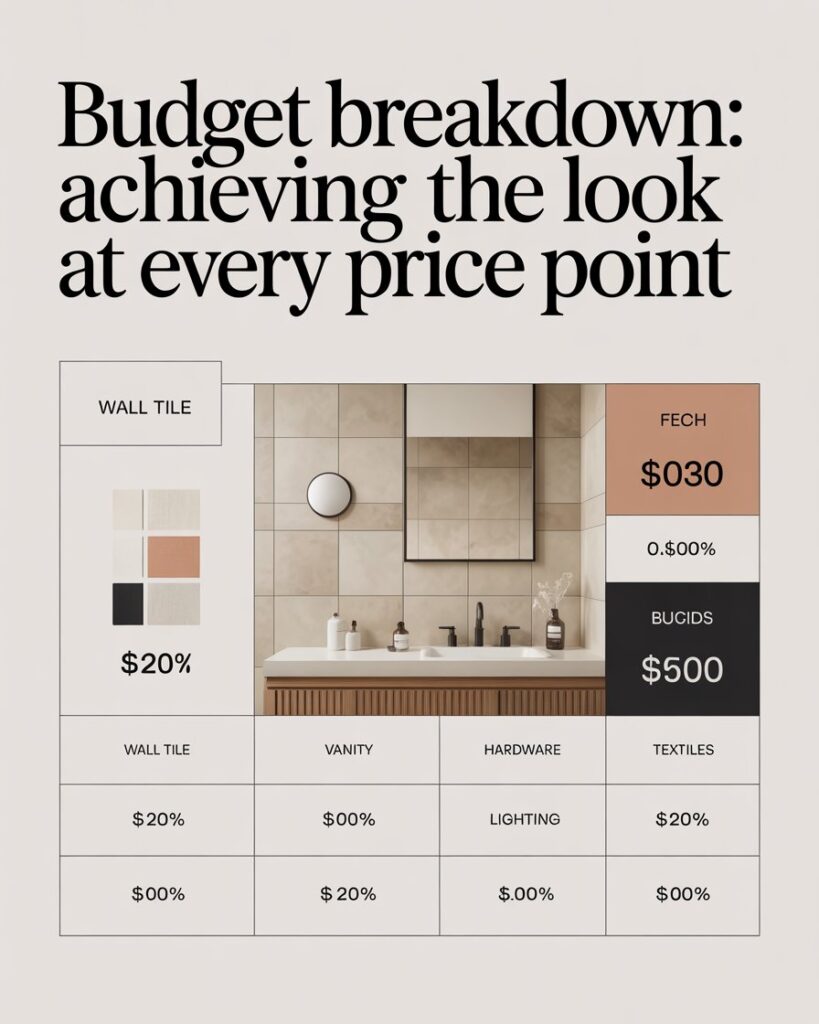
| Design Element | Budget Option | Mid-Range Option | Investment Option |
|---|---|---|---|
| Wall tile | Warm cream subway ($2–4/sq ft) | Large-format porcelain ($5–10/sq ft) | Zellige or stone ($15+/sq ft) |
| Vanity | IKEA hack in warm stain | RH or CB2 floating vanity | Custom cabinetry in walnut |
| Hardware | Amazon brushed brass set | Rejuvenation or Schoolhouse | Waterworks or Kallista |
| Lighting | Sconces from Wayfair (~$60–120 ea) | Visual Comfort or Hudson Valley | Apparatus or Roll & Hill |
| Textiles | Target waffle towels | Parachute or Boll & Branch | Sferra or Frette |
Pro Tip
If your budget is limited, invest in tile and hardware above everything else. These are the elements that are hardest to change later and make the biggest visual impact. Towels, accessories, and even lighting can be upgraded gradually over time — but the bones of the space (tile, vanity, plumbing fixtures) set the ceiling on how good the room can look.
Common Mistakes to Avoid in a Mocha Minimalist Bath
Even the best-intentioned bathroom renovations can go sideways. These are the pitfalls that interior designers see most often when homeowners attempt the mocha minimalist look on their own — and how to avoid them.
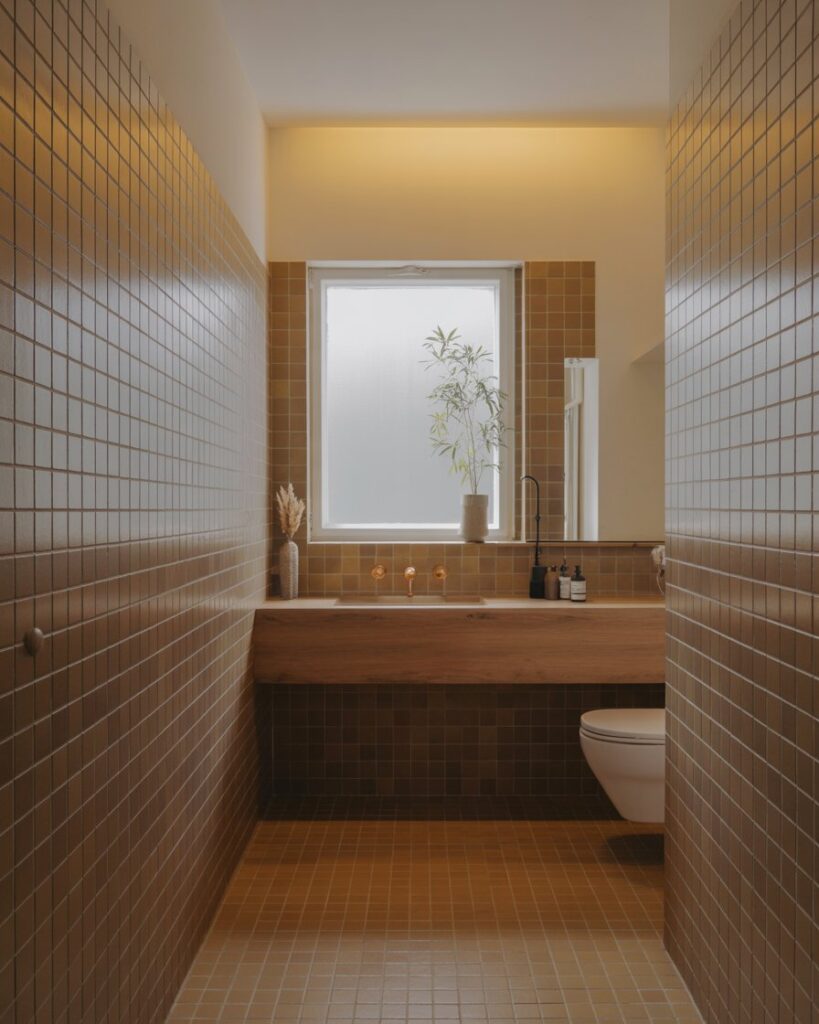
- Going too dark too fast. Deep mocha tones are beautiful, but in a small bathroom without abundant natural light, they can make the space feel cave-like. Start with lighter tones as the dominant palette and use deeper shades as accents.
- Mixing too many wood tones. Natural wood is a wonderful companion to mocha, but using four different wood tones (pale ash shelf, medium oak vanity, dark walnut floor, warm pine accessories) creates chaos. Commit to one or two wood tones and stick to them.
- Ignoring undertones. Not all whites, grays, and neutrals play nicely with mocha. Always check undertones — warm whites (with yellow or pink bases) harmonize; cool whites (with blue or green bases) clash. Test paint and tile swatches in your actual bathroom light before committing.
- Over-accessorizing. The word “minimalist” is in the design brief. Edit ruthlessly. If it doesn’t have a function or a strong aesthetic reason to exist, it probably doesn’t belong.
- Forgetting grout color. White grout on mocha tiles is a common and costly mistake — it draws attention to the grid and undermines the seamless warmth you’re trying to achieve. Match grout closely to your tile or go one shade deeper.
Final Thoughts: The Mocha Minimalist Bath as a Daily Ritual
The best bathrooms are more than functional rooms — they’re the spaces where you start and end your day, and their atmosphere directly shapes how you feel. The mocha minimalist bath achieves something rare in interior design: it’s simultaneously calming and sensual, warm and clean, simple and rich. It asks very little of you visually, but gives an enormous amount back emotionally.
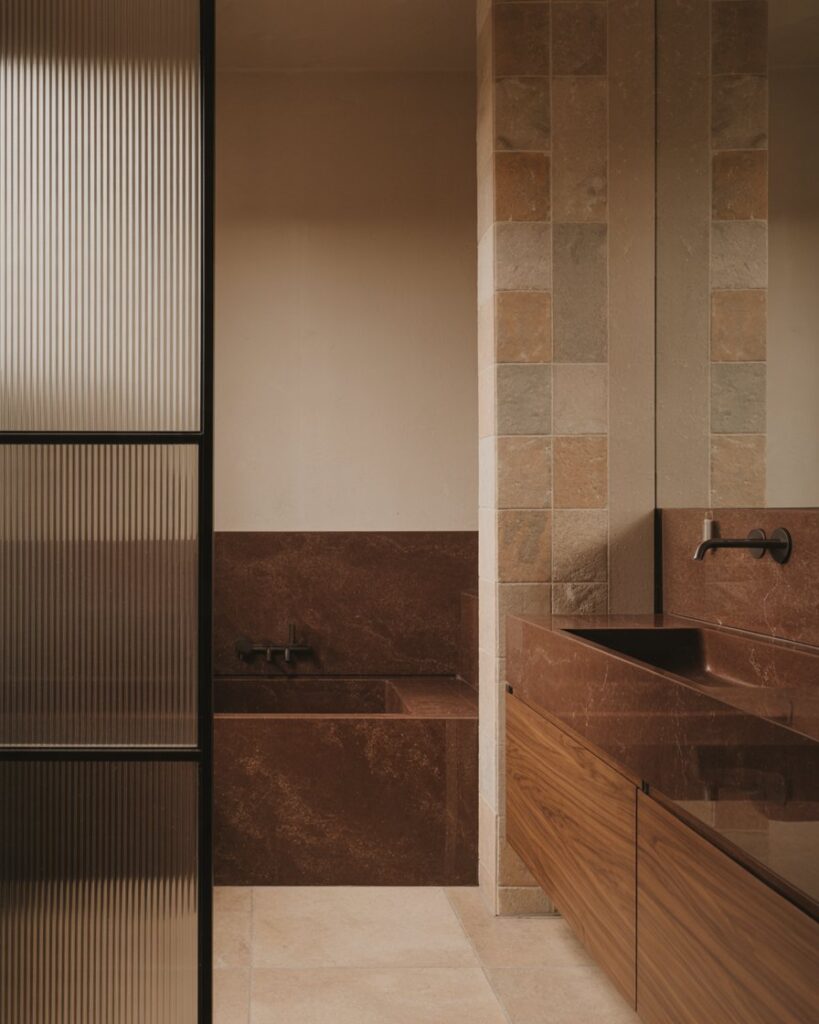
Whether you’re replacing a single vanity or undertaking a full gut renovation, the principles remain consistent: lean into warm, earthen neutrals, respect the power of restraint, invest in quality materials that reward close inspection, and let texture do the work that color and pattern cannot. The result is a bathroom that feels less like a utilitarian necessity and more like a daily retreat — and in 2025, that kind of sanctuary at home has never felt more necessary.
Explore further: Architectural Digest on bathroom trends · Houzz bathroom inspiration · The Spruce minimalist bath guide.