
If you’ve been thinking about upgrading your bathroom, there’s never been a better time to go green. Eco-friendly bathrooms — or “eco baths” — are no longer just a trend reserved for ultra-modern minimalists or off-grid homeowners. They’ve gone mainstream, and for good reason. Sustainable bathroom fixtures can dramatically reduce your water and energy consumption, lower your monthly utility bills, and contribute to a healthier planet — all while looking absolutely stunning in your home.
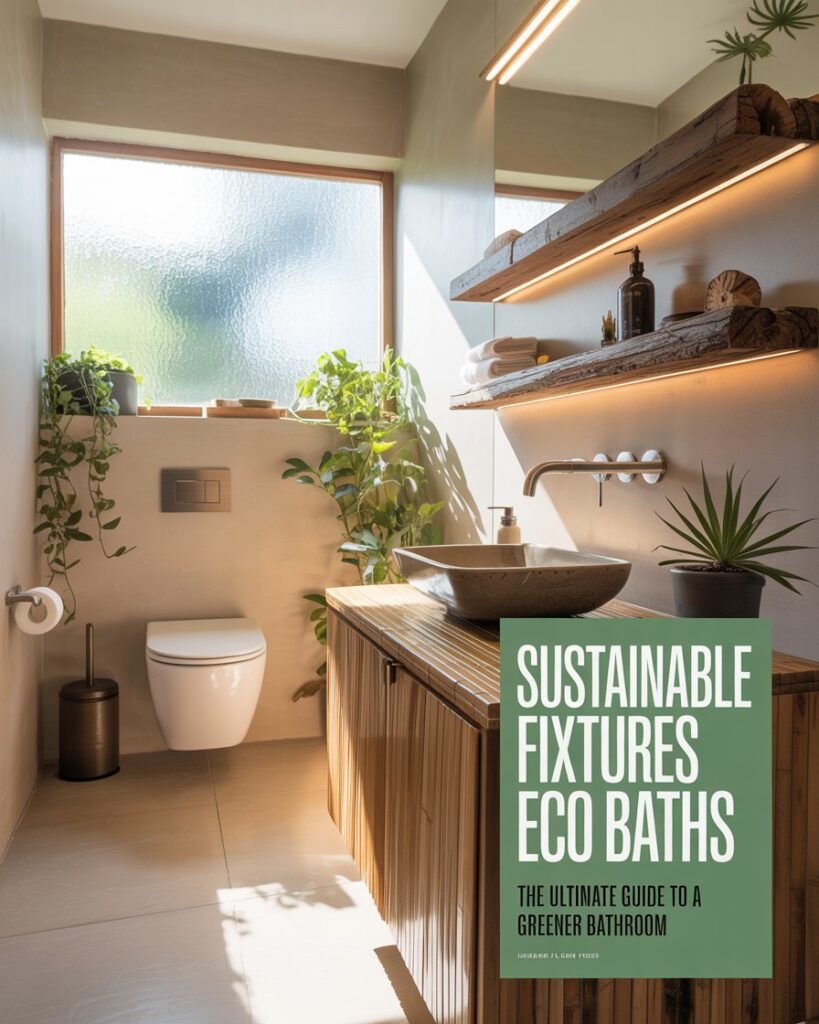
As an interior designer who works with homeowners across the United States every day, I can tell you firsthand: the most stylish bathrooms I’ve designed in the last few years have also been the most sustainable. Green design and beautiful design are not mutually exclusive — in fact, they go hand in hand. In this guide, I’ll walk you through everything you need to know about sustainable fixtures for eco baths, from water-saving faucets to energy-efficient lighting, so you can make smart, informed choices for your next bathroom renovation.Why Sustainable Bathroom Fixtures Matter More Than Ever
The bathroom is one of the most resource-intensive rooms in any American home. According to the U.S. Environmental Protection Agency (EPA), the average American family uses more than 300 gallons of water per day at home — and nearly 70% of that water use happens indoors. The bathroom alone accounts for nearly half of all indoor water consumption.
That’s a staggering number, and it means that the choices you make about your bathroom fixtures have a real, measurable impact. Switching to eco-friendly, WaterSense-certified fixtures can reduce your household’s water consumption by 20% or more without sacrificing comfort or aesthetics. Add energy-efficient lighting and low-VOC materials into the mix, and your bathroom becomes a genuine sustainability powerhouse.
Beyond the environmental benefits, sustainable bathroom design also makes financial sense. Homeowners who invest in water-efficient fixtures and green building materials typically see a return on investment within 2–4 years through reduced utility costs. And with green home features becoming increasingly desirable to buyers, eco baths can also boost your property value.
“Sustainability in bathroom design is no longer an afterthought — it’s a selling point, a design statement, and a responsibility all rolled into one.” — NKBA (National Kitchen & Bath Association)
Water-Saving Faucets and Aerators: The First Step Toward an Eco Bath
One of the easiest and most affordable ways to begin your sustainable bathroom journey is by upgrading your faucets. Standard bathroom faucets flow at 2.2 gallons per minute (GPM), but WaterSense-labeled faucets and aerators reduce that flow to 1.5 GPM or less — saving the average household nearly 700 gallons of water per year.
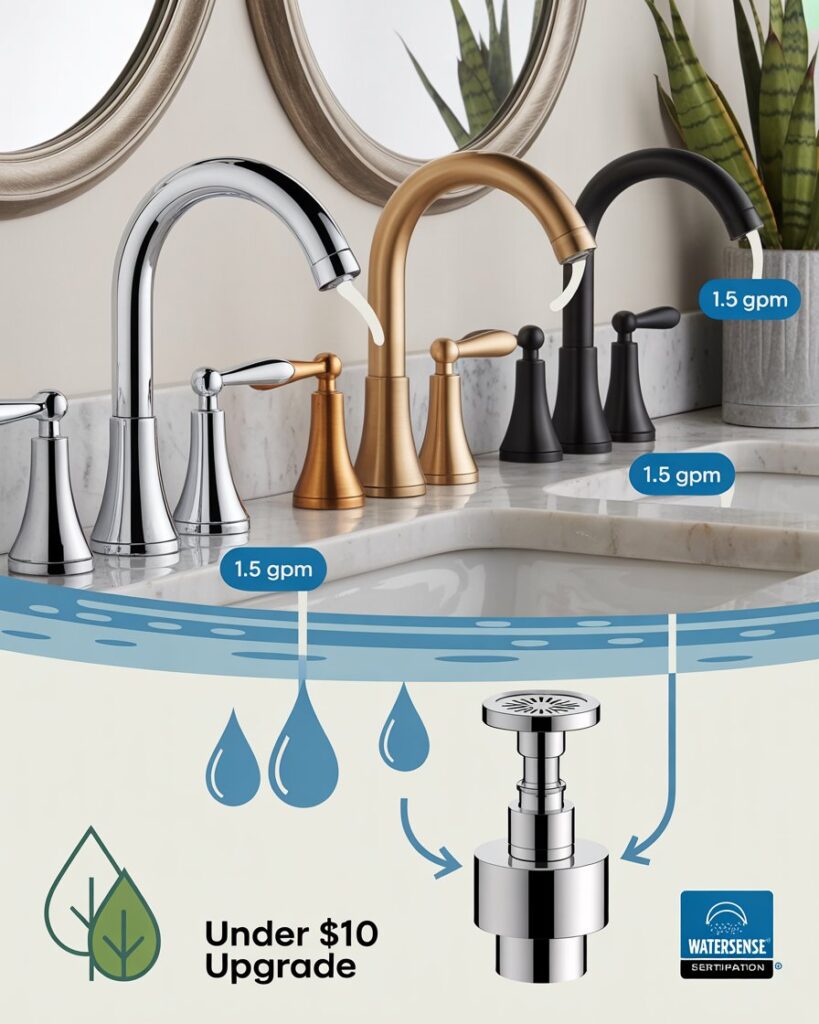
When shopping for eco-friendly faucets, look for products certified by the EPA’s WaterSense program. These faucets meet strict performance and efficiency criteria and are tested by independent third parties. Brands like Moen, Delta, and Kohler all offer beautiful WaterSense-certified collections that range from sleek contemporary chrome finishes to warm brushed gold and matte black — so your eco bath doesn’t have to look like it came out of a science lab.
Pro Tip 💡: Don’t overlook the aerator. If you’re on a tight budget and can’t replace your faucet right now, a simple low-flow aerator attachment — which typically costs under $10 — can reduce your faucet’s flow rate immediately. It’s the single most cost-effective green upgrade you can make in any bathroom.
Top Water-Saving Faucet Features to Look For
- Flow rate of 1.5 GPM or less (look for WaterSense label)
- Touchless or sensor-activated technology to eliminate water waste from running faucets
- Thermostatic controls to reach your desired temperature faster, reducing cold-water runoff
- Durable finishes like PVD (Physical Vapor Deposition) that resist corrosion and last longer, reducing replacement waste
- Lead-free brass or stainless steel construction for durability and safety
Low-Flow Showerheads: Luxury Meets Environmental Responsibility
Here’s a common misconception I hear from homeowners all the time: “Low-flow showerheads mean weak water pressure.” That used to be true. It’s simply not true anymore. Today’s high-efficiency showerheads use advanced pressure-compensating technology and aeration to deliver a powerful, satisfying shower experience while using significantly less water.
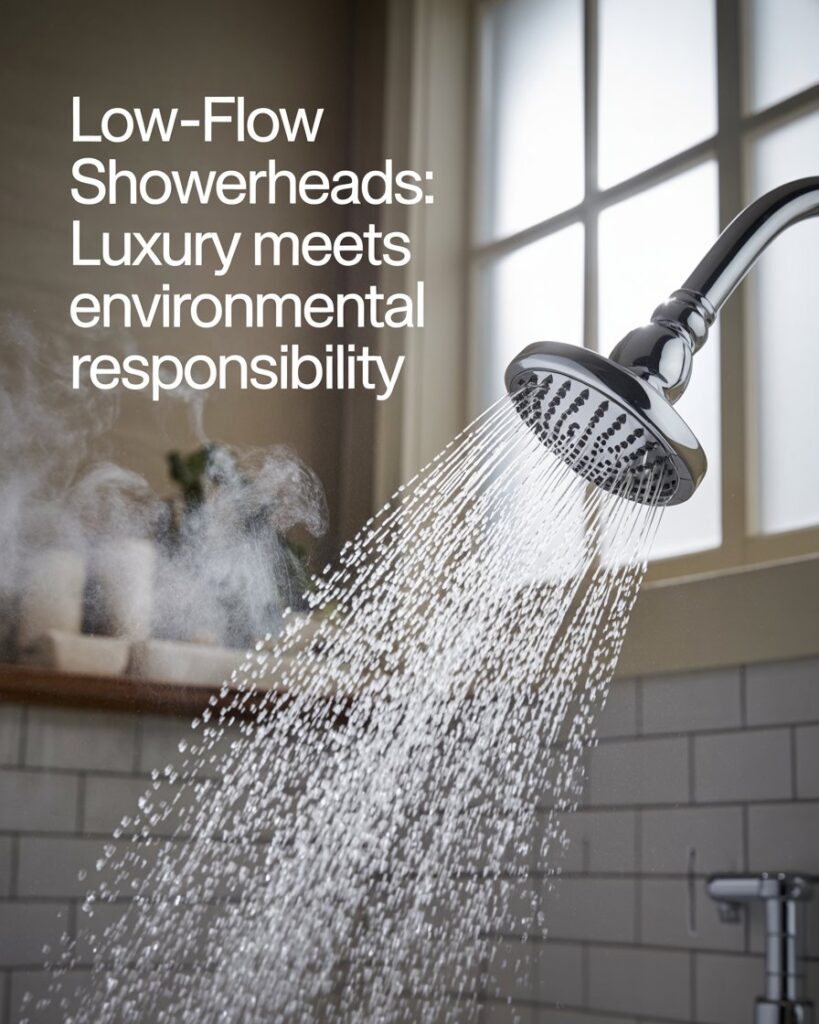
A conventional showerhead uses about 2.5 GPM, but modern low-flow models use 2.0 GPM or less — with some ultra-efficient options getting down to 1.5 GPM. For a family of four, that translates to thousands of gallons saved annually and real dollar savings on both water and water-heating costs. When you consider that heating water accounts for about 18% of a home’s energy use, a low-flow showerhead becomes both an eco and energy-saving upgrade simultaneously.
My personal favorite picks for eco-friendly showerheads that don’t compromise on the spa-like experience are the High Sierra Classic Plus (1.5 GPM, highly rated by consumers), Kohler Awaken (1.75 GPM with a stunning design), and Niagara Earth Massage (1.25 GPM — excellent for water-scarce regions). Each of these delivers excellent performance while keeping your water consumption responsibly low.
Dual-Flush and Low-Flow Toilets: The Biggest Water Savings in Your Bathroom
If you want to make the single biggest impact on your bathroom’s water footprint, replace your toilet. Toilets account for nearly 30% of indoor household water use. Older toilets manufactured before 1994 use a whopping 3.5 to 7 gallons per flush. Modern WaterSense-certified toilets use 1.28 gallons per flush or less — that’s an enormous difference.
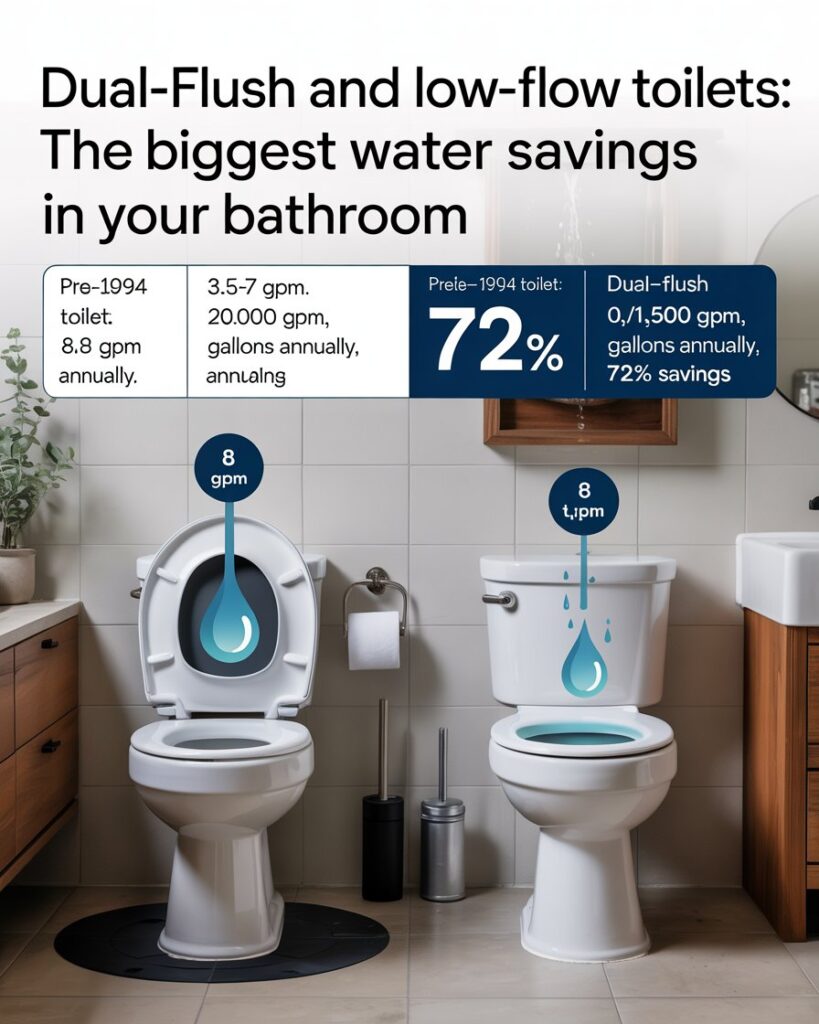
Dual-flush toilets take it a step further by offering two flush options: a half-flush for liquid waste (typically 0.8–1.0 GPM) and a full flush for solid waste (1.28 GPM). This technology is standard across Europe and Australia and is now widely available in the U.S. market. Brands like TOTO, American Standard, and Glacier Bay offer stylish dual-flush options at a range of price points.
| Toilet Type | Gallons Per Flush | Annual Water Use (Est.) | Savings vs. Old Model |
|---|---|---|---|
| Pre-1994 Toilet | 3.5 – 7 GPM | 20,000+ gallons | — |
| Standard Modern Toilet | 1.6 GPM | ~9,000 gallons | ~55% savings |
| WaterSense Certified | 1.28 GPM | ~7,300 gallons | ~63% savings |
| Dual-Flush (avg.) | 0.8 / 1.28 GPM | ~5,500 gallons | ~72% savings |
| Composting Toilet | 0 GPM | 0 gallons | ~100% savings |
Sustainable Bathtubs and Shower Pans: Material Matters
When choosing a bathtub or shower pan for your eco bath, the material you select matters as much as the fixture’s performance specifications. Many conventional acrylic and fiberglass tubs contain petrochemicals and are difficult to recycle at end of life. Sustainable alternatives include:
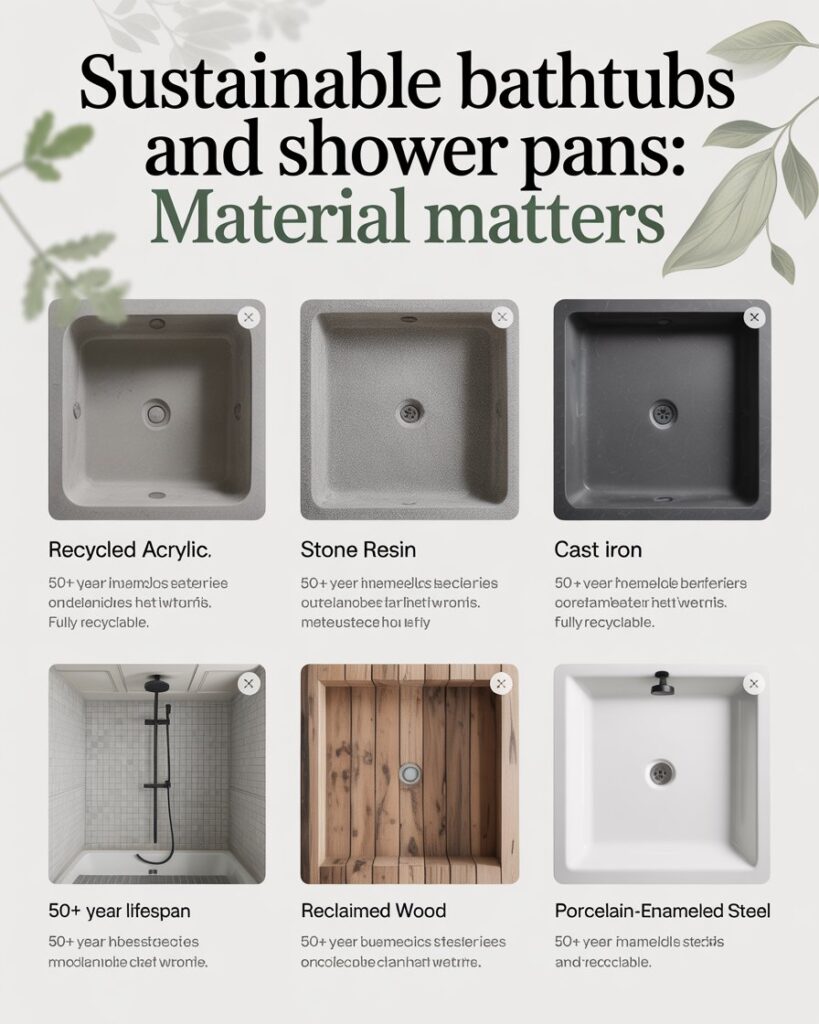
- Recycled acrylic – Some manufacturers now offer tubs made with post-industrial recycled acrylic content
- Stone resin – Durable, long-lasting composite material made partly from natural stone byproducts; brands like Badelunda and Victoria + Albert use this
- Cast iron – Incredibly durable (lasts 50+ years), often recyclable, and retains heat well (meaning less hot water needed per bath)
- Reclaimed wood soaking tubs – A niche but stunning option using sustainably harvested or reclaimed wood
- Porcelain-enameled steel – Long-lasting, non-toxic, and fully recyclable at end of life
Pro Tip 💡: When evaluating any bathroom fixture or surface, check for certifications like GreenGuard Gold, FSC (Forest Stewardship Council), or Declare Label compliance. These third-party certifications ensure that materials meet rigorous health and environmental standards — crucial for a room where humidity and ventilation are always factors.
Eco-Friendly Bathroom Vanities and Cabinetry: Think Beyond the Surface
Your vanity is the visual anchor of your bathroom, and choosing sustainable cabinetry can make a significant environmental difference. Conventional particleboard and MDF cabinetry are often manufactured with formaldehyde-based adhesives that off-gas VOCs (volatile organic compounds) into your home’s air — a particularly serious concern in a small, enclosed space like a bathroom.
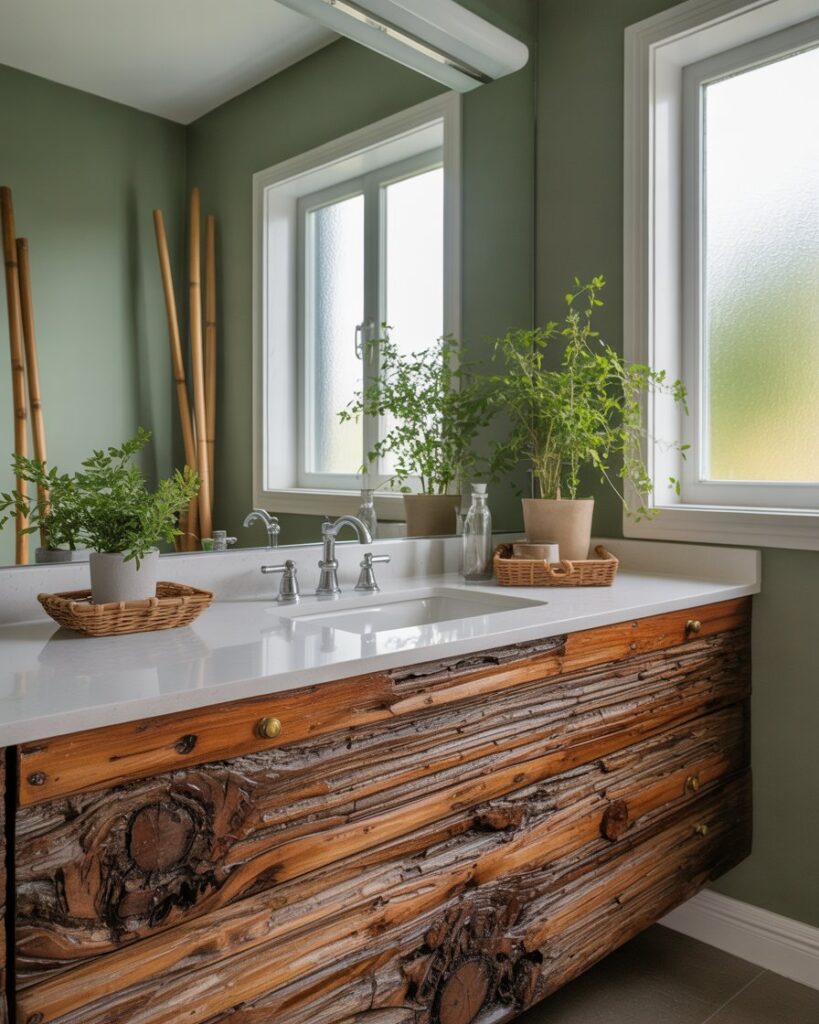
For an eco bath, look for vanities made with FSC-certified solid wood, formaldehyde-free plywood, or bamboo — which grows incredibly fast and doesn’t require replanting. Alternatively, reclaimed wood vanities are having a huge moment in interior design right now, offering beautiful character and texture while keeping perfectly good timber out of landfills. Companies like Signature Hardware, Native Trails, and James Martin Furniture offer eco-conscious vanity collections worth exploring.
Pair your sustainable vanity with low-VOC or zero-VOC paint for the walls and cabinetry finish. Major paint brands like Benjamin Moore (Natura line) and Sherwin-Williams (Harmony line) now offer zero-VOC interior paints in thousands of colors. Your bathroom will look gorgeous and your indoor air quality will thank you.
Energy-Efficient Lighting for Your Eco Bath
Lighting is often the last thing homeowners think about when designing a sustainable bathroom, but it’s one of the easiest wins available. Replacing traditional incandescent or halogen bulbs with LED lighting immediately reduces energy consumption by 75–80%. LEDs also last 15–25 times longer than incandescent bulbs, dramatically reducing replacement frequency and waste.
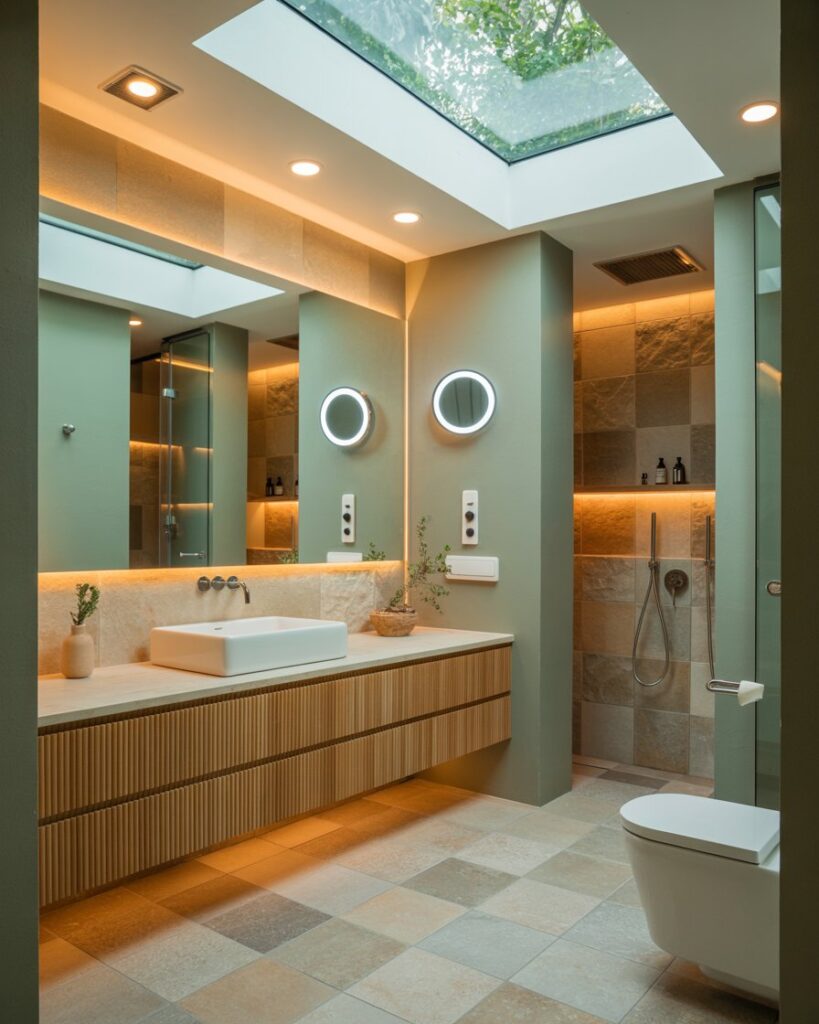
For eco baths, consider these lighting strategies:
- Layered LED lighting — Combine ambient, task (vanity mirror), and accent lighting with LEDs for a spa-like atmosphere at minimal energy cost
- Dimmer switches — Allow you to use only as much light as you need, cutting energy use further
- Motion-sensor lighting — Ideal for bathrooms used by children or in guest baths; lights automatically shut off when the room is empty
- Skylights or solar tubes — Maximize natural daylight, reducing reliance on artificial lighting entirely during daytime hours
- Smart lighting systems — Compatible with Alexa, Google Home, or Apple HomeKit; schedule and automate bathroom lighting for maximum efficiency
“The bathroom is where most families start and end their day — making it the ideal room to embed sustainable habits into your daily routine through thoughtful design.” — Green Building Council (USGBC)
Sustainable Flooring for Eco Baths: Beauty from the Ground Up
The floor sets the tone for your entire bathroom, and sustainable flooring options have never been more attractive or accessible. Here’s a quick comparison of the most popular eco-friendly bathroom flooring materials:
| Flooring Material | Eco Rating | Water Resistance | Durability | Price Range |
|---|---|---|---|---|
| Recycled Glass Tile | ⭐⭐⭐⭐⭐ | Excellent | High | $$$ |
| Bamboo (sealed) | ⭐⭐⭐⭐ | Good | High | $$ |
| Cork | ⭐⭐⭐⭐ | Moderate (needs sealing) | Medium | $$ |
| Reclaimed Wood | ⭐⭐⭐⭐ | Low-Moderate | High | $$$ |
| Porcelain Tile (recycled content) | ⭐⭐⭐⭐ | Excellent | Very High | $$ |
| Concrete (polished) | ⭐⭐⭐ | Good (when sealed) | Very High | $$-$$$ |
My top recommendation for most American homeowners? Recycled glass tile or porcelain tile with recycled content — both are stunning, incredibly durable in wet environments, and widely available at major retailers like The Home Depot, Lowe’s, and specialty tile shops.
Smart Water Management: Technology Meets Sustainability
Modern smart home technology is a powerful ally for eco bath design. Smart water monitors like the Flume 2 or Flo by Moen can be installed on your home’s main water line to track bathroom water usage in real time, detect leaks, and send alerts to your smartphone. A single undetected toilet leak can waste up to 200 gallons of water per day — smart monitoring puts an end to that.
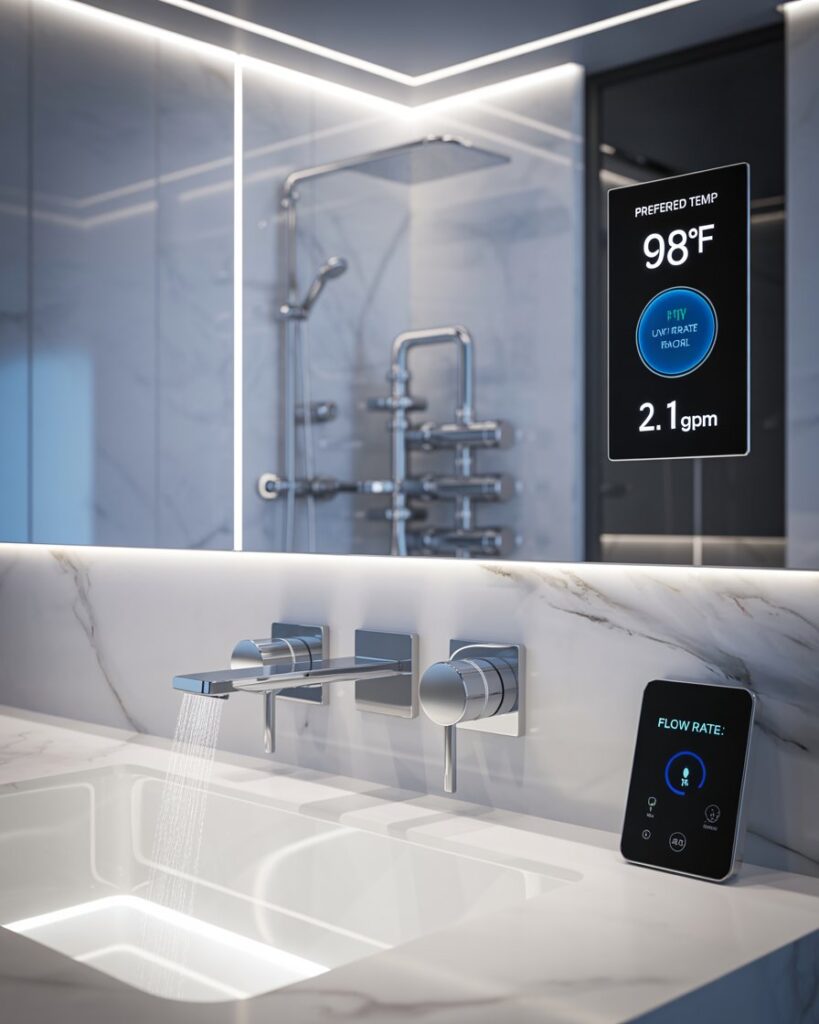
Touchless faucet technology and thermostatic shower systems are also worth the investment. A thermostatic system like the Kohler DTV+ Digital Interface or Moen U by Moen Smart Shower lets you pre-set your preferred water temperature and flow rate, eliminating the minutes of cold water running down the drain while you wait for it to warm up. These systems can reduce shower water waste by 20–30%.
For a truly next-level eco bath, consider a greywater recycling system — technology that captures water from your sink and shower drains and repurposes it for toilet flushing. While these systems require professional installation, they can reduce overall household water consumption by up to 30% and are eligible for rebates in many U.S. states.
Eco Bath Certification Programs Worth Knowing
If you’re serious about creating a certified green bathroom, these programs can guide your choices and even unlock rebates and incentives:
- EPA WaterSense — The gold standard for water-efficient fixtures in the U.S.
- LEED Certification — U.S. Green Building Council’s comprehensive green building framework
- GreenGuard Gold — Ensures low chemical emissions from building materials and fixtures
- ENERGY STAR — For energy-efficient ventilation fans, lighting, and water heaters
- Declare Label — Full ingredient transparency for building products
Final Thoughts: Your Eco Bath Is an Investment in the Future
Designing a sustainable bathroom doesn’t mean sacrificing style, comfort, or luxury. It means making smarter choices — choosing fixtures and materials that work with the planet rather than against it, that reduce waste, conserve resources, and create a healthier living environment for your family.
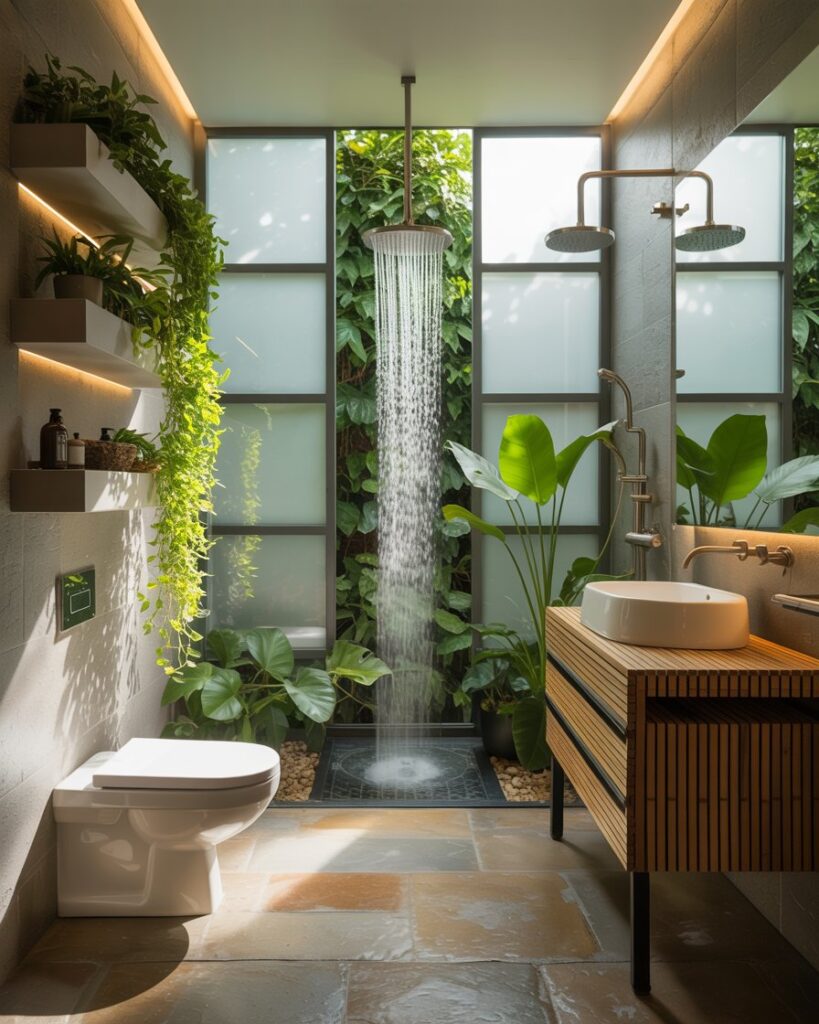
Start small if you need to. Swap out your showerhead. Install a low-flow aerator. Replace your bulbs with LEDs. Then, as your budget allows, layer in larger upgrades: a WaterSense toilet, a sustainable vanity, eco-friendly flooring, smart water monitoring. Every single change adds up, and the cumulative impact of millions of American homeowners making these choices is genuinely transformative.
The most beautiful bathroom I’ve ever designed wasn’t the most expensive one — it was the most intentional one. It was thoughtful, it was sustainable, and it was a joy to be in every single day. That’s what an eco bath can be for you, too.
Ready to start your eco bath transformation? Share this article with a friend who’s planning a bathroom renovation, or drop your questions in the comments below. Let’s build greener homes together.
Related Reading:
- WaterSense Partner Products – EPA
- NKBA Green Design Resources
- Energy.gov – Water Heating Efficiency Tips