
Small bathrooms can feel like a design puzzle — tight square footage, limited natural light, and the constant challenge of making everything feel open and airy. But here’s the secret most homeowners overlook: the right mirror doesn’t just reflect your face — it transforms your entire space. As an interior designer who has worked on hundreds of bathroom renovations across the US, I can tell you that strategic mirror placement is the single most cost-effective upgrade you can make in a small bath. Whether you’re working with a 40-square-foot powder room or a compact master bath, mirrors can visually double your light, create the illusion of depth, and turn a cramped space into something that genuinely feels luxurious.
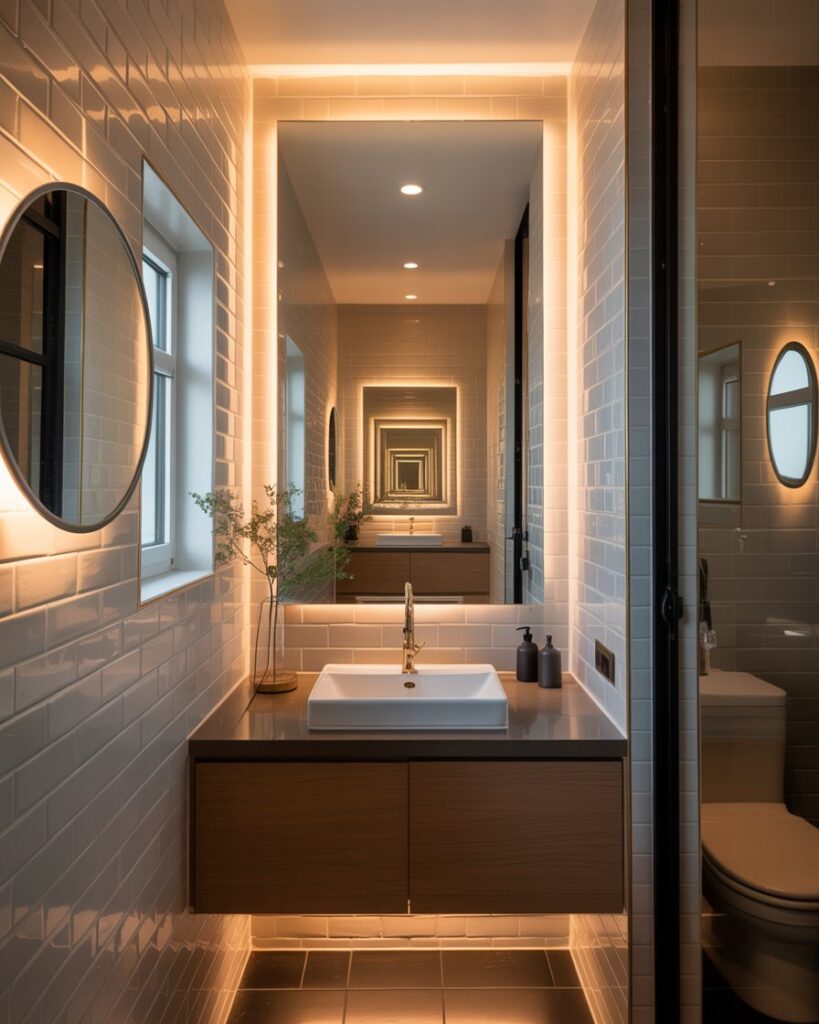
In this guide, I’m walking you through everything — from how mirrors actually work with light physics to specific product types, placement strategies, and designer-approved styling tips that work in real American homes.
How Mirrors Actually Amplify Light in Small Bathrooms
Before we dive into styles and shopping tips, it’s worth understanding why mirrors work so powerfully in light-challenged spaces. A mirror doesn’t create light — it bounces and multiplies existing light sources, whether that’s sunlight streaming through a frosted window or the warm glow of your vanity sconces.
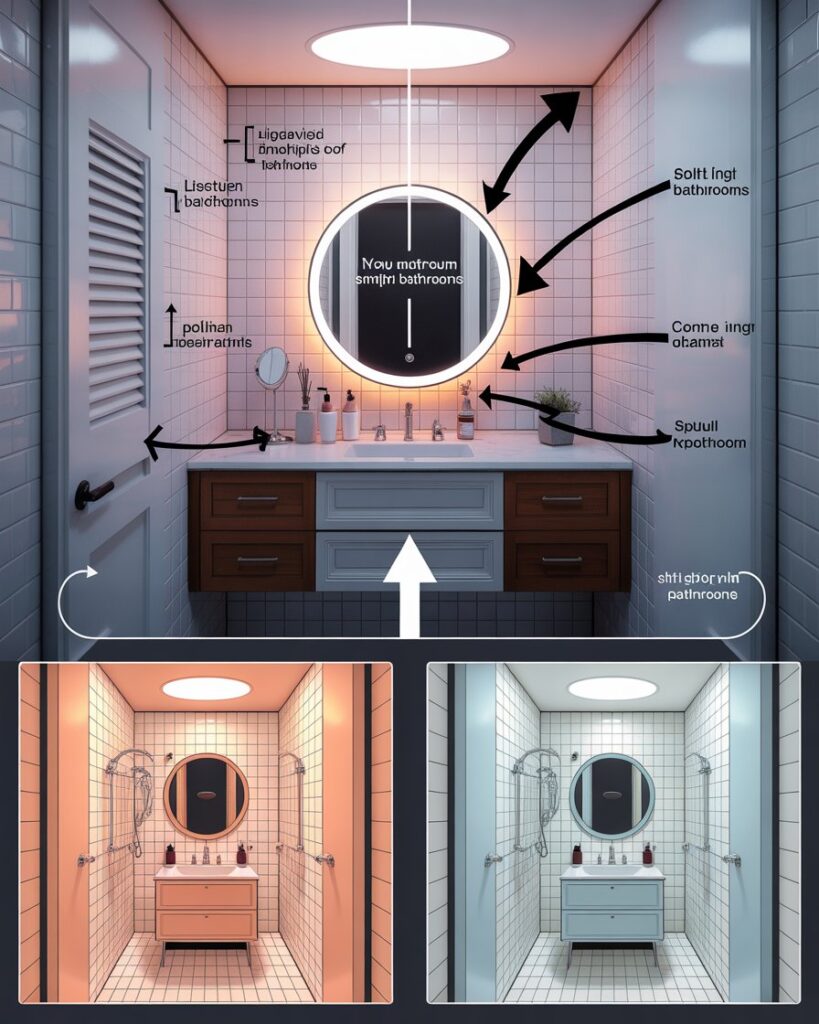
When light hits a mirror’s reflective surface, it scatters back into the room at various angles, illuminating corners and walls that would otherwise sit in shadow. In a small bathroom, where every square foot counts, this effect is especially dramatic. A well-placed large mirror can make a 50-square-foot bathroom feel nearly twice its actual size because the reflected depth fools the eye into perceiving more space.
The key variables that determine how effectively a mirror amplifies light are its size, placement, shape, and frame finish. Each of these factors plays a distinct role, and getting them right is what separates a good bathroom from a genuinely stunning one.
The Best Types of Mirrors for Light-Boosting in Small Baths
Not all mirrors are created equal when it comes to maximizing light. Here’s a breakdown of the most effective options for compact American bathrooms:
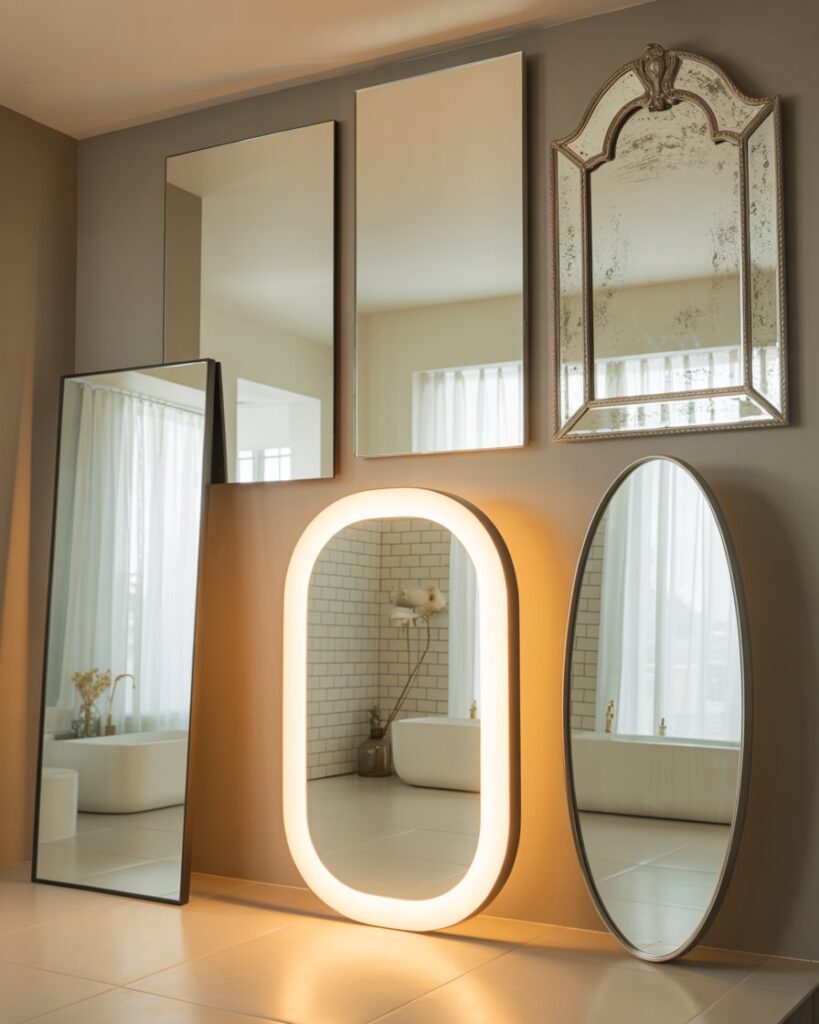
1. Full-Length Vanity Mirrors (Wall-to-Wall)
A mirror that spans the full width of your vanity wall is arguably the most powerful light-doubling tool available. By eliminating the visual break between the mirror edge and the wall, you create a seamless reflective surface that captures light from every angle — your overhead fixture, your side sconces, and any natural light from windows or skylights.
Best for: Narrow bathrooms, galley-style baths, and any space where the vanity wall is the primary light wall.
2. Frameless Mirrors
Frameless mirrors have a sleek, modern aesthetic, but their real superpower in small bathrooms is the absence of a visual boundary. A thick frame — even a beautiful one — creates a “box” that contains the reflection. A frameless mirror, by contrast, lets the reflective surface blend into the room, creating a more seamless illusion of depth.
3. Backlit LED Mirrors
One of the biggest trends in American bathroom design right now, backlit mirrors combine a reflective surface with built-in illumination. The soft halo of light around the mirror’s perimeter eliminates harsh shadows on the face while simultaneously casting a warm glow across the entire bathroom. They serve double duty as both a mirror and a light fixture, making them ideal for small baths where ceiling fixtures alone aren’t enough.
4. Antique or Mercury Glass Mirrors
If your style leans more traditional or eclectic, antique-finish mirrors (sometimes called mercury glass mirrors) offer a softer, more atmospheric reflection. While they don’t amplify light with the same intensity as a clear, polished mirror, they add warmth and visual texture that makes a small bathroom feel curated rather than cramped.
5. Round and Arch-Top Mirrors
Round mirrors are having a serious moment in US interior design, and for good reason. Their curved shape softens the angular lines of a small bathroom, while their compact footprint allows you to layer multiple mirrors for a collected, gallery-style look. Arch-top mirrors bring in a subtle architectural reference that adds height to low-ceilinged baths.
Mirror Placement Strategies That Professional Designers Use
“The placement of a mirror is just as important as the mirror itself. A beautiful mirror hung in the wrong spot is a wasted opportunity.” — Interior Design Principle
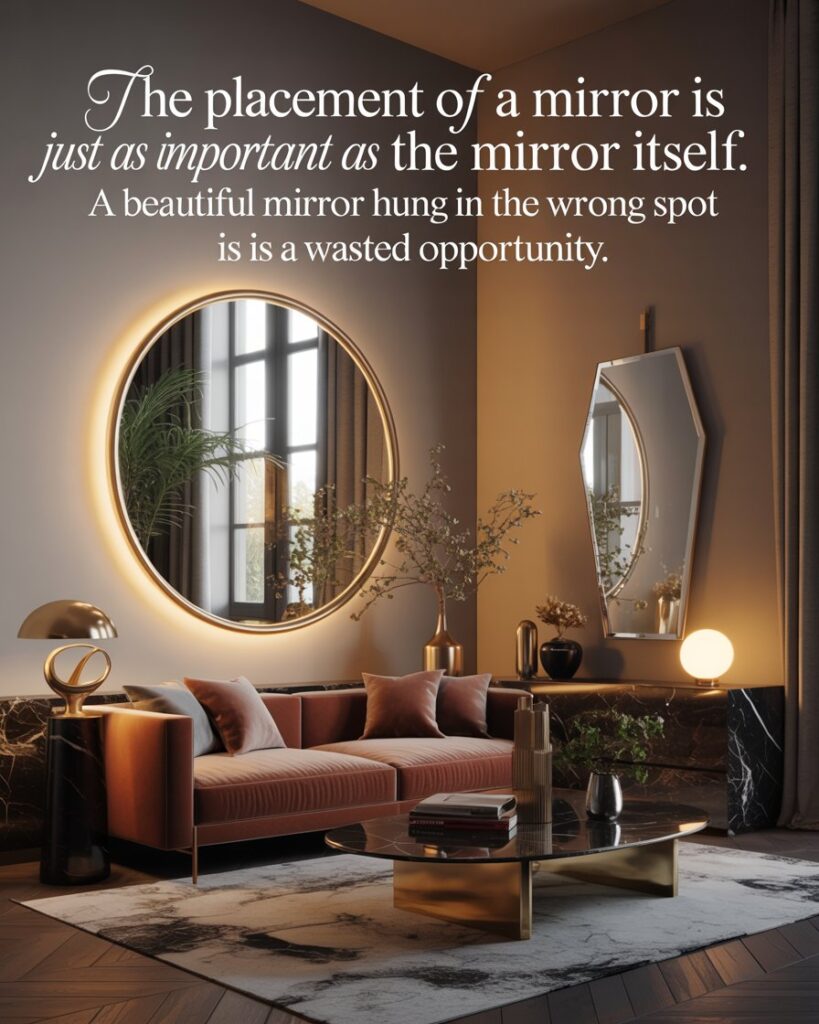
Getting placement right is where most homeowners leave value on the table. Here are the strategies I use in my own client projects:
Opposite a Window
This is the golden rule of mirror placement for light amplification. Position a mirror directly across from any natural light source — a window, a skylight shaft, or even a glass block wall — and it will bounce that light back across the full length of the bathroom. Even a small frosted window can flood a dark bath with reflected daylight when a large mirror faces it.
At Eye Level and Above
Hanging a mirror too low cuts off the reflection of your upper walls and ceiling, losing valuable light-amplifying real estate. Aim to have the top of your mirror reach as close to the ceiling as practically possible. In bathrooms with 8-foot or taller ceilings, consider mirrors that extend from just above the backsplash to within a few inches of the ceiling trim.
Flanking Light Sources, Not Competing With Them
If you have sconces on either side of your vanity mirror, make sure the mirror sits between the light sources — not behind or above them. This placement ensures the sconces light both the mirror and the surrounding walls simultaneously, creating a layered, glowing effect rather than a single bright spot in a dark room.
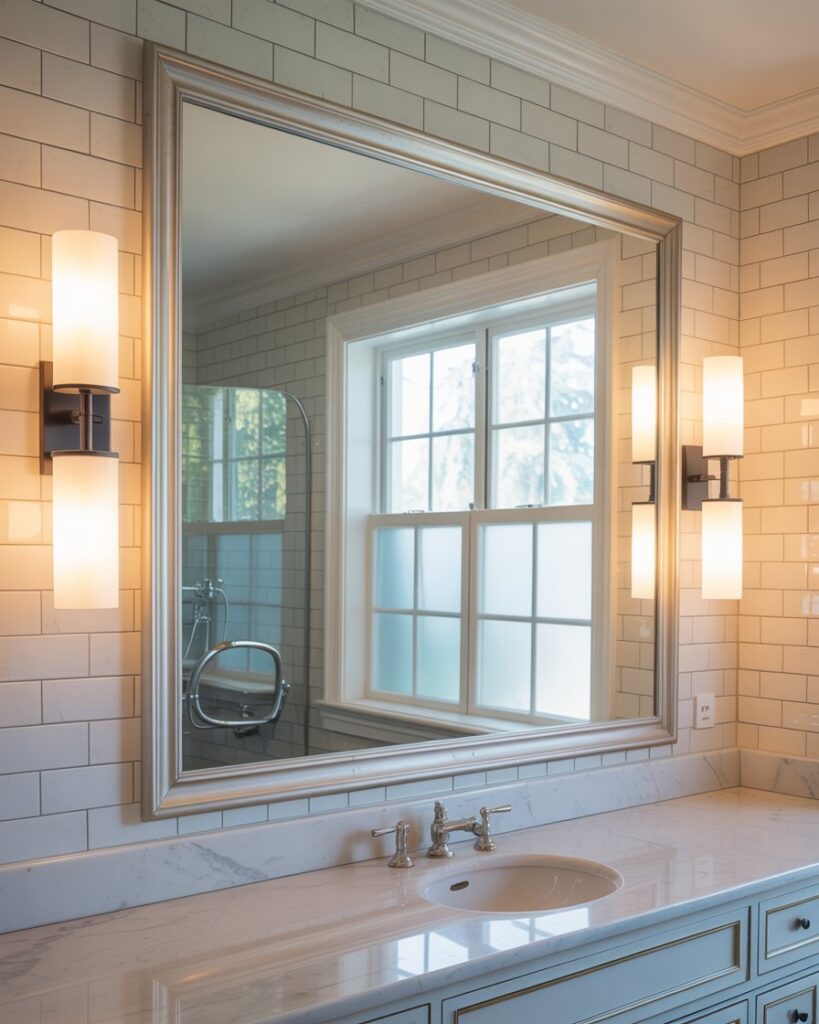
💡 PRO TIP: The “Double Mirror” Technique
One of my favorite tricks for small bathrooms is what I call the double mirror technique: install your primary vanity mirror as large as your wall allows, then add a smaller decorative mirror on an adjacent wall — perhaps above a toilet or beside a door. When light bounces between two reflective surfaces, it creates a secondary “echo” of light that makes the room feel remarkably larger. Use mirrors with complementary but slightly different finishes — for example, a frameless vanity mirror paired with a round brass-framed accent mirror — to add visual interest without cluttering the space.
Mirror Size Guide for Small Bathrooms
Choosing the right size mirror is critical. Go too small and the mirror feels like an afterthought; go too large and it can overwhelm the space or cover useful storage. Use this chart as your starting point:
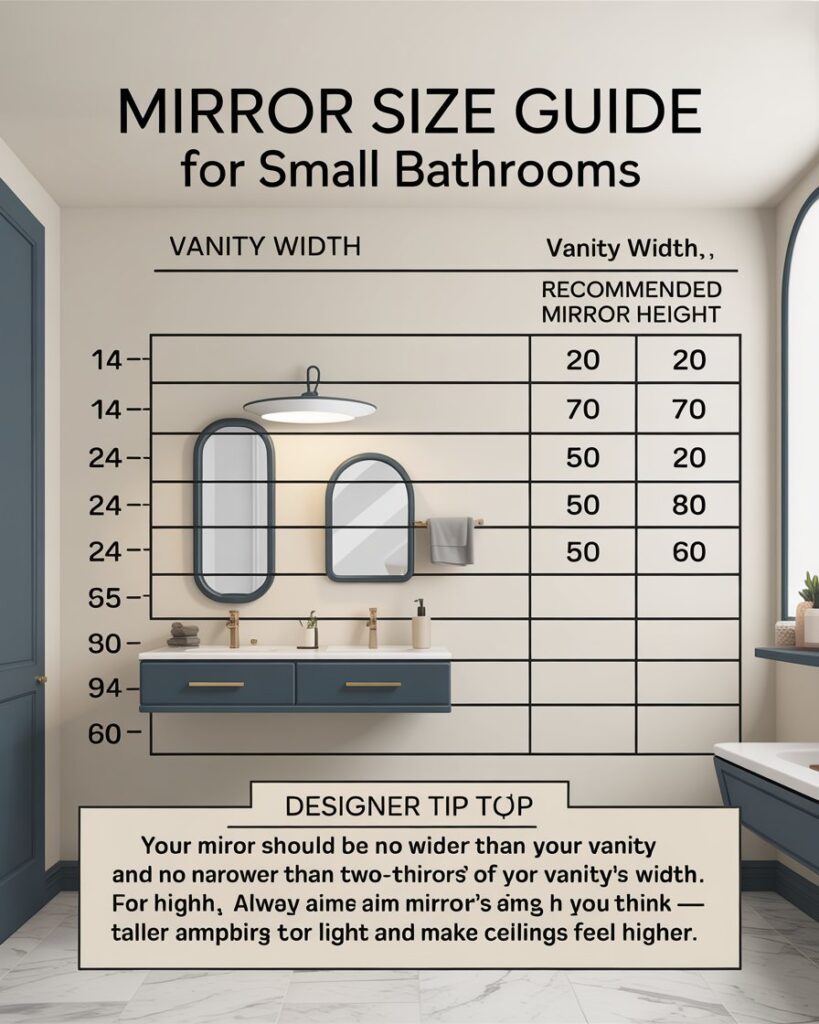
| Vanity Width | Recommended Mirror Width | Recommended Mirror Height |
|---|---|---|
| 24 inches | 20–22 inches | 28–32 inches |
| 30 inches | 26–28 inches | 30–36 inches |
| 36 inches | 30–34 inches | 32–40 inches |
| 48 inches | 44–46 inches | 36–48 inches |
| 60 inches (double vanity) | 54–58 inches OR two 24″ mirrors | 36–48 inches |
Designer Rule of Thumb: Your mirror should be no wider than your vanity and no narrower than two-thirds of your vanity’s width. For height, always aim higher than you think — taller mirrors amplify more light and make ceilings feel higher.
Frame Finishes That Maximize Light Reflection
The frame finish on your mirror affects not just aesthetics, but how much warmth or brightness it adds to the room. Here’s how popular finishes perform in small bathrooms:
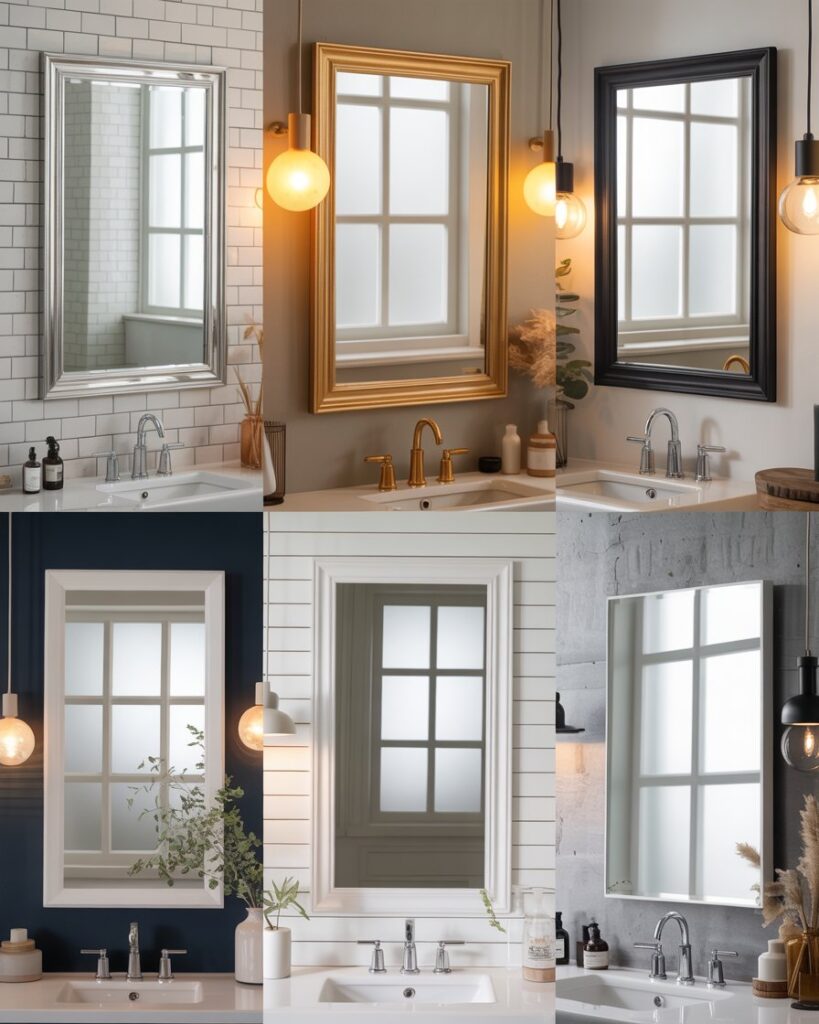
- Polished Chrome / Nickel: Reflects the most light; crisp and cool-toned; pairs beautifully with white tile and gray walls — a classic American bathroom combo.
- Brushed Gold / Brass: Reflects warm, amber-toned light; trending strongly in 2024–2025; works especially well with warm white walls and wood vanity finishes.
- Matte Black: Absorbs more light than metallic finishes; best used in bathrooms with abundant natural light where the contrast adds drama rather than darkness.
- White or Light Wood: Soft and airy; adds a Scandinavian or coastal cottage feel; ideal for small bathrooms that rely on an all-white palette to feel open.
- Frameless (no frame): Maximizes perceived size and light reflection; the most versatile option across contemporary, transitional, and minimalist styles.
Lighting and Mirror Pairings: Getting the Combination Right
A mirror alone won’t save a poorly lit bathroom. The most effective small bathroom transformations combine strategic mirror selection with equally thoughtful lighting. Here are the pairings I recommend most often to my clients:
Sconces + Large Vanity Mirror
The classic pairing for a reason. Wall sconces mounted at eye level on either side of a large mirror provide shadow-free, even illumination that flatters faces and fills the room with warm light. Choose sconces with upward-facing shades to throw additional light onto the ceiling.
Recessed Ceiling Lights + Backlit LED Mirror
For bathrooms without room for sconces, a backlit mirror combined with a single recessed overhead light creates a layered effect. The backlit mirror handles task lighting while the overhead fixture provides ambient fill.
Natural Light + Frameless Mirror Opposite Window
If you’re lucky enough to have a window in your small bath, maximize it with a large frameless mirror positioned directly across from it. This single change can reduce or even eliminate the need for daytime artificial lighting.
Common Mirror Mistakes to Avoid in Small Bathrooms
Even experienced decorators make these errors. Steer clear of these pitfalls:
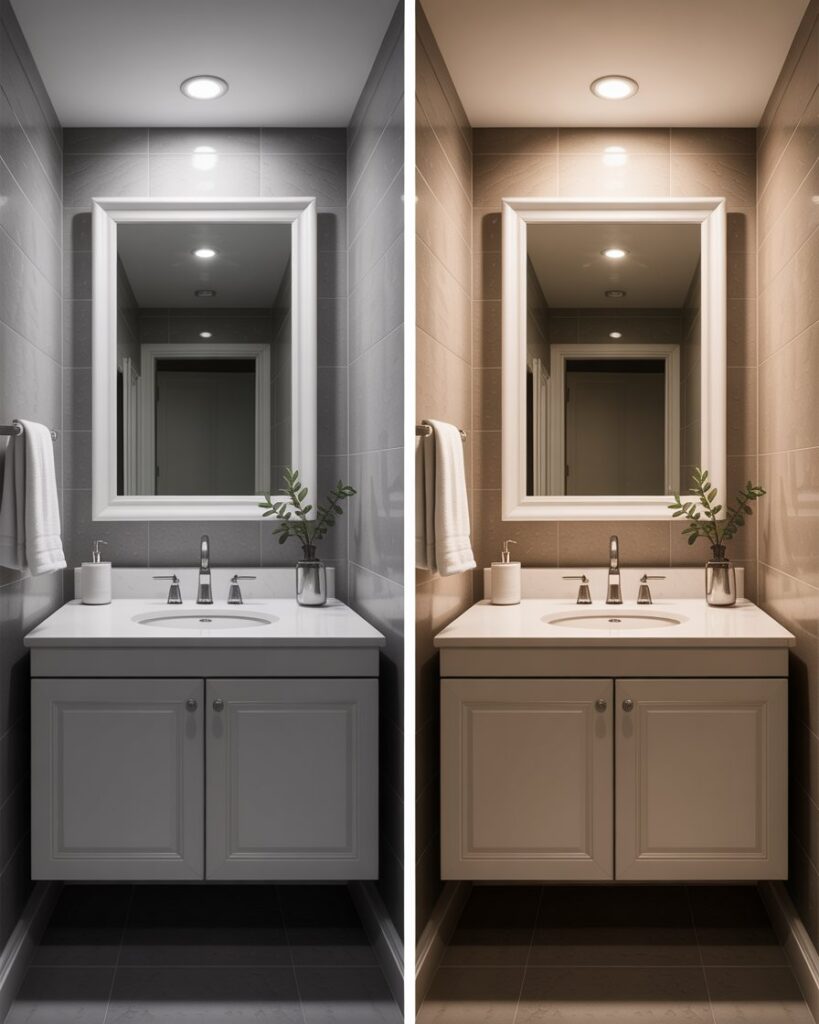
- Hanging the mirror too low — This is the number one mistake. A low mirror cuts off light reflection from the upper half of the room and makes ceilings feel lower.
- Choosing a mirror that’s too small — A mirror that’s undersized for the vanity looks timid and fails to amplify light meaningfully.
- Ignoring the frame finish — A matte black or dark wood frame in an already dark bathroom absorbs light rather than reflecting it.
- Placing the mirror where it reflects clutter — A mirror that reflects a messy counter or a cluttered shelf makes the room feel more chaotic, not more open. Style what the mirror will reflect.
- Using a beveled mirror in a tight space — Beveled edges scatter light rather than reflecting it cleanly, which reduces the light-amplifying effect.
- Forgetting about glare — A mirror placed directly opposite a bare, bright bulb can create uncomfortable glare. Use diffused or dimmable light sources alongside mirrors.
Top Mirror Styles Trending in American Bathrooms Right Now
American homeowners are leaning into some exciting mirror styles that balance function with strong design statements. These are the looks I’m seeing most in showrooms and on project sites:
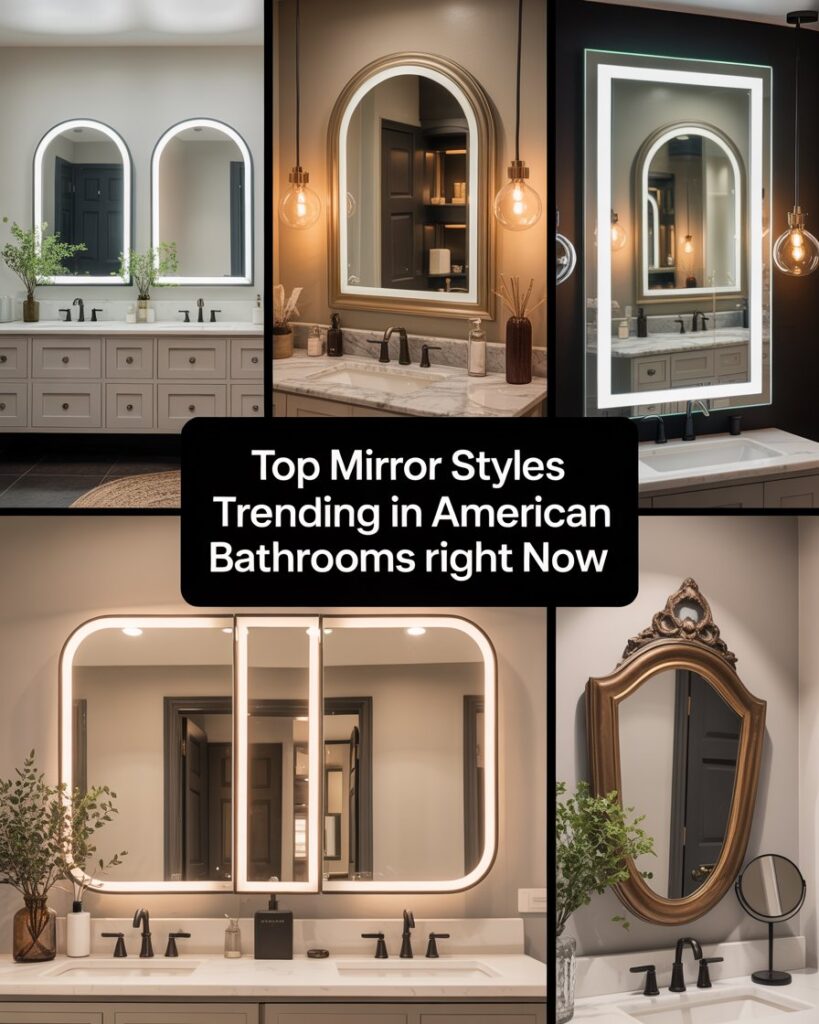
- Arch-top vanity mirrors with brushed gold frames — a nod to Old World architecture in a fresh, modern format
- Oversized rectangular frameless mirrors that span full vanity widths — clean, contemporary, maximally functional
- Triptych mirrors (three-panel hinged designs) — allow side-angle views and reflect light in multiple directions simultaneously
- Smart mirrors with built-in displays — integrating LED lighting, touch controls, and even weather or news displays for a high-tech bathroom experience
- Vintage convex mirrors used as accent pieces — smaller, statement-making, and excellent at bouncing light into corners
Budget Breakdown: What to Expect to Spend
You don’t need a luxury renovation budget to get a light-amplifying mirror that looks high-end. Here’s a realistic price guide for the US market:
| Mirror Type | Price Range | Where to Shop |
|---|---|---|
| Basic frameless vanity mirror | $40–$120 | IKEA, Home Depot, Wayfair |
| Decorative framed mirror | $80–$300 | Target, West Elm, TJ Maxx |
| Backlit LED mirror | $150–$600 | Amazon, Costco, Build.com |
| Custom frameless mirror | $200–$800+ | Local glass shops, Pottery Barn |
| Antique / vintage mirror | $100–$500+ | Etsy, local antique markets |
Pro Tip for Budget Shoppers: Thrift stores and Facebook Marketplace are goldmines for large vintage mirrors. A $30 find with a dated frame can be spray-painted in a modern finish (brushed gold or matte black) for under $10 — giving you a custom-looking mirror for a fraction of retail price.
How to Style Around Your Mirror for Maximum Impact
The mirror is the star, but what surrounds it matters enormously. Here are my go-to styling moves:
- Keep the counter beneath the mirror clear and curated — a few coordinating accessories (matching soap dispenser, small plant, decorative tray) rather than a cluttered collection
- Use matching hardware finishes on towel bars, faucets, and light fixtures to create a cohesive look that the mirror will reflect back
- Add a small plant or greenery at the mirror’s base — reflected greenery doubles the organic freshness in the room
- Consider wall tile that photographs well — anything with subtle texture or a slight sheen (subway tile with a gloss finish, zellige tile) will look especially beautiful reflected in a large mirror
Final Thoughts: The Mirror Is Your Most Powerful Small Bathroom Tool
If there’s one investment you make in your small bathroom this year, let it be the mirror. It’s the only decorating element that simultaneously addresses light, space, style, and function in a single installation. Choose a size that’s generous, a placement that captures your light source, and a finish that complements your existing fixtures — and you will be genuinely amazed at how transformed your bathroom feels.
The best part? Unlike a full renovation, the right mirror can be installed on a weekend with basic tools and a modest budget. You don’t need to tear out tile or hire a contractor. You just need to understand how light, reflection, and space work together — and now you do.
For more bathroom design inspiration, explore resources like Houzz Bathroom Ideas, Architectural Digest’s Bath Design Gallery, and the National Kitchen & Bath Association for finding certified designers in your area