
Warm Textured Finishes Like Honed Stone: The Design Trend That Makes Every Room Feel Like a Sanctuary
From matte limestone countertops to silky travertine walls, warm textured finishes are reshaping American interiors — and for good reason. Here’s everything you need to know to bring this timeless, tactile aesthetic into your own home.

The quiet luxury of honed stone — warmth you can feel before you even touch it.
honed stone warm textures matte finishes natural stone decor travertine quiet luxury biophilic design interior trends.
Walk into a room surfaced in honed stone and something shifts almost immediately. The air feels calmer. The light lands differently — absorbed rather than bounced. You reach out and touch the wall without quite meaning to. That instinctive reaction is exactly what makes warm textured finishes one of the most enduring forces in contemporary American interior design, and it’s why homeowners from Brooklyn brownstones to Scottsdale desert retreats are replacing their polished marble and stark white walls with softer, more tactile surfaces.
This isn’t just an aesthetic trend. It’s a full sensory philosophy — one that borrows from ancient Mediterranean architecture, Japandi minimalism, and the modern wellness movement to create spaces that feel genuinely restorative. As an interior designer who’s worked on hundreds of US homes, I can tell you: few upgrades deliver as much emotional impact per square foot as a warm, textured stone finish.
What Exactly Is a “Warm Textured Finish”?
The term covers a family of surface treatments that share three key qualities: tactile depth, muted color temperature, and light-absorbing rather than light-reflecting behavior. At the heart of this family sits honed stone — natural stone (typically limestone, travertine, marble, or sandstone) that has been ground to a smooth but non-reflective, satin-matte surface.
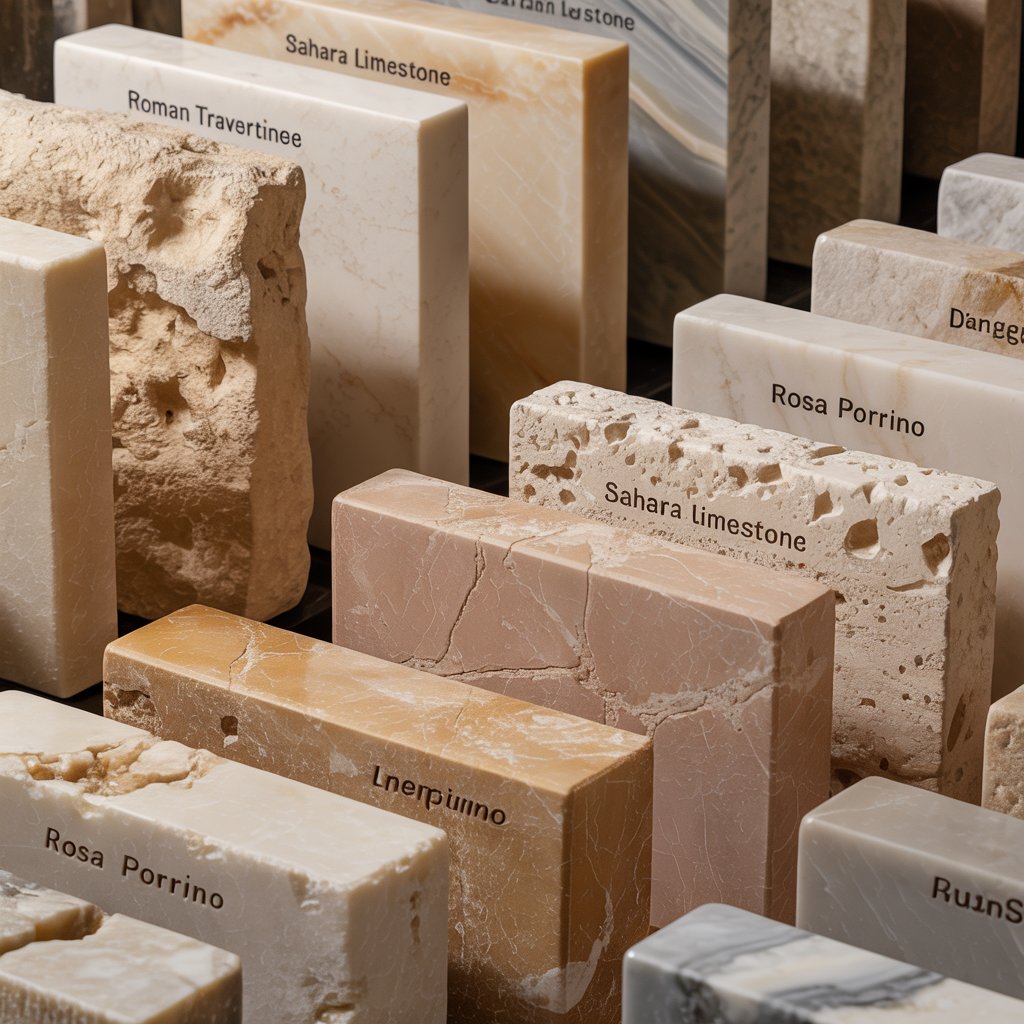
Unlike polished stone, which is buffed to a mirror-like shine, honed finishes retain the material’s natural pore structure and subtle grain. The result is a surface that reads as warm even when the underlying stone is cool gray or ivory white. Add the earthy tones that characterize the most popular varieties — creamy Roman travertine, dusty Sahara limestone, blush-veined Rosa Porrino — and you have a material that radiates a quiet, grounded luxury that polished finishes simply cannot replicate.
Roman Travertine
Cream · Honed
Sahara Limestone
Warm Gray · Honed
Desert Sandstone
Taupe · Bush-Hammered
Autumn Slate
Rust · Leathered
Ivory Onyx
Pearl · Satin
Popular honed stone colorways for US interiors — all available through major stone suppliers like MSI, Arizona Tile, and Dal-Tile.
The Difference Between Honed, Leathered, and Bush-Hammered Stone
Not all warm textured finishes are the same. Before you start speccing surfaces with your designer or contractor, it helps to understand the key finish categories and what makes each unique.

| Finish Type | Texture Level | Best For | Maintenance | Avg. Cost Premium |
|---|---|---|---|---|
| Honed | Smooth, matte | Countertops, floors, walls | Low–Medium | +10–15% over polished |
| Leathered | Subtle peaks & valleys | Kitchen islands, feature walls | Medium | +15–25% over polished |
| Bush-Hammered | Pronounced, rustic | Exterior walls, flooring accents | Low | +20–30% over polished |
| Sandblasted | Fine, uniform grain | Bathroom floors (slip-resistant) | Low | +10–20% over polished |
| Tumbled | Aged, rounded edges | Backsplashes, old-world kitchens | Low | +5–15% over polished |
“Texture is the dimension of a room that photography can never fully capture. When a client runs their hand across a honed limestone wall for the first time, that’s the moment they understand what their home is supposed to feel like.”— Kelly Wearstler, American Interior Designer
Why Warm Textured Finishes Are Dominating US Interiors
The shift away from high-gloss, everything-white interiors has been building for years, but 2025 feels like the tipping point. Several cultural currents are converging to make honed stone and its textured relatives the defining look of American home design right now.
68%of US homeowners say they want interiors that feel “cozy and grounded” over sleek and modern

First, there’s the wellness movement. After years of pandemic-era living, Americans crave homes that actively support mental health — not just look good in photos. Honed stone delivers on this instinctively. Its matte surface absorbs and diffuses light rather than bouncing it harshly around a room, creating the kind of soft, even glow that feels physiologically calming. Studies in environmental psychology consistently link natural materials and tactile surfaces with reduced stress and improved mood.
Second, the rise of quiet luxury as an aesthetic has made conspicuous shine feel dated. Homeowners who once wanted their kitchens to look like magazine spreads now want them to feel like boutique hotels in Umbria — layered, warm, and effortlessly sophisticated. Honed travertine achieves that in a way no polished Calacatta slab ever could.
Pro Tip
If you’re in a high-humidity climate (think Florida, Houston, or coastal New England), choose a leathered or bush-hammered granite over limestone or travertine. The denser grain structure resists moisture penetration, and the textured finish hides water spots beautifully — so you get all the warmth without the maintenance headaches.
Room-by-Room Guide: Where to Use Warm Textured Stone Finishes
The beauty of honed stone is its versatility. It doesn’t belong only in high-end kitchens or spa bathrooms — with the right material selection, it works everywhere in the home. Here’s how I approach each major space.

Kitchen
Honed Soapstone Countertops
Naturally non-porous, heat-resistant, and develops a patina over time. Pairs beautifully with unlacquered brass hardware and shaker-style cabinets in sage or warm white.
Bathroom
Travertine Shower Surround
Large-format honed travertine slabs with book-matched veining create an instant spa moment. Seal annually and use pH-neutral cleaners to preserve the finish.
Living Room
Limestone Feature Wall
A single honed limestone panel behind a fireplace or sofa wall grounds the entire room. Pair with plaster ceilings, linen sofas, and terracotta vessels for a cohesive palette.
Entryway
Sandblasted Slate Floors
Sandblasted slate in 24×24 inch format creates instant drama at the front door. The textured grip is also practical — wet shoes from rain or snow won’t cause slips.
Bedroom
Plaster-Look Stone Panels
For bedrooms, consider honed marble-look porcelain panels (a more budget-friendly option) on one wall behind the bed. They capture the texture without the weight load concerns of real stone.
Outdoor
Bush-Hammered Bluestone Patio
Bush-hammered bluestone is the gold standard for outdoor entertaining. The aggressive texture prevents slipping, handles freeze-thaw cycles beautifully, and blends into garden plantings.
The Art of Layering: Pairing Honed Stone With Other Warm Textures
The secret to a room with honed stone that feels rich rather than cold is layering — stacking complementary textures that share the same warmth and matte quality. Stone alone, however beautiful, can read as austere. But set it against aged linen, raw oak, woven jute, and matte ceramic, and suddenly the room has a depth that feels almost geological.

Think of it as building a material palette the way a painter builds a color palette: start with your dominant tone (the stone), add a secondary texture (usually a natural wood), bring in a mid-tone textile (linen, wool, or cotton canvas), and finish with small-scale tactile accents (handmade ceramics, wicker, or leather). Every material in the room should share the same quality of absorbed, directional light — no chrome, no high-gloss lacquer, no mirror tiles breaking the spell.
Here are the pairings I return to again and again for US clients:
- Honed travertine + whitewashed oak + undyed linen: The Italian farmhouse combination. Works in kitchens, living rooms, and primary baths alike.
- Honed limestone + aged brass + boucle fabric: The contemporary European hotel look. Feels expensive and serene simultaneously.
- Leathered granite + walnut + raw linen: Warmer and moodier — perfect for a kitchen or bar area where you want some drama.
- Bush-hammered slate + blackened steel + wool: An industrial-organic hybrid that reads especially well in loft conversions or modern craftsman homes.
- Honed marble + terracotta tile + rattan: The Mediterranean coastal palette beloved in Southern California and Florida design.
Pro Tip
Limit your stone palette to two varieties maximum per room. Mixing travertine countertops, limestone floors, and marble walls in the same space creates visual chaos — the textures compete rather than collaborate. Pick one hero stone and let everything else defer to it.
Honed Stone vs. Polished Stone: A Practical Comparison for Homeowners
One of the most common questions I get from clients is whether honed stone is more work to maintain than polished. The answer is nuanced — it depends entirely on the specific stone type and where you’re using it. Here’s the honest breakdown.
| Factor | Honed Stone | Polished Stone |
|---|---|---|
| Scratch visibility | Less visible — scratches blend with the matte surface | Very visible — scratches break the reflective plane |
| Stain resistance | More porous; requires regular sealing | Slightly more stain-resistant when sealed |
| Etching (acid damage) | Less visible — etching matches the matte tone | Highly visible — etching creates dull spots |
| Fingerprints & smudges | Not visible — matte surface doesn’t show oils | Very visible on dark polished surfaces |
| Cleaning frequency | Less frequent (texture hides daily grime) | More frequent (shows every smudge) |
| Sealing frequency | Every 6–12 months (porous stones) | Every 12–18 months |
| Longevity | Excellent — finish can be refreshed by re-honing | Good — polished surface can be re-buffed |
For most US kitchens, I actually recommend honed over polished for exactly the low-drama maintenance profile. Cooking creates splashes, acids, and heat — all of which show up mercilessly on a polished slab. A honed surface is forgiving in a way that polished simply isn’t.
“The patina a honed stone develops over years of use isn’t damage — it’s character. It’s the surface beginning to tell the story of the people who live there.”— Axel Vervoordt, Interior Design Legend
Budget Guide: How Much Should You Expect to Spend?
Warm textured stone finishes span an enormous price range — from genuinely affordable porcelain lookalikes to museum-quality slabs of rare European limestone. Here’s a realistic cost breakdown for US homeowners in 2025, including material and installation.
| Material | Finish Type | Cost per Sq. Ft. (Installed) | Best Application |
|---|---|---|---|
| Honed porcelain (stone-look) | Matte | $8 – $18 | Floors, bathroom walls |
| Tumbled travertine tile | Tumbled / honed | $15 – $28 | Backsplashes, entryways |
| Honed limestone slab | Honed | $45 – $90 | Countertops, feature walls |
| Leathered granite | Leathered | $55 – $110 | Kitchen islands, outdoor kitchens |
| Honed marble (Carrara, Thassos) | Honed | $70 – $150 | Primary baths, fireplace surrounds |
| Rare European limestone / travertine slab | Custom honed | $120 – $300+ | Statement walls, luxury baths |
Pro Tip
Use real honed stone where you touch it most — countertops, shower walls, fireplace surrounds — and substitute high-quality honed porcelain for floors and large wall areas. The tactile experience remains authentic where it counts, and you bring the overall project cost down significantly without any visual compromise.
5 Designer Mistakes to Avoid With Warm Textured Finishes
Even with the most beautiful materials, there are pitfalls that can undermine the whole effect. Here are the five mistakes I see most often — and how to sidestep them.
- Going too light everywhere. Stacking cream travertine, white plaster, and bleached oak makes a room feel washed out rather than warm. Ground the palette with at least one mid or deep tone — a dark walnut shelf, a terracotta rug, or charcoal linen pillows.
- Mixing too many natural textures. Wicker, rattan, jute, sisal, linen, raw oak, and stone all in one room becomes chaotic. Pick three complementary textures and repeat them throughout.
- Skipping the sealer. Honed porous stone must be sealed before use and resealed annually. An unsealed limestone countertop will stain within the first week of cooking. Use a quality penetrating sealer like StoneTech BulletProof or Miracle Sealants 511.
- Choosing the wrong grout color. A stark white grout with warm travertine tiles creates a grid pattern that visually chops the surface into small pieces. Always match grout to the mid-tone of your stone — usually a sandy or warm beige.
- Neglecting lighting design. Warm textured stone needs warm, directional light to read correctly. Cold LED downlights at 5000K will kill the material’s warmth instantly. Use 2700–3000K warm white bulbs, and add wall-grazing light to accentuate the texture.
Sustainable and Responsible Sourcing: What to Ask Your Stone Supplier
The growing demand for natural stone in US interiors has put pressure on quarrying operations worldwide. As a responsible designer and homeowner, it’s worth understanding where your stone comes from and how it’s extracted. Look for suppliers who can provide documentation of their sourcing, and ask these specific questions before purchasing.
- Does the quarry hold current certifications from ANSI/NSF or equivalent regional bodies?
- Is the stone extracted using water-recycling systems to minimize waste?
- What percentage of quarry waste is repurposed (for aggregates, landscape stone, etc.)?
- Is the material transported by sea freight rather than air (significantly lower carbon footprint)?
- Are domestic US alternatives available — Arizona sandstone, Vermont slate, Texas limestone — that could reduce shipping entirely?
Reputable US suppliers like MSI Surfaces, Arizona Tile, and Emser Tile all publish sourcing transparency reports — a good first filter when building your material shortlist.
The Bottom Line: Stone That Grounds You
Warm textured finishes like honed stone occupy a rare category in interior design: materials that look better in person than in photographs, age more beautifully than they begin, and create an atmosphere that no paint color or furniture arrangement can replicate on its own. They ask more of you — a little more budget, a little more maintenance, a more deliberate approach to pairing — but what they give back is a home that feels fundamentally, quietly alive.
Whether you start with a single honed travertine backsplash or commit to a full limestone bathroom renovation, the principle is the same: choose warmth over shine, depth over perfection, and materials that improve with every year they’re lived in. Your home will thank you.
Related Reading
- How to Style a Japandi Living Room With Natural Materials
- The Best Stone Countertop Options for American Kitchens.