
The Upholstery Guide
Performance Fabrics vs. Natural Textiles
A designer’s honest, no-fluff breakdown of which upholstery fabric is right for your lifestyle, your home, and your budget.
Choosing upholstery fabric is one of the most consequential decisions you’ll make when furnishing your home — and yet most people make it based on color alone.
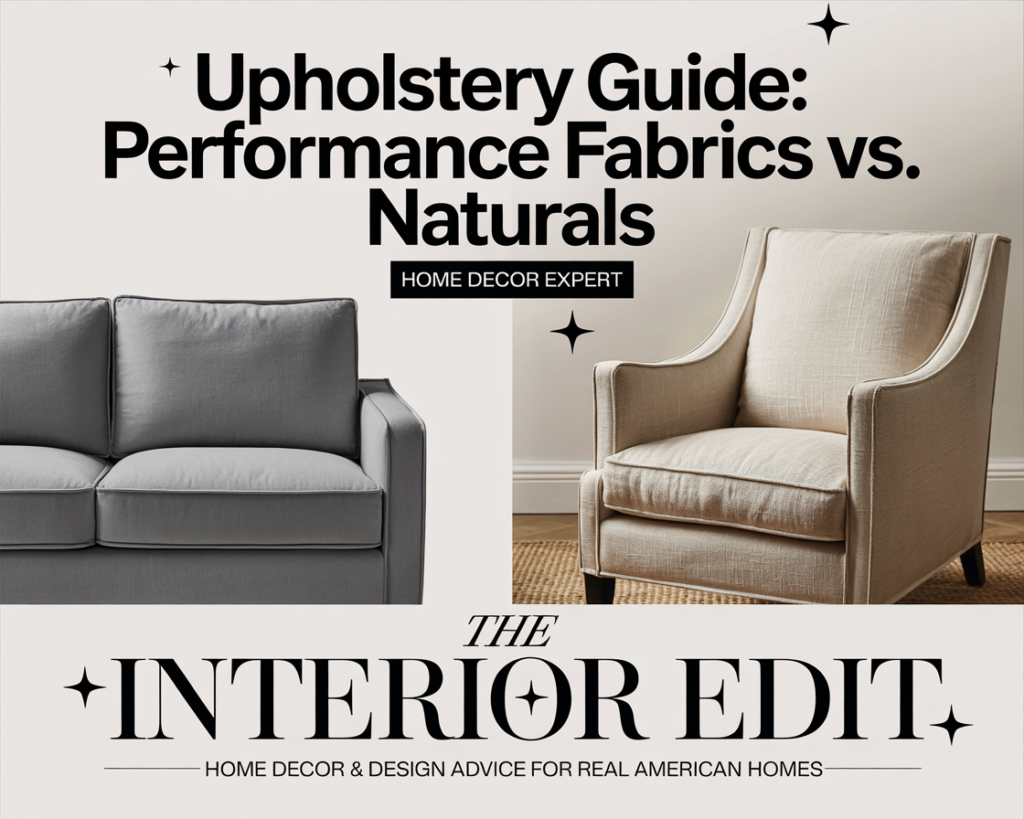
I’ve been an interior designer for over fourteen years, and if there’s one conversation I have more than any other, it’s this one: Should I go with performance fabric or natural fabric? It sounds like a simple question, but the answer depends on everything — your lifestyle, your household, how you actually use your furniture, and honestly, how much anxiety you’re willing to live with when a glass of red wine tips over at your next dinner party.
In this guide, I’m breaking down the performance fabric vs. natural upholstery debate in full. We’ll cover durability, maintenance, texture, sustainability, cost, and which type wins in specific real-life scenarios. Whether you’re outfitting a family room in Denver, a beach house in the Carolinas, or a high-rise condo in Chicago, this guide will help you make a fabric choice you won’t regret.
What Exactly Are Performance Fabrics?
Performance fabrics are engineered textiles designed specifically to resist the everyday wear, stains, moisture, and fading that furniture inevitably faces. Brands like Sunbrella, Crypton, and Revolution have become household names in the interior design world — and for good reason. These fabrics are constructed from synthetic fibers (primarily solution-dyed acrylic, polyester, or nylon) or natural fibers that have been chemically treated to improve their resilience.
The key selling point of performance upholstery fabrics is their stain-resistance and moisture-wicking properties. Many are rated with a high double-rub count — the industry measure for abrasion resistance — often exceeding 100,000 double rubs, making them highly suitable for high-traffic rooms and busy households. If you have kids, pets, or just a love of eating on the sofa (no judgment), performance fabric is engineered with you in mind.
The best fabric isn’t the most beautiful one in the showroom — it’s the one that still looks beautiful three years after you bring it home.— Sarah Calloway, Interior Designer
What Are Natural Upholstery Fabrics?
Natural upholstery fabrics include textiles sourced from plants or animals — linen, cotton, wool, leather, velvet (often cotton or wool-based), silk, and hemp. These materials have been used in furniture upholstery for centuries, and their enduring popularity isn’t just nostalgia. Natural fibers offer something performance fabrics genuinely cannot replicate: tactile richness, breathability, and an organic warmth that makes a room feel lived-in and human.
Linen sofas age beautifully, developing a soft patina. Wool-blend armchairs feel luxurious underhand. Full-grain leather deepens in character over decades. If you’re designing a home that prioritizes aesthetic sophistication — a formal living room, a primary bedroom sitting area, or a designer-curated study — natural upholstery textiles bring a depth of texture and character that synthetic alternatives often approximate but rarely match.
🌿 Eco Note
Natural fabrics like organic linen and untreated wool are generally more sustainable than synthetic performance fabrics, though many newer performance fabrics are now made with recycled content. Look for fabrics certified by OEKO-TEX® or GOTS (Global Organic Textile Standard) regardless of fiber type.
Performance Fabrics vs. Naturals: Head-to-Head Comparison
Let’s cut through the marketing and get real. Here’s how these two categories stack up across the criteria that actually matter when you’re investing in a sofa, sectional, or accent chair.
| Category | Performance Fabrics | Natural Fabrics | Winner |
|---|---|---|---|
| Stain Resistance | Excellent — most liquids bead off | Poor to moderate without treatment | Performance |
| Durability (Abrasion) | Very high (50K–150K+ double rubs) | Moderate (varies widely by fiber) | Performance |
| Breathability | Low to moderate | Excellent | Natural |
| Texture & Feel | Good, improving yearly | Luxurious, rich, unmatched | Natural |
| UV Fade Resistance | Superior (especially acrylic) | Poor without treatment | Performance |
| Ease of Cleaning | Very easy (W or WS codes) | Requires care (S or dry-clean) | Performance |
| Aesthetic Depth | Good, but reads “engineered” | Timeless, rich, evolving patina | Natural |
| Pet & Kid Friendly | Excellent | Poor to moderate | Performance |
| Sustainability | Moderate (some recycled options) | High (organic/untreated fibers) | Natural |
| Cost Range (per yard) | $20–$80+ | $15–$200+ | Tie |
When to Choose Performance Fabric: Real-Life Scenarios
Performance fabric isn’t just for the fear-of-stains crowd. There are specific living situations where choosing a high-performance textile isn’t just practical — it’s the genuinely smarter design decision. Here are the scenarios where I always steer clients toward performance upholstery.
- Homes with children under 10: Juice boxes, crayon marks, muddy hands — performance fabric cleans up with a damp cloth. No stress, no scrubbing, no regrets.
- Pet owners: Pet dander, oils from fur, and the occasional accident are no match for tightly woven, moisture-resistant performance weaves. Look for fabrics with a tight weave count to minimize claw-snagging.
- Vacation homes or rental properties: High turnover, unknown users, and coastal humidity make performance fabric a necessity. Sunbrella excels here.
- Indoor-outdoor rooms or sunrooms: If your space is flooded with natural light or transitions to the outdoors, UV-resistant performance fabrics prevent fading that would destroy most naturals within a season.
- Allergy-prone households: Many performance fabrics are hypoallergenic and resistant to mold, mildew, and dust mites — a significant health benefit often overlooked.
- High-traffic family rooms: The sofa your whole family piles onto every evening needs to handle 50,000+ double rubs, not 15,000.
⭐ Pro Tip
When shopping for performance fabric, always ask for the cleaning code. Fabrics labeled “W” can be cleaned with water-based solutions. “S” requires solvent only. “WS” accepts both. “X” means vacuum only — and I’d avoid that for any high-use piece. This single letter can save you hundreds in cleaning costs or fabric replacement.
When to Choose Natural Fabrics: The Case for Linen, Wool & Leather
Here’s where I have to be honest with you: if I’m designing my own home, my personal sofa in my living room is linen. There. I said it. Because natural upholstery fabrics offer something that no performance weave has yet fully replicated — a sense of warmth, depth, and sensory richness that makes a room feel genuinely designed rather than furniture-store assembled.
Natural textiles like Belgian linen, wool boucle, cotton velvet, and full-grain leather are the materials of choice when aesthetics are the primary driver and the room is used with a degree of intentionality. A formal living room that hosts dinner parties rather than movie nights. A designer home office. A primary bedroom reading nook. These are the spaces where natural fabric earns its keep — and its price tag.
- Low-traffic formal living rooms
- Adult-only households
- Primary bedroom seating
- Dining chairs (wipeable leather)
- Accent chairs & ottomans
- Library or study furniture
- Heirloom or investment pieces
- Rooms with controlled lighting
A Closer Look at Popular Natural Upholstery Fabrics
Linen — The Designer’s Darling
Linen is one of the oldest textile fibers in the world, and it remains one of the most beloved upholstery fabrics in interior design. It’s breathable, has a beautiful natural slub texture, and photographs stunningly. The downside? It wrinkles easily and can be prone to fading in direct sunlight. For a sofa that gets regular use, look for a linen-blend (at least 30% synthetic fiber) which improves durability significantly while maintaining that coveted natural look. Learn more about linen fabric grades at House Beautiful.
Wool & Boucle — Texture-Forward and Timeless
Wool upholstery, especially the trendy boucle weave that’s dominated interior design since 2021, is naturally stain-resistant (wool fibers repel liquid temporarily), durable, and incredibly cozy. It’s naturally flame-retardant, making it a smart choice for family rooms — even if it feels counterintuitive. The main drawback is pilling over time and difficulty cleaning deep stains.
Full-Grain Leather — The Long Game
A well-made full-grain leather sofa is arguably the best long-term upholstery investment you can make. It’s the only material that genuinely improves with age, developing a rich patina that reads as character rather than wear. It cleans easily with a damp cloth and ages beautifully over decades. The investment is significant — quality leather sofas range from $2,500 to $15,000+ — but the cost-per-year often rivals mid-range performance fabric furniture.
| Fabric | Best For | Avoid If… | Durability Rating |
|---|---|---|---|
| Belgian Linen | Formal rooms, accent chairs | You have young kids or pets | Moderate |
| Wool Boucle | Accent chairs, sofas in calm rooms | Pets with claws (snags easily) | Moderate |
| Cotton Velvet | Occasional chairs, headboards | High-traffic or humid rooms | Lower |
| Full-Grain Leather | Sofas, sectionals, dining chairs | Very dry climates (needs conditioning) | Very High |
| Hemp / Organic Cotton | Eco-conscious spaces, casual rooms | Wet or humid environments | Moderate |
The Best of Both Worlds: Blended & Treated Natural Fabrics
Here’s the designer secret most showroom salespeople won’t tell you: the line between performance and natural fabrics has blurred dramatically in the last five years. Many of today’s best upholstery options are blended fabrics — natural fibers woven with high-performance synthetics — or natural fibers treated with next-generation stain-resistant finishes like Crypton’s Green treatment or Nano-Tex technology.
These hybrid options give you the rich texture and breathability of a natural fiber with dramatically improved stain resistance, UV stability, and abrasion tolerance. A linen-polyester blend, for example, can give you 80% of the look of pure linen with two to three times the durability. For most American households, this middle-ground category deserves serious consideration before committing to either extreme.
⭐ Pro Tip
Before purchasing any natural upholstery fabric, ask about applying a professional fabric protector like Scotchgard™ or a water-based fluorocarbon treatment. Applied to a new piece before use, these treatments can extend the practical life of natural fabrics by two to three years in moderate-traffic rooms — without altering the look or feel of the textile.
How to Read Upholstery Fabric Labels Like a Designer
Understanding fabric labels is one of the most practical skills a homeowner can develop. When you’re standing in a showroom or scrolling a furniture website, these specifications tell you almost everything you need to know.
- Double Rub Count: The number of back-and-forth abrasion cycles a fabric withstands before showing wear. Residential: aim for 15,000+. Heavy use or commercial: 30,000–100,000+.
- Cleaning Code (W/S/WS/X): Tells you exactly how to clean the fabric without damaging it. W = water. S = solvent. WS = both. X = vacuum only.
- Lightfastness Rating: Rates UV resistance on a scale of 1–8. For rooms with significant sunlight, choose a rating of 5 or above.
- Pilling Resistance: Measured on a scale of 1–5. Look for a rating of 3.5 or above for sofas and seating that gets daily use.
- Fabric Weight (oz/yard): Heavier fabrics (10 oz/yard and above) generally last longer on high-use pieces.
Natural fabrics tell the story of a room. Performance fabrics make sure that room survives the chapter with children in it.— Interior Design Proverb
Cost Comparison: What’s the Real Investment?
Budget is always part of the conversation, so let’s be straightforward. Performance fabrics typically range from $20 to $80 per yard at the consumer level, with designer/trade-only performance textiles running $80–$150+. Natural fabrics have an enormous range: cotton and linen start around $15–$40 per yard, while quality wool, silk velvet, and leather can reach $100–$300+ per yard for premium grades.
The smarter metric, however, is cost per year of use. A $600 performance fabric sectional reupholster that lasts 12 years costs you $50/year. A $900 pure linen reupholster that shows significant wear in 4 years on a busy family sofa costs $225/year. Think in decades, not in purchase price — especially on large upholstered pieces.
✦
Final Verdict: Which Fabric Is Right for You?
If your home has children, pets, high foot traffic, or significant sun exposure — choose performance fabric without hesitation. The peace of mind alone is worth it, and today’s performance textiles look better than ever. Brands like Sunbrella, Crypton, and Revolution have closed the aesthetic gap considerably.
If you’re designing a lower-traffic space, live in an adult household, or are investing in a statement piece where beauty and character trump practicality — go natural. A Belgian linen sofa, a wool boucle armchair, or a full-grain leather Chesterfield will bring a warmth and authenticity to your home that no engineered fabric can fully replicate.
And if you’re somewhere in between — which honestly describes most American households — explore the growing world of blended and treated natural fabrics. You don’t always have to choose. The best upholstery decision is the one that fits how you actually live, not how you wish you lived.
Have a fabric question for your next project? Explore more at The Spruce’s Upholstery Center or consult a local ASID-certified designer for personalized guidance. © 2026 The Interior Edit · Written for informational purposes. Always consult a certified interior designer for project-specific guidance.