
Interior Design Guide
Visual Interest with Textures in Neutral Spaces
How to turn a quiet, neutral palette into a layered, soul-warming home that never feels flat or boring
✦ Interior Design Expert✦ 2,400+ Words✦ US Home Décor
A neutral room doesn’t have to be a boring room. In fact, some of the most breathtaking interiors I’ve ever walked into were dressed entirely in cream, ivory, warm white, and sand — and yet they felt alive, layered, and deeply personal. The secret? Texture. Strategic, intentional, beautifully layered texture.
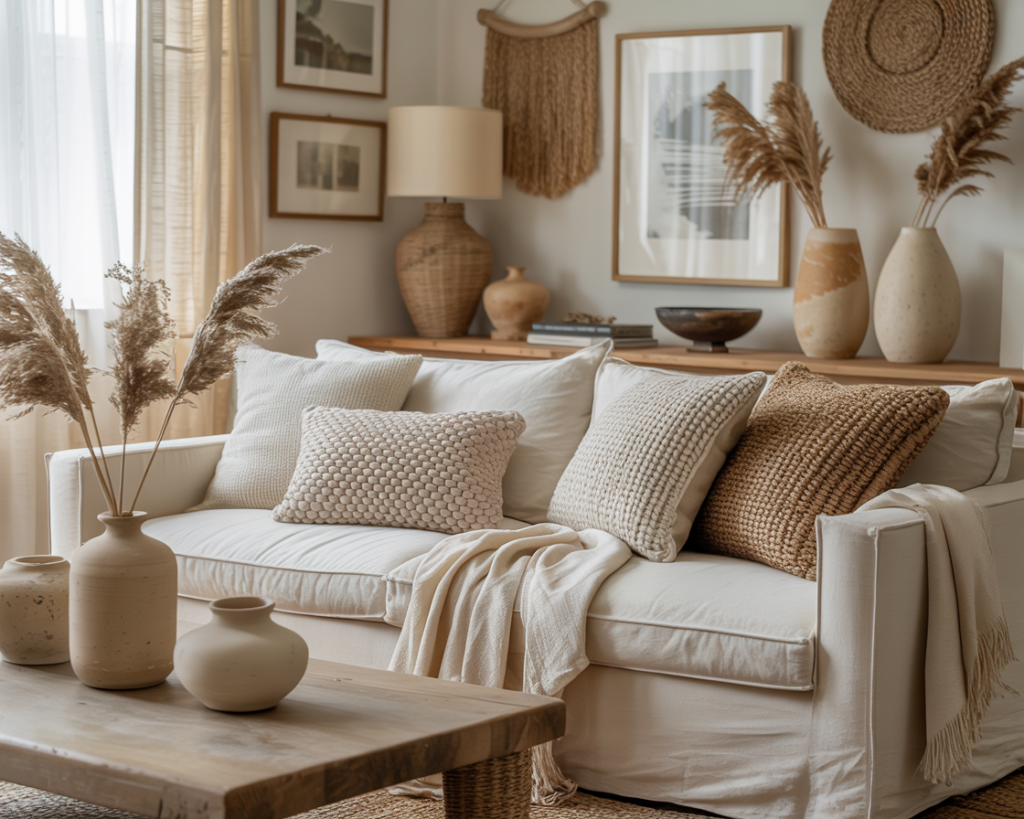
If you’ve ever scrolled through Pinterest or Architectural Digest feeling inspired by those effortlessly chic neutral rooms and then tried to recreate the look — only to end up with something that feels oddly flat and sterile — you’re not alone. The difference between a neutral space that sings and one that falls flat almost always comes down to textural depth. In this guide, I’m going to show you exactly how to bring visual interest, warmth, and personality into your neutral home using the power of texture.
Whether you’re decorating a living room, bedroom, or open-concept space, these principles work across every square footage and budget. Let’s dive in.
Why Texture Is the Heart of Neutral Interior Design
When you strip away bold color from a room, you’re not left with nothing — you’re left with form, light, and surface. That’s where texture becomes the hero of your design story. In neutral interior design, texture creates what color usually does: contrast, focal points, visual rhythm, and emotional warmth. It’s what keeps a room from looking like a hotel lobby or a staged model home.
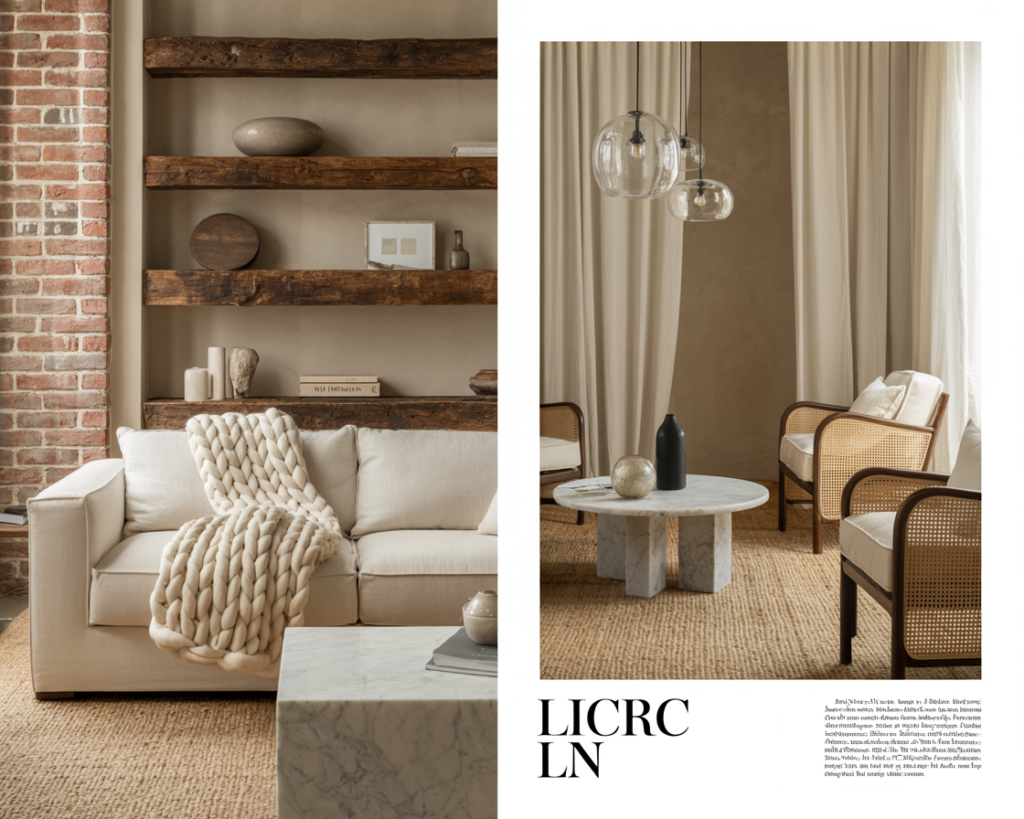
Think about the difference between a fluffy boucle throw draped over a linen sofa versus the same sofa left bare. Same neutral tones — completely different energy. The boucle adds dimension that your eye wants to explore. That exploration is what makes a space feel interesting, layered, and intentionally designed rather than simply furnished.
Interior designers talk about something called the “tactile experience” of a room — the way a space makes you feel before you’ve even touched anything. Rough, raw textures like exposed brick, rattan, or reclaimed wood signal warmth and authenticity. Smooth, refined textures like polished marble, glass, or silk signal elegance and calm. Mix them thoughtfully, and you’ve got a room with real character.
The beauty of leaning into texture in neutral spaces is that you never have to worry about clashing colors or trendy hues going out of style. Textural layering is timeless by nature — and that’s a major win for your home’s longevity and resale appeal.
Texture is the vocabulary of neutral design. Without it, a room has nothing to say.— Principle of Layered Interior Design
The Core Textures Every Neutral Room Needs
When building a textural palette for a neutral space, I recommend thinking in three categories: soft textures, hard textures, and organic textures. Each plays a distinct role in the overall composition, and a balanced neutral room will have at least a couple from each group.
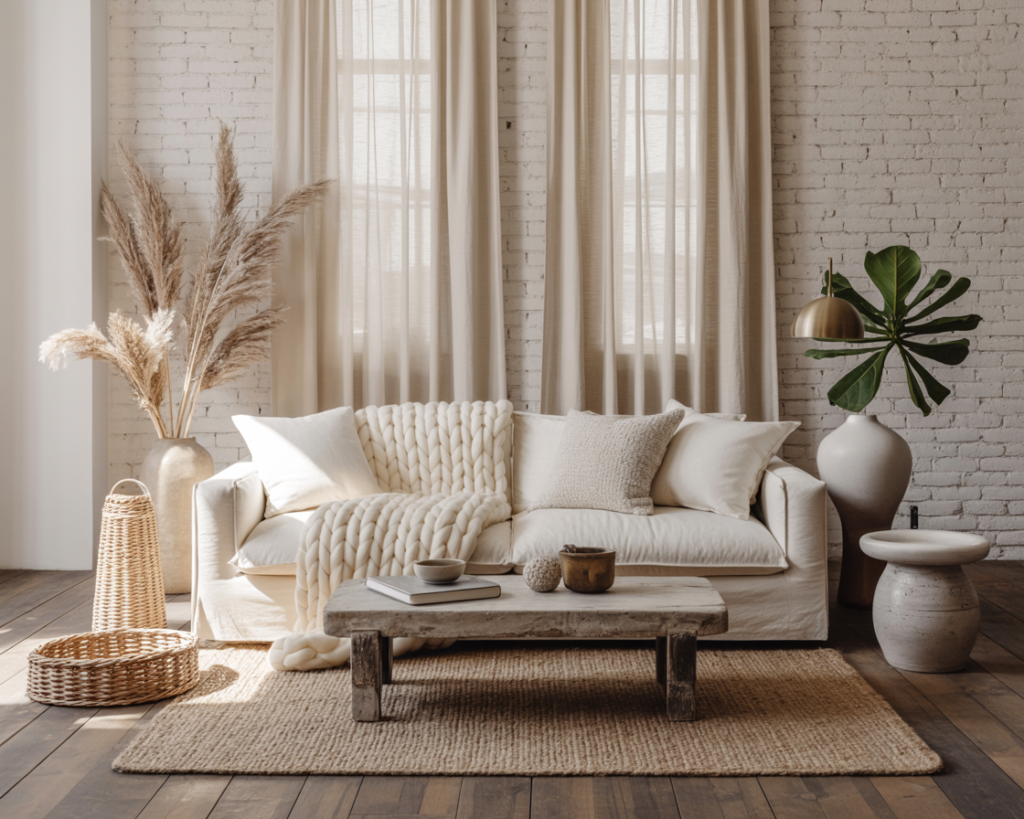
Soft textures are your upholstery, bedding, pillows, curtains, and rugs. Hard textures include your architectural elements — wood floors, stone countertops, ceramic tiles, plaster walls, and metal accents. Organic textures bring in the natural world: woven baskets, dried botanicals, jute, seagrass, clay, and live plants. Together, they build a room that feels complete from every angle.
🧵
Linen & Cotton
Breathable, relaxed, effortlessly lived-in. Perfect for sofas, curtains, and bedding.
🪨
Jute & Rattan
Raw, organic, and earthy. Ideal for rugs, baskets, furniture accents, and pendants.
✨
Velvet & Boucle
Luxurious, plush, and visually rich. Use for accent chairs, pillows, and throws.
🪵
Wood & Stone
Grounding, timeless, architectural. Tables, floors, counters, and decorative trays.
When choosing textures for a neutral room, use the “Rule of Three Finishes” — for every surface in a room (floor, walls, furniture), aim to incorporate one matte finish, one sheen finish, and one natural/raw finish. This trio creates automatic visual balance without overwhelming the eye.
Texture Pairing Guide for Neutral Rooms
| Primary Texture | Best Pairing | Mood Created | Best Room |
|---|---|---|---|
| Linen Sofa | Chunky knit throw + leather pillow | Warm & casual elegance | Living room |
| Marble Countertop | Raw wood shelving + woven basket | Luxe meets natural | Kitchen |
| Plaster Walls | Velvet drapes + glazed ceramic | European sophistication | Living/Dining |
| Jute Rug | Boucle chair + glass side table | Organic modern | Any room |
| Hardwood Floor | Shag rug + polished brass lamp | Layered warmth | Bedroom |
| Concrete Accents | Cashmere throw + linen pillow | Industrial softened | Loft/Open plan |
How to Layer Textiles in a Neutral Living Room
The living room is where most people start when redesigning a space, and it’s also where textile layering has the most dramatic impact. In a neutral living room — think beige, greige, ivory, or warm white walls — your textiles are doing all the heavy lifting visually. The goal is to build a “textile stack” that has at least five distinct touch-points for the eye to land on.
Start with your largest soft element: the sofa. A linen or cotton-blend upholstery in a creamy oyster or warm sand shade is a classic starting point. From there, add a throw blanket in a contrasting texture — something chunky, nubby, or woven. Think a chunky cotton knit, a boucle throw, or even a vintage kilim draped casually over the arm. This one addition immediately creates depth.
Layer in pillows next, but resist the urge to keep them all the same fabric. Combine a linen cover with a velvet accent and a leather or suede throw pillow — all in your neutral family but with different textures. The variation in surface quality is what makes the arrangement look curated rather than matchy-matchy. A great resource for understanding pillow layering is the Architectural Digest living room styling guide, which consistently showcases how the pros do it.
Finally, ground your seating area with a rug that introduces yet another texture layer. In neutral rooms, the rug is a critical piece — it defines the zone and adds the horizontal textural plane that prevents the space from floating. A jute, sisal, or Moroccan-style wool rug are all excellent choices that work beautifully in neutral spaces without introducing competing color.
The 5-Layer Textile Formula for Neutral Rooms
- Sofa or main upholstered piece (linen, cotton blend, or performance fabric)
- Area rug with natural or woven texture (jute, wool, sisal, or shag)
- Curtains or drapery (linen, cotton, or sheer with subtle texture)
- Throw blanket draped over seating (boucle, chunky knit, or cashmere)
- Mixed-texture pillow arrangement (velvet + leather + linen combination)
Using Hard Textures and Architectural Elements to Add Drama
One of the most overlooked tools in neutral interior design is the architectural texture — the surfaces that are built into your home itself. Walls, floors, ceilings, and built-ins all offer incredible opportunities to add visual interest that soft furnishings alone simply cannot achieve. If you’re designing or renovating, these are worth serious consideration.
Limewash paint, plaster walls, and Venetian stucco have become enormously popular in American homes over the past few years — and for good reason. Unlike flat latex paint, these finishes have depth and movement. Light plays off them differently at different times of day, creating a living, breathing wall that serves as a backdrop without being a backdrop. Brands like Portola Paints have made limewash accessible for DIYers across the US.
Wood is another essential hard texture for neutral spaces. Whether it’s wide-plank white oak floors, a live-edge console table, or exposed ceiling beams, wood introduces warmth and grain — a naturally occurring texture that connects the space to the organic world. In a neutral room that skews cool (whites and grays), warm-toned wood is often the element that makes the room feel inviting rather than clinical.
Don’t overlook smaller hard texture moments: a stone tray on a coffee table, a woven ceramic vase, a rattan light fixture, or a handthrown clay bowl on a shelf. These micro-textures are the punctuation marks in your design sentence — without them, everything runs together.
Before committing to any wall finish, order large sample swatches and observe them at different times of day — morning light, afternoon sun, and evening lamp light. Textured finishes like limewash or plaster behave dramatically differently under each light condition, and what looks perfect at noon may feel completely different by candlelight.
Natural and Organic Textures: Bringing the Outside In
One of the defining hallmarks of contemporary American neutral interior design — especially the organic modern aesthetic that dominates platforms like Instagram and Houzz right now — is the integration of natural, organic texture. These are the materials that remind us we are part of the natural world, and in a neutral palette, they provide an irreplaceable sense of groundedness.
Woven elements are among the most versatile organic textures you can introduce. Rattan furniture and pendant lights, seagrass baskets, jute placemats, and macramé wall hangings all bring handmade, artisanal character to a neutral space without introducing competing color. They work in virtually every room — from the kitchen to the primary bedroom to the bathroom — and layer beautifully with both soft and hard textures.
Live plants deserve their own conversation in the context of neutral spaces. Not only do they introduce color (green is actually a neutral in design terms), but they add a soft, irregular, organic texture that no manufactured element can replicate. The sculptural quality of a fiddle leaf fig, the trailing delicacy of pothos, or the graphic drama of a snake plant all contribute textural interest that changes as the plants grow. Consider checking out The Sill for curated plant and planter combinations designed for interior styling.
Raw and rough-hewn materials — unfinished concrete, reclaimed wood with visible grain, aged leather with natural patina — also fall into the organic texture category. They carry a sense of history and imperfection that is deeply appealing in neutral spaces, where perfection might otherwise read as sterile. The beauty of these materials is that they only get better with age.
Organic Textures by Room: Quick Reference
| Room | Recommended Organic Textures | Where to Use | Impact Level |
|---|---|---|---|
| Living Room | Jute rug, rattan chair, dried pampas | Floor, seating, styling shelf | ⭐⭐⭐⭐⭐ |
| Bedroom | Linen bedding, wicker nightstand, clay lamp | Bed, side table, lighting | ⭐⭐⭐⭐ |
| Kitchen | Wood cutting boards, ceramic bowls, woven baskets | Countertop, open shelving | ⭐⭐⭐⭐ |
| Bathroom | Teak mat, seagrass basket, stone soap dish | Floor, vanity, accessories | ⭐⭐⭐ |
| Home Office | Cork board, linen curtains, wood desk | Wall, window, work surface | ⭐⭐⭐ |
Common Mistakes to Avoid When Texturing Neutral Spaces
Textural layering in neutral spaces is an art form, and like all art forms, there are common pitfalls that can undermine even the most well-intentioned designs. Knowing what to avoid is just as important as knowing what to include — and these are the mistakes I see most often in homes across the US.
- Repeating the same texture throughout: All-linen, all-jute, or all-wood rooms feel monotonous rather than cohesive. Variety is essential — contrast between rough and smooth, matte and sheen, natural and refined is what creates the visual tension that makes a space interesting.
- Ignoring scale and proportion: A chunky knit throw on a small accent chair can look overwhelming, while a thin cotton throw on an oversized sectional can disappear entirely. Match the visual weight of your textures to the scale of your furniture.
- Forgetting the ceiling: The “fifth wall” is perpetually underutilized. A coffered ceiling, wooden beam detail, grasscloth wallpaper, or even a textured paint finish overhead adds architectural texture that grounds the entire room.
- Over-relying on shag or fur: Faux fur and ultra-shag rugs and throws are seductive in their coziness, but too much of them tips a room from cozy into cluttered. Use sparingly as an accent, not as your primary texture vehicle.
- Neglecting metallic textures: Brushed brass, matte black, unlacquered bronze, and aged silver are textures too — and in neutral rooms, they act as jewelry, catching light and adding sophistication. A room without any metal feels unfinished.
- Playing it too safe with similar finishes: Mixing only matte textures — all flat, all soft, all woven — creates a room that feels pleasant but forgettable. The contrast between a polished marble tabletop and a rough linen sofa is exactly the kind of tension that makes a room memorable.
Budget-Friendly Ways to Add Texture to Neutral Spaces
One of the most common concerns I hear from homeowners is that achieving a richly textured neutral space requires a massive budget. The good news is that texture is actually one of the most accessible design tools available — many of the most impactful textural additions are surprisingly affordable when you know where to look and what to prioritize.
Throw pillows and blankets are your highest-ROI texture investment. A $40 boucle throw from a store like Target’s threshold line or H&M Home can transform the entire energy of a sofa. Similarly, a single boucle or velvet pillow cover — which can be found for under $25 on Etsy from small-batch makers — introduces a texture that reads as high-end. The key is to shop for texture first, color second.
Thrift stores and estate sales are goldmines for organic texture on a budget. Vintage rattan chairs, woven baskets, ceramic vases, and even aged leather pieces can often be found for a fraction of retail pricing. Platforms like Facebook Marketplace and Craigslist regularly feature gently used furniture with exactly the kind of lived-in patina that adds authentic texture to a neutral space.
DIY textural treatments are another powerful budget lever. Limewash paint, for example, can be applied by a motivated homeowner over a weekend using techniques widely available on YouTube — and the result rivals professional plaster finishes at a fraction of the cost. Similarly, adding texture to a plain wall using a painting technique, peel-and-stick grasscloth panels, or wood slat paneling are all achievable weekend projects that dramatically transform a neutral space.
Shop your own home before buying anything new. Often, the most effective textural upgrades come from moving pieces you already own to new locations — bringing a woven basket from the bathroom into the living room, repositioning a rough-hewn wooden tray to a coffee table, or repurposing a vintage blanket as a wall hanging. Rearrangement costs nothing and often reveals textures you’ve been overlooking.
Lighting and Texture: The Relationship That Changes Everything
No discussion of texture in neutral spaces is complete without addressing the role of light. Lighting and texture are inextricably linked — it’s light that reveals texture, amplifies it, and sometimes completely transforms it. A room with beautiful textural layering but poor lighting will never achieve its full potential.
The direction of light has the greatest impact on perceived texture. Light that grazes a surface at a low, raking angle — the way a table lamp casts light across a linen slipcover, for example — emphasizes every weave, wrinkle, and imperfection in the fabric. This is desirable. It’s exactly this play of light and shadow that makes a linen sofa look rich and intentional rather than plain.
In neutral rooms, the temperature of your light matters enormously. Warm-toned bulbs (2700K–3000K) are generally preferred because they enhance the warm, creamy undertones that most neutral palettes are built on. Cool-toned lighting, by contrast, can flatten these warm neutrals and make a cozy beige room feel cold and institutional. For a resource on choosing the right bulbs for your neutral interior, 1000Bulbs.com offers a comprehensive color temperature guide.
Layer your lighting sources just as you layer your textures: overhead ambient light, floor lamps, table lamps, and candles all play different roles and create different textural shadows. A single overhead ceiling light flattens a room. Multiple light sources at varying heights create depth, shadow, and visual interest — making your textural investments look their absolute best.
Final Thoughts: Texture Is Your Most Powerful Design Tool
A neutral palette is not a limitation — it’s a canvas. And texture is the most nuanced, timeless, and endlessly versatile paint you have at your disposal. When you layer soft against hard, raw against refined, matte against sheen, and natural against manufactured, you create spaces that feel genuinely alive — spaces that reveal new details every time you look at them.
The homes that people return to again and again, the spaces that feel like a breath of fresh air and a warm hug simultaneously, are almost always deeply neutral in color and incredibly rich in texture. That combination is the signature of truly elevated interior design.
Start small if you need to: one new throw pillow, one textured vase, one change to your lighting. The momentum builds quickly, and before long you’ll have a neutral space that has everything to say — without uttering a single color.