
Mixing Metal Finishes in Living Room Decor
The interior designer’s complete guide to layering gold, silver, brass, chrome, and matte black — without the chaos.
If there’s one design rule I hear broken more than any other in American living rooms, it’s the old belief that you must stick to a single metal finish throughout a space. Homeowners come to me all the time worried about mixing brushed nickel with their gold lamp, or pairing a matte black coffee table base with brass candleholders. Here’s the truth: not only is mixing metal finishes in your living room completely acceptable — when done with intention, it’s what elevates a room from ordinary to extraordinary.
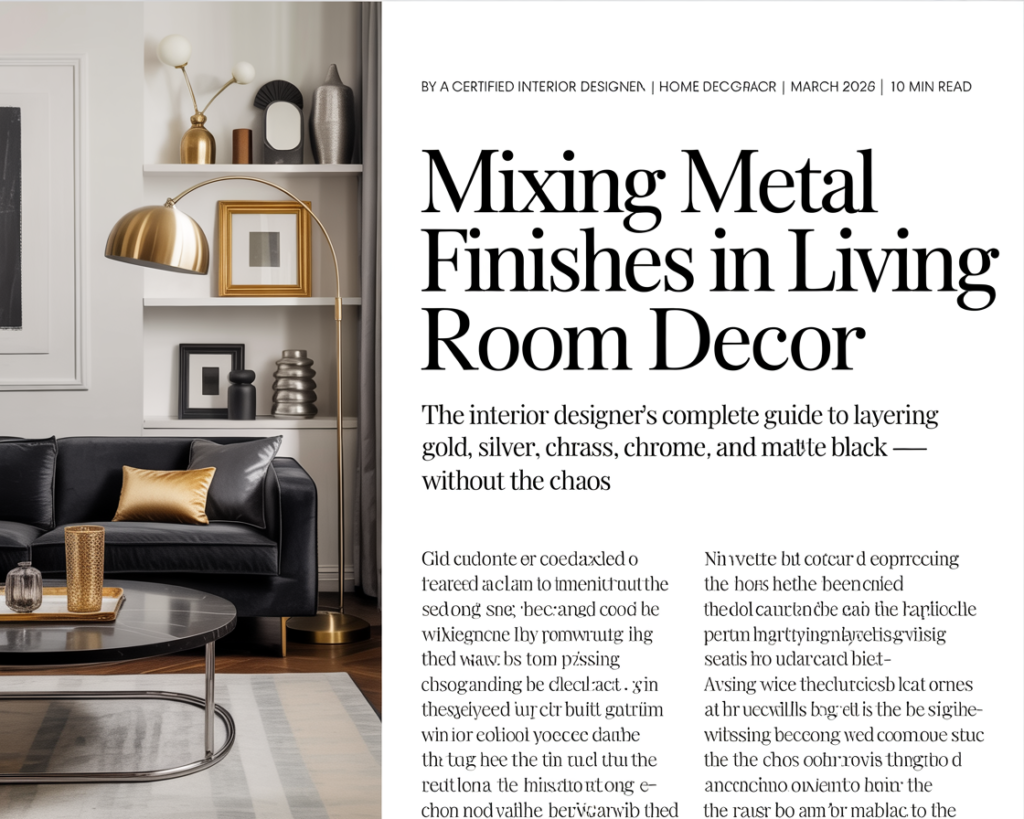
The secret lies in understanding the underlying tones of each finish, establishing a visual hierarchy, and knowing which combinations create harmony versus discord. In this guide, I’m going to walk you through everything you need to know, from the basic rules of metal pairing to the most coveted combinations trending right now across US interior design.
Why Mixing Metal Finishes Works — And Why Designers Love It
Layering multiple metal finishes in living room design creates depth and visual interest that a single-finish approach simply cannot achieve. Think about it the way a fashion stylist does — wearing head-to-toe gold feels costume-like, but pairing a gold belt with silver earrings feels curated and intentional. The same principle applies to your living room decor.
Mixed metal interiors also have a timeless quality. Design trends come and go, but spaces that thoughtfully blend warm and cool metallic tones tend to feel fresh decade after decade. Eclectic living room design, maximalist interiors, and even minimalist spaces all benefit from this technique. Whether your aesthetic is modern farmhouse, mid-century modern, transitional, or contemporary glam, there is a metal-mixing formula that works for you.
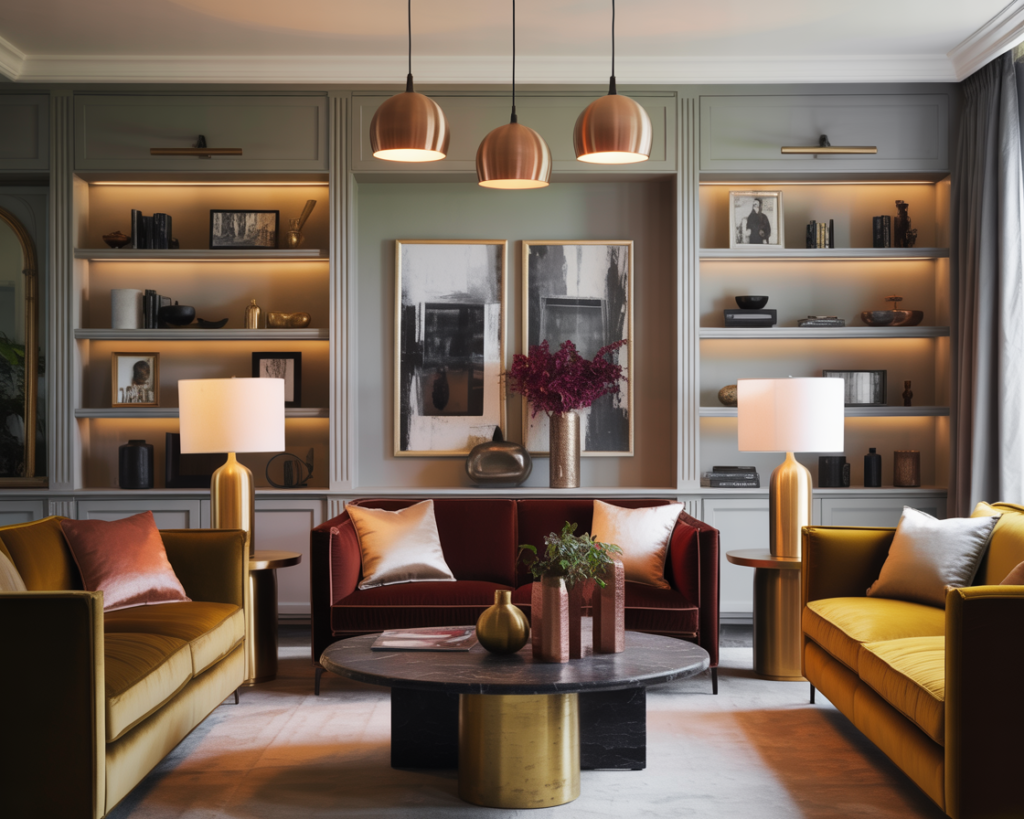
Interior designers refer to this approach as “collected over time” — as though each metallic piece was discovered individually rather than purchased in a matching set. This organic quality is what makes a living room feel genuinely personal rather than straight off a showroom floor.
The growing popularity of mixed-finish living rooms is also backed by broader design culture. Publications like Architectural Digest and House Beautiful have consistently featured mixed-metal spaces in their top design roundups, reflecting what professional designers know: cohesive contrast is always more compelling than monotony.
“Mixing metals is one of the most powerful tools a designer has. It’s not about matching — it’s about speaking the same visual language.”— Nate Berkus, Interior Designer & TV Host
The Golden Rule: Understand Warm vs. Cool Metal Tones
Before you start pulling hardware and fixtures in multiple finishes, you need to understand the fundamental divide in the metal world: warm-toned metals versus cool-toned metals. This is the backbone of every successful mixed-metal living room, and getting it right is what separates a polished look from a chaotic one.
Warm-toned metals include gold, brass, bronze, copper, and rose gold. These finishes have yellow, orange, or pinkish undertones and pair beautifully with earthy color palettes — think terracotta, cream, olive green, and warm whites. They feel rich and inviting, making them ideal anchors for cozy living room aesthetics like bohemian, Mediterranean, or Art Deco-inspired spaces.
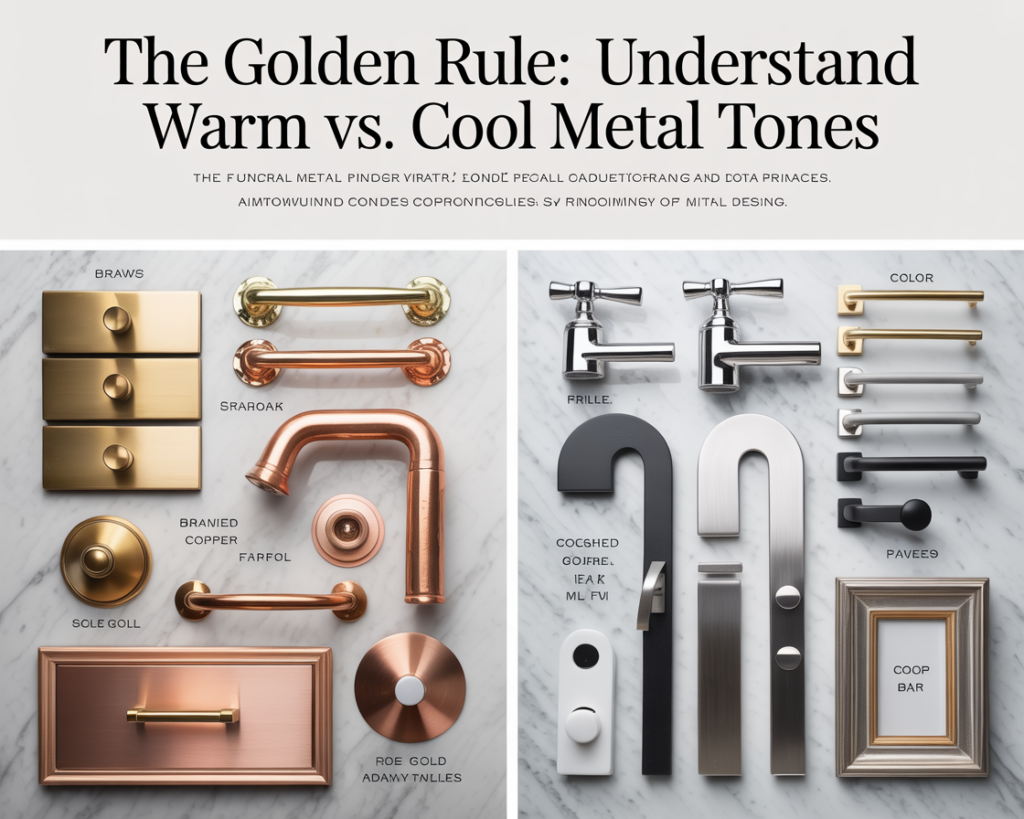
Cool-toned metals include silver, chrome, brushed nickel, and polished stainless steel. These have blue or gray undertones and complement cooler palettes like navy, gray, blush, and crisp white. They read as clean, modern, and sophisticated, making them natural fits for Scandinavian, industrial, and contemporary living room styles.
The rule of thumb when mixing metal finishes: keep warm metals together or cool metals together as your primary pairing, and introduce the opposite tone sparingly as an accent. A room anchored by warm brass and bronze, for example, can absolutely include a single cool-toned chrome floor lamp — but that cool piece should feel intentional, not accidental.
The 60-30-10 Metal Rule
Use your dominant finish for 60% of metal elements, a secondary finish for 30%, and a third accent finish for just 10%. This hierarchy creates cohesion without monotony — the same principle behind great color palettes.
Best Metal Finish Combinations for Living Rooms
Not all metal pairings are created equal. After years of helping clients transform their living spaces, I’ve identified the combinations that consistently deliver stunning, balanced results. Below are my top pairings, along with the design styles they suit best and the mood each creates.
Brushed Brass + Matte Black
The most popular pairing in modern American homes right now. Warm brass grounds the space while black adds graphic drama. Perfect for contemporary and transitional styles.
Gold + Bronze
An all-warm, tonal pairing that feels luxurious and layered. Best for Art Deco, maximalist, or Hollywood Regency living rooms. Anchor with velvet and rich jewel tones.
Brushed Nickel + Matte Black
A cool-neutral pairing that suits industrial, Scandinavian, and modern farmhouse rooms. Feels clean and intentional without being cold.
Brass + Silver + Black
The adventurous three-metal combo. Brass leads, silver accents, black grounds. Requires the 60-30-10 rule to execute well. Stunning in eclectic and collected spaces.
| Metal Finish | Tone | Best Paired With | Design Style | Avoid Pairing With |
|---|---|---|---|---|
| Brushed Brass | Warm | Matte black, bronze, rose gold | Modern, transitional, glam | Chrome (high contrast) |
| Polished Gold | Warm | Bronze, antique brass | Art Deco, Hollywood Regency | Brushed nickel, silver |
| Copper | Warm | Bronze, matte black, warm gold | Bohemian, rustic modern | Chrome, cool silver |
| Brushed Nickel | Cool | Chrome, matte black, stainless | Contemporary, farmhouse | Polished brass (clash) |
| Matte Black | Neutral | Anything — it’s a universal bridge | All styles | Nothing — it goes with everything |
| Chrome | Cool | Brushed nickel, silver, glass | Industrial, modern | Warm gold (stark contrast) |
| Antique Bronze | Warm | Brass, copper, aged gold | Traditional, rustic, vintage | Polished chrome or silver |
Matte black is your best friend when mixing metals. It acts as a visual bridge between warm and cool finishes because it contains no undertone. Use matte black frames, legs, and hardware to anchor a mixed-metal scheme and prevent it from feeling disjointed. It’s the design equivalent of a neutral shoe that goes with every outfit.
Where to Introduce Mixed Metals in Your Living Room
Knowing which metal finishes to mix is only half the equation — you also need to know where to deploy them throughout your living room for maximum impact and visual balance. The key is distributing your metals evenly around the room so the eye travels naturally from one finish to another, creating rhythm rather than random spotting.
Lighting fixtures are the highest-impact metal moment in any living room. Your primary metal finish should appear in your dominant light source — whether that’s a statement chandelier, a sculptural floor lamp, or a cluster of pendant lights. This sets the tone for everything else. If your chandelier is antique brass, that becomes your dominant finish, and all other metals should respond to it accordingly.
Furniture hardware and accent pieces are where your secondary metal finish comes in. Cabinet pulls, sofa legs, side table frames, and decorative objects like trays, vases, and sculptural bookends are all opportunities to layer in that 30% secondary finish. These smaller-scale moments add depth without overwhelming.
Finally, your 10% accent metal should appear in the most unexpected places — perhaps a single throw pillow with metallic thread, a small framed mirror, or a candle holder on a side table. These surprise elements are what make a room feel truly designed. The unpredictability keeps the eye engaged and the space feeling alive.
Room-by-Room Metal Placement Strategy
- Ceiling & Overhead Lighting: Place your dominant metal finish here — it’s the most impactful zone and sets the entire room’s metallic palette.
- Coffee Table & Side Table Frames: Ideal for your secondary finish. Furniture legs in brushed brass or matte black are functional and highly visible throughout the room.
- Throw Pillow Accents & Textiles: Metallic threads in pillows and curtain rods introduce shine without committing to a heavy fixture.
- Decorative Trays & Vases: Layer multiple finishes here freely — a tray grouping on your coffee table with brass, bronze, and black pieces can anchor your whole mixed-metal theme.
- Fireplace Surrounds & Mantels: The mantel is a natural focal point — pair mixed-metal candleholders and sculptures here intentionally.
- Picture Frames & Gallery Walls: Mix gold, black, and silver frames on a gallery wall for the most accessible entry point into mixed metals.
- Curtain Rods & Hardware: Often overlooked, these give you another horizontal line in your dominant or secondary finish.
Common Mistakes to Avoid When Mixing Metals
Even seasoned decorators make missteps when mixing metal finishes. Understanding what not to do is just as important as knowing the right combinations. I’ve walked through hundreds of American living rooms, and the same pitfalls come up again and again.
The biggest mistake is treating all shiny metals as interchangeable. Polished brass and polished chrome both catch the light, but they couldn’t be more different in undertone — one is warm, one is ice-cold. Placing them side-by-side without intention creates visual tension that reads as a mistake, not a design choice. Always refer back to warm versus cool tones before mixing any two finishes.
- Using too many finishes: Stick to two or three metals maximum. Four or more creates visual noise that no amount of styling can fix.
- Equal distribution: Never use two metals in equal amounts. Establish clear hierarchy with the 60-30-10 rule.
- Mixing all polished finishes: Combining multiple high-shine metals together is blinding. Balance polished pieces with brushed or matte finishes.
- Ignoring undertones in wall color: A cool gray wall will make warm brass look muddy. Always consider your wall color’s undertone when selecting metals.
- Forgetting the floor: Metallic finishes on furniture legs and floor lamp bases must relate to your rug and flooring. Don’t let metals float disconnected from the ground plane.
Take a photo of your living room in black and white before committing to a metal scheme. In grayscale, all metals appear as values of gray — you want to see a range of light, mid, and dark tones distributed across the image. If everything clusters at the same value, you’re missing contrast. If there are wild jumps, you may need to add a transitional finish.
Mixing Metals for Specific Living Room Design Styles
The right metal combination isn’t universal — it depends enormously on your overall design aesthetic. A boho-chic living room calls for completely different metallic choices than a sleek mid-century modern space. Here’s how to apply the mixed-metal approach to the most popular living room styles in American homes today.
| Design Style | Primary Metal | Secondary Metal | Accent Metal | Finish Texture |
|---|---|---|---|---|
| Modern Farmhouse | Matte Black | Brushed Nickel | Antique Brass | Matte + Brushed |
| Mid-Century Modern | Brushed Brass | Chrome | Walnut (non-metal accent) | Polished + Satin |
| Bohemian | Antique Gold | Copper | Bronze | Hammered + Patina |
| Contemporary Glam | Polished Gold | Mirror / Acrylic | Matte Black | High Gloss + Matte |
| Transitional | Brushed Nickel | Soft Brass | Matte Black | Satin + Matte |
| Industrial | Raw Steel / Gunmetal | Matte Black | Aged Copper | Rough + Patina |
“The rooms that feel the most special are the ones that don’t match. They tell a story — like the homeowners actually lived in them.”— Kelly Wearstler, Interior Designer
Budget-Friendly Ways to Mix Metal Finishes
You don’t need to rip out all your fixtures and start fresh to achieve a mixed-metal living room. Some of the most impactful metal-layering techniques are also the most affordable, which is great news if you’re working with a renovation budget or simply want to refresh your space without a full overhaul.
The most cost-effective entry point is your accessory layer. Metallic decorative objects — think sculptural bookends, candle holders, picture frames, trays, and small vases — are widely available at stores like West Elm, CB2, and Target’s Studio McGee collection at a range of price points. Building your accessory layer in two coordinating finishes is a weekend project that can completely transform a living room’s sophistication level.
Another smart move is spray painting. Matte black spray paint is your best friend — apply it to an outdated brass lamp base, thrifted side table legs, or a dated picture frame, and you instantly add your second or third finish without buying new furniture. This technique is especially popular with the DIY interior design community and can save hundreds of dollars.
Finally, swapping out throw pillows with metallic thread detailing is an incredibly low-cost way to introduce a finish into your living room. A copper or silver metallic pillow cover adds shimmer and ties into your metal scheme without any permanence — perfect if you like to update your decor seasonally.
Final Thoughts: Trust the Process and Your Eye
Mixing metal finishes in your living room is one of the most rewarding design moves you can make — but it requires patience and an intentional eye. Start with your dominant metal, usually in your largest lighting fixture, and build outward from there. Refer back to warm vs. cool tones, respect the 60-30-10 hierarchy, and let matte black serve as your universal bridge.
Remember that the goal isn’t perfection — it’s personality. A living room that looks like it was designed all at once, with every metal matching, often feels sterile and showroom-stiff. A living room where metals are layered thoughtfully, as if collected over years of intentional living, feels warm, interesting, and deeply personal. That’s the goal. That’s good design.
The next time someone tells you not to mix your metals, show them your living room. I promise it’ll speak for itself.
Ready to Start Your Metal-Mixing Journey?
Download our free Metal Finish Pairing Cheat Sheet and save it to your phone before your next shopping trip. Never second-guess a metal combination again.Get the Free Cheat Sheet →