
No renovation required. The fastest way to breathe new life into every room this season is simpler—and softer—than you think.
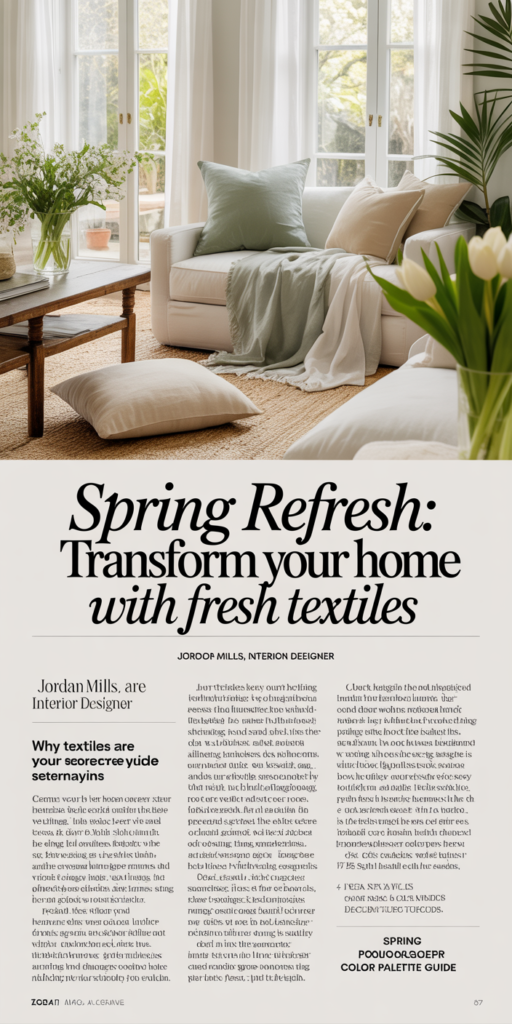
Jordan Mills, Interior Designer
Specializing in Seasonal Home Refresh .
Light linens · Natural textures · Botanical hues
In this article
- Why Textiles Are Your Secret Weapon
- Spring Color Palette Guide for
- Room-by-Room Textile Refresh
- Choosing the Right Fabrics for Spring
- The Art of Textile Layering
- Budget-Smart Swaps That Look Expensive
- Your Spring Textile Checklist
Every spring, my clients ask me the same question: “I want my home to feel fresh and new — but I don’t want to do a full renovation.” My answer is always the same. You don’t need new furniture, new flooring, or a fresh coat of paint to transform your space. You need fresh textiles.
Swapping out your soft furnishings — throws, pillow covers, curtains, table linens, and rugs — is the single highest-impact, lowest-cost update you can make to your home decor. Done right, a textile refresh changes the mood, the light, the feeling of warmth or airiness in a room, and even how spacious a space seems. This spring, I’m going to walk you through exactly how to do it like a professional.
Why Textiles Are Your Secret Weapon for a Spring Home Refresh
In interior design, we talk a lot about the “bones” of a space — the architecture, the furniture, the built-ins. But what makes a home feel lived-in, inviting, and seasonally alive is its soft layer. Textiles carry color, texture, pattern, and tactile warmth. They are the emotional layer of a room.
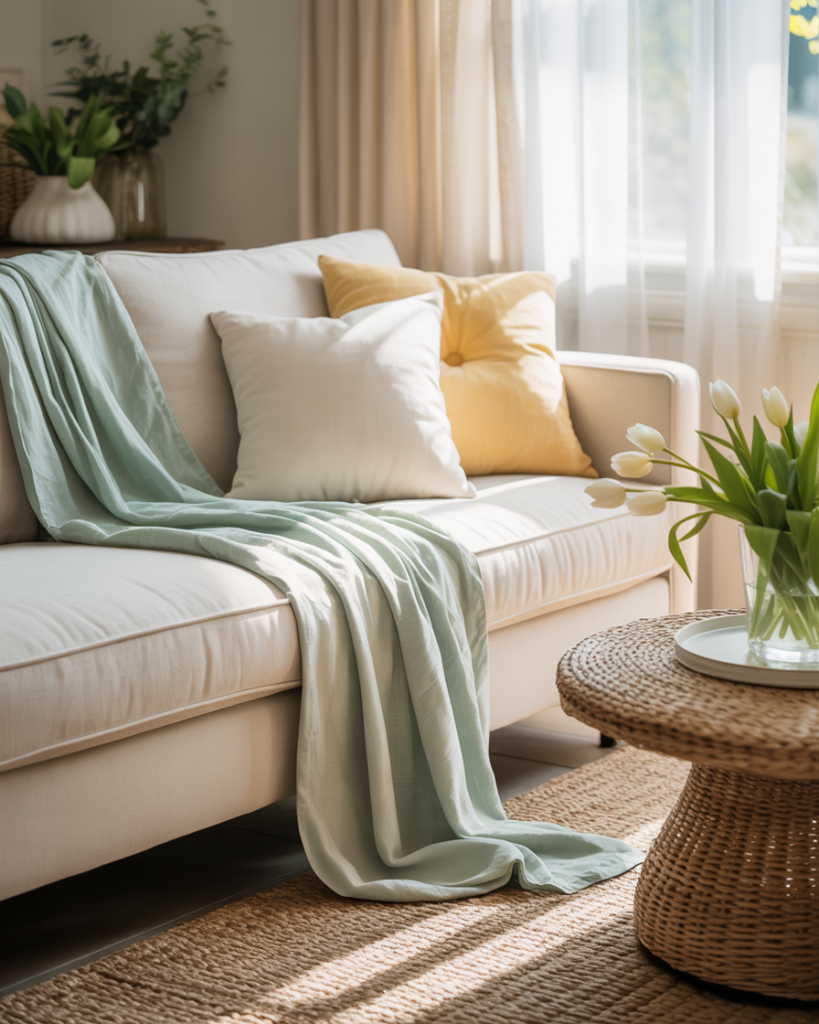
Spring is defined by lightness — longer days, open windows, that unmistakable sense of renewal. Your home decor should reflect that energy. Swapping heavy winter fabrics like velvet and chunky knit wool for breathable linen, airy cotton, and woven jute instantly signals a seasonal shift without a single paintbrush or power tool involved.
The best part? Textile updates are completely reversible, infinitely customizable, and — when you know where to shop and what to look for — extremely budget-friendly. Whether you’re updating a two-bedroom apartment in Chicago or a sprawling farmhouse in Texas, fresh spring textiles work universally.
Think of spring textiles as your home’s wardrobe refresh. Just as you swap cashmere sweaters for linen blazers in your closet, your rooms deserve the same seasonal transition. A 100% linen throw draped over the sofa arm does more for a living room’s spring energy than a brand-new coffee table ever could.
68%
of homeowners say seasonal decor changes improve their mood
$120
avg. cost of a full textile refresh vs. $3,000+ for furniture
3 hrs
typical time needed to refresh textiles in an entire home
Spring Color Palette Guide for
Before you shop for a single throw pillow, you need a color strategy. In 2025, the leading spring home decor palette leans into what I call “the naturalist’s garden” — a family of muted, botanical hues that are warm enough to feel cozy but light enough to breathe.
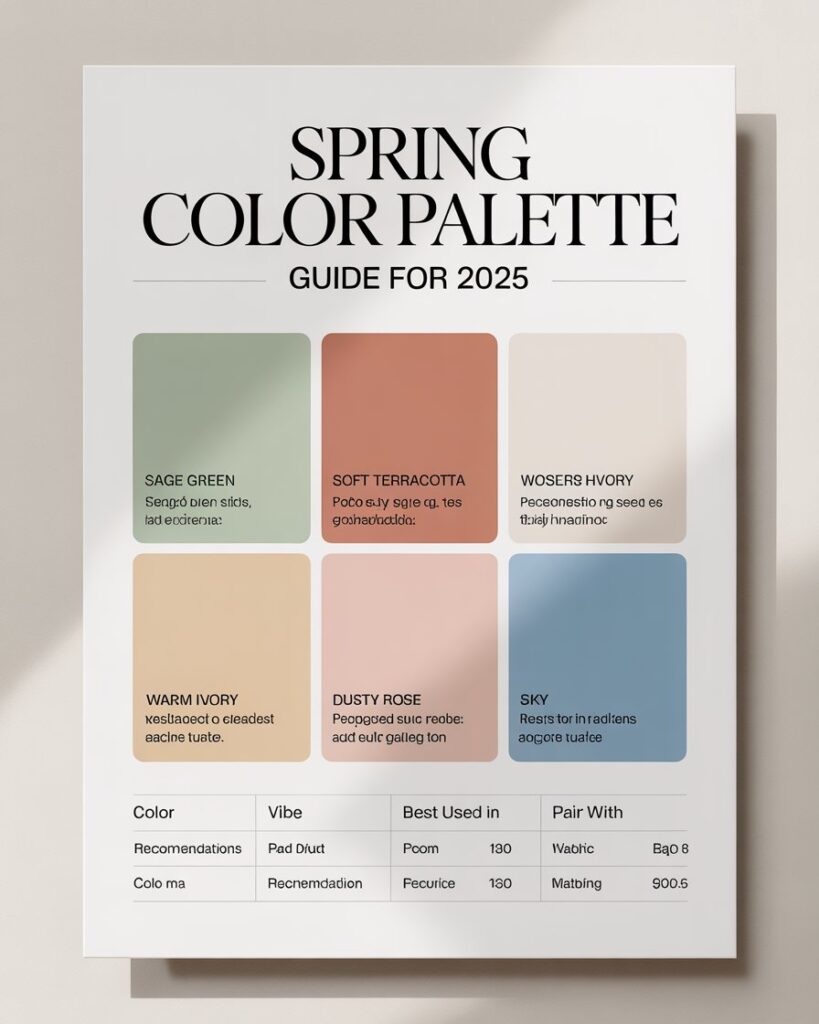
Think sage green, soft terracotta, warm ivory, dusty rose, and sky blue. These tones work beautifully together and are incredibly forgiving when mixing patterns and textures — which means less design anxiety for you and more creative freedom to layer prints and solids without everything clashing.
| Color | Vibe | Best Used In | Pair With |
|---|---|---|---|
| Sage Green | Calming, earthy | Bedroom, living room | Warm ivory, dusty rose |
| Terracotta | Grounded, warm | Dining room, entryway | Cream, wicker, jute |
| Sky Blue | Airy, fresh | Bathroom, nursery | White, natural linen |
| Dusty Rose | Romantic, soft | Bedroom, reading nook | Sage, warm white |
| Warm Ivory | Neutral, versatile | Any room | Literally everything |
✦ Pro Tip
Stick to a maximum of three colors across your textile refresh — one dominant neutral, one mid-tone accent, and one pop color. This creates visual cohesion without making your home feel like a catalog showroom. Keep the ratio roughly 60/30/10.
Room-by-Room Spring Textile Refresh
Every room in your home has a unique function, and your textile refresh should support that function while enhancing the seasonal feel. Here’s how I approach each space with my own clients, working from the most impactful room to the most overlooked.
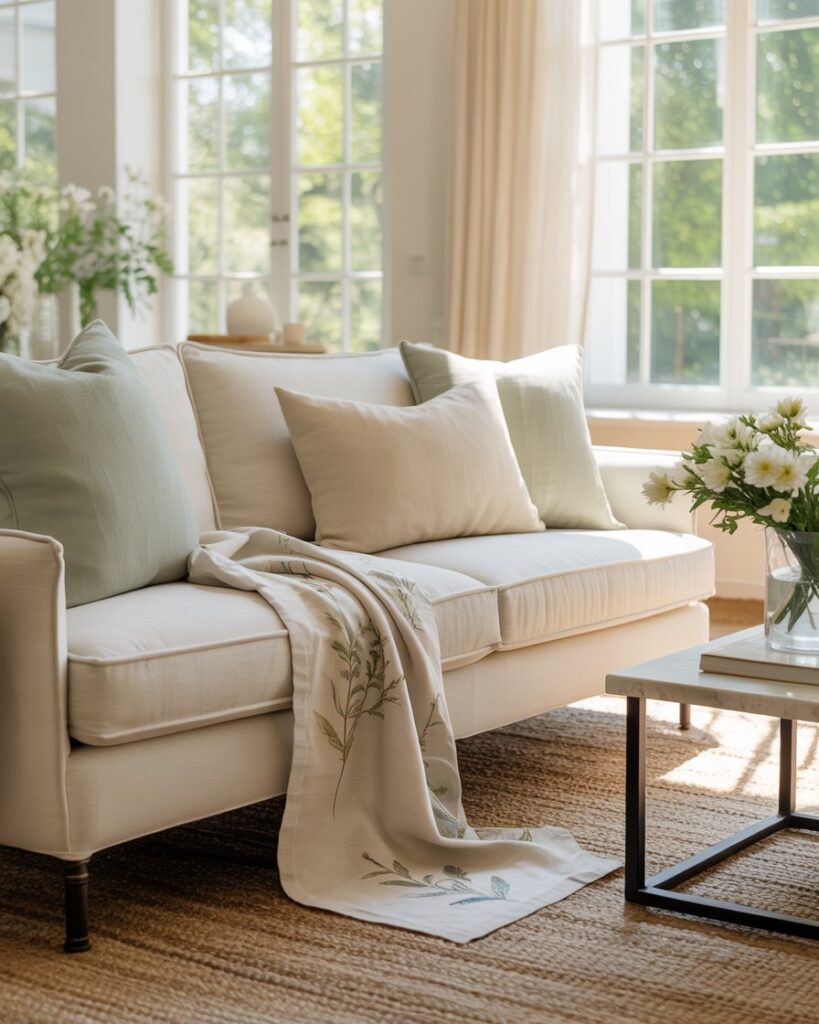
Don’t try to tackle every room in one weekend. I always advise starting with the space where you spend the most time — usually the living room — and letting that success and momentum carry you room to room. Doing one space beautifully beats five spaces halfway done.
Living Room: This is the room that sets the tone for your entire home and the place where a textile refresh pays the biggest dividends. Start with your sofa: swap out heavy throw pillows for lightweight cotton or linen covers in your spring palette. Add a loosely woven cotton or jute rug over your existing floor covering if you don’t want to move furniture — it works. A linen throw in a botanical print draped over the arm of the sofa is the finishing touch that says “a designer lives here.”
Bedroom: The goal is to create the feeling of a boutique hotel room — layered, breathable, and serene. Replace your winter duvet cover with a lighter, percale cotton or linen cover in soft ivory or sage. Add European pillow shams in a complementary pattern. A lightweight quilted coverlet at the foot of the bed adds texture and that hotel-like layered look without added warmth you don’t need in spring.
“Textiles are the fastest way to change the emotional temperature of a room — not the actual temperature, but how a space makes you feel the moment you walk in.”— Jordan Mills, Interior Designer
Dining Room: A table runner in natural linen, a new set of cloth napkins, and perhaps a pair of lightweight linen curtains replacing winter drapes can make your dining room feel like an al fresco café. Layer different textures — a woven placemat under a ceramic plate under a linen napkin — to create visual depth that makes meals feel like occasions.
Bathroom: Often overlooked but incredibly impactful. Swap out dark winter towels for a set of lightweight waffle-weave or Turkish cotton towels in sky blue, dusty rose, or clean white. A new cotton bath mat and a simple linen shower curtain with clean horizontal stripes elevates the entire bathroom into a spa-like retreat.
Choosing the Right Fabrics for Spring
Not all fabrics are equal, and spring comes with specific requirements: breathability, lightness, and an ability to take color well. Here’s my definitive fabric guide for a spring home refresh that will genuinely last and perform beautifully season after season.
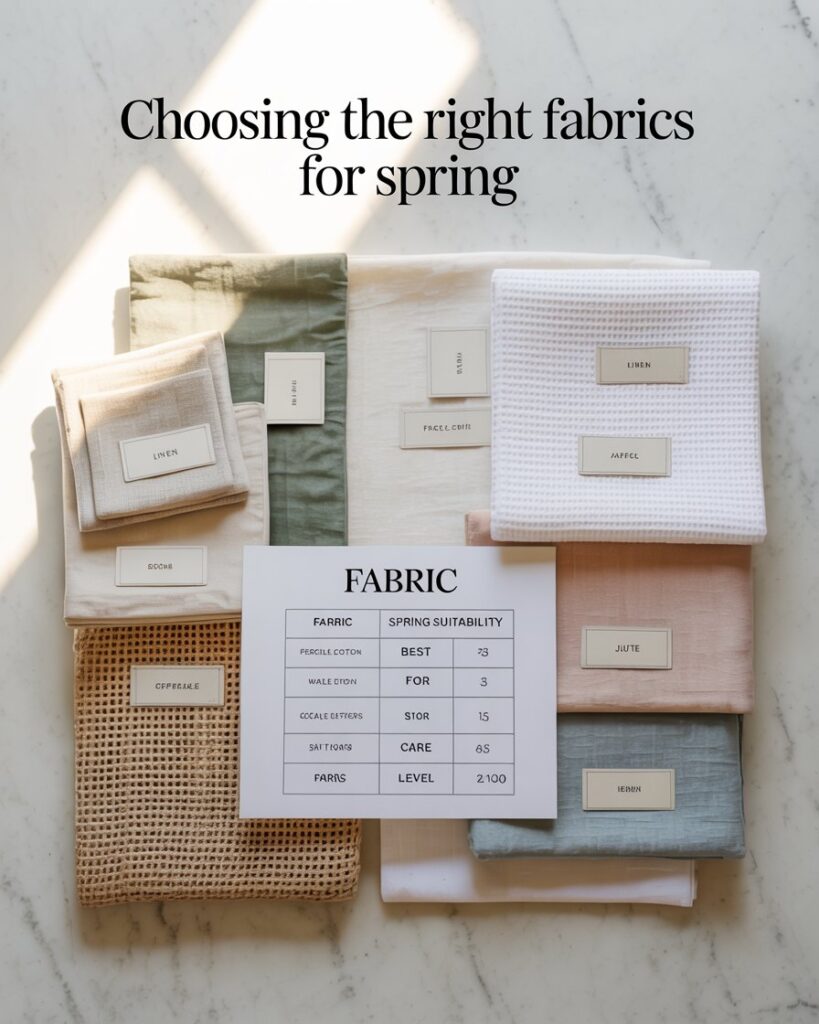
Quality matters enormously here. I’ve seen clients buy a $15 throw from a fast-fashion homeware brand that pills after two washes and a $95 linen throw that still looks beautiful five years later. Spend more on the textiles that get the most use and touch — bedding, sofa throws, and everyday napkins — and save on purely decorative accents like vase runners and shelf styling.
| Fabric | Spring Suitability | Best For | Care Level |
|---|---|---|---|
| 100% Linen | Excellent | Curtains, bedding, throws | Low — gets better with washing |
| Percale Cotton | Excellent | Sheets, duvet covers | Very low |
| Waffle Weave | Very Good | Towels, bath mats, throws | Low |
| Jute / Sisal | Very Good | Area rugs, placemats | Medium |
| Muslin Cotton | Good | Table linens, curtains | Very low |
| Velvet | Poor | Pack away until fall | High |
✦ Pro Tip
When buying linen for the first time, don’t be alarmed by wrinkling — it’s a feature, not a flaw. Linen’s relaxed, lived-in texture is exactly what gives a room that effortless, European summer-home quality. Embrace it rather than iron it away.
The Art of Textile Layering
One of the most common mistakes I see in home decor is what I call “matching syndrome” — buying every textile in a room from the same collection so everything is perfectly coordinated. The result always looks sterile and staged. Real, beautiful rooms are layered, and layering means intentional mixing.
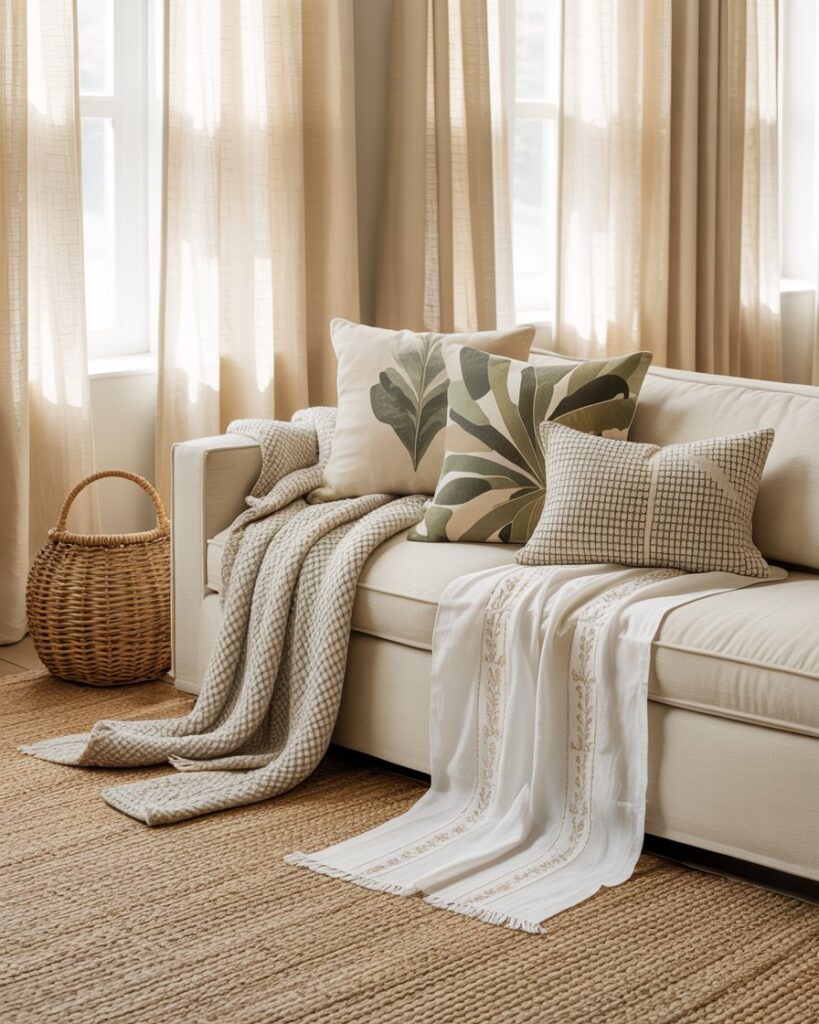
The rule I live by: mix scale, texture, and pattern — but stay within your color family. A large-scale botanical print pillow cover can sit next to a smaller geometric woven pillow in the same sage and ivory tones. A chunky jute rug can anchor a room where delicate linen curtains filter the window light. The contrast in texture is what creates visual richness.
Here’s the layering framework I use with every client, regardless of budget or room size. Follow these steps in order and you’ll always end up with a room that looks curated rather than chaotic.
- Layer 1 — Foundation: A large area rug in a neutral, textured weave (jute, sisal, or a low-pile wool). This anchors everything above it.
- Layer 2 — Structure: Your largest textile pieces — curtains and sofa throws. These should be in your dominant color (usually a neutral like linen ivory or warm white).
- Layer 3 — Accent: Pillow covers in your mid-tone spring accent color. Mix at least two different fabric textures here.
- Layer 4 — Detail: Small-scale pattern pieces — a botanical-print table runner, a striped hand towel, an embroidered edge on a pillowcase. These are your personality layer.
- Layer 5 — Organic: A woven basket, a macramé wall hanging, or a rattan tray. Natural materials that aren’t technically textiles but complete the soft, organic story.
The most beautiful rooms I’ve ever designed weren’t the most expensive — they were the most layered.
Budget-Smart Swaps That Look Expensive
You absolutely do not need a designer budget to execute a stunning spring textile refresh. I’ve done complete room refreshes for clients for under $200 that genuinely looked like the result of a $2,000 makeover — because the strategy was right even when the budget was tight.
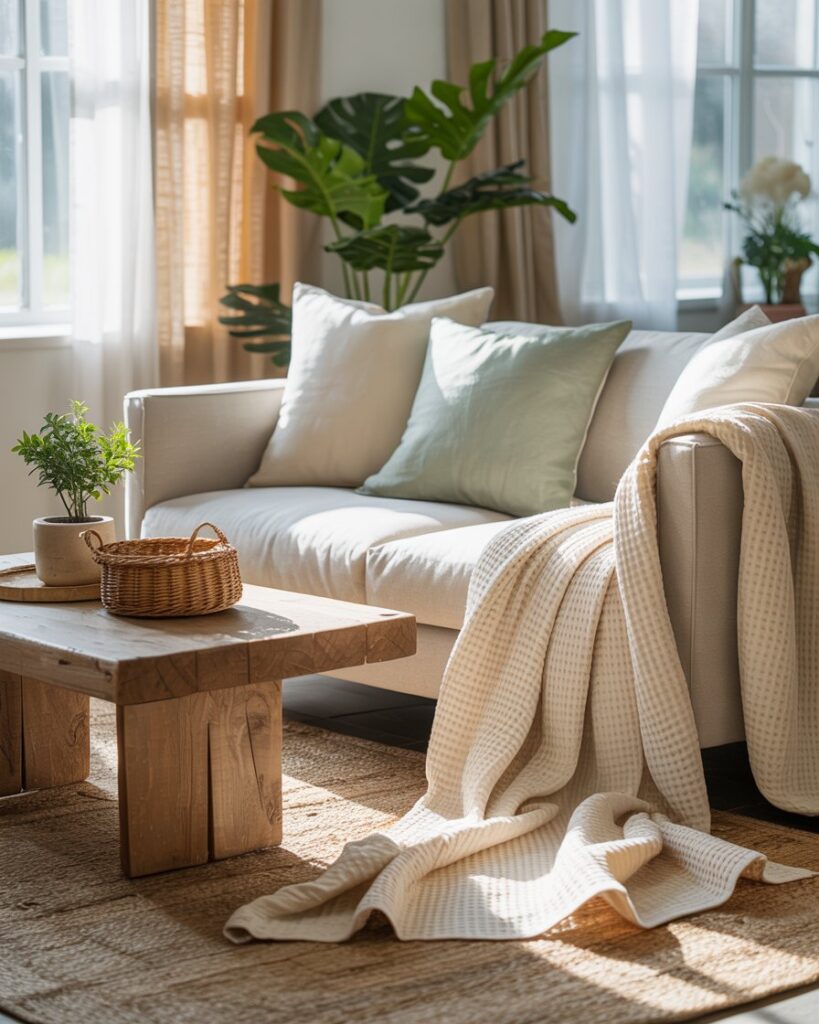
The key insight here is that perceived quality comes from texture and natural materials, not from brand names or price tags. A $30 set of 100% cotton waffle-weave towels looks more expensive on a bathroom shelf than a $60 set of synthetic-blend towels. Shop materials and fibers, not brands and collections.
| Room | High-Impact Swap | Estimated Cost | Where to Shop |
|---|---|---|---|
| Living Room | 2–3 new pillow covers + linen throw | $40–$80 | H&M Home, Target, IKEA |
| Bedroom | Linen duvet cover + new shams | $60–$150 | Quince, Brooklinen, West Elm |
| Dining Room | Linen table runner + cloth napkins | $25–$55 | Amazon Basics, HomeGoods |
| Bathroom | Turkish cotton towels + woven bath mat | $30–$70 | TJ Maxx, Etsy, Crate & Barrel |
| Entryway | Jute or flatweave runner rug | $35–$90 | Rugs USA, Wayfair, IKEA |
✦ Pro Tip
Shop the clearance sections at Pottery Barn, West Elm, and Crate & Barrel at the end of winter — usually February through March — when they liquidate their fall and winter textiles at 40–60% off. Then check Etsy for handmade linen items from European makers, which are frequently better quality than mass-produced alternatives at similar price points.
Your Complete Spring Textile Checklist
Use this checklist as your shopping and styling guide. Work through it room by room, checking off each item as you update, refresh, or consciously decide to keep it for another season. There’s no rule that says you need to change everything — a spring refresh is about editing and elevating, not replacing everything wholesale.
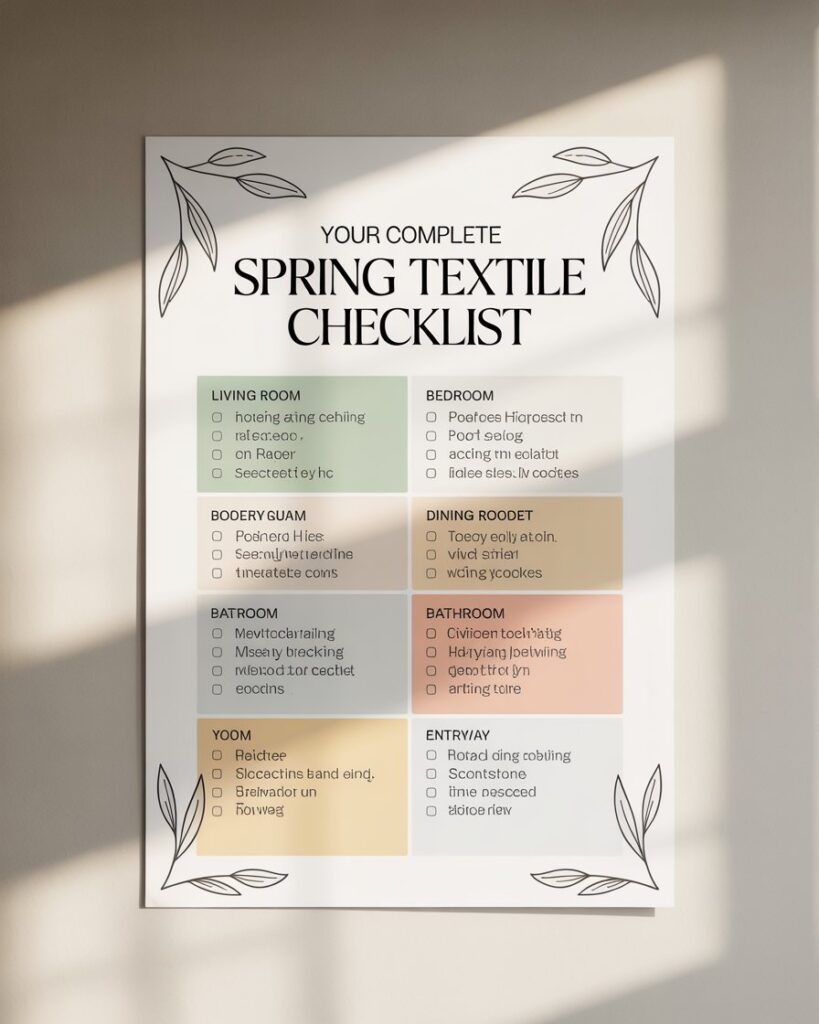
Print this out, stick it on your refrigerator, and tackle one room per weekend. By the time May arrives, your entire home will feel like a seasonal retreat that genuinely reflects the lighter, more optimistic energy that spring brings into all of our lives.
- Sofa throw pillow covers swapped to spring palette
- Lightweight linen or cotton throw on sofa / accent chair
- Living room curtains lightened (swap blackout for sheer or linen)
- Area rug or rug layer updated to natural fiber or lighter palette
- Duvet cover switched to percale or linen in a spring color
- Decorative European shams added to bed
- Lightweight quilted coverlet for bed foot layering
- Table runner updated to linen or cotton weave
- Cloth napkins refreshed (aim for a set of 8)
- Bathroom towels swapped to waffle-weave or Turkish cotton
- New woven or cotton bath mat placed
- Entryway or hallway runner rug refreshed
The Bottom Line
A spring home refresh doesn’t require a contractor, a designer’s budget, or even a free weekend. It requires intention, a clear color palette, and a willingness to embrace the beautiful, breathable, organically textured fabrics that the season calls for.
Start small. Buy one linen throw. Swap two pillow covers. Open your curtains to lighter panels. You’ll be amazed at how much a room can transform when you change what you touch and see every day. That’s the quiet power of textiles — and it’s been the foundation of beautiful homes for as long as homes have existed.