
By a home decor and interior design specialist | Smart small-space solutions for American homes
Meta description: Discover 15+ wall-mounted desk ideas for small home workspaces, from floating desks to fold-down Murphy desks, plus sizing charts, ergonomic tips, and budget breakdowns.
You do not need a spare bedroom to build a productive home office. Across the United States, remote and hybrid workers are carving out workspaces in apartments, condos, starter homes, and even hallway nooks. The secret weapon for most of them is surprisingly simple: a wall-mounted desk that lifts your workspace off the floor and gives you back precious square footage.
As an interior designer who specializes in home decor, I have helped clients turn unused corners, bedroom walls, and stair landings into polished, functional offices. A wall-mounted desk, also called a floating desk or space-saving desk, can look like a styled shelf one minute and a full workstation the next. This guide walks you through the best ideas, the right dimensions, the smartest materials, and the mistakes to avoid so your small home workspace feels intentional rather than squeezed in.
Why Wall-Mounted Desks Are Perfect for Small Home Offices
Traditional desks eat up floor space with bulky legs, drawers, and hardware. A wall-mounted desk frees the floor beneath it, which makes a room feel larger and easier to clean. Visual breathing room matters in compact spaces, and an open floor line is one of the easiest ways to create it.
These desks are also wonderfully flexible. You can install one at the exact height that suits you, tuck a chair or stool underneath, and even choose a design that disappears when the workday ends. For renters and homeowners alike, that flexibility is a major advantage in a market where square footage is expensive.
“In a small room, every inch has to earn its place. A desk that floats gives you the work surface without the visual weight.”
The main benefits at a glance:
- Frees up floor space so rooms look larger and feel less cluttered
- Customizable height for better ergonomics and comfort
- Easy to hide or fold when you need the room for something else
- Stylish and modern with clean lines that suit almost any decor style
- Budget friendly since many options cost less than a full-size desk
- Great for multipurpose rooms like bedrooms, living rooms, and guest rooms
Types of Wall-Mounted Desks to Consider
Before you buy, it helps to understand the main styles. Each one solves a slightly different problem, and the right pick depends on how often you work from home, how much gear you use, and how much wall you have available.
| Desk Type | Best For | Typical Depth | Average Price Range | Pros | Cons |
|---|---|---|---|---|---|
| Floating desk (fixed) | Daily remote work | 16 to 24 in. | $60 to $350 | Sturdy, sleek, simple to style | Always visible |
| Fold-down (drop-leaf) desk | Part-time work, tight rooms | 12 to 20 in. | $80 to $400 | Disappears when closed | Limited weight capacity |
| Murphy desk with cabinet | Hidden workspace in living areas | 14 to 22 in. | $250 to $1,200 | Built-in storage, tidy look | Higher cost, harder install |
| Desk with shelf unit | Storage-heavy setups | 15 to 24 in. | $90 to $500 | Vertical storage included | Can feel visually busy |
| Corner floating desk | Awkward corners | 16 to 20 in. per side | $100 to $400 | Uses dead space well | Needs two sturdy walls |
| Pull-out or sliding desk | Closets, bookcases, kitchens | 14 to 20 in. | $120 to $600 | Hides inside furniture | Custom work often needed |
If you are comparing styles, retailers such as IKEA, Wayfair, and The Container Store offer a wide range of wall-mounted and fold-down desks at different price points, which makes it easy to see sizes and finishes side by side.
Floating Desk Ideas for Every Room in Your Home
The beauty of a floating desk is that it works almost anywhere there is a stretch of open wall. Here are the room-by-room ideas I recommend most often to clients who are short on space.
Bedroom Wall Desk
A bedroom is the most common home for a small workspace, and a floating desk beside or opposite the bed keeps the footprint tiny. Choose a calm finish, like warm oak or soft white, so the desk blends with your bedroom decor instead of announcing itself. Add a wall sconce and a small pinboard to define the zone.
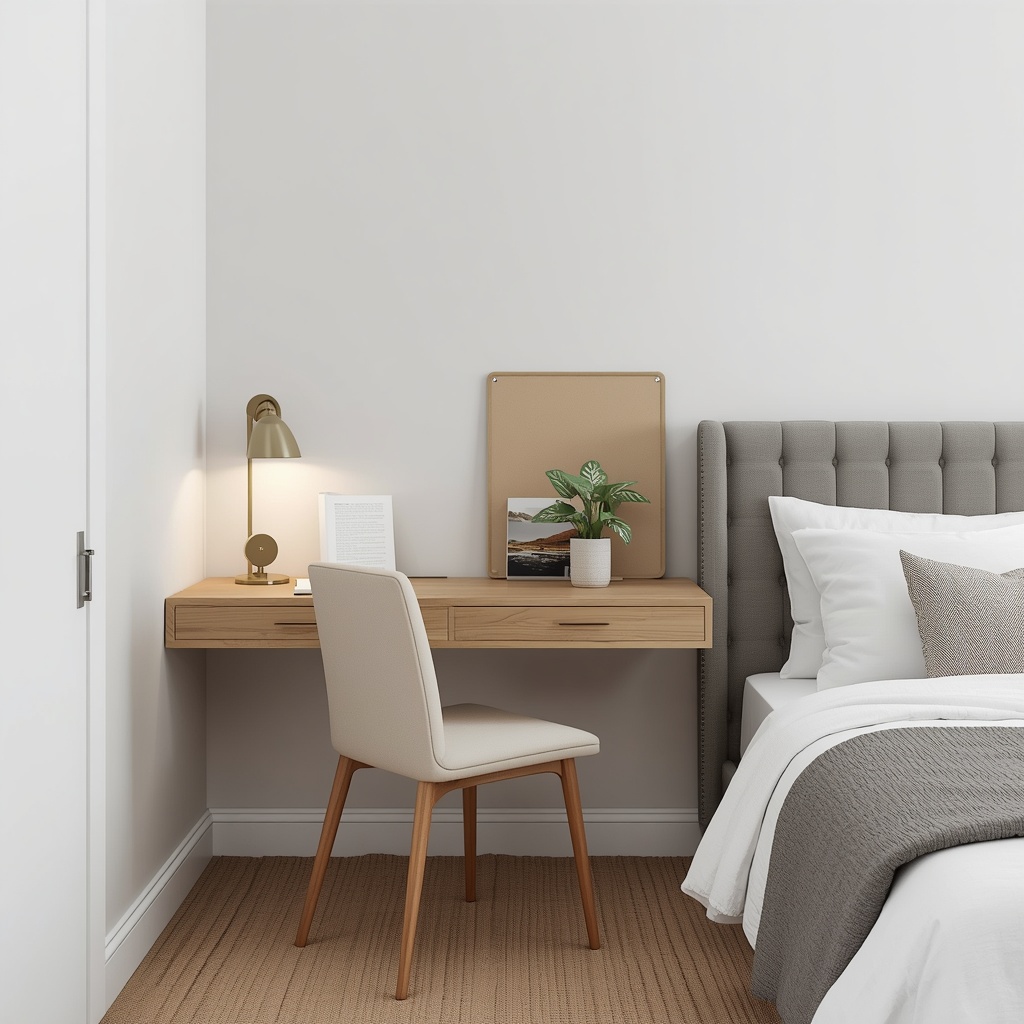
To protect your sleep, try to angle the desk away from the bed or use a decorative folding screen. When you finish work, close the laptop, tuck away the stationery, and pull the chair under the desk. That small ritual helps your brain separate work from rest.
Living Room Console Desk
A narrow floating desk can double as a console table behind a sofa or along a long wall. During the day it is your workstation; in the evening it holds a lamp, a tray, and a few styled decor pieces. This dual purpose approach is a favorite in studio apartments across New York, Chicago, and Los Angeles.
Keep the depth to about 16 or 18 inches so it does not crowd walkways. Pair it with a slim upholstered stool or a lightweight chair that can slide away easily when guests arrive.
Hallway or Entryway Nook
Wide hallways are wasted space in many homes. A shallow floating desk, around 12 to 14 inches deep, creates a charming “command center” that works for laptop sessions, bill paying, and homework. Add hooks above for bags and a mirror to bounce light down the corridor.
Closet Office
The closet office is one of the most popular small home office ideas of the past few years. Remove the doors, install a sturdy floating shelf-style desk at about 29 inches, and add shelves above for supplies. Paint the interior a bold color, such as deep green or navy, for a cozy, jewel box effect.
Kitchen or Dining Nook
A fold-down desk on a bare kitchen wall gives you a spot for meal planning, laptop work, or kids’ homework. Choose a wipeable finish like laminate or sealed hardwood, and keep it away from the stove and sink to avoid heat and splashes.
Stair Landing or Under-Stair Wall
If you have a landing, a custom floating desk can transform it into a quiet, light-filled office. Natural light, a small plant, and a simple task lamp make it feel like a purposeful retreat rather than leftover space.
Pro Tip from the designer: Before you buy anything, tape the desk’s dimensions on the wall and floor with painter’s tape. Sit in your chair and “work” for five minutes. If your elbows or knees feel cramped, adjust the size now, not after the drilling starts.
Fold-Down and Murphy Desk Ideas for Ultra-Tight Spaces
If your workspace has to vanish at the end of the day, a fold-down or Murphy desk is the answer. When closed, it looks like a framed picture, a cabinet, or a clean panel. When open, it reveals a fully functional work surface, often with cubbies for supplies.
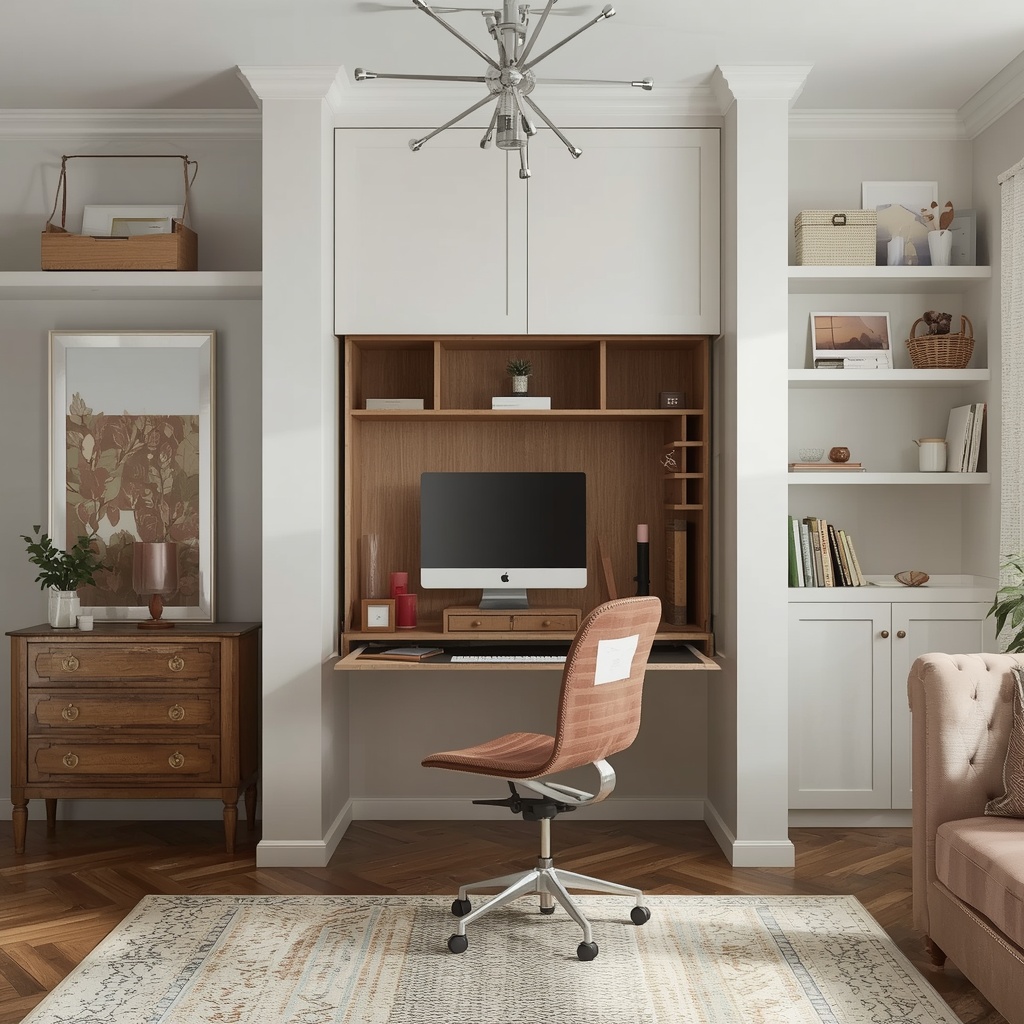
These designs are ideal for guest rooms, studio apartments, and open-plan living areas. They also protect you from the “work is always watching me” feeling that comes with a permanent desk in a shared room. Look for models with gas-assisted hinges or sturdy brackets that hold the desk open securely.
Smart ways to style a fold-down desk:
- Make it a gallery wall. Frame the closed panel with art so it blends in.
- Use a chalkboard or corkboard front. The closed desk becomes a family message center.
- Choose a mirror finish. A mirrored front doubles as a dressing mirror and bounces light around.
- Match your cabinetry. In kitchens or built-ins, finish the panel to match nearby doors for a seamless look.
- Add hidden power. Run a discreet outlet or USB hub inside the cabinet for easy charging.
Getting the Size and Height Right
Comfort is not optional, even in a tiny office. A desk that is too high or too deep will cause neck, shoulder, and wrist strain over time. Use these reference measurements as a starting point, then adjust for your own height and chair.
| Measurement | Recommended Range | Notes |
|---|---|---|
| Desk height (seated) | 28 to 30 inches | Elbows should rest at about 90 degrees |
| Desk depth (laptop only) | 14 to 18 inches | Enough for a laptop and a notebook |
| Desk depth (monitor use) | 20 to 24 inches | Keeps the screen at a comfortable distance |
| Desk width (minimum) | 36 inches | 48 to 60 inches is more comfortable |
| Knee clearance | 24 inches wide, 18 inches deep | Allows free leg movement |
| Monitor top height | At or just below eye level | Use a riser or wall arm if needed |
For deeper guidance on posture, screen position, and chair setup, the U.S. Occupational Safety and Health Administration offers a helpful computer workstation ergonomics resource. It is worth a quick read before you finalize your desk height.
Materials and Finishes That Make Small Spaces Shine
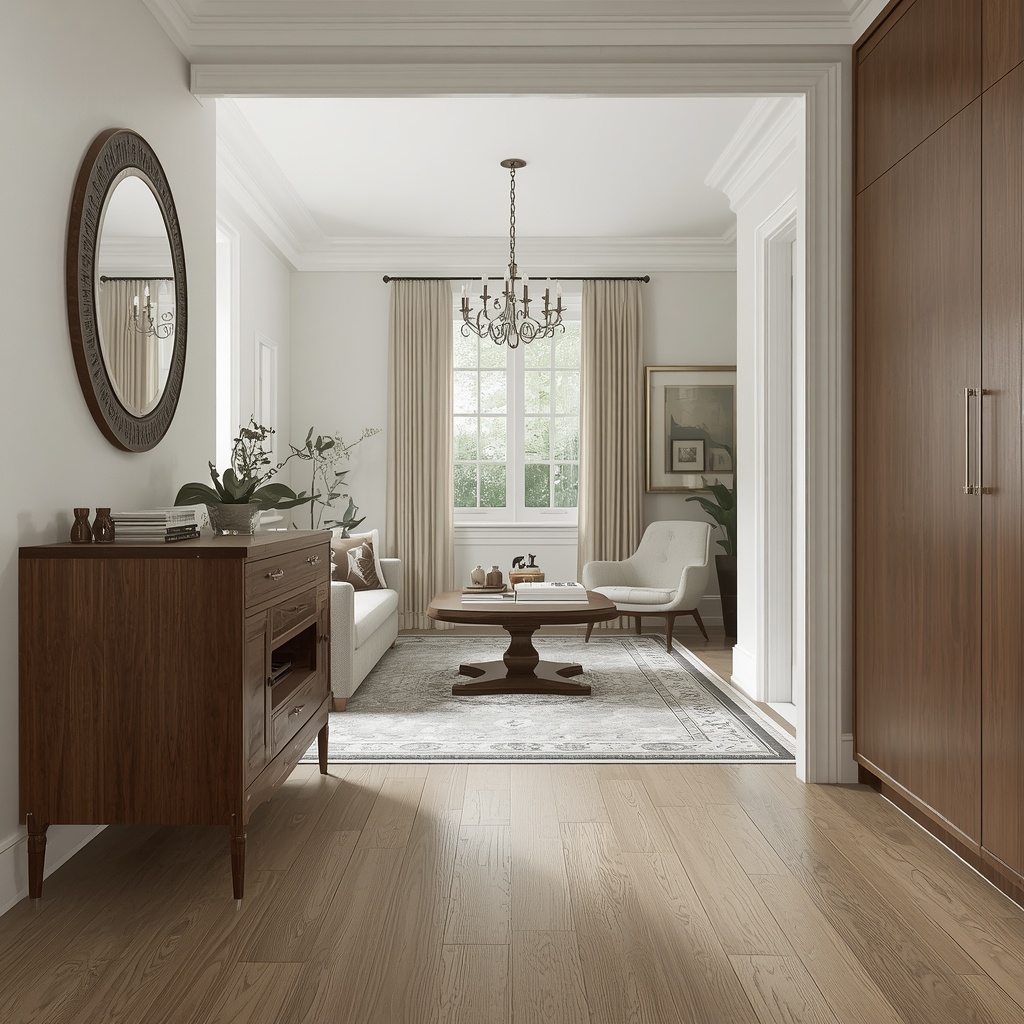
The material you choose affects not only durability but also how big your room feels. In small spaces, lighter tones and slim profiles generally work best, though a deep, rich finish can add drama if balanced with good lighting.
| Material | Look and Feel | Durability | Best Decor Styles |
|---|---|---|---|
| Solid wood (oak, walnut, ash) | Warm, natural, timeless | Excellent | Scandinavian, farmhouse, mid-century |
| Plywood with veneer | Light, modern, affordable | Good | Minimalist, contemporary |
| Laminate or MDF | Clean, budget friendly | Moderate | Modern, transitional |
| Metal and wood combo | Industrial, sturdy | Excellent | Industrial, loft |
| Glass top | Airy, visually light | Moderate | Modern, glam |
| Painted wood | Customizable color | Good | Cottage, eclectic, boho |
When in doubt, choose a finish that echoes something already in the room, like your flooring, a picture frame, or the legs of your sofa. That repetition makes a new desk feel like it was always meant to be there.
Storage Solutions That Keep a Wall Desk Clutter Free
Small workspaces fall apart when clutter takes over. The good news is that the wall above and beside your desk is prime real estate. Think vertically and keep surfaces mostly clear.
Storage ideas that work beautifully:
- Floating shelves stacked above the desk for books, baskets, and decor
- Pegboards with modular hooks, cups, and shelves for supplies
- Rail systems with S-hooks and small containers for pens and chargers
- Wall-mounted file holders for active paperwork
- Under-desk drawers on rolling carts that slide away when not needed
- Wall pockets or felt organizers for notebooks and cables
- Magnetic boards for to-do lists and reminders
Aim to keep only three things on your desktop: your laptop or monitor, one lamp, and one small decorative item. Everything else should live on the wall or in a drawer, which keeps your focus sharp and your space calm.
Lighting, Cables, and Comfort Details
Good lighting turns an ordinary nook into a workspace you actually want to use. Place your desk perpendicular to a window when possible to reduce screen glare, and add a task lamp with adjustable brightness for early mornings and late evenings. Warm white bulbs around 2700K to 3000K feel cozy, while neutral white around 4000K helps with focus.
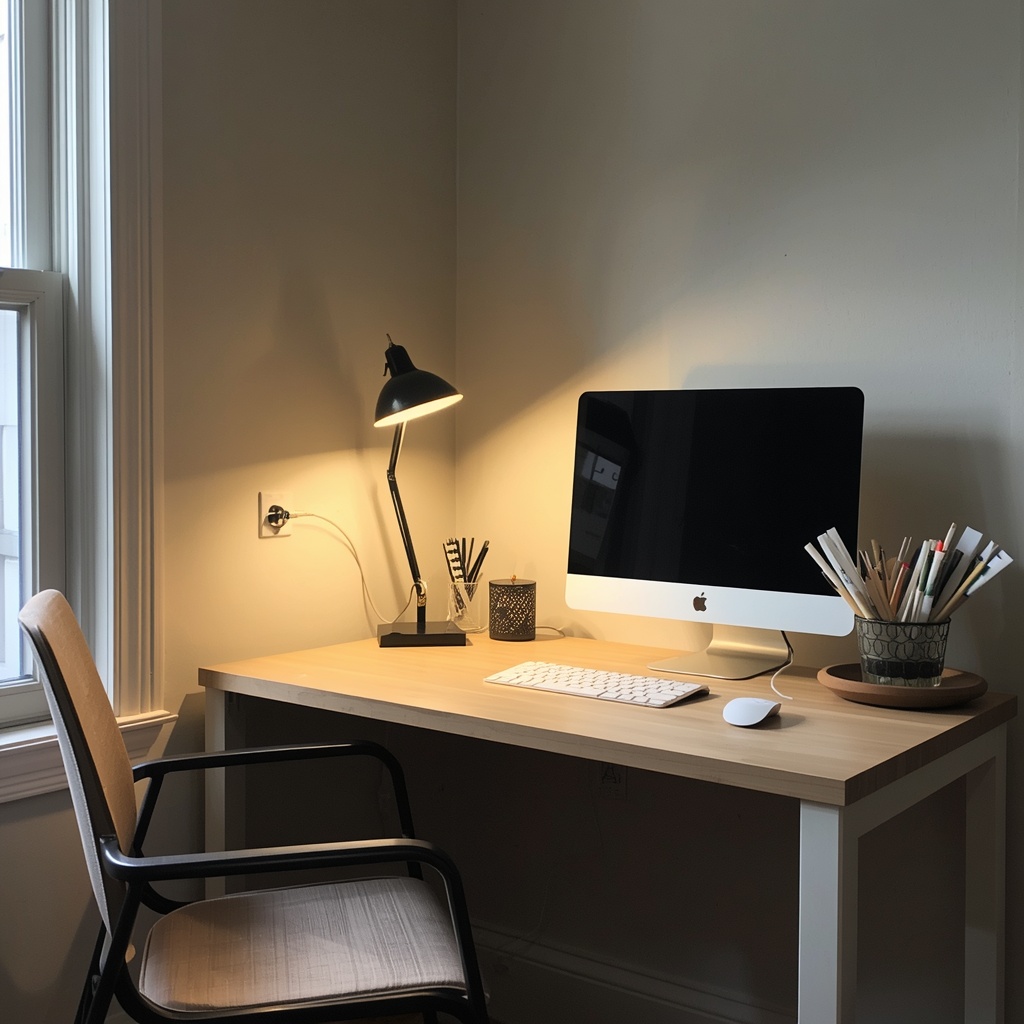
Cable management is the finishing touch that separates a styled desk from a messy one. Use adhesive cable clips, a paintable cord cover along the wall, and a small power strip mounted on the underside of the desk. A tidy setup photographs beautifully and, more importantly, feels better to work in every single day.
Pro Tip: Mount a power strip under the front edge of your floating desk and run a single cord down the wall to the outlet. You will cut visible cable clutter by more than half.
How to Install a Wall-Mounted Desk Safely
A floating desk only works if it is anchored properly. Weight capacity, wall type, and bracket quality all matter, especially if you plan to use a monitor, a lamp, and a few books. Here is the basic process I recommend, though you should always follow the manufacturer’s instructions.
- Find the studs. Use a stud finder and mark each stud location. Studs are typically spaced 16 inches apart in American homes.
- Mark your height. Hold the desk where you want it and use a level to draw a straight guide line.
- Choose the right hardware. Use heavy-duty lag screws into studs. Use rated toggle bolts or anchors only if studs are not available and the manufacturer allows it.
- Pre-drill pilot holes. This prevents wood from splitting and keeps screws straight.
- Mount the brackets or cleat. Check level at every step.
- Attach the desktop. Tighten everything securely and test with firm pressure before adding your gear.
- Load gradually. Add equipment slowly and watch for any sagging or movement.
Renters should check their lease before drilling. Some landlords allow small holes, while others do not. If you cannot drill, consider a freestanding secretary desk or a leaning desk as a flexible alternative.
Budget Breakdown: What a Small Wall Desk Setup Really Costs
You can create a beautiful workspace on almost any budget. The table below shows realistic ranges for U.S. shoppers, from simple DIY projects to premium custom builds.
| Budget Level | Desk | Chair | Lighting and Storage | Total Estimate |
|---|---|---|---|---|
| Starter | $50 to $120 | $60 to $120 | $30 to $60 | $140 to $300 |
| Mid-range | $150 to $350 | $150 to $300 | $60 to $150 | $360 to $800 |
| Premium | $400 to $1,200 | $350 to $800 | $150 to $400 | $900 to $2,400 |
A clever shortcut is the DIY floating desk. A pre-finished butcher block or solid wood shelf board, paired with heavy-duty brackets from a home improvement store such as The Home Depot or Lowe’s, often costs less than a ready-made desk and can be cut to fit your wall exactly.
Styling Ideas: Make Your Small Workspace Feel Designed
A small home office should still feel like part of your home, not a corner that was forgotten. A few thoughtful touches can make a big difference to both mood and productivity.
- Pick a simple color palette. Two or three tones, such as warm white, sage, and natural wood, keep the nook cohesive.
- Add greenery. A trailing pothos on a shelf or a small snake plant on the floor brings life and softness.
- Hang meaningful art. One framed print at eye level makes the space feel personal.
- Layer textures. A small rug, a linen pin board, and a woven basket warm up hard surfaces.
- Use a comfortable but compact chair. Backless stools save space, but a supportive task chair is better for long days.
- Include a mirror. It reflects light and makes the area feel more open.
Common Mistakes to Avoid
Even the best small space ideas can go wrong if a few details are overlooked. After years of designing compact home offices, these are the mistakes I see most often.
| Mistake | Why It Hurts | Better Approach |
|---|---|---|
| Skipping the stud finder | Desk may sag or pull from the wall | Always anchor into studs when possible |
| Choosing a desk that is too shallow | Cramped screen distance, eye strain | Allow at least 20 inches for monitors |
| Ignoring chair clearance | Chair bumps walls and furniture | Leave 30 to 36 inches behind the chair |
| Overloading the surface | Visual clutter, reduced focus | Use wall storage and keep the desktop minimal |
| Forgetting about lighting | Glare, shadows, tired eyes | Add a task lamp and manage window light |
| Buying for looks only | Discomfort and poor posture | Test height and depth before committing |
Frequently Asked Questions
How much weight can a wall-mounted desk hold?
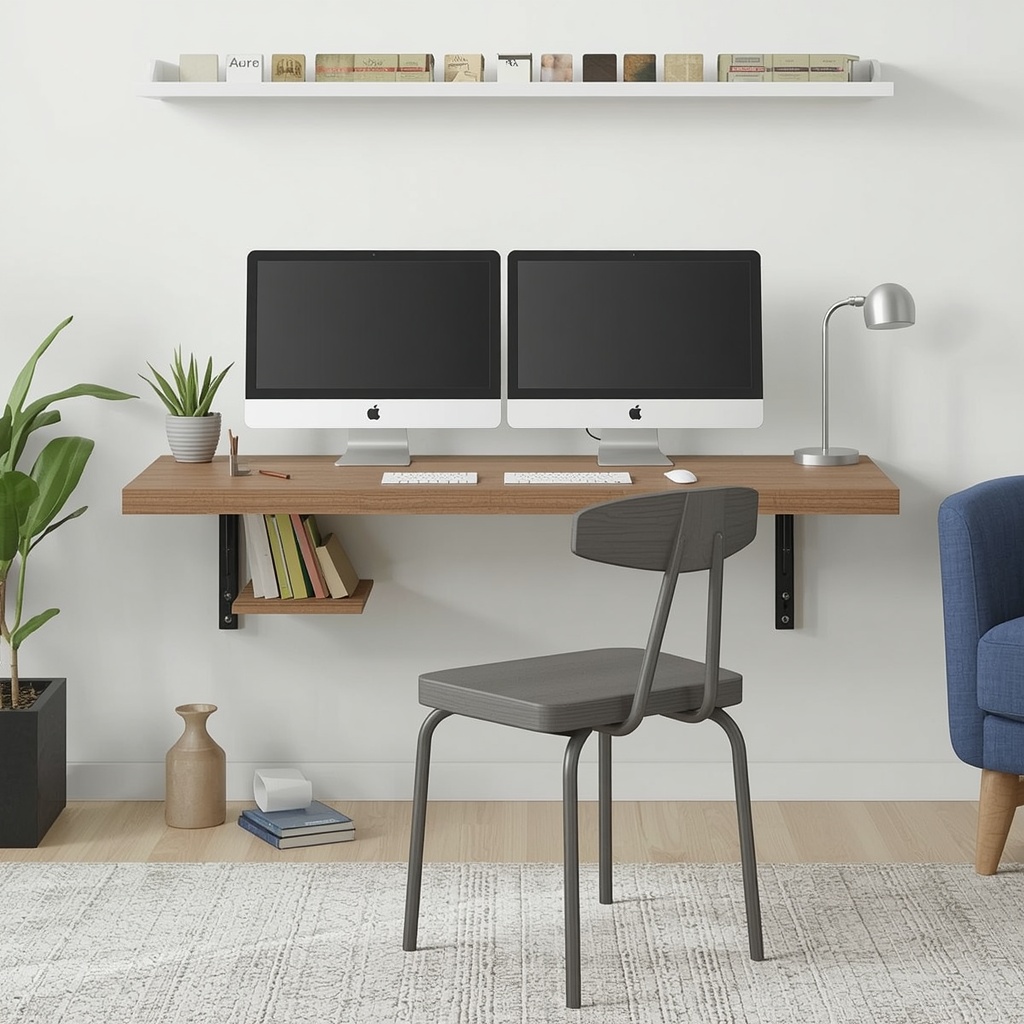
It depends on the design, brackets, and wall. Many quality floating desks hold between 50 and 150 pounds when properly anchored into studs. Always check the manufacturer’s weight rating and distribute heavy items, like monitors, across the desk’s width.
Can I use a wall-mounted desk for dual monitors?
Yes, if the desk is wide enough, at least 48 to 60 inches, and rated for the combined weight. Consider mounting monitors on wall arms instead, which takes weight off the desk entirely.
What is the best wall-mounted desk for renters?
Look for fold-down desks with minimal mounting points, or consider heavy-duty adhesive-free alternatives like a leaning desk. If your lease allows drilling, a bracket-mounted floating desk can be removed and the holes patched easily.
How do I make a small home office feel less boring?
Bring in color, texture, and personal items. Paint an accent wall, hang a gallery of art, and choose lighting that has character. A small space can have a big personality.
Final Thoughts: Big Productivity in a Small Footprint
A wall-mounted desk proves that a great home workspace is about smart design, not square footage. Whether you choose a sleek floating desk in the bedroom, a fold-down Murphy desk in the living room, or a closet office wrapped in a bold paint color, the goal is the same: a workspace that supports your focus and fits your life.
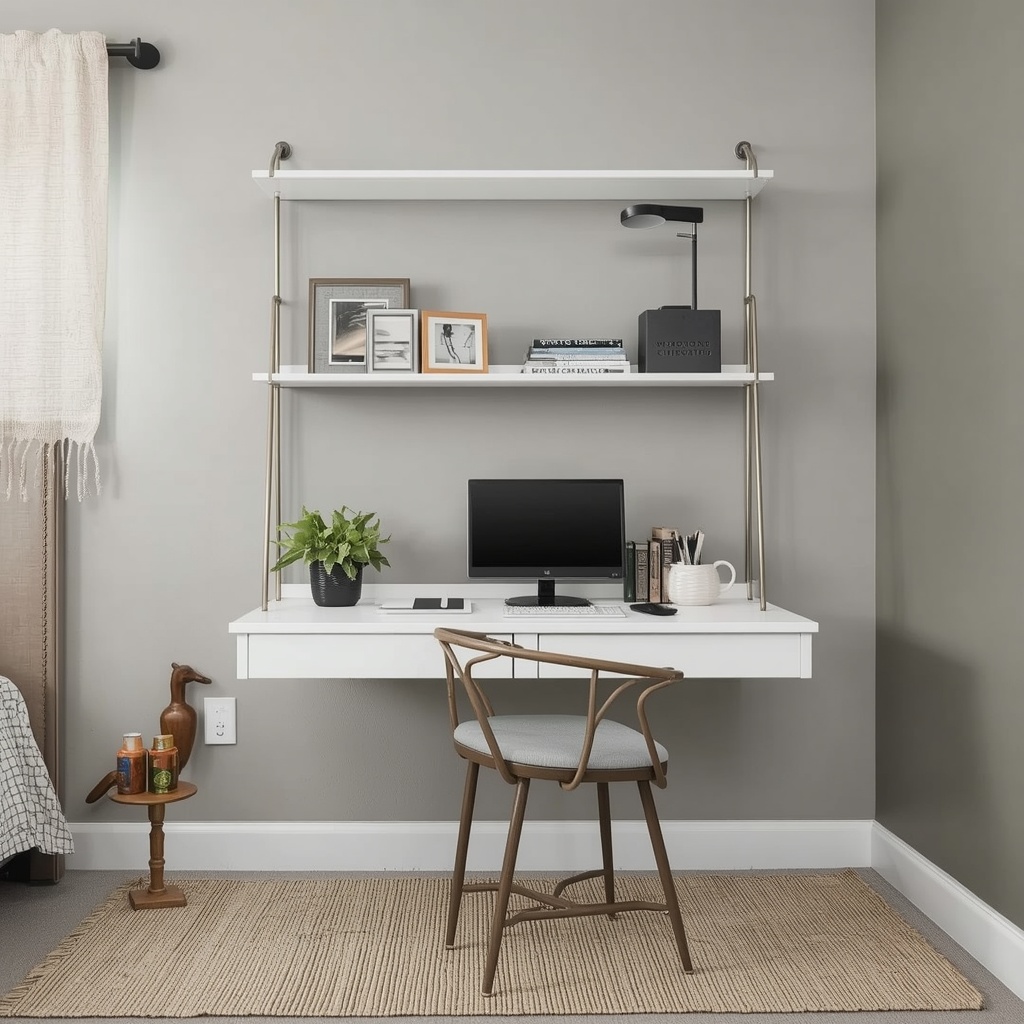
Start by measuring your wall, testing your dimensions with painter’s tape, and picking a style that matches your decor and your work habits. Add good lighting, clever storage, and a few personal touches, and you will have an office that looks beautiful, works hard, and leaves your floor open for everything else that matters at home.
Related keywords covered: small home office ideas, floating desk, fold-down desk, Murphy desk, space-saving desk, wall-mounted workstation, compact home office, remote work setup, small space decor, apartment office ideas, ergonomic home office, DIY floating desk, closet office, home office storage.