
If there’s one material pairing that never goes out of style, it’s wood and marble. This duo has been a cornerstone of luxury interiors for centuries, yet it feels completely at home in today’s modern living rooms. The warmth of wood grain against the cool elegance of marble creates a visual and tactile balance that’s hard to replicate with any other combination.
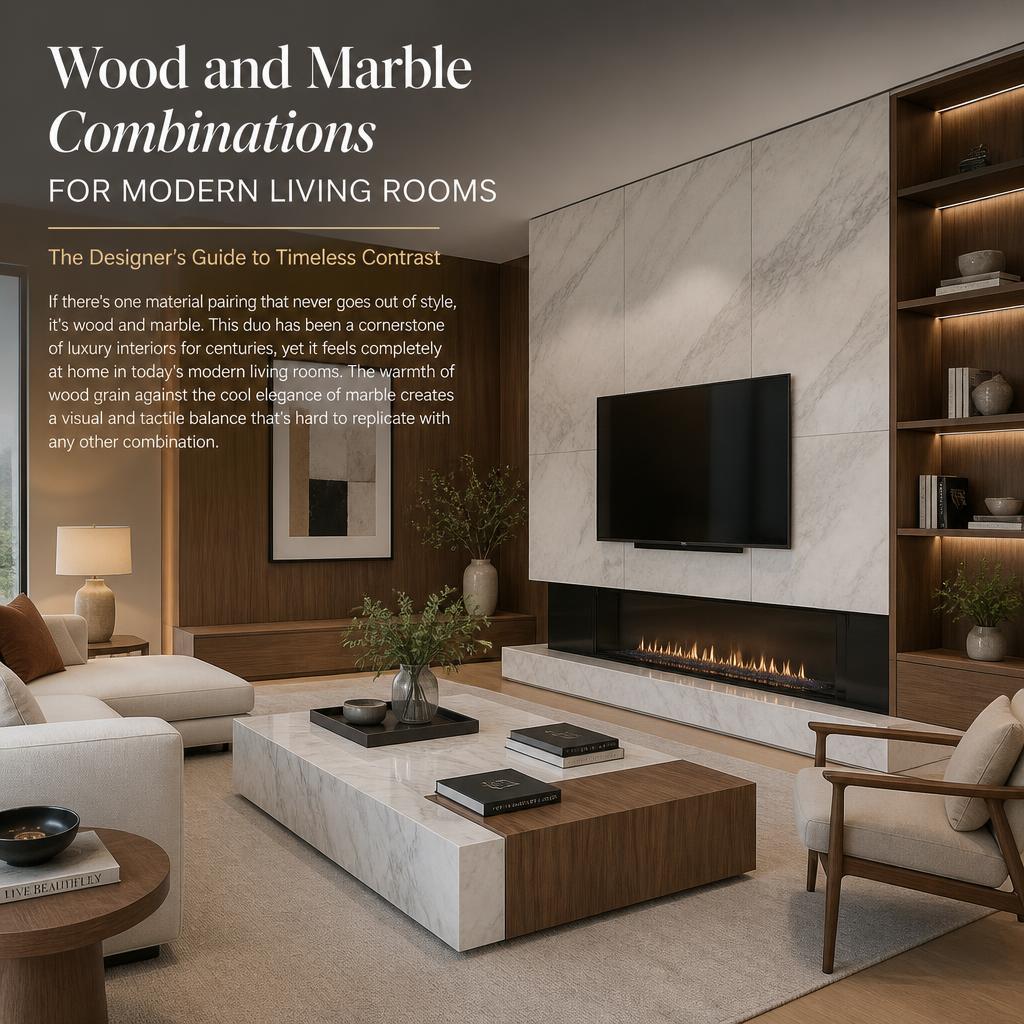
As an interior designer, I get asked constantly how to bring this “high-end hotel lobby” feeling into an actual family living room. The good news? You don’t need a mansion or an unlimited budget to pull it off. You just need to understand why this pairing works and where to use it strategically.
In this guide, I’ll walk you through everything from material selection to layout tips, so you can create a living room that feels curated, current, and genuinely liveable.
Why Wood and Marble Work So Well Together
Design is fundamentally about balance, and wood and marble are natural opposites that complete each other. Wood brings organic texture, visual warmth, and a sense of grounding to a room. Marble contributes light-reflective surfaces, subtle veining, and an elevated, almost sculptural quality.
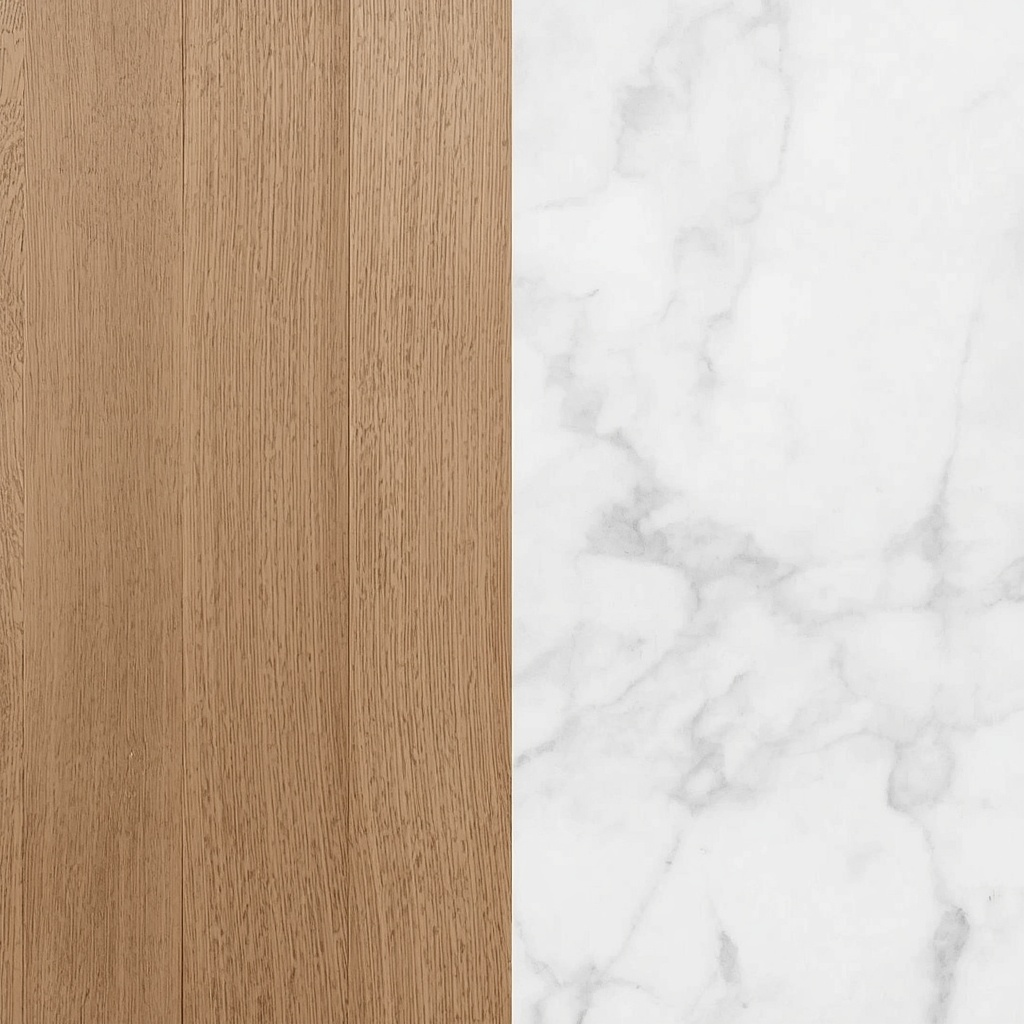
This is what designers call “material contrast,” and it’s a foundational principle of modern interior design. When you pair a matte, textured surface with a polished, reflective one, the eye naturally moves between them, creating visual interest without clutter. It’s also why this combination fits so well into biophilic design, which emphasizes natural materials that connect us to the outdoors.
“Great interiors are rarely about one hero material. They’re about the conversation between two or three materials that shouldn’t work together on paper, but do.”
That’s the magic of wood and marble: one softens the other, and together they read as intentional rather than accidental.
Popular Wood and Marble Pairings
Not all wood tones and marble varieties pair equally well. Below is a quick-reference table I use with my own clients when narrowing down options.
| Wood Type | Best Paired Marble | Overall Vibe |
|---|---|---|
| Walnut | Calacatta Gold | Warm, luxurious, contemporary |
| White Oak | Carrara White | Scandinavian minimalism |
| Teak | Emperador Brown | Earthy, mid-century modern |
| Ebonized Oak | Nero Marquina (Black) | Moody, dramatic, editorial |
| Natural Ash | Statuario | Bright, airy, coastal-modern |
| Reclaimed Pine | Travertine | Rustic-modern, organic |
A quick rule of thumb: warmer wood tones pair beautifully with marble that has gold or beige veining, while cooler, ashy woods tend to look best against gray or white-based stone.
💡 Pro Tip
When in doubt, bring home physical samples of both materials before committing. Marble and wood tones shift dramatically under different lighting conditions — a pairing that looks stunning under warm showroom lighting can feel flat or mismatched under your living room’s natural daylight or LED fixtures.
Key Living Room Zones to Use This Combo
You don’t need to renovate your entire living room to introduce this pairing. Here are the most effective (and popular) places to work it in:
- Coffee tables – A wood base with a marble top is one of the easiest entry points into this trend.
- TV console or media unit – Wood cabinetry with a marble-topped surface adds function and elegance.
- Fireplace surrounds – Marble facing with a wood mantel is a classic, high-impact focal point.
- Accent walls – Wood slat paneling paired with a marble-look feature wall creates depth.
- Flooring transitions – Marble tile in an entryway that flows into wood flooring in the living area.
- Side tables and shelving units – Small doses of marble on wood shelving units add polish without overcommitting.
- Window sills or ledges – Thin marble slabs on wood-framed windows are a subtle, designer-level detail.
Starting small — a single coffee table or console — is a great way to test the look before investing in larger architectural elements like flooring or a fireplace surround.
Color Palettes That Complement Wood and Marble
Since wood and marble already carry strong textural presence, your color palette should support rather than compete with them. Neutral tones remain the safest and most timeless base for this material pairing.
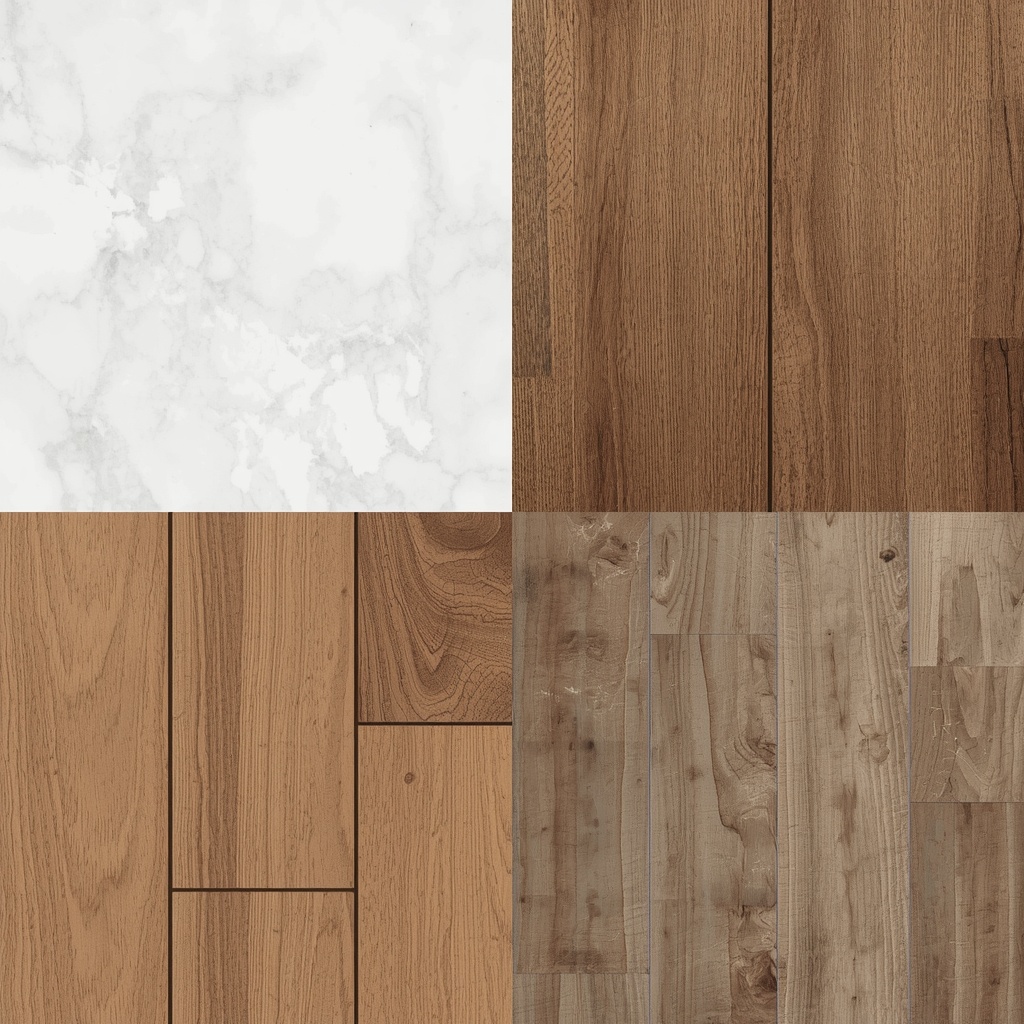
Consider building your palette around soft whites, warm greige, charcoal, and deep forest green or navy as accent colors. These shades let the natural veining of the marble and the grain of the wood remain the visual stars of the room. Metallic accents in brushed brass or matte black also complement this pairing exceptionally well.
| Palette Style | Wall Color | Accent Colors |
|---|---|---|
| Warm Minimalist | Soft White / Alabaster | Walnut brown, brass |
| Modern Scandinavian | Cool White | Light oak, black |
| Moody Contemporary | Charcoal / Deep Green | Ebony wood, gold veining |
| Coastal Modern | Off-White / Sand | Ash wood, blue-gray |
Furniture and Layout Tips for a Cohesive Look
Once your materials and palette are chosen, layout and furniture selection tie everything together. The goal is to repeat the wood-and-marble theme in at least two or three places without overdoing it.
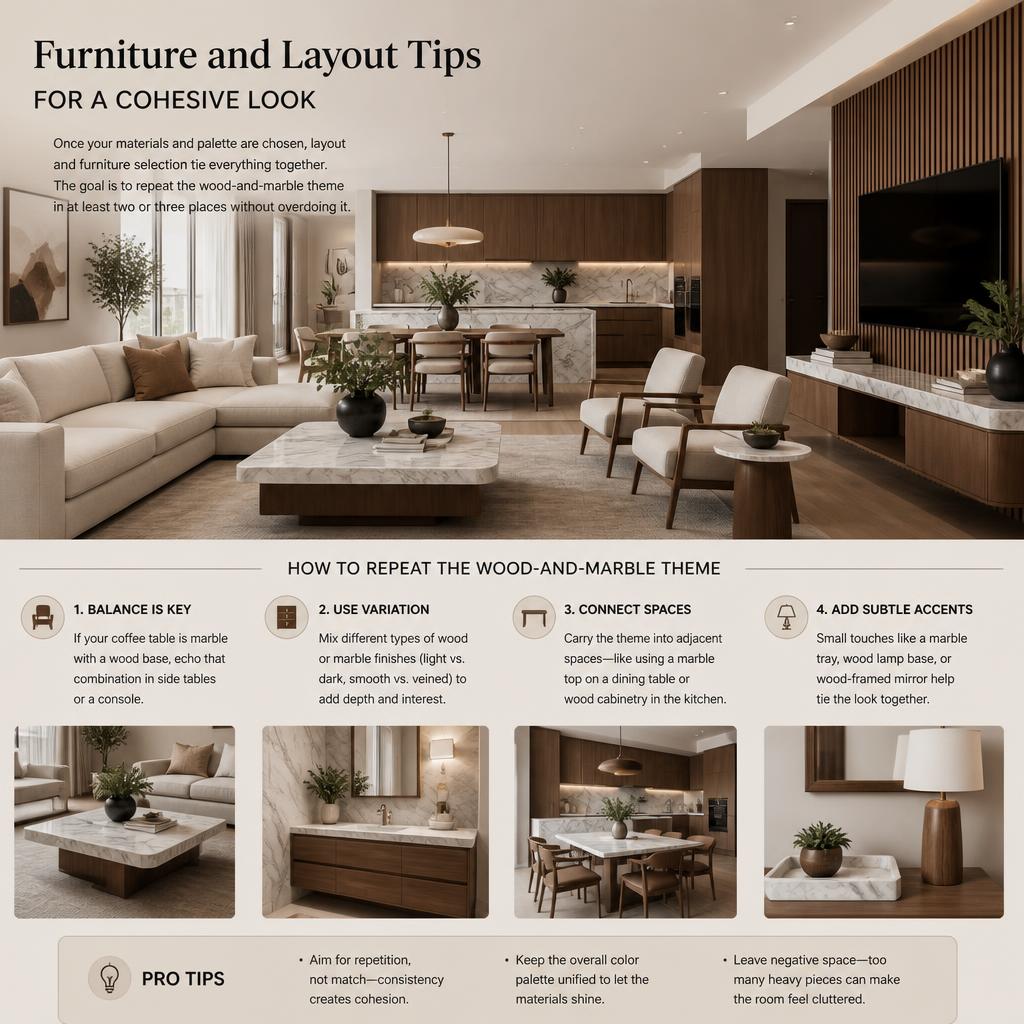
A well-designed living room usually has one “anchor” piece — often the coffee table or fireplace — where both materials meet directly. From there, secondary pieces like a console, side table, or shelving unit should echo the same tones without duplicating the exact same wood or marble type, which keeps the space feeling curated rather than matchy.
“Repetition creates rhythm in a room, but exact duplication creates monotony. Echo the materials, don’t clone them.”
💡 Pro Tip
Aim for the 60-30-10 rule when balancing materials: 60% of the room in your dominant wood tone (flooring, furniture frames), 30% in marble or marble-look accents, and 10% in metal or glass detailing. This keeps the pairing feeling proportionate rather than overwhelming.
Common Mistakes to Avoid
Even experienced homeowners can get this pairing wrong. Here are the mistakes I see most often:
- Mixing too many wood tones. Stick to one or two dominant wood tones in a single room.
- Choosing marble with too much veining for a small space. Bold veining can overwhelm compact living rooms.
- Ignoring lighting conditions. Marble’s reflective surface changes dramatically depending on natural vs. artificial light.
- Skipping texture variety. Pure wood-and-marble without soft textiles (rugs, throws, linen upholstery) can feel cold.
- Overusing real marble in high-traffic zones. Natural marble stains and etches easily, so factor in maintenance before committing.
Avoiding these pitfalls is often the difference between a room that looks professionally designed and one that feels slightly “off” without an obvious reason why.
Budget-Friendly Alternatives to Real Wood and Marble
Real marble and solid hardwood are beautiful, but they come with a real price tag — and real maintenance requirements. Fortunately, today’s material market offers excellent alternatives that mimic the look convincingly.
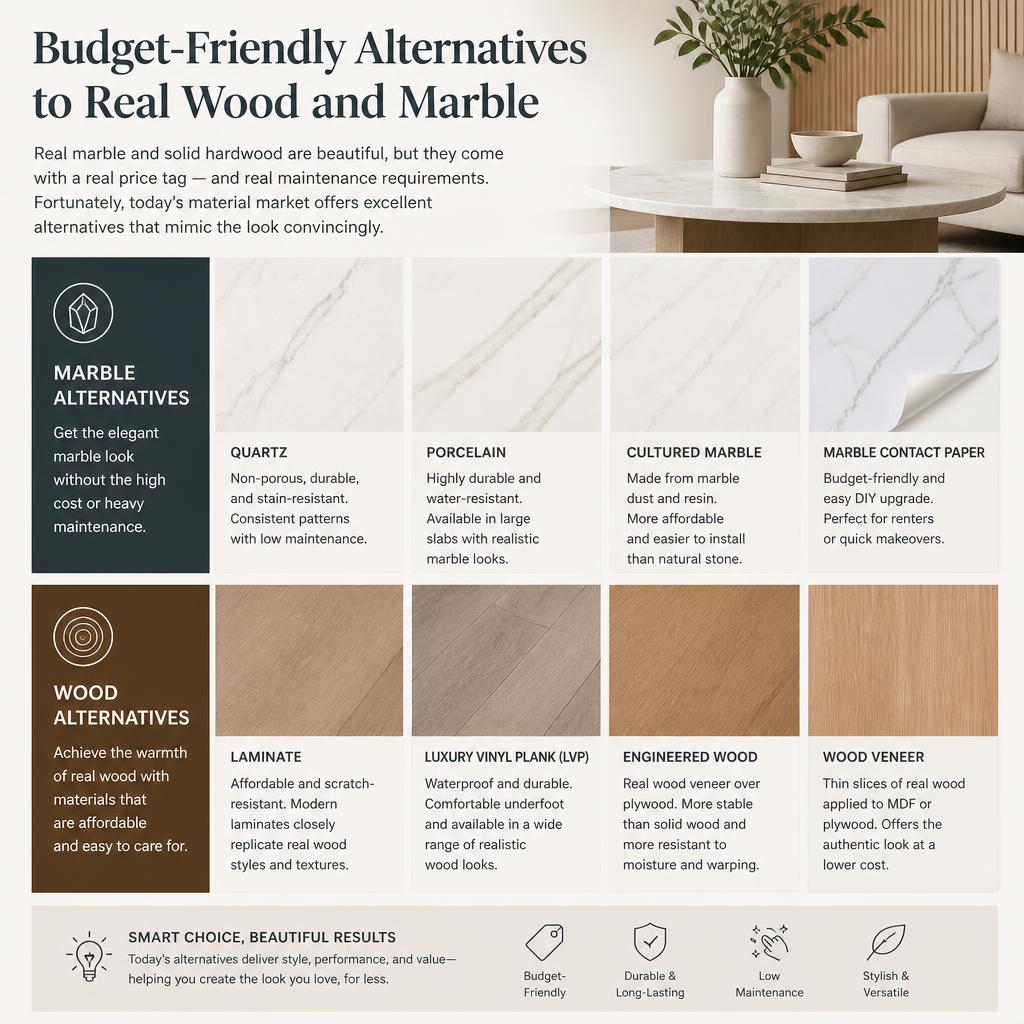
| Material Type | Authentic Option | Budget Alternative |
|---|---|---|
| Marble | Natural Carrara/Calacatta slab | Quartz or porcelain marble-look tile |
| Marble | Solid stone countertop | Marble-effect laminate or vinyl |
| Wood | Solid walnut/oak furniture | Engineered wood veneer |
| Wood | Hardwood flooring | Luxury vinyl plank (LVP) wood-look |
Porcelain slabs, in particular, have become a favorite among designers because they replicate marble’s veining almost indistinguishably while being far more resistant to scratches, heat, and staining — a practical win for busy households.
Maintenance Tips to Keep Both Materials Looking Their Best
Wood and marble each have their own care requirements, and understanding them upfront will save you headaches later.
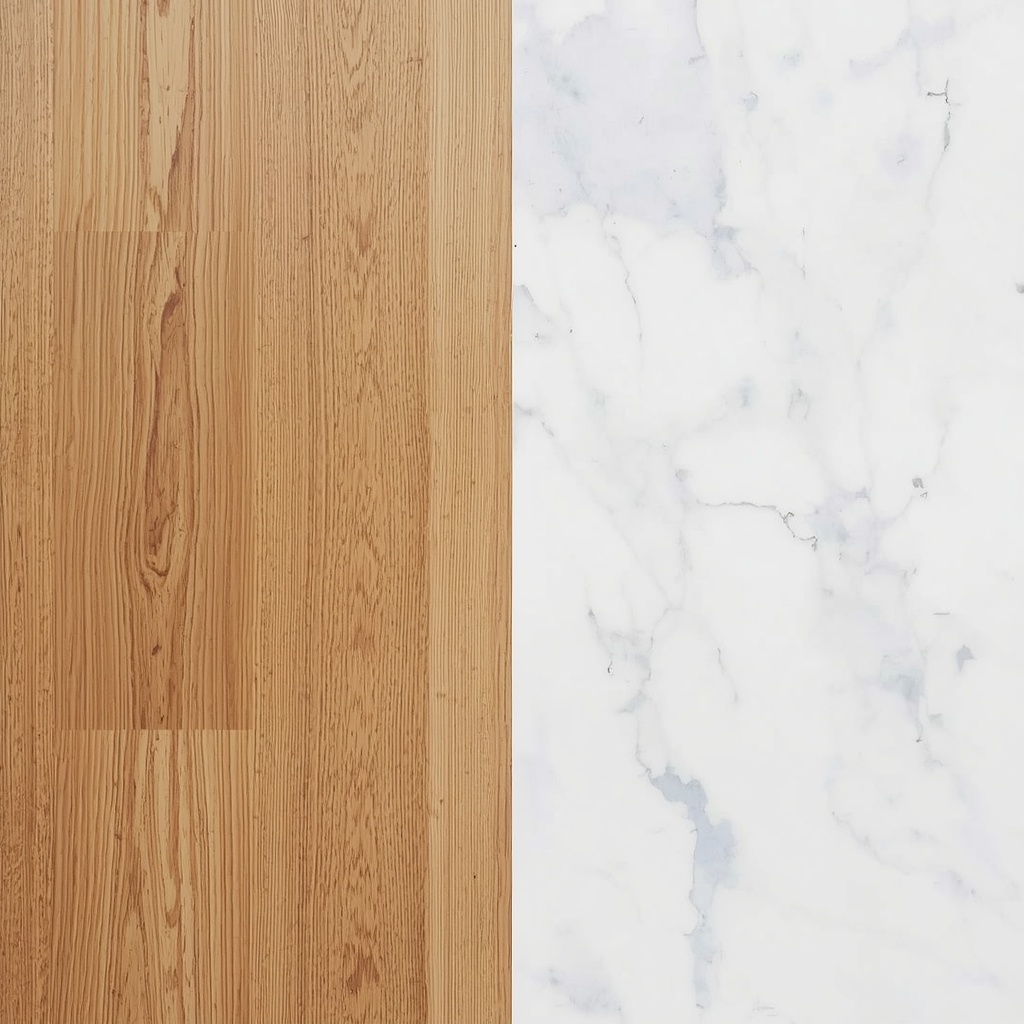
For wood surfaces, avoid direct, prolonged sunlight exposure, which can cause fading and warping over time. Use coasters and felt pads under décor items, and clean with a slightly damp cloth rather than harsh chemical cleaners. For marble, seal the surface periodically to prevent staining, wipe up spills immediately (especially acidic liquids like wine or citrus), and use pH-neutral stone cleaners rather than generic all-purpose sprays.
A little routine care goes a long way in preserving both the beauty and the investment value of these materials.
Final Thoughts: Making the Pairing Your Own
Wood and marble aren’t just a passing interior design trend — they represent a design philosophy built on contrast, balance, and craftsmanship. Whether you’re renovating an entire living room or simply swapping in a new coffee table, this pairing offers a way to elevate your space without abandoning warmth or livability.
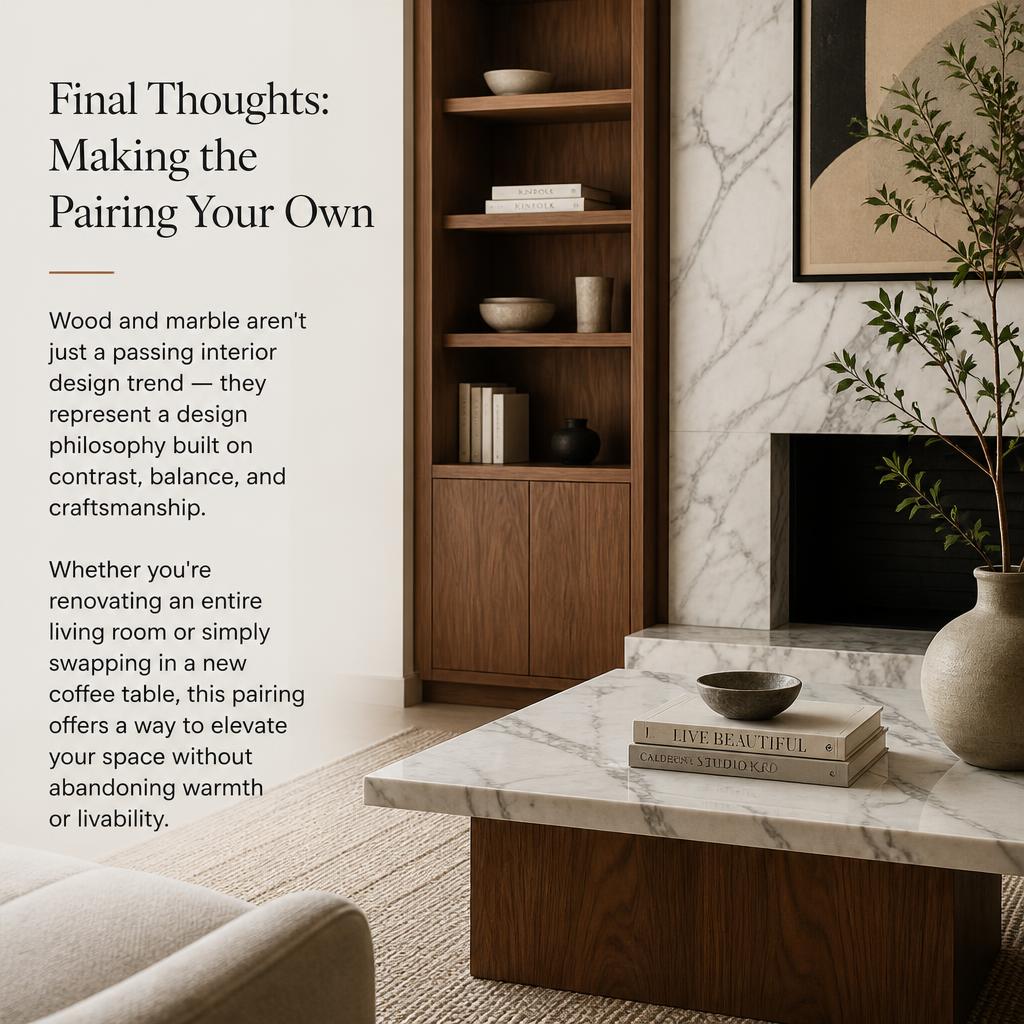
Start small if you’re unsure, let the materials breathe with supporting neutral tones, and don’t be afraid to mix in soft textiles to balance out the hard surfaces. Done right, a wood-and-marble living room feels less like a showroom and more like a home that happens to look like one.
If you’re exploring more ideas for material pairings and modern living room design, resources like Houzz and Architectural Digest offer excellent visual inspiration galleries to help refine your personal style before you commit to a design direction.