
If you’ve ever yanked open a cabinet door only to be greeted by an avalanche of cleaning sprays, tangled cords, and mystery sponges, you already know the truth: the space under your sink is the most mismanaged square footage in the entire house. As an interior designer who has walked through hundreds of American kitchens and bathrooms, I can tell you this cabinet is almost never the problem. The way we use it is.
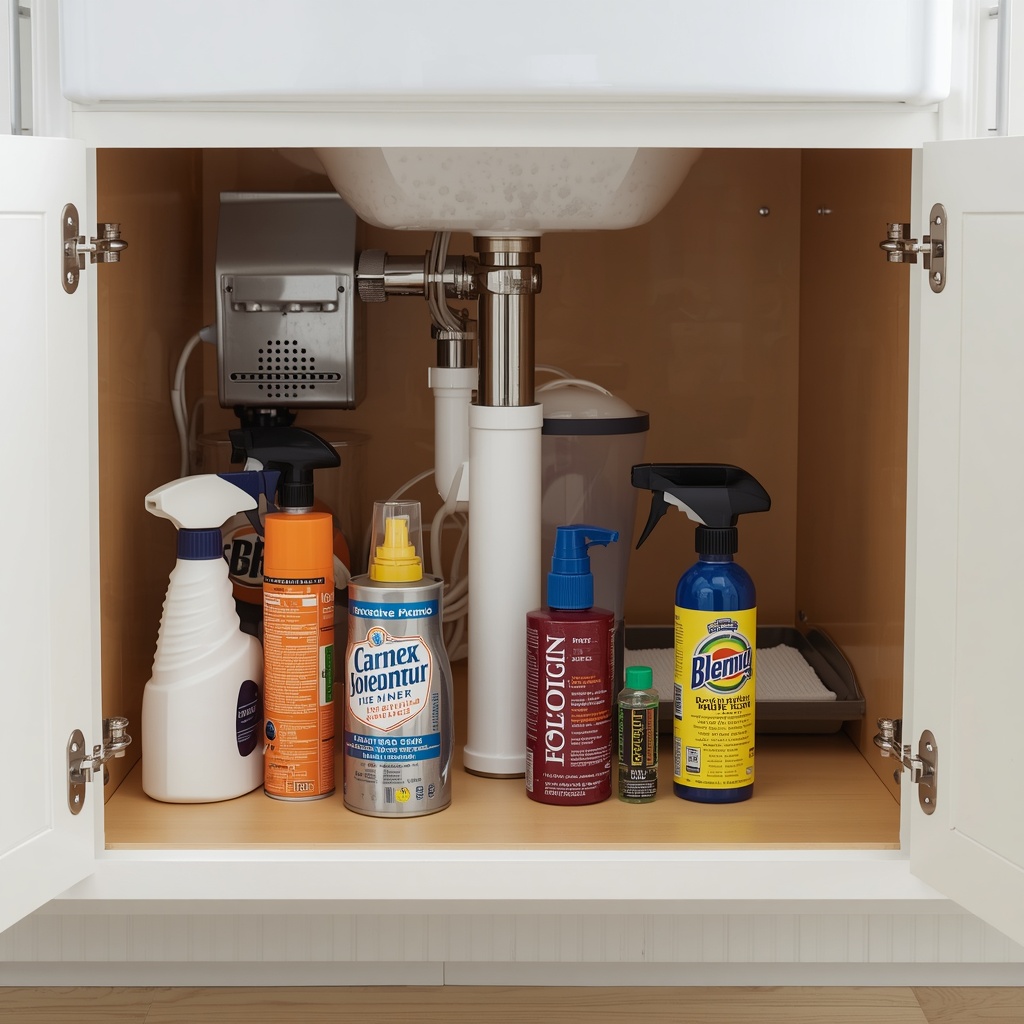
Under-sink cabinets are awkward by design. Plumbing pipes cut through the middle, cabinet doors swing inward, and the space is often deep, dark, and forgotten until something spills. But with the right under-sink storage solutions, this cramped corner can become one of the most functional zones in your home. In this guide, we’ll walk through practical, stylish, and budget-friendly ways to organize under-sink kitchen and bathroom cabinets so you can find what you need in seconds instead of digging through chaos.
Why Under-Sink Spaces Become Clutter Zones
Before you buy a single organizer, it helps to understand why this space fills up so fast. Under-sink cabinets are typically the default “catch-all” for anything that doesn’t have another home — extra trash bags, half-used cleaning products, dish soap refills, plungers, and hair tools all end up here because it’s out of sight.
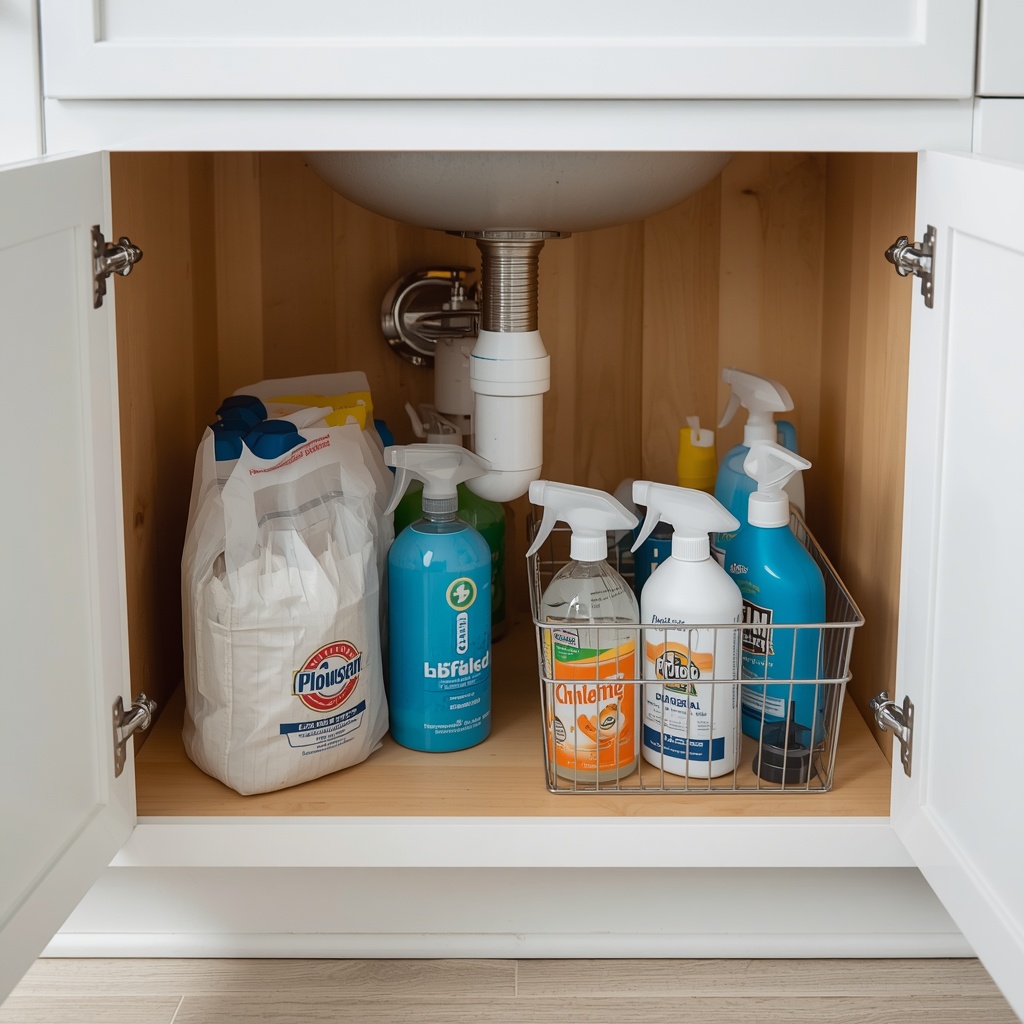
The real culprits are structural. Pipes, garbage disposals, and water shut-off valves eat into usable space, leaving oddly shaped gaps that standard bins can’t fill. Add poor lighting and a lack of vertical organization, and you’ve got a recipe for a cabinet that feels smaller than it actually is.
“Most under-sink cabinets aren’t cluttered because they’re small — they’re cluttered because nothing in them has a designated spot,” notes one veteran kitchen organizer. “Once every item has a home, the chaos disappears almost overnight.”
Assess Before You Organize
Every good storage project starts with an honest inventory. Pull everything out of the cabinet, wipe down the interior, and sort items into three piles: keep, relocate, and toss.
- Keep: Items used weekly, like dish soap, sponges, or bathroom cleaners
- Relocate: Items better stored elsewhere, such as bulk paper towels or rarely used tools
- Toss: Expired products, empty bottles, and duplicate cleaning supplies
Once you know exactly what needs to live under the sink, measure the cabinet’s width, depth, and height, and note the location of any pipes. This single step prevents the most common storage mistake: buying organizers that don’t actually fit.
Best Storage Solutions for Kitchen Under-Sink Cabinets
Kitchen under-sink cabinets tend to house cleaning supplies, trash and recycling bins, dish soap, and sometimes small appliances. The goal here is to combine vertical storage with easy-access sliding systems so nothing gets buried in the back.
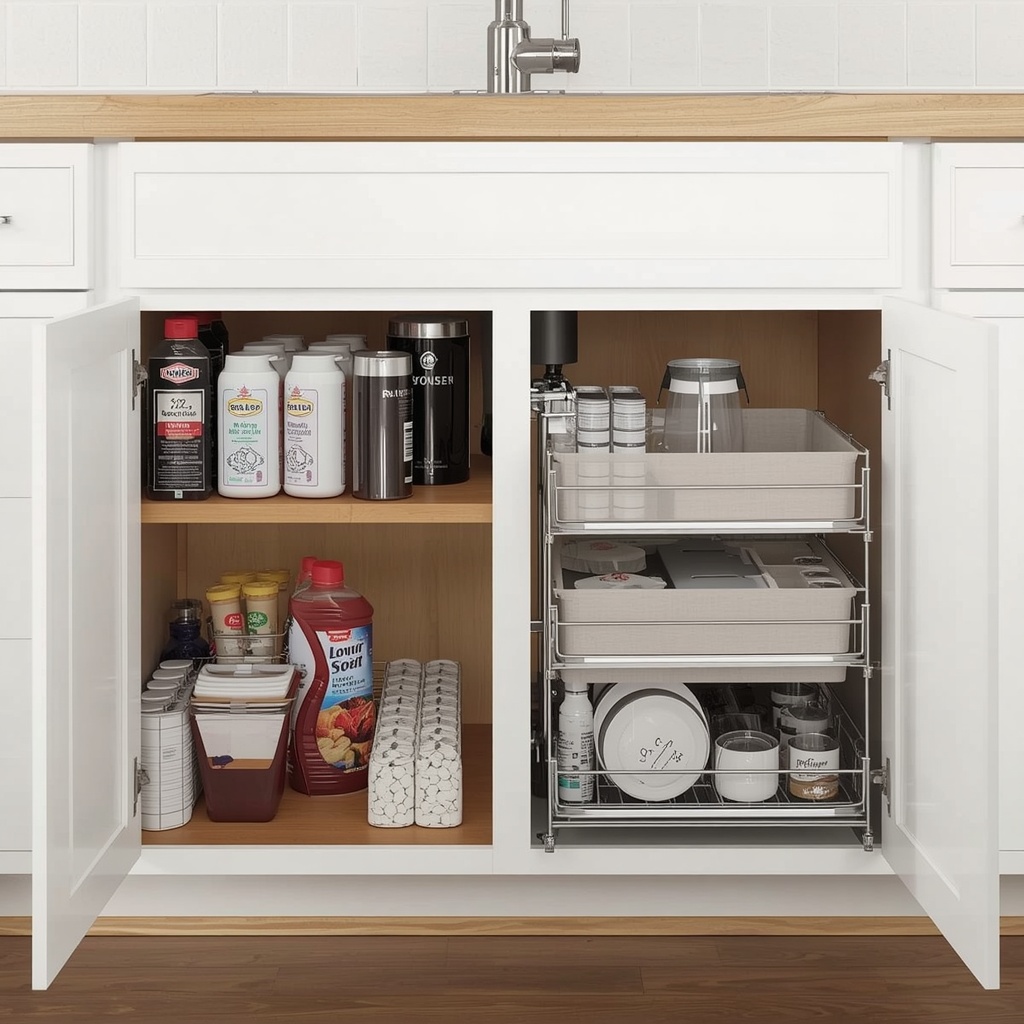
Sliding drawer systems are the single most transformative upgrade for kitchen cabinets. Instead of crouching down and reaching blindly, you pull out a shallow drawer that brings every item into full view. Pair that with a two-tier lazy Susan or a stackable bin system, and you effectively double your usable storage without any renovation.
Top kitchen solutions to consider:
- Pull-out sliding drawers or baskets
- Pipe-friendly, U-shaped storage bins that wrap around plumbing
- Tension rod dividers to hang spray bottles by their trigger handles
- Adjustable tiered shelving for vertical stacking
- Over-the-door organizers mounted on the cabinet door itself
- Lazy Susans for corner or deep cabinets
- Labeled bins for trash bags, dish tabs, and sponges
| Solution | Best For | Approx. Cost | Difficulty |
|---|---|---|---|
| Pull-out sliding drawers | Deep cabinets, heavy items | $25–$60 | Easy |
| Tension rod + hooks | Spray bottles, small tools | $8–$15 | Very Easy |
| U-shaped pipe bins | Cabinets with center plumbing | $20–$40 | Easy |
| Over-the-door organizer | Small items, sponges, gloves | $15–$35 | Very Easy |
| Two-tier lazy Susan | Corner cabinets | $18–$30 | Easy |
| Stackable clear bins | Grouping similar items | $10–$25 | Very Easy |
<div style=”border-left: 4px solid #2b7a78; padding: 10px 16px; background:#f4faf9; margin:20px 0;”> <strong>Pro Tip:</strong> Use tension rods (the kind meant for curtains) as makeshift shelves under sinks. Install two rods a few inches apart and hang spray bottles by their trigger necks. It keeps bottles upright, prevents leaks from pooling, and frees up the entire floor of the cabinet for bins. </div>
Bathroom Under-Sink Storage Ideas
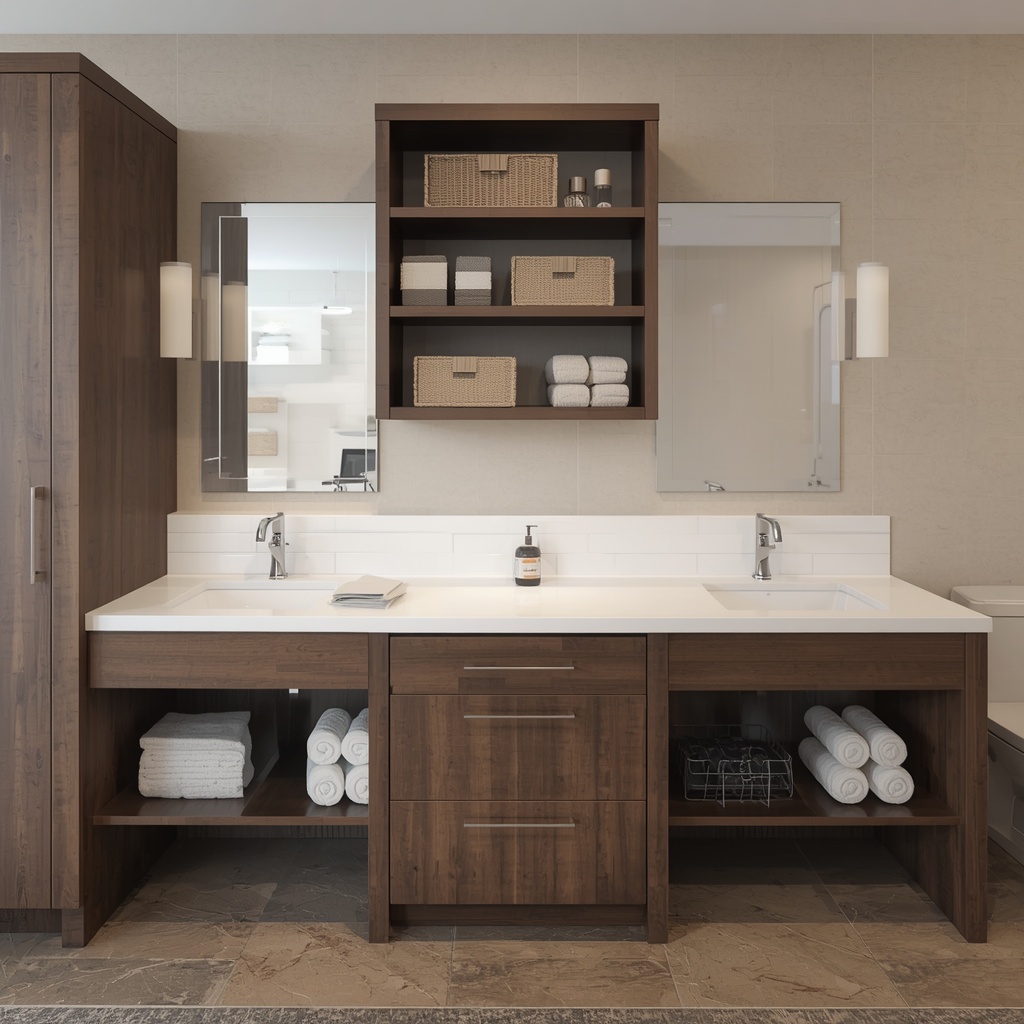
Bathroom cabinets face a different challenge: smaller footprints, more delicate items, and a wider variety of product shapes, from skincare bottles to hair dryers and cleaning supplies. The key here is compartmentalization.
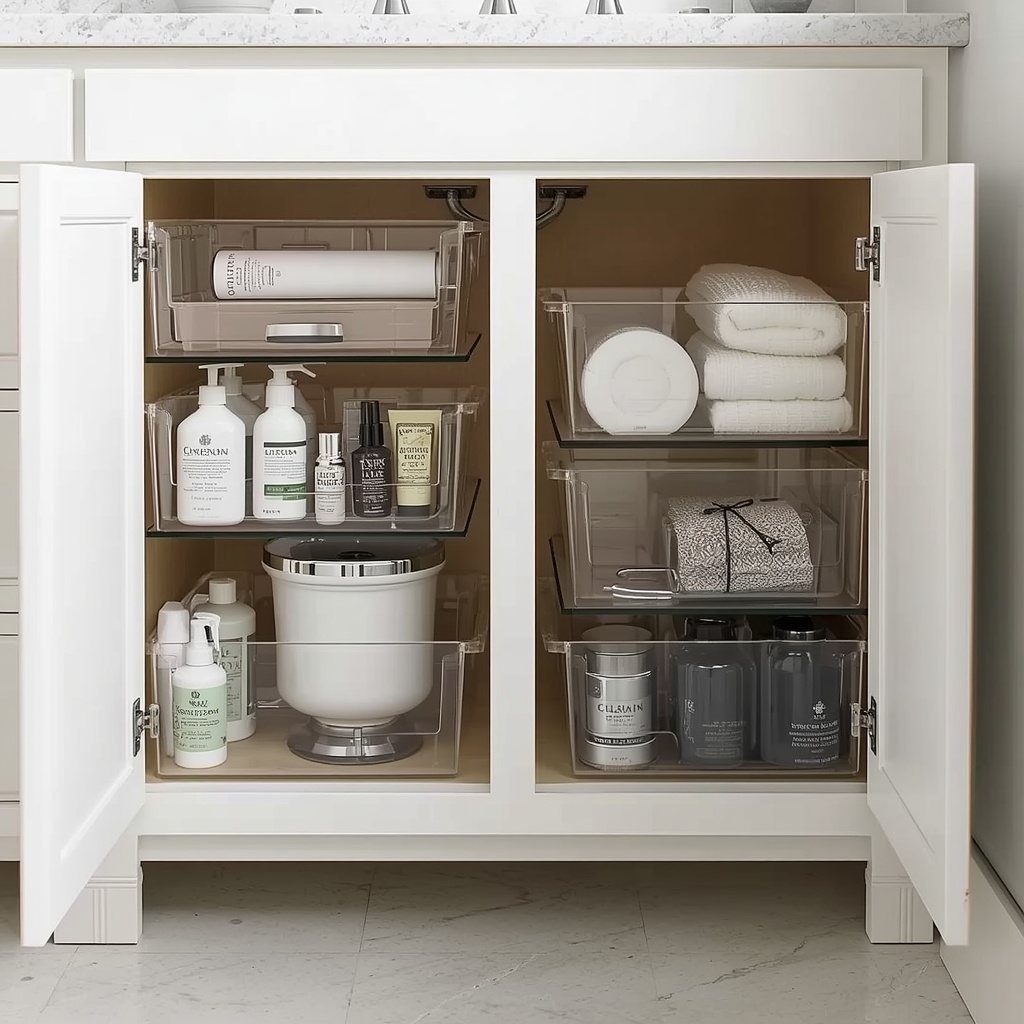
Clear acrylic bins are a bathroom organizer’s best friend because they let you see contents at a glance while keeping similar items grouped together. Combine bins with a slim rolling cart for anything you use daily, like a hairdryer or straightener, so you’re not unspooling cords every morning.
Effective bathroom storage ideas include:
- Clear stackable bins for skincare and haircare products
- A slim rolling cart that slides in and out for daily-use tools
- Adhesive hooks on the inside of the cabinet door for hair tools
- Small caddies to corral cleaning supplies separately from beauty products
- Drawer dividers if your vanity has a bottom drawer instead of a swing door
- Velcro cord wraps to keep hairdryer and straightener cords tangle-free
Materials and Product Comparison
Choosing the right material for your organizers matters more than most people realize, especially in bathrooms and kitchens where humidity and spills are common.
| Material | Pros | Cons | Best Use |
|---|---|---|---|
| Clear acrylic | Water-resistant, easy to see contents | Can scratch over time | Bathroom bins |
| Metal wire baskets | Sturdy, breathable, stylish | Can rust if not coated | Kitchen pull-outs |
| Bamboo/wood | Eco-friendly, attractive | Needs sealing to resist moisture | Decorative caddies |
| Plastic bins | Affordable, lightweight | Less durable long-term | Budget organizing |
| Fabric bins | Soft-sided, flexible | Not ideal near water | Dry storage only |
Maximizing Vertical Space
Most under-sink cabinets are taller than they look once you remove the clutter sitting on the floor. Vertical storage systems, like tiered shelving or stackable risers, let you use that height instead of wasting it.
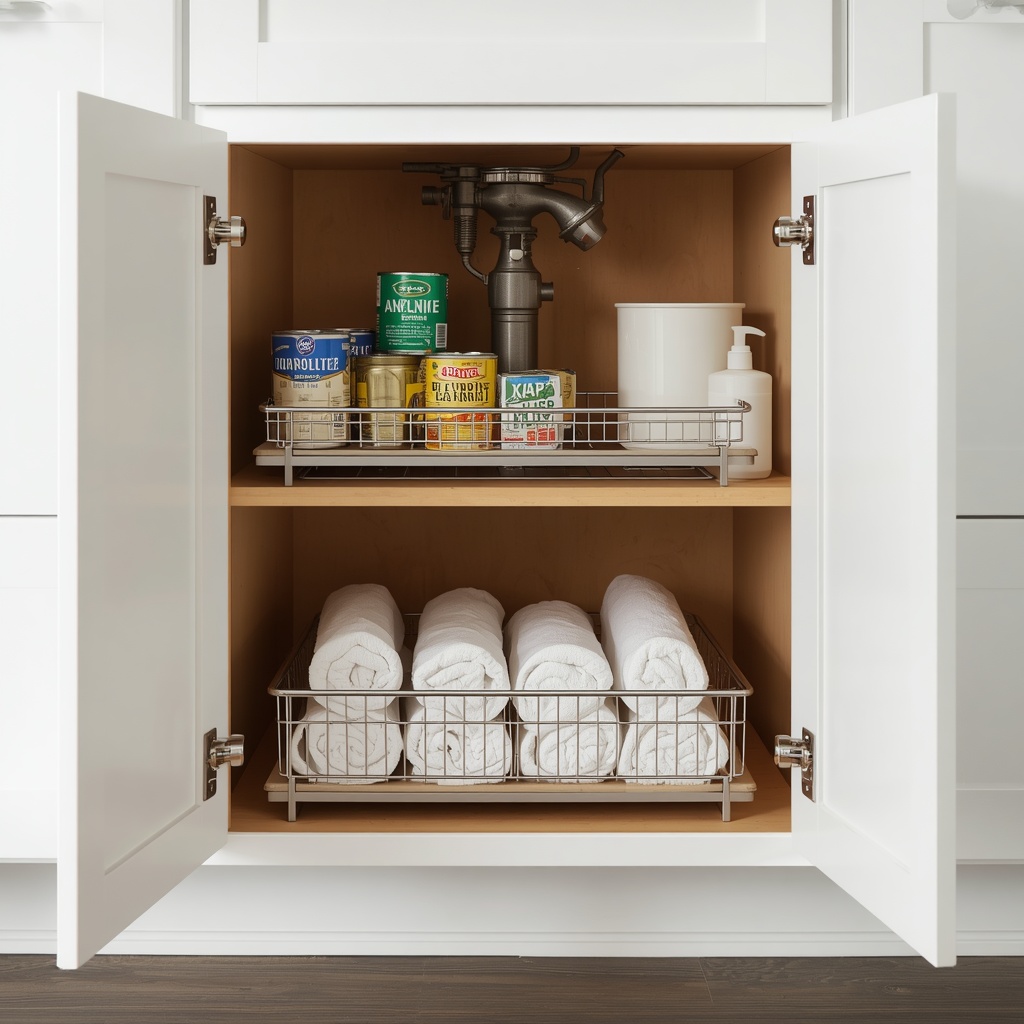
A simple two-tier shelf riser can instantly create a second “floor” in your cabinet, doubling your storage capacity without touching the cabinet’s structure. For kitchens, this is ideal for stacking canned goods overflow or extra dish soap refills. For bathrooms, it works beautifully for rolled towels, extra toilet paper, or grouped skincare bins.
Consider these vertical add-ons:
- Adjustable wire shelf risers
- Hanging tension-rod shelving
- Stackable drawer units
- Door-mounted pocket organizers
- Wall-mounted mini shelves on the cabinet’s side panel
Working Around Pipes and Odd Shapes
Plumbing is the number one design obstacle in under-sink cabinets, and it’s exactly why generic rectangular bins so often fail here. The solution is to shop for organizers specifically designed with a U-shaped or split configuration that wraps around the pipe rather than fighting it.
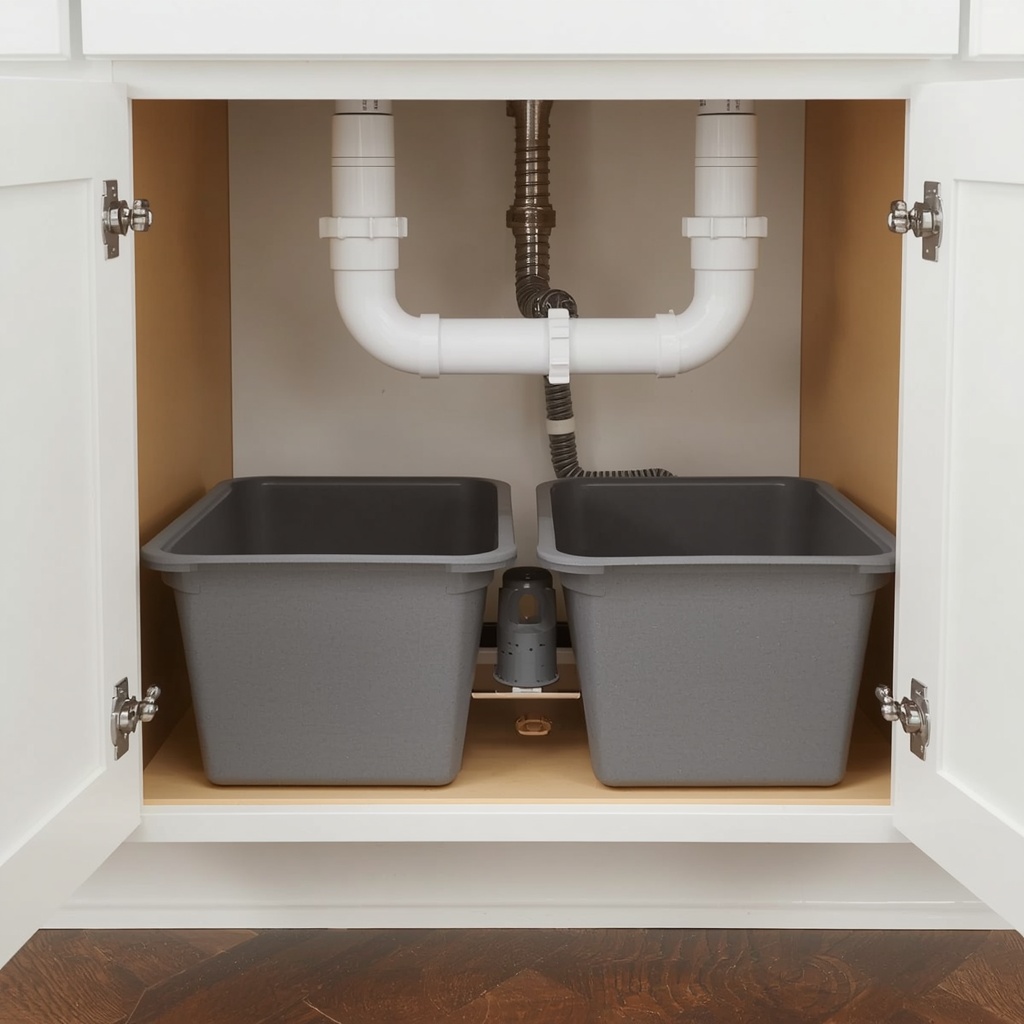
Many modern under-sink organizer kits, sold by brands like The Container Store and IKEA, now include modular, pipe-friendly pieces that snap together around plumbing. If you can’t find a pre-made fit, two smaller bins placed on either side of the pipe almost always outperform one oversized bin that has to be awkwardly notched.
Eco-Friendly and Budget-Friendly Options
Sustainable, low-cost organizing doesn’t have to mean sacrificing style. Repurposed shoe organizers, mason jars, and thrifted baskets can be just as effective as premium products when used intentionally.
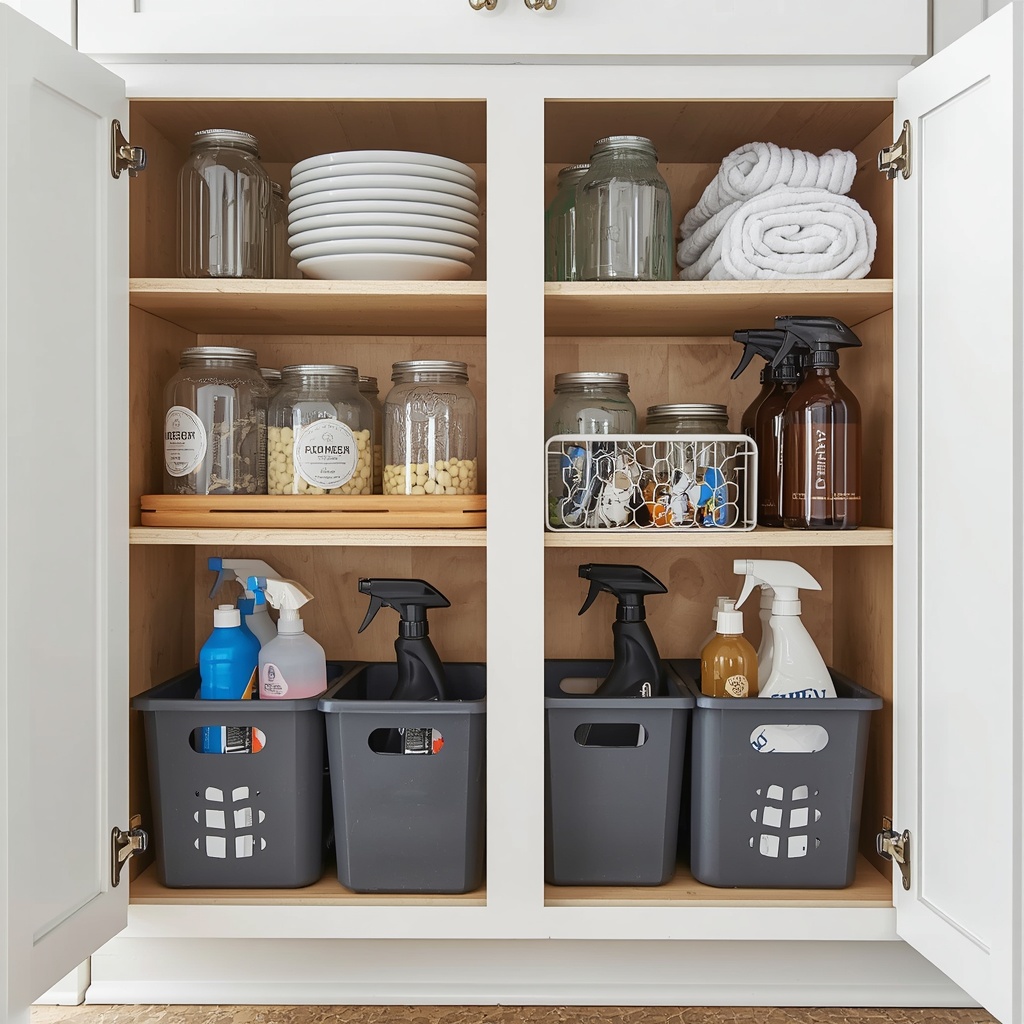
Look for organizers made from recycled plastic or sustainably sourced bamboo, and consider refillable cleaning product dispensers to cut down on single-use plastic bottles cluttering the cabinet. A $10 tension rod and a few dollar-store bins can transform a chaotic cabinet just as effectively as a $200 custom pull-out system — the difference is mostly in finish and durability, not function.
A Quick Maintenance Routine
Organizing under the sink is only half the battle; keeping it that way is the real win. Set a recurring reminder every three months to do a five-minute cabinet check.
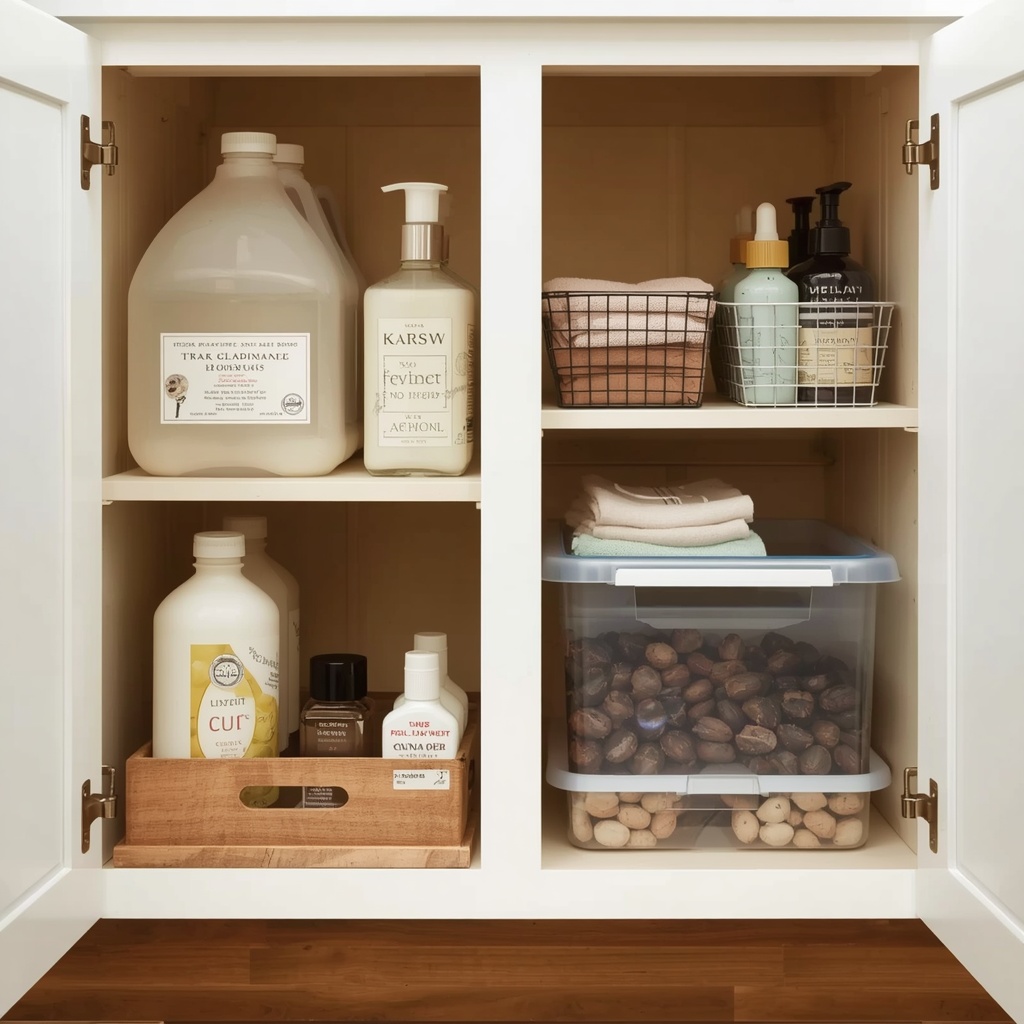
During this quick reset, wipe down shelves and bins, check for leaks or moisture damage, toss expired products, and confirm that everything still has a designated spot. This small habit prevents the slow creep of clutter that undoes even the best organizing system.
Frequently Asked Questions
How do I stop things from getting wet under the sink? Line the cabinet floor with a waterproof mat or shelf liner, and elevate items using risers or bins rather than placing them directly on the cabinet floor.
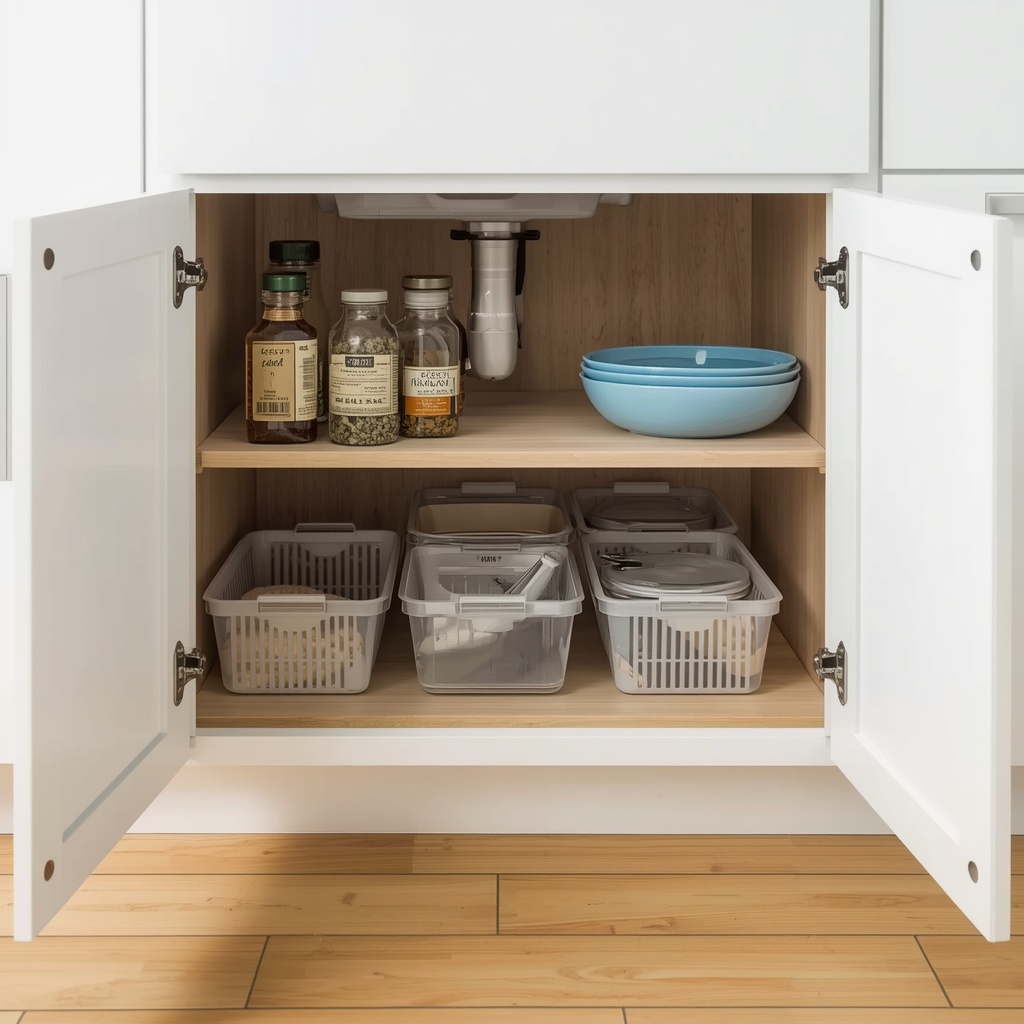
What’s the best under-sink organizer for small kitchens? A slim pull-out drawer paired with door-mounted racks maximizes storage without requiring extra floor space, which is ideal for compact kitchens.
Can I install pull-out drawers myself? Yes. Most pull-out drawer kits are designed for simple DIY installation with a screwdriver and take under 30 minutes, though cabinet depth should be measured carefully first.
How often should I reorganize under-sink storage? A quarterly check-in is usually enough to catch expired products, leaks, or organizational drift before it becomes full-blown clutter again.
Final Thoughts
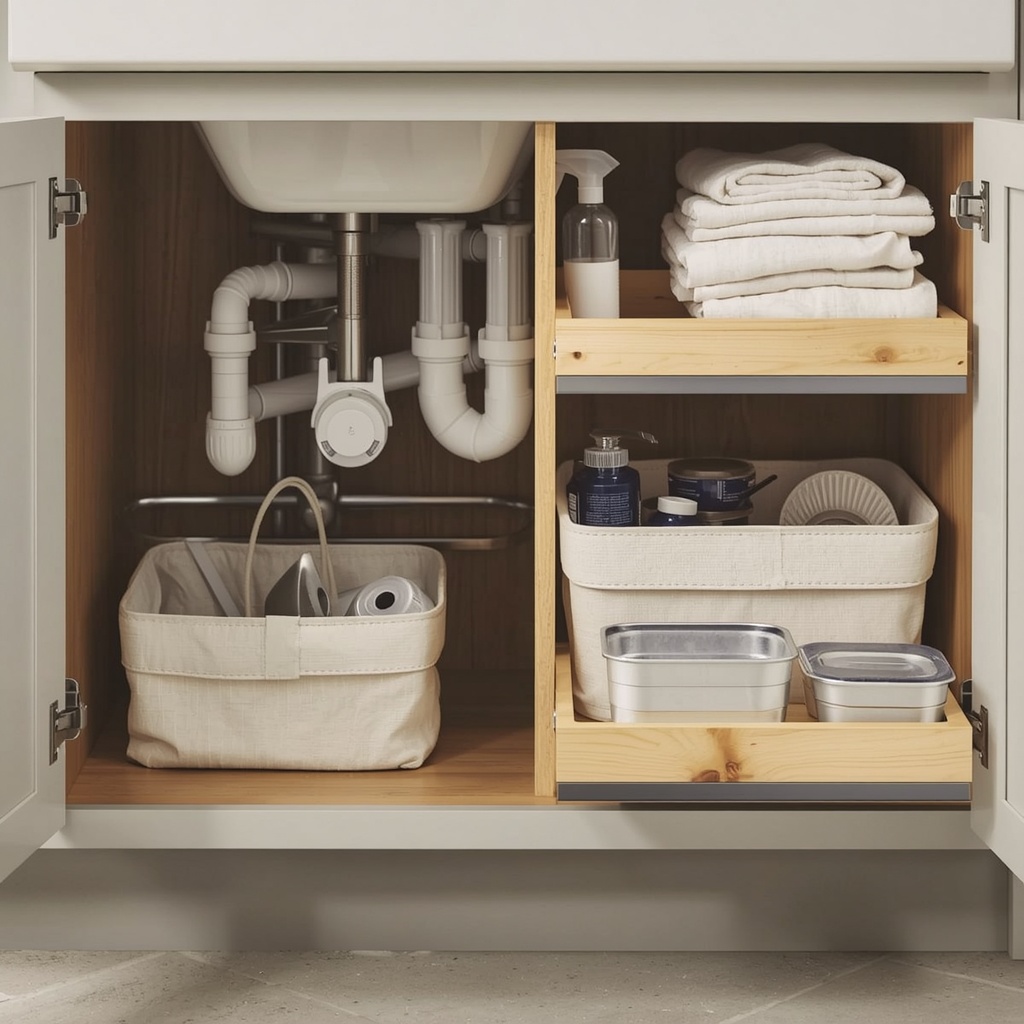
Under-sink cabinets don’t have to be the dark, chaotic corner of your kitchen or bathroom. With a thoughtful mix of pull-out drawers, tiered shelving, pipe-friendly bins, and a little regular maintenance, this once-neglected space can become one of the most efficient areas in your home. Start small, measure twice, and choose organizers that work with your cabinet’s quirks rather than against them. Your future self, reaching for the dish soap without a mid-clean-up avalanche, will thank you.