
If you live in a small apartment, you already know the struggle: you open your front door and you’re practically standing in your living room. The entryway — or foyer, or “that tiny strip of floor between the door and everything else” — is one of the most overlooked yet most important spaces in any home. It sets the tone for your entire apartment. It’s the first thing you see when you walk in and the last thing guests notice when they leave.
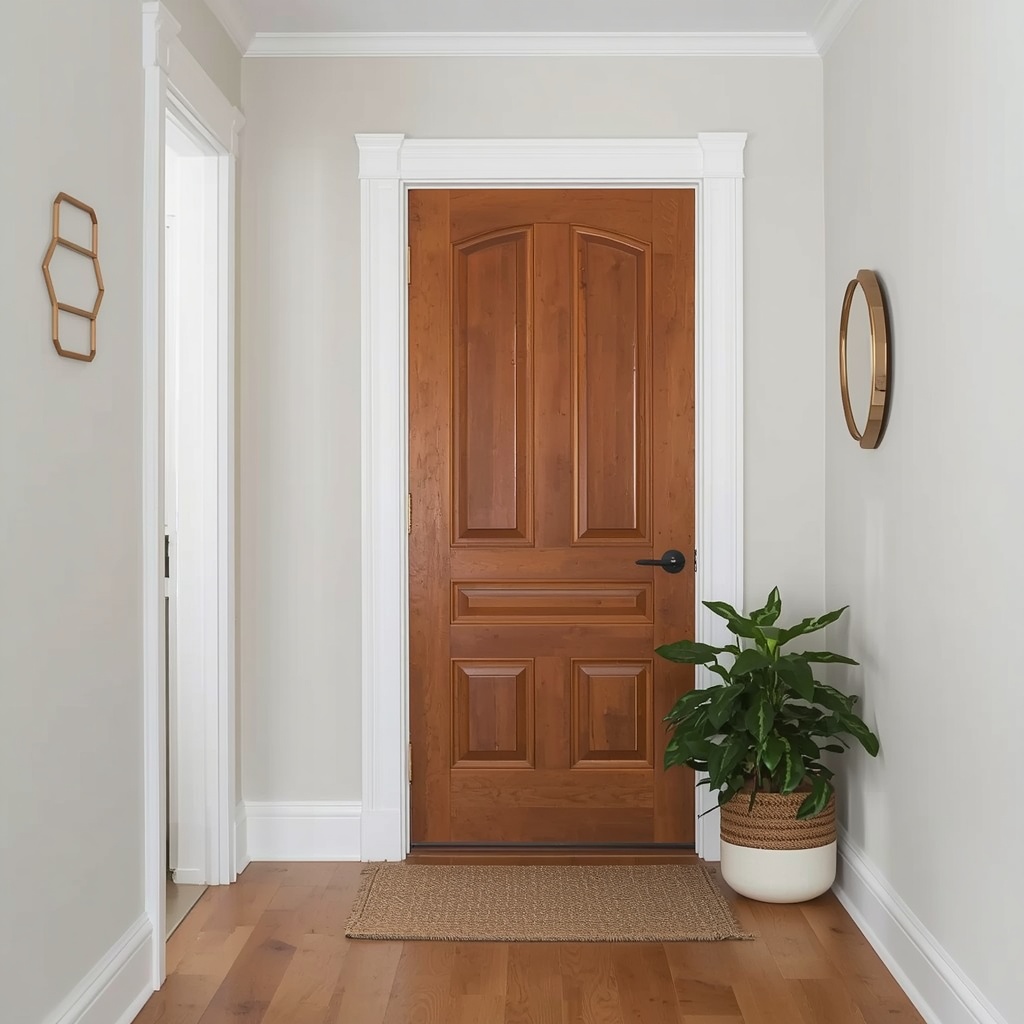
The good news? You don’t need square footage to make a stunning, functional entryway. With the right small entryway ideas, smart storage solutions, and a few designer tricks, even the most compact apartment entry can feel polished, welcoming, and surprisingly spacious. As someone who has helped hundreds of US homeowners and renters transform their tight spaces, I can tell you: it’s all about working smarter, not bigger.
Why Your Apartment Entryway Deserves Your Attention
Most people treat their apartment entryway like a dumping ground — keys on the floor, shoes piling up, bags hanging off the doorknob. But here’s what I always tell my clients: your entryway is prime real estate. In a small apartment especially, every square inch needs to pull double duty.
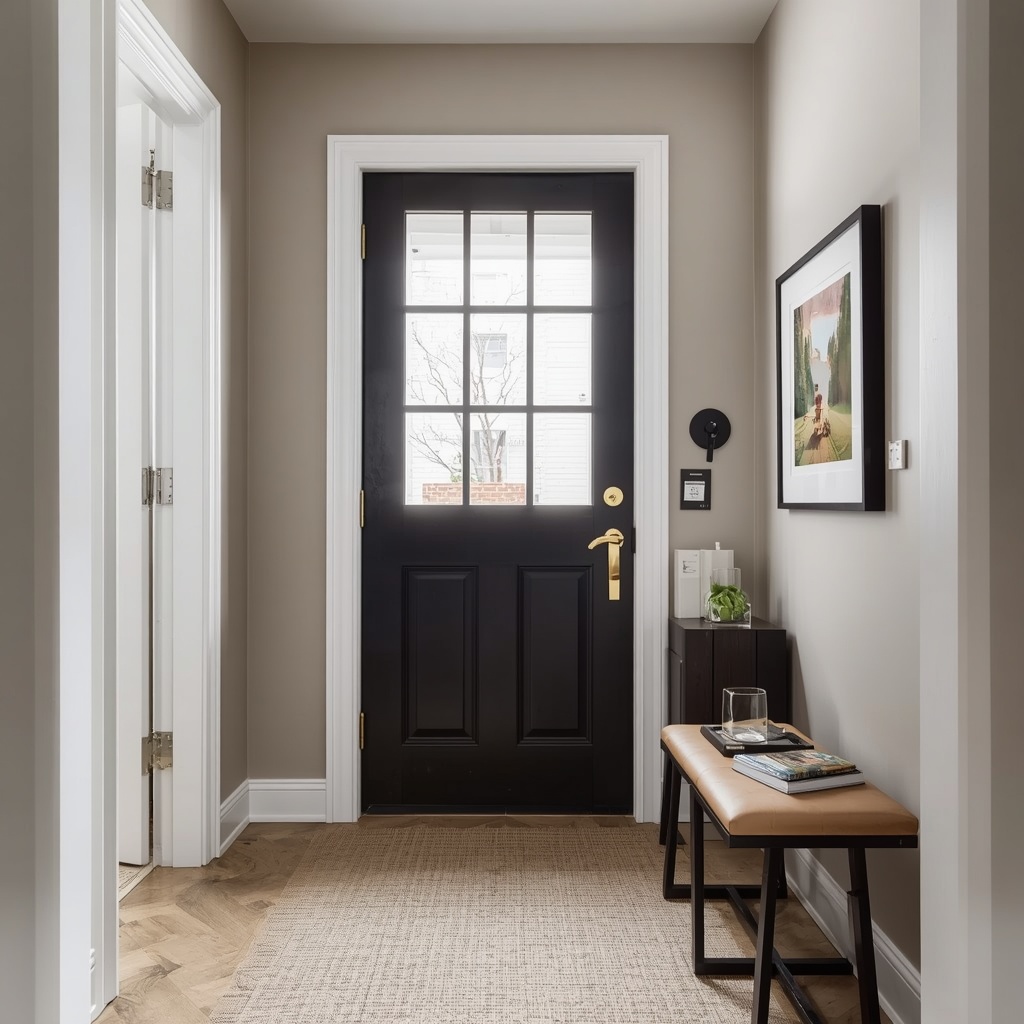
A well-designed entryway creates a buffer zone between the outside world and your personal sanctuary. It gives you a designated spot for everyday essentials, reduces clutter that would otherwise creep into your living space, and makes your apartment feel intentionally designed from the moment the door swings open. Investing time and thought into this small zone pays off in ways you’ll feel every single day.
Beyond functionality, your entryway communicates your personal style. Whether you lean toward minimalist modern, cozy farmhouse, or bold maximalist aesthetics, the entryway is your apartment’s opening statement. Don’t waste it on chaos.
Measure First, Decorate Second
Before you buy a single piece of furniture or hang a single hook, measure your entryway precisely. This is the step most people skip — and the reason most small entryway makeovers fail.
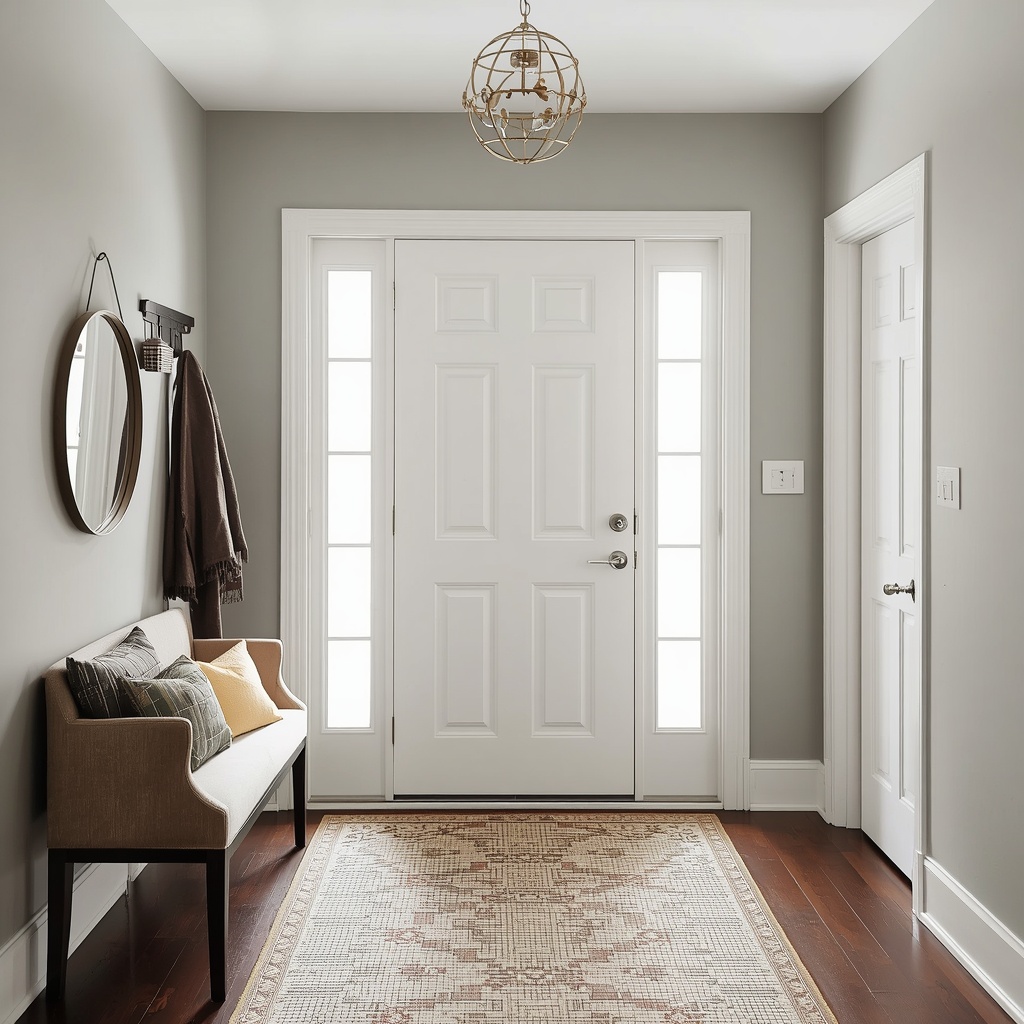
Note the width of the doorway, the depth of the space, ceiling height, and where the light switch and outlets are located. In most US apartments, a typical entryway is anywhere from 3 to 6 feet wide and 4 to 8 feet deep. Knowing your exact dimensions allows you to shop for pieces that actually fit rather than pieces that look good online and create a traffic jam in real life.
“In interior design, the biggest mistake people make in small spaces is buying furniture that’s proportionally wrong. Scale is everything — a piece that’s 2 inches too wide can make an entire room feel claustrophobic.” — Interior Design Principle, widely cited in space planning
Use Vertical Space to Your Full Advantage
When floor space is limited, the only direction to go is up. Vertical storage is the single most powerful tool in small apartment entryway design, and it’s underused in nearly every apartment I’ve ever walked into.
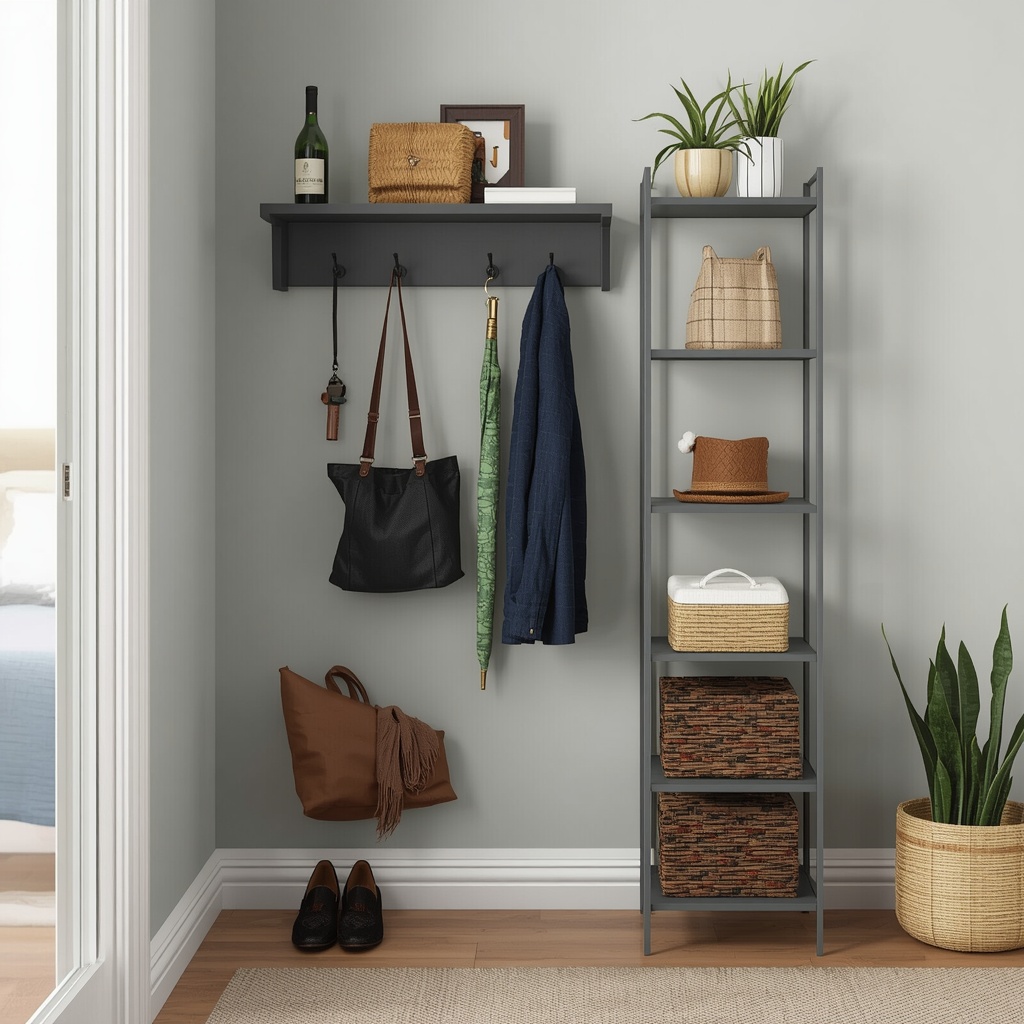
Installing wall-mounted hooks at varying heights allows you to hang coats, bags, hats, and even umbrellas without taking up any floor space at all. Look for hooks with a small shelf above them — these combo units, often called “entryway organizers” or “coat hook shelves,” let you store keys, mail, and small items right alongside your outerwear. Brands like IKEA’s HEMNES series, Wayfair’s entryway collections, and Amazon Basics offer affordable, renter-friendly versions that mount with minimal wall damage.
Tall, narrow shelving units — sometimes called “ladder shelves” or “column bookcases” — are another vertical hero. A unit that’s 12 inches deep, 18 inches wide, and 6 feet tall gives you significant storage in a footprint no bigger than a small suitcase. Use the lower shelves for shoes, the middle for baskets and bags, and the upper shelf for decorative items that add personality without adding clutter.
Pro Tip: Install your hooks and shelves higher than you think is necessary — aim for at least 66 to 72 inches from the floor for the top hook. This draws the eye upward, making the ceiling feel higher and the space feel larger. It also keeps longer coats from dragging on the floor.
The Best Furniture Pieces for a Small Apartment Entryway
Choosing the right furniture for a compact entryway means prioritizing pieces that multitask. Here’s a breakdown of the best options by function and size:
| Furniture Piece | Ideal Width | Key Benefit | Best For |
|---|---|---|---|
| Slim console table | 10–14 inches deep | Surface for keys/decor + visual anchor | Entryways 4ft+ wide |
| Upholstered storage bench | 36–48 inches wide | Seating + hidden shoe storage | Families, heavy coat users |
| Wall-mounted floating shelf | Any width | Zero floor footprint | Micro entryways under 3ft |
| Narrow shoe cabinet | 10–12 inches deep | Concealed shoe storage | Minimalist aesthetic |
| Cube storage unit | 12×12 inches per cube | Modular, customizable | Renters who move frequently |
| Ladder shelf | 12–18 inches deep | Vertical storage, open display | Decor-forward apartments |
When shopping, always filter by depth first. A console table that’s 10 to 12 inches deep is the sweet spot for small entryways — it provides surface area without jutting into your path. Anything deeper than 14 inches starts to feel like an obstacle course.
Mirror, Mirror on the Wall — and Why It’s Non-Negotiable
If there’s one design element I recommend to every single client with a small entryway, it’s a mirror. A well-placed mirror in your apartment foyer does three things simultaneously: it reflects light to brighten a typically dark space, it creates the optical illusion of depth that makes the area feel twice as large, and it gives you a spot to do a final look-check before you leave the house.
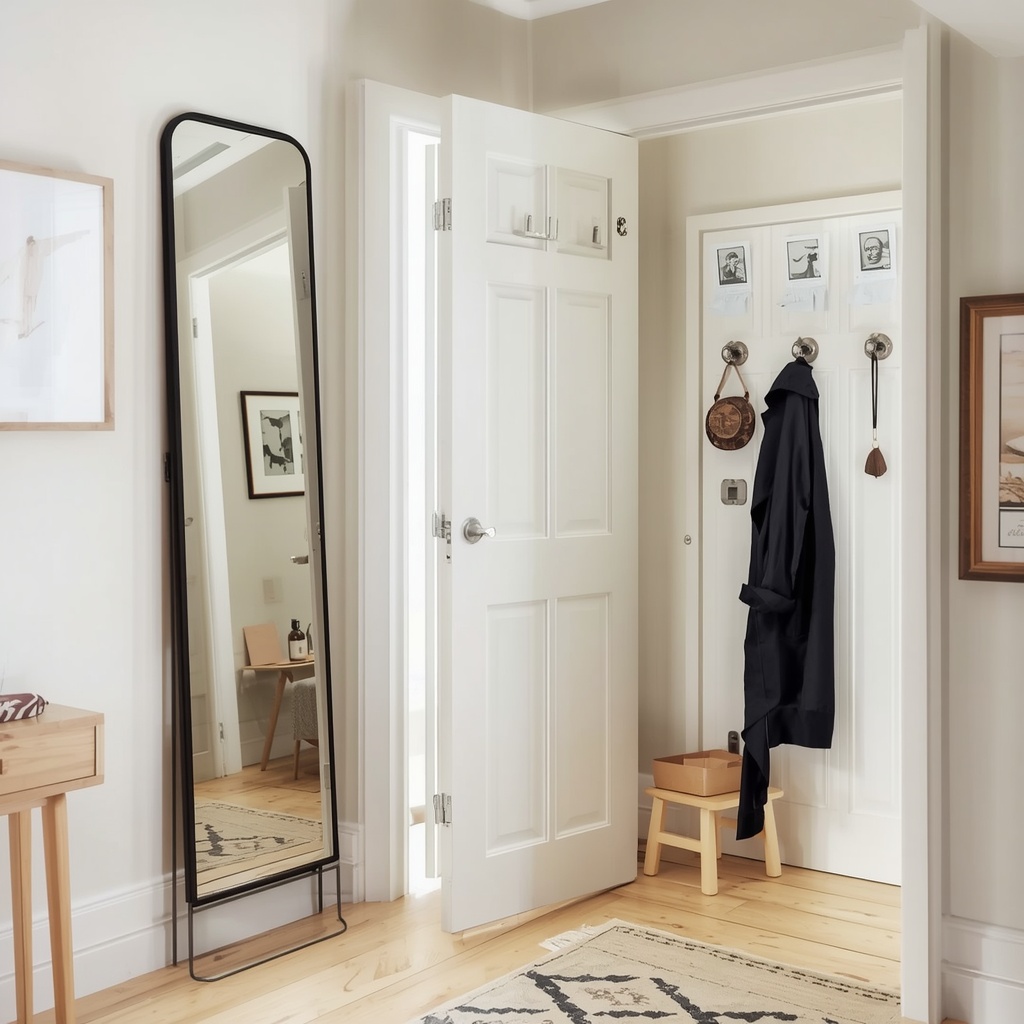
For small entryways, lean toward tall, narrow mirrors or round mirrors rather than wide horizontal ones. A leaner mirror propped against the wall (great for renters who can’t make large holes) or a full-length mirror mounted on the back of the door are both excellent options. Mirrors with built-in hooks or shelving — sometimes called “mirror coat racks” — are a genius double-duty solution popular in urban apartment design right now.
The back of your front door is genuinely prime real estate that most apartment dwellers never use. An over-the-door organizer with pockets, hooks, or a mirror mounted directly to the door can add significant function without using any floor or wall space at all.
Lighting: The Most Underrated Entryway Upgrade
Apartment entryways are often naturally dark — no windows, a single overhead fixture that casts a harsh downward glow, and walls that haven’t been painted with light in mind. Strategic lighting transforms a dark corridor into a welcoming transition space.
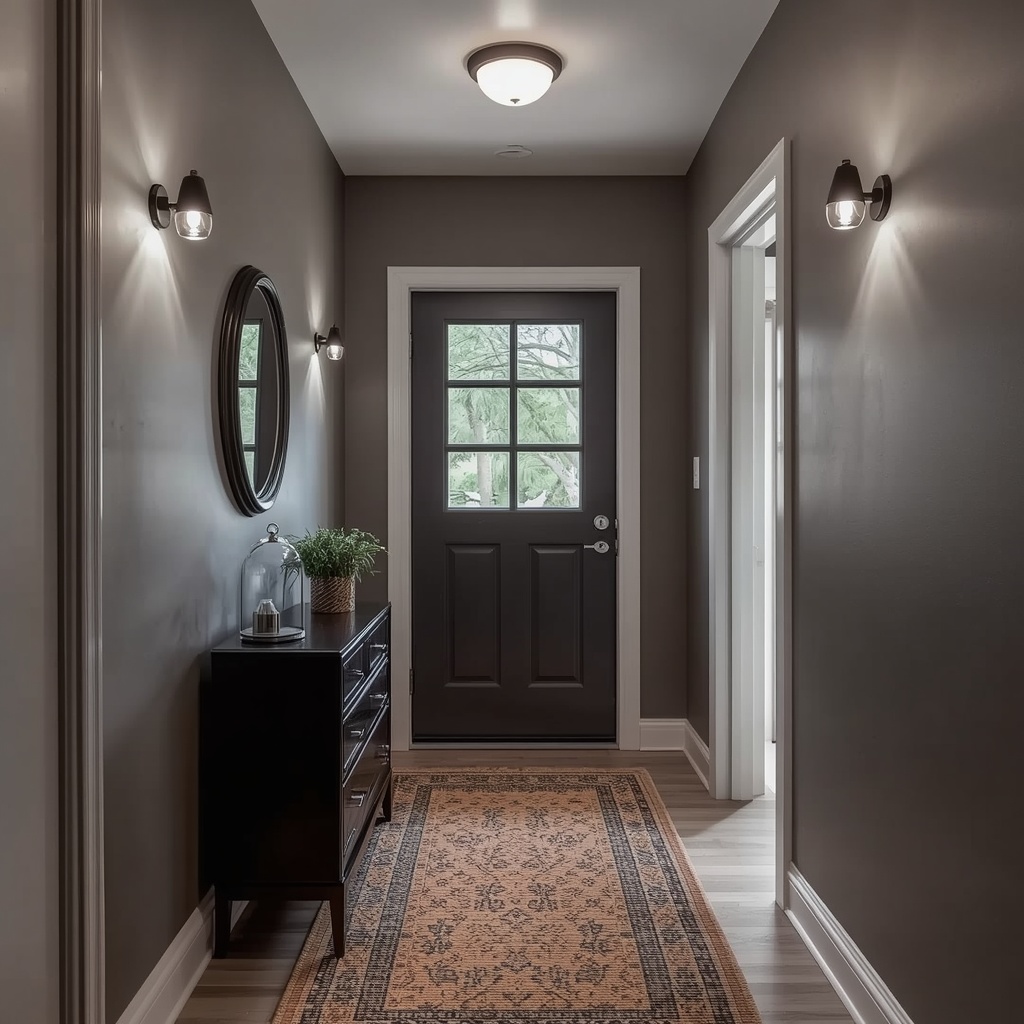
If you can’t hardwire new fixtures (and most renters can’t), plug-in wall sconces are a game changer. They give the look of built-in lighting with only a cord to manage, which you can tuck behind furniture or run along the baseboard discreetly. Battery-powered LED puck lights mounted inside a shoe cabinet or under a floating shelf add practical task lighting without any electrical work at all.
Consider the color temperature of your bulbs carefully. Warm white bulbs in the 2700K to 3000K range create an inviting, cozy atmosphere ideal for an entryway. Cool white or daylight bulbs (5000K+) tend to feel clinical and are better suited to kitchens and bathrooms. Small details like this are what separate a professionally designed space from a well-intentioned one.
Smart Storage Solutions for Shoes, Coats, and Everyday Chaos
The most common small entryway problem in US apartments isn’t lack of style — it’s lack of storage for the stuff that accumulates by the door every single day: shoes, coats, bags, keys, mail, dog leashes, reusable grocery bags, and everything in between.
Here are the storage solutions that work best in tight entryways:
For Shoes:
- Slim shoe racks that fit under a console table or bench
- Over-the-door shoe organizers (hold 12–24 pairs without touching the floor)
- Shoe drawers built into a storage bench
- A simple woven basket designated for “shoes that get worn most days” — easier than a rack and takes 5 seconds to tidy
For Coats and Bags:
- Wall-mounted double hooks rated for heavier items (look for 10–15 lb capacity per hook)
- A small coat rack with a weighted base if you can’t drill into walls
- An adhesive hook system like Command strips for lightweight bags and accessories
For Small Essentials (Keys, Mail, Sunglasses):
- A divided wall organizer or “drop zone” shelf with labeled sections
- A key holder with a small drawer mounted near the door
- A magnetic strip (often used in kitchens) repurposed to hold keys on metal key rings
Color and Decor: Making Your Entryway Feel Like Home
Function is the foundation, but style is what makes your entryway feel like yours. In small spaces, color and decor choices carry extra weight because there’s less square footage to work with.
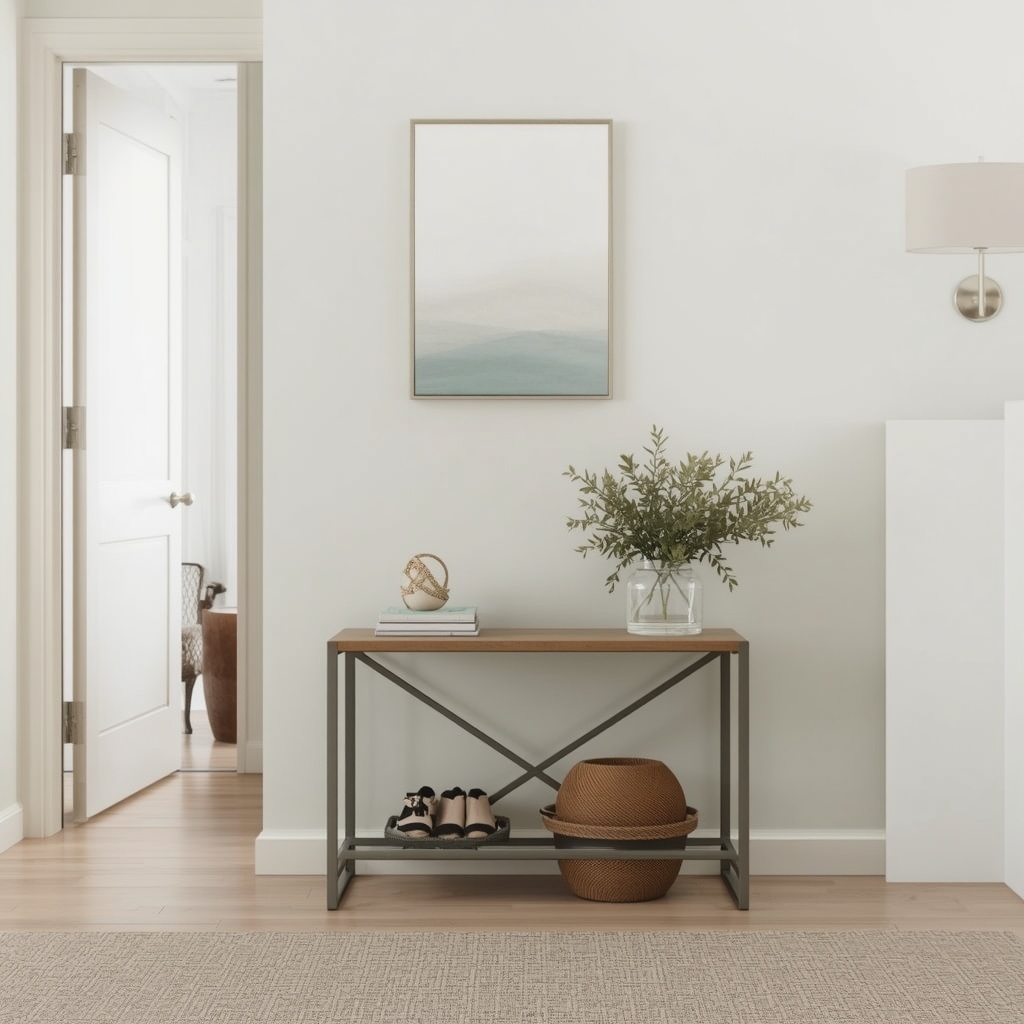
Light, neutral colors on the walls — soft whites, warm greiges, pale sage greens — help small entryways feel open and airy. If you’re a renter who can’t paint, a large piece of removable wallpaper on a single accent wall can introduce color and pattern beautifully. Peel-and-stick wallpaper has come a long way in quality and now comes in hundreds of designs that look genuinely high-end.
Don’t skip the finishing touches that make a space feel complete. A small potted plant or a vase with fresh stems adds life and freshness — both literally and visually. A small tray to corral items on your console table keeps the surface looking curated rather than chaotic. A textured rug in a durable material like jute, wool, or indoor-outdoor fabric grounds the space and defines the entryway zone even in an open-plan apartment where there’s no physical separation between the entry and the living area.
Entryway Ideas by Apartment Size
Not all small apartments are the same. Here’s a quick-reference guide based on your specific situation:
| Apartment Type | Best Entryway Approach |
|---|---|
| Studio apartment (no defined entry) | Use a rug + console table to visually define the zone |
| 1BR with 3-ft entry corridor | Wall-mounted hooks + floating shelf + mirror |
| 1BR with 4–5 ft entry | Slim bench + vertical hooks + mirror + small plant |
| 2BR with shared entry | Double hook rail + shoe cabinet + console table with tray |
| Doorman building (less outdoor gear) | Focus on aesthetic: mirror + console + art |
Renter-Friendly Entryway Ideas That Won’t Cost You Your Deposit
One of the biggest concerns I hear from apartment renters is: “I don’t want to lose my security deposit.” That’s completely valid — and completely workable. Most of the best small entryway upgrades require zero permanent changes.
Command strips and adhesive hooks have become remarkably strong and reliable. 3M Command strips now hold up to 7.5 pounds per strip, and many products are designed specifically for heavier items like coats. Freestanding furniture — console tables, ladder shelves, standalone coat racks — requires no installation at all. Over-the-door organizers and hooks slip right over your door without any drilling. Removable wallpaper peels cleanly without damaging paint.
The only “installation” worth doing as a renter (with landlord permission) is a basic stud-mounted hook rail, which can be patched with spackle and touch-up paint for just a few dollars when you move out. Given the functional payoff, it’s almost always worth having that conversation with your landlord.
“Design is not just what it looks like and feels like. Design is how it works.” — Steve Jobs
This quote resonates deeply in entryway design. The most beautiful entryway that doesn’t function — where you still can’t find your keys, still trip over shoes, still feel stressed the moment you walk in — is a design failure. Form must follow function, especially in small spaces.
Final Thoughts: Start Small, Think Big
Transforming your small apartment entryway doesn’t require a renovation budget or a design degree. It requires clarity about what you need, smart furniture choices, intentional use of vertical space, and a few well-chosen finishing touches that make the space feel cohesive and personal.
Start with one change — a hook rail, a mirror, a designated shoe basket — and build from there. The beauty of small space design is that even one well-chosen addition can completely change how a space feels and functions. Your entryway is the prologue to your home’s story. Make it a good one.
Quick Reference: Small Entryway Must-Haves Checklist
- [ ] Wall-mounted hooks or hook rail
- [ ] Mirror (full-length, leaner, or over-door)
- [ ] Shoe storage solution (rack, cabinet, or basket)
- [ ] Surface for keys and small items (shelf, console, or tray)
- [ ] Warm lighting (plug-in sconce or battery LED)
- [ ] Rug to define the zone
- [ ] One plant or organic element for life and freshness
- [ ] A designated “drop zone” for daily carry items
Related Reading: