
There’s something quietly magnetic about a piece of furniture that tells a story. The worn leather armchair in the corner, the farmhouse dining table with its scuffs and stains, the brass lamp that’s turned the most gorgeous shade of honey gold — these aren’t imperfections. They’re character. In a world increasingly obsessed with fast furniture and sterile perfection, more American homeowners are falling in love with furniture that has patina and personality, and for good reason.
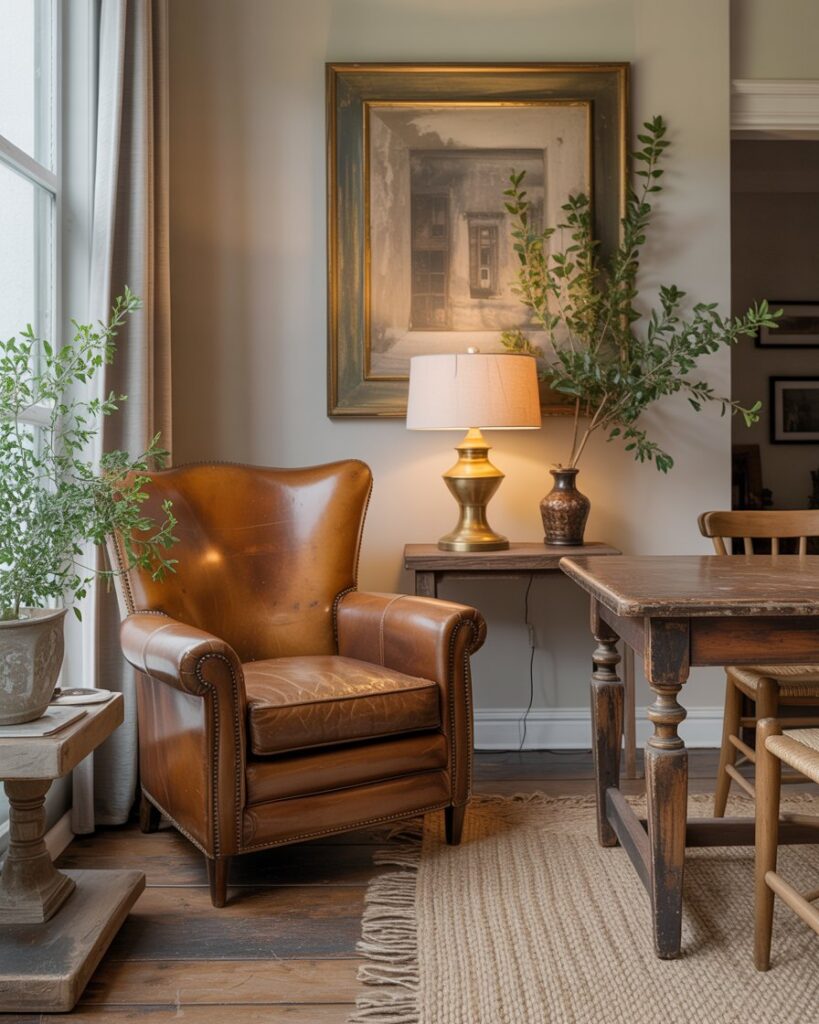
If you’ve ever walked into a room and felt immediately at ease, chances are there were a few beautifully aged pieces doing the heavy lifting. Patina — that rich, time-earned finish that develops on wood, metal, leather, and stone — creates warmth and visual depth that no factory-fresh finish can replicate. It transforms a house into a home that feels genuinely lived in, in the best possible way.
Whether you’re decorating a cozy craftsman bungalow in Vermont or a sleek loft apartment in Austin, embracing furniture with age and soul is one of the smartest design decisions you can make. Let’s explore why — and how to do it beautifully.
What Is Patina, and Why Does It Matter in Interior Design?
Patina refers to the surface changes that occur on materials over time as a result of exposure, use, oxidation, and natural aging. On copper and brass, it produces that distinctive green or honey-brown sheen. On wood, it deepens the grain and smooths the surface. On leather, it creates a supple, color-rich finish that only improves with use.
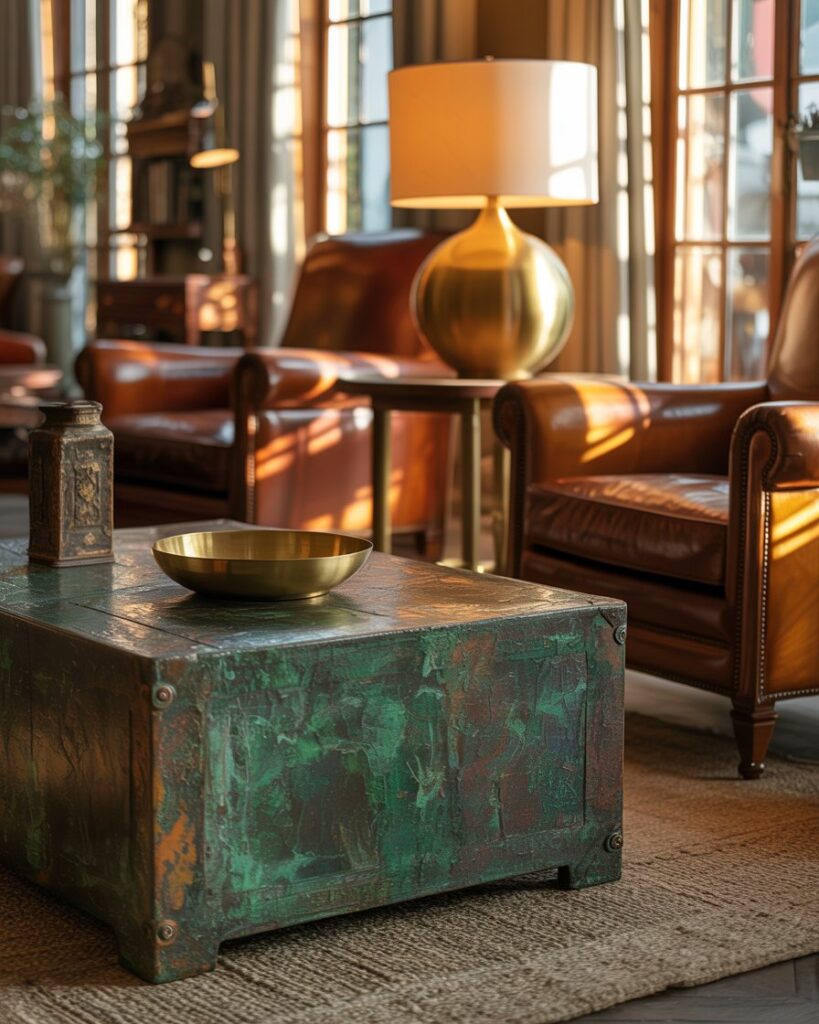
From an interior design standpoint, patina is enormously valuable because it adds visual texture, warmth, and authenticity to a space. It’s the antidote to the “showroom look” — that slightly cold, untouchable feeling that new furniture can sometimes carry. A patinated piece anchors a room and gives it a sense of history and rootedness.
Semantically, patina is deeply connected to concepts like aged furniture, antique finishes, time-worn surfaces, rustic home decor, and artisan craftsmanship. Understanding this helps you shop more intentionally and style more confidently.
The Psychology Behind Loving Old Things: Why We’re Drawn to Aged Furniture
There’s actually science behind why we respond so warmly to furniture with age and character. Psychologists call it the “Endowment Effect” — we assign more value to objects we perceive as having a history. When a piece of furniture shows evidence of a life well-lived, our brains register it as more meaningful, more trustworthy, more real.
Aged furniture also taps into what design theorists call biophilic design principles — our innate human desire to connect with nature and organic, imperfect forms. Smooth, flawless surfaces signal the artificial; worn, varied textures signal the natural world. This is why a reclaimed wood dining table immediately feels more comfortable than a perfectly laminated one.
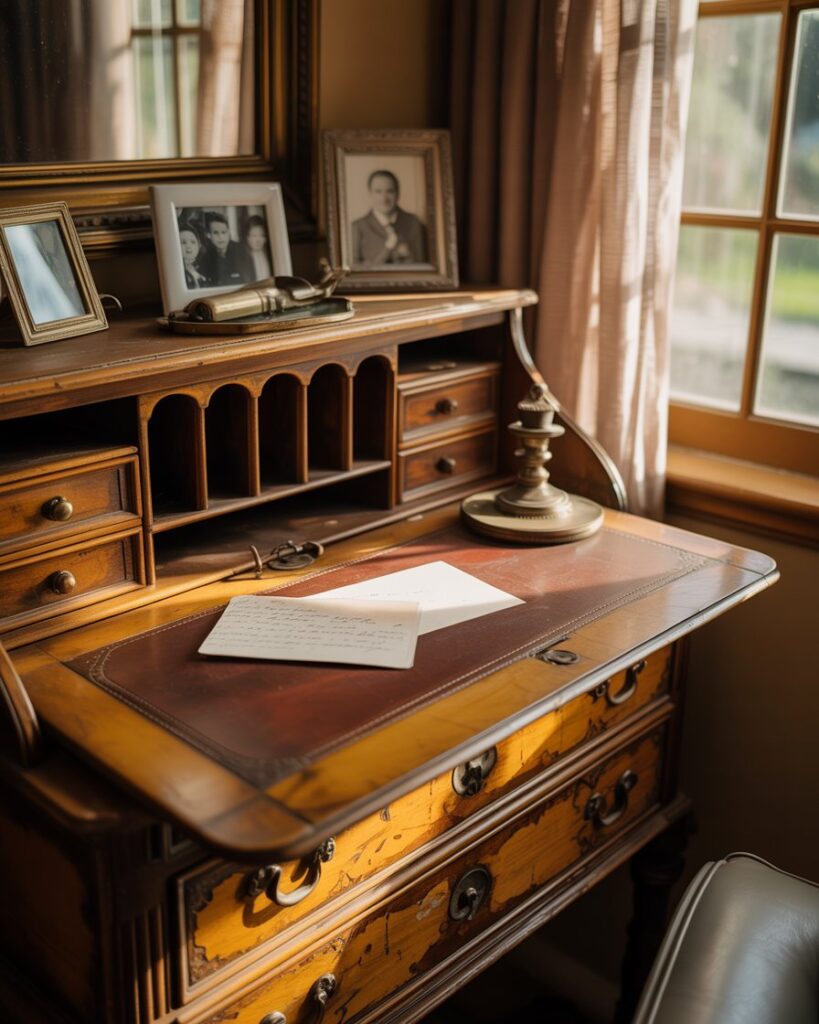
For many American homeowners, there’s also a layer of nostalgia and emotional resonance. A grandmother’s secretary desk or a flea market find that reminds you of a childhood home carries a psychological weight that a new piece simply can’t manufacture. This is the personality component of patina — and it’s priceless.
Types of Furniture That Develop the Most Beautiful Patina Over Time
Not all materials age equally. Here’s a quick reference guide to the best materials for patina-forward furniture shopping:
| Material | How It Ages | Best For | Maintenance Level |
|---|---|---|---|
| Solid Hardwood | Deepens in color, develops rich grain | Dining tables, dressers, floors | Low–Medium |
| Brass & Bronze | Develops warm honey or green oxidation | Lamps, hardware, accent pieces | Low |
| Leather | Softens, develops color variation | Sofas, armchairs, ottomans | Medium |
| Copper | Turns verdigris green or warm brown | Accent furniture, light fixtures | Low |
| Linen & Velvet | Softens, slight fading gives depth | Upholstered chairs, curtains | Medium |
| Cast Iron | Develops rust tones and matte texture | Outdoor furniture, bed frames | Low–Medium |
| Rattan & Wicker | Lightens and becomes more supple | Side tables, accent chairs | Low |
“The best rooms I’ve ever designed weren’t built in a day — they were found. A great piece of patinated furniture does in five minutes what a room full of new décor can’t do in five years.” — Anonymous Interior Designer, Architectural Digest Forum
How to Source Furniture with Authentic Patina and Personality
Finding genuinely aged furniture is an adventure, and knowing where to look makes all the difference. The good news? The US is absolutely rich with sourcing options for character-filled vintage and antique furniture.
Top sources for patinated furniture in the US:
- Estate Sales — Often the best source for authentic aged furniture with real provenance. Sites like EstateSales.net list local sales nationwide.
- Antique Malls & Flea Markets — Places like Round Top in Texas, Brimfield in Massachusetts, and the Rose Bowl Flea Market in Pasadena are legendary for quality finds.
- Chairish & 1stDibs — Premium online marketplaces for curated vintage and antique furniture with photos that show patina clearly.
- Facebook Marketplace & Craigslist — Underrated goldmines for local finds at accessible prices.
- Architectural Salvage Yards — Great for reclaimed wood pieces, vintage hardware, and statement items with serious history.
- Thrift Stores (Goodwill, Salvation Army) — Surprisingly excellent for finding solid wood furniture that just needs some love.
Pro Tip: When shopping estate sales or flea markets, bring a flashlight to examine wood joints and check for solid wood construction vs. veneer. Solid wood ages beautifully; cheap veneer chips and peels. Tapping the surface and listening for a solid “thunk” vs. a hollow sound is your best quick test.
Mixing Patinated Pieces with Modern Furniture: The Art of Contrast
One of the biggest misconceptions about aged furniture is that you need to commit fully to one style — that you can’t mix a beautiful 1940s walnut dresser with contemporary pieces. This couldn’t be further from the truth. In fact, contrast is the secret weapon of great interior design.
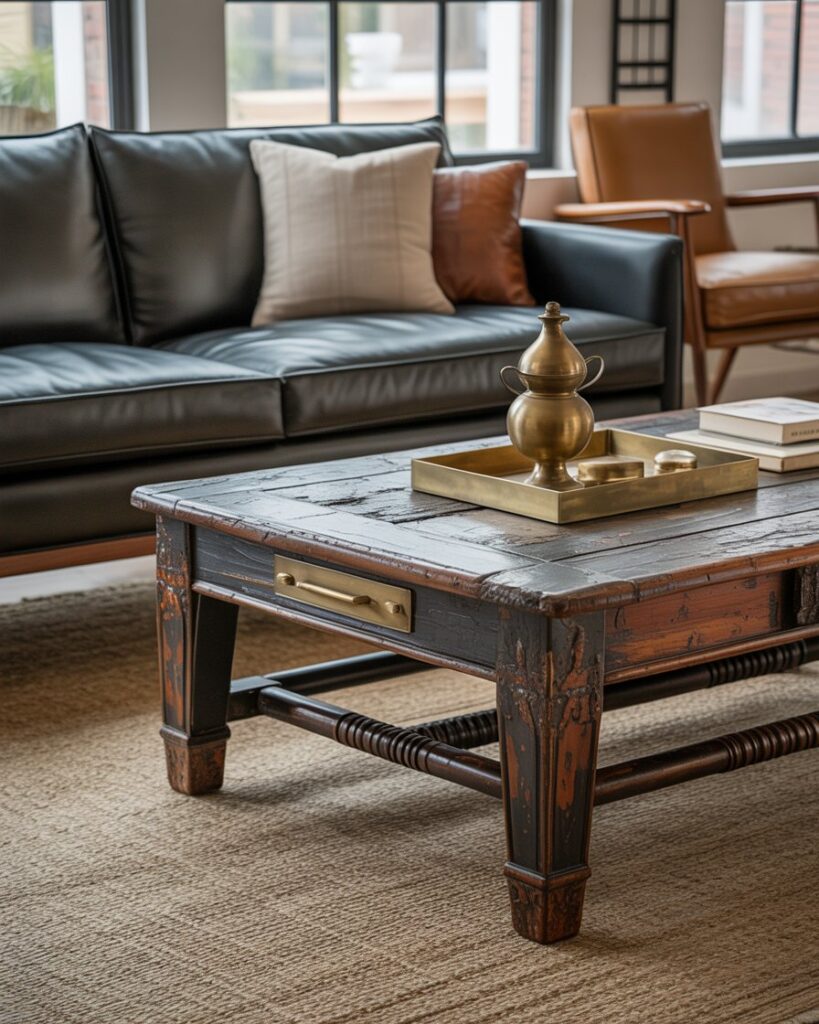
The most sophisticated American interiors right now blend the old and the new intentionally. Think a sleek mid-century modern sofa paired with a heavily distressed farmhouse coffee table. Or a minimalist white kitchen anchored by a gorgeous antique French provincial hutch. The tension between old and new creates visual interest and keeps a room from feeling like a period museum.
The key rule when mixing styles is to establish a common thread — whether that’s a color palette, a material (brass hardware appears on both vintage and modern pieces), or a silhouette language. When your aged piece and your modern piece share at least one design element, the mix feels intentional rather than accidental.
The Best Interior Design Styles That Celebrate Aged and Vintage Furniture
Patinated furniture doesn’t belong to just one aesthetic. It works beautifully across a wide range of popular American home decor styles:
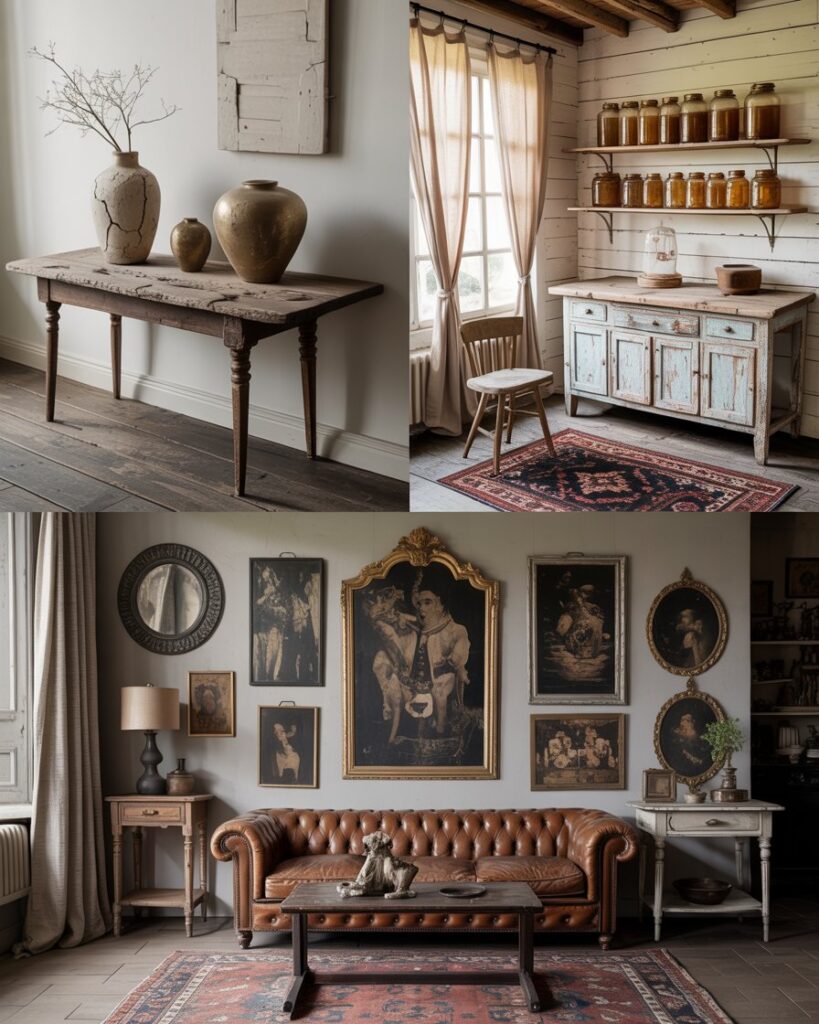
1. Wabi-Sabi The Japanese philosophy of finding beauty in imperfection and impermanence. Cracked ceramics, worn wood, and tarnished metal are celebrated, not hidden. Perfect for minimalist homes that want warmth.
2. Farmhouse & Cottagecore Both styles actively embrace distressed wood furniture, chippy painted pieces, aged linen, and vintage kitchenware. Shiplap walls and reclaimed wood beams are close cousins of patina.
3. Maximalist Eclectic The more-is-more approach that layers periods, patterns, and personalities. A gallery wall of vintage art alongside a velvet chesterfield and a Moroccan rug — patinated pieces thrive here.
4. Industrial Chic Exposed brick, raw steel, and reclaimed wood beams are all about celebrating the aging process. Vintage factory stools, cast iron shelving, and worn leather chairs fit perfectly.
5. French Country & Provençal Lavender, limestone, and linen — plus gorgeous aged oak armoires, distressed painted buffets, and tarnished gilt mirrors. This style was made for patina.
6. Transitional Style The most popular style in American homes right now blends traditional and contemporary elements. Aged wood pieces soften the contemporary lines and add richn
How to Care for and Preserve Patinated Furniture (Without Ruining It)
Caring for aged furniture is genuinely different from maintaining new pieces — and the goal is almost always preservation, not restoration. Many well-meaning homeowners accidentally destroy irreplaceable patina by over-cleaning or refinishing pieces that were perfect as found.
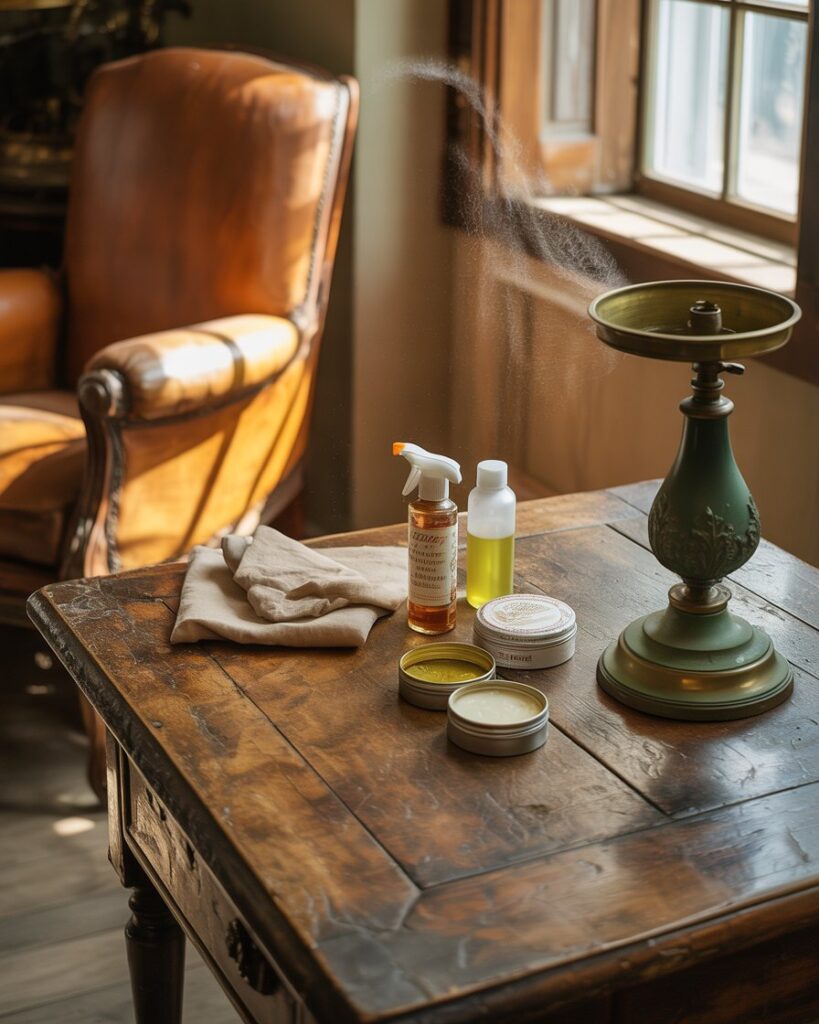
Essential care tips by material:
- Aged Wood: Use a beeswax polish or lemon oil to nourish the wood without stripping natural oils. Avoid harsh chemical cleaners. Dust with a slightly damp cloth, never soaking wet.
- Patinated Brass & Copper: If you love the patina, leave it alone. A light coat of clear paste wax protects without changing the finish. If you want to slow further oxidation, apply Renaissance Wax (available on Amazon).
- Vintage Leather: Condition every 3–6 months with a leather conditioner like Leather Honey. Avoid direct sunlight which accelerates cracking. Embrace the natural color variations that develop with use.
- Distressed or Painted Wood: Touch up chips with matching chalk paint if needed, then seal lightly with wax. The goal is authenticity, not perfection.
- Antique Upholstery: Steam clean gently if needed; avoid scrubbing which can break delicate fibers. For valuable pieces, consult a textile conservator.
Pro Tip: Before buying any aged piece, determine whether its patina is natural or faux. Natural patina develops from the inside out and has a depth and irregularity that artificial distressing can’t truly replicate. Look for variation in wear patterns — genuine pieces show wear on edges, corners, and high-touch areas, not uniformly across the surface.
DIY Ways to Add Patina and Personality to New Furniture
Not every budget allows for antique hunting, and that’s completely fine. There are beautiful ways to add aged character to newer or thrifted pieces yourself — a practice that’s surging in popularity among DIY home decorators across the US.
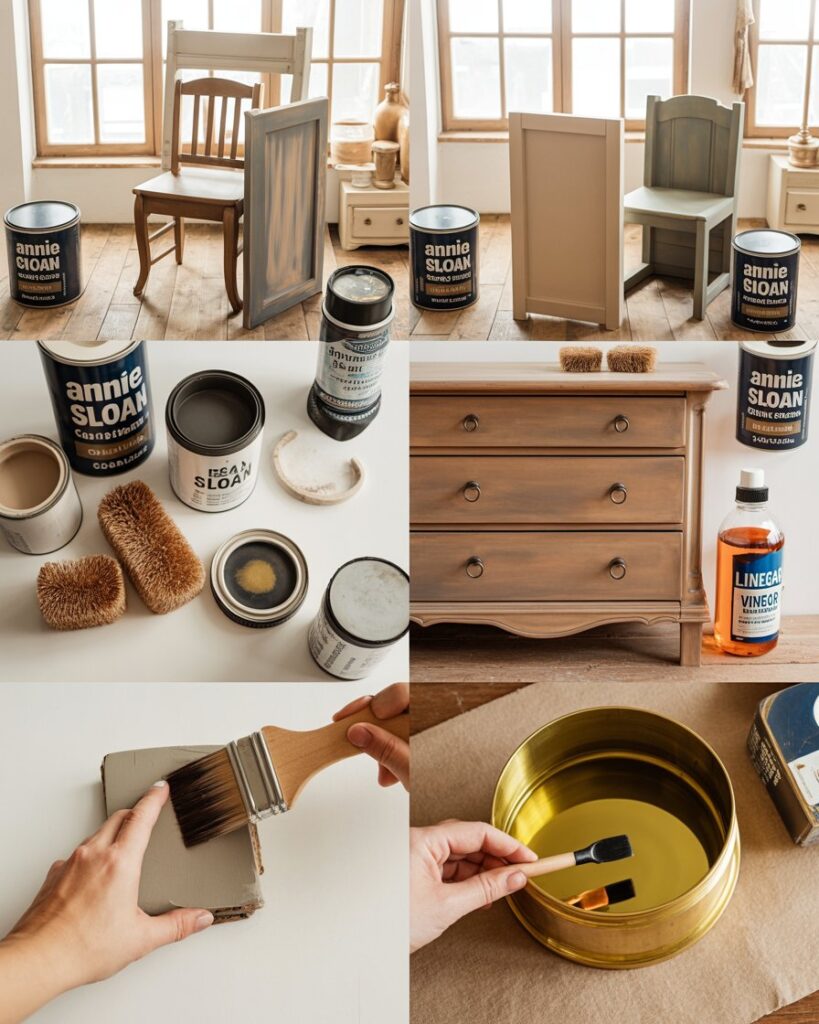
Popular DIY patina techniques:
- Chalk Paint + Wax Distressing — Paint any wood piece in chalk paint (Annie Sloan is the gold standard), let dry, then sand edges and high points to reveal wood below. Seal with dark wax for instant aged character.
- Steel Wool + Vinegar on Wood — Soak steel wool in white vinegar overnight, then brush the solution onto raw wood. The chemical reaction mimics decades of natural aging. Works beautifully on pine and oak.
- Liver of Sulfur on Brass Hardware — This chemical creates instant antique oxidation on brass and copper hardware. Transform brand-new cabinet pulls into heirlooms in minutes.
- Milk Paint + Wet Distressing — Apply milk paint over a slightly wet surface, then distress while damp for a naturally chippy, aged appearance.
- Tobacco Pipe Resin on Wood — Mix pipe resin with denatured alcohol and brush onto raw wood for a golden, aged stain that mimics Victorian-era finishes.
Creating a Cohesive Room with Patinated Pieces as the Anchor
The most successful rooms built around aged furniture use what designers call the “anchor and orbit” principle. One or two patinated statement pieces serve as the room’s anchor — the pieces that define its character and soul. Everything else in the room orbits around them in a supporting role.
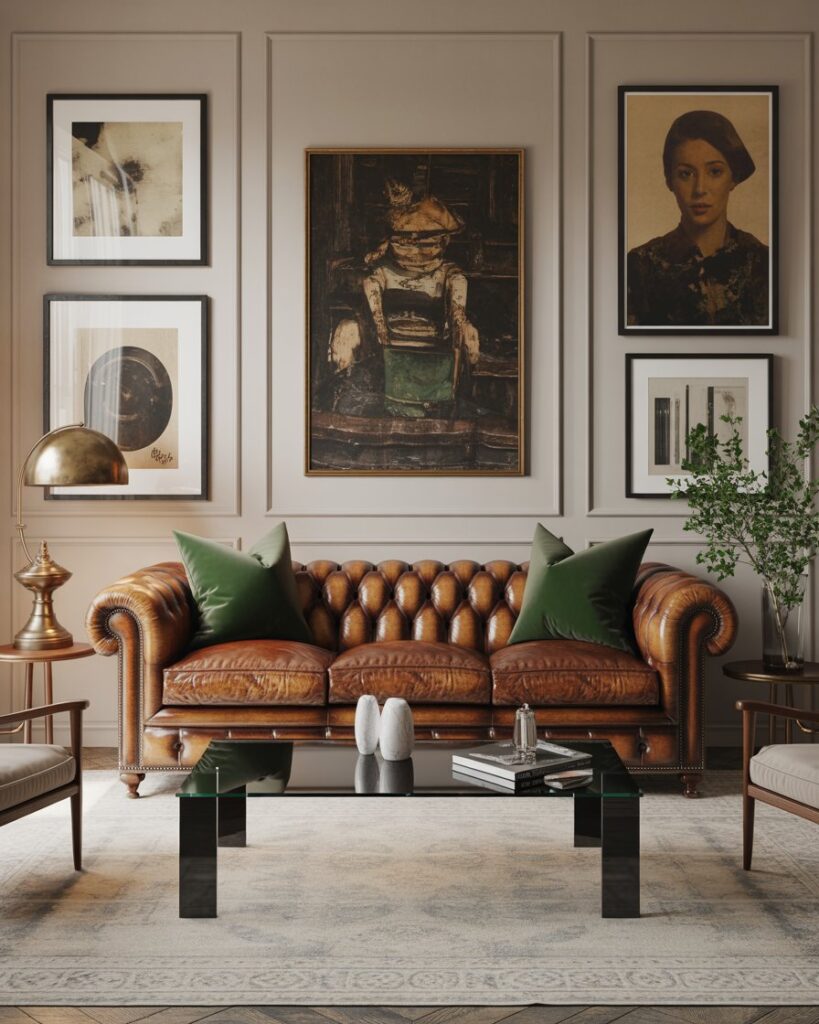
Your anchor might be a dramatic antique armoire in the bedroom, a reclaimed wood farm table in the dining room, or a gorgeous patinated leather Chesterfield in the living room. From there, you build outward with complementary pieces — some new, some vintage, all chosen to harmonize with the anchor’s spirit.
Color palette matters enormously here. Patinated furniture tends to carry warm undertones — amber, honey, caramel, rust, and forest green. Building your room palette around these tones creates a cohesive, sophisticated space where old and new feel naturally unified.
For walls, consider earthy, saturated hues: Benjamin Moore’s “Newburyport Blue,” Sherwin-Williams’ “Antique White,” or Farrow & Ball’s “Dead Salmon” (more beautiful than it sounds, we promise) are all deeply flattering backdrops for patinated furniture.
Room-by-Room Guide: Where to Use Patinated Furniture for Maximum Impact
| Room | Best Patinated Pieces | Why It Works |
|---|---|---|
| Living Room | Aged leather sofa, brass floor lamp, reclaimed wood coffee table | Creates warmth and invitation; becomes the social heart |
| Dining Room | Farmhouse table with bench, vintage hutch, patinated chandelier | Encourages lingering; adds richness to meals |
| Bedroom | Antique dresser, worn wood nightstands, vintage mirror | Brings intimacy and calm; feels like a boutique hotel |
| Home Office | Roll-top desk, patinated brass lamp, worn leather chair | Inspires creativity; suggests gravitas and focus |
| Entryway | Antique console, aged mirror, vintage coat hooks | Sets the tone for the whole home; makes a memorable first impression |
| Kitchen | Farmhouse sink, butcher block island, vintage stools | Warms what can be a cold, utilitarian space |
The Sustainability Argument: Why Patinated Furniture Is the Greenest Choice
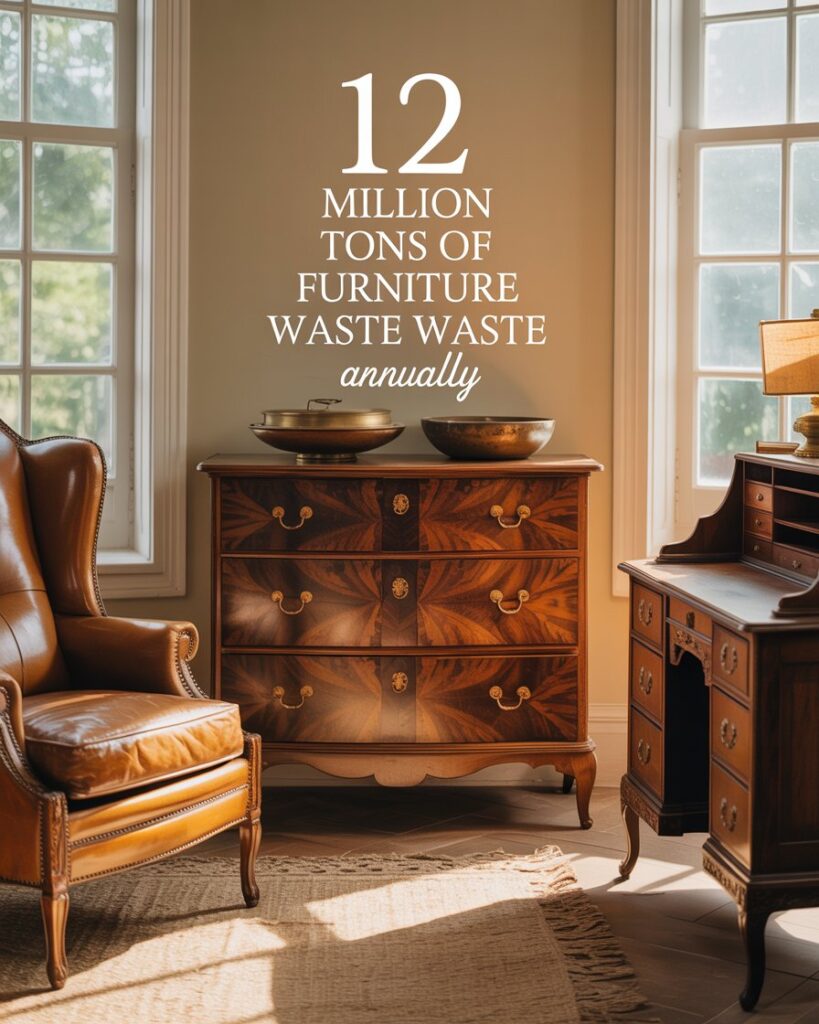
Beyond aesthetics, there’s a powerfully practical argument for furniture with patina and personality: it’s the most sustainable furniture choice you can make. The US furniture industry generates an estimated 12 million tons of furniture waste annually. Choosing vintage, antique, or reclaimed pieces directly reduces that number.
Furniture that has already developed a beautiful patina has proven its durability. A solid walnut dresser from 1950 has already outlasted dozens of flat-pack alternatives — and with proper care, it will outlast dozens more. When you invest in a patinated piece, you’re investing in something built to last, constructed from materials (old-growth hardwoods, solid brass, hand-stitched leather) that are increasingly rare in new manufacturing.
There’s also a compelling economic argument: patinated furniture holds and often appreciates in value, while new furniture depreciates the moment it leaves the showroom floor. Your grandmother’s secretary desk may be worth more today than when she bought it. Your IKEA bookshelf is worth less the moment you assemble it.
Final Thoughts: Giving Your Home a Soul
Designing a home around furniture with patina and personality isn’t just a stylistic choice — it’s a philosophy. It says that you value depth over polish, history over novelty, and authenticity over perfection. It’s the design equivalent of choosing a handwritten letter over a text message.
The most beautiful American homes aren’t the ones that look like they were decorated yesterday. They’re the ones that feel like they’ve been loved for generations — spaces that hold the light differently depending on the hour, that invite you to sink in rather than perch carefully, that tell stories with every scratch and stain and worn edge.
Go slow. Shop thoughtfully. Let your home accumulate character the way a good life does — piece by piece, year by year, story by story. That’s what patina and personality are really about.