
Your bathroom and kitchen deserve more than utility. Discover how sculptural faucets are redefining American home interiors — turning the everyday act of turning on the tap into a moment of pure aesthetic pleasure.
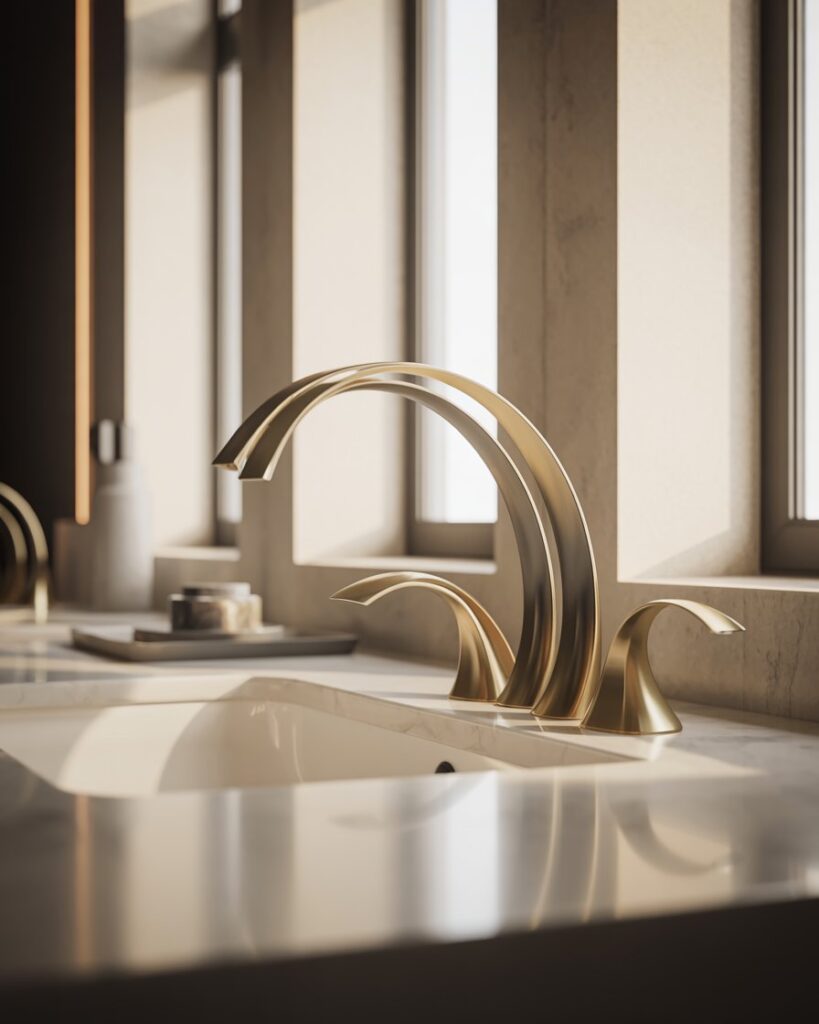
A minimalist arc faucet — where engineering precision meets sculptural beauty.
Walk into any high-end American home today and you’ll notice something remarkable happening at the sink. The faucet — once an afterthought bolted to the basin — has evolved into a statement-making art piece that anchors the entire room’s aesthetic. Sculptural faucets are no longer a luxury reserved for designer showrooms; they’ve become an accessible, transformative tool for elevating bathroom and kitchen design across the United States.
As an interior designer who has spent years helping homeowners reimagine their living spaces, I can tell you with confidence: nothing changes a room’s energy faster than the right fixture. A sculptural faucet is the jewelry of your kitchen or bathroom — it catches the eye, starts conversations, and tells a story about who you are and how you live. Whether you’re renovating a Craftsman bungalow in Portland or updating a modern condo in Miami, this guide will show you how to choose and style sculptural faucets that blur the line between utility and fine art.
What Makes a Faucet “Sculptural”?
The term sculptural faucet refers to fixtures intentionally designed as three-dimensional art objects — pieces where form is given equal or greater weight than function. Unlike standard utilitarian faucets, these fixtures feature organic curves, architectural angles, dramatic proportions, and premium finishes that command visual attention. Think of the sweeping arc of a waterfall spout, the geometric precision of a matte black pillar faucet, or the sensuous curves of a brass swan-neck design.
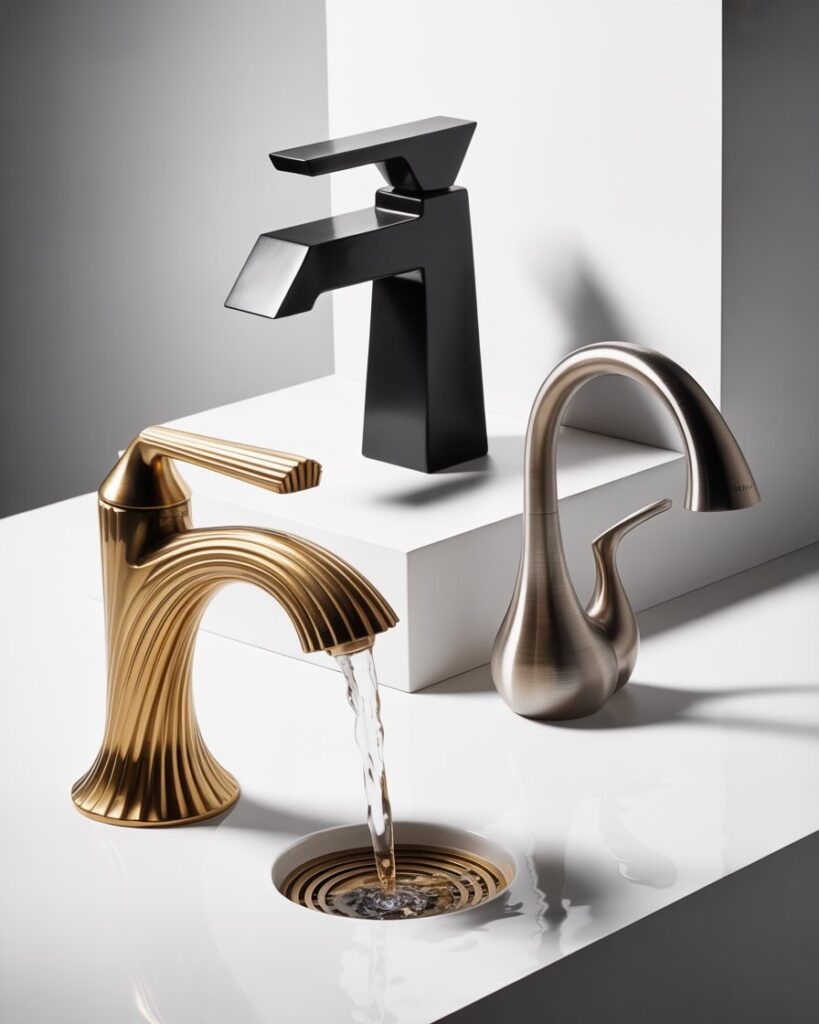
Sculptural faucets draw on movements from fine art, architecture, and industrial design. You’ll find nods to Art Nouveau in flowing organic forms, echoes of Bauhaus minimalism in clean-lined matte fixtures, and the bold confidence of postmodern design in oversized statement pieces. The key characteristic is intentionality — every curve, angle, and proportion is deliberate, contributing to a unified aesthetic vision.
The rise of sculptural hardware is deeply connected to the broader trend of “considered interiors” — spaces where every element is curated rather than merely functional. Architectural Digest and Elle Decor have consistently spotlighted statement faucets as one of the most impactful (and underrated) design investments a homeowner can make.
“The faucet is the punctuation mark of the bathroom — it’s the detail that tells you whether you’re reading a sentence or a poem.”— Interior Design Principle, Hospitality Design Forum 2024
Top Sculptural Faucet Styles Transforming American Homes
Understanding the major design categories helps you align your faucet choice with your home’s overall aesthetic language. Each style brings a distinct personality and pairs naturally with specific materials, palettes, and room configurations.
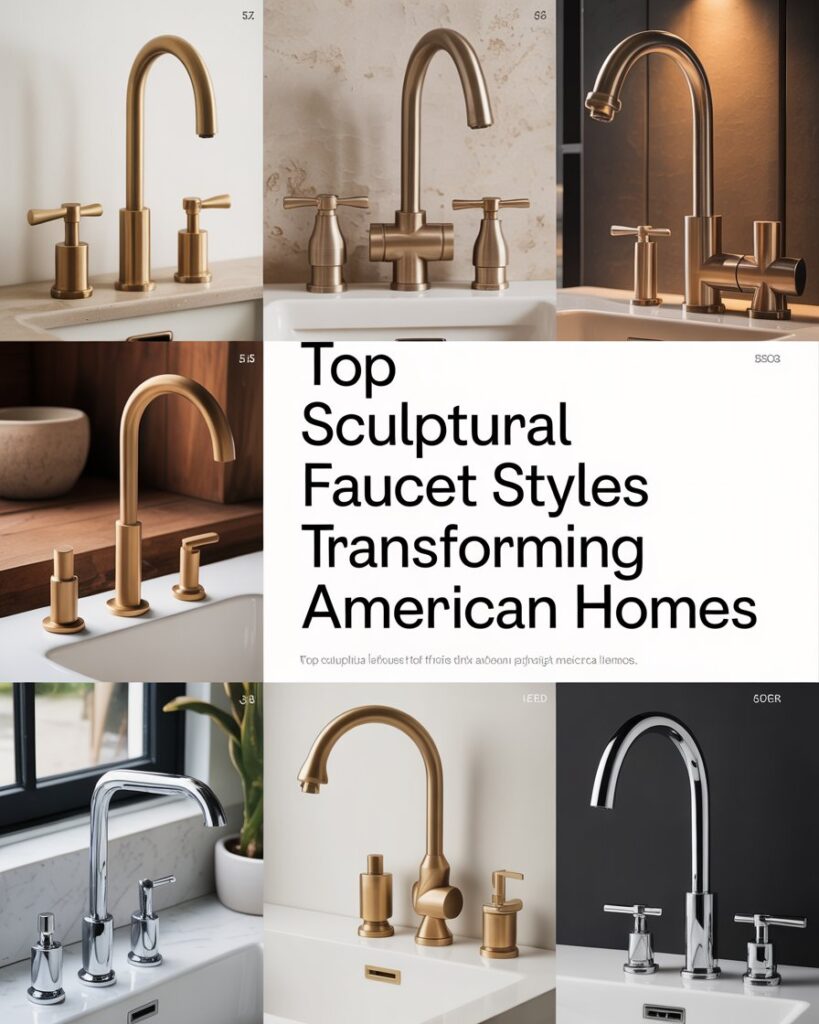
Whether your home leans toward warm organic textures or cool industrial minimalism, there’s a sculptural faucet aesthetic that will feel like it was designed specifically for your space. Here’s a breakdown of the five most influential styles shaping American bathroom and kitchen design right now.
| Style | Defining Feature | Best Finish | Ideal Room Style | Price Range |
|---|---|---|---|---|
| Arc Waterfall | Long sweeping spout, cascading flow | Brushed nickel, chrome | Contemporary, spa-inspired | $180–$650 |
| Pillar / Column | Tall vertical body, architectural silhouette | Matte black, unlacquered brass | Minimalist, industrial loft | $250–$1,200 |
| Organic / Biomorphic | Nature-inspired curves, no hard angles | Brushed gold, antique bronze | Earthy, Japandi, bohemian | $300–$2,000 |
| Geometric / Angular | Sharp edges, cubic proportions | Matte black, gunmetal | Modern, transitional | $220–$900 |
| Wall-Mount Exposed | Visible pipe system, industrial aesthetic | Raw brass, oil-rubbed bronze | Industrial, vintage, farmhouse | $350–$1,800 |
Choosing the Right Sculptural Faucet for Your Space
Selecting a sculptural faucet requires the same thoughtfulness you’d bring to choosing a painting or a statement piece of furniture. The fixture must harmonize with your countertop material, sink shape, cabinet hardware, lighting, and the overall visual weight of the room. A towering pillar faucet that looks breathtaking in a large primary bath can feel overwhelming in a powder room — and vice versa, a delicate organic piece may get lost in a high-ceilinged kitchen.
Scale is the single most important factor most homeowners underestimate. I always advise clients to measure their sink basin depth and counter height before falling in love with a faucet online. The spout reach — the horizontal distance from the faucet base to where water falls — should direct water toward the drain center, not the basin rim. A sculptural faucet that’s technically beautiful but functionally awkward will frustrate you every single day.
✦
Pro Tip from the Studio
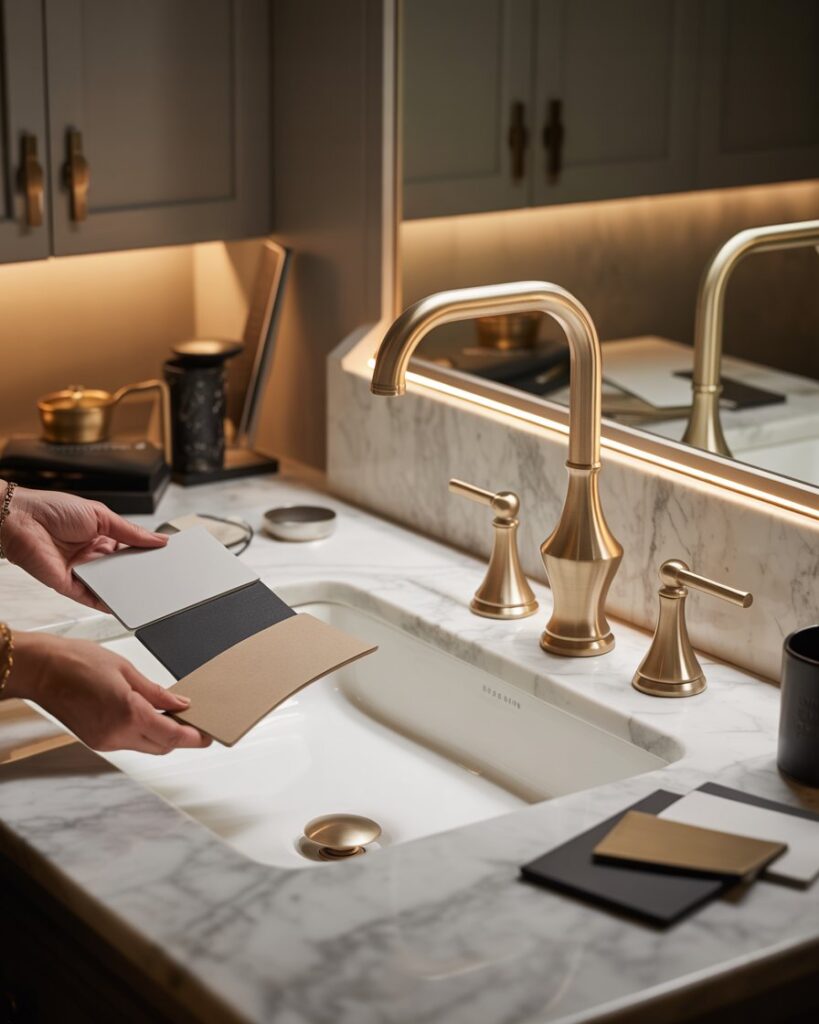
Before purchasing, hold a cardboard cutout of your chosen faucet’s silhouette against your actual sink. This quick trick reveals proportional issues that photos on a screen always mask — especially with tall pillar-style and arc waterfall designs. Also request finish swatches from your plumbing supplier to compare against your countertop and cabinet hardware in your home’s actual lighting.
Finish as Fine Art: Matching Metals to Your Interior Palette
The finish of a sculptural faucet is its “color” — and just like paint on a canvas, the wrong choice can undermine even the most beautiful form. The American design market currently offers an extraordinary range of finishes, from living finishes that evolve naturally over time to precision-engineered PVD coatings that resist tarnishing for decades. Understanding which finish belongs in which context is essential for creating a cohesive, high-end look.
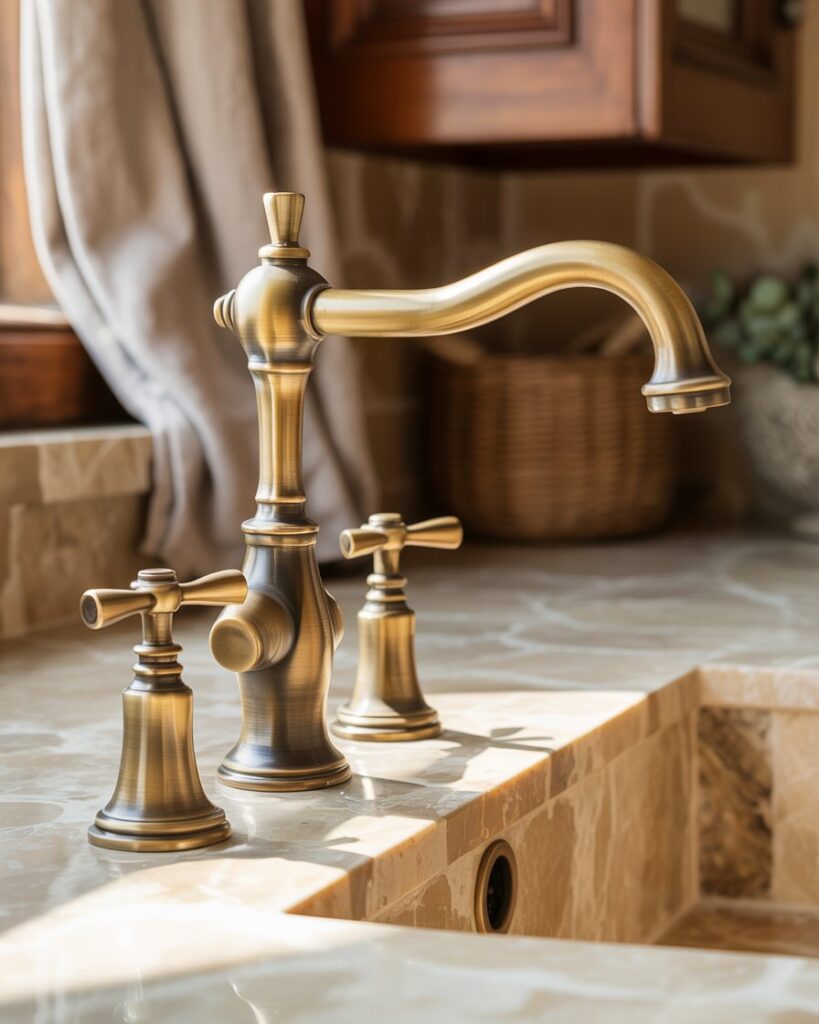
Living finishes like unlacquered brass and raw copper are particularly relevant for homeowners seeking authenticity and character. These materials develop a natural patina over time — a quality that resonates deeply with the growing movement toward organic, impermanent beauty in American home design. They’re the anti-Instagram finishes: they look better with age, not worse.
Designer’s Finish Guide — What Works Where
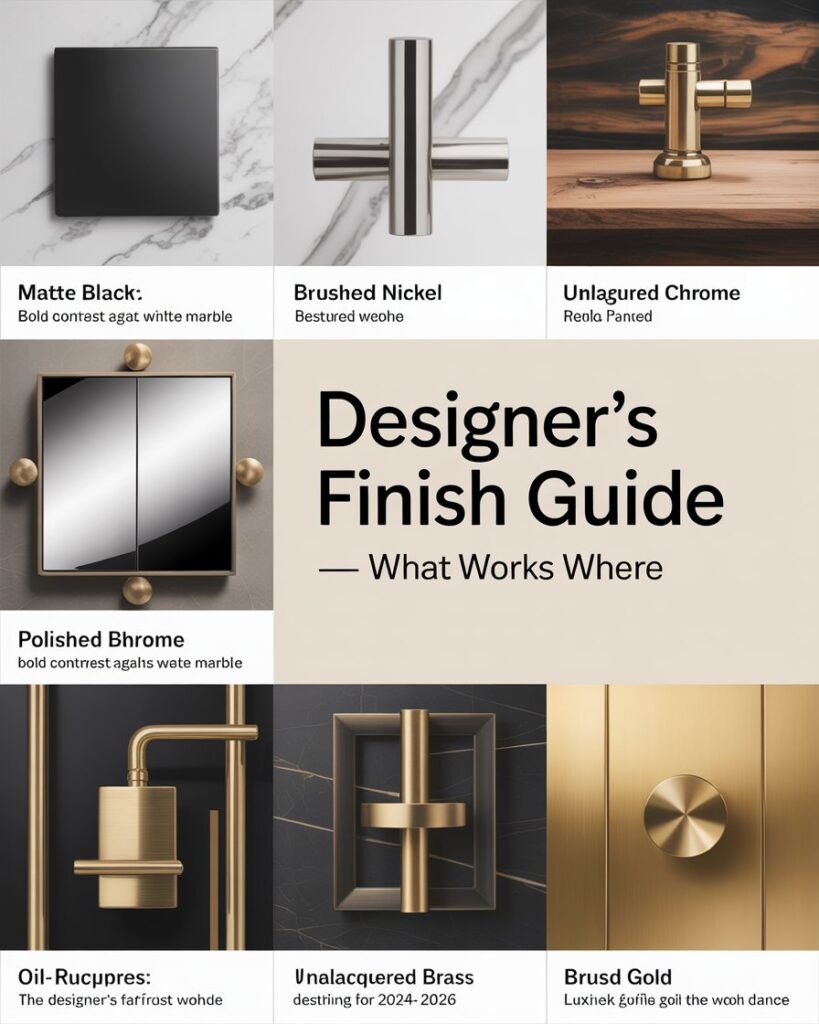
- Matte Black: Bold contrast against white marble or light wood; ideal for modern and transitional spaces. Pairs with dark cabinet hardware.
- Brushed Nickel: The versatile classic — warm enough for traditional spaces, clean enough for contemporary. Works with both warm and cool palettes.
- Unlacquered Brass: The designer’s darling for 2024–2026. Warm, timeless, and develops a gorgeous patina. Pairs beautifully with terracotta, sage, and warm neutrals.
- Polished Chrome: Crisp, reflective, and eternally contemporary. Best for cool-toned bathrooms with gray, white, or blue palettes.
- Oil-Rubbed Bronze: Rich and moody. Perfect for Arts & Crafts, Mediterranean, and old-world interiors with warm wood tones.
- Brushed Gold / Champagne: Luxurious without the formality of polished gold. Works in glam-minimalist and Art Deco-influenced spaces.
✦
Pro Tip — The Two-Metal Rule
You don’t have to match every metal in the room — but limit yourself to two finish families. A bathroom with brushed gold faucet, matte black towel bars, and chrome accessories reads as chaotic. Choose a primary finish (say, brushed brass) and a single complementary accent (matte black cabinet pulls). This creates intentional contrast rather than visual clutter.
Sculptural Faucets as Focal Points in Bathroom Design
In bathroom interior design, the concept of the focal point is everything. When you walk into a beautifully designed bathroom, your eye travels naturally to a single anchor — a vanity mirror, a freestanding tub, or increasingly, a remarkable faucet installation. The rise of vessel sinks paired with tall, dramatic faucets has created an entirely new typology in American bathroom design: the sink-as-sculpture moment.
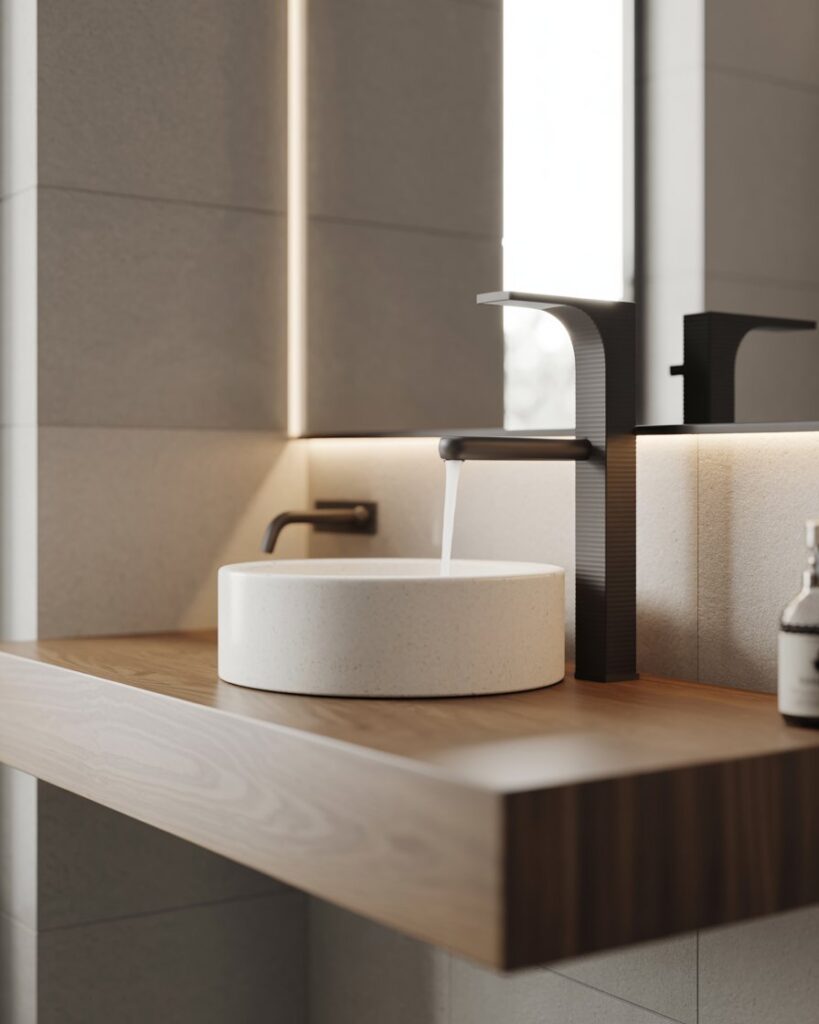
Consider the visual hierarchy at play when a matte black column faucet rises above a white concrete vessel sink on a floating walnut vanity. The faucet isn’t just completing the sink — it’s creating a still-life composition that rivals any art object. Houzz data consistently shows that bathrooms with statement fixtures receive significantly more saved collections and inspiration shares than those with standard hardware, confirming what designers have long known: people respond to fixtures as art.
Powder rooms — those half-baths visited by every guest — offer the most liberating design opportunity in the home. Because they’re small and functional demands are minimal, you can take risks that might feel overwhelming in a primary bath. This is where you install the sculptural faucet you’ve been dreaming about: the hand-hammered brass piece, the sculptural organic form, the architectural wall-mount system that belongs in a gallery.
| Room | Design Approach | Recommended Style | Key Consideration |
|---|---|---|---|
| Primary Bathroom | Anchor the vanity; cohesion with tub/shower | Arc waterfall or organic form | Must coordinate with tub filler |
| Powder Room | Bold statement, gallery-like impact | Any sculptural style — go dramatic | Scale to small basin; one hero piece |
| Primary Kitchen | Functional artistry; high-use durability | Articulating arm or arc pull-down | Reach must cover full sink width |
| Bar / Prep Sink | Secondary accent; design play | Mini pillar or compact arc | Smaller scale; high design impact |
The Kitchen Revolution: Sculptural Faucets Beyond the Bathroom
For years, sculptural faucet innovation was primarily a bathroom story. The kitchen faucet was expected to be hardworking and durable first, beautiful second. That hierarchy has been completely upended. Today’s American kitchen designs — particularly in the open-plan layouts that dominate new construction and renovation — treat the kitchen sink as a focal point visible from the dining and living areas, making the faucet as important as any other piece of visible hardware in the home.
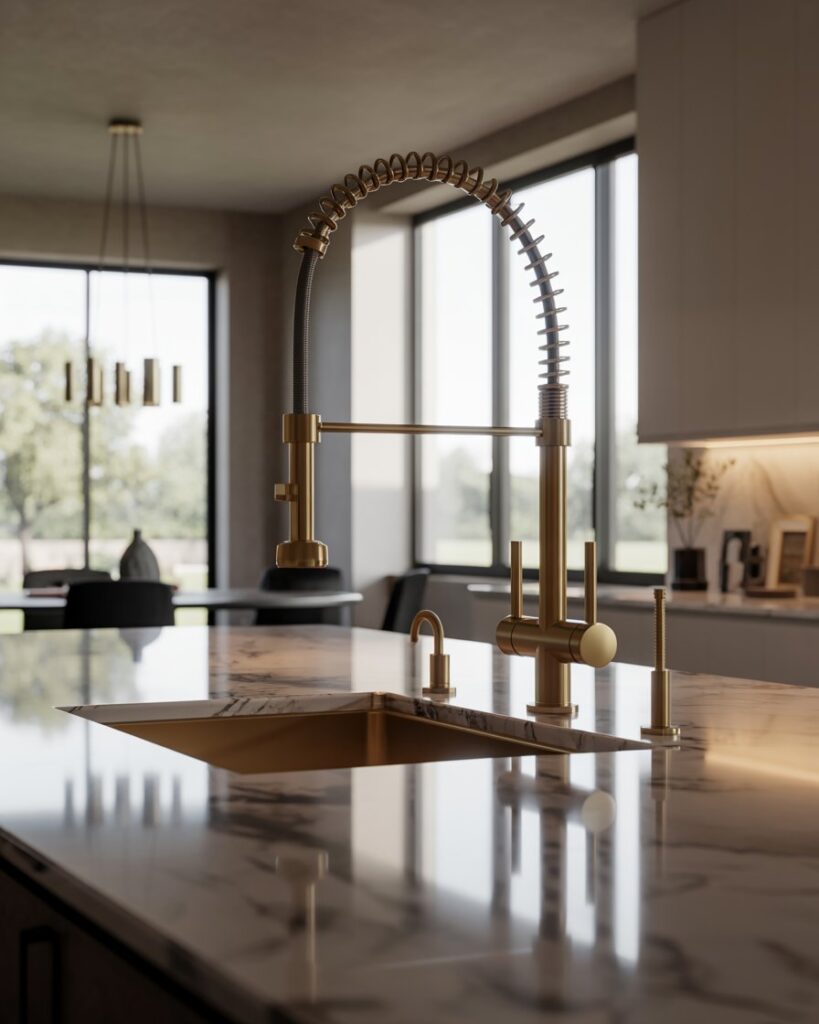
High-arc kitchen faucets with articulating arms, exposed spring mechanisms, and architectural bridge designs are redefining what a working kitchen can look like. Brands like Kallista, Waterworks, and Dornbracht have elevated kitchen faucet design to museum-quality objects. The exposed spring faucet — a nod to professional restaurant kitchens — has become particularly popular in American homes, combining industrial authenticity with unmistakable visual impact.
“The kitchen faucet has become the chandelier of the sink — it’s the element everyone notices first and remembers longest.”— Studio Observation, Kitchen & Bath Industry .
Sustainable Design: Sculptural Faucets That Are Good for the Planet
One of the most compelling developments in the sculptural faucet market is the integration of water-saving technology with high-end aesthetic design. WaterSense-certified faucets that use aerators and flow restrictors to reduce water consumption by 30% or more are now available in the full spectrum of sculptural designs — you don’t have to choose between beauty and responsibility.
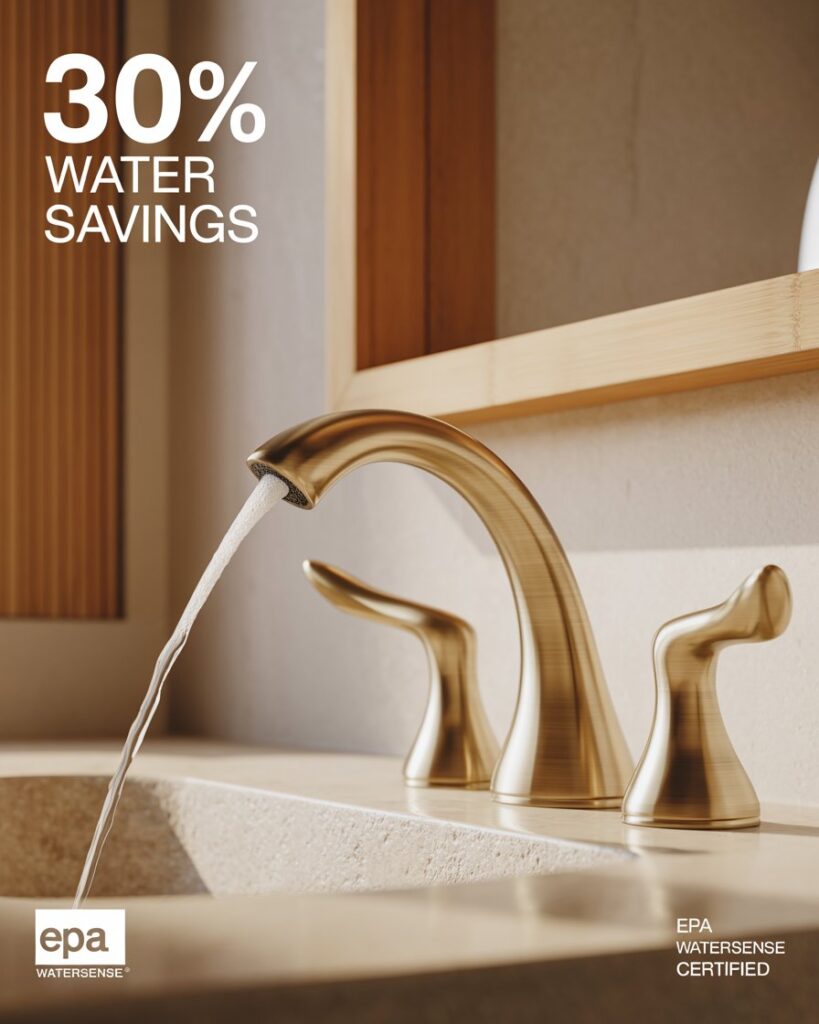
American homeowners increasingly prioritize sustainable interior design without compromising on visual quality. Look for faucets certified by EPA WaterSense — these meet strict performance and efficiency criteria. Additionally, fixtures made from recycled brass or featuring PVD (Physical Vapor Deposition) coatings not only resist tarnishing for longer but are manufactured with fewer harmful chemicals than traditional electroplated finishes.
What to look for in eco-conscious sculptural faucets
- EPA WaterSense certification (max 1.5 GPM for bathroom, 1.8 GPM for kitchen)
- Ceramic disc cartridges — drip-resistant and long-lasting (50,000+ cycle rating)
- PVD finish — more durable and environmentally friendlier than electroplating
- Solid brass body — recyclable and far more durable than zinc alloy alternatives
- Manufacturer sustainability transparency and warranty length (look for lifetime warranties)
Budget-Conscious Sculptural Design: Every Price Point Has Options
The most common misconception I encounter is that sculptural faucets are exclusively for high-budget renovations. This simply isn’t true. The market has expanded dramatically at every price point, and some of the most visually striking sculptural designs are available at accessible price points through retailers like Wayfair, Build.com, and even well-curated collections at Home Depot’s higher design tier. The key is knowing what you’re looking for.
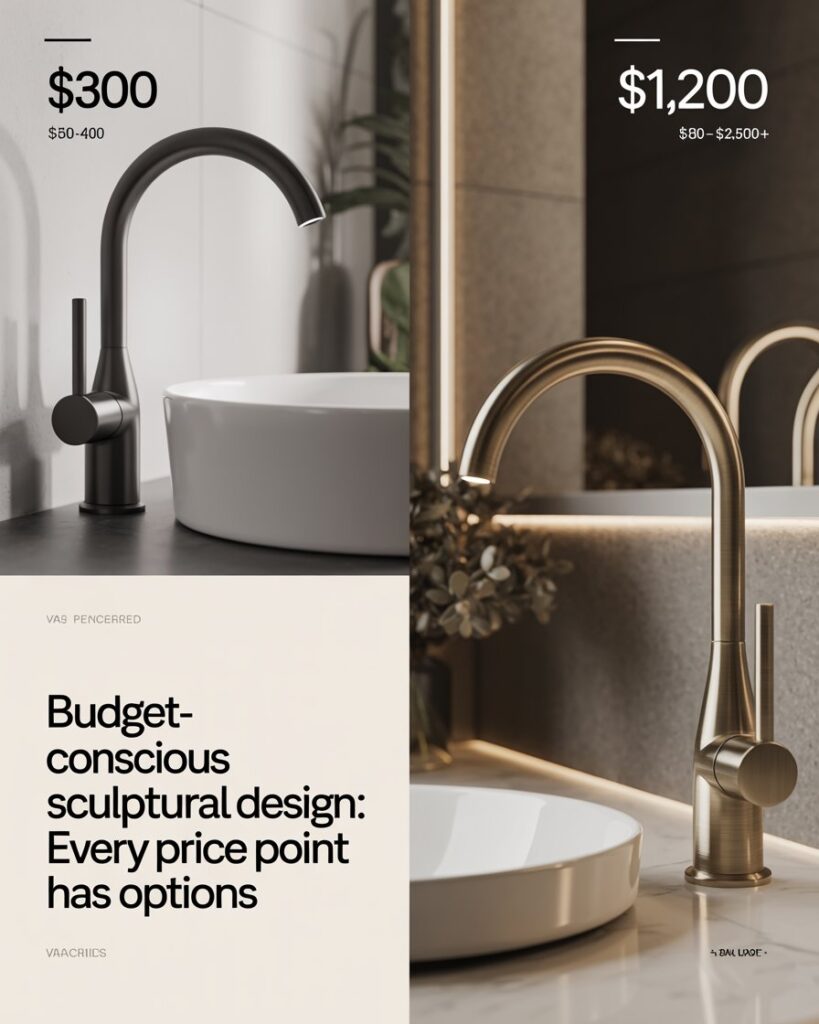
At the $150–$400 range, you can find genuinely beautiful arc and pillar faucet designs in matte black and brushed nickel. The trade-off is typically in the quality of the internal cartridge and the precision of the finish application — visible under close scrutiny but not from a normal viewing distance. At $400–$800, you enter semi-professional territory with better ceramic disc cartridges, more refined finish quality, and more distinctive design language. Above $800, you’re accessing true designer-tier fixtures with the kind of tactile and visual quality that makes an audible difference in how a room feels.
Entry-Level Design
$150–$400
Strong visual impact; standard cartridge quality
Designer Tier
$800–$2,500+
Premium finish, ceramic disc, designer provenance
Installation Considerations: What Your Plumber Needs to Know
Sculptural faucets — particularly wall-mount designs, vessel faucets, and those with unique spout geometries — often require careful installation planning that standard faucets do not. Before you purchase, understand your sink’s pre-drilled hole configuration (single hole, 3-hole, widespread) and whether your wall or countertop can accommodate the structural requirements of a taller or wall-mount fixture. Wall-mount faucets in particular require rough-in plumbing positioned precisely during framing or renovation — a mistake that’s expensive to correct later.
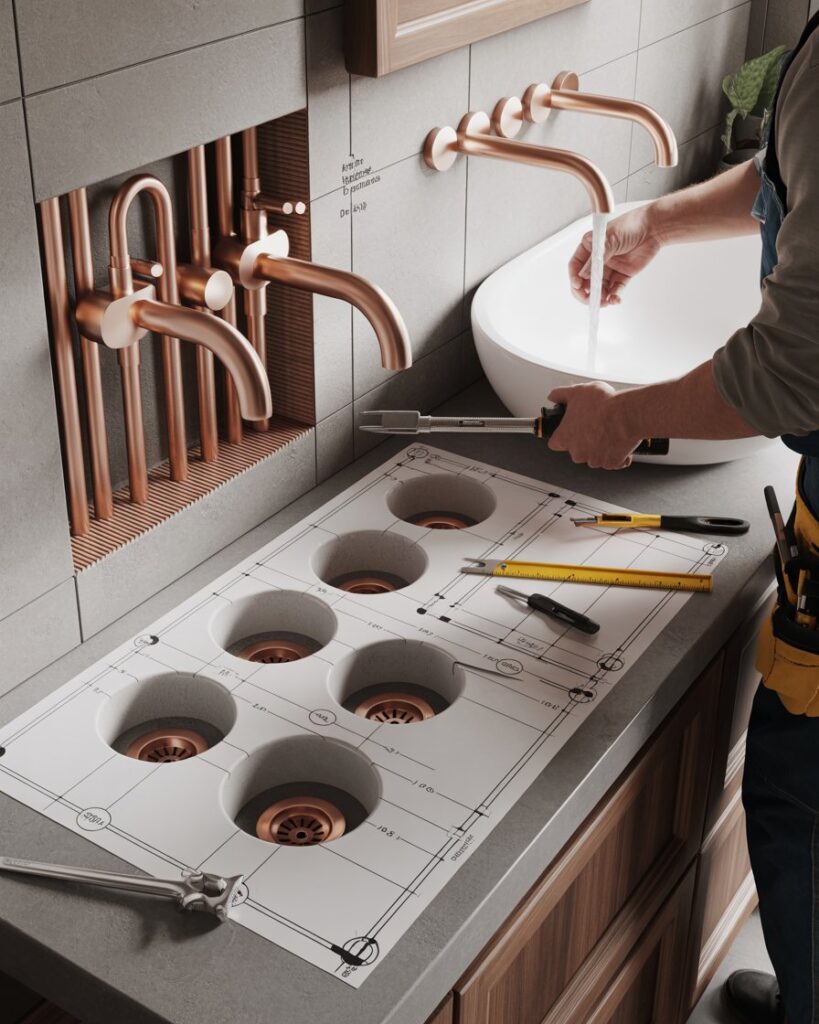
Always work with a licensed plumber familiar with decorative fixtures for final installation. The investment in professional installation protects your fixture warranty (most high-end manufacturers void warranties on DIY installation) and ensures the water connections, which are invisible once the faucet is mounted, are clean and leak-free. A poorly installed $1,500 faucet looks and performs worse than a properly installed $300 one.
Final Thoughts: The Faucet Is the Fine Art You Actually Use
Sculptural faucets represent one of the most exciting intersections in contemporary American home design — the place where daily ritual meets deliberate beauty. Unlike a painting you pass without touching, a sculptural faucet is engaged with multiple times every day. That act of reach, turn, and flow becomes a small but cumulative experience of living well, of choosing beauty as part of the ordinary.
The most successful interiors I’ve designed treat every surface and fixture as part of an integrated whole — a philosophy where the faucet deserves as much consideration as the countertop, the mirror, or the pendant light overhead. When you choose a sculptural faucet with intention, you’re not just selecting hardware. You’re composing. And that’s a distinction every beautifully designed American home should aspire to.
Whether you’re drawn to the dramatic sweep of a brushed brass arc spout, the geometric confidence of matte black steel, or the timeworn character of a living finish that grows more beautiful with every year, the right sculptural faucet is waiting to transform your space. The only question is: which one speaks your design language?
Ready to Find Your Statement Faucet?
Explore designer fixture collections at Waterworks, Kallista, or Kohler’s Artifacts line — and always request finish samples before committing to your final choice.Help me choose my faucet style ↗