
By a Home Decor Interior Designer | Bathrooms · Small Space Living · Tub Styling
small bathroom ideas free standing tubs soaking tub small space bathroom remodel tub styling tips compact bathroom design
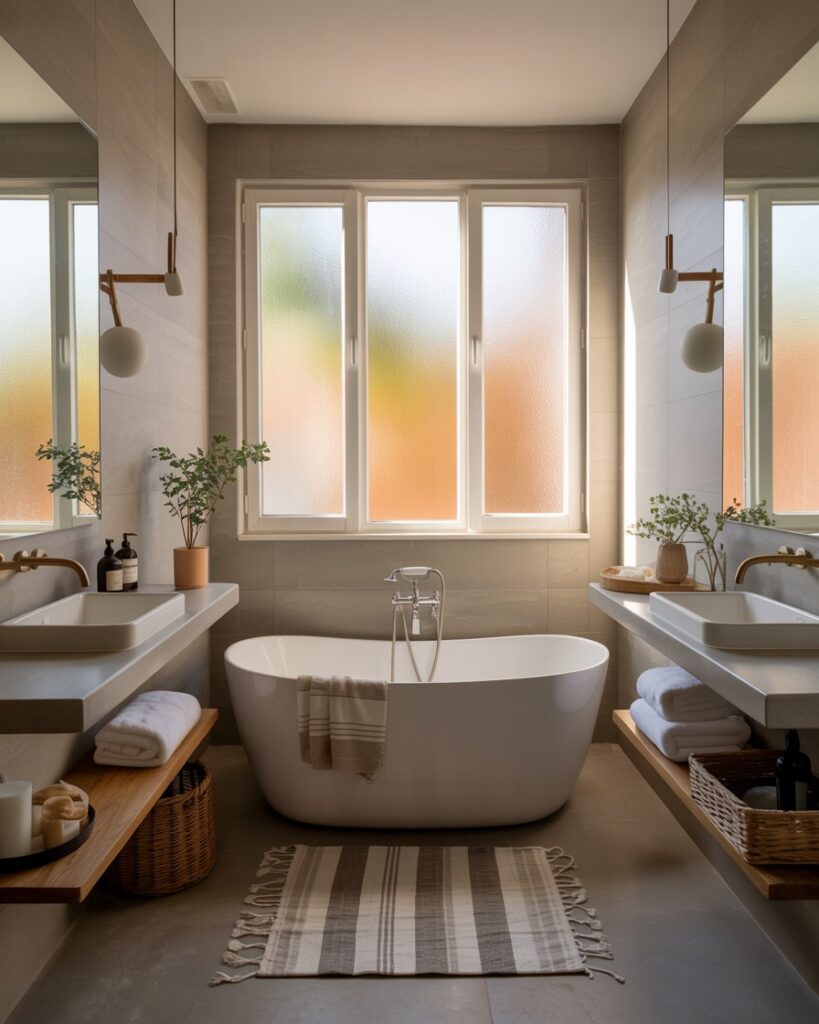
Let’s be honest — the idea of a gorgeous soaking tub in a petite bathroom sounds like a luxury reserved for sprawling master suites in design magazines. But here’s the truth I share with every client who thinks they simply don’t have the room: a small bathroom doesn’t mean you have to forfeit the bathtub of your dreams. It just means you have to be smarter, bolder, and a little more intentional with every single design decision you make.
Whether you’re working with a narrow galley bathroom in a Brooklyn brownstone, a compact main bath in a suburban ranch home, or a tiny ensuite in a Pacific Northwest cottage, this guide is your blueprint. We’re diving deep into the strategies, fixtures, finishes, and spatial tricks that make small tub spaces feel indulgent, intentional, and absolutely stunning — without tearing down a single wall.
Why Tubs Still Matter in Small Bathrooms
In recent years, the design world flirted with the idea of ripping tubs out of smaller bathrooms entirely in favor of walk-in showers. And while a beautifully tiled shower has its place, the pendulum has swung back. Bathtubs — especially soaking tubs — are back in a major way, and American homeowners are leading the charge. According to the National Association of Home Builders, a primary bathroom with a soaking tub remains one of the most-wanted features among buyers, even in compact homes.
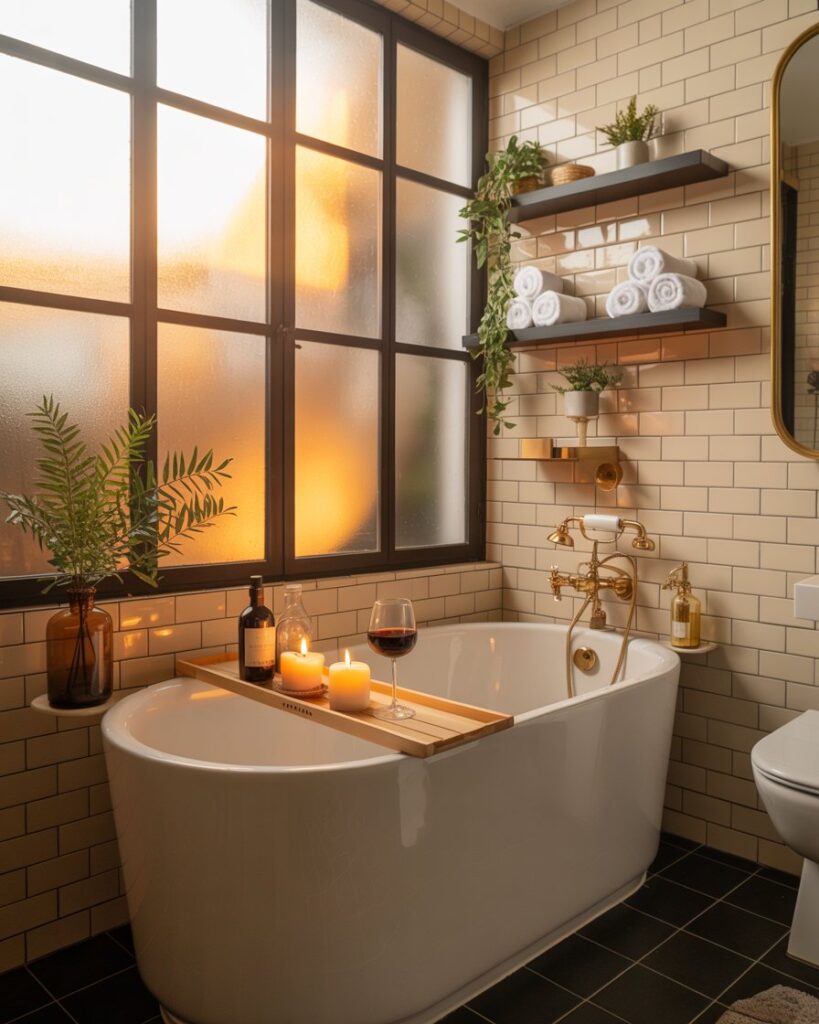
Beyond resale value, tubs offer something a shower simply can’t: ritual. The act of drawing a bath, slipping in with a glass of wine and a candle flickering — that’s not just hygiene, it’s self-care. And in a world that never stops moving, your bathroom should be your personal sanctuary, regardless of square footage. The key is choosing the right tub style and surrounding it with intentional decor that maximizes every inch.
“Small space design is not about sacrifice — it’s about precision. When you get every detail right, a 50-square-foot bathroom can feel more luxurious than a 200-square-foot one.”— A common principle among top residential interior designers
Choosing the Right Tub for a Small Space
This is the single most important decision you’ll make. The wrong tub can make a small bathroom feel claustrophobic and dysfunctional. The right one can anchor the entire room and even create the illusion of more space. Before you fall in love with a fixture on Pinterest, measure your bathroom twice — and then measure again.
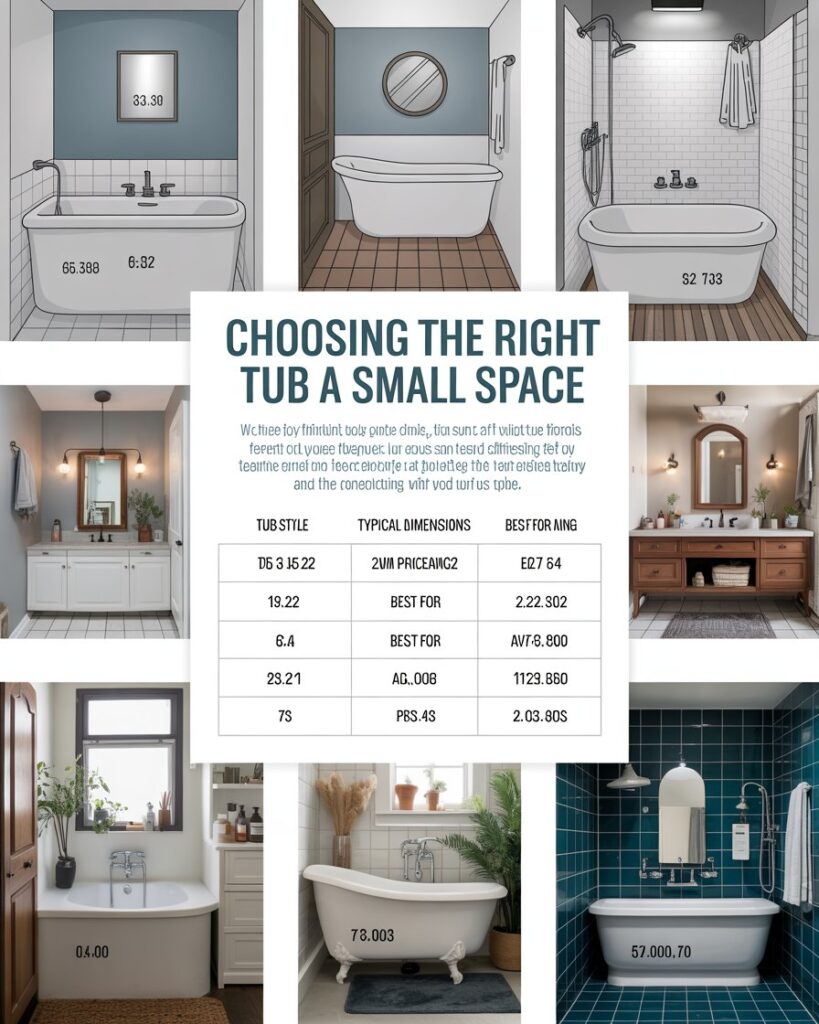
Think about how the tub will interact with the door swing, the vanity clearance, and the traffic flow. A tub that blocks the path to your toilet is a daily frustration you simply don’t need. Fortunately, the market for compact tubs has exploded, and you now have genuinely beautiful options at every price point.
| Tub Style | Typical Dimensions | Best For | Avg. Price Range |
|---|---|---|---|
| Japanese Soaking Tub | 42″–48″ L × 28″ W | Very small bathrooms, deep soak lovers | $800 – $3,500 |
| Compact Freestanding | 52″–55″ L × 28″ W | Statement piece in tight quarters | $1,200 – $5,000 |
| Corner Tub (triangular) | 54″–60″ each leg | Awkward or angular rooms | $600 – $2,000 |
| Standard Alcove (short) | 54″ L × 30″ W | Three-wall niche bathrooms | $400 – $1,800 |
| Drop-In Compact | 54″–60″ L × 30″–32″ W | Custom surround or deck installations | $700 – $3,200 |
Pro Tip
For truly tiny bathrooms under 40 square feet, consider a Japanese soaking tub (also called an ofuro). These deep, compact vessels — typically 42 to 48 inches long — let you soak in a seated position, which means you need far less floor footprint without sacrificing any of the luxury. Brands like Kohler and American Standard offer excellent compact soaking options that won’t break the bank.
Layout Strategies: Placing the Tub for Maximum Impact
Placement is everything in small bathroom design. The position of your tub doesn’t just affect function — it shapes the entire visual narrative of the room. Most homeowners default to tucking the tub into a three-wall alcove, and while that’s a practical choice, it’s rarely the most exciting one. If your layout allows any flexibility at all, explore these smarter placement approaches before committing.
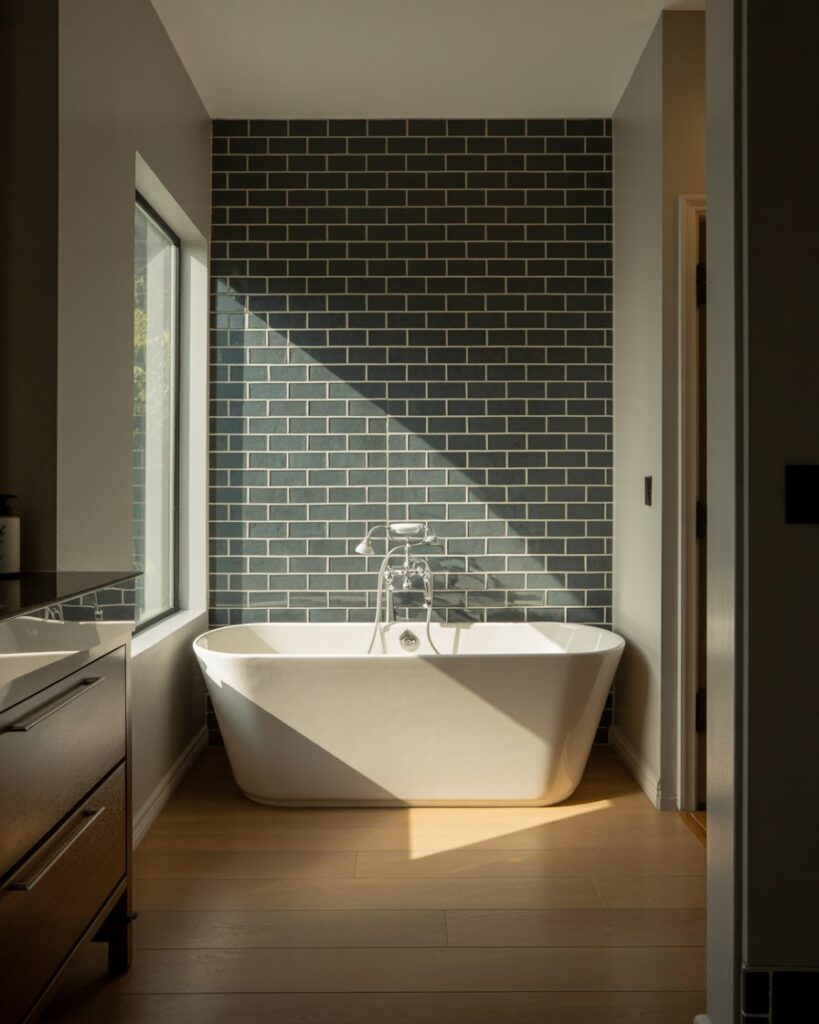
One of my favorite strategies for small bathrooms is pushing the tub to the far wall from the door, so it’s the first thing your eye lands on when you enter. This creates instant drama and makes the room feel purposeful rather than cramped. Pair it with a window above the tub if at all possible — natural light cascading onto the tub surface is one of the most beautiful sights in residential design, and it makes the space feel open and airy even when it’s small.
- Alcove placement — the classic three-walled niche; maximizes floor space and works well with a shower-tub combo
- Under-window placement — positions the tub beneath a window for natural light and garden views; incredibly spa-like
- Corner placement — uses diagonal space efficiently; great for square rooms with no obvious focal wall
- Against a feature wall — backs the tub to a dramatic tiled or shiplap wall, making it the room’s centerpiece
- Peninsula style — one end of the tub is open to the room; works in slightly larger small bathrooms and feels very luxurious
Tile and Color: How to Make the Room Feel Bigger
Here’s where small space design gets genuinely fun. Color and tile choices have an outsized effect on how large — or small — a bathroom feels. The classic advice is to go all-white, and while that works, it’s far from your only option. The real goal is visual continuity: the fewer interruptions your eye experiences, the more expansive the room feels.
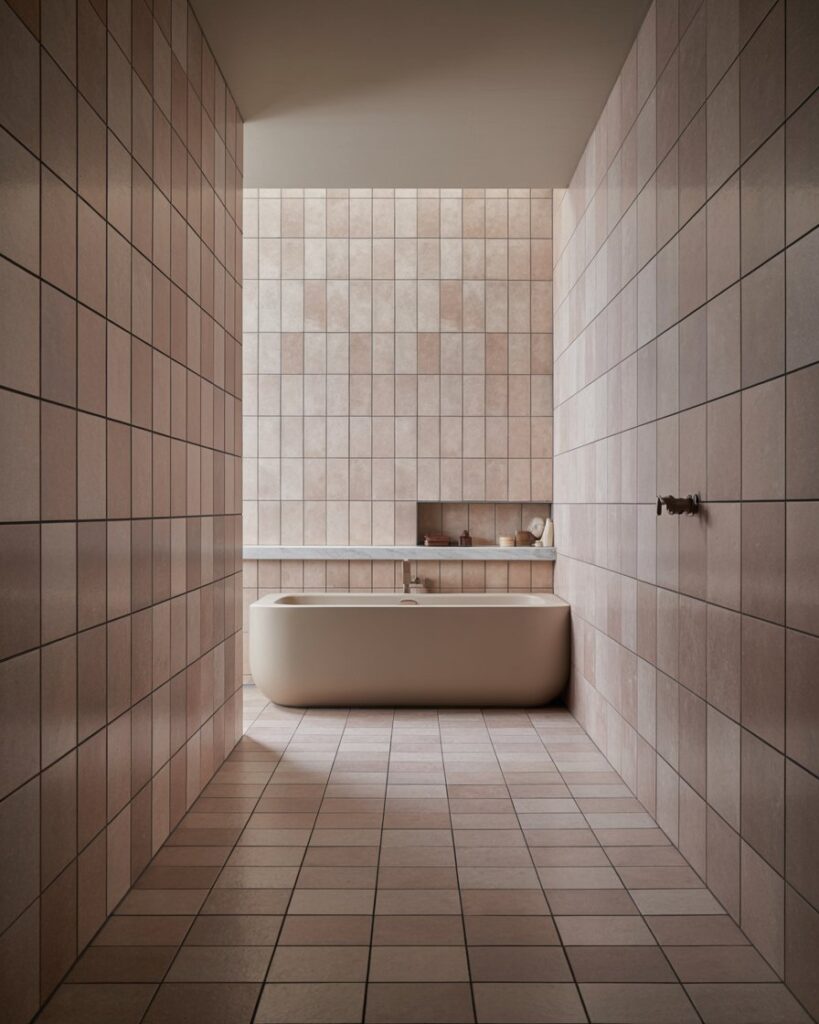
Large-format tiles are one of the most powerful tools in the small bathroom arsenal. When you use a single oversized tile — think 24×24 or even 24×48 inches — on both the floor and the walls, you dramatically reduce the number of grout lines the eye processes, which makes the room feel seamlessly larger. Pair this with a tub in the same color family as your walls, and the entire room reads as one cohesive, expansive volume.
Top Tile Choices for Small Tub Areas
- Large-format porcelain slabs (24″×48″) in matte white or warm stone
- Vertically stacked subway tiles to draw the eye upward and add height
- Zellige tiles for texture without visual clutter — one accent wall only
- Continuous floor-to-wall tile in the same material for a seamless, spa feel
- Marble-look porcelain for luxury aesthetics at a fraction of the cost
Fixtures and Hardware: Small Choices, Big Personality
Never underestimate the transformative power of a beautiful faucet. In a small bathroom, fixtures are jewelry — they’re the details that signal whether a space is merely functional or truly designed. Wall-mounted tub fillers are a particularly smart choice for compact tubs because they free up the tub deck entirely, making the fixture feel lighter and less imposing in the room.
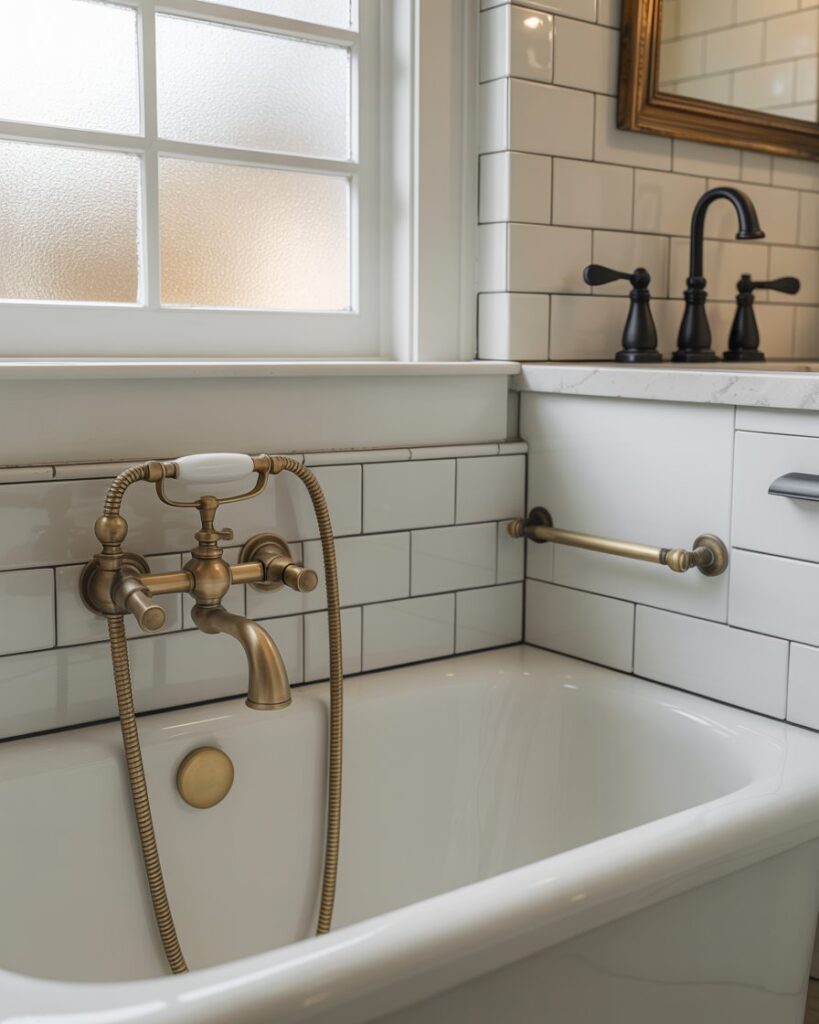
Brushed brass and matte black have dominated American bathrooms for the past several years, and for good reason — both finishes photograph beautifully and pair well with a wide range of tile and tub colors. But in a small space, I’d also encourage you to consider polished nickel or even unlacquered brass, which develops a living patina over time and gives a space an irreplaceable sense of character and history.
| Finish | Best Paired With | Maintenance Level | Vibe |
|---|---|---|---|
| Matte Black | White subway tile, light wood, terrazzo | Low (shows fewer water spots) | Modern, graphic, bold |
| Brushed Brass / Gold | Warm stone, sage green, navy, cream | Medium | Warm, luxurious, on-trend |
| Polished Nickel | Marble, classic white, soft grays | Medium (shows fingerprints) | Timeless, refined, classic |
| Unlacquered Brass | Zellige, earthy tones, natural materials | High (develops patina) | Artisanal, layered, warm |
| Chrome | Cool grays, white, black accents | Medium | Clean, versatile, budget-friendly |
Pro Tip
In a small bathroom, commit to a single metal finish and repeat it everywhere — tub filler, towel bar, mirror frame, light sconces. Mixing two metals is a technique that works in large rooms where you have visual breathing room. In tight spaces, it reads as chaotic rather than curated. One finish, executed consistently, is always the more sophisticated choice.
Lighting: The Most Underrated Element in Tub Styling
If there’s one thing I wish every American homeowner understood before starting a bathroom renovation, it’s this: lighting is not an afterthought. It is the design. The most beautiful tile, the most gorgeous tub, the most perfectly placed fixtures — all of it becomes mediocre under bad lighting. And in a small bathroom, where natural light is often limited, your artificial lighting strategy becomes even more critical.
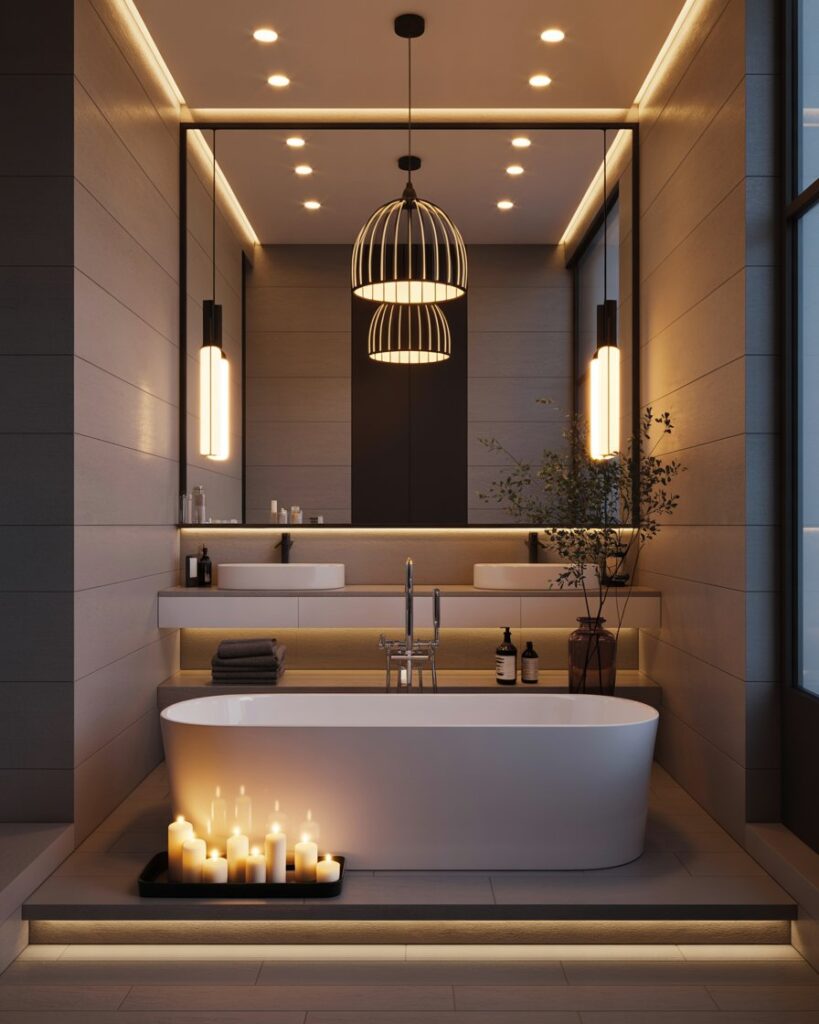
The goal in a small tub area is to layer your light sources so the room feels warm, dimensional, and intimate rather than harshly lit. Overhead recessed lighting alone produces a flat, unflattering light that makes everyone look terrible and flattens the visual depth of the room. Instead, think in three layers: ambient light for overall illumination, task light for the vanity, and accent light specifically in or around the tub area to create atmosphere.
- Recessed can lights — use slim LED versions on a dimmer; always dim your bathroom lights
- Wall sconces flanking the mirror — at face height (roughly 60–65 inches from the floor) for flattering task light
- A pendant or chandelier above the tub — even in small spaces, a petite pendant above the tub creates incredible drama; ensure it’s rated for damp locations
- Toe-kick LED strips — placed under floating vanities or tub skirts, these create a floating effect and make the room feel larger at night
- Candles — never underestimate real flame; it does things no electrical fixture can replicate
“The difference between a bathroom that feels like a hotel spa and one that just feels like a bathroom is almost always the lighting. Get the lighting right, and everything else falls into place.”— Shared wisdom in the interior design community
Decor and Styling: Dressing the Tub Area
Once your structural decisions are locked in — tub, tile, fixtures, lighting — it’s time for the layer that most people rush through: the styling. This is where you get to express genuine personality, and it’s also where small spaces most often go wrong. People either over-stuff the area with too many accessories (cluttered, stressful) or leave it completely bare (cold, unfinished). The sweet spot is purposeful minimalism — every object earns its place.
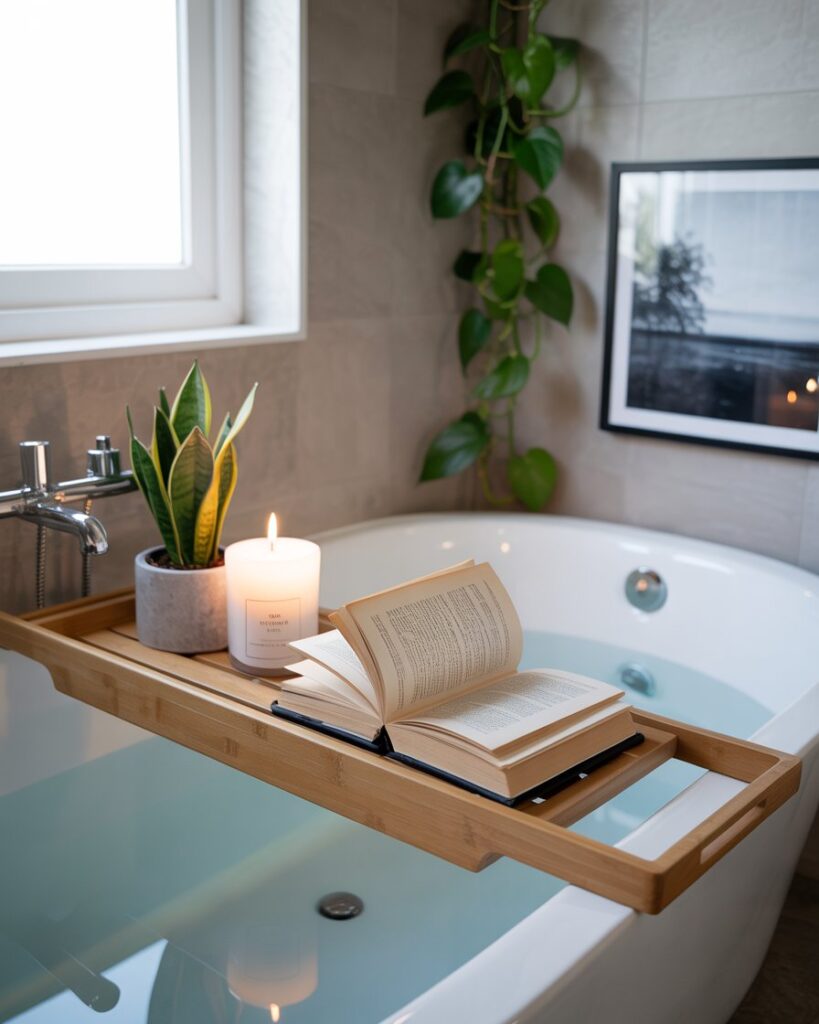
The tub tray is one of the most impactful small accessories you can invest in. A beautiful teak, marble, or brushed metal tray spanning the tub creates a dedicated surface for a candle, a small plant, a book, or a drink — and it photographs beautifully to boot. Beyond the tray, think vertically: a tall, slender plant in the corner (pothos, snake plants, and certain ferns love bathroom humidity), a piece of art on the wall beside the tub, or a sculptural object on the window ledge.
Tub Styling Checklist: The Essentials
- Tub tray in teak, marble, or brushed metal — one beautiful object, not a collection
- One trailing plant (pothos, philodendron) or a compact fern on the windowsill
- A single large-format piece of art or framed print at eye level beside the tub
- A linen hand towel in a neutral or earth tone — fold it loosely, never tight
- A candle or two (taper or pillar); use a fireproof holder and a simple lighter nearby
- One quality bath product visible — a beautiful bottle of bath oil or a bar of handmade soap on the ledge
Storage Solutions That Don’t Steal Space
Storage in a small bathroom is the eternal challenge, and the tub area is often where the struggle plays out most visibly. Shampoo bottles lined up along the tub ledge, a plastic caddy hanging from the showerhead, a stack of towels balanced precariously on the toilet tank — these are the visual enemies of a well-designed small bathroom. The solution is not to have less stuff, but to store your stuff smarter and further from the tub’s visual field.
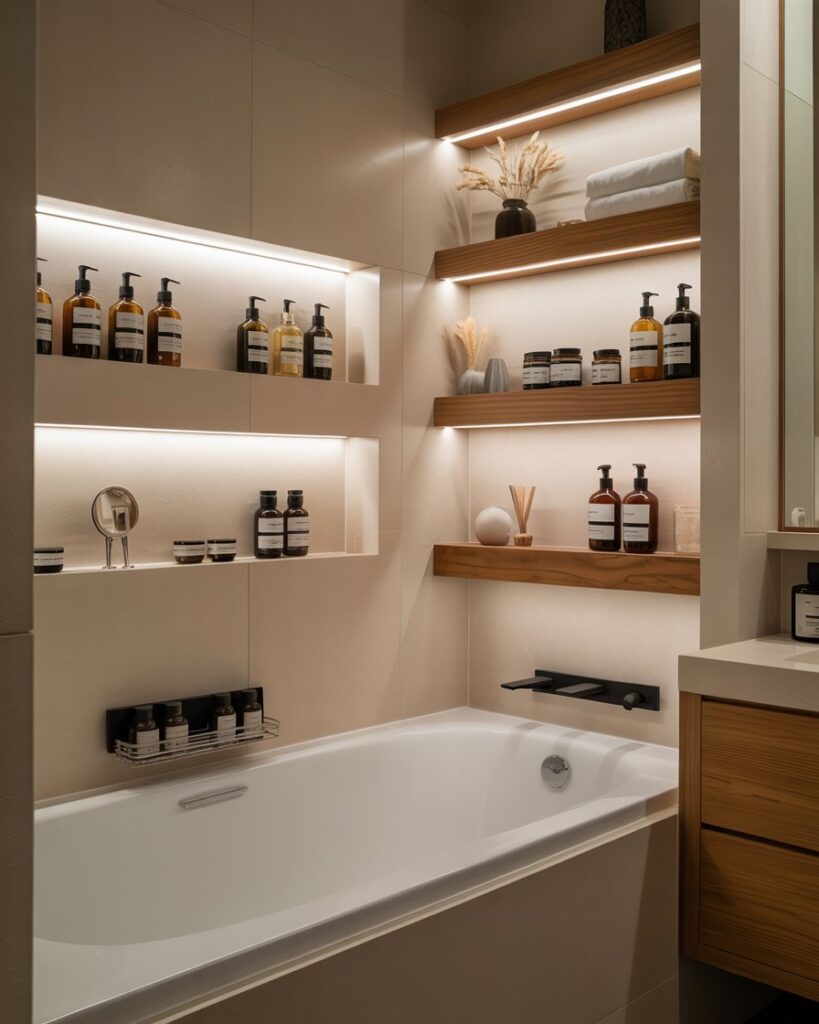
Recessed niches built into the wall adjacent to the tub are one of the most elegant storage solutions available, and they add almost no additional visual weight to the room because they don’t project outward. If a built-in niche isn’t possible, look for slim floating shelves in the same material or finish as your vanity. Keep anything stored near the tub beautiful — decant your products into matching vessels, or choose brands whose packaging you actually like looking at. For everything else, closed storage elsewhere in the bathroom is your best friend.
Pro Tip
Before purchasing any storage solution for near the tub, do what I call the “ten-foot test”: stand ten feet back from the tub area (or the doorway if that’s closer) and assess whether the storage reads as part of the design or as clutter. If you can see individual product labels or random objects, the storage solution isn’t working. Everything visible from the doorway should feel intentional and beautiful. Move the functional but ugly stuff behind closed doors or under the sink.
Mirrors and Reflection: Your Secret Square Footage
Mirrors are the oldest trick in the small-space playbook, and in a small bathroom with a tub, they can be genuinely transformative. A large mirror — ideally one that spans the full width of the vanity and reaches close to the ceiling — reflects light, reflects the tub, and creates the optical illusion of a room twice its actual size. If you can see a reflection of the tub from the mirror, you’ve effectively doubled its visual presence in the room.
Beyond the standard vanity mirror, consider a smaller decorative mirror on the wall beside or behind the tub. A leaning mirror in an unused corner, a round porthole-style mirror above a freestanding tub, or even a collection of small antique mirrors grouped together — any of these can add depth, light, and personality to a compact tub area without taking up a single square inch of floor space.
Quick-Reference: Small Tub Bathroom Do’s and Don’ts
| Do | Don’t |
|---|---|
| Choose a compact or Japanese soaking tub | Force a 60″ standard tub into a room that can’t breathe around it |
| Use large-format tiles for visual continuity | Use small mosaic tiles wall-to-wall — they make rooms feel busy |
| Install all lights on dimmers | Rely on a single overhead fixture for all bathroom lighting |
| Pick one metal finish and commit to it | Mix three different hardware finishes in one small room |
| Style the tub tray with 2–3 objects max | Line the tub ledge with a dozen different product bottles |
| Use vertical lines and tall elements to add height | Keep everything low and horizontal — it shortens the room visually |
| Consider a wall-mounted tub filler to open up the tub deck | Place a large deck-mount faucet on an already-narrow tub |
Final Thoughts: Small Is a Design Challenge, Not a Compromise
After years of helping clients transform bathrooms of every size and shape, I’ve come to believe deeply in this: the constraints of a small space force a level of intentionality that larger rooms rarely demand. When you can’t afford a single wasted decision, every decision becomes meaningful. The tub you choose, the tile you select, the fixture finish you commit to, the single trailing plant in the corner — they all work together as a unified whole, and when they do, the result is a bathroom that doesn’t just function beautifully but genuinely moves you.
You don’t need square footage to create a sanctuary. You need vision, patience, and a willingness to choose quality over quantity at every turn. The small tub bathroom of your dreams isn’t a compromise — it’s an opportunity to design something truly extraordinary within a beautifully defined frame. And that, in my experience, is where the most memorable interiors are always born.