
By your interior design partner — helping American homeowners make beautiful, lasting choices
If you’ve been scrolling through Pinterest or walking through home showrooms lately, you’ve probably stopped dead in your tracks at the sight of a natural stone sink. There’s something undeniably magnetic about them — that sense of weight, permanence, and raw beauty that no manufactured material can truly replicate. But here’s what most people don’t realize: the stone itself is only half the story. The edge profile you choose is what transforms a beautiful sink into a truly show-stopping focal point.
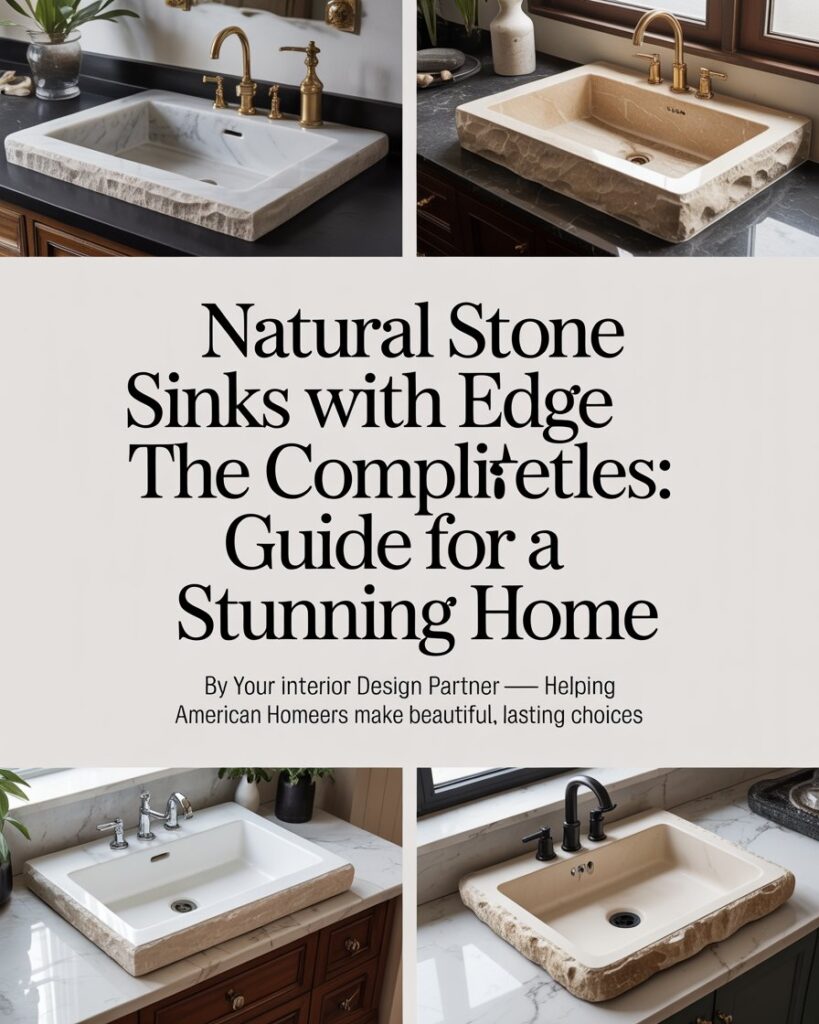
As someone who has specified hundreds of kitchens and bathrooms across the country, I can tell you that edge profiles are the single most overlooked decision in the stone sink buying process. This guide will walk you through everything you need to know — from understanding stone types and their properties, to matching the right edge detail to your home’s aesthetic, to caring for your investment for decades to come.
What Is a Natural Stone Sink, and Why Does It Matter?
A natural stone sink is carved, chiseled, or cut directly from a single block of quarried stone. Unlike porcelain or stainless steel, each piece is genuinely one-of-a-kind — the veining, color variation, and texture are determined entirely by geology, not a factory floor. The most popular stone types used in American homes today include marble, granite, travertine, onyx, soapstone, and quartzite.
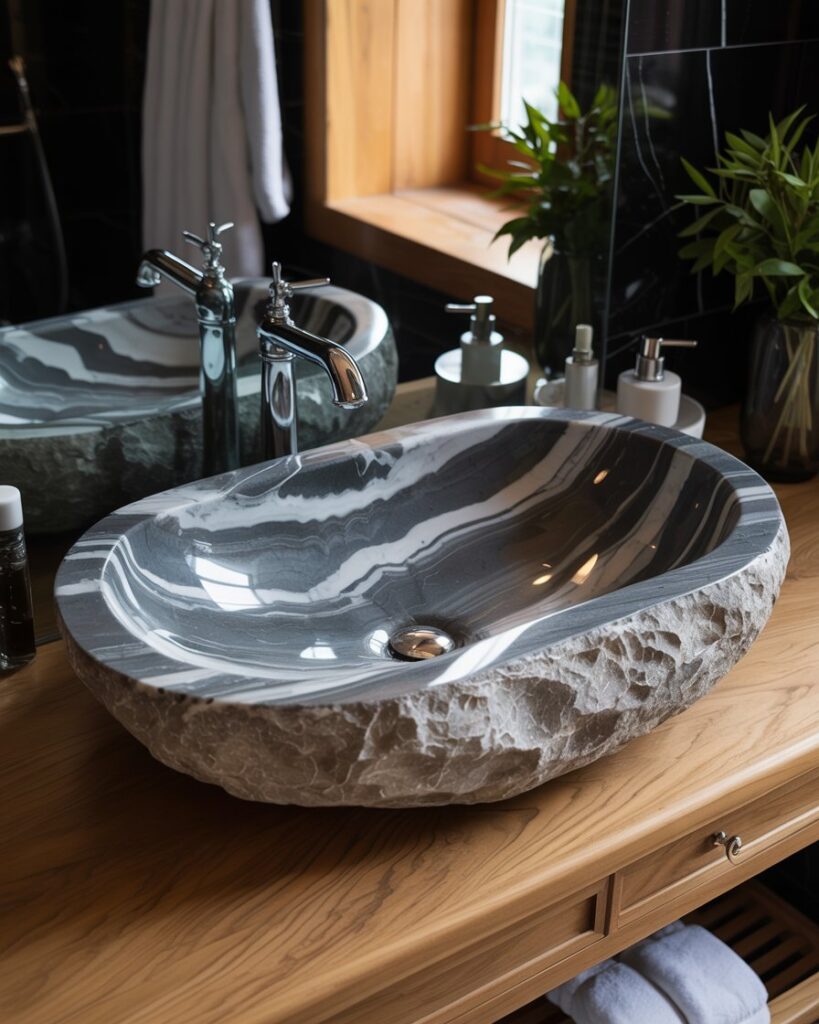
Each stone brings its own personality. Marble offers that timeless, high-contrast elegance that interior designers have coveted for centuries. Granite is the workhorse — dense, resistant to scratching and heat, and available in a dizzying range of colors. Travertine carries warmth and an old-world character that suits Mediterranean and Tuscan-inspired interiors beautifully. Soapstone, though less commonly specified, is naturally non-porous and practically maintenance-free, making it a sleeper favorite among knowledgeable designers. Onyx is the drama queen of the group — translucent, gem-like, and absolutely breathtaking when backlit.
Understanding your stone is step one. Step two — and this is where the magic really happens — is choosing the right edge profile to complement both the stone and the overall design language of your space.
Understanding Edge Profiles: The Vocabulary of Stone Design
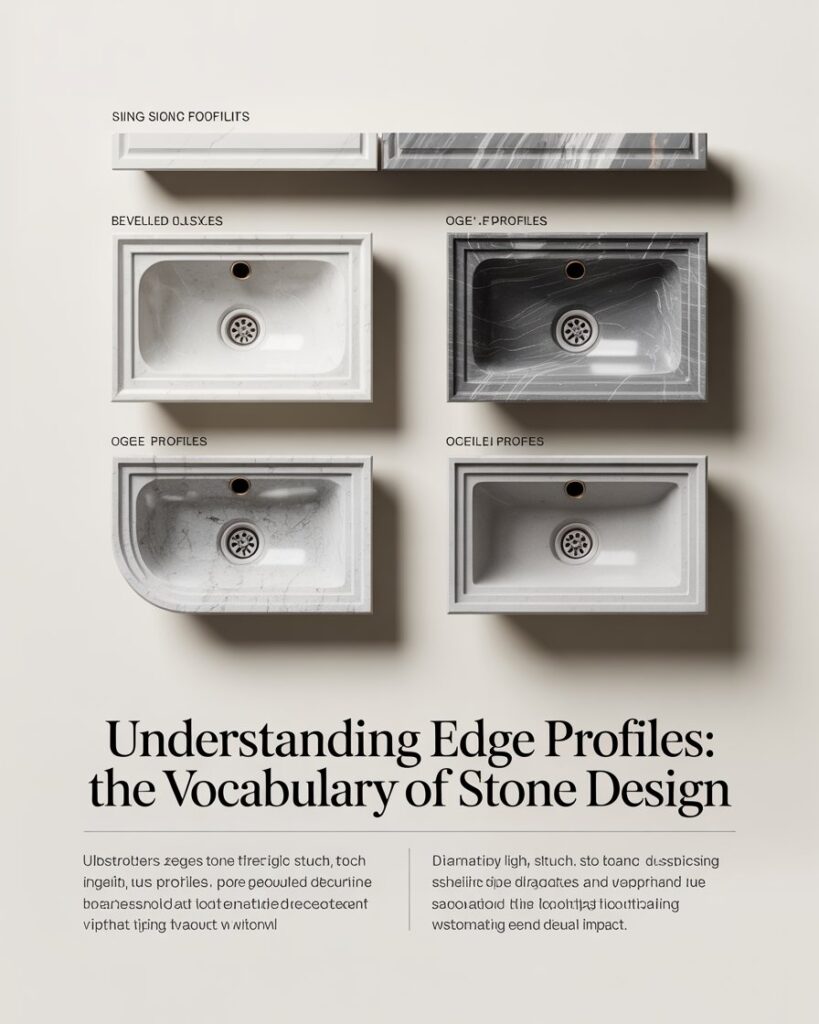
An edge profile is the shaped detail applied to the exposed rim and lip of a stone sink. It’s carved by skilled artisans using diamond-tipped tools, and it dramatically affects how light plays across the surface, how the sink feels to touch, and how it reads visually from across the room.
Think of it like the frame on a painting. You could have the most incredible piece of art, but the wrong frame makes it feel off. The right one elevates everything around it.
Here is a quick-reference comparison of the most popular edge profiles available for natural stone sinks (see the table above for a side-by-side breakdown).
The Six Most Popular Edge Profiles for Natural Stone Sinks
Eased or straight edge is the most widely specified profile in contemporary American homes right now, and for good reason. The corners are softened just enough to prevent chipping, while maintaining that clean, architectural line that modern and minimalist design demands. If your kitchen leans toward flat-front cabinetry, integrated appliances, and a neutral palette, an eased edge on a honed black granite vessel sink is going to look like it was always meant to be there.
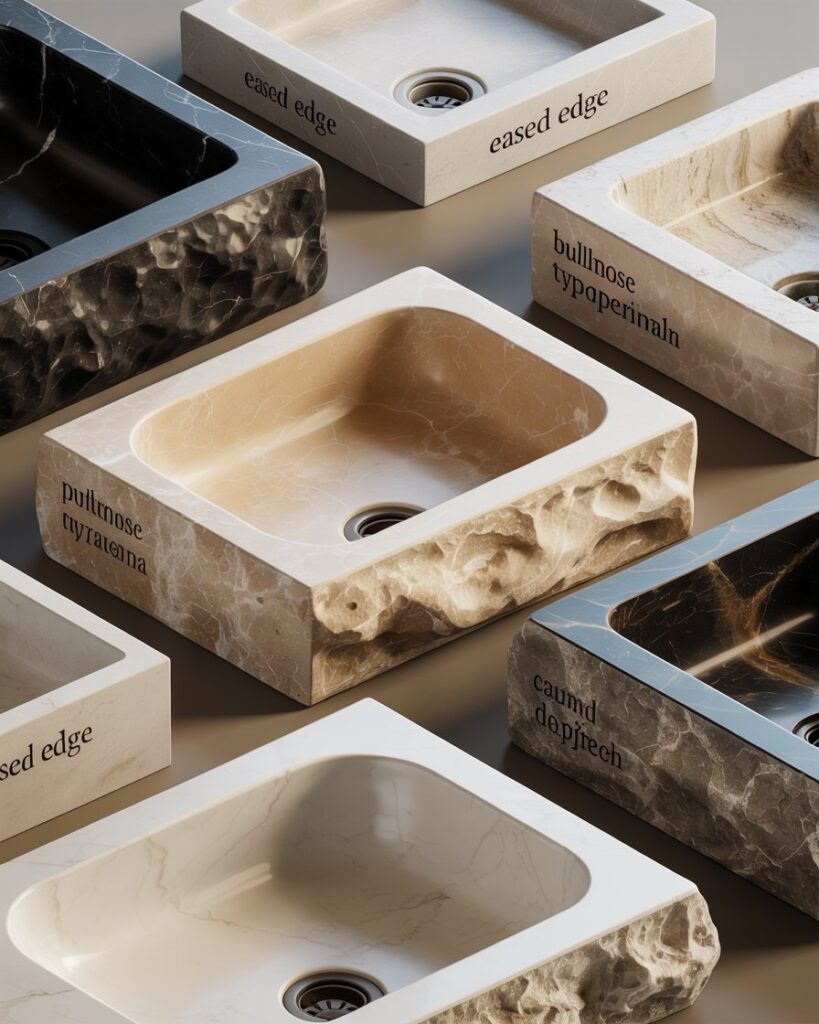
Bullnose is a fully rounded edge — the stone is shaped into a smooth, continuous curve from the top surface down to the underside. It reads as approachable and organic, which is why it’s the go-to choice for farmhouse kitchens, coastal bathrooms, and family-friendly spaces where safety and comfort matter as much as aesthetics. A cream travertine trough sink with a bullnose edge feels like it was lifted straight from a Tuscan villa.
Ogee is where stone edge profiles become genuinely decorative. This S-shaped profile — with its concave and convex curves flowing into each other — has roots in classical architecture and Renaissance-era stonework. It’s formal, it’s ornate, and it’s absolutely at home in a traditional or transitional master bathroom where the countertop is a rich emperador marble and the fixtures are unlacquered brass. The ogee profile catches light in multiple directions simultaneously, which gives it that luxurious, three-dimensional quality.
Waterfall (also sometimes called a mitered edge) is perhaps the boldest contemporary option available. Here, the stone appears to continue vertically down the side of the vanity or island, creating a seamless, unbroken plane of material. It’s essentially an architectural statement — the sink stops being a fixture and becomes a sculpture. If you’re working with a dramatic book-matched marble or a striking quartzite with strong movement, the waterfall profile lets the stone do all the talking.
Chiseled or rock face is the most textural and organic edge option. Instead of being polished smooth, the edge is intentionally broken and roughened to mimic how stone naturally fractures in the earth. It’s perfect for spa-inspired bathrooms, mountain-retreat aesthetics, and any space that leans into the idea of bringing the natural world indoors. A rough chiseled edge on a river-stone-colored granite vessel sink feels primordial and grounding in the best possible way.
Beveled is a subtle, elegant angled cut along the top edge of the stone — typically at 45 degrees. It’s more refined than a straight edge but less decorative than an ogee, making it the ideal choice for transitional interiors that blend traditional and modern sensibilities. A beveled edge catches light cleanly and adds a sense of definition without demanding too much visual attention.
“The edge profile is where craftsmanship becomes art. It’s the detail that guests may not consciously notice, but it’s what gives a space that ‘pulled-together’ feeling that everyone responds to.”
Matching Edge Profiles to Your Home’s Design Style
One of the most common mistakes I see homeowners make is falling in love with a stone, selecting it impulsively, and then choosing an edge profile as an afterthought. The result is a sink that looks slightly disconnected from its environment — beautiful, but not quite right.
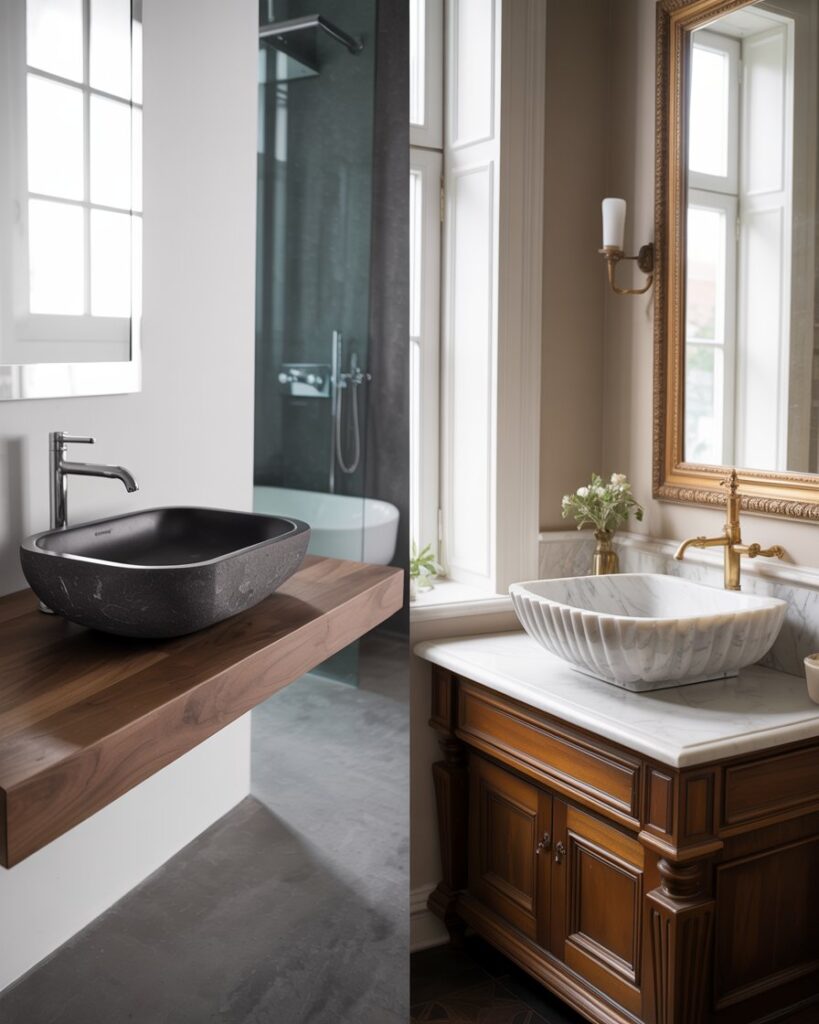
Here’s a more intentional approach. For modern and contemporary interiors, stick to eased, straight, or waterfall profiles. These clean-lined details reinforce the precision and simplicity that define the style. A matte black soapstone vessel sink with an eased edge in a bathroom with floating vanities and concrete floors is an extraordinarily powerful combination.
For traditional and formal spaces, the ogee profile is almost always the right answer. Pair it with polished white Carrara marble or a warm emperador brown, and you’ve created something that could belong in a historic Charleston townhouse or a brand-new build in the suburbs of Atlanta — timeless and completely at ease in its surroundings.
Farmhouse and cottage styles call for softness. Bullnose edges on creamy travertine or warm beige limestone sinks will feel completely at home alongside shaker cabinetry, apron-front accents, and oil-rubbed bronze hardware.
Rustic and mountain-modern aesthetics are where the chiseled rock face edge really shines. Combined with a rough-hewn granite or a dark basalt stone, the raw edge reinforces the connection to nature that is the entire design philosophy of this aesthetic.
Spa and wellness-inspired bathrooms — one of the fastest-growing design categories in American residential design right now — can actually benefit from several different edge profiles depending on the stone. A smooth bullnose on warm travertine evokes the thermal baths of Japan. A chiseled edge on river stone creates that outdoor-shower-in-the-jungle sensation. And a waterfall edge on onyx, especially when backlit, turns your bathroom into something that feels genuinely otherworldly.
Pro Tips from the Design Studio
Pro Tip #1 — Always request a full sink mock-up, not just a slab sample. The edge profile will look completely different on a 12×12 inch slab sample than it will on the actual three-dimensional sink. Ask your stone fabricator to show you a corner piece or a sink of the same profile in their showroom before you commit.
Pro Tip #2 — Finish and profile work together, never separately. A polished finish will make an ogee edge look regal and formal. The same ogee on a honed surface will look softer and more relaxed. A leathered or brushed finish on a bullnose reads very differently than a polished bullnose. Always evaluate them in combination.
Pro Tip #3 — Consider the sightline. In a vessel sink (one that sits on top of the vanity), the entire edge profile is visible from a standing position. In an undermount configuration, only the interior rim detail is visible. Make sure you’re specifying an edge that will actually be seen and appreciated in your specific installation type.
Stone Selection and Its Relationship to Edge Profile Complexity
Not every stone is suitable for every edge profile, and this is a technical reality that your fabricator should walk you through — but it helps to arrive at that conversation informed.
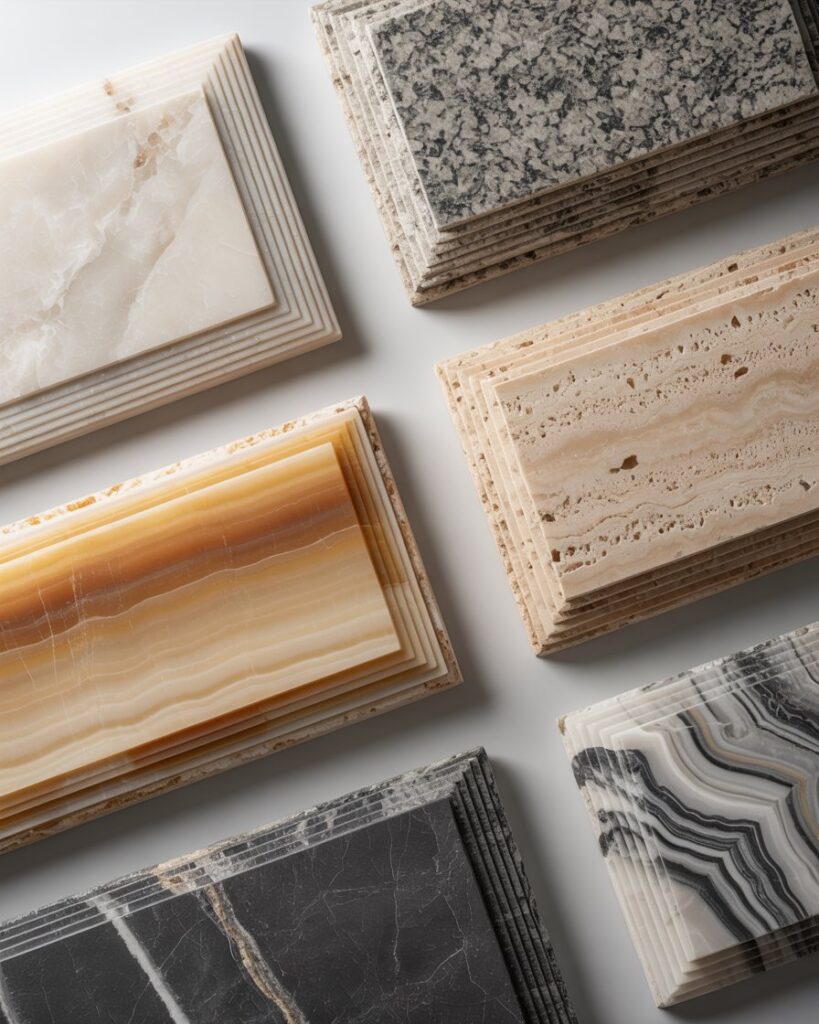
Marble is workable and can be carved into complex profiles like ogee and full bullnose, but it is prone to chipping along thin edges. If you’re going with marble, avoid very sharp or delicate edge details, and consider a slightly thicker slab for better structural integrity at the rim.
Granite is extremely hard and durable — it can hold almost any edge profile well, including intricate carved details. It’s the best choice for families with young children where edge impact is a real-world consideration.
Travertine is softer and more porous, which means it takes complex carving beautifully but requires sealing and maintenance around the edge detail to prevent water infiltration. A bullnose or eased edge is generally safer than a deeply carved ogee on travertine.
Onyx is fragile and should be handled with care. Simple edge profiles — eased or straight bevel — are strongly recommended. The drama of onyx comes from the material itself, not from an elaborate edge.
Soapstone carves exceptionally well and is naturally non-porous, making it one of the more forgiving materials for detailed edge profiles. It’s an underappreciated option for families who want the beauty of natural stone without the maintenance anxiety.
Quartzite (not to be confused with engineered quartz) is extremely hard and durable, rivaling granite in toughness. It holds edge detail beautifully and is available in some of the most spectacular color ranges and natural movement patterns in the stone world.
Maintenance and Sealing: Protecting Your Edge Profiles
This is the part of the conversation that separates a stunning sink that ages gracefully from one that becomes a source of regret within a few years.
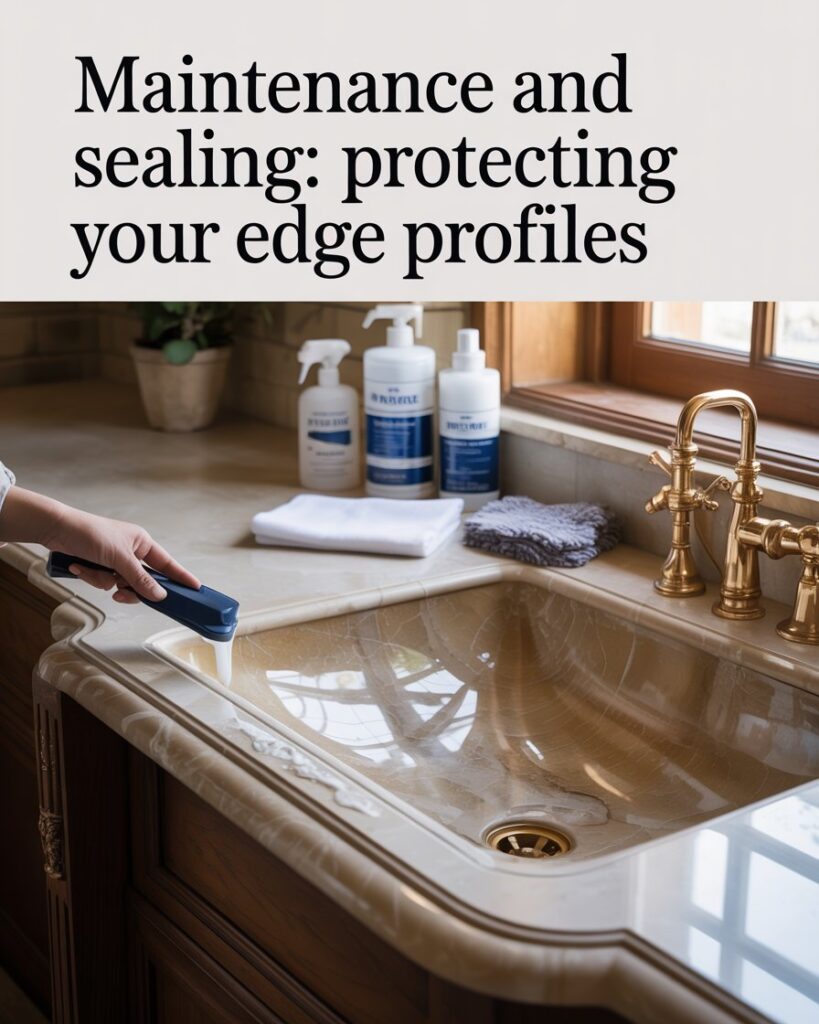
Natural stone sinks require sealing, and the edge profile is actually the most vulnerable area for water infiltration, staining, and long-term damage. Here is a practical maintenance framework for American homeowners:
For porous stones like travertine, marble, and limestone, apply a penetrating stone sealer at installation and re-seal every 6 to 12 months depending on use. Pay particular attention to the edge profile — run your sealer-soaked applicator along the full perimeter of the rim, not just the basin floor.
For dense stones like granite, quartzite, and soapstone, sealing is still recommended but less urgently required. Annual sealing is sufficient in most households.
Clean natural stone sinks with a pH-neutral cleaner — never acidic products like vinegar or citrus-based sprays, which will etch polished surfaces, especially along the carved edge details where the stone is most exposed. Microfiber cloths are your best friend here; avoid abrasive scrubbers that can scratch the finish over time.
Chip repair on edge profiles is possible and commonly performed by skilled stone restoration professionals. If you experience a chip on a bullnose or ogee edge, don’t panic — it can typically be repaired with color-matched epoxy and carefully re-polished to blend seamlessly.
What Does a Natural Stone Sink with a Custom Edge Profile Cost?
Budget is, understandably, a real part of this conversation. Natural stone sinks with custom edge profiles represent a significant investment, and pricing varies widely based on stone type, edge complexity, size, and your geographic market.
A basic granite vessel sink with an eased or straight edge typically starts around $400 to $800 for the stone alone, not including fabrication or installation. Mid-range options — think travertine or limestone with bullnose or beveled profiles — generally fall in the $800 to $1,500 range. Luxury configurations involving marble, onyx, or quartzite with complex ogee or waterfall profiles can easily run $2,000 to $5,000 or more, particularly for custom-carved undermount designs.
Installation adds roughly $200 to $600 depending on your region and the complexity of the plumbing configuration. Always budget for professional installation — natural stone is unforgiving of mistakes, and improper support or leveling can crack even a thick slab.
Where to Source Natural Stone Sinks in the US
When shopping for natural stone sinks, your best starting points are regional stone fabricators, specialty tile and stone showrooms, and design-trade-only suppliers that many interior designers can provide access to. National retailers like Stone Forest and Native Trails offer curated collections with consistent quality control. For truly bespoke options, working directly with a local stone yard and fabricator gives you the most control over material selection and edge profile customization.
If you’re working with a designer on a broader renovation, ask them about their stone trade accounts — access to trade pricing can often offset the designer’s fee on its own.
Final Thoughts: The Detail That Makes the Difference
Natural stone sinks with thoughtfully chosen edge profiles are one of the most impactful investments you can make in a kitchen or bathroom renovation. They bring warmth, individuality, and a tangible sense of craftsmanship that manufactured materials simply cannot replicate. More importantly, they’re deeply personal — because every piece of stone is different, your sink is, quite literally, one of a kind.
The edge profile is your opportunity to give that stone a voice. Whether you choose the clean restraint of an eased edge, the classical drama of an ogee, or the primal beauty of a chiseled rock face, you’re making a design decision that will define the character of the space for as long as you live in your home.
Take your time with this choice. Touch the profiles in person. Evaluate them in the light conditions of your actual space. And when you find the combination that makes you catch your breath — that’s the one.
Looking to take the next step? Consult with a certified stone fabricator in your area and request physical edge profile samples alongside your stone slab selection. Your future self will thank you.
Semantic keywords used throughout: natural stone sink, edge profile, stone vessel sink, undermount stone sink, kitchen stone sink, bathroom stone sink, marble sink, granite sink, travertine sink, soapstone sink, onyx sink, quartzite sink, ogee edge, bullnose edge, waterfall edge, beveled edge, chiseled rock face edge, stone fabricator, stone sealer, custom stone sink, stone countertop edge, interior design trends, home renovation, luxury bathroom design, farmhouse sink, spa bathroom, stone care and maintenance.