Statement Range Hoods as Focal Points: How to Make Your Kitchen Unforgettable
The one upgrade interior designers swear by — and homeowners rarely see coming.
By Your Interior Design Expert.
Walk into any kitchen that stops you in your tracks — the kind you screenshot and save for “someday” — and look up. Nine times out of ten, there’s a range hood doing the heavy lifting.
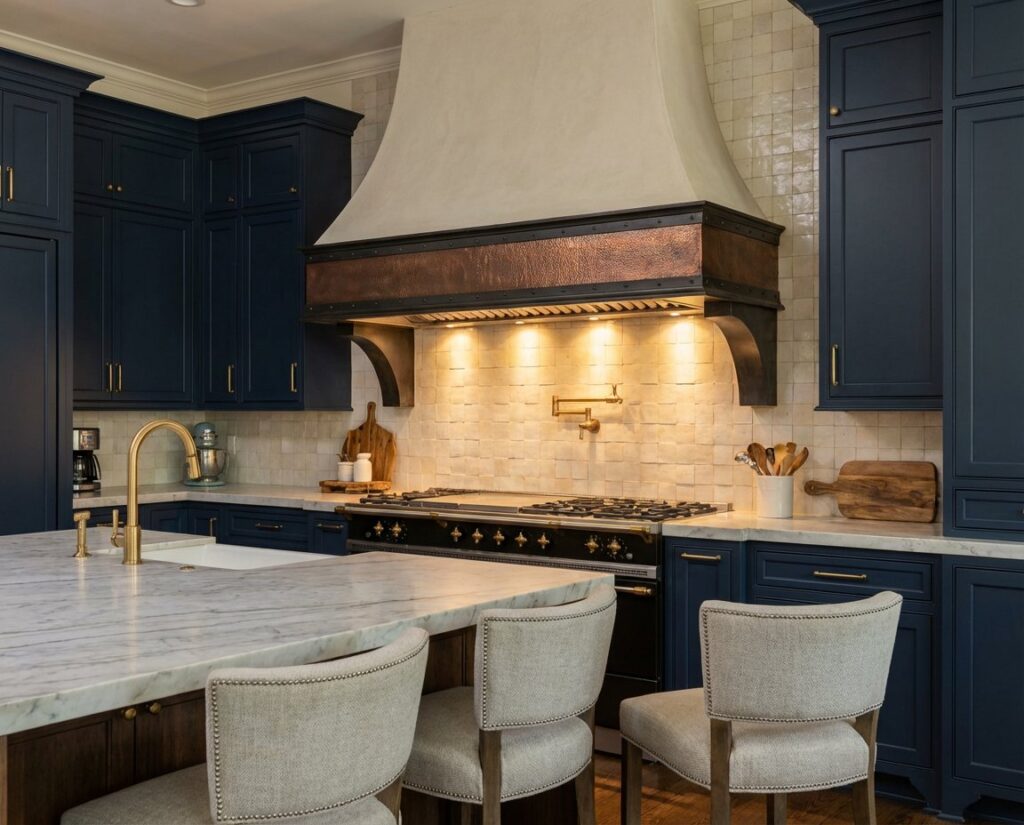
For years, range hoods lived in the background: boxy, builder-grade, beige. Something you tolerated because you had to. But the modern American kitchen has completely rewritten that story. Today, statement range hoods are arguably the single most transformative design element in the entire room — more impactful than countertops, more memorable than cabinet finishes, and more personal than any backsplash tile you could ever choose.
As an interior designer who has worked on everything from farmhouse renovations in the Carolinas to sleek urban lofts in Chicago, I can tell you this without hesitation: if you want your kitchen to have a moment — a genuine focal point that anchors the room and commands attention — your range hood is where to invest. Let’s explore exactly how to do it right.
✦ ✦ ✦
Why Range Hoods Have Become the Star of Kitchen Design
The shift didn’t happen overnight. Open-concept floor plans played a huge role — when the kitchen is visible from the living room and dining area, every surface becomes a design decision. Suddenly, a dull stainless-steel box above the range just doesn’t cut it. Homeowners began asking their designers: what can we do here?
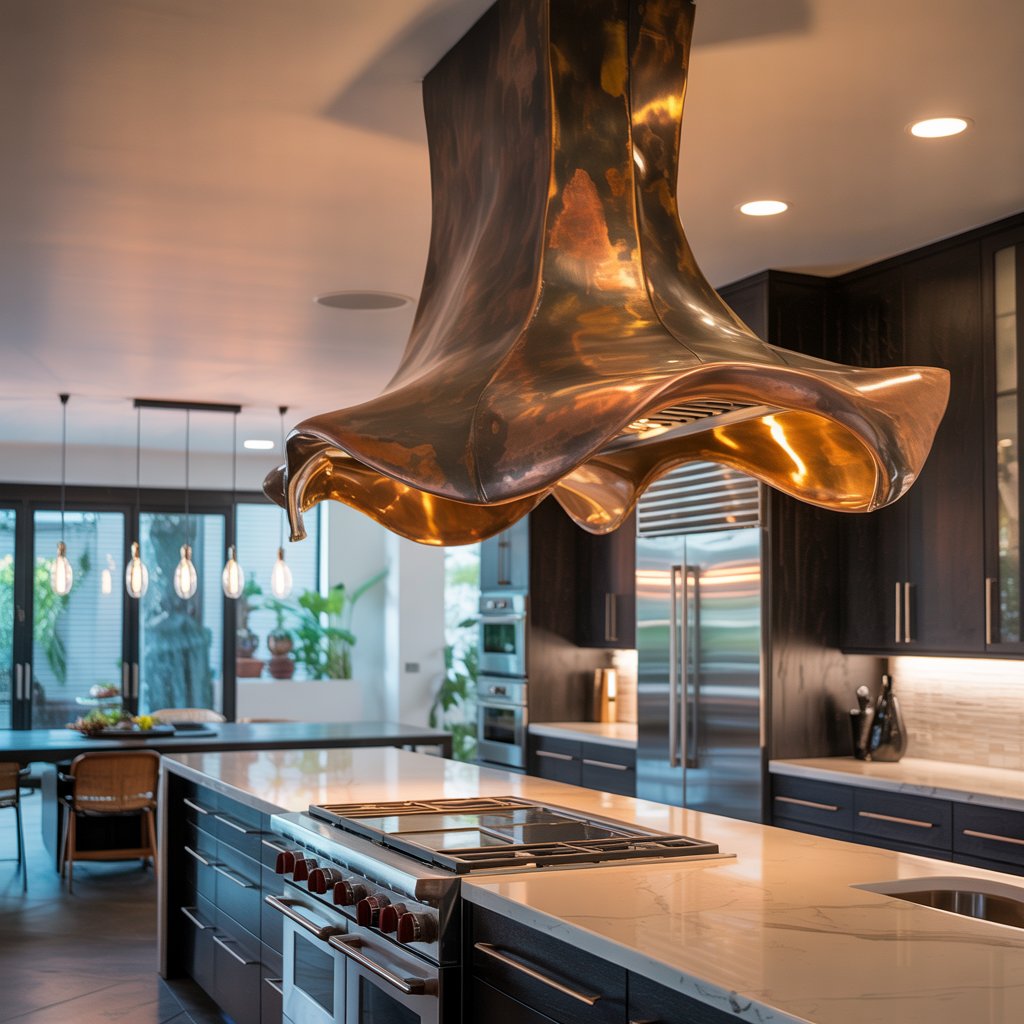
Simultaneously, the rise of professional-style cooking at home — fueled by cooking shows, high-end appliance brands, and the pandemic-era kitchen renaissance — created demand for hoods with serious ventilation power. The happy coincidence? Powerful hoods can also be strikingly beautiful. Custom plaster hoods. Hand-hammered copper. Sculptural stainless steel. Reclaimed wood and steel hybrids. The design vocabulary exploded.
Today, kitchen design experts consistently cite the range hood as one of the top features that add perceived value to a home. It’s not just about aesthetics — it’s about the story your kitchen tells the moment someone walks through the door.
The range hood is the chandelier of the kitchen. It’s the first thing the eye lands on, the piece that sets the tone for everything else in the room. Get that right, and the rest of the design practically designs itself.— A sentiment shared by leading American kitchen designers
Popular Statement Range Hood Styles for Every Kitchen Aesthetic
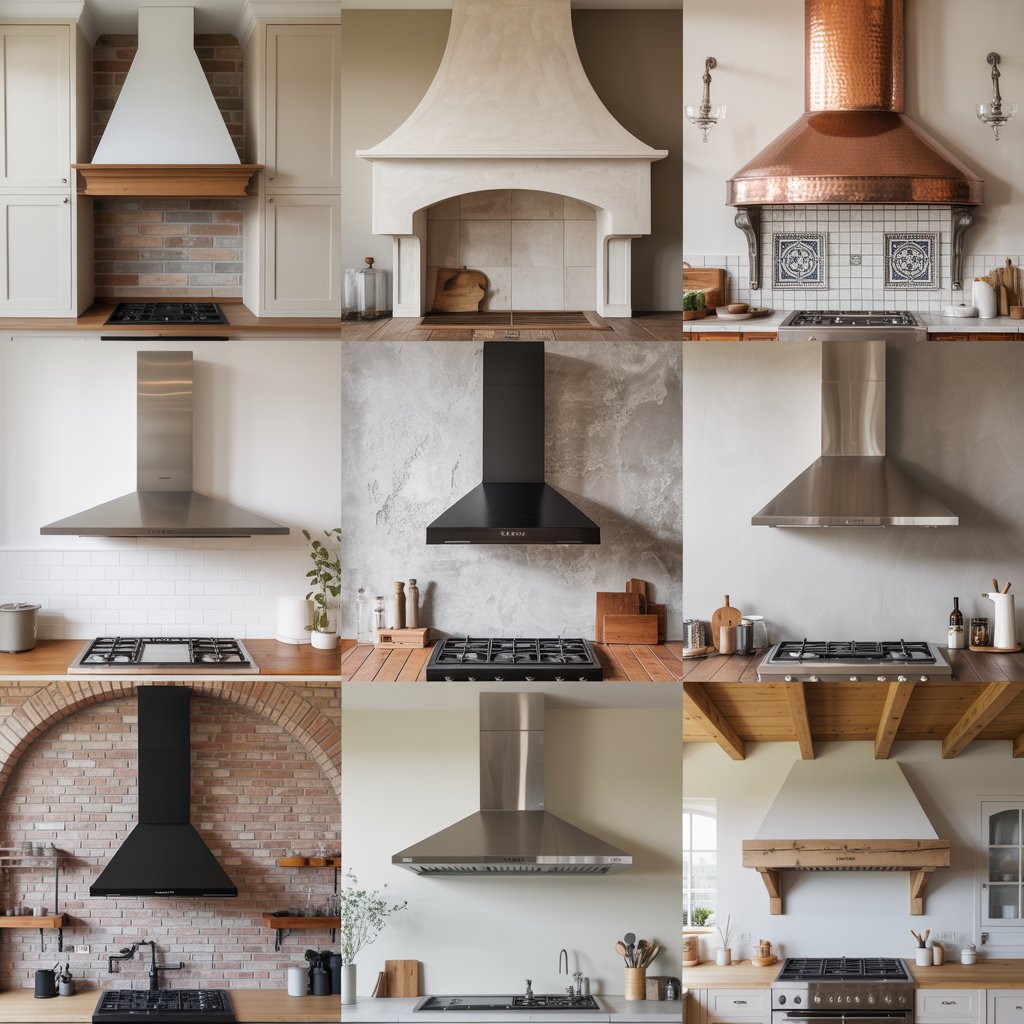
One of the most exciting things about designing with range hoods today is the sheer variety available. Whether your kitchen leans traditional, modern, transitional, or somewhere gloriously in between, there’s a hood style that can serve as your centerpiece. Here’s a breakdown of the most popular custom range hood styles and what they pair best with:
| Hood Style | Best Kitchen Aesthetic | Key Materials | Design Mood |
|---|---|---|---|
| Shaker Wood Hood | Farmhouse, Transitional | Painted MDF, solid wood | Warm, grounded, classic American |
| Plaster / Venetian | Mediterranean, Tuscan, Organic Modern | Lime plaster, gypsum | Artisanal, sculptural, textured |
| Hammered Copper | Rustic, French Country, Eclectic | Hand-hammered copper | Rich, handcrafted, heirloom |
| Sleek Stainless Steel | Modern, Industrial, Contemporary | Brushed or polished stainless | Clean, professional, minimalist |
| Arched Plaster or Brick | Old World, Spanish Revival | Brick, plaster, stone | Historic, dramatic, weighty |
| Floating Glass / Minimal | Ultra-Modern, Scandinavian | Tempered glass, hidden steel | Invisible-but-present, airy |
| Reclaimed Wood Beam | Industrial Farmhouse, Lodge | Salvaged barn wood, blackened steel | Rugged, natural, storied |
Pro Tip
Before choosing a hood style, identify your kitchen’s “personality word” — one adjective that should describe how it feels. Warm? Sleek? Dramatic? Cozy? That word becomes your north star for every decision, including the hood. If you’re torn between two styles, the one that more deeply embodies that word is your answer. For more guidance, explore resources like Houzz’s range hood gallery to find your aesthetic language.
Choosing the Right Materials for Your Custom Kitchen Hood
Material selection is where a statement range hood goes from “interesting” to genuinely extraordinary kitchen design. The material you choose communicates texture, weight, history, and intention — all at a glance. Here are the most popular options and their design implications:
Plaster & Limewash
Endlessly customizable in shape and color. Develops beautiful character over time. Ideal for organic modern and Mediterranean kitchens.
Copper
Living material that patinas beautifully. Hand-hammered versions feel like functional sculpture. Pairs with unlacquered brass hardware.
Painted Wood
Most versatile option — can match cabinetry or contrast boldly. Works in virtually every style from cottage to contemporary.
Stainless Steel
Professional and precise. Brushed finishes hide fingerprints and add warmth. Perfect for chef-inspired or industrial kitchens.
Brick & Stone
Adds genuine architectural weight. Best suited for larger kitchens where the scale doesn’t overwhelm. Timeless and irreplaceable.
Reclaimed Wood
Brings history and soul to the kitchen. Each piece is unique. Best paired with matte black or aged bronze hardware and fixtures.
Pro Tip
When mixing metals in your kitchen, let your range hood lead. Whatever metal finish you use on the hood — whether it’s copper, brushed gold, or matte black — should appear at least two other places in the room (faucet, cabinet hardware, light fixtures). This creates intentional repetition rather than accidental clash. Interior designers call this the “rule of three” for metal finishes.
✦ ✦ ✦
Sizing and Placement: Getting the Proportions Exactly Right
Even the most gorgeous custom range hood can look awkward if the proportions are off. This is one of the most common — and most fixable — mistakes I see in American home kitchens. Good sizing is the difference between a hood that looks designed and one that looks like an afterthought.
Here are the key range hood sizing guidelines every homeowner should know:
- Width: Your hood should be 3–6 inches wider than your range on each side. For a 36-inch range, a 42-inch hood is the minimum; 48 inches reads as a statement.
- Height above cooktop: For gas ranges, the hood should sit 24–30 inches above the cooking surface. For electric, 20–24 inches is standard. Check your manufacturer’s guidelines.
- Vertical height of the hood itself: Taller ceilings call for taller hoods. In a kitchen with 9-foot ceilings, a 24-inch-tall hood looks stubby; 30–36 inches creates much better visual balance.
- Ceiling height considerations: In rooms with 10-foot or higher ceilings, extending the hood all the way to the ceiling (or adding a custom chimney extension) creates a dramatic, architectural feel.
- Depth: The hood should be at least as deep as the cooktop — typically 20–24 inches for wall-mounted styles.
Pro Tip
Use painter’s tape to mock up the hood dimensions on your wall before committing to any purchase or build. Take a photo and live with it for a few days. What feels right in person and what photographs well are often different things — and since you’ll be sharing your kitchen on social media (let’s be real), both matter. NKBA’s kitchen planning guidelines also provide excellent sizing standards.
How to Style Around Your Range Hood Focal Point
Once you’ve committed to a statement range hood, the rest of the kitchen’s design should work in conversation with it — not compete. Think of the hood as your anchor; everything else is there to support and elevate it. Here’s how to design a kitchen around a focal point hood:
The Wall Behind the Hood
This is prime real estate in your kitchen. A dramatic backsplash tile that extends from counter to ceiling — especially behind and around the hood — creates a stunning frame. Zellige tiles, handmade ceramic subway tiles, and slab marble all work beautifully. Just make sure the tile pattern doesn’t fight the hood’s texture; if the hood is ornate, the tile can be simpler, and vice versa.
Open Shelving as Supporting Characters
Flanking your range hood with floating shelves — in a material that complements the hood — is one of my favorite design moves. It creates a symmetrical composition that feels intentional and designed, while offering practical storage for beautiful dishware, cookbooks, and plants. Architectural Digest’s kitchen hood roundup showcases several gorgeous examples of this pairing.
Lighting as a Design Layer
Don’t underestimate the power of lighting around your hood. Integrated hood lighting handles task illumination, but adding pendant lights or sconces nearby — in a finish that echoes the hood material — adds warmth and dimension to the whole cooking zone.
Pot Fillers and Decorative Hardware
A wall-mounted pot filler in the same metal family as your hood is both practical and beautiful. It adds another vertical design element that emphasizes the intentionality of the entire cooking wall. Pair with cabinet hardware in a matching or complementary finish for a cohesive look.
2025 Range Hood Design Trends You Should Know
The world of kitchen ventilation design moves fast. Here’s what’s trending in American homes and design studios right now — and what’s on its way out:
| Trending In 2025 | On Its Way Out |
|---|---|
| Arched, curved plaster hoods | Angular, boxy stainless inserts |
| Limewash and textured plaster finishes | Plain white painted drywall hoods |
| Oversized, ceiling-height hoods | Undersized hoods that barely clear the range |
| Warm metals (unlacquered brass, aged bronze) | Chrome and cold-tone stainless steel |
| Hand-hammered copper and custom artisan work | Mass-market builder-grade ventilation |
| Integrated open shelving flanking the hood | Cabinets pressed up tight on both sides |
| Earthy, nature-inspired color palettes | All-white and all-gray kitchens |
Common Range Hood Mistakes (And How to Avoid Them)
Even with the best intentions, homeowners make a few predictable errors when it comes to kitchen range hood installation and design. Here’s your shortcut to avoiding them:
- Going too small. The most common mistake by far. When in doubt, go bigger. A hood that’s properly scaled — or even slightly oversized — reads as intentional and dramatic. One that’s too small looks like an afterthought.
- Ignoring CFM ratings. A beautiful hood that can’t actually ventilate your kitchen is a beautiful problem. For gas ranges, aim for at least 100 CFM per 10,000 BTUs. Professional-style ranges often need 600–1,200 CFM or more.
- Matching perfectly instead of coordinating. Your hood doesn’t need to be the exact same finish as every other metal in the room — it should rhyme, not repeat. Slight variation adds sophistication.
- Neglecting the chimney section. The duct cover above the hood is part of the design. Have it custom-finished to match or complement the hood — never leave an exposed silver duct box as a visual non-sequitur.
- Skipping professional installation. A statement hood is a significant investment. The ductwork, structural support, and electrical connection need to be done correctly. This is not a DIY weekend project.
The Focal Point Formula
Great kitchen focal points share three qualities: scale (it’s big enough to command attention), texture (it has surface interest that rewards a closer look), and contrast (it stands apart from its surroundings in color, material, or form). Run your hood choice through this filter before you commit.
For additional inspiration and technical guidance, the Wolf ventilation collection and Bertazzoni’s hood lineup represent some of the best examples of form meeting function at the high end of the market.
What to Budget for a Statement Range Hood
One of the first questions I hear from clients is: what does this actually cost? The honest answer is that the range is wide — and understanding the tiers helps you set realistic expectations and make smart trade-offs.
| Budget Tier | Typical Cost Range | What You Get |
|---|---|---|
| Entry-Level Statement | $800 – $2,000 | Quality painted wood insert with custom proportions; basic to mid-range ventilation insert |
| Mid-Range Custom | $2,000 – $5,000 | Custom cabinetry hood, plaster finish work, higher CFM insert; professional installation included |
| Premium Artisan | $5,000 – $12,000 | Hand-hammered copper or custom metal fabrication, architectural plaster, top-tier insert; design consultation |
| Luxury / Bespoke | $12,000+ | One-of-a-kind artisan work, custom stone carving, imported materials, complex structural work |
Keep in mind that installation costs (ductwork, electrical, structural framing) typically add $500–$2,000 to any tier. The good news? Even an entry-level custom hood — thoughtfully chosen and properly sized — will transform your kitchen more dramatically than almost any other upgrade at a comparable price point.
✦ ✦ ✦
Make the Upgrade That Changes Everything
A statement range hood isn’t just a ventilation solution — it’s an architectural element, a piece of functional art, and the anchor that gives your entire kitchen a sense of purpose and personality. When everything else in the room points toward it, you’ve created something rare: a kitchen that feels designed, not assembled.
Whether you’re building from scratch, embarking on a full renovation, or simply looking for the one change that delivers the most visual impact per dollar, this is where to start. Choose with intention, scale with confidence, and don’t be afraid to be bold. Your kitchen is worth it.