
Few things in a home feel as quietly satisfying as opening a linen closet and seeing everything in its place — matching sheet sets stacked in neat rectangles, towels rolled like they belong in a spa, and not a single stray pillowcase in sight. As an interior designer who works on home organization and decor for clients across the country, I can tell you that a well-organized linen closet isn’t just about aesthetics. It’s about function, calm, and making your daily routine easier.
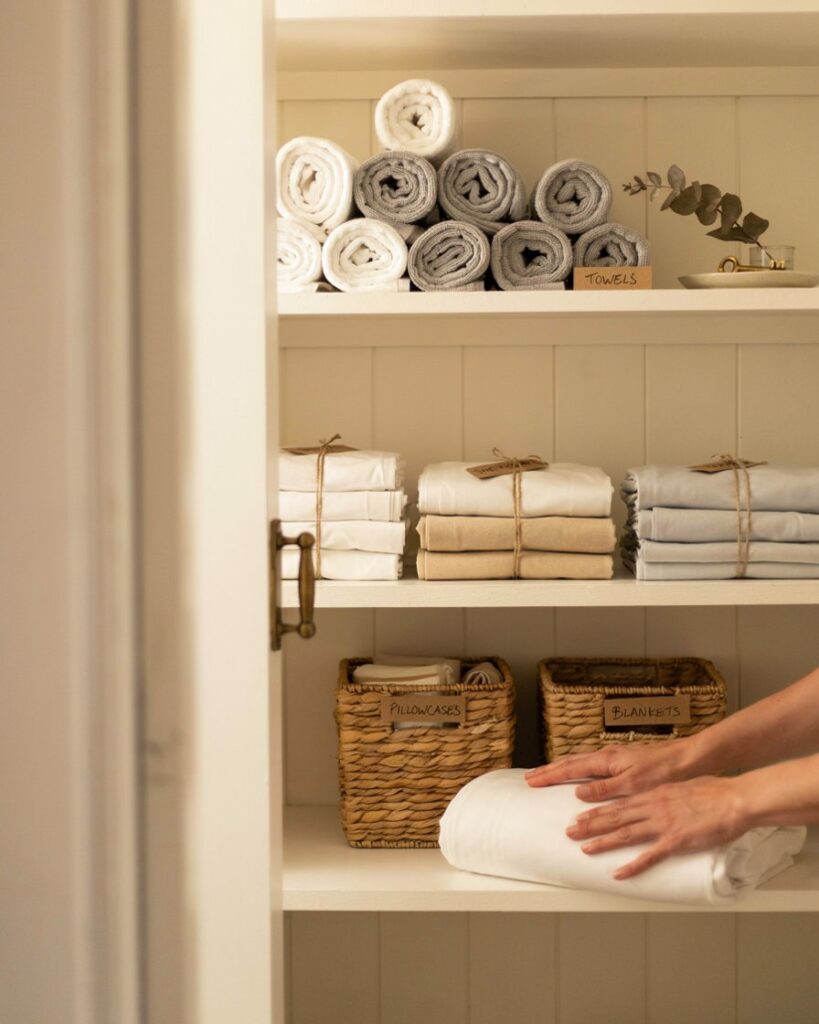
If your linen closet currently looks like a game of Jenga gone wrong, you’re not alone. Bedding, towels, and extra blankets multiply fast, and most closets weren’t designed with a real system in mind. The good news is that with the right folding techniques, storage solutions, and a bit of linen closet organization strategy, you can transform that chaotic cabinet into a functional, beautiful space in an afternoon.
Why a Well-Organized Linen Closet Matters More Than You Think
A linen closet is one of the most-used storage spaces in any home, yet it’s often the most neglected. Unlike a pantry or a coat closet, it doesn’t get a second thought until you’re frantically searching for a fitted sheet at 11 p.m. because guests are arriving in the morning.
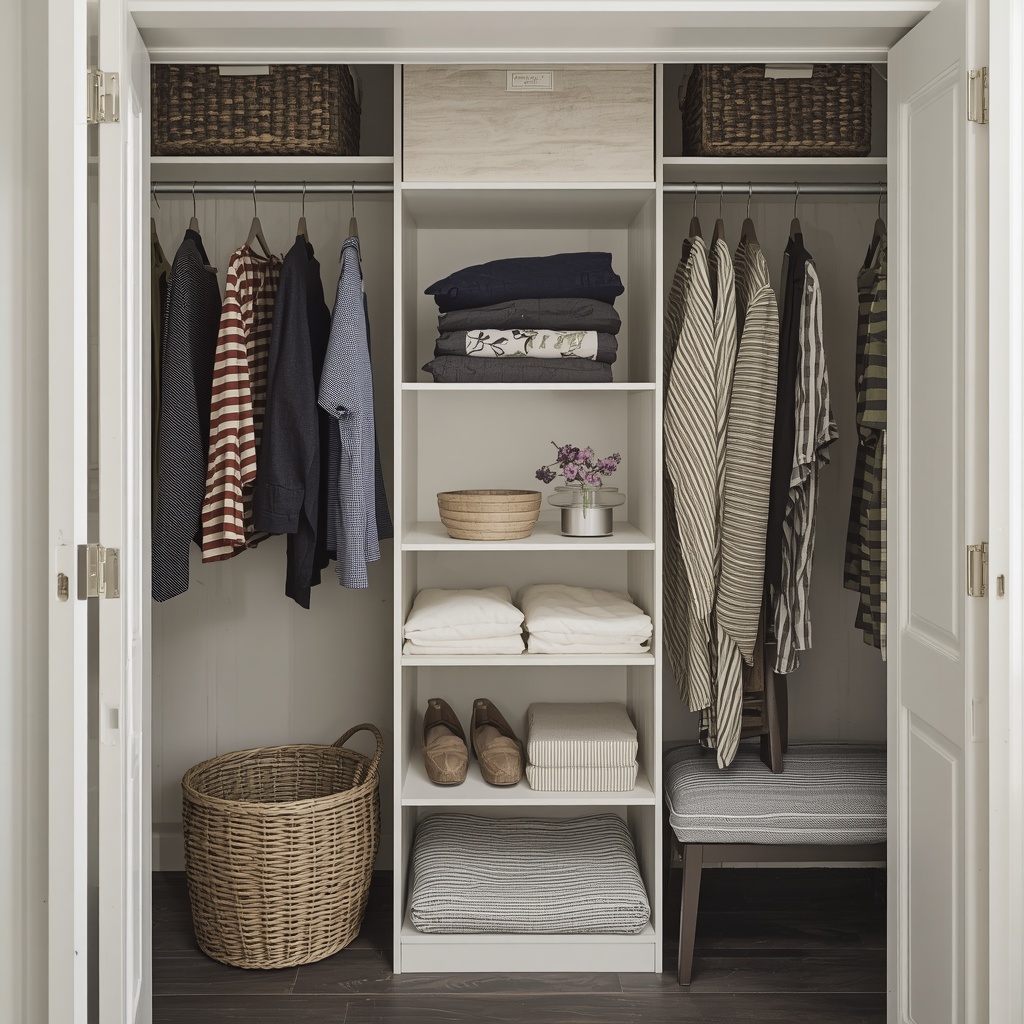
Beyond convenience, an organized linen closet actually extends the life of your textiles. Bedding stored in tangled, overstuffed piles wrinkles, traps moisture, and can develop musty odors. Sheets folded properly and stored with breathing room stay fresher, smell better, and are far easier to match into complete sets. There’s also a design element at play: even a closet no one else sees affects how your home feels. Order in hidden spaces creates a subconscious sense of calm throughout the house.
Step 1: Declutter Before You Organize
You cannot organize your way out of a closet that’s simply overstuffed. Before you fold a single sheet, pull everything out and sort it into categories: keep, donate, and toss.
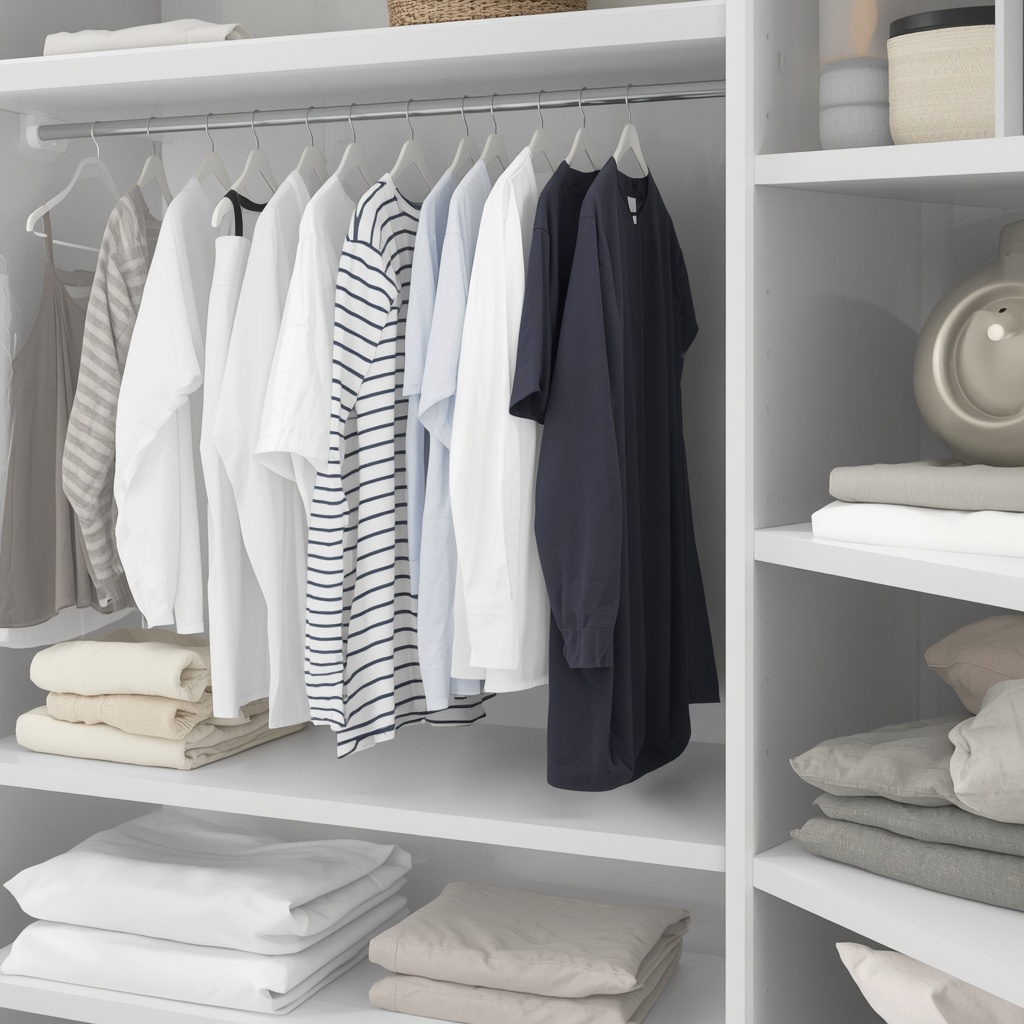
A good rule of thumb for most households is the “two-per-bed” method — keep two sets of sheets per bed (one in use, one in the wash rotation) plus maybe one extra seasonal set. Anything beyond that tends to become closet clutter that never gets used.
Ask yourself these questions as you sort:
- Does this sheet set have a matching fitted sheet, flat sheet, and pillowcases?
- Is the fabric pilling, thinning, or permanently stained?
- Have I used this blanket or duvet cover in the last two years?
- Am I keeping this “just in case,” or do I actually need it?
“The biggest mistake I see in client closets isn’t a lack of storage — it’s a lack of editing. You can buy every bin on the market, but if you’re storing bedding for beds you no longer own, no system will feel organized.”
Step 2: Choose Your Linen Closet Organization System
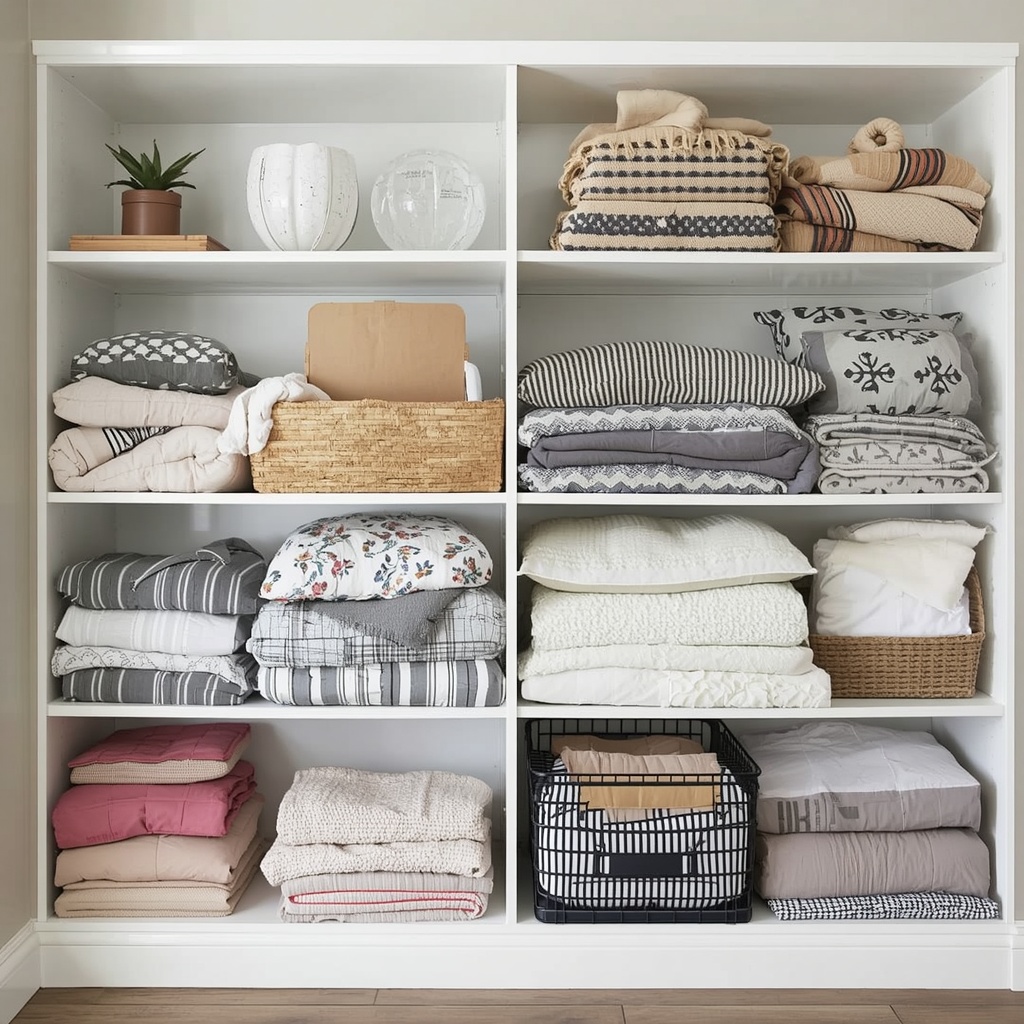
Once you’ve decluttered, decide how you want to categorize your shelves. Grouping by type and bed size makes items easy to find at a glance, especially in a shared household.
| Shelf Zone | What Goes There | Best For |
|---|---|---|
| Top shelf | Extra blankets, out-of-season bedding | Items used infrequently |
| Middle shelves | Sheet sets, sorted by bed size | Daily-access items |
| Lower shelves | Towels, bath linens | Family or guest access |
| Bins/baskets | Pillowcases, small items, spare cases | Keeping loose pieces contained |
Labeling shelves — even with simple printed tags or a label maker — makes it far easier for the whole household to put things back correctly, which is half the battle in maintaining any organized space.
Step 3: The Sheet-Folding Method That Actually Works
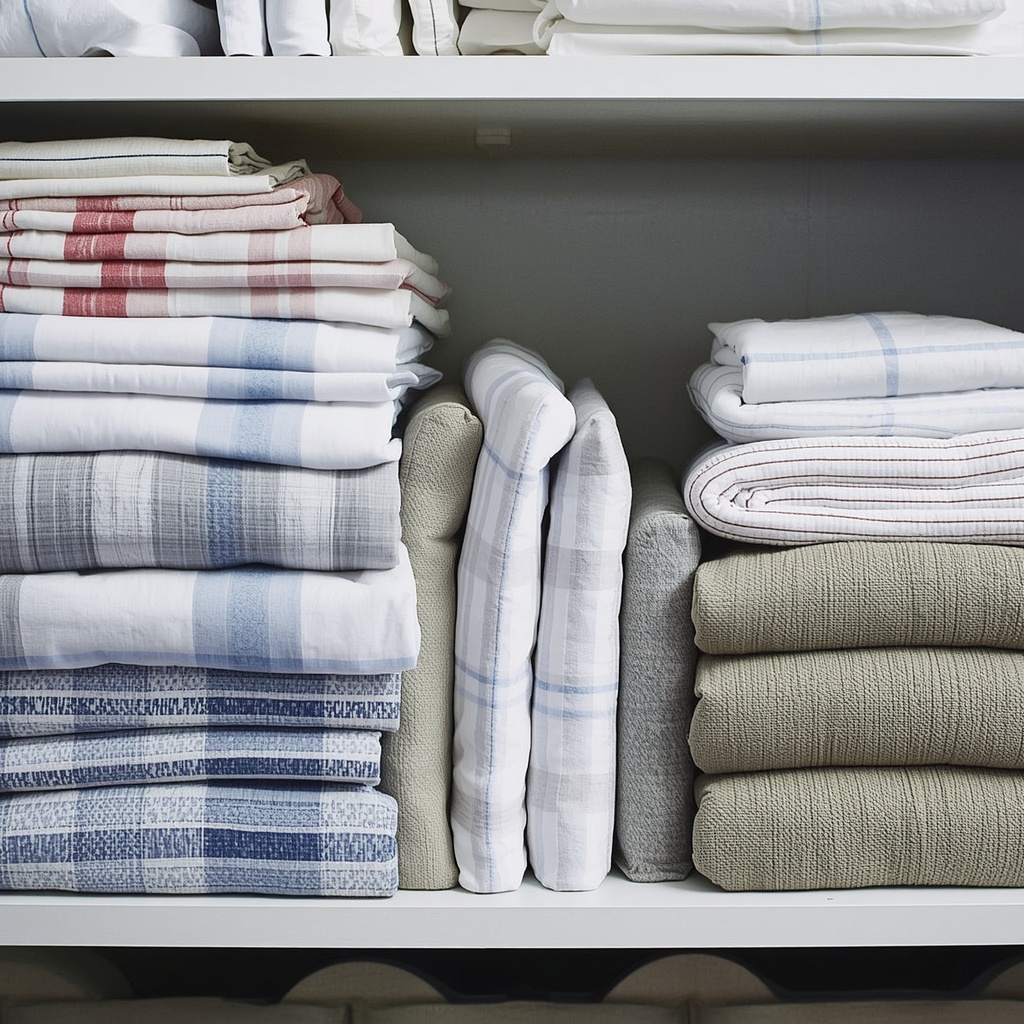
This is the heart of linen closet organization, and it’s the step most people skip or do wrong. Professionally folded sheets aren’t just neater; they take up less space, stack more securely, and make it obvious at a glance which set is which.
The Classic Flat Sheet Fold
Flat sheets and pillowcases are straightforward:
- Lay the sheet flat and fold it in half lengthwise, then in half again.
- Fold it into thirds horizontally.
- Fold once more in half to create a neat, compact rectangle.
The Fitted Sheet Fold (Without the Fight)
Fitted sheets cause the most frustration because of their elastic corners, but there’s a foolproof technique:
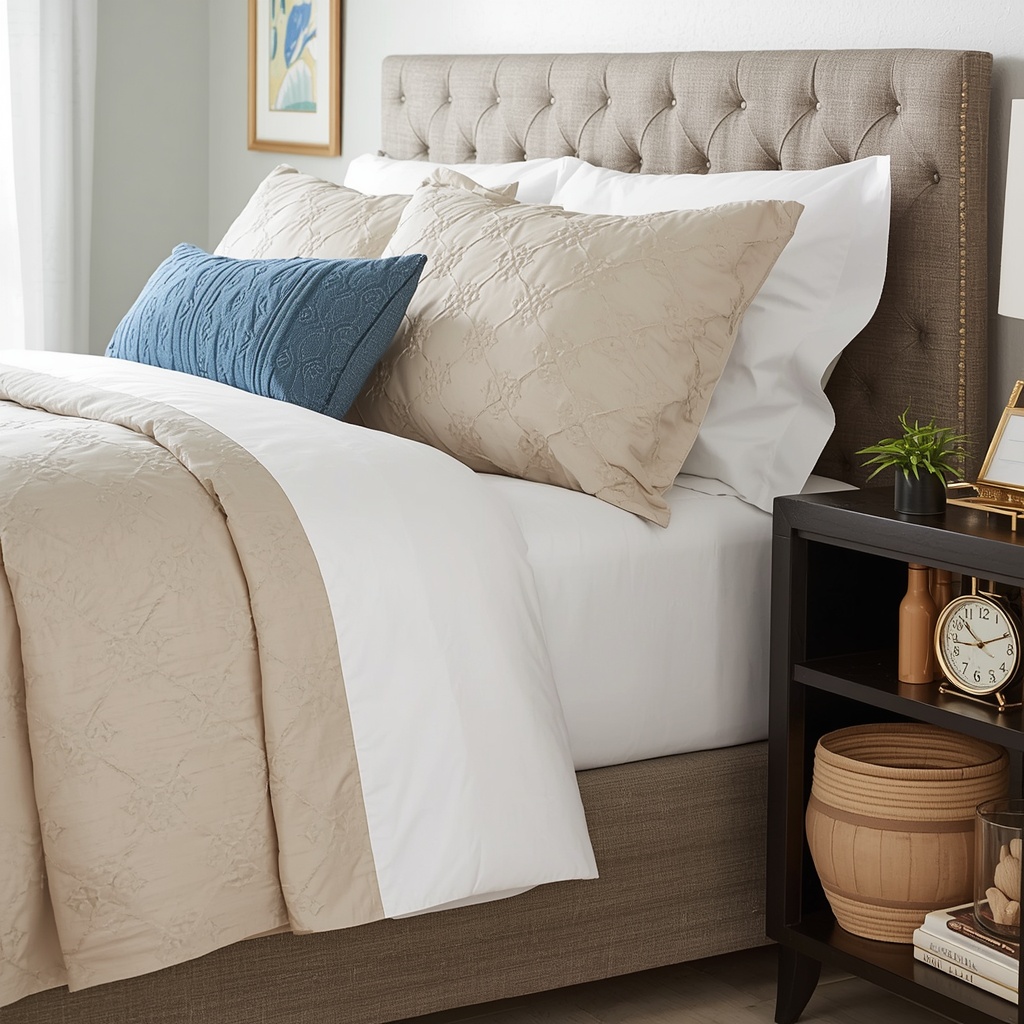
- Turn the sheet inside out and tuck your hands into two adjacent corners.
- Fold one corner over the other so they nest together, tucking the seam under.
- Repeat with the two remaining corners, nesting them into the first pair.
- Lay the sheet flat — it will naturally form a rough rectangle with the elastic edge tucked inward.
- Smooth it out and fold into thirds, then in half, just like a flat sheet.
Pro Tip: Fold your entire sheet set — fitted sheet, flat sheet, and both pillowcases — into one of the pillowcases like an envelope. This “sheet burrito” method keeps matching sets together permanently, so you never have to hunt for the right pieces again, and it creates a uniform, stackable shape for every set in your closet.
Quick Comparison: Folding Methods at a Glance
| Method | Best For | Time Needed | Space Saved |
|---|---|---|---|
| Classic thirds fold | Flat sheets, pillowcases | 30 seconds | Moderate |
| Nested corner fold | Fitted sheets | 45 seconds | Moderate |
| Pillowcase-envelope method | Full sheet sets | 1–2 minutes | High |
| Rolling method | Towels, guest linens | 20 seconds | High |
Step 4: Stack Smart — Not Just Neat
How you stack your folded linens matters almost as much as how you fold them. A few professional stacking principles:
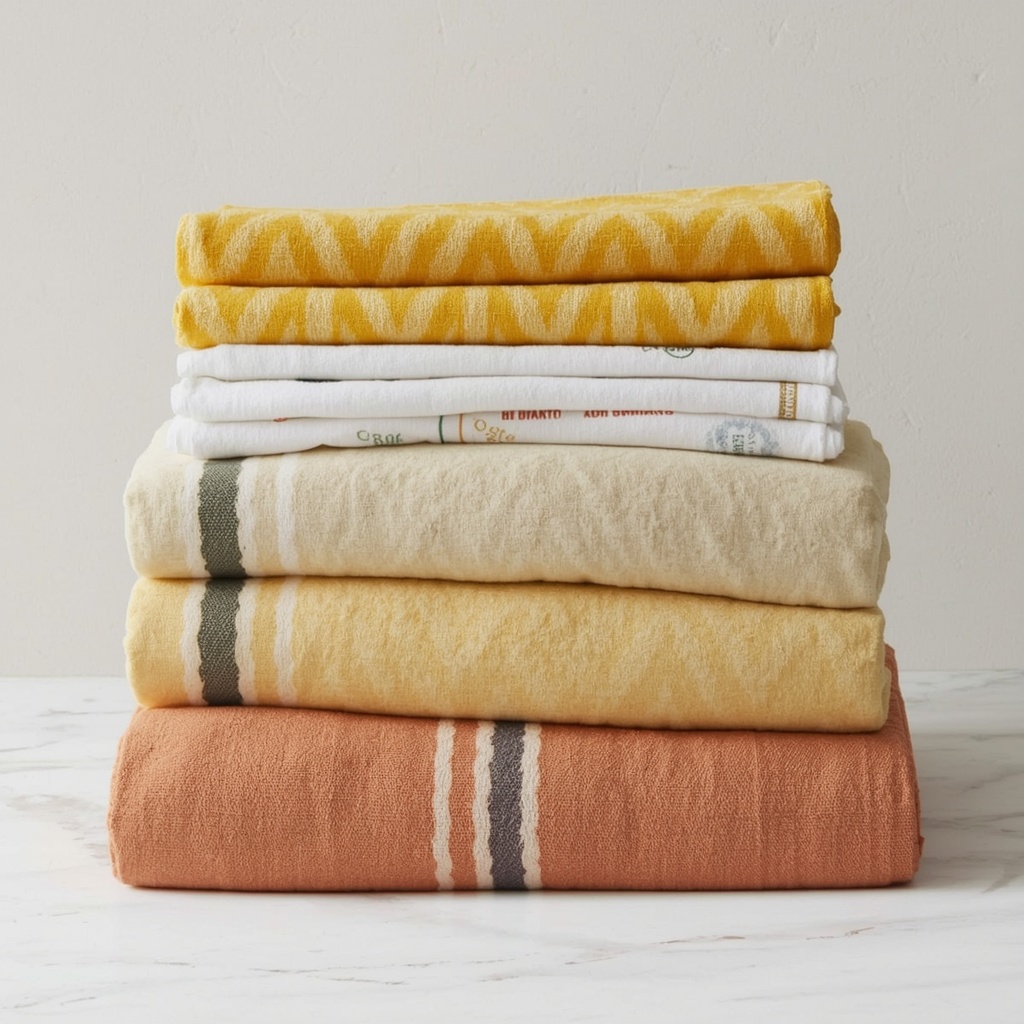
- Fold seams inward. This creates a cleaner visible edge when sheets are stacked with the fold facing out.
- Store sets vertically when possible. File-folding sheets (standing them upright like folders in a filing cabinet) makes every set visible without unstacking the whole pile — a trick borrowed directly from professional organizers.
- Rotate your stock. Place freshly laundered sheets at the bottom of the stack so older sets get used first, preventing yellowing from prolonged storage.
- Keep matching sets together. Whether you use the pillowcase-envelope trick or simply stack sets side by side, avoid separating pieces across shelves.
Step 5: Add the Right Storage Tools
A few well-chosen organizers go a long way toward keeping your linen closet functional long-term.
Useful additions for most linen closets:
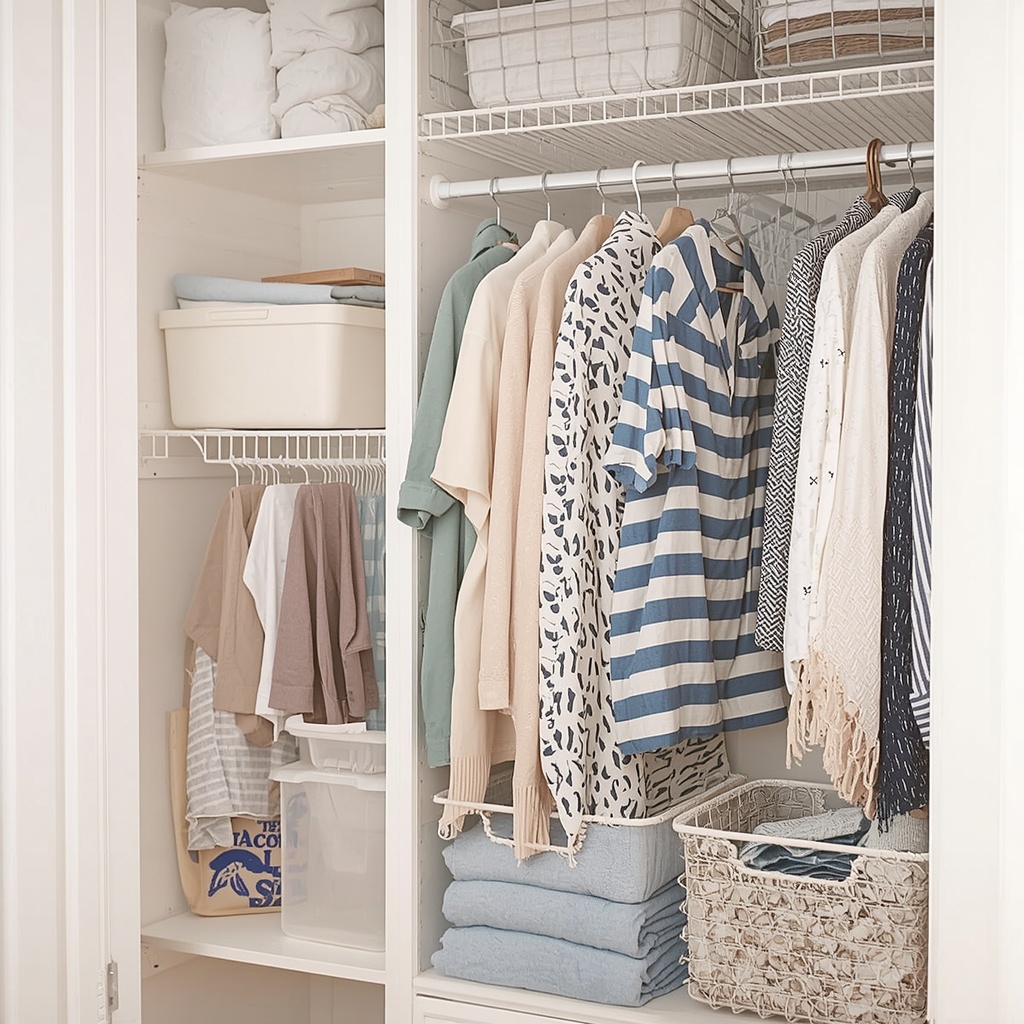
- Clear or labeled bins for loose pillowcases and small items
- Shelf dividers to keep stacks from toppling into each other
- Woven baskets for towels, which add texture and warmth to an otherwise utilitarian space
- Drawer or shelf liners to keep fabric snag-free and shelves clean
- Vacuum storage bags for out-of-season or guest bedding you use only occasionally
If you’re short on shelf space, over-the-door organizers or slim rolling carts can add extra storage without a renovation. For deeper design inspiration on maximizing small closet spaces, resources like The Container Store’s organization guides and Better Homes & Gardens home organization section are excellent places to browse ideas suited to U.S. home layouts.
Step 6: Keep Scent and Freshness in Mind
An organized linen closet should smell as good as it looks. Musty or stale-smelling sheets are one of the most common complaints in enclosed closet spaces, especially in humid climates.
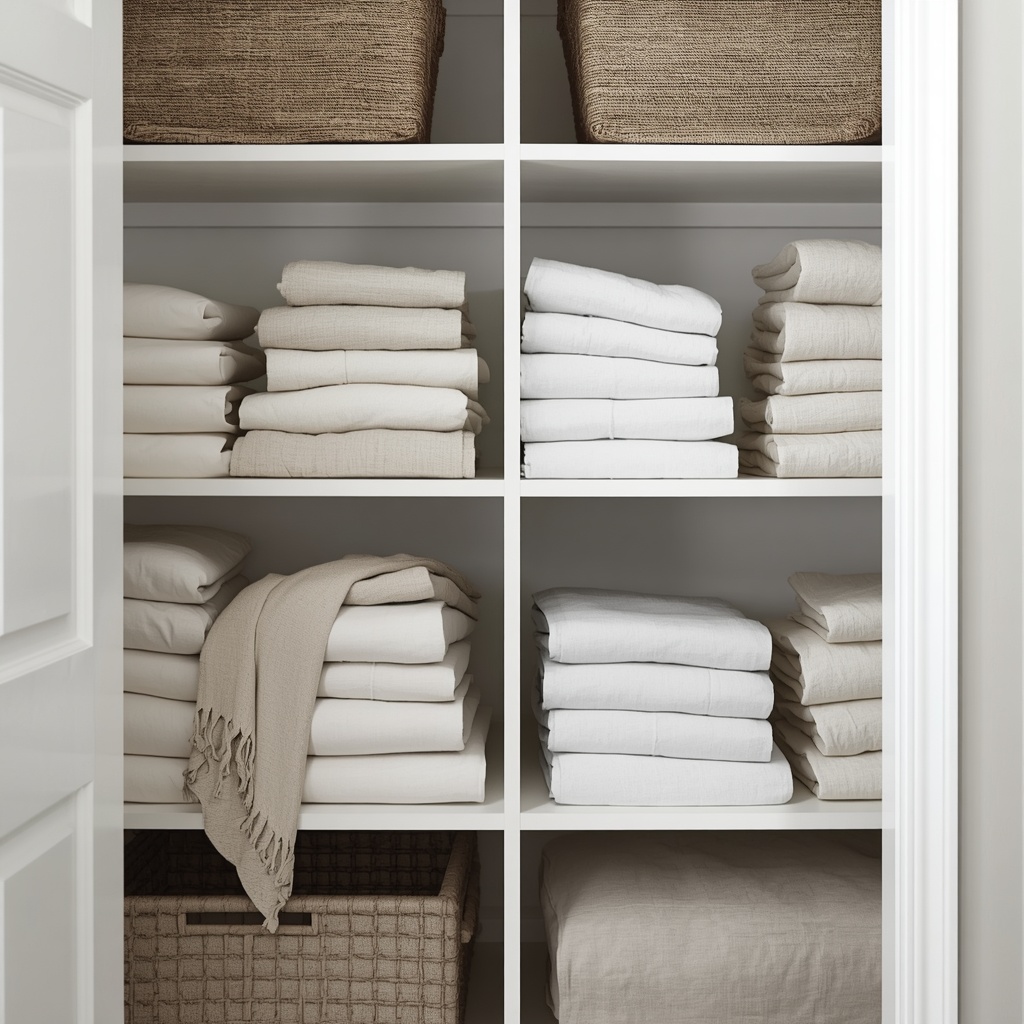
Simple ways to keep things fresh: tuck a few sachets of dried lavender or cedar blocks between stacks, ensure sheets are completely dry before folding (even slight dampness can cause mildew odor over time), and avoid overpacking shelves so air can circulate. A closet stuffed to the brim not only looks cluttered but also traps moisture and odor.
“Fabric holds onto humidity longer than most people realize. I always tell clients: if you can’t slide a hand between stacks, your shelf is too full — and your linens will suffer for it.”
Step 7: Maintain the System
The real test of any organization project is whether it still looks good a month later. A few habits keep a linen closet from sliding back into chaos:
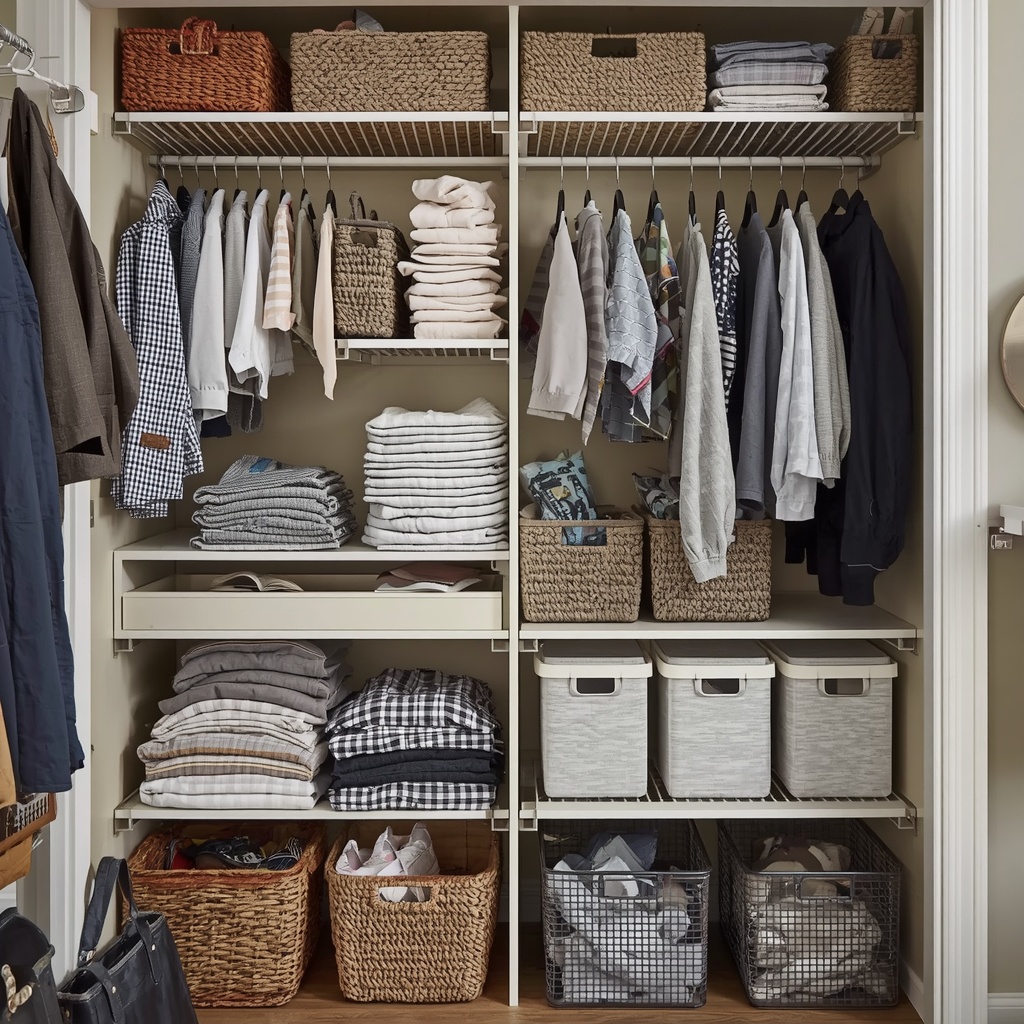
- Fold sheets the same way every time, so putting things away is automatic rather than a decision.
- Do a seasonal purge twice a year — once in spring and once in fall — to reassess what’s actually being used.
- Assign zones and stick to them, even when you’re in a hurry putting laundry away.
- Involve the household. If everyone knows where things go, everyone can put them back correctly.
Common Linen Closet Mistakes to Avoid
Even well-intentioned organizing projects can go sideways. Watch out for these frequent missteps:
- Overbuying bedding. More sheet sets than beds usually means clutter, not preparedness.
- Mixing sizes without labels. Twin, full, queen, and king sheets look nearly identical when folded — label shelves or bins by size.
- Skipping the fold. Simply stuffing sheets onto a shelf undoes all the benefits of a folding system.
- Ignoring vertical space. Tall closets often waste the top few feet; add a shelf or stackable bin to use that space for seasonal items.
- Forgetting to rotate stock. Always-used-first sheets on top means older sets sit unused and yellow at the bottom.
Final Thoughts: Small Space, Big Impact
A linen closet might be one of the smallest rooms in your home, but the sense of order it creates has an outsized effect on how your whole house feels to live in. Learning to fold sheets like a professional — nesting fitted sheet corners cleanly, bundling full sets together, and stacking with intention — turns a chore into a five-minute task you might actually enjoy.
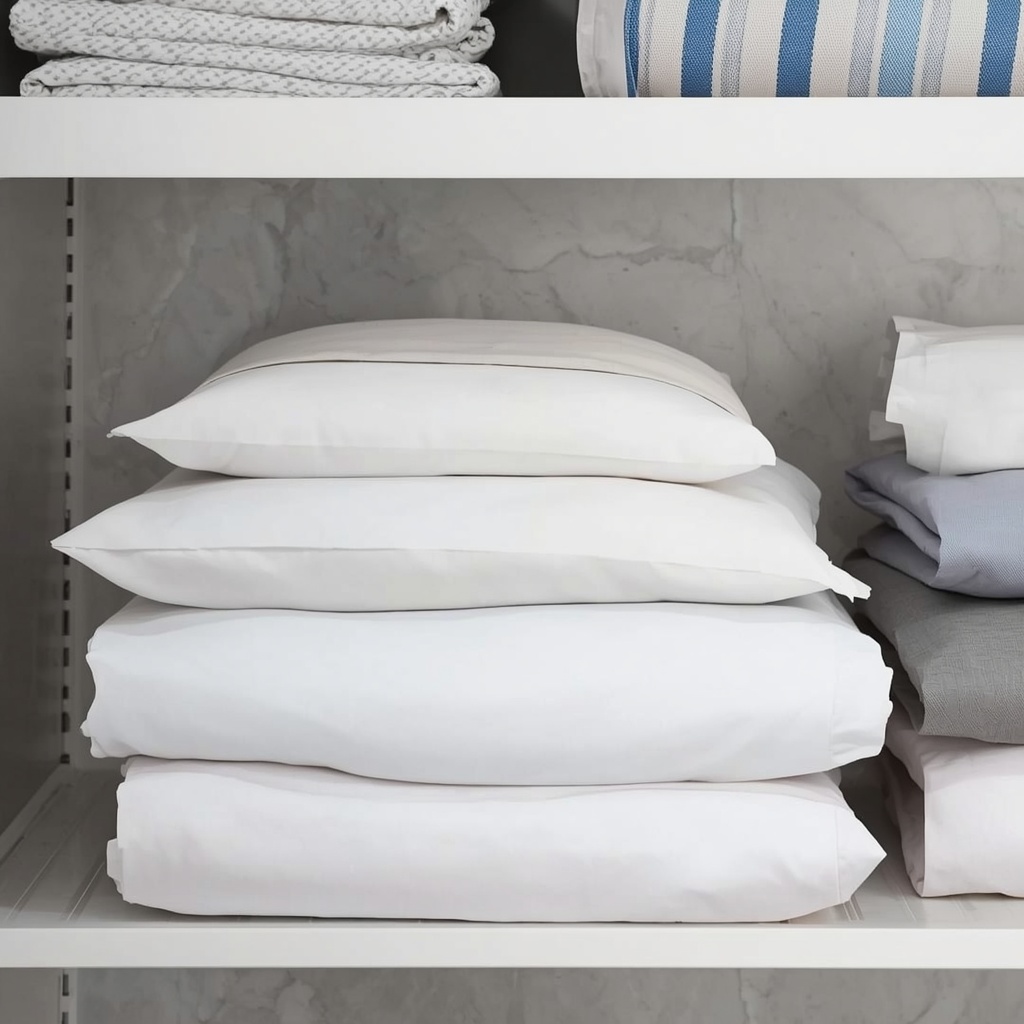
Start with a full declutter, choose a folding method that fits your household’s habits, and invest in a few simple storage tools to keep everything contained. The result isn’t just a tidier closet — it’s fresher linens, less laundry-day stress, and one more corner of your home that reflects the calm, considered style you’re working toward everywhere else.