
How to Make a Studio Apartment Feel Like a Luxury Suite
Living in a studio apartment doesn’t mean you have to sacrifice elegance, comfort, or style. As an interior designer who has worked with clients across New York, Chicago, and Los Angeles — all navigating the realities of compact urban living — I’ve seen firsthand how a thoughtfully curated space can rival even the most opulent hotel suite. The secret? It’s not the square footage. It’s the strategy.
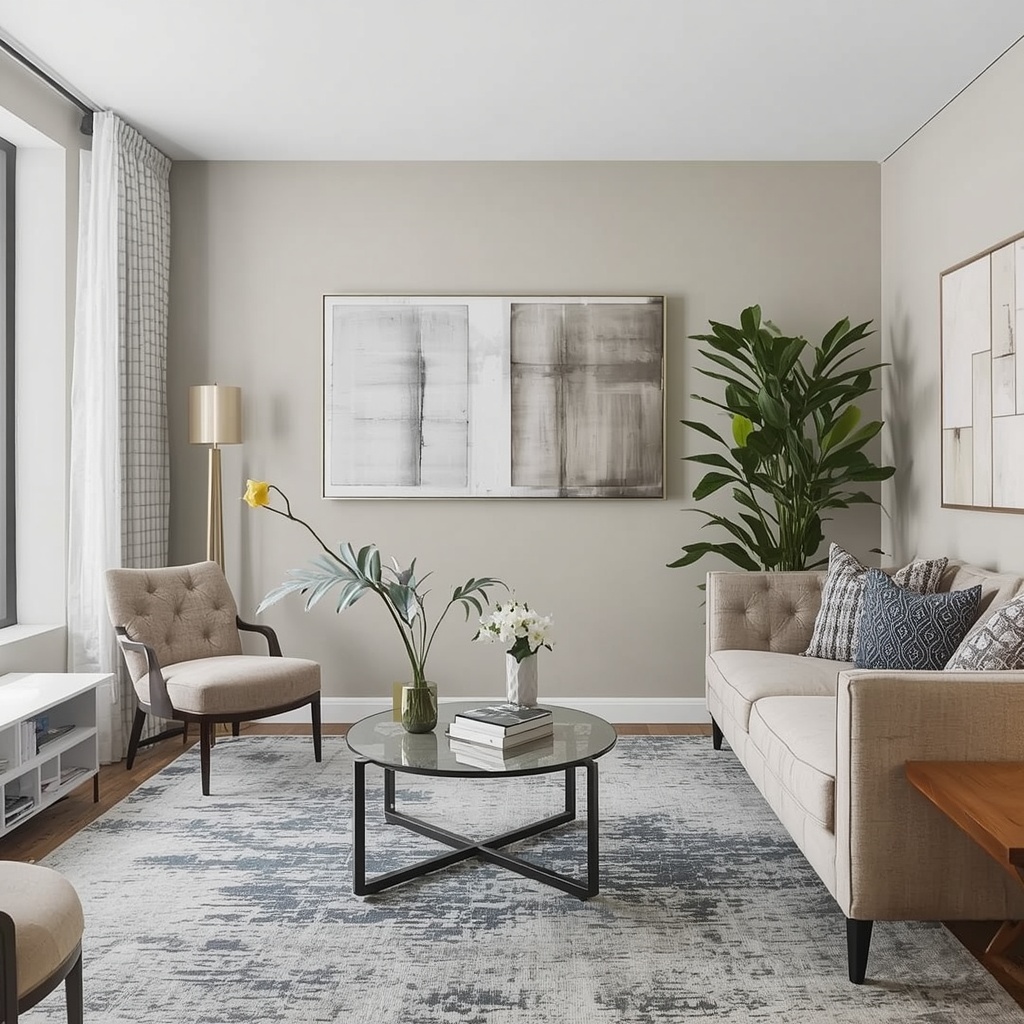
Whether you’re renting a 350-square-foot studio in Manhattan or settling into a 500-square-foot open-plan loft in Austin, the principles of small-space luxury design are the same. From furniture selection and smart zoning to lighting design and high-end textiles, this guide walks you through every element that transforms a cramped studio into a boutique living experience — one intentional design choice at a time.
Start with a Luxury Mindset: Edit, Don’t Add
The first rule of high-end small-space design: more is the enemy of luxury. True elegance is always edited.
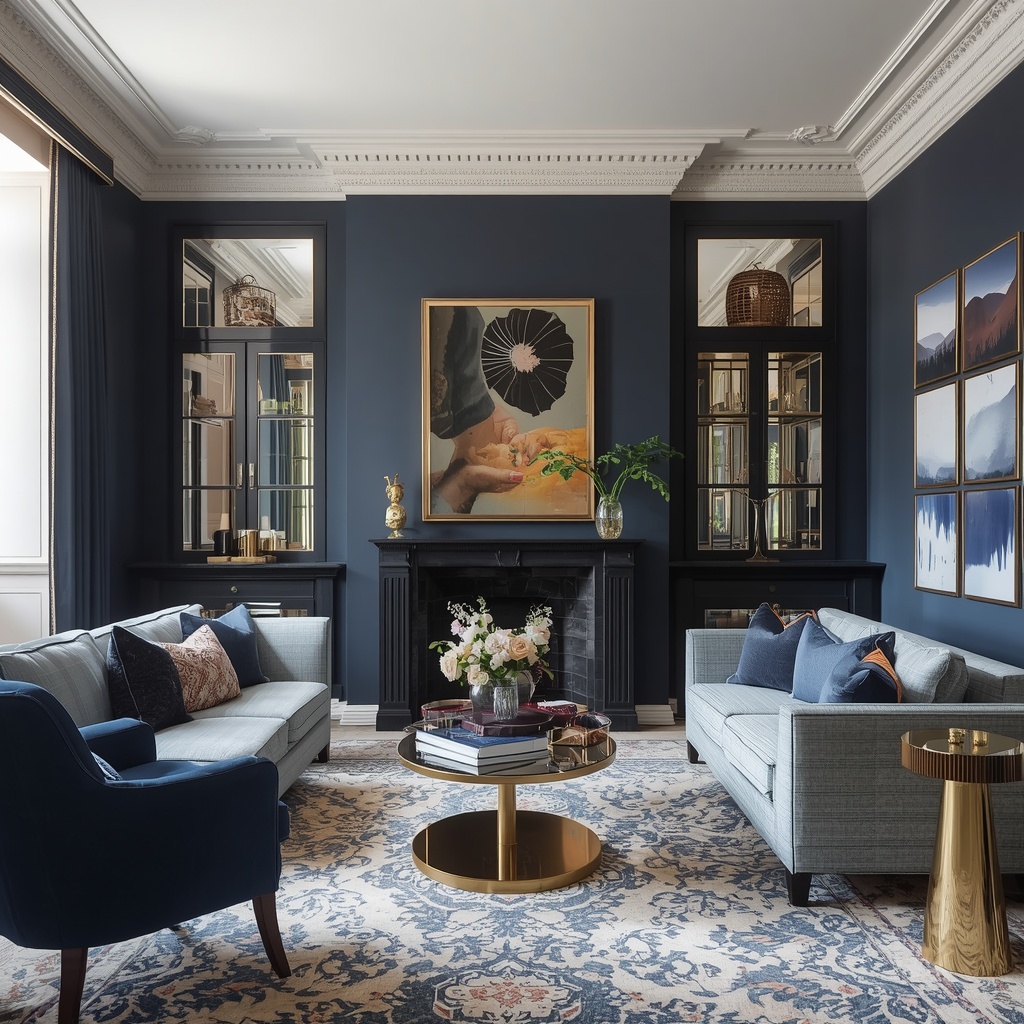
The biggest mistake studio dwellers make is trying to cram in too much — too many furniture pieces, too many decorative objects, too many competing patterns. Walk into any five-star hotel room and notice what it doesn’t have: clutter. Luxury is defined by restraint, intention, and breathing room. Before you buy a single new item, start by removing. Donate, store, or sell anything that doesn’t serve a clear functional or aesthetic purpose.
Think of your studio as a canvas. A great interior designer doesn’t fill every inch — they choreograph the negative space just as deliberately as they do the objects within it. When you edit your possessions down to only what you love and what works hard for you, the room immediately begins to feel more curated, more deliberate, and — yes — more luxurious. This minimalist luxury approach is the foundation everything else is built on.
Pro Tip
Before redesigning, photograph your space and study it like a client. You’ll instantly spot what’s visually “loud” and what’s earning its place. I recommend the “one-in, two-out” rule — for every new decor item you bring in, remove two. This keeps your studio perpetually edited and hotel-ready.
Master the Art of Zoning: Define Spaces Without Walls
One of the most powerful tools in small apartment design is the creation of distinct zones within a single open room. In luxury hotel suites, you often see this in action — a sleeping area feels separate from a sitting area, even without a physical partition. This concept, known as functional zoning, is essential for making your studio feel intentional and spacious rather than chaotic and cramped.
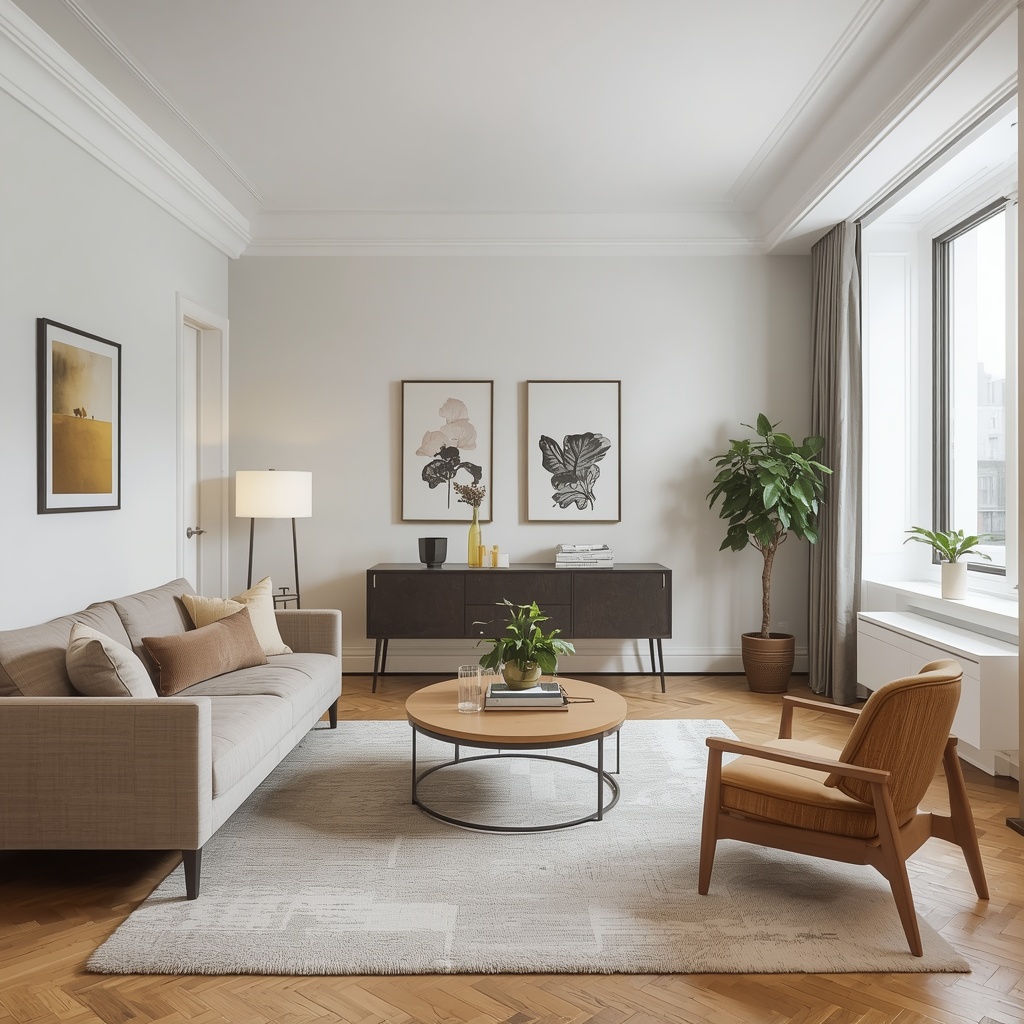
Area rugs are your best friend here. A plush, oversized rug anchored beneath your sofa and coffee table instantly signals “living room.” A different rug texture near your bed — or even just the absence of a rug — defines the bedroom zone. You can reinforce these zones with lighting changes, furniture orientation, and even subtle color shifts in your throw pillows and soft furnishings. The goal is to walk through your studio and feel like you’re moving between distinct, purposeful rooms.
| Zone | Defining Element | Luxury Upgrade | Budget Range |
|---|---|---|---|
| Living Area | Area rug + sofa configuration | Wool or silk-blend rug, linen sofa | $300–$900 |
| Sleeping Zone | Bed placement + headboard | Upholstered headboard, linen bedding | $200–$700 |
| Dining Nook | Pendant light above table | Marble bistro table, cane chairs | $150–$500 |
| Work Corner | Task lighting + desk | Floating shelf desk, brass lamp | $100–$350 |
| Dressing Area | Mirror + clothing storage | Full-length leaner mirror, wardrobe | $100–$600 |
Lighting Design: The Single Biggest Luxury Upgrade
If I could tell every studio apartment owner to do just one thing, it would be this: throw out your overhead lighting and layer your light sources like a professional. Nothing destroys the ambiance of a space faster than a single harsh overhead fluorescent. Nothing transforms it faster than layered, warm, dimmable lighting at multiple heights.
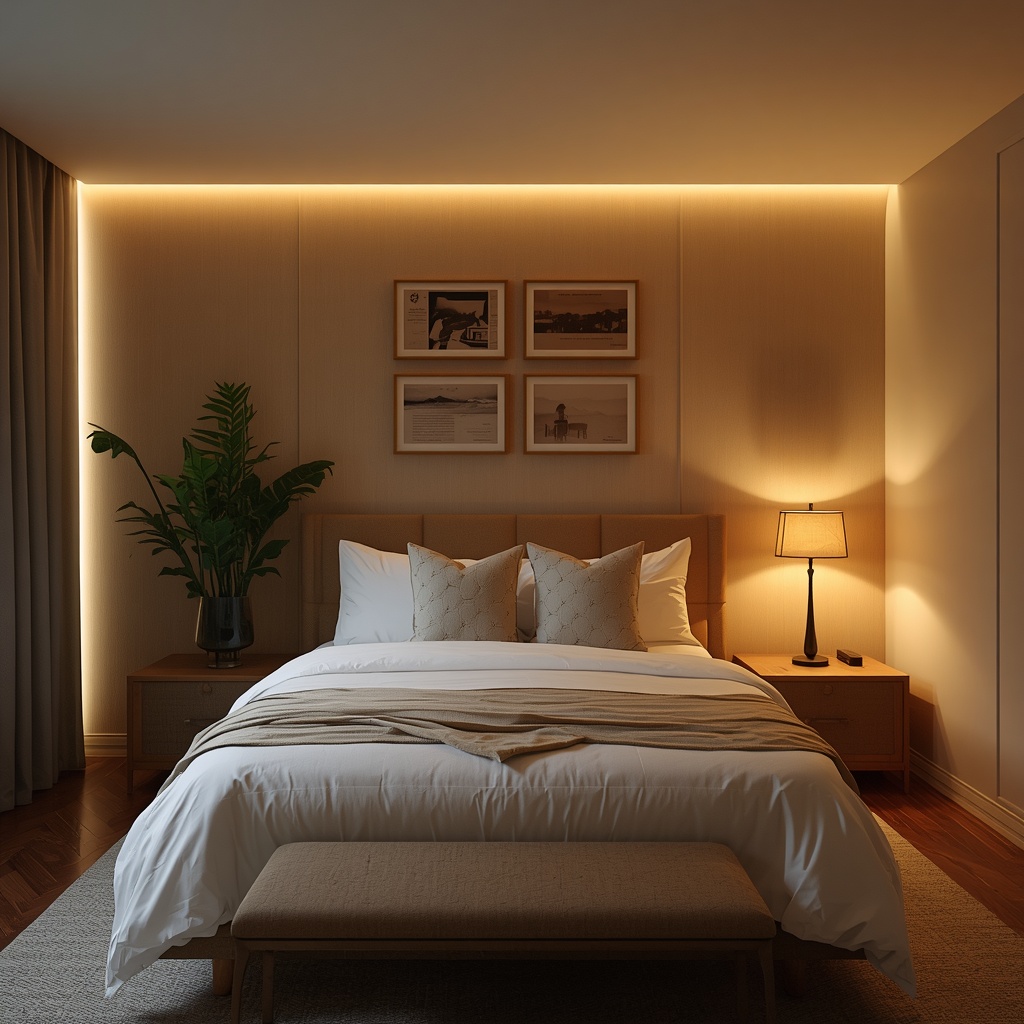
Luxury hotels invest enormously in lighting design because it controls mood, perceived warmth, and spatial illusion more than any other design element. In your studio, aim for at least three light layers: ambient (a central, soft ceiling fixture or recessed lighting), task (reading lamps, under-cabinet kitchen lighting), and accent (LED strips behind a headboard, a backlit shelf, a glowing table lamp). Warm bulbs — 2700K to 3000K — are non-negotiable. Pair them with dimmer switches wherever possible, and your studio will feel entirely different from day to evening.
Pro Tip
Install smart bulbs (Philips Hue or LIFX) in every socket. Program a “morning routine” at 5000K for energizing mornings and a “lounge mode” at 2200K for evenings. This single upgrade, often under $150, replicates the dynamic lighting design found in boutique hotels.
“A room is not a luxury suite because of its size. It’s a luxury suite because of how it makes you feel the moment you walk in. Lighting is 80% of that feeling.”— Nate Berkus, Interior Designer & TV Host
Furniture Selection: Invest in a Few Statement Pieces
In a studio apartment, every piece of furniture is on display, all the time. There is no spare room to hide an ugly sofa or a scratched dresser. This reality, which many people find frustrating, is actually your greatest design advantage — it forces you to choose intentionally. And intentional choosing is the essence of luxury design.
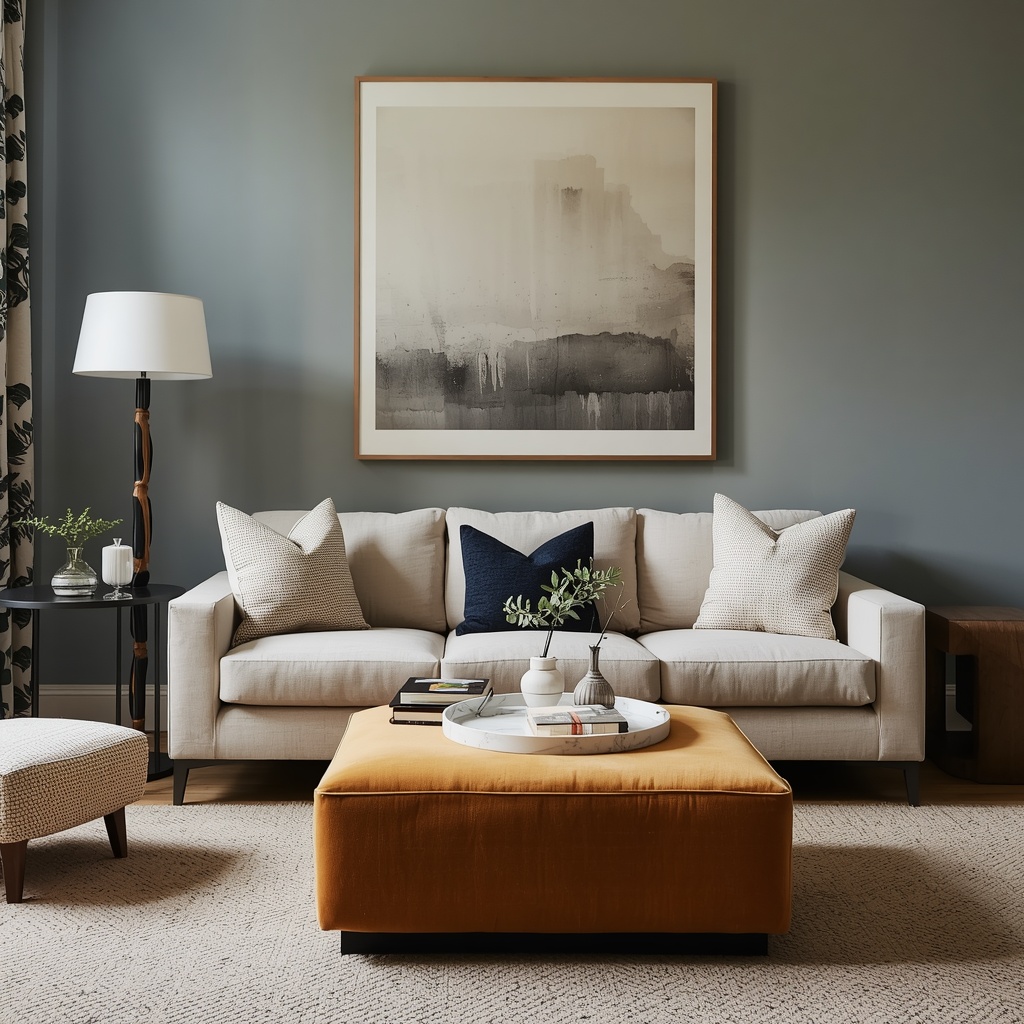
Resist the urge to fill your space with a matching boxed set from a big-box retailer. Instead, save your budget for one or two truly exceptional pieces — a quality upholstered sofa in a neutral linen, a solid wood dining table, or an architectural floor lamp with a sculptural base. These anchor pieces do the heavy lifting aesthetically and make everything around them look better by association. Complement them with functional-but-beautiful secondary pieces: a rattan side table, a marble serving tray repurposed as a nightstand accessory, a velvet ottoman that doubles as a coffee table and extra seating.
- Multifunctional furniture:Ottoman with storage, sofa beds, extendable dining tables, murphy beds built into shelving units
- Elevated materials:Solid wood, linen fabric, brushed brass hardware, marble or terrazzo accents
- Scaled correctly:Choose furniture sized for the space — oversized pieces overwhelm, too-small pieces look accidental
- Legs visible:Furniture on legs (not floor-level) lets light travel underneath, making the room feel taller and airier
- Neutral hero pieces:Keep large furniture neutral so you can easily update the look seasonally with accessories and textiles
The Power of Mirrors and Reflective Surfaces
No design tool expands a small space more dramatically — or more affordably — than the strategic use of mirrors. A well-placed large mirror doesn’t just reflect light; it creates the visual illusion of depth, making your studio feel like it has an additional room just beyond the frame. In luxury hotel design, mirrors are used deliberately to double the perceived size of a space, and you can apply the same principle at home.
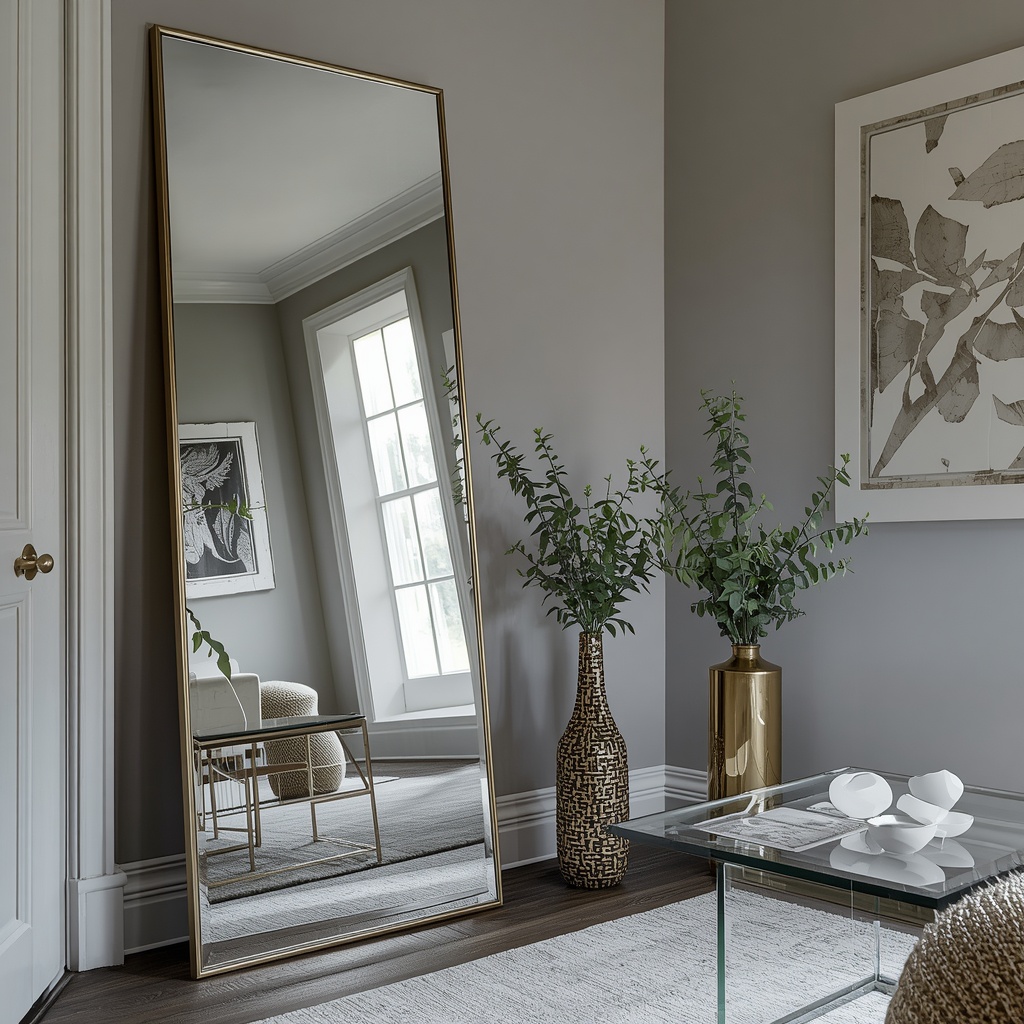
For maximum impact, lean a large floor-length mirror against a wall opposite a window. This bounces natural light deep into the room and gives the impression of an extended space. You can also consider a full wall of framed mirrors in your dining zone or a mirrored wardrobe panel in your sleeping area. Beyond mirrors, introduce other reflective surfaces thoughtfully: a glass coffee table, a lacquered side table, metallic lamp bases in gold or brass, and glossy ceramic vases all catch and redirect light to make the room sparkle.
| Surface Type | Effect | Best Placement | Luxury Feel ★★★★★ |
|---|---|---|---|
| Full-length leaner mirror | Doubles depth, adds height | Opposite a window or door | ★★★★★ |
| Gallery wall of mirrors | Creates dimension and art-like focal point | Dining or living zone | ★★★★☆ |
| Brass/gold lamp bases | Warm reflective glow | Bedside, side tables | ★★★★☆ |
| Glass-top coffee table | Visually “disappears,” opens floor plan | Living zone center | ★★★★☆ |
| Lacquered furniture | Subtle sheen, depth | Accent table, nightstand | ★★★☆☆ |
Textiles and Bedding: Where Luxury Is Most Felt
In a studio apartment, your bed is likely the largest visual element in the room — and the most used surface. Making your bed look and feel like a five-star hotel is one of the highest-impact investments you can make. High thread-count cotton percale or linen bedding in crisp whites, warm ivory, or soft sage signals quality immediately and makes the entire room feel elevated.
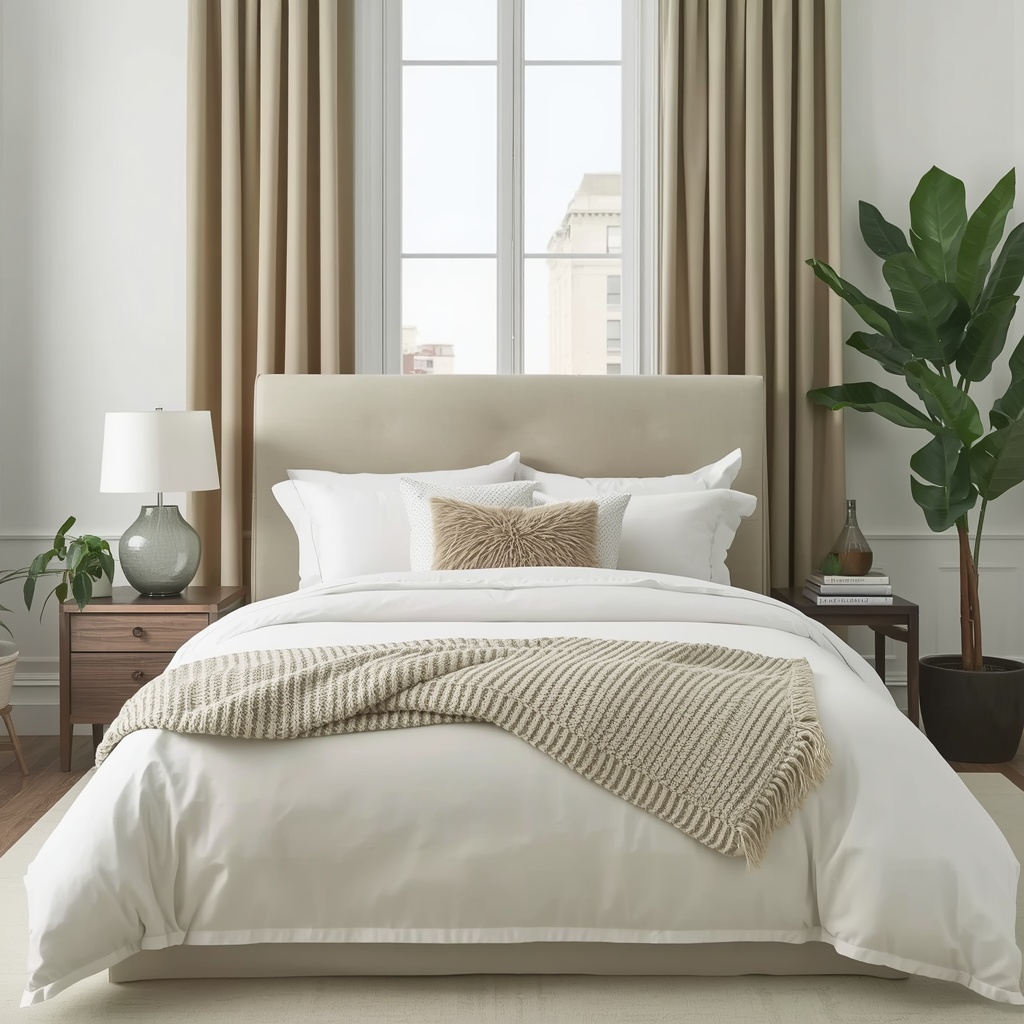
Layer your bedding the way hotel designers do: a fitted sheet, a flat sheet, a lightweight duvet in a high-quality cover, and then two or three decorative Euro shams behind your sleeping pillows. Add a folded throw blanket at the foot of the bed in a complementary texture — a chunky knit in winter, a lightweight cotton weave in summer. This “hotel layering” technique creates visual richness and tactile luxury that you literally feel every night. Don’t overlook window treatments either — heavy linen or velvet curtains hung from ceiling to floor dramatically heighten the room and add the kind of softness that bare blinds simply cannot.
Pro Tip
Hang your curtain rod 4–6 inches above the window frame and extend the rod 8–10 inches past each side of the window. This creates the illusion of a much larger window and floods the room with drama — a trick used in every luxury residential project I’ve designed. Curtain panels should always puddle slightly or just kiss the floor.
Color Palette and Wall Treatments: Set the Mood Like a Hotel
The color palette you choose for your studio sets the emotional tone of the entire space. Luxury hotel suites rarely use stark white walls alone — they use warm whites, soft greiges, deep jewel-toned accent walls, or sophisticated neutrals layered with rich textures. The goal is warmth, depth, and a sense of being enveloped rather than exposed.
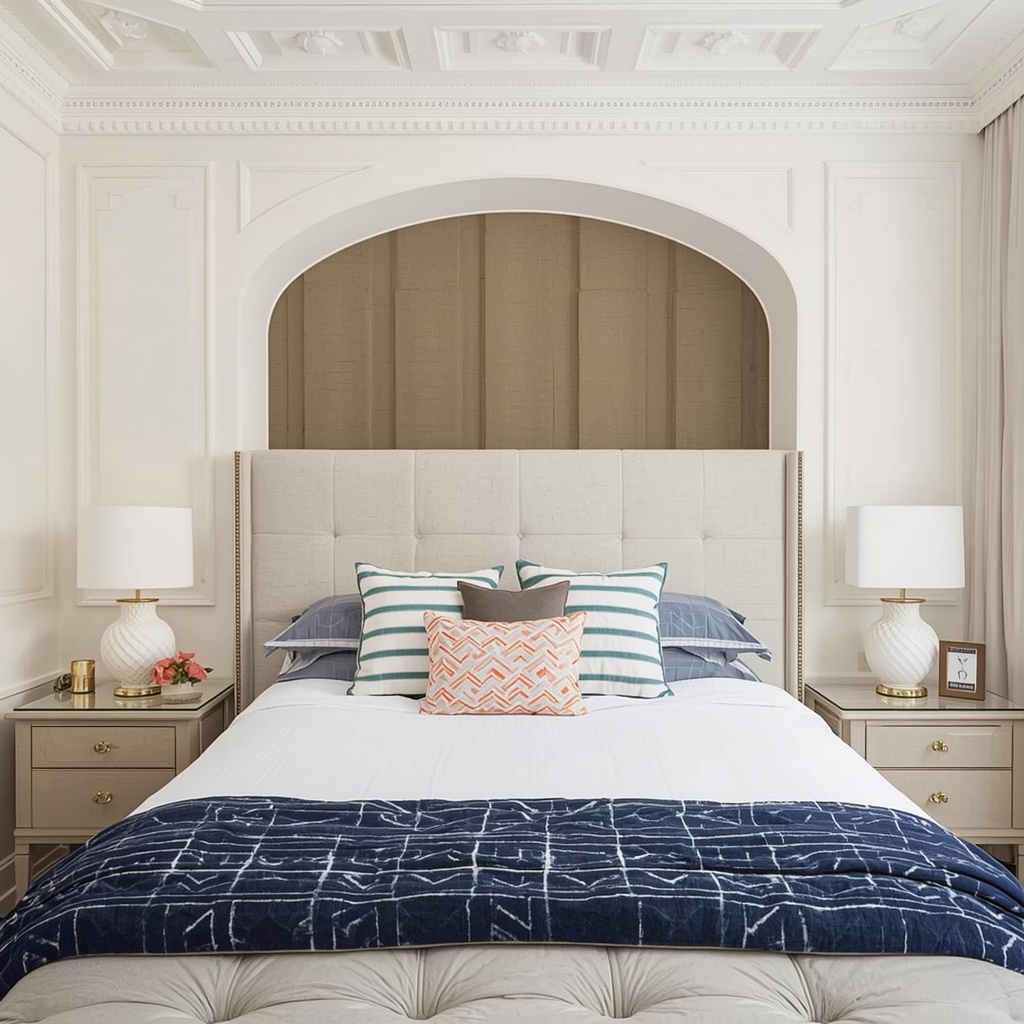
If you’re renting and can’t paint, you have more options than ever: removable wallpaper in grasscloth, linen, or geometric patterns can transform a wall in a weekend. Consider creating a faux headboard wall with a panel of removable wallpaper in a deep, moody tone — navy, forest green, terracotta, or charcoal — behind your bed. This anchors the sleeping zone beautifully and gives your studio the visual drama of a high-end boutique hotel room. For those who can paint, a warm, tinted off-white on all walls (think Benjamin Moore’s “White Dove” or Farrow & Ball’s “Elephant’s Breath”) is almost always more luxurious than a stark, cool white.
“The right paint color is the least expensive, highest-return investment in interior design. Don’t default to builder-grade white — that choice says ‘temporary.’ A warm, intentional tone says ‘home.'”— Sofia Durant, Interior Designer
Scent, Sound, and Sensory Details: The Final Layer of Luxury
A truly luxurious environment engages all five senses, not just the visual. This is something five-star hotels understand deeply and most home decorating guides completely ignore. The Ritz Carlton has a signature scent. The Four Seasons curates its lobby music. These aren’t accidents — they’re deliberate investments in the full sensory experience of a space.
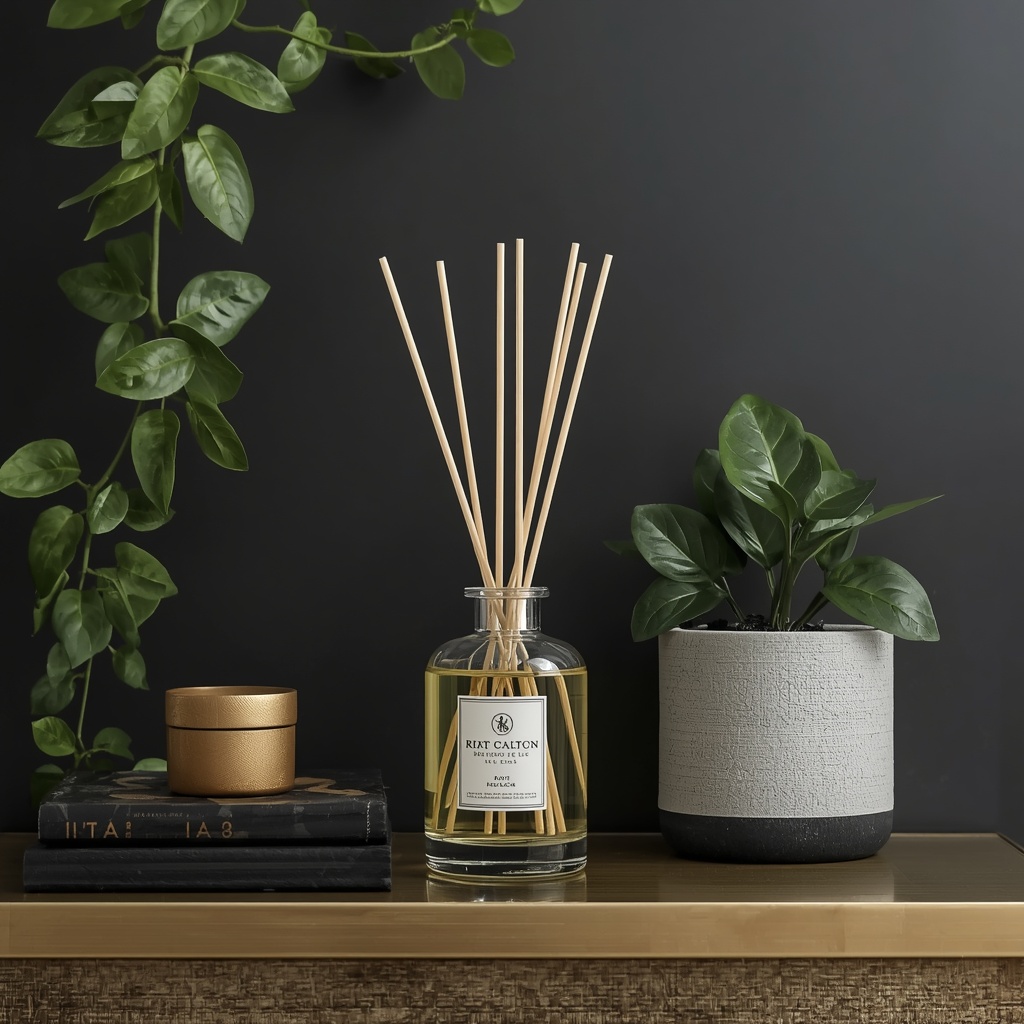
In your studio, scent is easiest and most impactful. A quality reed diffuser or a stone-diffuser with essential oils in a sophisticated blend — sandalwood and cedar, bergamot and white tea, or warm amber and musk — creates an immediate sense of arrival every time you walk in. Add a Bluetooth speaker with a curated playlist for mornings and evenings. Consider a small indoor plant or two: a fiddle-leaf fig, a pothos trailing from a high shelf, or a snake plant in a sculptural ceramic pot. Plants add life, oxygen, and a grounded organic quality that elevates even the most minimal space.
Ready to transform your studio? The biggest luxury upgrades — layered lighting, hotel bedding, strategic mirrors, and a curated color palette — can all be achieved for under $1,000. Start with one zone, do it beautifully, and let it set the standard for the rest of the space.
Quick-Reference: Studio Luxury Upgrade Checklist
- Replace overhead lighting with layered warm-tone sources at multiple heights
- Install dimmer switches in every outlet that will hold a lamp
- Anchor each zone with a distinct, quality area rug
- Invest in hotel-quality linen or percale bedding in a neutral palette
- Hang curtains from ceiling to floor, wider than the actual window
- Place a large leaner mirror opposite your main light source
- Remove all clutter — keep only items that earn their space aesthetically or functionally
- Add one signature scent diffused consistently throughout the space
- Choose one or two anchor furniture pieces in elevated materials
- Add a statement plant in each functional zone for organic life and scale
Transforming a studio apartment into a luxury living experience is less about budget and more about intention. Every design decision in a small space is amplified — which means your best choices shine twice as bright. Be deliberate, edit ruthlessly, invest in what you touch and see every day, and your studio will become the sanctuary you deserve.