
Curated Corners for Unique Style
How to transform forgotten nooks into personalized vignettes that tell your story — one carefully chosen object at a time
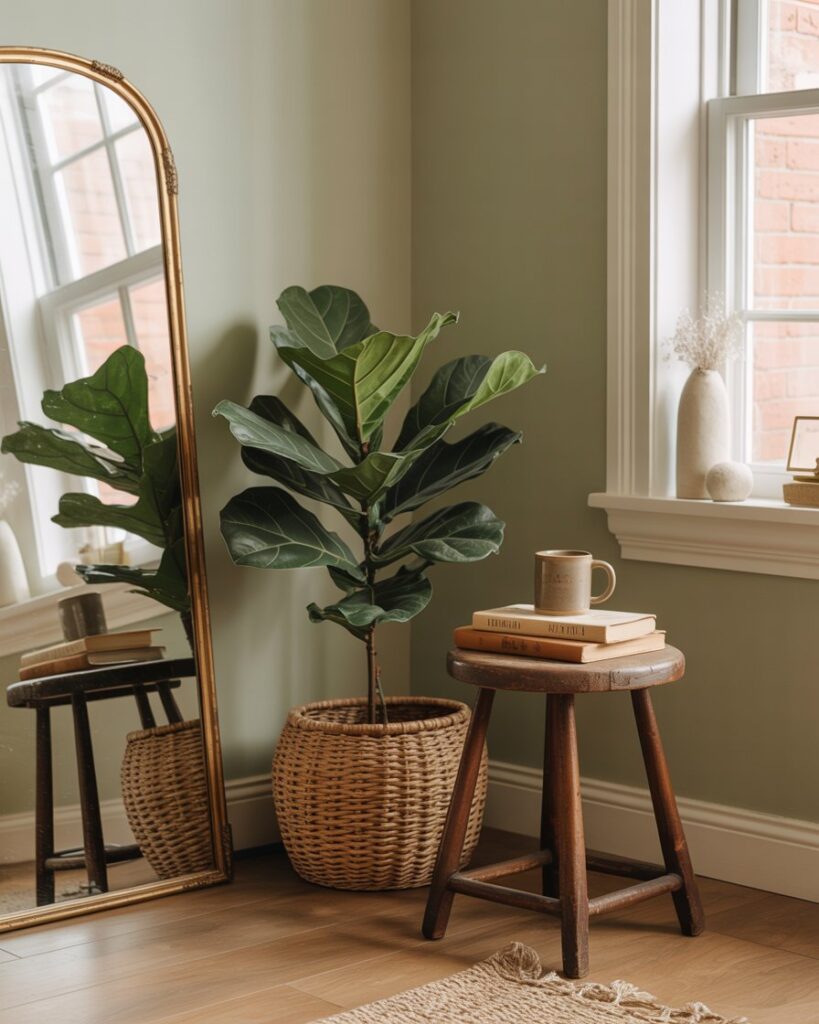
Walk into any truly memorable home and you’ll notice it immediately — that one corner where everything feels intentional. A layered bookshelf. A moody reading nook. A sculptural plant beside a vintage mirror. These are curated corners: small-scale styled vignettes that pack enormous design punch and reveal the personality of the people who live there.
In the world of interior design, a curated corner is more than an afterthought. It’s a deliberate composition — a marriage of texture, scale, color, and meaning. For American homeowners looking to move beyond the mass-produced look and into something genuinely personal, the curated corner is the single most accessible and high-impact design move you can make. And the best part? You don’t need to gut your entire living room to get started.
What Exactly Is a Curated Corner?
A curated corner is a deliberately styled area in your home — typically a nook, alcove, mantel, desktop, bookshelf, or empty wall zone — where objects are intentionally arranged to create visual harmony and personal meaning. Think of it as vignette styling taken to its fullest potential.
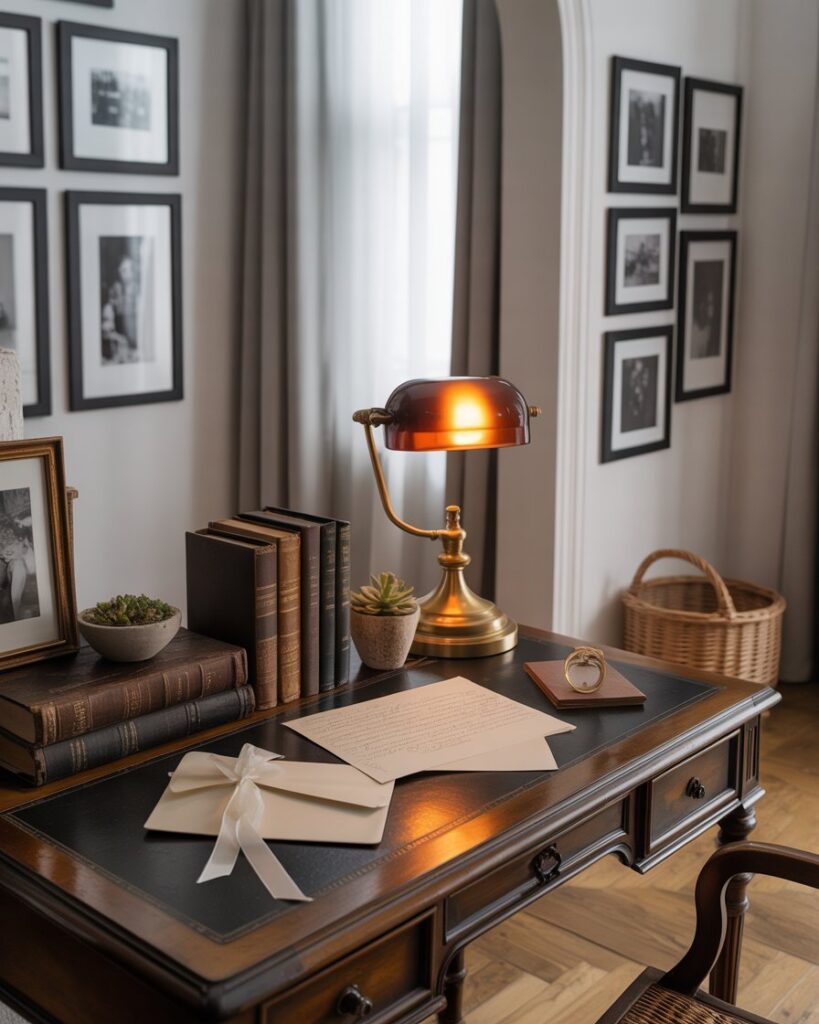
Unlike general “decorating,” curation implies a point of view. You’re not just filling a space; you’re making editorial choices — selecting objects that share a common thread, whether that’s a color palette, a material family, a cultural origin, or a personal narrative. Every object earns its place, and negative space is respected as much as the objects themselves.
Interior stylists often describe the practice as creating a “still life” within your living environment. The principles borrow as much from gallery curation as from traditional home decorating, which is exactly what gives curated corners their distinctive, elevated feel compared to ordinary shelf arrangements or generic decor groupings.
The curated corner philosophy aligns with the broader movement toward intentional living — choosing quality over quantity, personal meaning over trend-chasing, and aesthetic coherence over impulse purchases. It’s an antidote to rooms that feel cluttered, characterless, or like a showroom floor rather than a real home.
“A curated corner is the truest expression of who you are as a person. It’s where your travels, your memories, your passions, and your taste all converge in one small square of real estate.”— Nate Berkus, Interior Designer & Author
Finding the Right Corner in Your Home
Before you start shopping or rearranging, you need to identify the right candidate. Curated corners thrive in specific spatial conditions — places where the eye naturally pauses, where natural light creates drama, or where traffic flow encourages a moment of contemplation. The best corners are not always obvious at first glance.
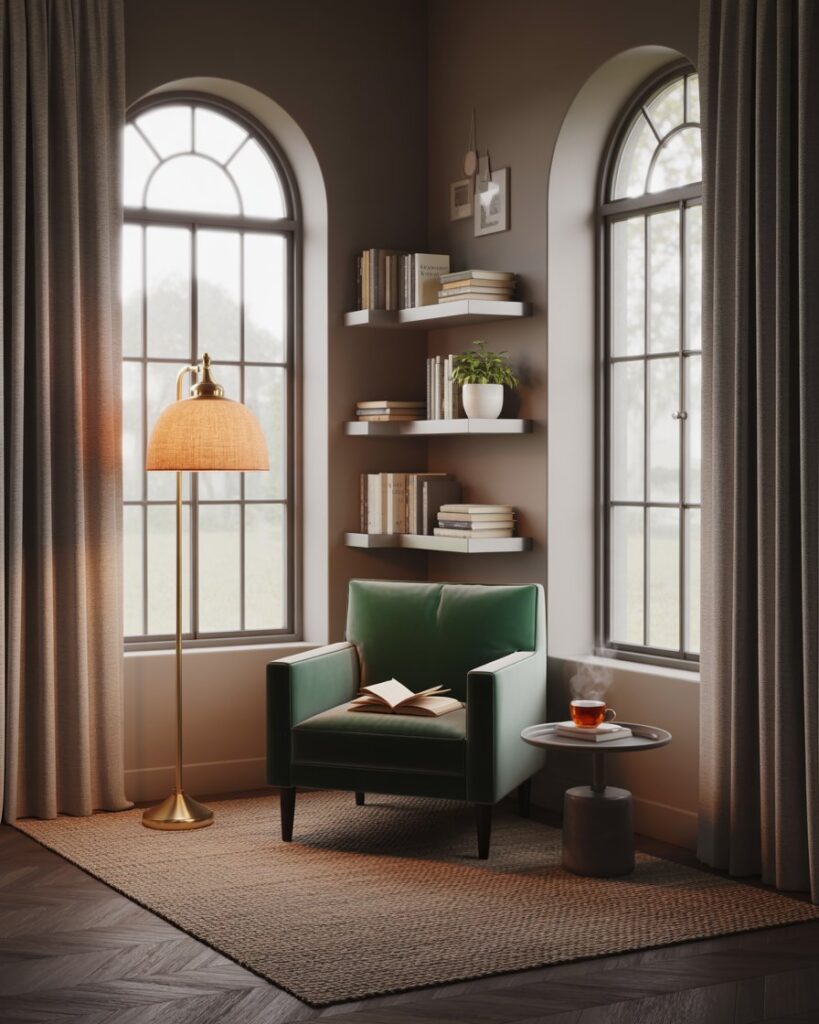
Look for areas in your home that currently feel “dead” — a blank wall next to a doorway, the space beside a fireplace that holds nothing but a dusty fake fern, an underused entryway, or the corner of a bedroom that gets overlooked. These forgotten zones are your greatest design opportunity. They already have structure; they just need a story.
📚
The Reading Nook
A chair, layered lighting, and a small side table create an intimate retreat.
🪴
The Plant Corner
Mix plant sizes, pots in complementary tones, and a statement sculptural piece.
🖼️
The Gallery Wall
Curated art, mirrors, and objects mounted as a cohesive visual composition.
🕯️
The Entryway Vignette
A console table styled with art, objects, and layered lighting sets the tone.
Consider natural light when selecting your corner. A spot that catches morning sun will feel entirely different at noon or dusk, and the best curated corners take advantage of that shifting quality. A west-facing alcove that glows golden in the late afternoon, for instance, is the perfect home for warm-toned objects in amber glass, aged brass, or burnished wood.
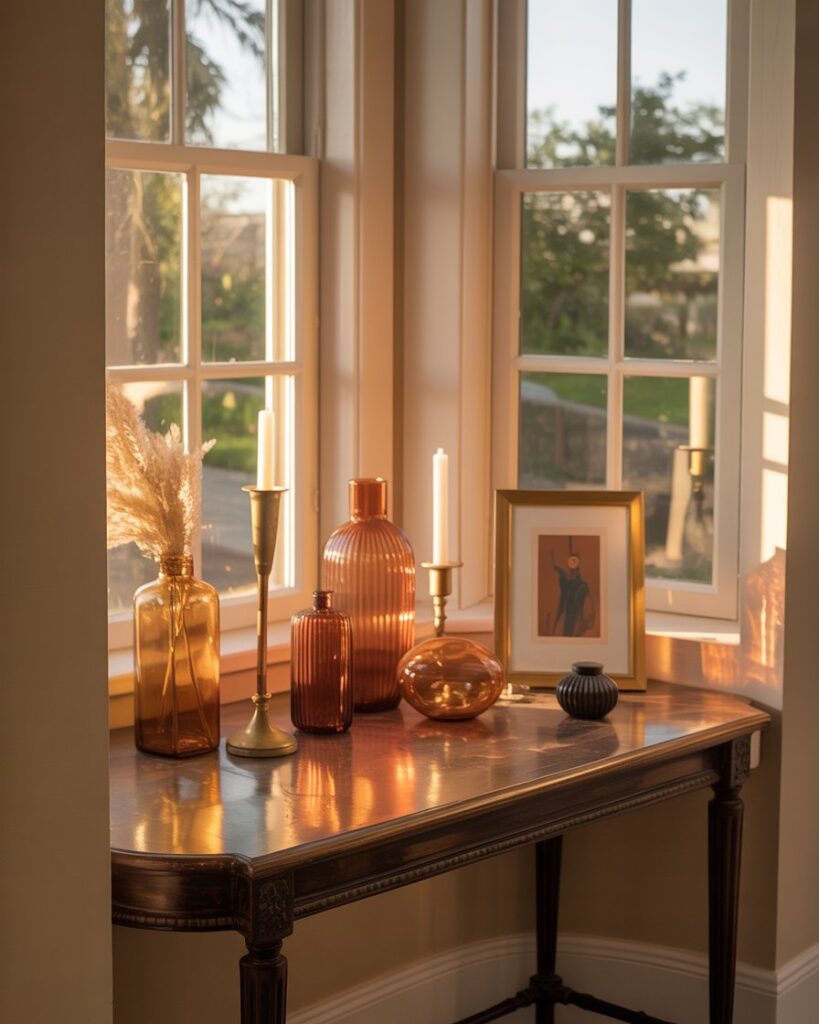
Traffic flow matters too. A curated corner near a frequently used path — the hallway to the kitchen, the landing at the top of the stairs — gets noticed daily and becomes part of your living experience in a way that a corner in a rarely-used formal dining room simply doesn’t. Start with a space you pass through and glance at regularly.
Pro Tip
Use the “squint test” — step back from a potential corner, squint your eyes until the space blurs, and notice where your gaze lands naturally. That focal point is your anchor. Everything in your curation should radiate outward from it in terms of visual weight and scale.
The Core Design Principles of Curated Corners
Great curated corners don’t happen by accident — they follow a handful of timeless design principles that interior designers use instinctively. Once you understand these principles, you can apply them to any corner in any style of home, from a mid-century modern apartment in Chicago to a coastal farmhouse in the Carolinas.
The Rule of Three (and Its Variations)
Design has long embraced the rule of odd numbers, and for good reason: groupings of three, five, or seven objects are inherently more visually dynamic than even-numbered groupings. When you place objects in odd-numbered groups, the eye moves between them rather than settling into a static symmetry. This creates the sense of life and energy that makes a corner feel styled rather than staged.
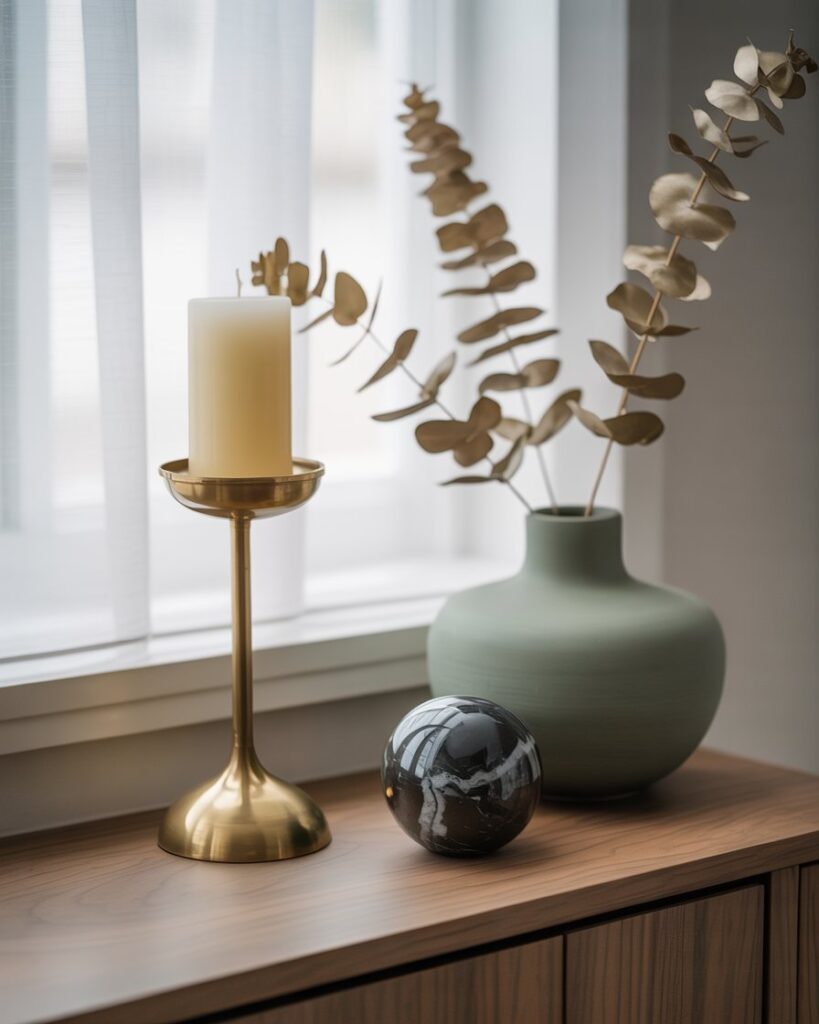
Within a group of three, aim for variation in height, texture, and scale. A tall candlestick, a medium-sized ceramic vessel, and a small sculptural object create a visual “mountain range” — a rhythm that the eye finds satisfying and interesting. This same principle applies whether you’re arranging objects on a console table, a floating shelf, or a windowsill.
- Vary heights: tall, medium, and low objects create visual rhythm and movement
- Mix materials: pair matte with glossy, rough with smooth, organic with geometric
- Anchor with scale: one statement piece grounds the composition around it
- Use negative space: what you leave empty is as important as what you place
- Layer depth: place objects at different depths from front to back, not in a single row
Color and Tonal Cohesion
Color is the fastest way to create either harmony or chaos in a curated corner. The most sophisticated corners typically work within a tight color story — two to three hues at most, often drawn from a single material family. Think warm neutrals punctuated by a single earthy tone, or a cool-toned corner in slate, navy, and aged silver.
You don’t have to be rigid. The key is tonal cohesion — ensuring that even if your objects vary in color, they share a similar light level (all dusty and muted, or all saturated and bold). A corner where a bright orange ceramic sits next to a dusty mauve vase next to a neon-green plant feels chaotic because the light levels conflict. Choose objects that feel like they belong to the same mood.
| Corner Style | Key Color Palette | Best Materials | Ideal Room |
|---|---|---|---|
| Warm Organic | Terracotta, sand, warm white | Rattan, linen, raw clay, olive wood | Living room, bedroom |
| Moody Dramatic | Deep navy, charcoal, forest green | Dark timber, velvet, matte black metal | Study, reading room |
| Coastal Light | Pale blue, warm gray, driftwood | Bleached wood, sea glass, woven jute | Sunroom, entryway |
| Eclectic Bold | Jewel tones with warm brass | Brass, velvet, lacquered objects | Living room, dining room |
| Soft Minimalist | Cream, pale taupe, warm white | Marble, alabaster, brushed linen | Bedroom, bathroom |
Choosing Objects That Reflect Your Unique Personality
Here’s where interior design stops being about rules and starts being about you. The objects that populate a truly curated corner are never randomly purchased — they’re collected, inherited, discovered, or deliberately sought out. They carry meaning. This is what separates a curated corner from a styled corner: personal resonance versus aesthetic formula.
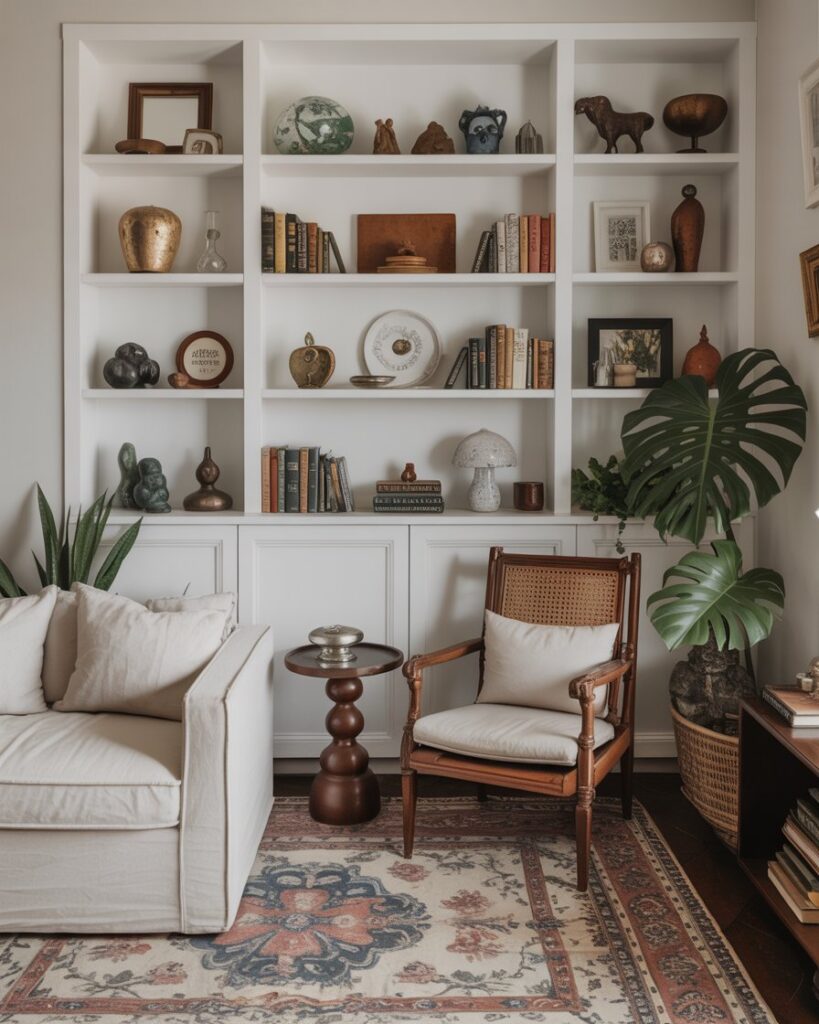
Think about the categories of objects that naturally accumulate in a meaningful life: travel souvenirs that tell a geographic story, books that reveal intellectual passions, handmade ceramics from local artisans, vintage pieces with patina and history, family heirlooms that connect you to your roots, and artworks that stop you in your tracks. These are the raw materials of authentic curation, and no interior designer can source them for you.
“The best curated corners look like they took years to assemble — because the best ones actually did. Resist the urge to buy everything at once.”
Start with what you already own. Walk through your home and collect objects that you genuinely love but that are currently scattered, hidden, or underused. Bring them together on a table and study the connections. You’ll often discover a latent color story, a shared material family, or an unexpected thematic thread that you never noticed when the objects were separated.
Once you’ve inventoried your existing treasures, identify the gaps. Perhaps you need a plant to bring organic life to an otherwise static grouping. Maybe you’re missing a vertical element — a tall vase or a narrow sculptural object. Shop for those specific gaps rather than browsing broadly, which almost always leads to purchases that dilute rather than strengthen the composition.
- Start with a personal anchor object — something meaningful that drives the whole story
- Build the color palette from that anchor piece’s dominant and secondary tones
- Add a textural counterpoint — something soft if your anchor is hard, rough if it’s smooth
- Introduce a plant or organic element to soften the composition and add life
- Layer in lighting — even one small lamp or candle completely changes the atmosphere
- Step back, edit ruthlessly, and remove anything that doesn’t earn its place
Pro Tip
Shop your local estate sales, antique markets, and thrift stores before buying anything new. The patina, scale variation, and authentic character of vintage and secondhand objects is almost impossible to replicate with new purchases — and the prices are dramatically lower. Apps like Chairish and 1stDibs are excellent for curated vintage finds online.
Lighting: The Secret Ingredient That Elevates Every Corner
No curated corner is complete without thoughtful lighting. Lighting is the difference between a corner that looks good in photographs and one that feels genuinely alive in person — warm, atmospheric, and inviting at every hour of the day. Yet lighting is the most consistently overlooked element in residential interior design, even among people who otherwise invest heavily in furnishings and decor.
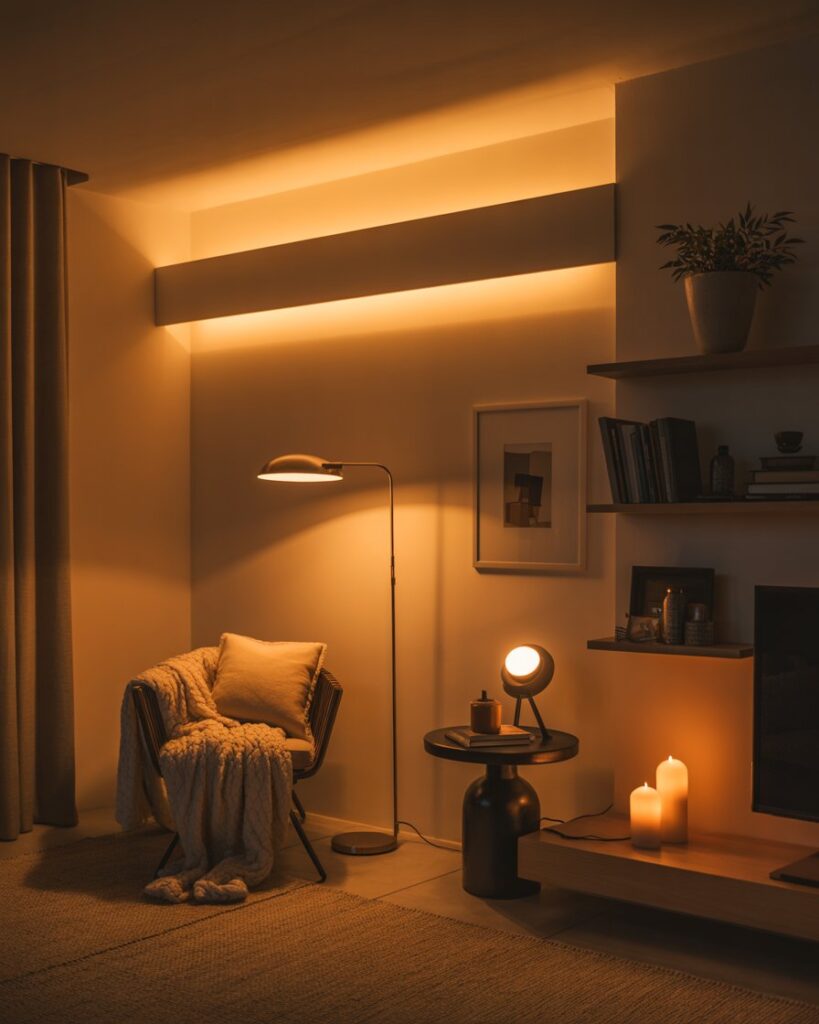
The golden rule of curated corner lighting is to layer from three sources: ambient (the room’s general overhead light), task (a small table or floor lamp within or adjacent to the corner), and accent (candles, battery-powered LED filament bulbs, or a small spotlight directed at a key object). When all three layers are present, even a modest corner achieves a depth and richness that overhead lighting alone can never provide.
For warm, flattering light that makes organic materials like wood, ceramics, and textiles look their best, choose bulbs in the 2700K–3000K color temperature range. These “warm white” bulbs replicate the quality of candlelight and late-afternoon sun — the two most universally flattering light sources in existence. Avoid cool white (4000K+) bulbs in residential spaces; they flatten color and make organic materials look clinical.
Don’t underestimate the power of candles in a curated corner. Even unlit candles provide visual warmth through their waxy texture and vertical form. When lit, they introduce movement, scent, and a quality of light that no electric bulb can fully replicate. Group pillar candles in varying heights, or cluster a collection of votive holders in complementary materials — clear glass, hammered brass, and matte concrete make an excellent trio.
“Lighting isn’t an accessory to a curated corner — it’s the foundation. Get the light wrong and even the most beautifully chosen objects will fall flat. Get it right and even simple objects will look like works of art.”— Kelly Wearstler, Interior Designer
Room-by-Room Guide to Curated Corners
The principles of curation apply across every room in your home, but each space presents unique opportunities and constraints. What works beautifully in a living room vignette may feel out of scale in a bathroom, and the personal objects appropriate for a bedroom corner are different from those that make sense in a home office. Here’s how to adapt the curated corner philosophy to each space.
| Room | Best Corner Types | Key Objects | Common Mistakes to Avoid |
|---|---|---|---|
| Living Room | Console vignette, bookshelf, fireplace mantel | Art, books, sculptural objects, plants, candles | Overcrowding, mixing too many styles |
| Bedroom | Nightstand styling, vanity corner, window alcove | Personal photos, small plants, soft textiles, meaningful objects | Too much visual stimulation, harsh lighting |
| Entryway | Console table, wall-mounted shelf, coat rack vignette | Mirror, art, functional + decorative mix, seasonal florals | Clutter buildup, no vertical element |
| Home Office | Desktop vignette, bookcase curation, wall art cluster | Books, stationery, art, small plant, meaningful object | Purely functional objects with no beauty |
| Bathroom | Vanity tray, windowsill display, floating shelf | Candles, small botanicals, quality glass or ceramic vessels | Humidity-sensitive objects, over-accessorizing |
Pro Tip
For bathroom and kitchen curated corners, always consider humidity and practicality. Stick to moisture-tolerant materials like sealed ceramic, glass, stone, and metal. Keep organic matter (dried botanicals, books, paper goods) away from steam-producing appliances and sinks. A beautiful corner that deteriorates within a year is not a good investment.
Refreshing Your Curated Corners Seasonally
One of the most satisfying aspects of curated corners is how easily they can be refreshed to reflect seasonal shifts, personal growth, or simply the desire for something new. Unlike major renovations or furniture purchases, updating a corner costs very little and can be done in an afternoon. This built-in flexibility is one of the most underappreciated benefits of the curated corner approach to home styling.
Develop a seasonal rotation system using a few key swappable elements. The bones of your corner — a quality side table, a quality lamp, a meaningful art piece — stay constant through the year. Around them, you rotate soft objects like textiles, botanicals, candles in seasonal scents, and small decorative accents that reflect the current season’s colors and textures. In fall, warm ochres, dried grasses, and beeswax candles. In winter, evergreen sprigs, aged brass, and deep jewel-toned velvet. In spring, fresh greenery, pastel ceramics, and linen. In summer, woven textures, bleached woods, and citrusy glass.
✦ Key Takeaway
A curated corner is never truly “finished.” Think of it as a living collection that evolves with you — gaining objects that hold new meaning, releasing objects that no longer resonate, and being rearranged as your eye develops and your tastes deepen. The process of curation is itself a creative practice that grows richer over time.
Building Beautiful Curated Corners on Any Budget
The curated corner is fundamentally a democratic design concept. You don’t need a design budget, a vintage dealer’s Rolodex, or access to trade showrooms. Some of the most stunning curated corners are built almost entirely from thrift store finds, objects sourced from nature, and things that already lived in a drawer, on a forgotten shelf, or in a box in the garage. Budget is almost never the limiting factor; perspective and intention are.
The most common budget mistake is spending money on the wrong things — buying multiple inexpensive decorative objects instead of saving for one quality anchor piece that will define the whole composition. A single excellent object — a genuine piece of handmade pottery, a small original artwork, a quality brass candlestick — will do more for a curated corner than a dozen cheap accent pieces from a big-box retailer. Invest in one great thing and let everything else support it.
- Start with what you own — edit and rearrange before buying anything new
- Visit thrift stores, estate sales, and flea markets for character-rich vintage objects
- Forage from nature: branches, stones, dried grasses, and pinecones cost nothing
- Invest in one quality anchor piece rather than many inexpensive accents
- Use Facebook Marketplace and Craigslist for local furniture and decor deals
- Check end-of-season sales at Anthropologie Home, CB2, and Pottery Barn for quality pieces at reduced prices
Your Corner, Your Story
A curated corner is one of the most personal and powerful things you can add to your home. It’s not about following trends or replicating the aspirational images you see in design magazines. It’s about creating a small, deliberately composed space where the objects that matter most to you are given the attention and context they deserve.
Start small. Pick one corner — just one — and commit to it fully. Gather objects that speak to you, apply the principles of scale, texture, color, and light, and then step back and edit with a ruthless eye. Repeat this process over weeks and months rather than trying to finish everything in a single shopping trip. The best curated corners reveal themselves slowly, accumulating meaning and depth with time.
In a world of mass production and algorithmic trend cycles, a genuinely curated corner is a quiet act of resistance and self-expression. It says: this is who I am, these are the things I love, and this is how I choose to live. That kind of design authenticity is always in style — and it can never be bought off a showroom floor.
“Don’t decorate to impress guests. Decorate to express yourself. A home that tells your story is worth more than one that follows any trend.”— Celeste Monroe, Interior Designer.