
Real rooms, real transformations — discover the design strategies, budget-smart choices, and styling secrets behind the most stunning home makeovers across America.
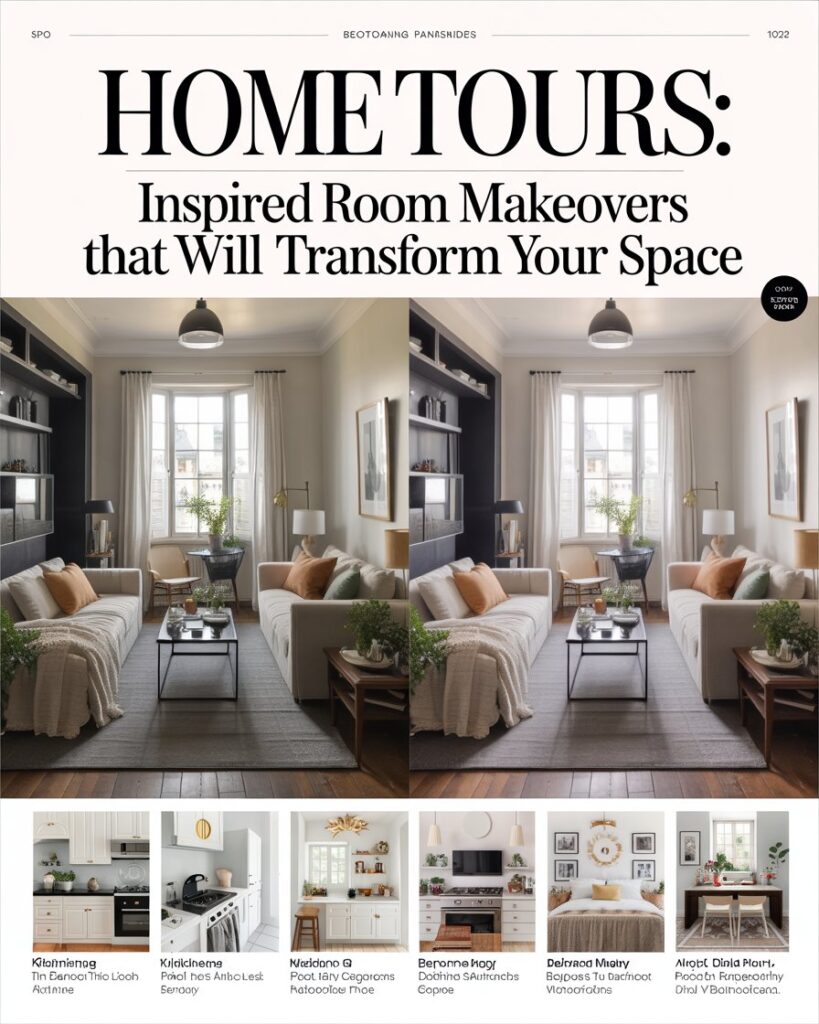
There’s a moment every homeowner knows well — you stand in a room you’ve lived with for years and suddenly see it clearly: the tired paint color, the furniture that never quite fit, the wasted corner that’s been collecting clutter since you moved in. That moment, though frustrating, is also the beginning of something exciting. It’s the spark of a room makeover.
Home tours have become one of the most powerful sources of interior design inspiration in America. Whether you’re scrolling through a beautifully styled living room on a design blog, watching a renovation reveal on YouTube, or touring a neighbor’s freshly updated kitchen, seeing real spaces transformed by thoughtful design decisions is endlessly motivating. But inspiration without a plan is just a mood board. That’s where this guide comes in.
As an interior designer who has helped hundreds of homeowners across the country reimagine their spaces, I’ve seen firsthand how the right approach to a room makeover can change not just how your home looks — but how it feels to live in it. In this article, we’re going on a room-by-room tour of inspired makeovers, unpacking the design thinking, budget strategies, and styling choices behind each transformation.
Whether you’re planning a complete room renovation or a simple refresh, these home tour highlights will give you the ideas, the terminology, and the confidence to tackle your own space with intention.
Why Home Tours Are the Best Design Education
Long before Pinterest boards and Instagram reels, Americans toured model homes and open houses not just to shop for real estate — but to gather ideas. Today, the home tour has evolved into a full design genre of its own. From the famous “House Beautiful” annual home tours to neighborhood design walks in cities like Austin, Denver, and Charleston, these tours give everyday homeowners a rare look inside spaces where interior design choices have been made with care.
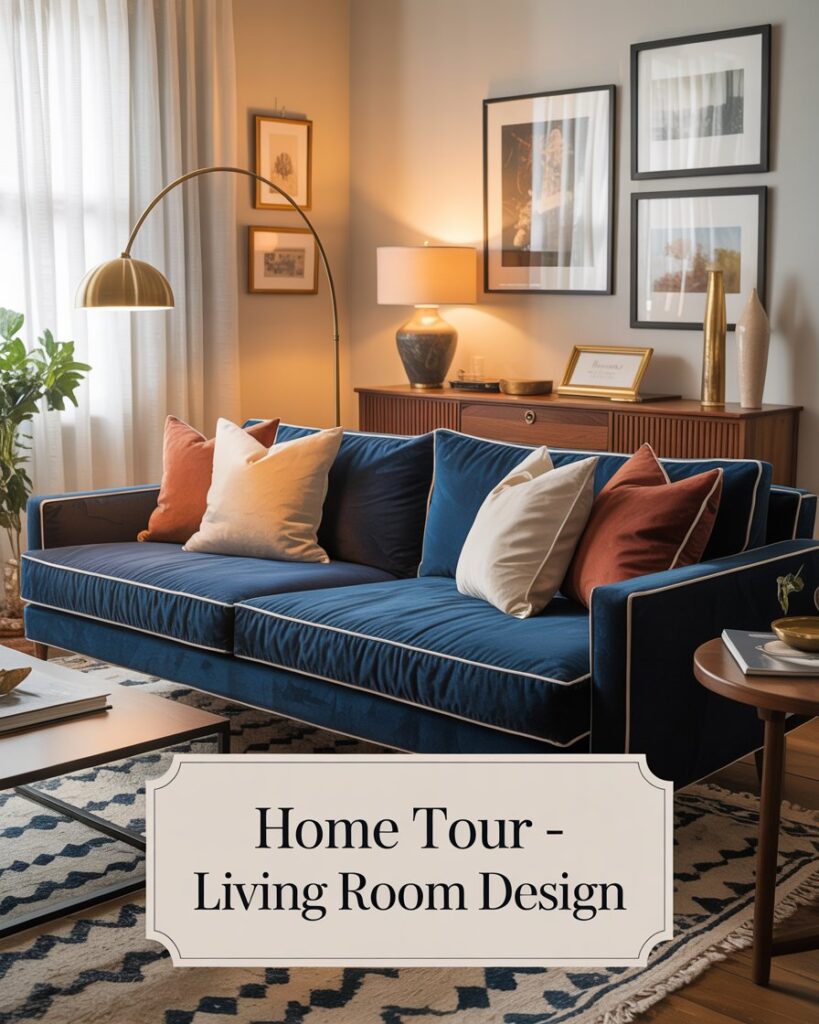
What makes a home tour so powerful as a learning tool is context. You’re not looking at a sofa in a showroom under fluorescent lights — you’re seeing it anchored by a rug, warmed by a lamp, and balanced against a wall color that makes the whole room sing. That holistic, room-in-its-entirety view is how professional designers think, and it’s a habit worth cultivating as a homeowner.
The best room makeovers tell a story of problem-solving: a dark, cramped living room opened up with mirrors and light-reflective surfaces; an awkward dining nook made functional and beautiful with built-in banquette seating; a builder-grade bedroom elevated with layered textiles and statement lighting. Every design challenge has a solution, and home tours are where you find them in real life.
Beyond inspiration, home tours teach you the language of interior design — terms like negative space, visual weight, traffic flow, and layered lighting that help you articulate what you want and communicate it clearly, whether you’re working with a designer or going the DIY route. Understanding these concepts is the foundation of every successful room makeover.
“A room should never allow the eye to settle in one place. It should smile at you and create fantasy.”— Juan Montoya, Interior Designer
The Living Room Makeover: From Dated to Design-Forward
Of all the rooms in an American home, the living room tends to be the one that suffers most from “good enough” syndrome. Furniture accumulated over years, paint colors chosen a decade ago, and lighting that was never really thought through. Yet it’s also the room with the highest makeover payoff — because it’s where life happens.
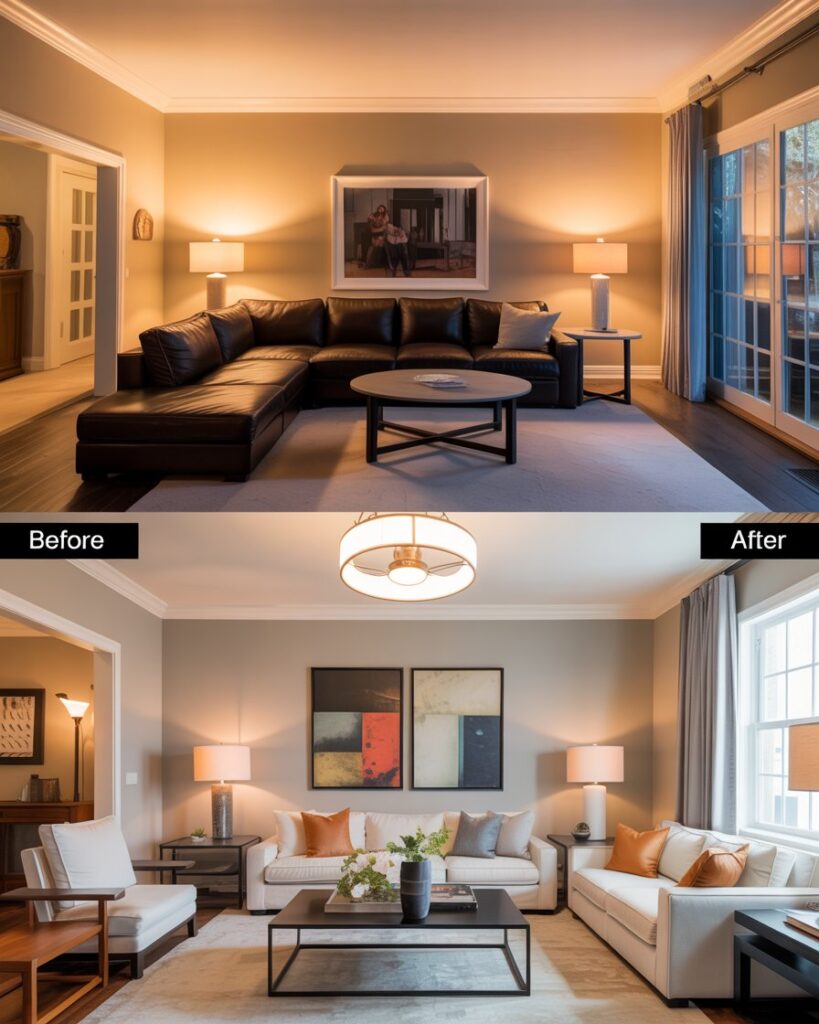
One of the most impactful living room transformations I’ve guided involved a suburban home in the Nashville area. The space had 9-foot ceilings, decent natural light, and good bones — but it was weighed down by dark brown furniture, a beige wall color that had yellowed with age, and overhead can lights that created harsh, unflattering illumination.
Before
- Dark brown sectional, wrong scale
- Yellowed beige walls
- Single overhead can lighting
- No focal point or art
- Mismatched accent tables
After
- Warm white sofa + linen chairs
- Agreeable gray + white trim
- Layered floor, table, pendant lights
- Gallery wall as focal anchor
- Matching side tables + coffee table
The transformation centered on three principles: lighten, layer, and anchor. We swapped the heavy sectional for a cream-upholstered sofa paired with two linen accent chairs — an arrangement that felt both inviting and spacious. Sherwin-Williams’ Agreeable Gray replaced the dated beige, creating a warm-neutral backdrop that worked beautifully with natural wood tones and soft textiles.
Lighting, often the most neglected element in a living room makeover, was addressed with a three-layer approach: a new statement pendant over the seating area, two floor lamps at opposite corners for ambient warmth, and accent table lamps to add intimacy. The room went from flat and functional to warm and magazine-worthy — and the homeowners couldn’t believe it was the same space.
Pro Tip
Before you buy a single piece of furniture, define your room’s focal point. It might be a fireplace, a picture window, or a feature wall — but every great living room has one anchor that the furniture arrangement responds to. Design starts there, not at the sofa store.
The Primary Bedroom Refresh: Creating Your Personal Sanctuary
The bedroom is the most personal room in any home, yet it’s often the last to get attention. After the kitchen is updated and the living room is styled, the bedroom tends to languish with mismatched furniture, uninspiring bedding, and no real design intention. But a bedroom makeover doesn’t need to be expensive to be transformative.
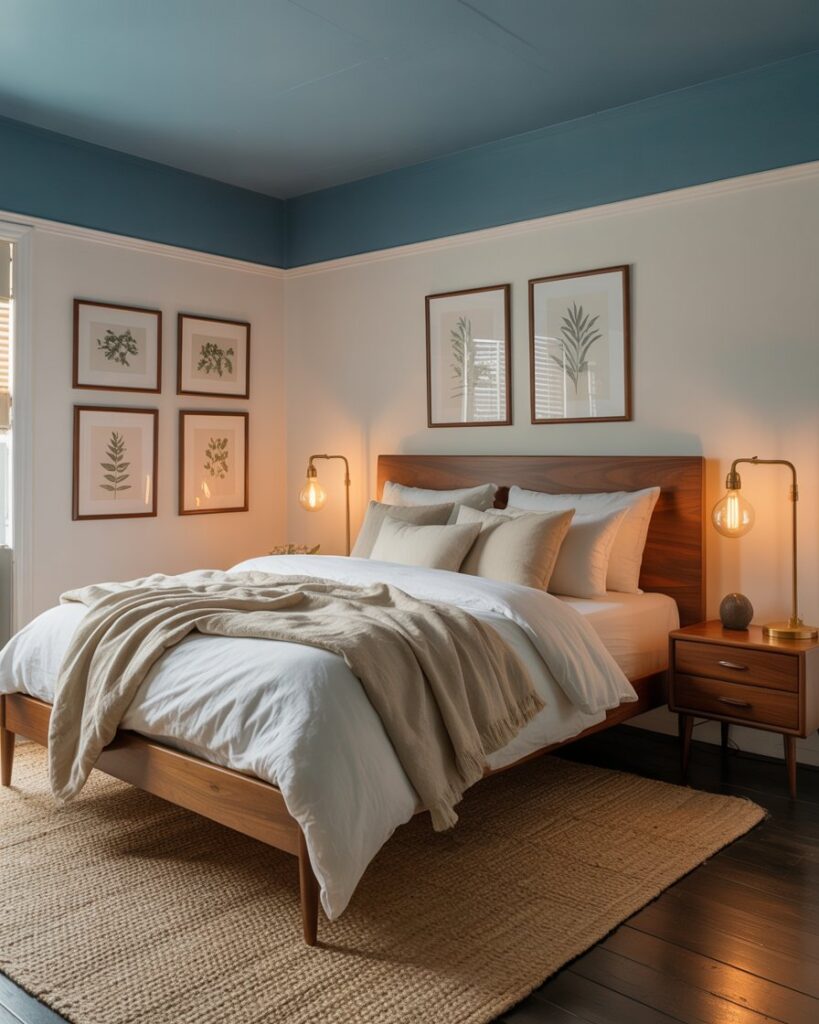
The principles of good bedroom design — calm color palette, layered textiles, intentional lighting, and a sense of enclosure and coziness — are achievable at almost any budget. The key is understanding that the bedroom is about sensory experience as much as aesthetics. How does the room feel in the morning light? How does it smell? How does the bedding feel against your skin? Great bedroom design engages all of these dimensions.
For a mid-century modern bedroom makeover I completed last year in a Denver bungalow, the transformation hinged on a single brave decision: painting the ceiling a deep, dusty blue — Benjamin Moore’s Van Deusen Blue — while keeping the walls crisp white. That unexpected inversion created an immediate sense of intimacy and enclosure, making the room feel like a cozy retreat rather than a pass-through.
We paired the painted ceiling with warm walnut furniture, linen bedding in ivory and sand tones, and a woven jute area rug that grounded the space without competing with the ceiling drama. Vintage brass task lamps flanked the bed, and a simple gallery of framed botanical prints completed the look. Total project investment: under $4,000 — including new furniture.
Bedroom Makeover Budget Breakdown
| Category | Budget Option | Mid-Range | Splurge |
|---|---|---|---|
| Bedding & Pillows | $150–$300 | $400–$800 | $1,000+ |
| Area Rug | $100–$250 | $350–$700 | $800+ |
| Lighting (pair) | $80–$200 | $250–$500 | $600+ |
| Paint & Supplies | $60–$120 | $120–$200 | $200+ |
| Wall Art & Decor | $75–$200 | $250–$600 | $700+ |
Kitchen Refresh Without a Full Renovation
A full kitchen renovation is one of the most expensive home improvement projects an American homeowner can undertake — easily ranging from $25,000 to $80,000 or more. But a kitchen refresh? That’s an entirely different story. With strategic choices, a dated kitchen can look dramatically updated for a fraction of the cost of gut renovation.
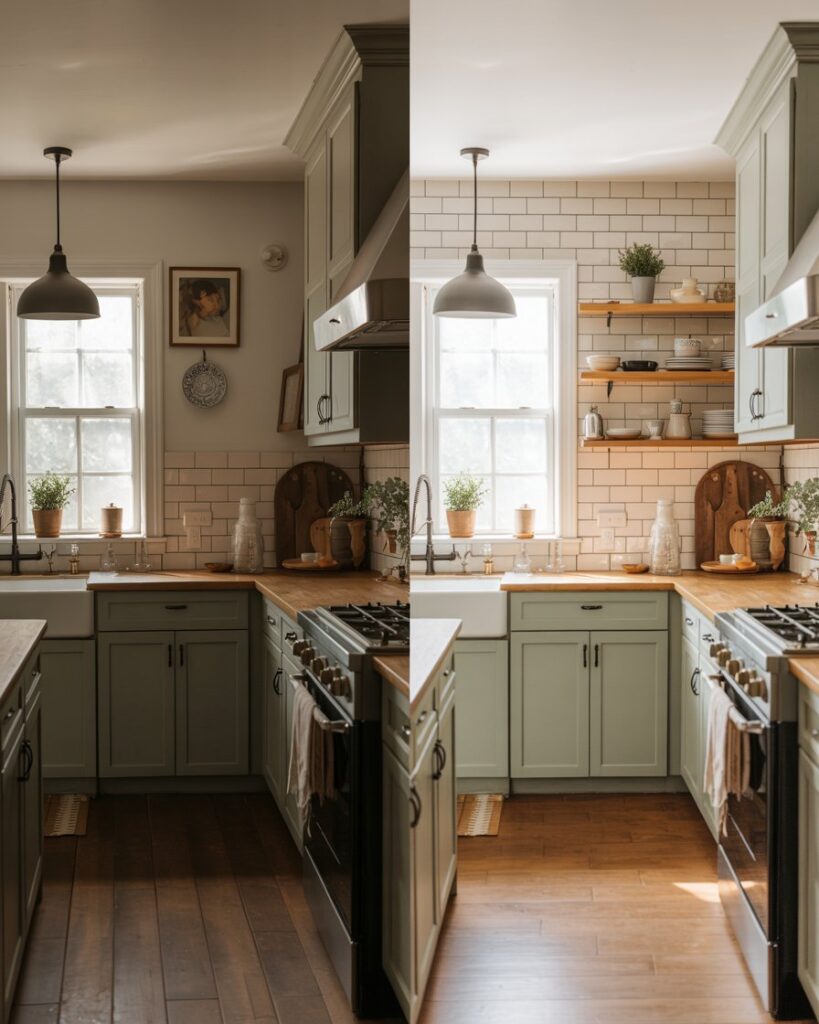
The most impactful no-renovation kitchen updates I recommend to clients are cabinet painting, hardware replacement, new pendant lighting, and a tile backsplash. Done together, these four changes can make a kitchen look like it was just renovated — without touching the layout, plumbing, or appliances.
- Cabinet repainting: A professional spray paint job in a trending color like Sage Green, Navy, or Warm White transforms the dominant visual element of any kitchen. Cost: $1,500–$3,500 depending on kitchen size.
- Hardware replacement: Swapping dated brass or chrome pulls for matte black, brushed nickel, or unlacquered brass hardware instantly modernizes cabinetry. Budget $200–$600 for a full kitchen.
- Statement pendant lighting: New pendants over an island or sink area change the entire character of a kitchen. Budget $300–$800 for a quality pair.
- Peel-and-stick backsplash tiles: A renter-friendly option that looks surprisingly good. Budget $150–$400 for materials.
- Open shelving addition: Removing one or two upper cabinet doors and styling the shelves with styled dishware and plants adds a designer-kitchen feel.
Pro Tip
When repainting kitchen cabinets, always use a high-quality cabinet-specific paint formula — not standard wall paint. Products like Benjamin Moore Advance or Sherwin-Williams Emerald Urethane are formulated for the wear, moisture, and daily use that kitchen cabinets endure. Cutting corners here is the single biggest mistake DIY kitchen painters make.
Small Space Makeovers: Big Ideas for Compact Rooms
Not every home tour features sprawling great rooms and double-height ceilings. Some of the most inspiring room makeovers happen in small apartments, compact bungalows, and tight urban spaces where clever design thinking matters more than square footage. Small space interior design is a discipline in itself — one built on the principles of multi-functionality, visual lightness, and strategic storage.
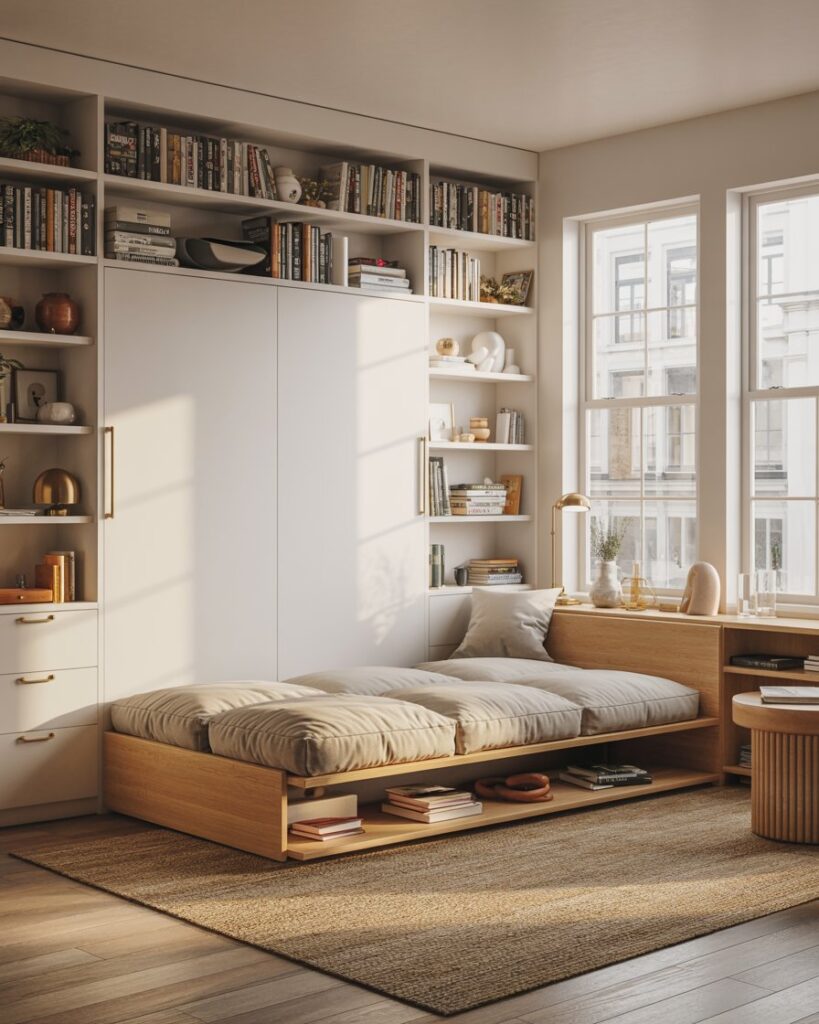
The greatest small space transformations I’ve toured share a common trait: they refuse to apologize for their size. Instead of trying to disguise the room’s dimensions, the best small space makeovers lean into them — using cozy scale furniture, layered textiles that add warmth without bulk, and design moments that feel intentional rather than improvised. A small room done well feels like a jewel box, not a closet.
In a 280-square-foot studio apartment in Chicago, a young homeowner worked with me to transform a single room into a fully functional living/sleeping/working space. The solution was built around three pivotal choices: a Murphy bed with integrated bookshelves that freed the floor during the day; a compact sofa with built-in storage; and a defined “rug zone” that visually separated the living area from the sleeping area even without walls.
The visual language was kept consistent throughout — warm white walls, natural oak furniture, linen textiles, and brass hardware — so that the small space read as one cohesive, considered home rather than a series of awkward compromises. The result was a space that felt not just livable but genuinely beautiful, and proof that square footage has nothing to do with design quality.
🪞
Mirrors
Reflect light and visually double the perceived depth of any room
📦
Vertical Storage
Use wall height for shelving — draw the eye upward to make ceilings feel taller
💡
Layered Lighting
Multiple light sources eliminate shadows that make small spaces feel smaller
🪑
Leggy Furniture
Furniture on visible legs shows floor — making the room feel more open
The Outdoor-Indoor Connection: Bringing the Outside In
One of the defining trends emerging from home tours across the American South, West Coast, and Mountain West is the blurring of boundaries between indoor and outdoor living spaces. Whether it’s through biophilic design elements like living walls and potted plants, or through architectural choices like large sliding glass doors and covered patios, today’s most inspiring home makeovers treat the transition between inside and outside as a design opportunity rather than an afterthought.
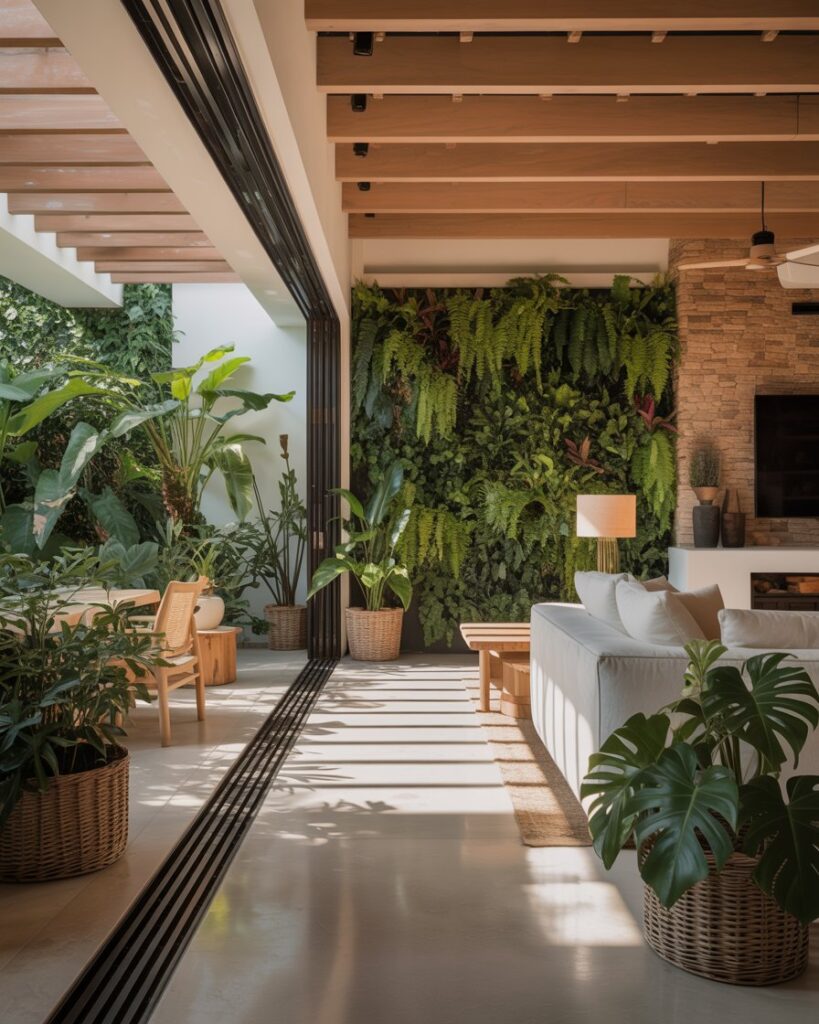
Biophilic design — incorporating natural elements like wood, stone, plants, and natural light into interior spaces — has moved from a design trend into a mainstream practice supported by a growing body of research showing its positive effects on stress reduction, cognitive function, and overall wellbeing. For homeowners looking to refresh a room without structural changes, adding plants is consistently one of the highest-return investments you can make.
“The home should be the treasure chest of living.”— Le Corbusier, Architect
Room Makeover Planning: A Checklist Before You Begin
Every successful room makeover I’ve been part of started with a planning phase — and every frustrating, over-budget, never-quite-finished project skipped it. Before you order a single piece of furniture or buy a can of paint, work through this foundational checklist to set your project up for success.
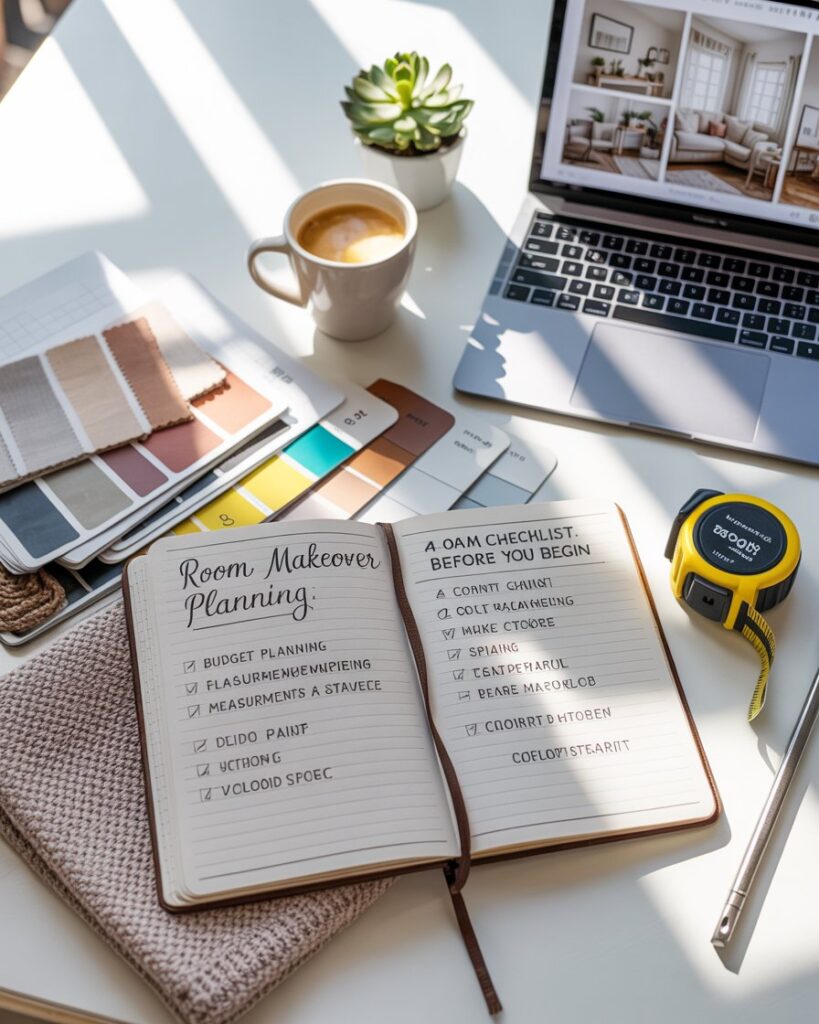
- Define the room’s primary function — and secondary functions. A living room that also needs to serve as a home office has different design requirements than a purely social space.
- Measure everything. Wall lengths, ceiling height, window and door placement, existing built-ins. Good design is built on accurate dimensions.
- Establish your budget — and add 20% contingency. Makeovers almost always surface unexpected costs.
- Identify your style direction before you shop. Traditional, transitional, modern farmhouse, coastal, mid-century modern — knowing your aesthetic prevents impulse purchases that don’t belong together.
- Choose your color palette first. Paint is the backdrop for everything else. Select your wall color, trim color, and accent colors before you buy furniture.
- Shop for the “big three” before accessories: sofa/bed, area rug, and lighting. These anchor pieces determine everything else.
- Layer in accessories last. Pillows, throws, art, and plants are the finishing touches — not the starting point.
Pro Tip
Use painter’s tape to map furniture on your floor before ordering anything. This low-tech trick reveals traffic flow issues, awkward proportions, and layout problems that no amount of imagining will catch. Spend 20 minutes on this step and save yourself the misery of returning a sofa that doesn’t fit.
Where to Find Your Best Room Makeover Inspiration
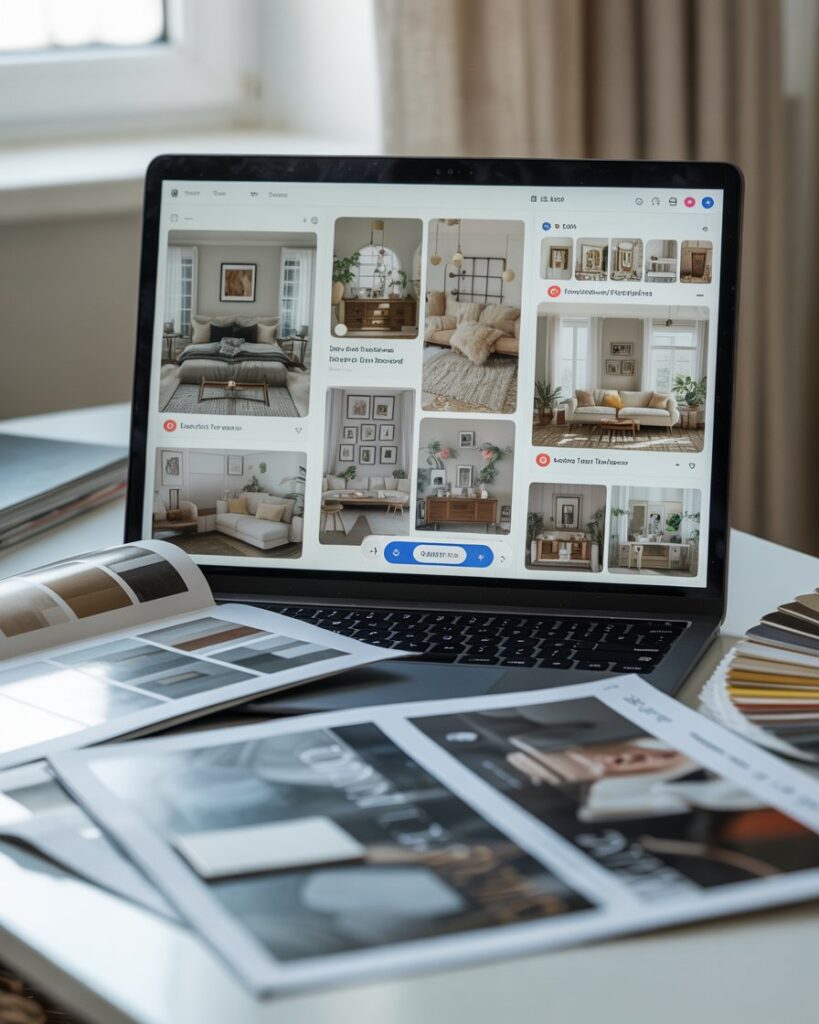
The internet has made room makeover inspiration more accessible than ever — but it’s also made it overwhelming. The key is curating your sources carefully so you’re building a cohesive vision rather than a chaotic collection of disconnected aesthetics. Here’s where to look, and how to look productively.
| Source | Best For | Watch Out For |
|---|---|---|
| Architectural Digest | High-end inspiration, designer interviews, trend forecasting | Budgets are often unrealistic for most homeowners |
| House Beautiful | Accessible home tours, DIY-friendly content, color guidance | Sponsored content — products may be premium-priced |
| Visual mood boarding, style exploration, project idea collection | Images often lack context — verify sources before trusting info | |
| Houzz | Real homeowner project galleries, contractor reviews, product sourcing | Review quality varies; older listings may not reflect current availability |
| Local Design Tours | Real spaces, real budgets, local designers and contractors | Seasonal and location-specific — plan ahead |
Final Thoughts: Your Room, Your Story
At the heart of every inspiring room makeover is a story — a homeowner who decided they deserved more from their space, made thoughtful choices, and created something that reflects who they are and how they want to live. The rooms that stop you cold on a home tour, the ones that make you say “I want that feeling in my home,” are almost never the most expensive rooms. They’re the most intentional ones.
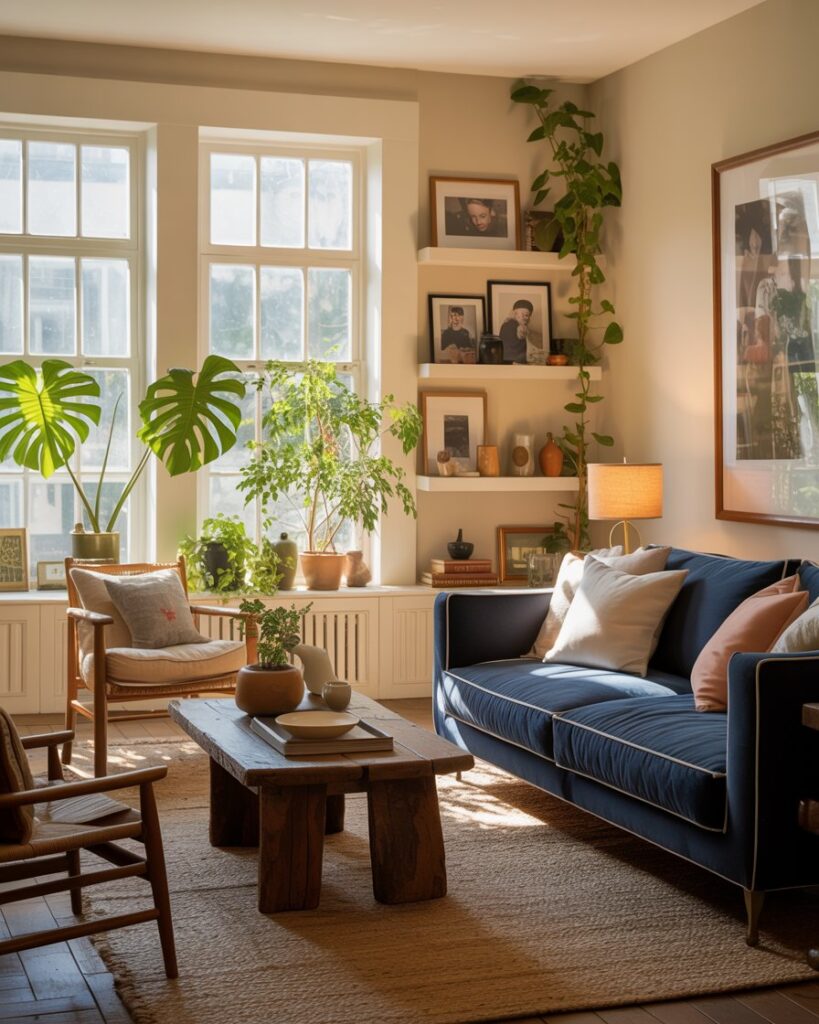
The best interior design advice I can give you is this: start with how you want to feel in the room, then work backwards to the furniture, the colors, the lighting, and the accessories that create that feeling. Design is emotional before it is visual. A room that makes you feel calm, inspired, or deeply at home has done its job — regardless of what it cost or how it measures up to anyone else’s home tour.
Your home is yours to claim. Take the inspiration from these home tours, adapt it to your life, your family, your neighborhood, and your budget — and go make something beautiful. The best room makeover is the one that makes coming home feel like the best part of your day.
Ready to start your own transformation? Use the checklist above, define your focal point, choose your palette, and take it one decision at a time. Great rooms aren’t built in a day — but they absolutely can start today.
Related Keywordsroom makeover ideas interior design inspiration home renovation tips small space design biophilic design budget home refresh living room transformation bedroom makeover kitchen refresh ideas layered lighting furniture arrangement color palette selection.