
How to design spaces that reflect who you truly are — not just what’s trending.
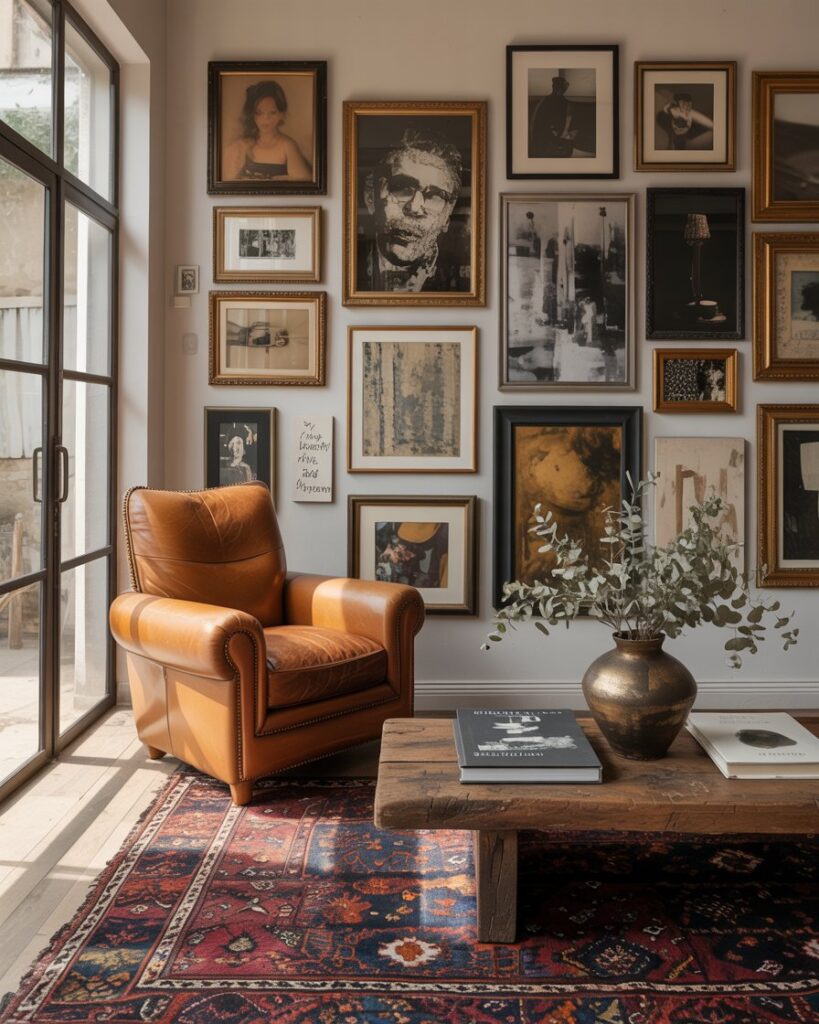
Your home is the most honest portrait of you that exists. Not your LinkedIn profile, not your Instagram feed — your home. The worn leather chair you dragged from three apartments ago, the gallery wall that took two years to curate, the vintage rug your grandmother left you. These are not just objects. They are chapters. And yet, so many American homes I walk into feel like they were styled for someone who doesn’t quite exist — safe, catalog-pretty, and strangely impersonal.
That changes today. As a home interior designer who has helped hundreds of families across the US turn blank-slate rentals and new builds into deeply personal sanctuaries, I’m here to guide you through the art of the statement piece — the one (or few) anchor objects in a room that do the heavy lifting of meaning, personality, and visual narrative. Whether you’re starting from scratch or rethinking a space you’ve lived in for years, this guide will help you find, choose, and place pieces that genuinely tell your story.
What Is a Statement Piece, Really?
In interior design, a statement piece is any object — furniture, art, lighting, textile, or decorative accent — that commands immediate attention and anchors the visual identity of a room. It’s the first thing your eye lands on when you walk through the door. But a true statement piece does something more than just look bold: it communicates something about the people who live there.
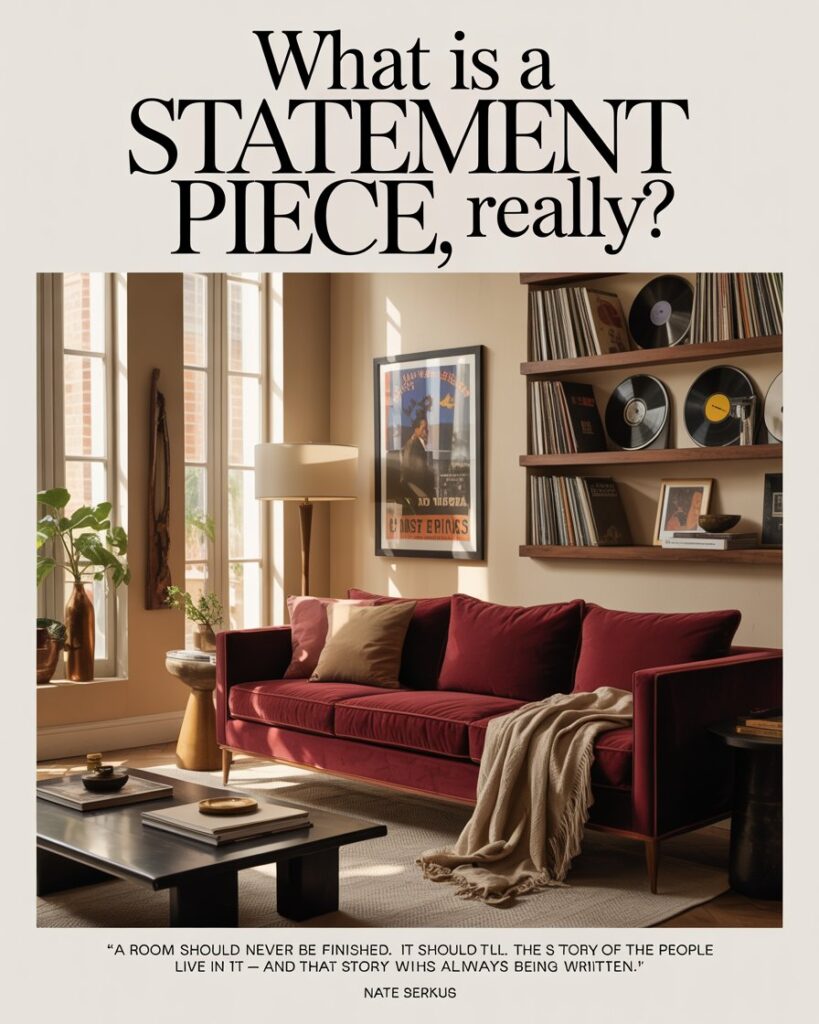
Think of it this way: a bright red velvet sofa is visually loud, but it becomes a statement piece when it’s paired with a framed concert poster from the band that played at your wedding, a stack of vintage jazz vinyl on the shelf beside it, and a throw blanket knitted by your aunt. That is storytelling through design. The sofa anchors it, but the context gives it soul.
Statement pieces are not reserved for the wealthy or the design-savvy. They are available at every price point, in every style, and from every era. The key is intentionality — choosing objects that carry personal meaning and placing them with confidence in a space designed to support them.
“A room should never be finished. It should tell the story of the people who live in it — and that story is always being written.”— Nate Berkus, Interior Designer & Author
The 5 Categories of Statement Pieces (And How to Choose Yours)
Not all statement pieces are created equal. Depending on your space, your style, and what aspects of your identity you want to foreground, different categories of objects will serve you differently. Below is a breakdown of the five major statement piece categories, with guidance on which type suits which storytelling goal.
| Category | Best For | Examples | Price Range |
|---|---|---|---|
| Furniture Anchor | Setting the style foundation of an entire room | Heirloom armchair, custom sofa, vintage credenza | $300 – $5,000+ |
| Wall Art / Gallery | Expressing creativity, travel, or personal history | Large-scale painting, photography, tapestry | $50 – $10,000+ |
| Lighting Fixture | Defining architectural mood and sophistication | Sculptural chandelier, arc floor lamp, neon sign | $150 – $3,000+ |
| Textile / Rug | Adding warmth, culture, or pattern storytelling | Moroccan rug, quilted throw, embroidered curtains | $80 – $2,500+ |
| Decorative Object | Telling micro-stories on shelves and surfaces | Ceramic collection, travel souvenirs, vintage globes | $10 – $1,000+ |
Pro Tip
You don’t need to break the bank. Some of the most powerful statement pieces I’ve ever seen cost under $100 — a thrifted oil painting with a compelling face, a macramé wall hanging made by a local artist, a bold secondhand lamp. Shop Etsy, Chairish, and your local estate sales before going to big-box stores. Unique beats expensive every single time.
How to Identify Your Personal Design Narrative
Before you shop a single thing, I always ask my clients the same three questions: What are the five words you want a guest to feel when they walk into your home? What’s the most meaningful object you already own? And what story about yourself do most people not know, but you wish they did? The answers reveal everything.
Personal design narrative is the invisible thread running through every object in your home. It’s what separates a “decorated” home from a designed one. Your narrative might be: “adventure-seeker with a love of Japanese minimalism and 1970s soul music.” Or it could be: “family-centered Southern roots with a modern maximalist twist.” Neither is wrong. Both are rich, specific, and full of possibilities.
Here’s a simple exercise I give clients at the start of every project:
- Gather 10–15 images that make you feel most “at home” — from Pinterest, magazines, or memories.
- Look for the repeating elements: colors, textures, eras, moods.
- Write three adjectives that describe the feeling, not the style (e.g., “cozy,” “adventurous,” “elevated”).
- Identify one object you already own that embodies all three adjectives. That is your first statement piece.
- Build outward from there, letting every new addition support rather than compete with that anchor.
Room-by-Room Placement: Where Your Story Unfolds
Every room in your home has a different storytelling role. The living room is your opening chapter — your most public space and the one that makes the first impression. The bedroom is your private epilogue, the space that reflects your innermost self. Knowing where each type of statement piece belongs is as important as the piece itself.
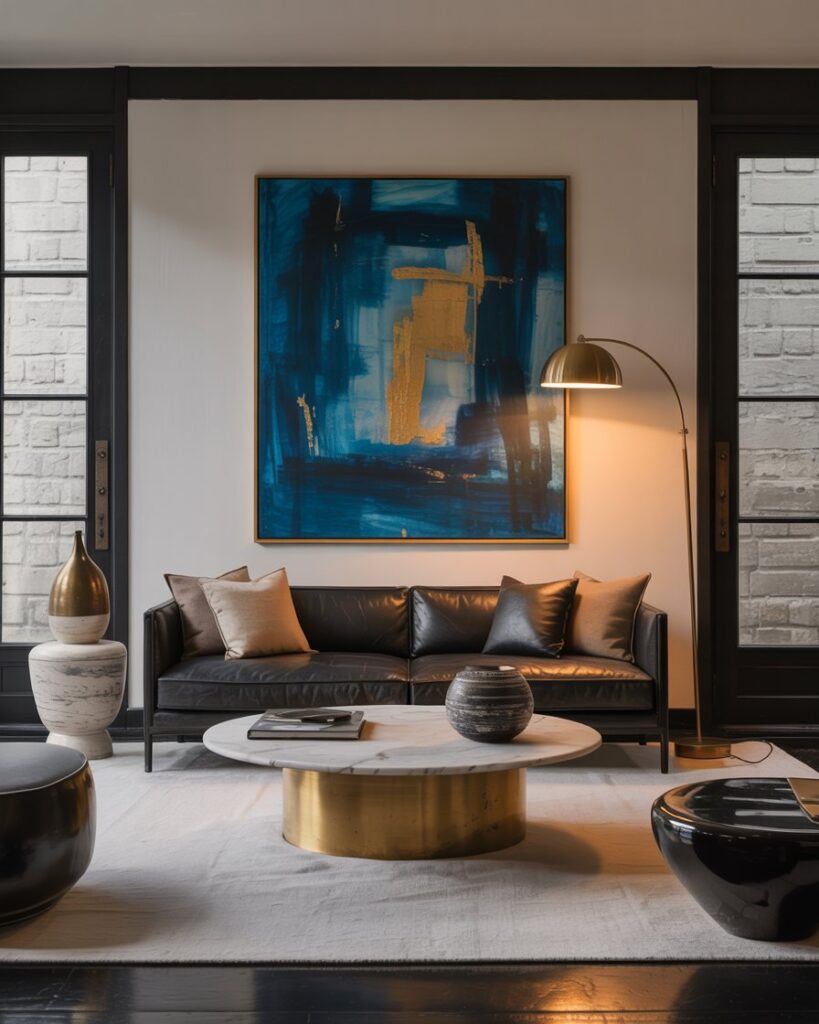
One of the most common mistakes I see in American homes is scattering statement pieces across a room without hierarchy — every corner competing for attention, and the result is visual noise rather than visual poetry. The golden rule: one major statement piece per room, supported by 2–3 complementary accent pieces that echo its story without repeating it.
🛋
Living Room
Sofa, art above fireplace, large-scale rug
🍽
Dining Room
Chandelier, statement table, gallery wall
🛏
Bedroom
Upholstered headboard, bedside art, textile wall hanging
🪴
Entryway
Sculptural mirror, bold console, oversize plant
Mixing Old and New: The Art of Collected Interiors
The most compelling homes I’ve ever designed share one trait: they look collected, not purchased. There’s a difference between a room that was assembled in a single weekend from one store and a room that accumulated its personality over years of intentional choices, travel, inheritance, and discovery. The former looks like a showroom. The latter looks like a life.
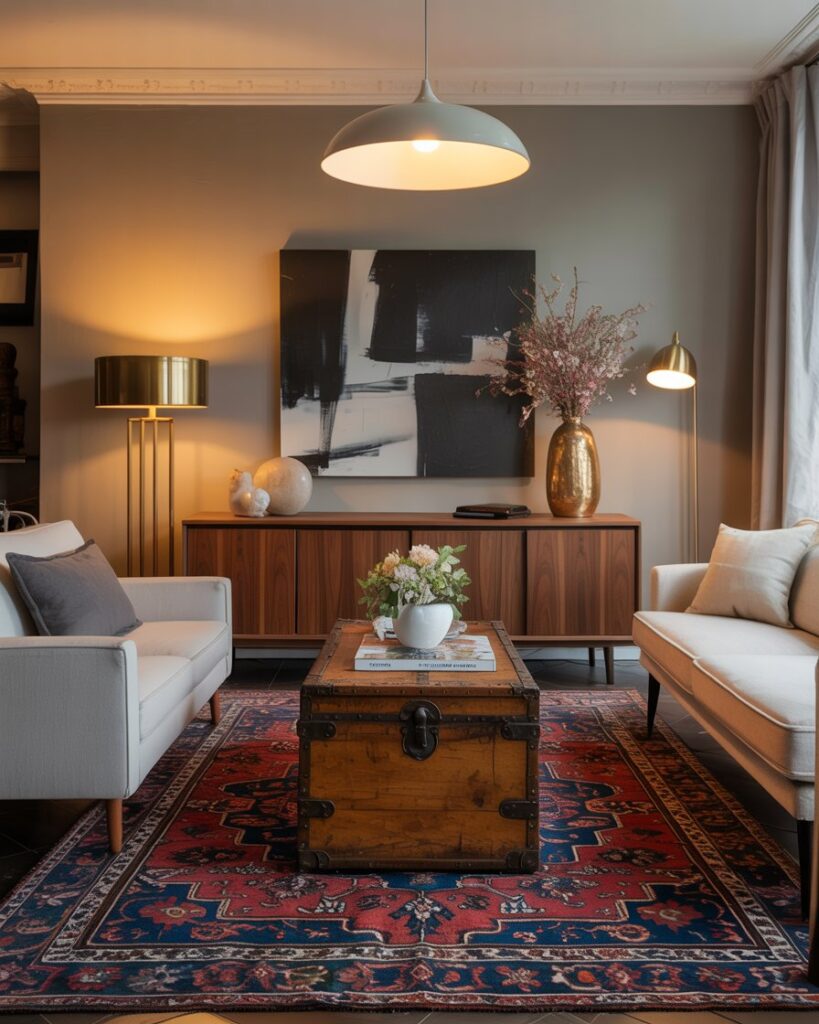
Mixing eras is the fastest way to achieve a “collected” aesthetic. Pair a mid-century modern credenza with a contemporary abstract painting above it. Place a Victorian-era wooden trunk as a coffee table in a room full of clean-lined modern furniture. Let an antique Persian rug anchor a space filled with IKEA basics elevated with thoughtful accessories. These contrasts create visual tension in the best possible way — they create curiosity, they invite guests to look closer, and they tell a richer story than any single-era room can.
“The secret to a beautiful room is layering — light, texture, color, and time. A room that looks like it was done all at once is a room that looks like it’s never been lived in.”— Kelly Wearstler, Designer
Common Statement Piece Mistakes (And How to Fix Them)
Even well-intentioned decorators fall into a few predictable traps. Here are the most common mistakes I see — and exactly how to correct them:
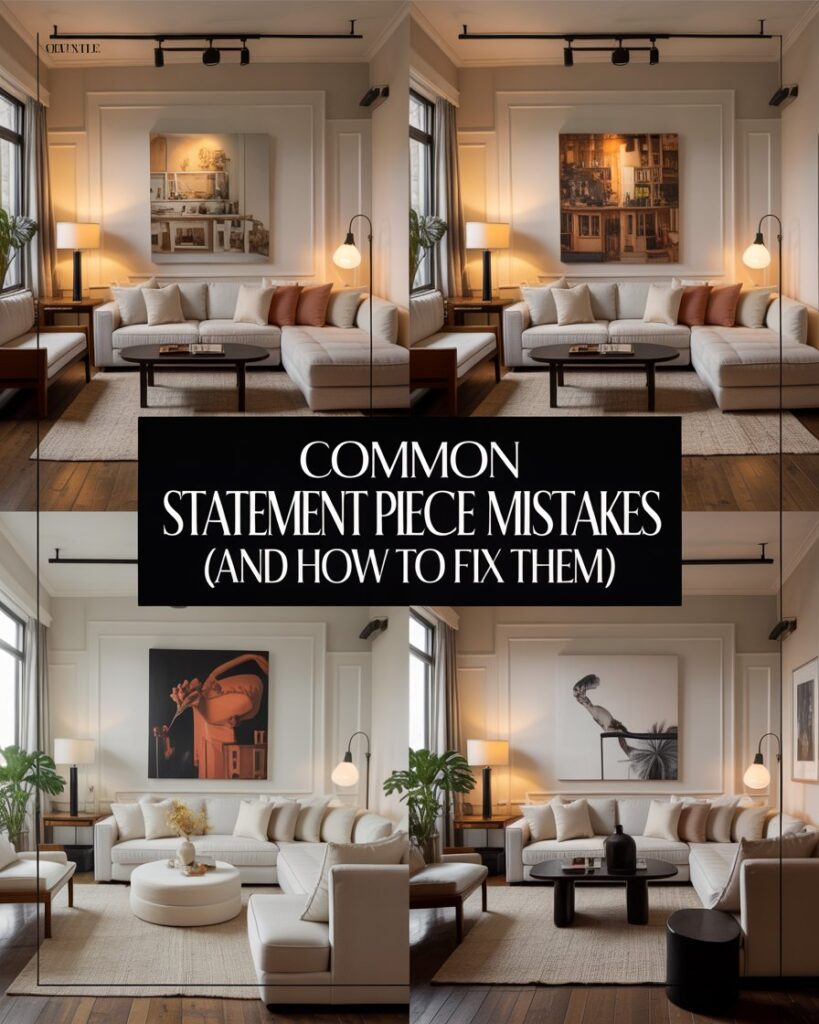
- Choosing scale over story: Bigger isn’t always better. A massive abstract canvas in a room with no other visual anchors looks confused, not confident. Match the scale of your statement piece to the story it needs to tell.
- Buying to match, not to contrast: Statement pieces should stand out, not blend in. If your sofa is beige and your walls are greige and your rug is ivory, nothing is saying anything.
- Neglecting negative space: A statement piece needs breathing room to breathe. Overcrowding it with competing objects muffles its voice. Curate aggressively around it.
- Ignoring lighting: Even the most extraordinary object looks flat without proper lighting. Add a picture light above art, an uplighter behind a sculptural lamp, or a spotlight on a key shelf. Lighting is the punctuation of a design sentence.
- Following trends over truth: Gallery walls of identical frames in the same finish, the obligatory fiddle-leaf fig, the ubiquitous shiplap — these are trends, not stories. Ask yourself: does this feel like me, or does it feel like Pinterest?
Pro Tip
Before purchasing any statement piece, take a photo of your room and use Houzz’s “View in My Room” AR tool, or simply cut a piece of kraft paper to the exact dimensions of the item and tape it to the wall or floor. Scale is the #1 factor people misjudge — visualizing before buying will save you costly returns.
Statement Pieces on a Budget: Thrift, Inherit, Create
You do not need a designer budget to fill your home with meaningful statement pieces. In fact, some of the most soul-rich interiors I’ve ever walked into belonged to people working with very modest means. The secret? Three sourcing strategies: thrift, inherit, and create.
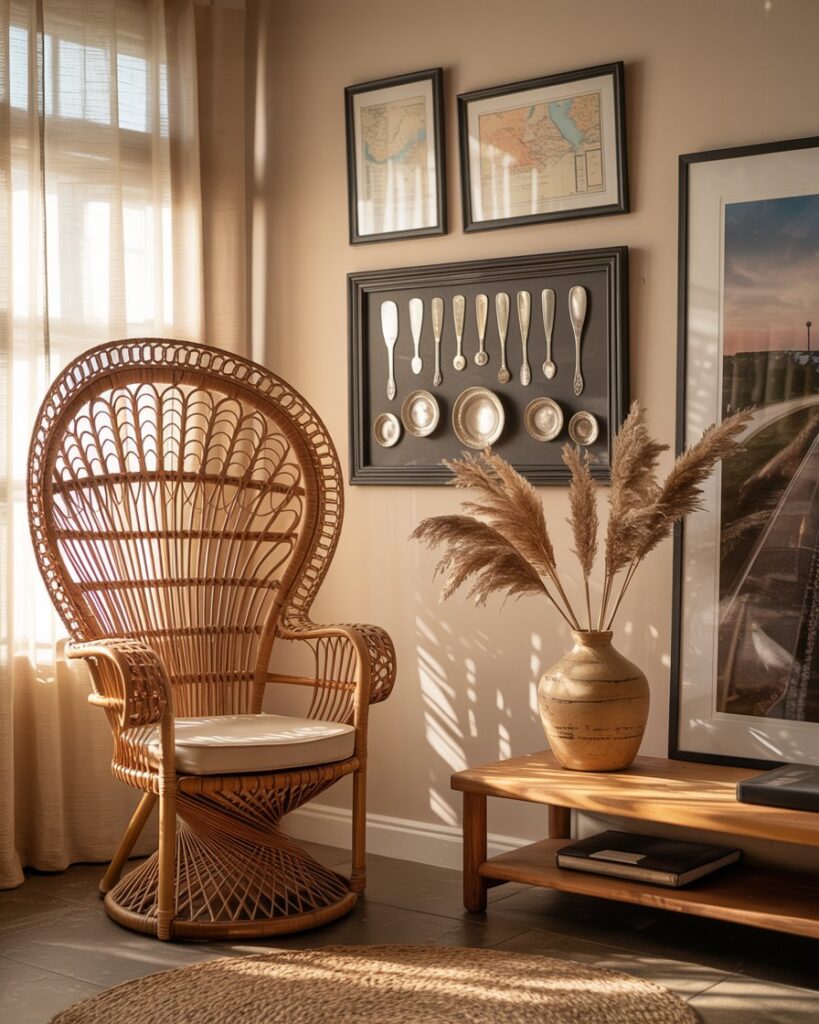
Thrift: Goodwill, Habitat for Humanity ReStores, local estate sales, Facebook Marketplace, and OfferUp are goldmines for one-of-a-kind objects at pennies on the dollar. I once found a 1960s rattan peacock chair at an estate sale for $35 that became the defining piece of an entire living room redesign. Search with intention — know what you’re looking for before you go, and be patient.
Inherit: The most meaningful statement pieces already exist in your family. Ask your parents, grandparents, or aunts and uncles if there are objects in storage that haven’t seen the light of day. A grandmother’s silverware collection displayed in a shadowbox becomes extraordinary wall art. An old map from a great-uncle’s study frames beautifully and carries decades of family history.
Create: Commission a local artist, take a ceramics class and make your own vases, or frame your own travel photography at a large scale. Handmade and custom pieces carry an authenticity that no retail item can replicate — and they generate the best conversations.
Your Space, Your Story — A Final Word
Design is not about perfection. It’s about honesty. The most beautifully designed homes are the ones that feel like the people who live in them — complex, layered, full of contradictions and loves and histories. A statement piece isn’t a trophy or a trend. It’s a comma in a long, ongoing sentence about who you are and who you are becoming.
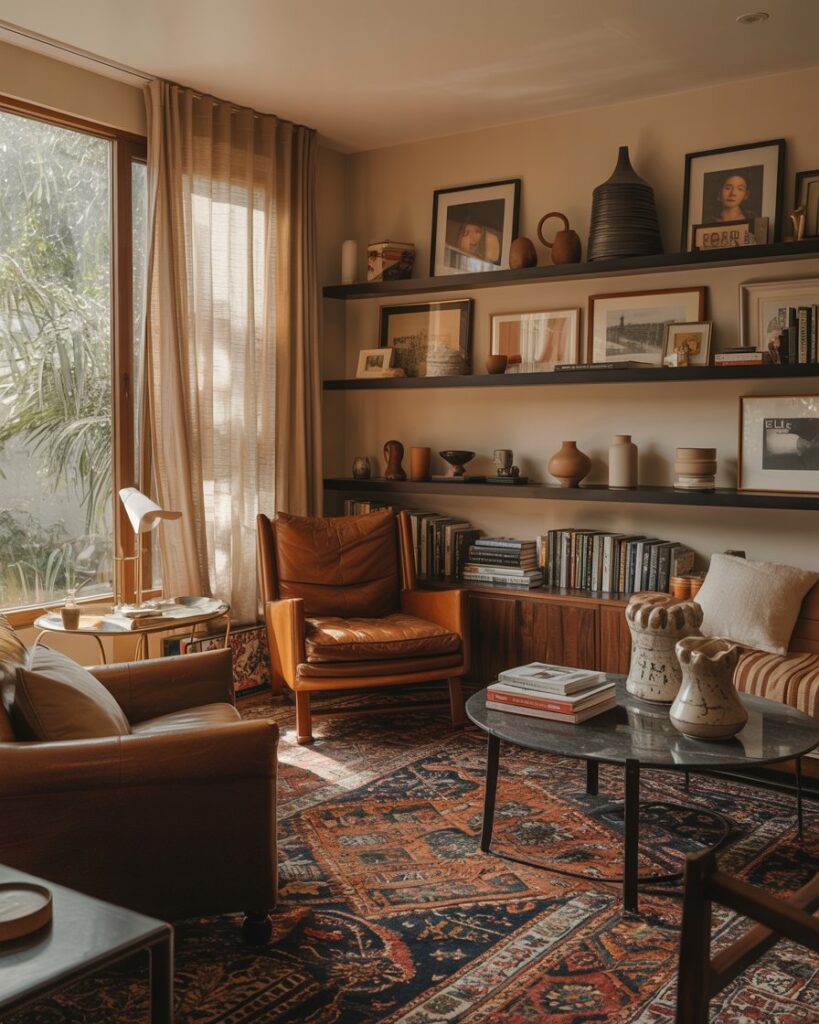
Start with one room. Choose one piece you already love and build outward from it. Trust your instincts over algorithms. Visit Apartment Therapy or Architectural Digest for ongoing inspiration, and remember: the best interior design advice I’ve ever received came from an old client who said, “Buy nothing you don’t love completely.” That’s the whole philosophy, right there.
Your home is the only space on Earth that is entirely, unconditionally yours. Make it speak.
Ready to find the statement pieces that tell your story? Ask your designer — or ask Claude — for personalized room recommendations based on your style.