
How to design a stunning, sustainable home using natural, recycled, and low-impact materials — without sacrificing style or breaking the budget.
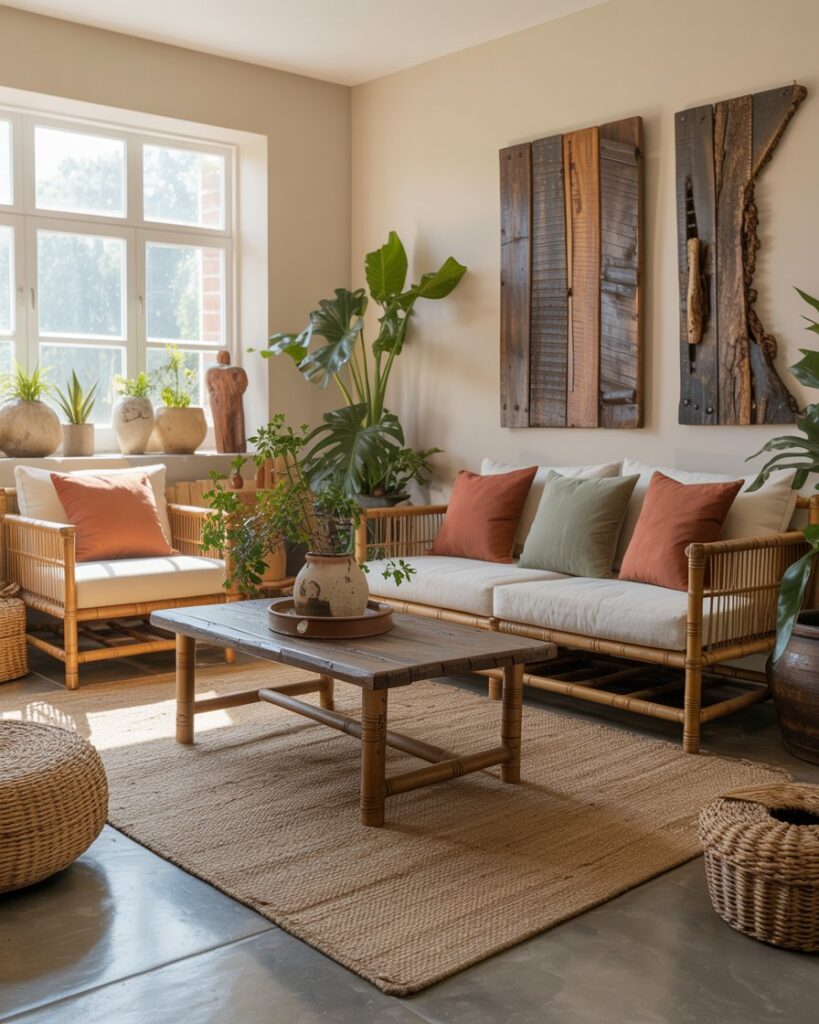
As a home decor specialist, I’ve spent years helping American homeowners transform their spaces — and in the last decade, one shift has been impossible to ignore. Clients aren’t just asking for beautiful rooms; they’re asking for rooms with a conscience. The good news? Eco-friendly home decor has never looked better, or been more accessible. From certified organic rugs to reclaimed wood wall art, sustainable interior design is having its well-deserved moment.
Whether you’re renovating a farmhouse in Vermont or refreshing a condo in Austin, this guide walks you through every major material category — rugs, textiles, furniture accents, and wall art — so you can make intentional choices that serve both your home and the planet.
Why Eco-Friendly Home Decor Is More Than a Trend
Let’s get one thing straight: sustainable home decor is not a passing Pinterest phase. According to a U.S. Environmental Protection Agency report, the average American household generates over 600 pounds of furniture and textile waste annually. The conventional decor industry is one of the largest contributors to off-gassing VOCs (volatile organic compounds), deforestation, and synthetic microplastic pollution in waterways.
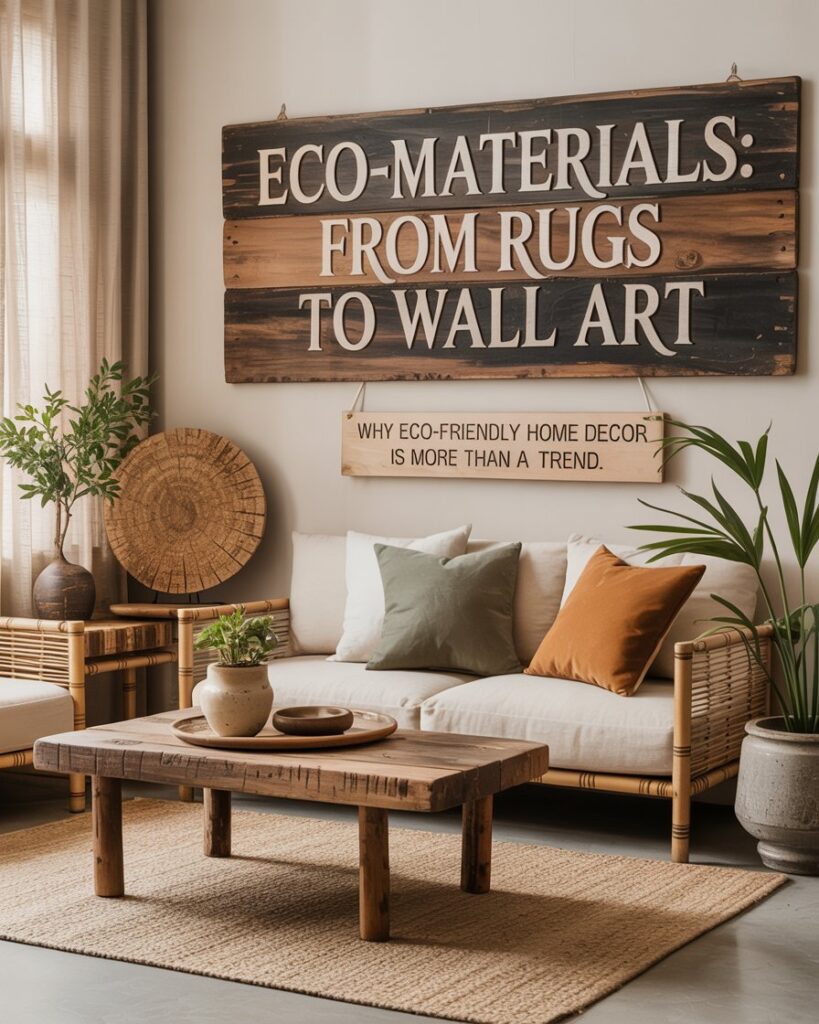
When you choose eco-friendly interior materials — such as natural fiber rugs, reclaimed wood art pieces, or low-VOC paints — you’re reducing indoor air pollution, supporting ethical supply chains, and investing in longer-lasting decor. These choices compound over time, both environmentally and financially.
“A well-designed room doesn’t have to cost the earth — literally. The most enduring interiors I’ve created have been built from honest, natural materials that age beautifully and leave a lighter footprint.”— Sarah Ellison, ASID-Certified Interior Designer
Sustainable Rugs: The Foundation of an Eco-Conscious Room
Every great room starts from the ground up, and choosing a sustainable area rug is one of the highest-impact decisions you can make. Conventional rugs are often made from nylon or polyester — petroleum-derived synthetics that shed microplastics with every footstep. Natural fiber rugs, on the other hand, are biodegradable, durable, and stunning.
Top Eco-Friendly Rug Materials to Know
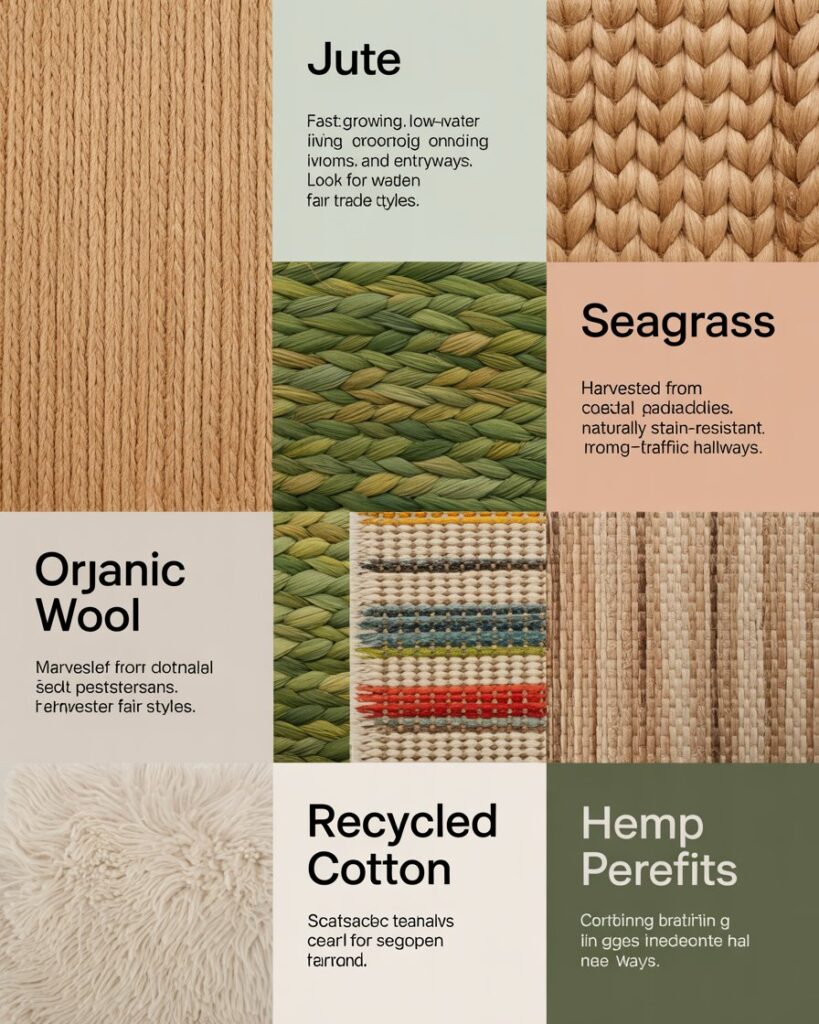
- Jute: Fast-growing, low-water crop. Jute rugs offer a warm, golden texture ideal for living rooms and entryways. Look for handwoven styles from Fair Trade–certified producers.
- Seagrass: Harvested from coastal paddies, seagrass is naturally stain-resistant and adds a rich, green-toned weave. Perfect for high-traffic areas like hallways.
- Organic wool: A renewable, long-lasting fiber. GOTS-certified organic wool rugs are free from synthetic dyes and pesticide residues — and they regulate indoor temperature naturally.
- Recycled cotton: Upcycled from textile waste, recycled cotton dhurrie rugs bring color and softness underfoot with minimal environmental cost.
- Hemp: One of the most sustainable crops on Earth. Hemp rugs are incredibly durable, naturally antimicrobial, and soften beautifully with use.
★
Pro Tip
Always check for certifications before buying. Look for OEKO-TEX Standard 100, GOTS (Global Organic Textile Standard), or GoodWeave labels. These ensure no harmful chemicals and ethical labor. Retailers like Etsy and IKEA’s sustainable line carry verified options at various price points.
| Rug Material | Eco Rating | Best Room Use | Avg. Lifespan | Price Range |
|---|---|---|---|---|
| Organic Wool | Excellent | Living Room, Bedroom | 20–30 years | $150–$800+ |
| Jute | Excellent | Living Room, Entryway | 5–10 years | $50–$300 |
| Seagrass | Excellent | Hallway, Dining Room | 10–15 years | $80–$400 |
| Hemp | Excellent | Any Room | 15–25 years | $100–$500 |
| Recycled Cotton | Good | Bedroom, Kids Room | 5–8 years | $40–$200 |
| Synthetic (Nylon/Poly) | Poor | Not Recommended | 3–7 years | $30–$300 |
Natural Textiles & Soft Furnishings: Conscious Comfort
Beyond the floor, your sustainable textiles — throw pillows, curtains, blankets, and upholstery — contribute enormously to your home’s overall environmental footprint. Conventional fabrics are often treated with formaldehyde-based wrinkle-resistance finishes and synthetic flame retardants that off-gas into your living space for years.
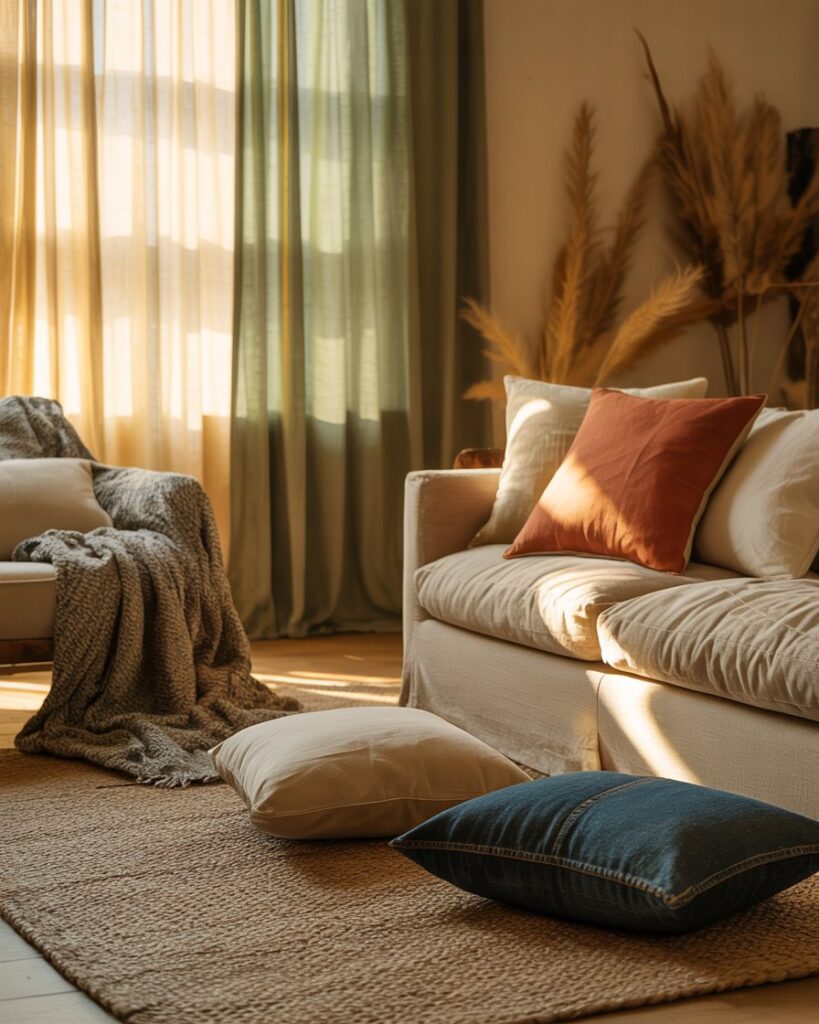
Swapping these out for natural and low-impact textile options not only improves indoor air quality but also brings a layered, organic texture to your interiors that no polyester can replicate. Think linen curtains that filter light into warm pools, organic cotton throw blankets in earthy tones, or a hand-block-printed cotton pillow from an artisan collective.
Best Eco-Friendly Fabric Choices for Home Textiles
- Linen (flax fiber): Low water and pesticide use. Gets better with every wash. Ideal for curtains, table linens, and loose covers.
- Organic cotton: GOTS-certified cotton is grown without synthetic fertilizers. Use for bedding, throws, and upholstery.
- Bamboo lyocell: Fast-growing crop processed in a closed-loop system. Silk-soft and moisture-wicking — great for bedding.
- Deadstock fabric: Overstock fabric from fashion manufacturers, repurposed into pillows, curtains, and accessories. Zero new resource extraction.
- Upcycled denim: Old jeans transformed into tufted cushion covers or patchwork throws — a uniquely American upcycled textile tradition.
★
Pro Tip
When shopping for curtains, opt for unlined linen or cotton panels over synthetic blackout curtains. They allow natural light to diffuse beautifully through the room and you can add a separate blackout liner made from recycled polyester if needed — making them more versatile and sustainable. Browse Rejuvenation or Serena & Lily for quality options.
Reclaimed & Recycled Materials: The Art of Repurposing
One of the most exciting frontiers in sustainable interior design is the use of reclaimed, salvaged, and upcycled materials. In America, architectural salvage yards are treasure troves — old barn wood becomes a feature wall, vintage factory windows become room dividers, and antique clay tiles get a second life as a bathroom backsplash.
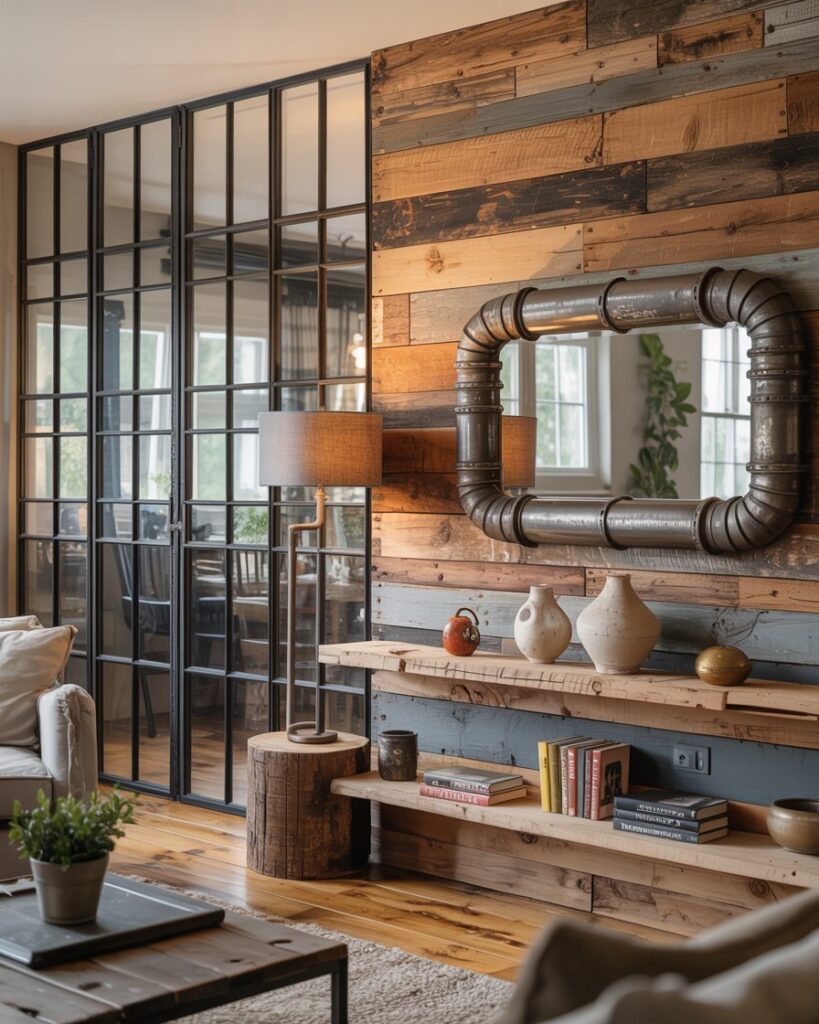
Reclaimed materials carry a story that no new product can replicate. A shelf made from 100-year-old pine flooring has character etched into every grain. A mirror framed in salvaged industrial pipe has visual weight that modern furniture rarely achieves. Incorporating these pieces into your space is not just eco-conscious — it’s deeply personal and culturally rich interior design.
“Reclaimed materials don’t just reduce waste — they give your home a sense of history and grounding that mass-produced decor simply cannot offer.”— Marcus Webb, Sustainable Architecture Advocate
Where to Source Reclaimed Materials in the U.S.
- Habitat for Humanity ReStores — Discounted salvaged building materials, fixtures, and furniture nationwide.
- Architectural salvage yards — Local and regional yards stock reclaimed wood, doors, windows, tile, and hardware.
- Facebook Marketplace & Craigslist — Underrated gold mines for solid wood furniture, vintage fixtures, and usable scrap materials.
- Etsy artisan sellers — Independent makers who craft decor from reclaimed barn wood, driftwood, and vintage textiles.
Eco-Friendly Wall Art: Decorating with Purpose
Wall art is where sustainability meets pure creative expression. The conventional art print market generates enormous waste — mass-produced canvas prints on plastic stretcher bars, shipped in excessive plastic packaging, printed with solvent-based inks. But the world of sustainable wall art is rich with alternatives that look stunning and tell a better story.
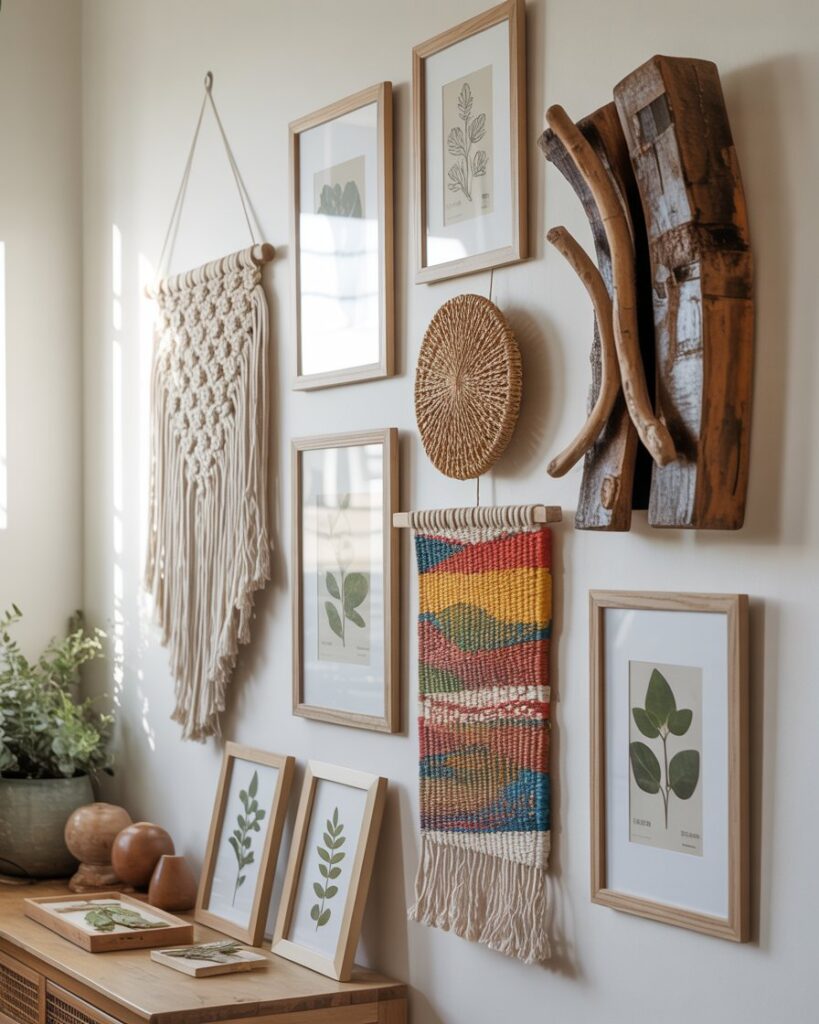
Consider hand-painted originals from local artists, which require no shipping across oceans and support your local creative economy. Or explore textile wall hangings woven from organic wool or naturally dyed cotton — a category exploding in popularity across American homes right now. Framed botanical pressings, printed on recycled paper with plant-based inks, bring nature indoors without any ecological cost.
| Wall Art Type | Material | Sustainability Factor | Style Vibe |
|---|---|---|---|
| Macramé wall hanging | Organic cotton cord | High | Boho, Coastal |
| Botanical print | Recycled paper, plant-based ink | High | Modern, Botanical |
| Reclaimed wood art | Salvaged barn wood | Excellent | Rustic, Farmhouse |
| Woven textile tapestry | Organic wool, natural dyes | High | Global, Artisan |
| Local original painting | Linseed oil paint, canvas | Moderate–High | Any |
| Pressed botanicals (framed) | Real plants, FSC wood frame | Excellent | Cottage, Naturalist |
★
Pro Tip
When framing art, always look for frames made from FSC-certified wood or reclaimed timber. Avoid frames with chrome or shiny plastic finishes — these are almost always virgin plastic. Framebridge and local custom framers often offer sustainably sourced wood frame options with UV-protective, non-plastic glazing.
Low-VOC Paints and Sustainable Wall Treatments
Your walls are the single largest surface in your home, and what you put on them matters. Conventional latex paints contain volatile organic compounds (VOCs) that off-gas for months after application, contributing to indoor air pollution that the EPA estimates can be 2–5 times worse than outdoor air. For households with children, elderly residents, or anyone with respiratory sensitivities, this is a genuine health concern.
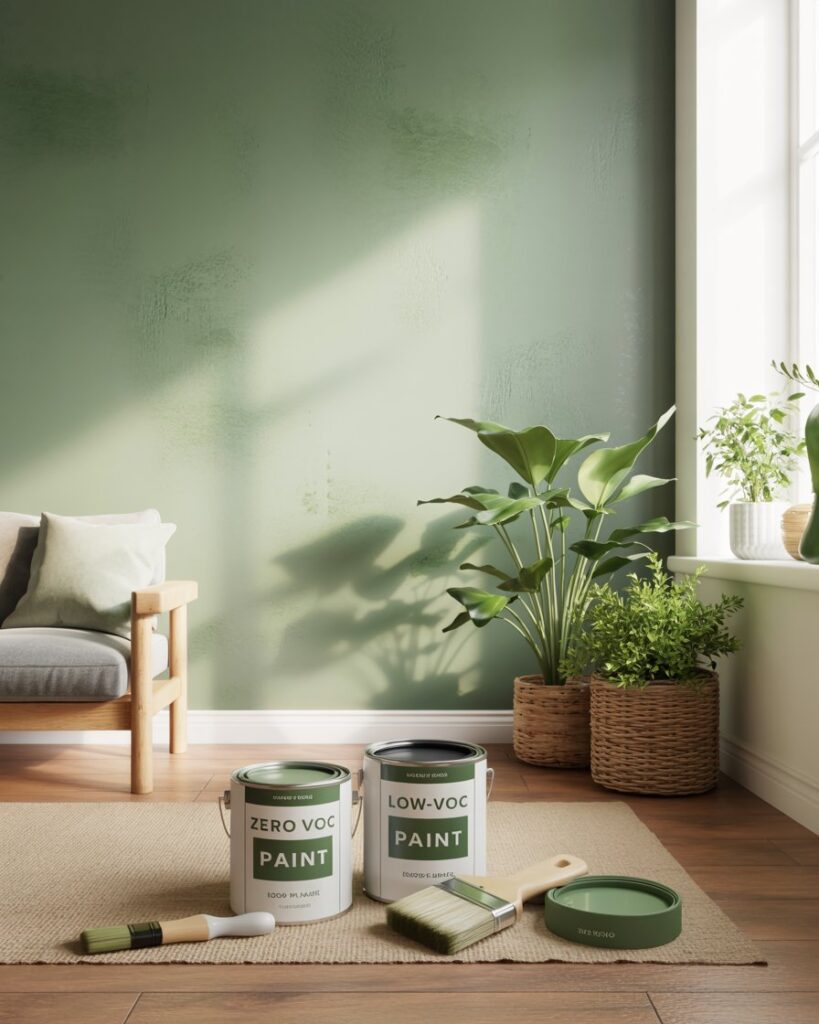
The switch to zero-VOC or low-VOC paint is one of the easiest sustainable swaps you can make — and today’s formulas are every bit as beautiful and durable as conventional options. Brands like Benjamin Moore’s Natura line, Sherwin-Williams Harmony, and Earth Paint offer rich color palettes with minimal environmental impact.
Beyond Paint: Other Sustainable Wall Treatment Options
- Natural clay plaster: Breathable, regulates humidity, and completely non-toxic. Creates beautiful, textured finishes reminiscent of Mediterranean and Southwestern adobe architecture.
- Lime wash: A centuries-old technique using calcium carbonate. Antifungal, breathable, and gives walls a gorgeous, layered patina.
- FSC-certified wood paneling: Shiplap or beadboard from sustainably sourced timber adds warmth and architectural interest.
- Recycled glass tile: For kitchens and bathrooms, backsplash tiles made from recycled glass are stunning and circular economy-certified.
- Grasscloth wallpaper: Natural seagrass, jute, or sisal woven onto paper backing — a timeless, eco-friendly wallcovering option.
Eco-Friendly Decor Certifications You Should Know
Navigating sustainability claims can feel overwhelming — “natural,” “green,” and “eco-friendly” are used loosely by marketers. Learning to recognize legitimate third-party certifications protects you from greenwashing and ensures your money goes to genuinely responsible products.
| Certification | What It Covers | Applied To |
|---|---|---|
| GOTS | Organic fiber + ethical processing | Rugs, textiles, upholstery |
| OEKO-TEX Standard 100 | No harmful chemical residues | All textiles and fabrics |
| FSC Certified | Responsibly managed forests | Wood furniture, frames, panels |
| GreenGuard Gold | Low VOC emissions | Paints, furniture, flooring |
| Cradle to Cradle | Circular lifecycle design | Furniture, textiles, materials |
| GoodWeave | No child labor in production | Handmade rugs and textiles |
| B Corp | Overall ethical business practice | Brands across all categories |
Putting It All Together: Designing a Sustainable Room
Here’s the thing about sustainable interior design — it doesn’t have to happen all at once. In fact, the most thoughtful eco-friendly homes I’ve worked on were built piece by piece, with intention. When a client asks me how to start, I always give the same answer: begin with what you’re replacing.
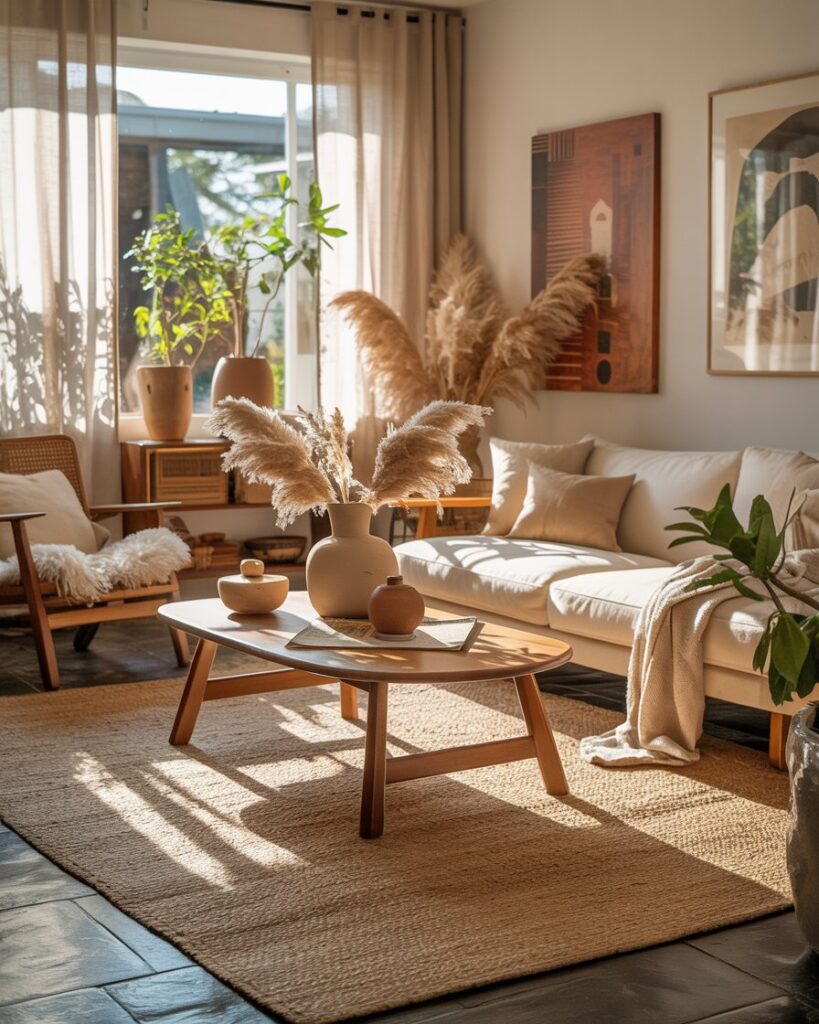
If your area rug is worn out, replace it with an organic jute or wool option. If you’re repainting, choose zero-VOC. If you’re adding a new wall art moment, seek out a local artist or an Etsy artisan using natural materials. Each small sustainable swap compounds into a home that reflects your values — and over years, into a significantly reduced carbon footprint from your household’s decor choices.
“The greenest product is often the one you already own. Before you buy anything new, ask: can I restore, repurpose, or restyle what I have?”— A design philosophy worth living by
Quick-Start Sustainable Swap Checklist
- Replace synthetic rug with jute, seagrass, or organic wool
- Switch to zero-VOC or natural lime wash paint on next repaint
- Source one piece of wall art from a local or artisan maker
- Replace polyester throw pillows with organic cotton or linen covers
- Add a macramé or woven textile wall hanging in a key room
- Check furniture for FSC-certified wood or reclaimed material sourcing
- Frame existing prints in FSC wood or reclaimed timber frames
Final Thoughts: Design for the Long Game
Sustainable home decor is not about perfection — it’s about progress. The American home is one of the most powerful sites of environmental decision-making in modern life. The materials we choose for our rugs, our walls, our soft furnishings, and our art all add up to something much larger than aesthetics. They speak to what we value, what we support, and what kind of world we’re designing — one room at a time.
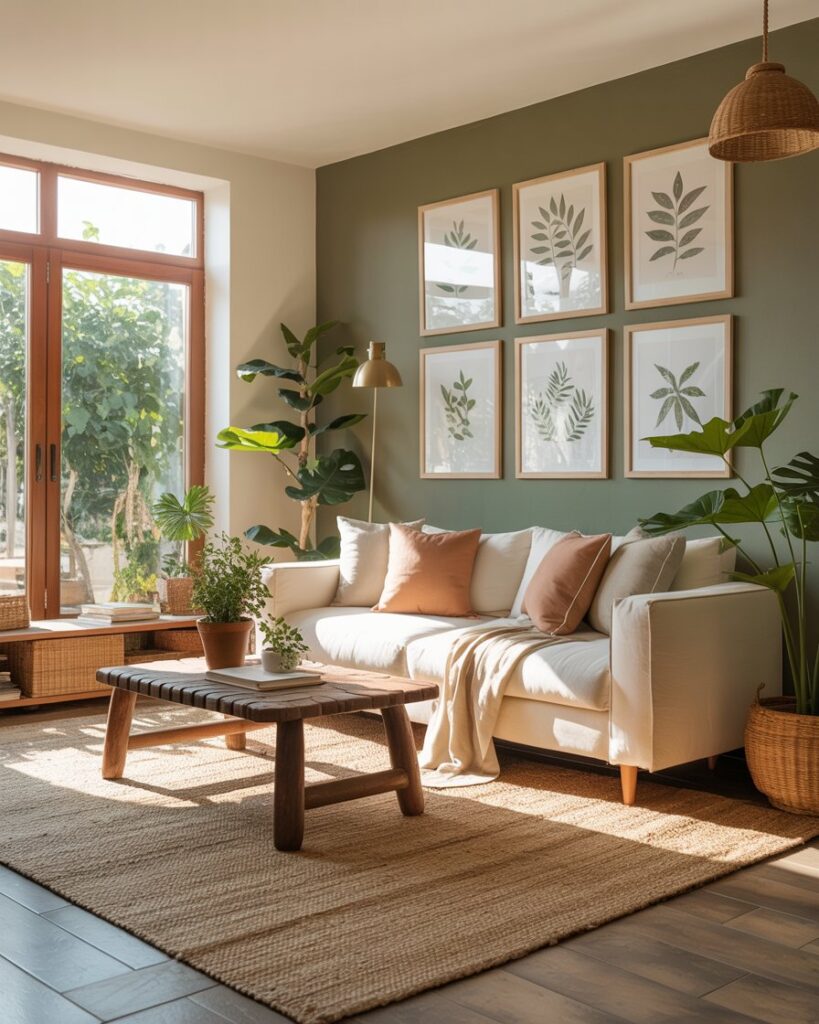
Whether you start with a sustainably harvested jute rug, a gallery wall of botanical prints on recycled paper, or a can of zero-VOC paint in a beautiful sage green, every choice matters. Your home can be stunning and sustainable — and the best interior designers will tell you those two things