
Vintage China Cabinets in Master Suites
How a single antique piece can transform your bedroom into the most sophisticated room in the house.
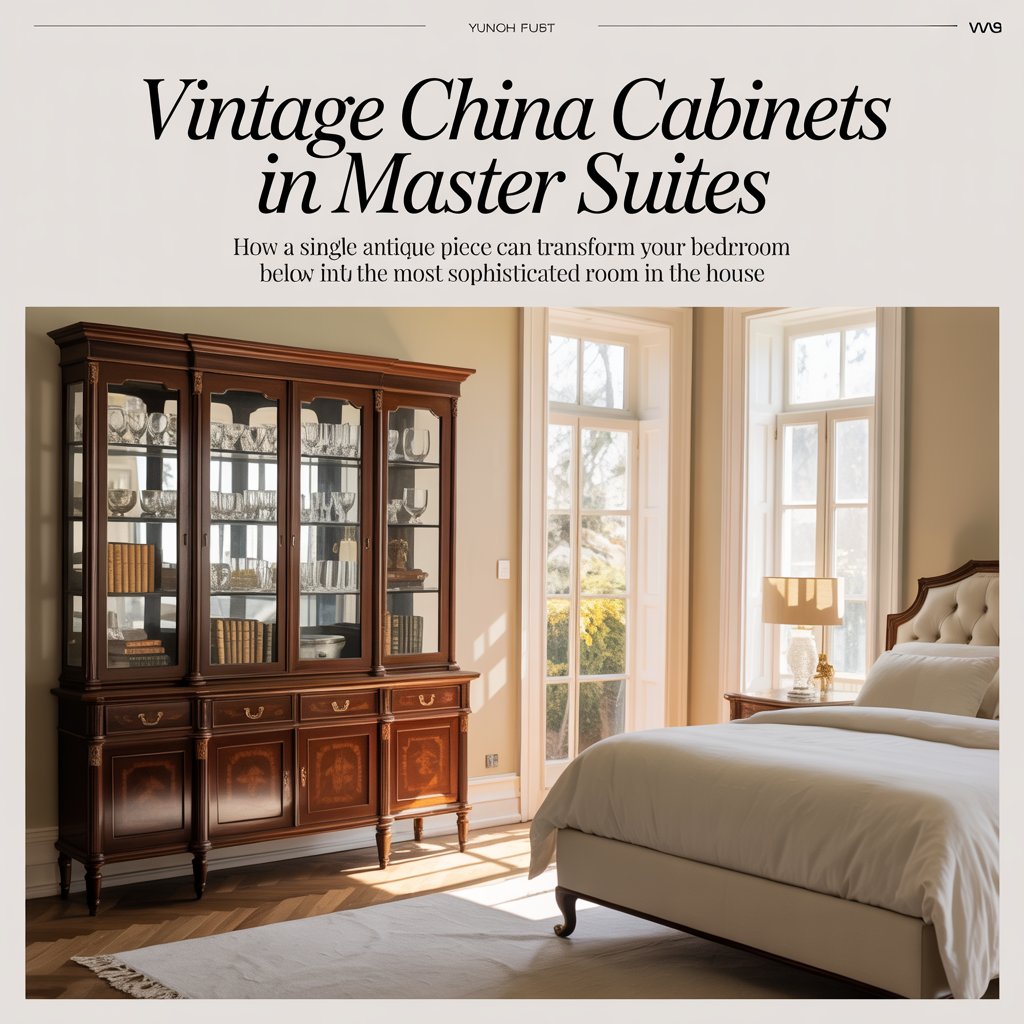
There is a quiet revolution happening in master suite design across America, and it has nothing to do with smart mirrors or heated floors. Homeowners and interior designers alike are rediscovering the transformative power of vintage china cabinets — those stately, glass-fronted heirlooms that once lived exclusively in dining rooms — and reimagining them as stunning focal points in the bedroom. If you have ever walked into a master suite and felt that something was missing, that elusive sense of depth, personality, and collected elegance, a vintage china cabinet might be exactly what your space has been waiting for.
As an interior designer who has worked with clients across the country on layered, character-driven bedrooms, I can tell you this trend is not a passing fad. It is a thoughtful design philosophy rooted in the idea that our most personal spaces deserve furniture with a story. This article will walk you through everything you need to know — from choosing the right vintage piece to styling it beautifully inside your master suite.
Why Vintage China Cabinets Belong in the Master Suite
The master suite is the one room in your home that is entirely yours. It is where you begin and end every day, and yet so many American bedrooms are furnished with interchangeable big-box pieces that could belong to anyone. Introducing a vintage china cabinet into this space is one of the most impactful ways to inject genuine character and visual interest without a full renovation.

China cabinets bring architectural weight and vertical drama that most bedroom furniture simply cannot match. Their glass doors and interior lighting create a warm, luminous quality that feels almost magical in the evening. Beyond aesthetics, they are extraordinarily functional — offering display space for curated collections, precious objects, books, and meaningful keepsakes. In a master suite, this translates into a deeply personal gallery that tells your story.
“The bedroom should feel like the most curated room in the house — not the most decorated, but the most intentional. A vintage china cabinet does exactly that. It anchors the room and gives it a soul.”— Emily Hartwell, ASID Certified Interior Designer, Nashville, TN
From a design perspective, antique and vintage furniture introduces what designers call “patina value” — the visual texture of age that makes a room feel lived-in, layered, and authentic. Pairing a Victorian breakfront, a French Provincial vitrine, or a Mid-Century Modern display cabinet with contemporary bedding and lighting creates that coveted high-low mix that defines today’s most celebrated interior design.
The semantic language of this design trend includes terms like antique bedroom furniture, heirloom decor, eclectic master bedroom, statement furniture pieces, curio cabinet bedroom styling, and bespoke bedroom design — all pointing toward the same core idea: that bedrooms deserve the same thoughtful curation we give our living rooms and dining spaces.
Choosing the Right Vintage China Cabinet for Your Bedroom
Not every china cabinet will work in every master suite, and choosing wisely is the key to a result that feels intentional rather than haphazard. The most important factors to consider are scale, style, wood tone, and the condition of the glass. A piece that is too large will crowd the room, while one that is too small will look lost against a king-sized bed wall.

For master suites with ceiling heights under nine feet, look for lower-profile china cabinets — hutch-style pieces that reach no higher than 78 inches. In rooms with soaring ceilings or dramatic architecture, a full breakfront china cabinet standing 84 to 90 inches tall can be absolutely breathtaking. Always measure your wall and leave at least 12 inches of breathing room on each side of the piece.
✦ Pro Tip
When sourcing vintage china cabinets, always bring a photo of your bedroom’s wall color and flooring to the antique shop or estate sale. Hold the photo next to the piece in natural light. The wood tone should either closely complement or beautifully contrast with your existing finishes — there is no middle ground. A honey oak cabinet against warm beige walls will disappear, while a dark ebonized finish against the same wall creates stunning drama.
Popular Vintage Cabinet Styles for Master Suites
| Style | Era | Best For | Key Features |
|---|---|---|---|
| French Provincial Vitrine | 1930s–1960s | Romantic, feminine bedrooms | Curved legs, gilt trim, beveled glass |
| Victorian Breakfront | 1850s–1910s | Grand, traditional master suites | Carved details, arched glass, dark mahogany |
| Mid-Century Modern Display Cabinet | 1950s–1970s | Contemporary or transitional bedrooms | Clean lines, teak or walnut, sliding glass |
| American Colonial Hutch | 1700s–1800s reproduction | Farmhouse or Americana interiors | Open top shelves, raised panel doors, pine |
| Art Deco Display Cabinet | 1920s–1940s | Glamorous, jewel-toned bedrooms | Lacquered finish, geometric hardware, mirrored back |
| Chinoiserie Cabinet | 1700s–1800s | Global eclectic or maximalist suites | Hand-painted motifs, lacquer, bamboo-style legs |
Where to Place a China Cabinet in the Master Suite
Placement is everything in interior design, and vintage china cabinets are no exception. The most successful placements treat the cabinet as an architectural element rather than an afterthought. Think about how it interacts with natural light, the primary sightline from the doorway, and its relationship to the bed.

The wall opposite the bed — often called the “footwall” — is the most impactful location for a vintage china cabinet in a master suite. It is the first thing you see when you walk in the door and the last thing you see before you fall asleep. A beautifully lit cabinet on this wall transforms the entire room into a cohesive, gallery-like space. Alternatively, flanking the bed with two matching china cabinets in place of traditional nightstands creates a breathtakingly bespoke headboard wall that feels truly one-of-a-kind.
Top Placement Options at a Glance
- Footwall focal point: Place the cabinet centered on the wall opposite the bed for maximum visual impact and a clear sightline from the doorway.
- Flanking the bed: Use two smaller matching vitrines as oversized nightstands for a symmetrical, bespoke headboard wall.
- Alcove or nook integration: Built-in-looking placement in an architectural nook creates a sense of permanence and intention.
- Dressing area or walk-in closet entrance: A compact vitrine near the closet adds elegance to a transitional space.
- Reading corner anchor: Pair the cabinet with an upholstered chair and floor lamp to create a layered, intimate reading vignette.
What to Display Inside: Curating Your Cabinet Collection
This is where the real magic happens. The interior of a vintage china cabinet in the master suite should feel like a highly personal museum — a curated collection that reflects your life, travels, passions, and aesthetic sensibility. Unlike a dining room cabinet filled with matching china sets, a bedroom cabinet invites a more eclectic, intimate approach to display.

Think in terms of categories and levels. The top shelves should feature your tallest, most visually striking objects — sculptural vases, architectural books stacked vertically, or a meaningful piece of art glass. Middle shelves are ideal for collections: perfume bottles, miniature portraits, travel mementos, vintage cameras, or decorative boxes. The bottom shelves anchor the composition with grounded, heavier elements like stacked linen-wrapped books, a small potted plant, or a ceramic urn.
“The best-styled china cabinets in bedrooms feel like a visual autobiography. Every object should have a reason to be there — either because it is beautiful, meaningful, or ideally both.”— Marcus Teller, Antique Furniture Specialist & Home Stylist
Display Ideas by Aesthetic Style
- Romantic/Maximalist: Vintage perfume bottles, pressed botanical prints in small frames, stacked poetry collections, dried flower arrangements in bud vases, pearl jewelry draped artfully over a glass stand
- Modern/Minimalist: Three to five sculptural ceramic pieces in a tonal palette, a single large art glass piece, natural stone specimens, folded cashmere throws on lower shelves
- Global Eclectic: Travel objects from different countries, woven baskets, hand-painted pottery, small textiles draped over shelves, beaded objects, wooden carvings
- Traditional/Classic: Family heirloom china displayed decoratively, silver-framed photographs, leather-bound books, monogrammed linens, antique clocks
- Hollywood Regency: Mirrored trays, gold and black lacquer boxes, crystal decanters, dramatic black-and-white photography, oversized jewelry as sculpture
✦ Pro Tip
Always line the interior back panel of your vintage china cabinet with a contrasting material before styling. Removable grasscloth wallpaper, a piece of fabric stretched over foam board, or peel-and-stick mirror tiles instantly elevate the cabinet’s interior and make every displayed object pop. This single step separates a styled cabinet from a truly designer-level installation.
Lighting Your Vintage China Cabinet: The Secret to a Luminous Bedroom
Many vintage china cabinets came with interior lighting, and if yours did not, adding it is one of the highest-return investments you can make in your bedroom design. A well-lit cabinet casts a warm, ambient glow that acts as a secondary light source in the room — reducing your dependence on harsh overhead fixtures and creating the kind of layered, atmospheric illumination that makes master suites feel genuinely luxurious.

Battery-operated LED strip lights in a warm white tone (2700K to 3000K) are the easiest, no-electrician solution for adding interior cabinet lighting. Tape them along the inside top edge of each shelf for a clean, professional look. For a more dramatic effect, a small picture light mounted to the top exterior of the cabinet — angled downward — creates beautiful surface wash lighting that illuminates both the cabinet and the surrounding wall in a warm, golden tone. This technique is particularly effective with cabinets that have carved or embossed woodwork.
| Lighting Type | Difficulty | Effect | Approx. Cost |
|---|---|---|---|
| Battery LED strip lights (warm white) | Easy – DIY | Soft shelf-level glow | $20–$60 |
| Plug-in picture light on top | Easy – DIY | Dramatic downward wash | $40–$120 |
| Hardwired interior cabinet lights | Requires electrician | Built-in, seamless look | $150–$400+ |
| Battery-powered puck lights | Easy – DIY | Spotlighted accent objects | $25–$80 |
Mixing Vintage with Modern: Avoiding Common Styling Mistakes
The most stunning master suites featuring vintage china cabinets succeed because they strike a careful balance between old and new. The cabinet should feel like a deliberate, confident design choice — not a hand-me-down that ended up in the bedroom because there was no other place for it. Achieving this requires attention to finish, scale, and the overall color story of the room.
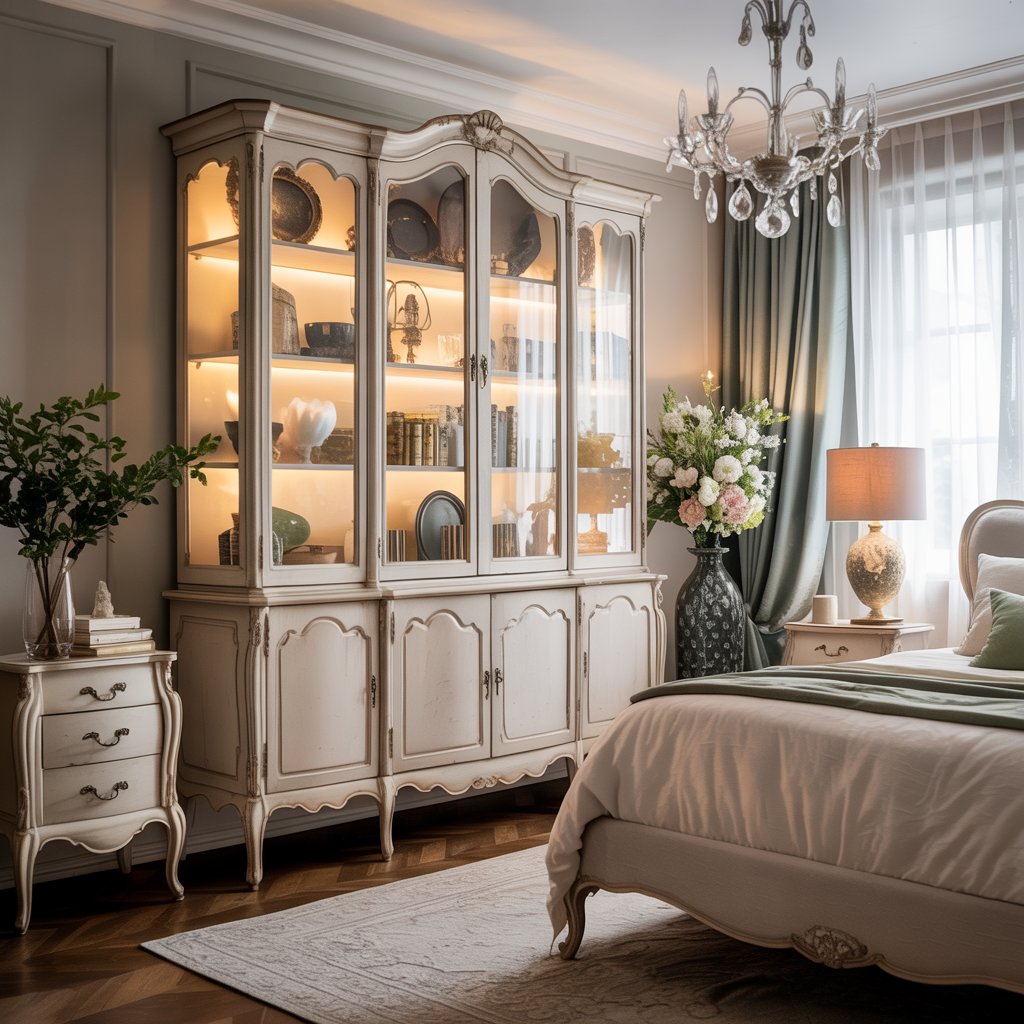
One of the most common mistakes I see is placing a dark, heavily carved Victorian cabinet in a room full of light, airy, Scandi-inspired furniture. The piece ends up looking alienated rather than elevated. To avoid this, always pull at least two to three design elements from the cabinet’s era or style into the rest of the room. If you are using a French Provincial vitrine, layer in curved-leg nightstands, a velvet throw in a complementary tone, and perhaps a vintage-style chandelier. The cabinet will then feel like the anchor of a considered design conversation rather than an outlier.
Dos and Don’ts of Vintage China Cabinet Styling in the Bedroom
- ✅ Do pull accent colors from the cabinet’s wood tone into your bedding or rug
- ✅ Do add interior lighting to elevate the display and warm the room
- ✅ Do mix antique objects with contemporary ones inside the cabinet for visual interest
- ✅ Do use odd numbers of objects per shelf for natural-looking composition
- ❌ Don’t overcrowd shelves — negative space is essential to elegant display
- ❌ Don’t mix too many competing wood tones in the same room without a unifying element
- ❌ Don’t place the cabinet in a corner where it cannot be properly seen and lit
- ❌ Don’t use it as a catch-all storage unit — keep the display intentional and edited
Where to Source Vintage China Cabinets in the US
Finding the right piece requires patience, but the search itself is part of the joy of antique furniture hunting. The most reliable sources for high-quality vintage china cabinets in the United States include local estate sales, regional antique markets, and a growing number of online platforms that have made sourcing vintage furniture dramatically easier in recent years.
For in-person sourcing, estate sales are consistently the best place to find well-priced, high-quality pieces that have been preserved in residential settings. Apps like EstateSales.net and EstateSales.org aggregate local sales by zip code and allow you to preview inventory before attending. For online sourcing, 1stDibs offers vetted, high-end antique cabinets with detailed provenance, while Chairish and Ruby Lane offer a wider price range with strong dealer accountability.
- Estate Sales (EstateSales.net / EstateSales.org) — Best for budget-friendly finds with authentic provenance
- 1stDibs — Premium, dealer-vetted antique and vintage pieces with clear provenance
- Chairish — Curated vintage marketplace with a wide price range and strong return policies
- Ruby Lane — Specialty antique dealers with deep expertise in period furniture
- Facebook Marketplace / Craigslist — Local finds, often significantly underpriced; best for experienced buyers
- Local antique malls and multi-dealer shops — Allows in-person assessment of condition, finish, and scale
- Auction houses (Invaluable.com, LiveAuctioneers) — Access to estate auction pieces, often with strong provenance documentation
✦ Pro Tip
When buying a vintage china cabinet online, always ask the seller for two specific things before purchasing: a photo of the back panel (which reveals structural integrity and any repairs) and a photo of the interior shelves without styling (which shows actual condition of the interior finish and glass). These two images will tell you more about the true condition of the piece than any hero shot from the front.
Final Thoughts: Let Your Bedroom Tell a Story
Bringing a vintage china cabinet into your master suite is one of those rare design decisions that does multiple things at once: it adds functional storage, creates a luminous focal point, introduces irreplaceable character, and transforms the room into something genuinely personal and one-of-a-kind. In a world where so many interiors look identical, that kind of individuality is invaluable.
The best master suites are the ones that feel curated over time — like the rooms of someone who has lived fully and collected beautifully along the way. A vintage china cabinet, chosen thoughtfully and styled with care, communicates exactly that. Whether you gravitate toward a gilded French vitrine, a sleek Mid-Century teak display case, or a grand Victorian breakfront, the right piece will make your bedroom feel less like a furniture showroom and more like the sanctuary you actually deserve.
Start with one great piece. Let the room grow around it. That is always how the best interiors begin.