
In modern interior design, perfectly minimal spaces are no longer the only goal. Instead, homeowners are embracing something far more personal—intentional clutter. Books, souvenirs, travel finds, and collected objects tell the story of where you’ve been and what you love.
As an interior designer working with US homeowners, I often remind clients that decor should feel lived-in, not staged. Styling books and travel pieces thoughtfully allows your home to become a visual autobiography rather than a showroom.
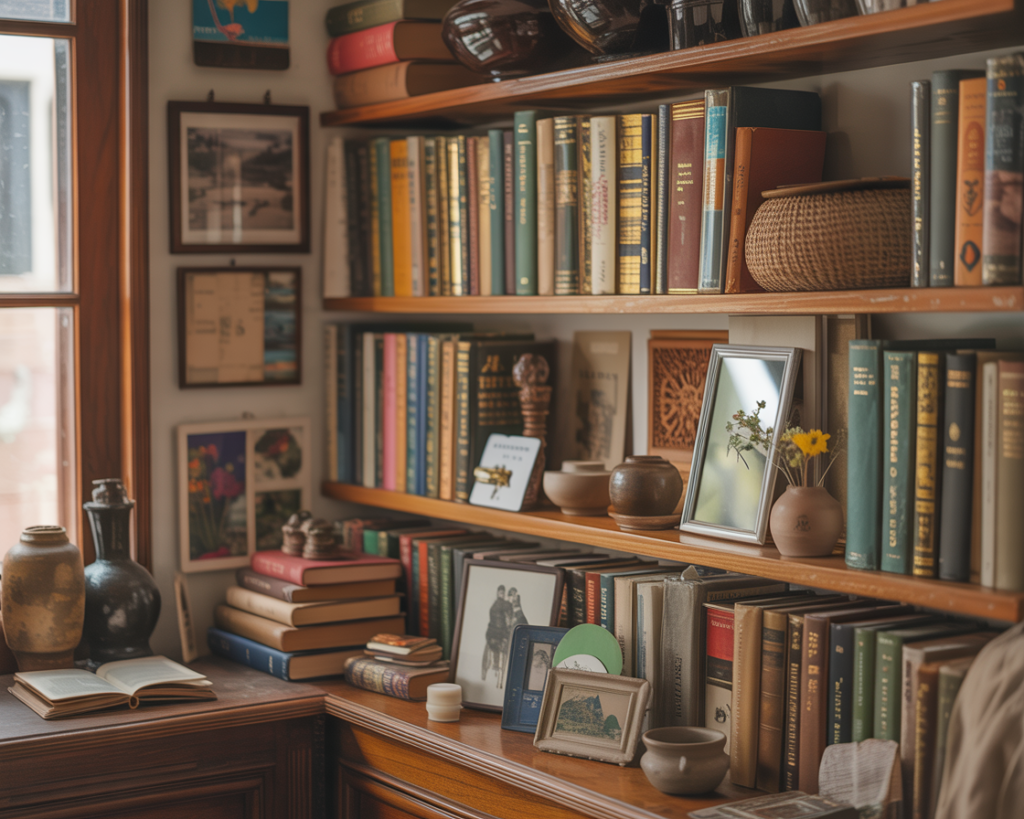
This guide will show you how to turn everyday items like books, postcards, ceramics, and souvenirs into beautiful, story-driven decor.
Why Personal Objects Make the Best Decor
A home becomes memorable when it reflects the personality of the people living in it.
Books from your favorite authors, shells collected from beach trips, or a ceramic bowl from Italy add authenticity that store-bought decor often lacks.
Personal objects also spark conversation. Guests are naturally drawn to items with stories behind them—like the novel you read in college or the vintage map you found in a Paris market.
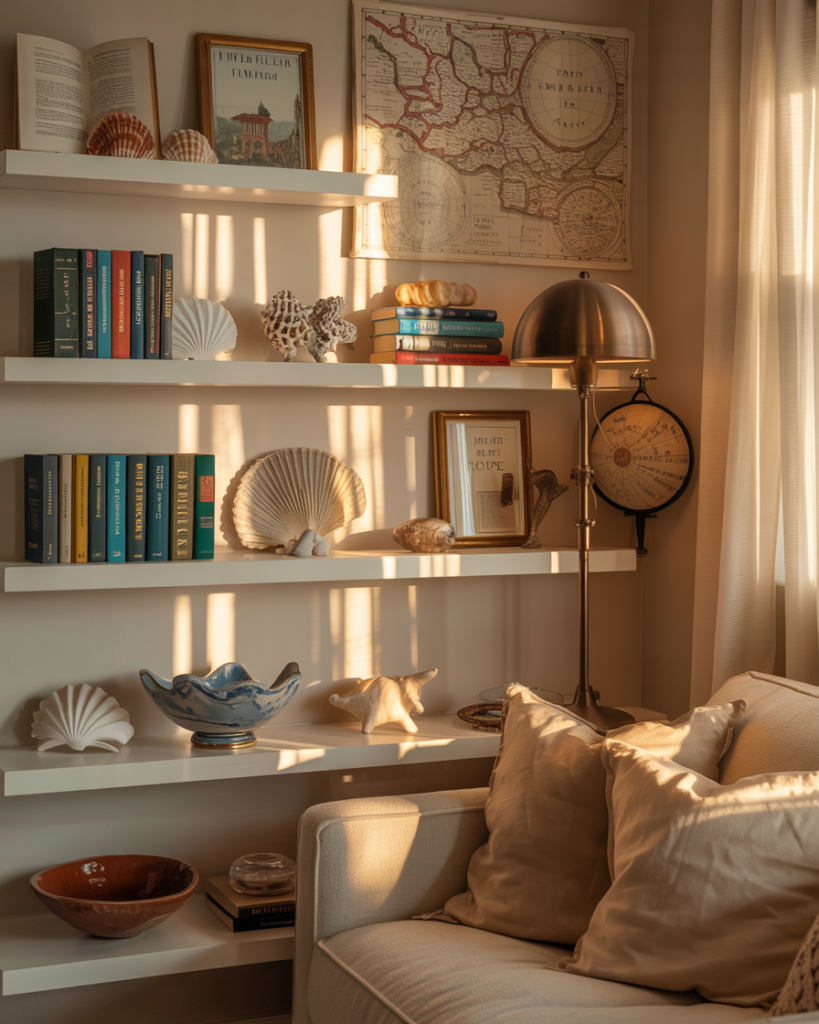
Most importantly, styling personal clutter makes your home emotionally comfortable, not just visually pleasing.
“Your home should tell the story of who you are and be a collection of what you love.” – Nate Berkus
The Concept of “Intentional Clutter
Clutter usually has a negative reputation, but designers use the term intentional clutter to describe curated collections displayed with purpose
Instead of hiding everything away, intentional clutter highlights meaningful items while maintaining balance and order.
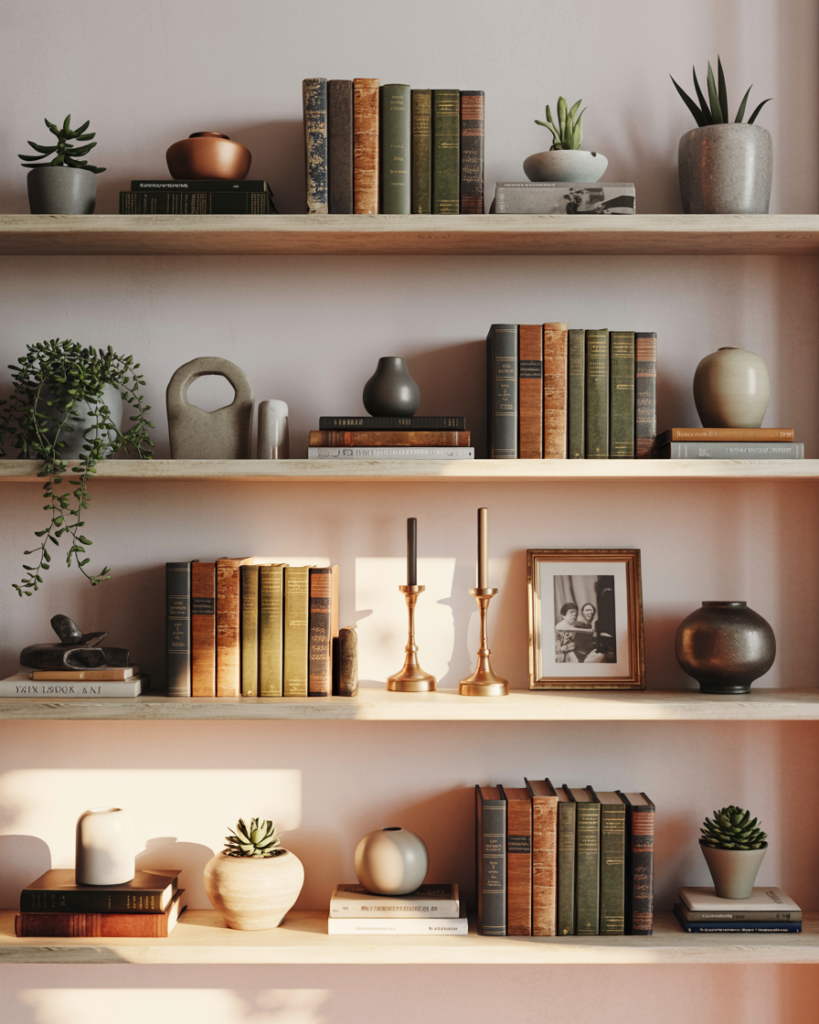
Think of it like editing a photo album—you don’t show every picture, only the best ones.
Characteristics of Intentional Clutter
- Curated collections rather than random piles
- Objects grouped by theme, color, or size
- Balanced spacing and layering
- Meaningful personal items
When done correctly, intentional clutter adds warmth, personality, and depth to interiors.
Styling Books Like a Designer
Books are one of the easiest ways to decorate a home because they bring texture, color, and personality to shelves and tables.
But stacking them randomly can look messy. With a few styling tricks, books become a design feature.
1. Mix Vertical and Horizontal Stacks
Interior designers rarely line up books in a single row.
Instead, alternate vertical books with horizontal stacks to create rhythm and visual interest.
Horizontal stacks also provide a base for decor items like candles or small sculptures.
2. Color Coordinate Selectively
Color coordination works especially well in modern homes.
You can group books by spine color or arrange them in a gradient from dark to light.
However, avoid making it too perfect—the goal is organic elegance, not a rainbow library.
3. Use Books to Elevate Decor
Books are excellent pedestals for decorative objects.
Examples include:
- Small plants
- Candles
- Travel souvenirs
- Sculptural objects
- Picture frames
This layering technique makes shelves look styled rather than crowded.
4. Rotate Books Seasonally
You don’t have to display every book at once.
Rotate titles throughout the year, just like seasonal decor.
Travel books might appear in summer, while cozy novels feel right during winter months.
Pro Tip From an Interior Designer
⭐ PRO TIP: Remove paper jackets from hardcover books if the colors clash with your room. The cloth covers underneath are often neutral and look far more sophisticated on shelves
Creative Ways to Display Travel Souvenirs
Travel finds are often sentimental, but they can easily become clutter if not styled intentionally.
The key is displaying them like a curated gallery instead of scattered trinkets.
Display Ideas That Work Beautifully
- Floating shelves for small souvenirs
- Shadow boxes for delicate items
- Coffee table trays for grouped objects
- Glass cabinets for collectible pieces
- Wall ledges for travel photography
These solutions keep memories visible without overwhelming your space.
Coffee Table Styling with Books and Travel Finds
The coffee table is one of the best places to combine books and souvenirs.
Designers often follow the “Rule of Three” when styling surfaces.
Example Coffee Table Arrangement
| Item | Purpose | Styling Tip |
|---|---|---|
| Coffee Table Books | Base layer | Stack 2–3 books horizontally |
| Travel Souvenir | Personal element | Place on top of books |
| Candle or Plant | Soft texture | Adds warmth and balance |
| Decorative Tray | Organization | Keeps items visually grouped |
This arrangement feels curated but still relaxed.
The Story Shelf: Turning Memories Into Decor
A “story shelf” is a designer technique where each shelf represents a theme or memory.
For example:
- One shelf dedicated to beach vacations
- Another for favorite novels
- A third for vintage finds
This method prevents clutter while keeping your displays meaningful.
How to Build a Story Shelf
- Choose a theme for each shelf
- Add books related to the theme
- Include 2–3 meaningful objects
- Leave negative space for balance
The result feels like a mini museum of your life experiences.
Styling Entryways with Travel Finds
Your entryway is the perfect place to display travel memories.
A console table with books and souvenirs can immediately set the tone for your home.
Try styling with:
- A stack of travel photography books
- A bowl collected from abroad
- Framed travel photos
- A vintage map
This creates an inviting “welcome story” for guests entering your home.
Using Trays to Organize Decorative Clutter
Decorative trays are a designer favorite because they make collections look intentional.
Without a tray, multiple objects can feel scattered.
With a tray, they instantly become a styled vignette.
Best Places to Use Decorative Trays
- Coffee tables
- Entryway consoles
- Bedroom dressers
- Kitchen counters
A tray acts like a visual frame for your decor.
Mixing Modern Decor with Travel Souvenirs
One mistake many homeowners make is displaying souvenirs in ways that feel outdated.
To keep things stylish, mix souvenirs with modern elements.
Examples include:
- Pairing vintage pottery with minimalist shelves
- Displaying souvenirs next to modern art
- Combining travel books with contemporary candles
This contrast keeps spaces feeling fresh and sophisticated.
Decluttering Without Losing Sentimental Value
Not every souvenir needs to be displayed.
Interior designers recommend editing your collections regularly.
A Simple Decluttering Method
Ask yourself three questions:
- Does this item tell a meaningful story?
- Does it visually complement my home?
- Would I notice if it disappeared?
If the answer is no to most of these, it might belong in storage instead of display.
Styling Bookshelves Like a Professional
Bookshelves are often the main place where personal clutter accumulates.
A well-styled bookshelf balances books, objects, and empty space.
Designer Shelf Formula
| Shelf Element | Percentage |
|---|---|
| Books | 60% |
| Decorative objects | 25% |
| Empty space | 15% |
This ratio keeps shelves from feeling overcrowded.
Adding Natural Elements for Balance
Personal clutter can sometimes feel visually heavy.
Natural elements help balance the look.
Consider adding:
- Indoor plants
- Wooden objects
- Stone sculptures
- Woven baskets
These textures create warmth and soften busy displays.
Creating a Travel Gallery Wall
If you collect postcards, tickets, or small art pieces during trips, a gallery wall is a beautiful way to display them.
Gallery Wall Layout Tips
- Use matching frames for cohesion
- Mix travel photos with maps and artwork
- Include small shelves for 3D objects
- Keep spacing consistent
A gallery wall transforms memories into a statement design feature.
Styling Ideas for Different Rooms
Living Room
The living room is perfect for large coffee table books and statement travel pieces.
Place oversized books on tables, display ceramics on shelves, and add framed travel photography.
Bedroom
Bedrooms benefit from calmer styling.
Use books on bedside tables and small meaningful souvenirs like shells or postcards.
The key is keeping the mood relaxed and personal.
Home Office
Books and travel objects can inspire creativity in workspaces.
Consider displaying:
- Design books
- Travel photography
- Inspirational quotes
- Objects from meaningful places
These elements make the workspace feel motivating.
Common Styling Mistakes to Avoid
Even meaningful decor can look cluttered if styled poorly.
Mistakes Designers Often See
- Overcrowded shelves
- Too many small items
- No visual grouping
- Ignoring negative space
- Displaying everything at once
Editing and spacing are just as important as the objects themselves.
Budget-Friendly Ways to Style Personal Clutter
You don’t need expensive decor to create a beautiful display.
Many designers actually prefer meaningful personal items over store-bought accessories.
Affordable Styling Ideas
- Use thrifted trays for styling
- Frame postcards from trips
- Stack old hardcover books
- Display natural items like shells or stones
- Repurpose vintage boxes for storage
The goal is creativity, not cost.
The Emotional Impact of Personalized Decor
Decorating with books and travel finds creates a home that feels authentic.
Instead of generic decorations, every object has a story.
Guests feel it immediately—the space feels warm, layered, and lived-in.
More importantly, these objects remind you daily of the experiences and memories that matter most.
Final Thoughts
Styling personal clutter isn’t about filling your home with things. It’s about curating meaningful objects and presenting them beautifully.
Books and travel finds are powerful design tools because they combine aesthetics with storytelling.
By mixing thoughtful arrangement, balanced spacing, and a few designer tricks, you can transform everyday items into stylish, personal decor.
Your home should never feel like a catalog.
It should feel like your story told through objects, memories, and design.
If you’d like, I can also help you with:
- Pinterest titles for traffic
- AI image prompts for blog visuals
- Internal linking strategy for home decor blogs.