
By a Professional Interior Designer | Home Décor & Styling Expert
There’s something almost magical about a well-placed mirror. It doesn’t just reflect your face — it reflects light, space, mood, and your personal design philosophy. As an interior designer who has worked with hundreds of American homes, I can tell you without hesitation: minimalist mirrors are one of the most powerful, budget-friendly tools in any home décor arsenal. Whether you live in a cozy studio apartment in Chicago or a sprawling farmhouse in rural Tennessee, the right minimalist mirror can transform your space from ordinary to absolutely dreamy.
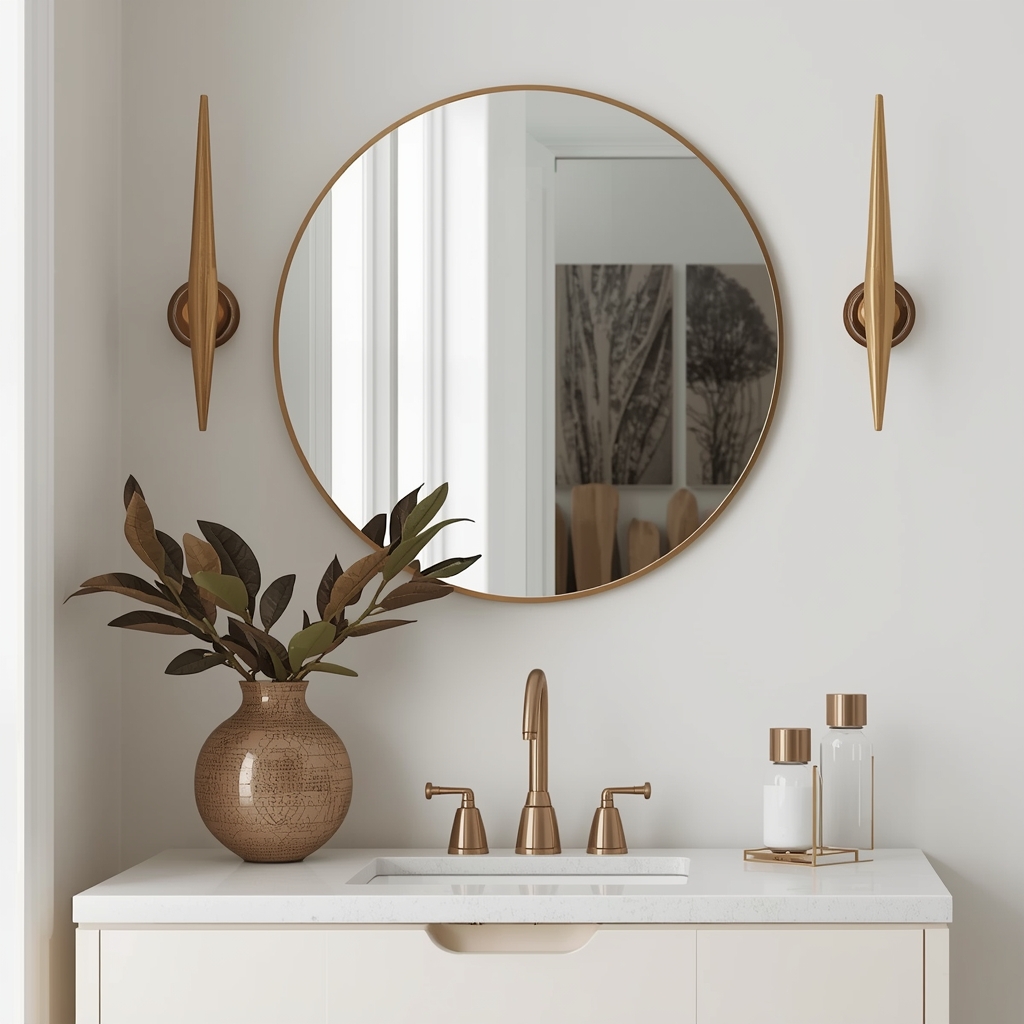
In today’s design world, the “less is more” aesthetic is thriving. Homeowners across the US are ditching the ornate, gilded frames of the past in favor of clean lines, frameless silhouettes, and intentional simplicity. And honestly? The results are breathtaking. This comprehensive guide will walk you through everything you need to know about choosing, placing, and styling minimalist mirrors in your home — complete with pro tips, product comparisons, and design inspiration you’ll actually use.
What Are Minimalist Mirrors, and Why Are They Trending?
Minimalist mirrors are defined by their clean, unfussy aesthetic. They strip away unnecessary ornamentation, focusing instead on shape, proportion, and reflective function. Think frameless full-length mirrors leaned against a bedroom wall, simple black metal-framed circular mirrors above a bathroom vanity, or a row of small, identically shaped mirrors arranged in a geometric gallery on a hallway wall.

The minimalist mirror trend has gained enormous traction in the United States over the past five years, fueled by the rise of Scandinavian design influence, the popularity of platforms like Pinterest and Instagram, and a broader cultural shift toward intentional, clutter-free living. Search volume for terms like “minimalist home décor,” “simple mirror ideas,” and “frameless mirror wall” has surged dramatically, reflecting a real hunger among American homeowners for this sleek aesthetic.
Beyond beauty, minimalist mirrors serve powerful functional purposes. They bounce natural light around a room, create the illusion of more square footage, and act as subtle focal points without overwhelming a space. In short, they work harder than decorative mirrors while looking effortlessly chic.
The Most Popular Minimalist Mirror Styles for American Homes
When clients come to me asking about minimalist mirrors, I always start by helping them identify which style suits their existing décor and lifestyle needs. Here are the most sought-after styles in the US market right now:

1. Frameless Mirrors
These are the purest expression of minimalist design — just the glass, beveled or straight-edged, with no frame at all. Frameless mirrors work beautifully in bathrooms, entryways, and bedrooms. Their versatility means they complement virtually any color palette or design scheme, from all-white Scandinavian interiors to moody, dark-walled maximalist spaces that still want one clean design moment.
2. Thin Metal Frame Mirrors
A sleek, pencil-thin frame in matte black, brushed brass, or gunmetal gray gives a mirror just enough structure without adding visual weight. This style is especially popular in modern farmhouse and contemporary urban spaces. The black thin-frame circle mirror has become an almost iconic piece in American home décor over the last three years.
3. Arch-Top (Arched) Mirrors
The arched or half-moon mirror silhouette has taken the interior design world by storm. With a flat bottom and a gracefully curved top, these mirrors bring a soft architectural quality to any room without introducing busy ornamentation. They’re particularly stunning in bedrooms leaned against the wall at full-length height.
4. Geometric Mirrors
Hexagonal, diamond, sunburst (with clean, minimal rays), and irregular polygon shapes add artistic interest while maintaining a clean, intentional look. These work best as statement pieces above a console table or fireplace mantle.
5. Leaner Mirrors
Full-length mirrors leaned casually against a wall (rather than mounted) are the ultimate in laid-back minimalist cool. They’re practical, moveable, and photograph beautifully — which is why you’ll see them in virtually every aspirational bedroom photo on social media.
How to Choose the Right Minimalist Mirror for Every Room
Selecting the perfect mirror isn’t just about aesthetics — it’s about understanding the scale, light conditions, and functional needs of each specific space. Here’s my room-by-room breakdown:

| Room | Recommended Style | Ideal Size | Placement Tip |
|---|---|---|---|
| Living Room | Large rectangular or arched | 36″–48″ wide | Above sofa or console table |
| Bedroom | Full-length leaner or arch-top | 60″–72″ tall | Against main wall or beside dresser |
| Bathroom | Frameless or thin metal frame | Match vanity width | Centered above sink |
| Entryway / Hallway | Vertical rectangular or round | 24″–36″ | At eye level, near light source |
| Dining Room | Large rectangular | 40″+ wide | Opposite a window to bounce light |
| Home Office | Small round or geometric | 18″–24″ | Corner wall, for light and depth |
The Power of Placement: Where You Put Your Mirror Matters More Than You Think
I cannot stress this enough to my clients: a beautiful mirror in the wrong spot is a wasted opportunity. Placement is everything in minimalist design, where every object needs to earn its place.

Reflect natural light, not clutter. The golden rule of mirror placement is to position your mirror so that it reflects something beautiful — a window, an outdoor view, a light fixture, or a well-styled shelf. The worst thing you can do is hang a mirror opposite a messy closet or a blank, boring wall. Your mirror will amplify whatever it faces, so make sure what it faces is worth amplifying.
Create perceived space in small rooms. In compact apartments and smaller homes — extremely common in cities like New York, Boston, and San Francisco — a large minimalist mirror on the longest wall can visually double the apparent size of a room. This isn’t an illusion in a deceptive sense; it’s intelligent, professional design at work.
Use height to draw the eye upward. Mounting a tall, narrow minimalist mirror (or leaning one against the wall) in a room with lower ceilings creates a vertical line that makes the ceiling feel higher. This trick works beautifully in older American homes where ceilings often hover around 8 feet.
Group small mirrors thoughtfully. If you’re working with multiple smaller minimalist mirrors, arrange them in a deliberate pattern — an asymmetric cluster, a perfectly spaced grid, or a diagonal line. Randomness is the enemy of minimalist design. Every piece should feel intentional.
“A mirror doesn’t just show you the room — it shows you the room’s potential. Place it with intention, and it will give you back something more beautiful than what was already there.” — Interior Design Principle I live by
Pro Tips From a Professional Interior Designer
Here are some of the insider techniques I use when styling minimalist mirrors for my clients:
✅ Pro Tip #1: The “Two Thirds” Rule When hanging a mirror above a piece of furniture (like a console table, sideboard, or dresser), the mirror should be approximately two-thirds the width of the furniture beneath it. This creates visual balance without the mirror overwhelming or underwhelming the piece below it.
✅ Pro Tip #2: Eye-Level Hanging Is Non-Negotiable The center of a wall mirror should sit at approximately 57–60 inches from the floor — this is the standard “gallery height” used by professional designers and art curators across the US. Going higher or lower throws off the visual balance of an entire wall.
✅ Pro Tip #3: Lean, Don’t Always Hang For large, full-length minimalist mirrors, consider leaning instead of mounting. Leaning adds a relaxed, editorial quality to a space and allows you to reposition easily as your design evolves. Just make sure to secure the mirror with furniture anchoring straps for safety, especially in homes with children or pets.
✅ Pro Tip #4: Match Frame Finish to Your Existing Metal Tones If your room features gold or brass hardware on light fixtures and cabinet pulls, choose a brushed brass or warm-toned mirror frame. If your space leans cool with chrome or matte black hardware, echo those tones in your mirror frame. Consistency in metal finishes is a hallmark of professionally designed spaces.
✅ Pro Tip #5: Don’t Neglect the Back of the Mirror If you opt for a leaner mirror, the back will occasionally be visible. Choose mirrors with a finished, clean back panel — or lean it against a wall where only the face shows. This small detail separates a thoughtfully styled space from a haphazardly decorated one.
Minimalist Mirrors and the Psychology of Space
Interior design is deeply connected to psychology, and mirrors are one of the most psychologically active elements in any room. Research in environmental psychology consistently shows that rooms with mirrors feel more spacious, brighter, and more socially comfortable. For many Americans working from home in smaller spaces post-pandemic, this psychological benefit is more relevant than ever.
Minimalist mirrors, specifically, tend to create a sense of calm rather than visual stimulation. Because they lack ornate detailing, the eye doesn’t linger on the frame — it passes through to the reflection, expanding the visual field of the room. This is why minimalist mirrors are so effective in meditation rooms, bedrooms, and home spas, where the goal is serenity rather than stimulation.
There’s also a confidence element. A well-placed full-length mirror — especially in a bedroom or dressing area — encourages people to see themselves fully, which can positively influence morning routines and self-perception. As my clients often tell me, adding a beautiful leaner mirror to their bedroom was one of the best quality-of-life improvements they made during a renovation.
Best Minimalist Mirrors Available in the US Right Now
Whether you’re shopping at a big-box retailer or investing in a boutique piece, here are some of the best categories of minimalist mirrors you can find across popular US retailers:
Budget-Friendly Options (Under $100)
- Target’s Project 62 line — offers excellent frameless and thin-frame options
- IKEA HOVET — the iconic full-length leaner that’s been a minimalist design staple for years
- Amazon Basics frameless bathroom mirrors — clean, practical, and affordable
Mid-Range Options ($100–$300)
- West Elm Metal Arch Mirrors — beautifully proportioned with matte black or antique brass frames
- CB2 Infinity Rectangle Mirror — frameless with a polished, beveled edge
- Wayfair’s Neutype series — great quality arched and full-length options with consistently strong reviews
Investment Pieces ($300+)
- Pottery Barn Rowan Arched Mirror — a beautifully crafted statement piece
- Restoration Hardware Gallery mirrors — frameless beveled glass with exceptional clarity
- Local artisan mirrors — check Etsy for handcrafted, made-in-the-USA minimalist mirrors with unique edge detailing
For more design inspiration and styling ideas, visit resources like Architectural Digest’s Home Design section, Houzz’s Mirror Ideas gallery, or The Spruce’s Interior Design hub — all excellent references for US-based home décor trends.
Common Minimalist Mirror Mistakes to Avoid
Even well-intentioned decorators make these errors. Here’s what to watch out for:
- Hanging the mirror too high — a very common mistake that disconnects the mirror from the room’s scale
- Choosing a mirror that’s too small for the wall — timid sizing is one of the biggest home décor mistakes; go bigger than you think you need
- Placing a mirror opposite a window that gets harsh afternoon light — this can create uncomfortable glare in the room
- Over-clustering too many mirrors — minimalism means restraint; two or three mirrors maximum in one space
- Ignoring the room’s color palette — a warm brass-framed mirror in an all-cool-toned room will look disconnected and out of place
- Buying online without checking dimensions carefully — always measure your wall space and compare to product dimensions before purchasing
How to Style Around Your Minimalist Mirror
A minimalist mirror is a design anchor, not an island. Here’s how to build a cohesive vignette around it:
For a console table setup: Style a thin metal-framed rectangular mirror above a console table. Below it, keep the table surface intentionally sparse — a single ceramic vase with dried pampas grass, a small stack of art books, and a candle. Less is genuinely more here.
For a bedroom leaner: Lean a large arched mirror against the wall beside a bed or near a window. Place a small woven basket or potted plant at its base. The organic textures ground the mirror’s sleek lines beautifully.
For a bathroom vanity: A frameless mirror above the vanity benefits from simple, symmetrical lighting — a pair of wall sconces on either side, installed at eye level. Keep the countertop beneath it minimal: a soap dispenser, a small tray, and one or two intentional objects.
Final Thoughts: Let Your Mirror Tell a Story
Minimalist mirrors are more than just functional objects or decorative accents — they are design statements that speak to your values, your taste, and the kind of home you want to live in. They say: I care about beauty without excess. I believe space itself is a luxury worth preserving.
As an interior designer, I’ve seen countless clients fall in love with their homes all over again simply by adding the right mirror in the right place. It costs far less than a renovation and delivers a similarly transformative visual impact. Whether you’re styling a starter apartment, refreshing a family home, or curating a serene personal sanctuary, a minimalist mirror belongs in your space.
Start with one room. Choose a mirror with intention. Place it where it will reflect something worth seeing. And watch what happens to the room — and to how you feel inside it.
Ready to transform your space? Explore more home décor tips, room styling guides, and designer-approved product recommendations on our blog. Have questions? Drop them in the comments — I’d love to help you find your perfect mirror.
Tags: minimalist mirrors, home décor, interior design ideas, mirror placement tips, modern home decor, minimalist interior design, wall mirrors USA, arched mirrors, frameless mirrors, home styling tips, living room mirrors, bedroom mirror ideas, bathroom mirror décor, Scandinavian design, small space decorating