
If you’ve been scrolling through Pinterest or Instagram lately, you’ve probably noticed fluted walls popping up in the most gorgeous bathroom renovations — and for good reason. This architectural detail, once reserved for grand entryways and luxury spas, has officially made its way into one of the most challenging rooms to design: the compact American bathroom.
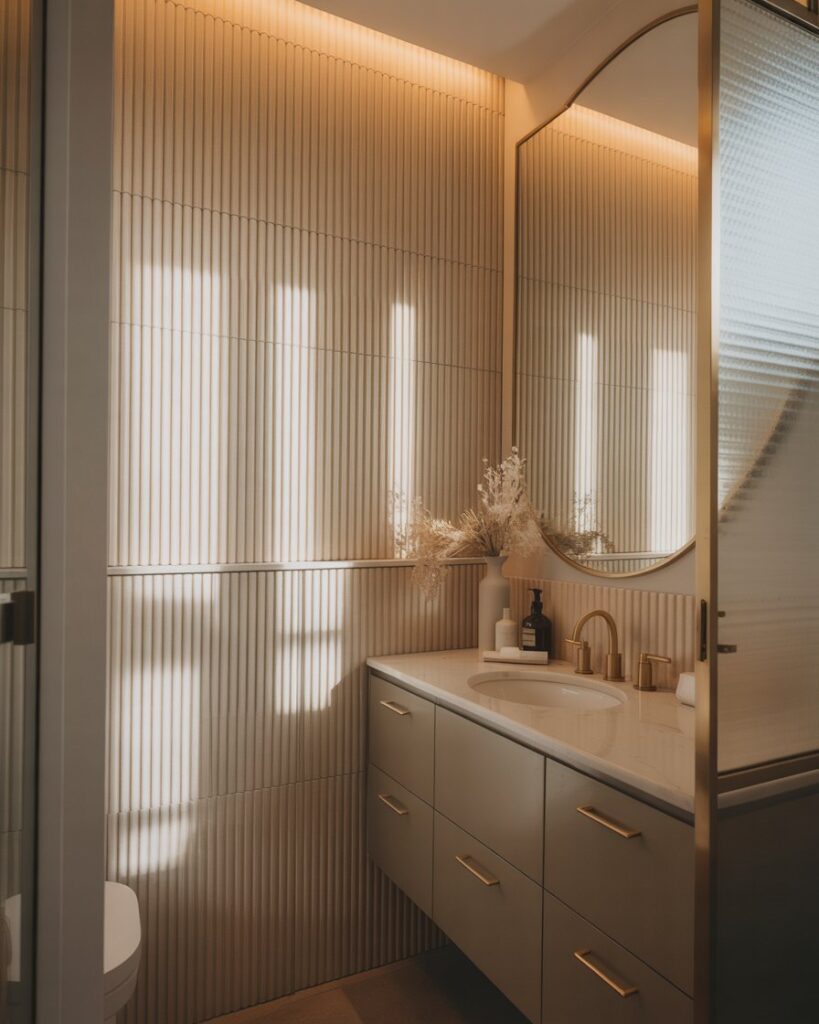
As an interior designer who has worked with everything from tiny NYC studio bathrooms to cozy suburban powder rooms, I can tell you that fluted walls are not just a trend. They are a transformative design tool. When used correctly in a small bathroom, fluted wall panels add texture, depth, visual height, and a sense of spa-like luxury that even the most expensive tile cannot replicate.
In this guide, I’m breaking down everything you need to know — from material selection and installation tips to color pairing and maintenance — so you can confidently bring this elevated design element into your own compact bath.
What Are Fluted Walls, and Why Are They Perfect for Small Bathrooms?
Fluted walls feature a series of vertical grooves or ridges — called reeds or flutes — that run continuously across a surface. The effect is rhythmic, sculptural, and deeply rooted in classical architecture. Think ancient Greek columns or Art Deco facades, now reimagined for modern interiors.
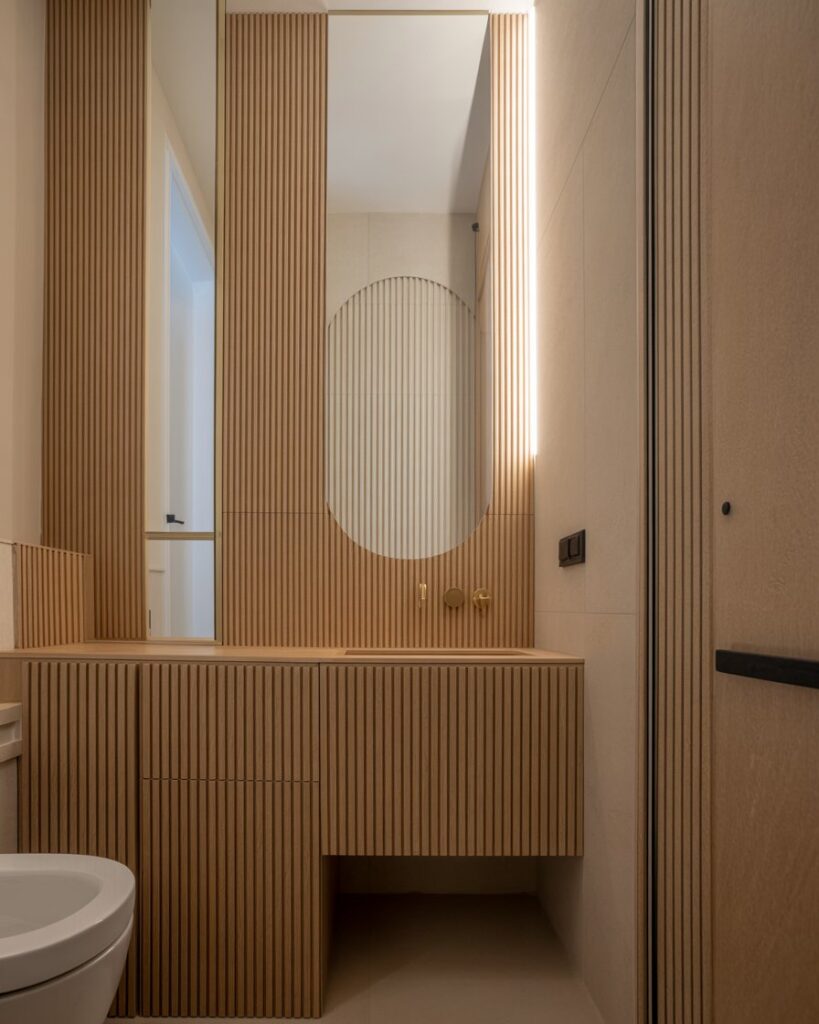
In a compact bathroom, these vertical lines do something almost magical: they draw the eye upward. This optical illusion creates the perception of higher ceilings and more vertical space, which is exactly what a small bathroom needs. Unlike busy tile patterns that can visually “chop up” a room, fluted texture adds dimension without visual clutter. The grooves catch light and shadow in a way that makes walls feel alive, not flat.
“Texture is the secret weapon of small-space design. When you can’t go wide, you go deep — and fluted panels do exactly that.” — Interior Design principle widely used by small-space specialists
Beyond the visual benefits, fluted walls are also incredibly versatile. They work with a wide range of bathroom interior styles, from modern minimalist to transitional, coastal, and even Japandi-inspired aesthetics.
Best Materials for Fluted Walls in a Compact Bath
Choosing the right material is everything when designing a small, moisture-heavy space. Here’s a breakdown of the most popular options for bathroom fluted panels:
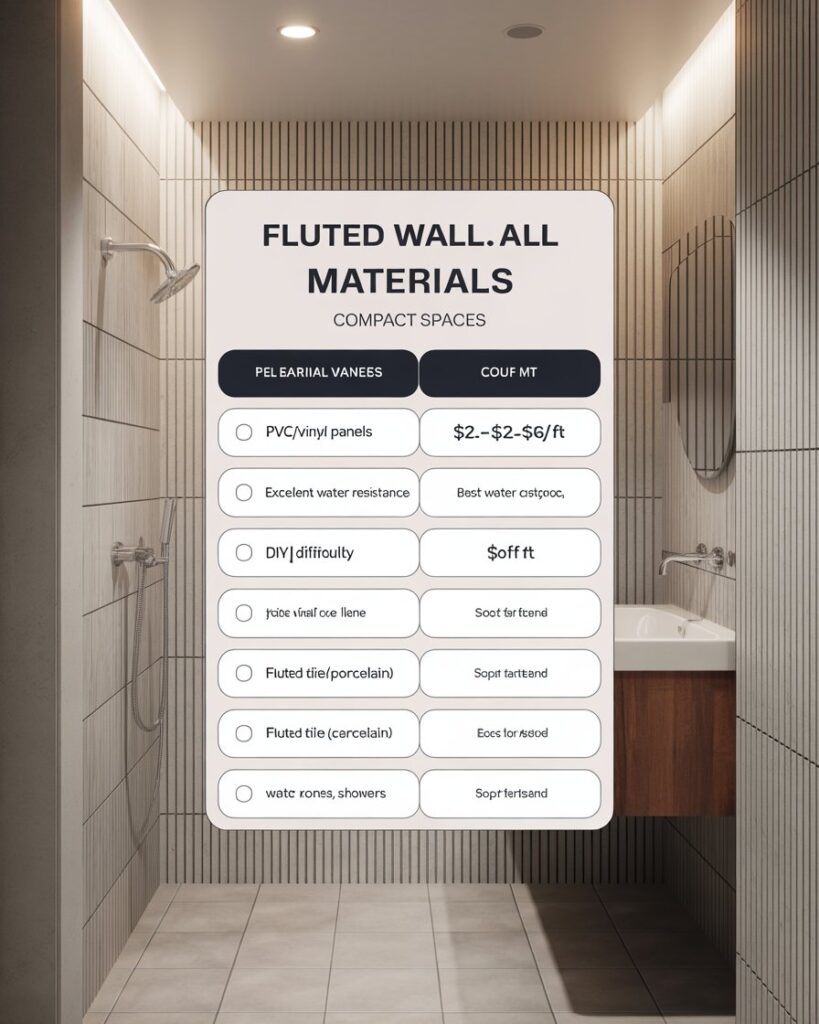
| Material | Water Resistance | DIY Friendly | Cost Range | Best For |
|---|---|---|---|---|
| PVC / Vinyl Panels | Excellent | Yes | $2–$6/sq ft | Budget renovations, renters |
| Moisture-Resistant MDF | Moderate (sealed) | Yes | $4–$9/sq ft | Accent walls, half baths |
| Natural Wood (sealed) | Low–Moderate | No | $10–$30/sq ft | Dry walls above tile line |
| Fluted Tile (ceramic/porcelain) | Excellent | Moderate | $8–$20/sq ft | Wet zones, showers |
| Plaster / Venetian Finish | Good (sealed) | No | $15–$40/sq ft | Custom, high-end looks |
For a true wet zone like a shower surround, fluted tile is your best bet. Ceramic and porcelain fluted tiles are waterproof, easy to clean, and available in a wide range of finishes. For dry accent walls, vanity backdrops, or powder rooms, moisture-resistant MDF or PVC panels give you maximum visual impact at a fraction of the cost.
How to Use Fluted Walls Strategically in a Small Bathroom
Not every wall in your compact bath needs the fluted treatment. In fact, applying it everywhere will defeat the purpose. Strategic placement is what separates a thoughtfully designed bathroom from an overwhelmingly busy one.
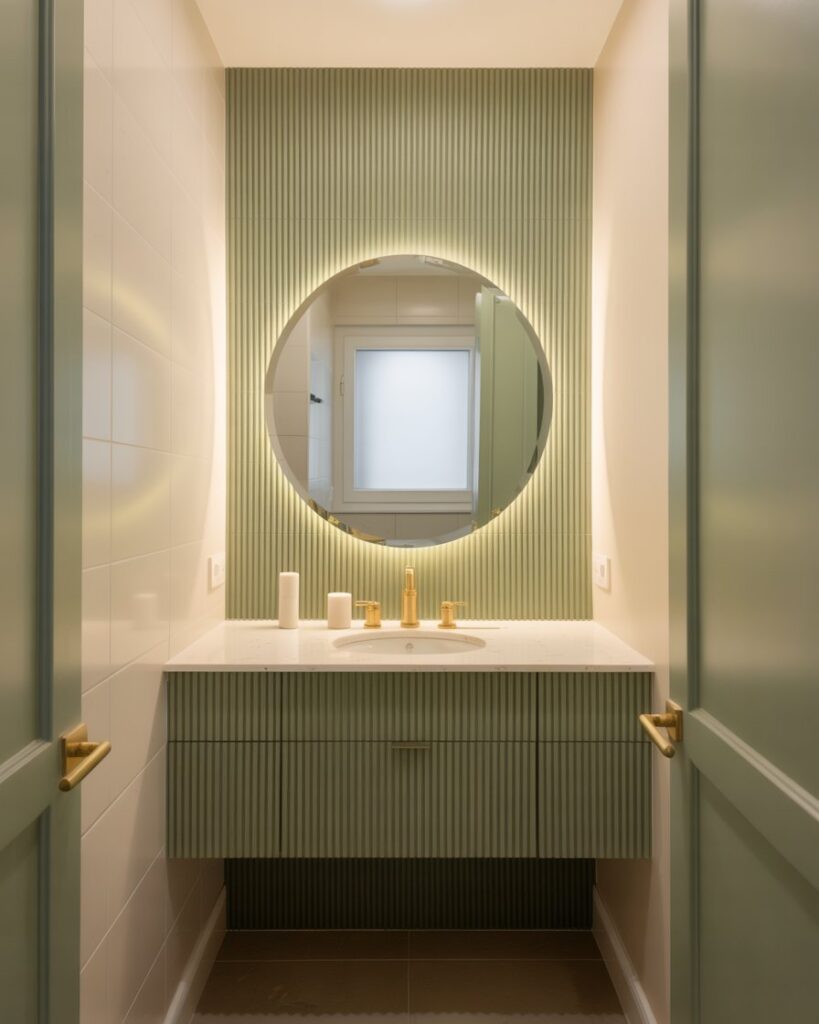
Here are the most impactful ways to incorporate fluted wall texture in a small space:
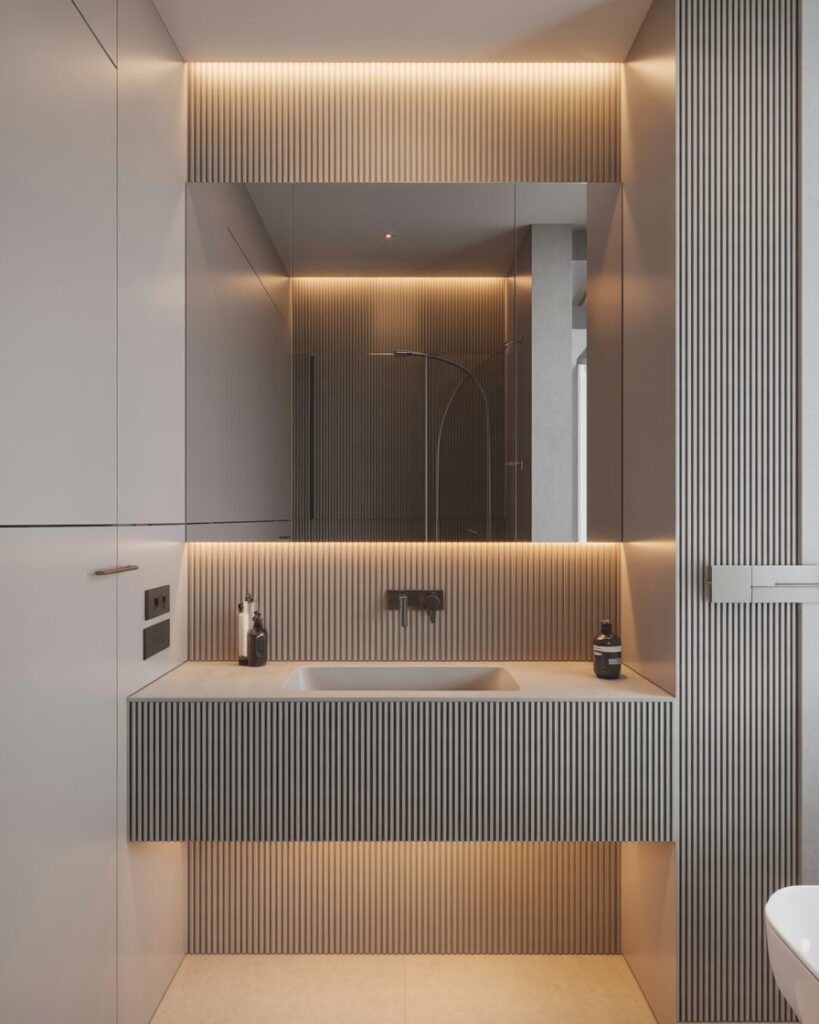
The Vanity Feature Wall Install fluted panels directly behind your vanity and mirror. This is the most photographed zone in any bathroom and the perfect spot for a textural statement. It frames the mirror beautifully and creates a built-in, intentional look without requiring a full remodel.
The Bathtub Surround If you have a freestanding tub or an alcove tub, fluted panels on the surrounding walls create an instant spa-like vignette. Pair with a wall-mounted faucet and minimal accessories for a high-end look.
A Single Accent Wall In a very compact bathroom — say, 35 to 50 square feet — consider applying fluted panels to just one wall, typically the wall you see first when you enter. This creates a focal point without overwhelming the space.
From Floor to Ceiling Running fluted panels from floor to ceiling on one wall dramatically amplifies the height illusion. This technique works especially well in bathrooms with low ceilings (8 feet or under), which is common in older American homes.
Pro Tip: The Half-and-Half Method
💡 Pro Tip: For compact bathrooms under 50 square feet, try the half-and-half method — install fluted panels on the upper half of one wall and pair the lower half with a contrasting tile or painted wainscoting. This technique breaks vertical space into two distinct zones, making the room feel more intentional and designed. Use a thin strip of brass, matte black, or chrome trim as a divider between the two materials for a polished, custom finish. This approach also keeps costs down, since you’re using less of the premium material.
Color Palettes That Work Best with Fluted Walls in Small Baths
Color selection is critical in a compact bathroom. The grooves in fluted panels create natural shadow lines, which means even light-colored walls will show depth. Here’s what works beautifully:
Warm Whites and Creams Warm white fluted panels — think Benjamin Moore’s “White Dove” or Sherwin-Williams’ “Alabaster” — feel fresh and airy while still showing off the texture. The shadow lines remain subtle, and the overall effect is clean, spa-like, and timeless.
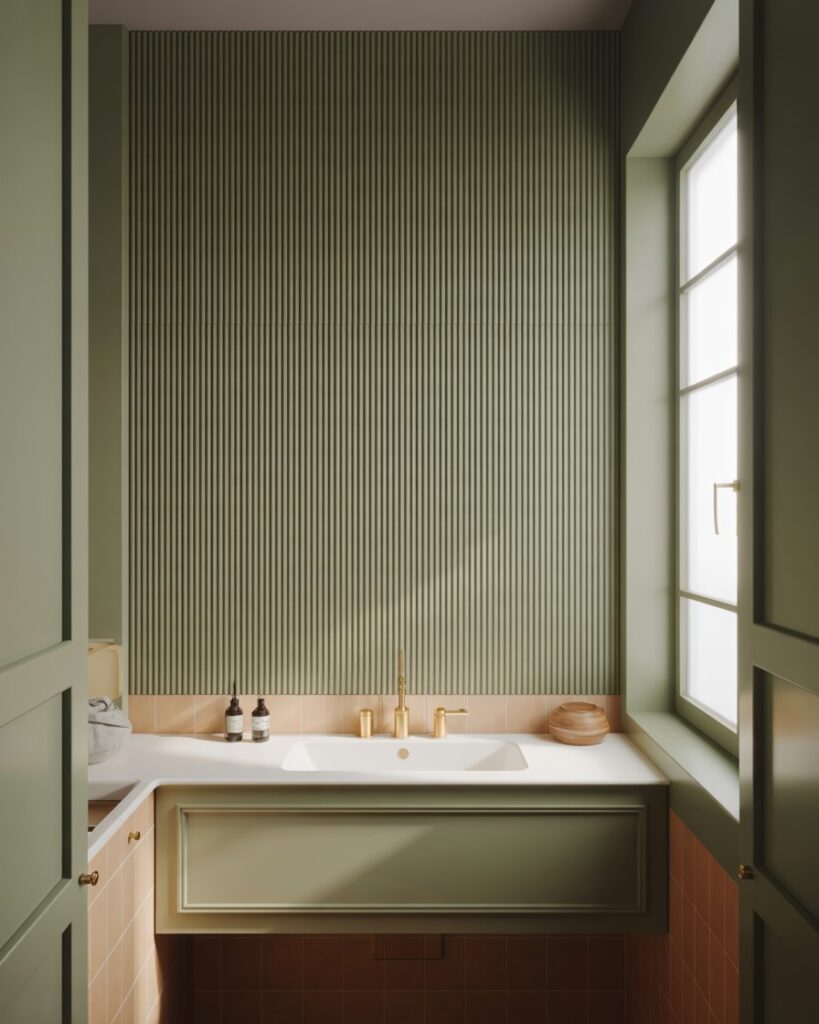
Sage Green and Eucalyptus Soft greens are one of the biggest bathroom color trends in the US right now, and they pair exquisitely with fluted texture. The organic, nature-inspired tone complements the rhythmic lines of the fluting and creates a calming, biophilic bathroom environment.
Charcoal, Navy, and Deep Slate Don’t be afraid of dark colors in a small bathroom — especially on a fluted feature wall. Deep tones paired with good lighting create a moody, dramatic look that feels intentional and luxurious rather than cramped.
Warm Terracotta and Clay For a more earthy, Southwestern-influenced bathroom design, terracotta-toned fluted panels create incredible warmth. Pair with natural wood accessories and brass fixtures for a cohesive, designer look.
Fixture and Hardware Pairings That Complement Fluted Walls
The wrong hardware can undercut even the most beautiful fluted wall. Here’s how to pair fixtures thoughtfully:
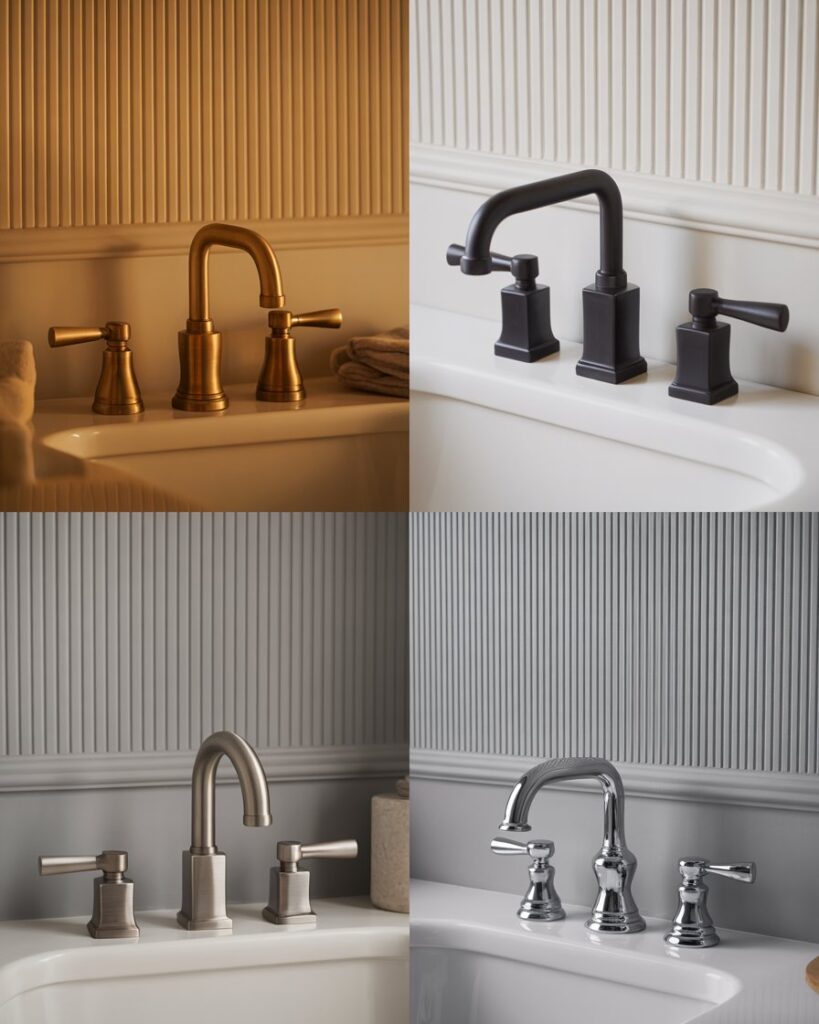
- Brass and Gold Finishes: These warm metallic tones are the most popular pairing for fluted walls. They echo the classic, architectural feel of the reeding detail.
- Matte Black: A bold, modern choice that creates striking contrast against light-colored fluted panels. Ideal for a contemporary or industrial-modern bathroom.
- Brushed Nickel: A safe, versatile option that blends well with both warm and cool fluted wall tones.
- Chrome: Works best with white or gray fluted panels and a more traditional or transitional bathroom style.
Avoid mixing more than two metal finishes in a compact bathroom. The limited square footage means every element is visible at once, and too many competing finishes can feel chaotic.
Installation Guide: What to Expect
Installing fluted wall panels in a bathroom is a project that ranges from weekend-DIY to professional-required, depending on the material you choose.
For PVC or Vinyl Panel Installation:
- Measure your wall dimensions carefully and add 10% for waste.
- Clean and prime the wall surface. Remove any existing wallpaper completely.
- Apply construction adhesive in vertical strips to the back of each panel.
- Press firmly into place, using a level to keep panels straight.
- Caulk all seams with color-matched or clear silicone caulk rated for bathrooms.
- Apply trim pieces at ceiling, floor, and corners for a finished look.
For Fluted Tile Installation: Fluted tiles require a professional tile setter in most cases, especially in wet zones. The grout selection matters enormously — choose an epoxy grout or a stain-resistant formula for easier long-term maintenance. The installation process involves standard thinset mortar, proper waterproof membrane installation behind the tile, and careful grout joint spacing to complement the flute dimensions.
Timeline: A DIY panel installation on one bathroom wall typically takes 4–8 hours for a beginner. Professional tile work on a full bathroom can take 2–5 days including drying and curing time.
Lighting: The Element That Makes or Breaks Fluted Walls
Here is a design truth that every homeowner needs to hear: fluted walls are only as good as the lighting that hits them. The ridges and grooves need directional or layered light to truly come alive. In a compact bathroom, you often have limited lighting options — but here’s how to maximize the effect:
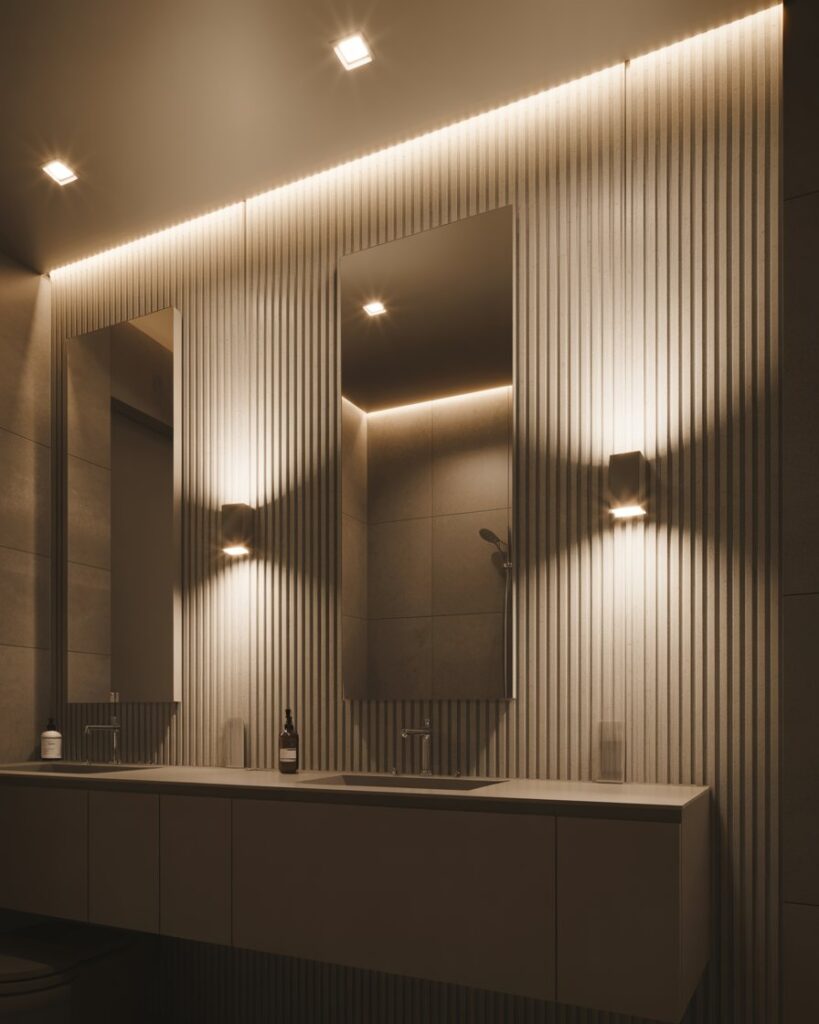
Vertical Sconces on Either Side of the Mirror Side-mounted sconces create horizontal light that rakes across the fluted surface, casting beautiful shadows in the grooves. This is both the most flattering lighting for faces and the most effective at highlighting wall texture.
Recessed Lighting Aimed at the Wall If you’re renovating, consider adding one or two recessed can lights angled to wash down the fluted wall. This technique, called wall washing, dramatically amplifies the three-dimensional quality of the fluting.
LED Strip Lighting Above Cabinets or Mirror Indirect LED lighting bounced off the ceiling or wall creates a diffused glow that illuminates the fluted texture without harsh shadows.Maintenance and Cleaning Tips for Fluted Bathroom Walls
The grooves in fluted walls can trap soap scum, dust, and moisture if not properly maintained. Here’s how to keep them looking pristine:
- Use a soft-bristle brush (like a clean toothbrush or a detail brush) to clean inside the grooves once a week.
- For PVC panels, a diluted all-purpose cleaner and microfiber cloth work perfectly — never use abrasive scrubbers.
- For fluted tile, seal the grout annually to prevent staining and mold growth.
- Ensure your bathroom has adequate ventilation (exhaust fan rated for your square footage) to prevent moisture buildup in the grooves.
- Avoid steam-cleaning fluted MDF or wood panels, as excess moisture can cause warping over time.
Budget Breakdown: What Does a Fluted Wall Bathroom Renovation Cost?
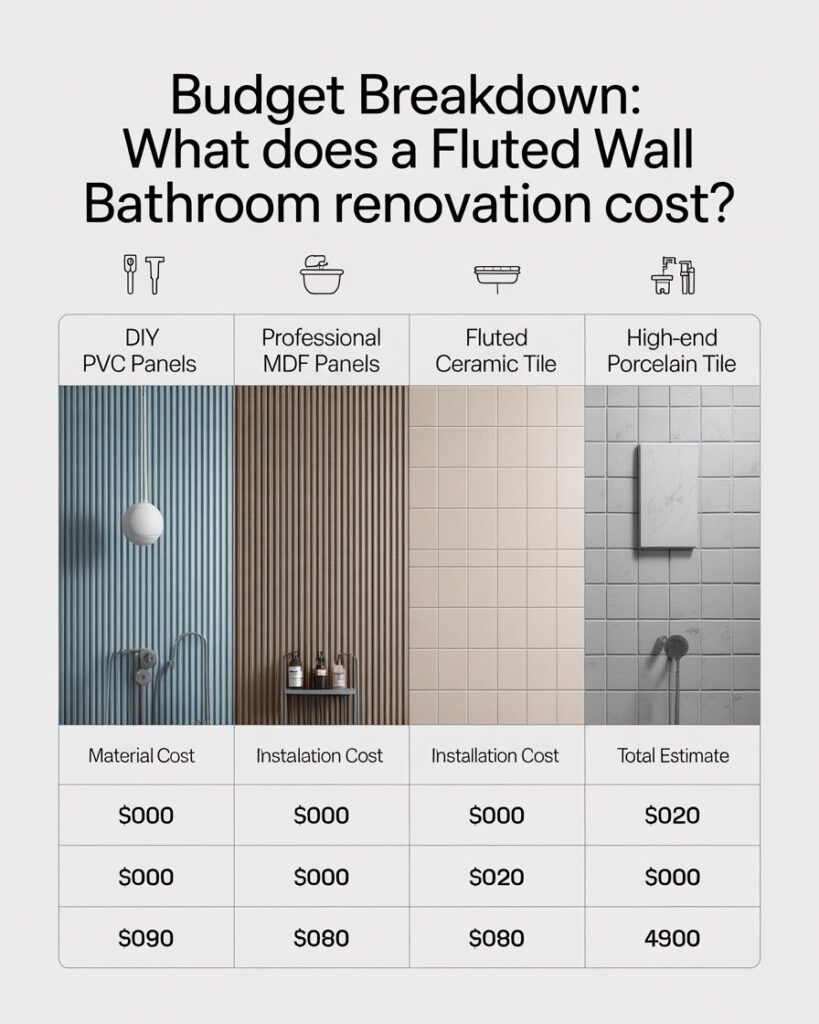
One of the most common questions I get from clients is: how much is this actually going to cost me? Here’s a realistic breakdown for a compact bathroom accent wall (approximately 30–40 square feet):
| Option | Material Cost | Installation Cost | Total Estimate |
|---|---|---|---|
| DIY PVC Panels | $60–$240 | $0 (self-install) | $60–$240 |
| Professional MDF Panels | $120–$360 | $300–$600 | $420–$960 |
| Fluted Ceramic Tile | $240–$600 | $400–$900 | $640–$1,500 |
| High-End Porcelain Tile | $600–$1,200 | $600–$1,200 | $1,200–$2,400 |
The good news: even the most budget-friendly PVC option delivers a visually impressive result. Many homeowners are genuinely shocked at how expensive and custom the finished product looks, even when the total investment was under $200.
Where to Shop: Trusted US Sources for Fluted Wall Materials
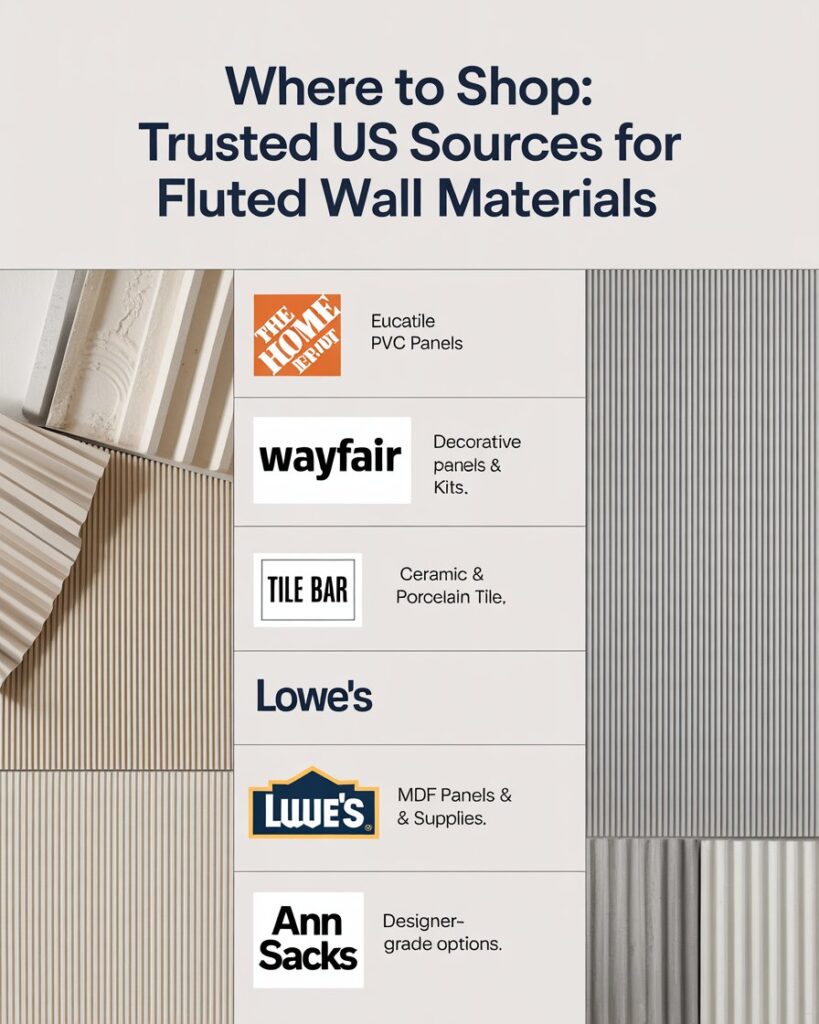
- The Home Depot (homedepot.com) — Carries a growing selection of PVC fluted wall panels and moisture-resistant board under the brand names EUCATILE and others.
- Wayfair (wayfair.com) — Excellent for decorative fluted panels and wainscoting kits; good filter options for bathroom-safe materials.
- Tile Bar (tilebar.com) — One of the best online destinations for fluted ceramic and porcelain tile with a wide range of styles and price points.
- Lowe’s (lowes.com) — Good source for moisture-resistant MDF panel boards and installation supplies.
- Ann Sacks (annsacks.com) — For high-end, designer-grade fluted tile options if budget allows.
Final Thoughts: Is a Fluted Wall Right for Your Compact Bathroom?
Fluted walls are one of the most effective, designer-approved ways to elevate a small bathroom from forgettable to absolutely stunning. The vertical texture adds height, the play of light and shadow adds dimension, and the overall effect adds the kind of intentional, architectural character that most compact bathrooms desperately lack.
Whether you’re working with a $150 budget and a free weekend or investing in a full professional tile installation, there is a fluted wall solution that will work for your space, your style, and your budget. The key is strategic placement, smart material selection, and layered lighting that allows the texture to truly shine.
Start small if you’re nervous — a single vanity feature wall is all it takes to see why interior designers across the US are reaching for this detail again and again. Once you see it in your own space, I promise you’ll wonder how your bathroom ever looked complete without it.
Related Topics to Explore: bathroom remodel ideas for small spaces | powder room accent wall ideas | modern bathroom tile trends | spa bathroom design on a budget | vertical shiplap in bathrooms.