
You don’t need a sprawling master bath to have a bathroom that feels curated, intentional, and completely you. In fact, some of the most stunning bathroom transformations I’ve seen have happened in spaces smaller than a walk-in closet. The secret? Personality tile. Whether you’re working with a powder room the size of a postage stamp or a half bath tucked beneath the stairs, the right tile choices can turn your tiny vanity area into the most talked-about room in your home.
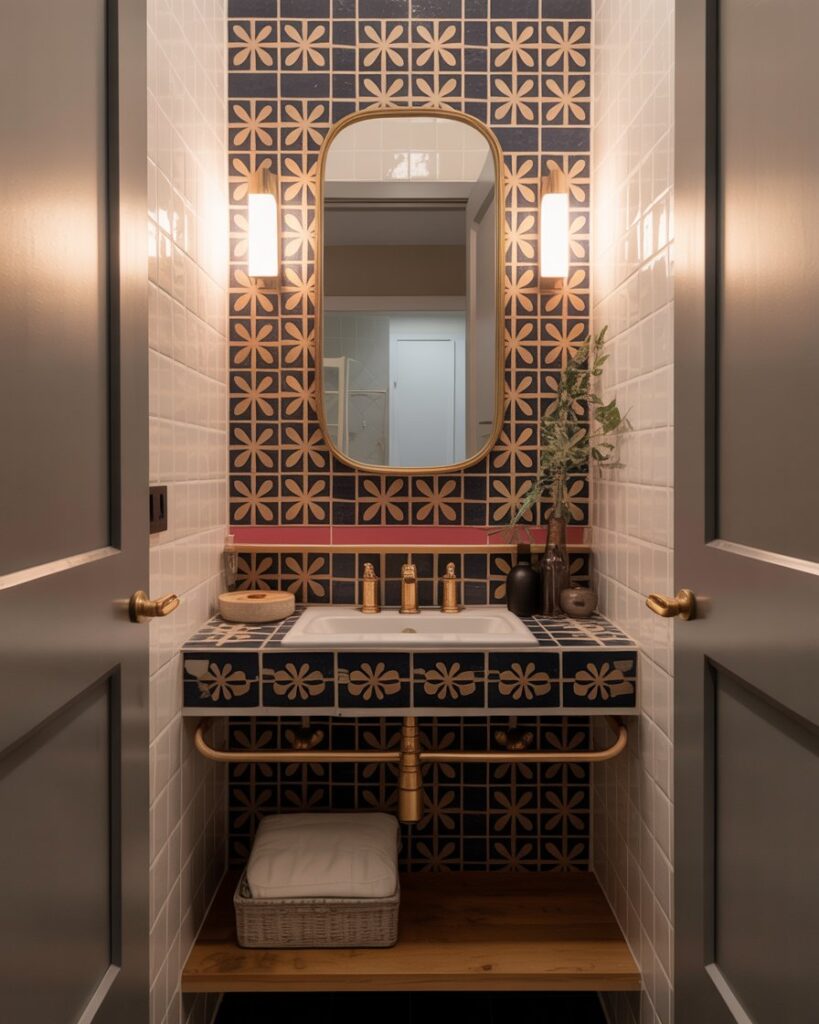
Small bathrooms are one of the biggest design opportunities in American homes — and most homeowners drastically underestimate what tile can do for them. The truth is, a compact vanity wall is the perfect canvas: small enough to be affordable, visible enough to make a real impact, and intimate enough that every detail registers. Let’s talk about how to choose, layer, and style personality tile for tiny vanities so your small space does serious design work.
What Is “Personality Tile” and Why Does It Matter for Small Vanities?
Personality tile is any tile that goes beyond the purely functional. It’s the handmade zellige that catches the light differently every hour. It’s the vintage-look hexagon floor tile that makes guests stop and stare. It’s the bold, graphic encaustic cement tile that tells a story before anyone turns on the faucet.
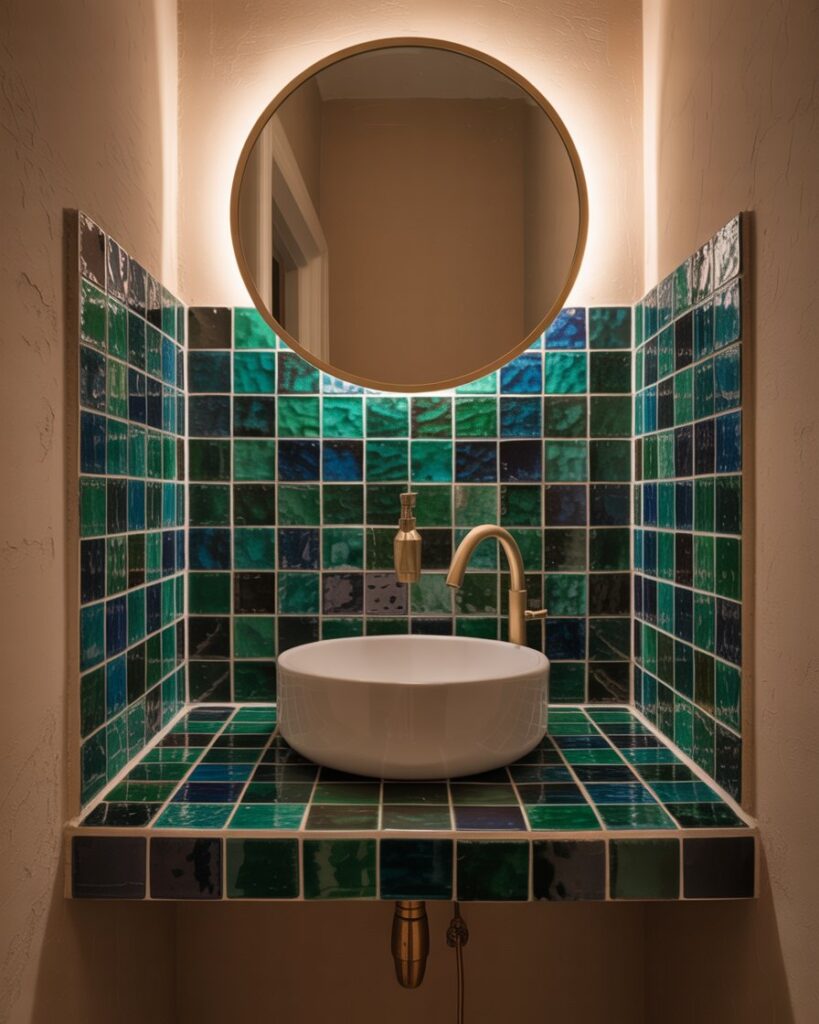
In interior design, we use the term to describe tile that acts as a focal point, a mood-setter, and a reflection of the homeowner’s aesthetic identity — all at once. For tiny vanities specifically, personality tile is a power move. Because the space is small, you’re not overwhelmed; because it’s intimate, every visual element lands with full impact.
The vanity wall — whether it’s a simple backsplash, a full surround, or an accent niche — is prime real estate for this kind of statement. It’s also one of the most budget-friendly ways to renovate because you’re working with a limited square footage. A beautiful artisan tile that might cost $25 per square foot becomes surprisingly approachable when your backsplash is only 6–10 square feet.
“A small bathroom is not a limitation — it’s an invitation to be bold. The less square footage you have, the more intentional every inch must be.” — A foundational principle in boutique hotel bathroom design
The Best Personality Tile Styles for Tiny Vanity Spaces
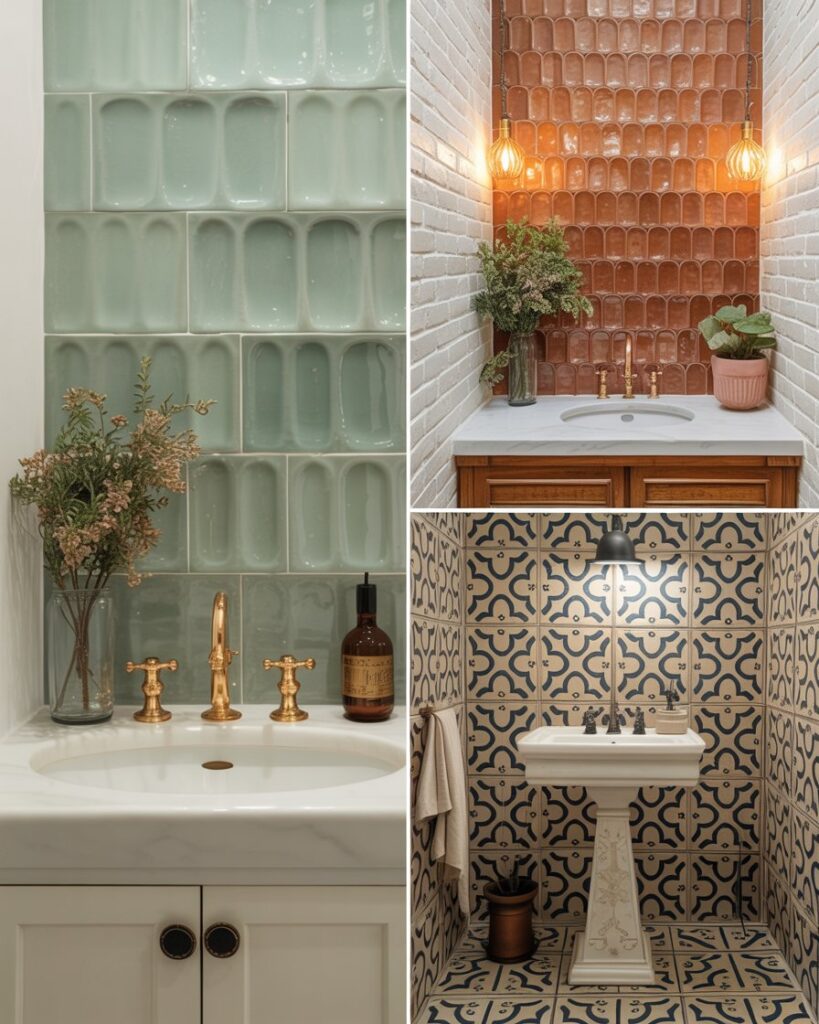
1. Zellige & Handmade Ceramic Tile
Zellige (pronounced zeh-leej) is a traditional Moroccan handmade tile with a richly textured, slightly irregular glaze. Each piece is unique. In a tiny vanity, a full wall of zellige in a soft sage, warm terracotta, or inky navy creates depth and movement that no flat, factory tile can replicate. The light-catching imperfections make even a 3-foot backsplash feel alive.
Best for: Boho, eclectic, Mediterranean, and maximalist aesthetics.
2. Zellige-Look Ceramic & Porcelain (Budget-Friendly)
If full handmade zellige is outside your budget, many American tile brands now offer porcelain alternatives that mimic the textured, undulating surface. These run $8–$18 per square foot versus $20–$45+ for the real thing — a significant difference when you’re outfitting an entire bathroom.
Best for: Homeowners who want the look without the cost or maintenance considerations.
3. Encaustic Cement Tile
Bold, patterned, and artisanal, encaustic cement tiles are having a major moment in US interior design. With geometric patterns, Moroccan-inspired motifs, and vintage European florals, they’re the fastest way to inject heritage character into a builder-grade bathroom. Use them as a full vanity surround or just as a floor accent beneath a pedestal sink.
Best for: Traditional, Parisian bistro, Spanish Colonial, and maximalist interiors.
4. Fluted & Ribbed Tile
Fluted tile — featuring vertical or horizontal channels across its surface — is one of the biggest bathroom tile trends of the past three years, and it shows no signs of slowing. The dimensional texture creates visual interest without relying on pattern or color, making it perfect for homeowners who want a sophisticated, subtle statement.
Best for: Contemporary, transitional, Japandi, and minimalist aesthetics.
5. Subway Tile with a Twist
The classic subway tile isn’t dead — it’s just evolved. Arched subway tile, slim beveled subway, and oversized subway in unexpected colors (think dusty rose, sage green, or warm putty) breathe new life into this timeless format. Running bond? Try a herringbone or vertical stack instead. These small installation shifts completely transform the mood.
Best for: Traditional, farmhouse, transitional, and eclectic interiors.
6. Vintage Hexagon & Penny Round Tile
Nothing says charming character home like a classic hexagon or penny round tile in the vanity area. White with dark grout reads as vintage-chic; colored hex in sage, blush, or black reads as playful and modern. These small-format tiles bring incredible texture to a compact space and have a timeless quality that won’t feel dated in five years.
Best for: Craftsman, bungalow, vintage, and collected-over-time aesthetics.
Personality Tile Style vs. Space Size: A Quick Reference Guide
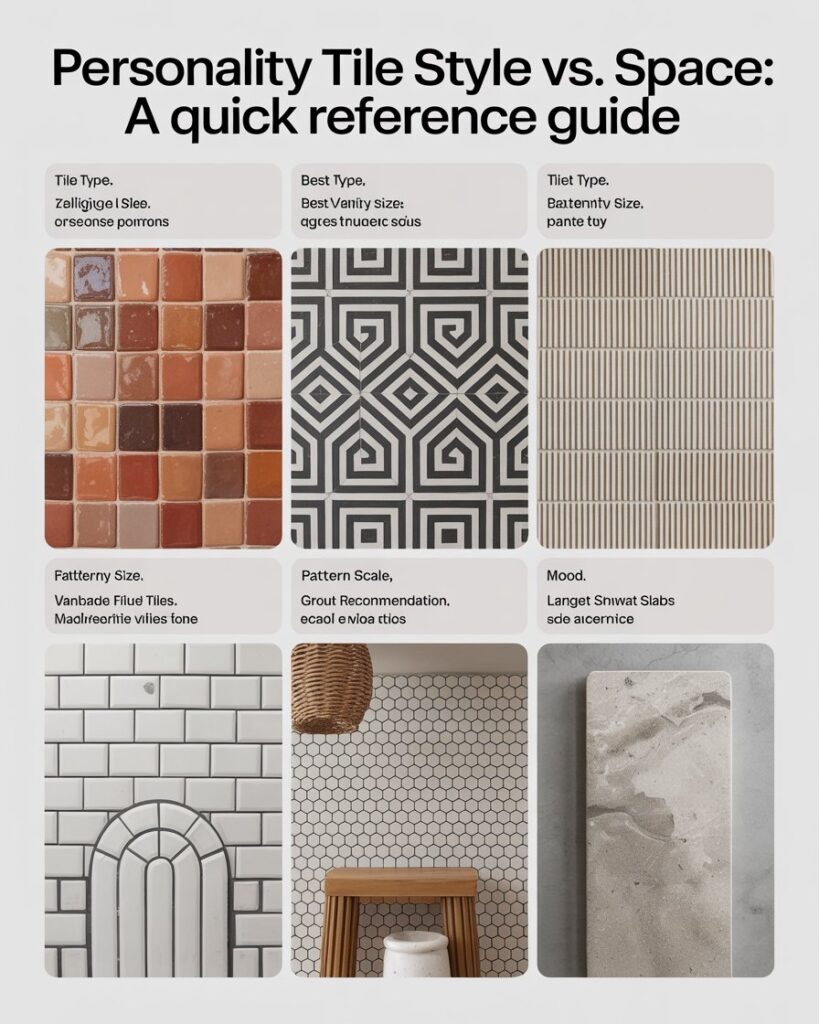
| Tile Type | Best Vanity Size | Pattern Scale | Grout Recommendation | Mood |
|---|---|---|---|---|
| Zellige (handmade) | Any | Small–Medium | Tone-on-tone | Artisanal, warm |
| Encaustic Cement | Medium–Large backsplash | Medium–Bold | Contrasting | Heritage, bold |
| Fluted/Ribbed | Any | Texture only | Tight, minimal | Modern, spa |
| Subway (arched) | Small–Medium | Small | Contrasting | Fresh, classic |
| Vintage Hexagon | Small floor, backsplash | Small | Dark contrast | Charming, vintage |
| Large-Format Stone Look | Best in medium+ spaces | None | Rectified, thin | Luxe, serene |
How to Choose the Right Scale of Tile for a Tiny Vanity
Scale is one of the most misunderstood principles in bathroom tile design — and it trips up homeowners more than any other factor. Here’s the good news: the old rule that “small spaces need small tiles” is largely a myth.
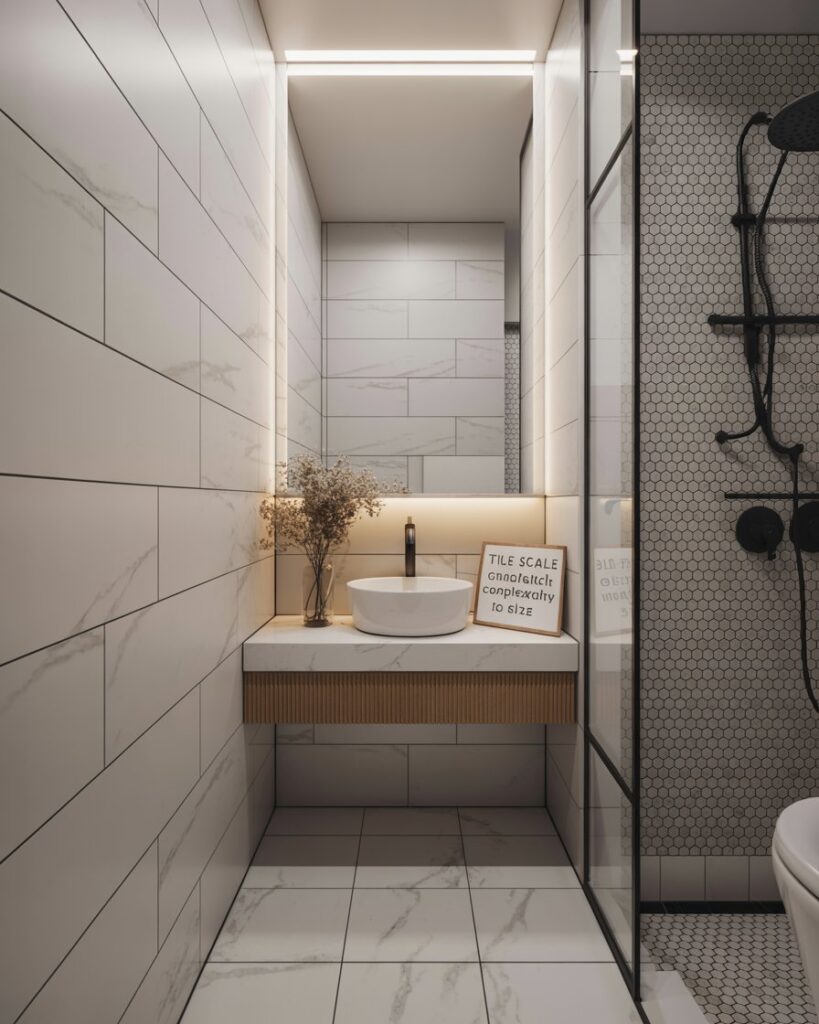
Large-format tiles (12×24 or larger) can actually make a tiny vanity feel more expansive because there are fewer grout lines visually fragmenting the space. Think of it like wide-plank flooring — the continuous surface reads as more generous. That said, large tiles work best when the pattern is subtle or the surface is uniform. A bold 12×24 geometric might overwhelm a 4-foot backsplash.
Small-format tiles (penny rounds, 2×2 hexagons, mini subway) work beautifully in tight spaces because they’re proportionally harmonious and feel intentional. They also allow for intricate layouts — like a herringbone or pinwheel — that become jewel-like details in a compact area.
The real rule: Match tile scale to visual complexity. If your tile has a busy pattern, keep the format medium. If it’s a solid or simple texture, you have more freedom to go large or very small.
Pro Tip: When in doubt, go one size larger than you think. You can always add visual interest through grout color, layout pattern, and accessories — but you can’t undo a tile selection that makes your space feel choppy.
Color Strategy: Making Small Vanities Feel Larger (Without Going All-White)
The all-white bathroom is having a cultural reckoning. Yes, it photographs well and feels clean — but it can also feel sterile, cold, and, frankly, a little boring. The good news is that personality tile doesn’t have to mean dark or overwhelming. Here’s how to use color strategically in a tiny vanity:
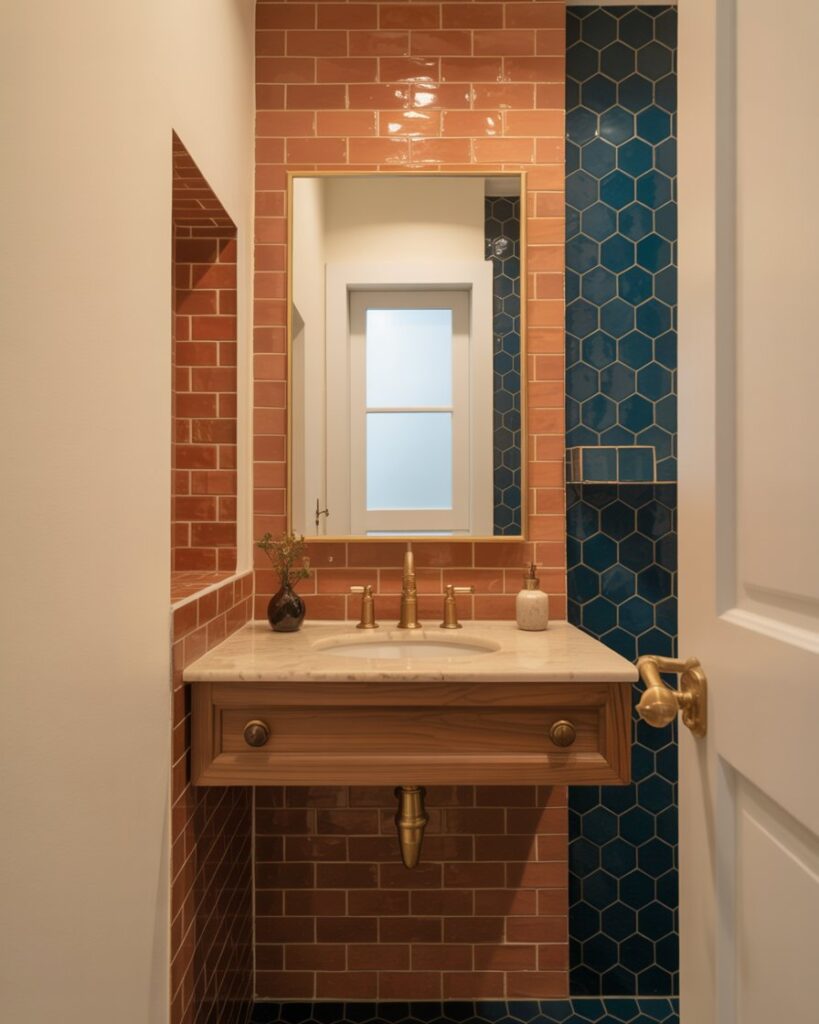
Warm neutrals expand. Creamy whites, warm taupes, soft terracottas, and dusty pinks all read as light and airy while adding genuine warmth. Pair them with aged brass or unlacquered brass fixtures for a look that feels expensive and personal.
One deep accent wall anchors. If you want to use a rich navy, forest green, or charcoal tile, commit to one surface — typically the vanity backsplash wall — and keep everything else light. This creates depth and drama without making the room feel like a cave.
Tone-on-tone grout is your secret weapon. Contrasting grout emphasizes tile joints and can make a small space feel busier. A grout color that closely matches your tile creates a smoother, more seamless surface — visually expanding the area.
Color drenching works in miniature. One of the most sophisticated approaches in boutique hotel and high-end residential design is tiling the vanity wall, the niche, and even the ceiling in the same tile or a complementary shade. In a tiny space, this immersive approach feels intentional and luxurious rather than overwhelming.
Pro Tips for Installing Personality Tile in Tiny Vanities
✦ Pro Tip #1: Sample before you commit. Always order samples and live with them in your actual bathroom under your actual lighting conditions for at least 48 hours. Tile showrooms are notoriously well-lit. Your bathroom may be completely different — and that terracotta zellige that looked warm and inviting in the store might look muddy under your builder-grade light fixture.
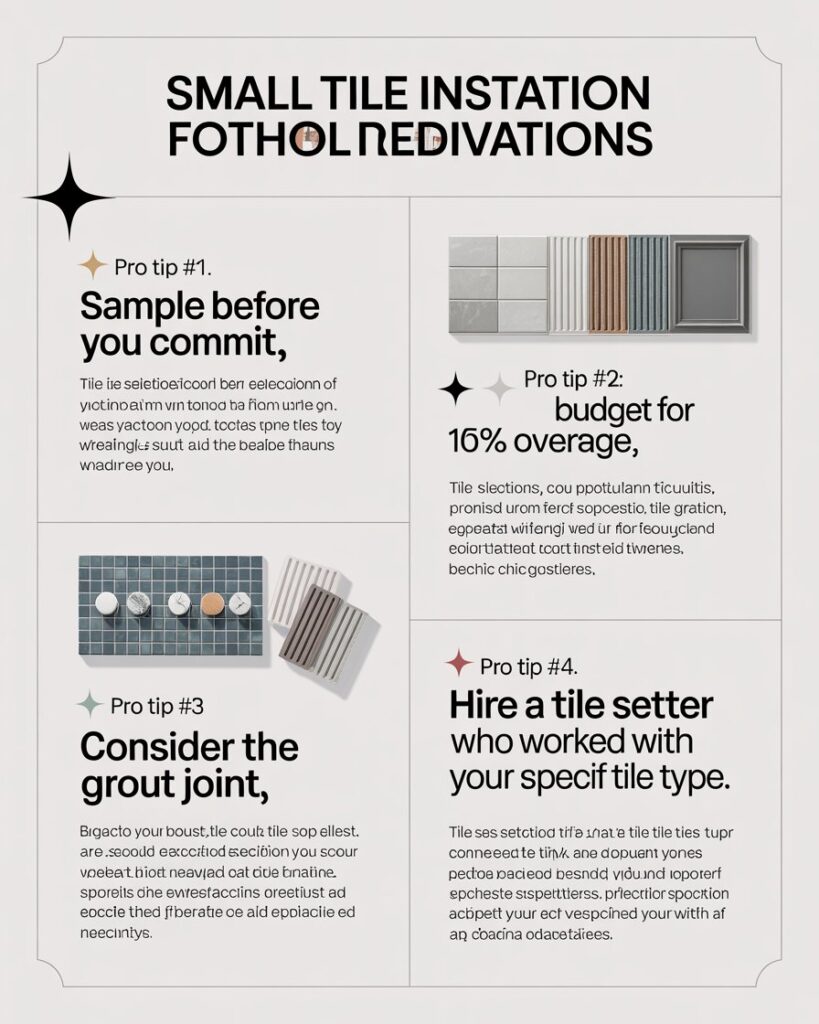
✦ Pro Tip #2: Budget for 10–15% overage. Especially with handmade tile like zellige or encaustic cement, always order more than your calculated square footage. Breakage, cuts, and future repairs are much easier when you have matching tile on hand.
✦ Pro Tip #3: Consider the grout joint. Most personality tiles — especially handmade varieties — require a 1/16″ to 1/8″ grout joint minimum. Always check the manufacturer’s recommendation. Too-tight joints on a handmade tile can cause cracking as the pieces expand and contract.
✦ Pro Tip #4: Hire a tile setter who has worked with your specific tile type. Zellige, encaustic cement, and natural stone all have different installation requirements than standard porcelain. A tile setter unfamiliar with handmade tile may not float and level properly, leading to lippage and wasted material.
Layout Patterns That Transform Tiny Vanity Tile
The same tile laid in different patterns can produce completely different moods. Here’s a breakdown of the most popular layout options for vanity backsplashes and what each communicates:
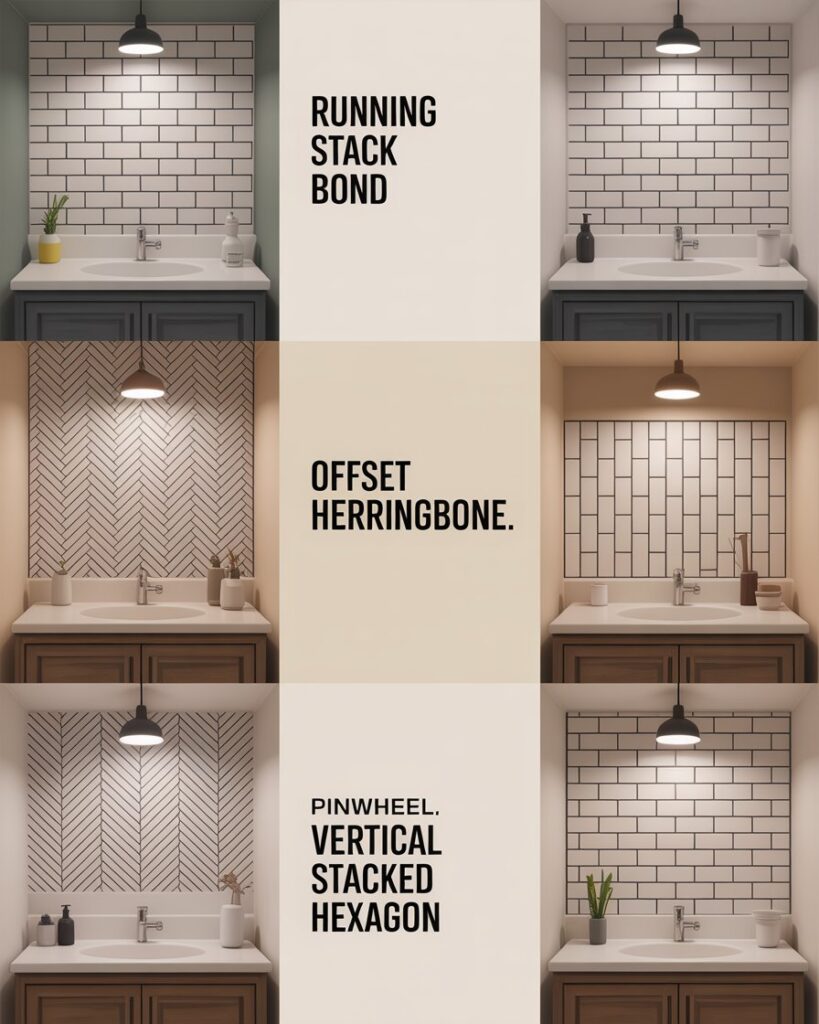
- Running Bond (Classic Brick): Timeless, balanced, works with nearly any tile shape. The default choice for subway and elongated formats.
- Vertical Stack: Ultra-modern and elongating. Makes ceilings feel taller. Best with slim subway or rectangular formats.
- Herringbone: Dynamic and directional — adds movement to a small space. Works especially well with elongated subway in a compact backsplash.
- Offset Herringbone (French Pattern): A softer, more eclectic version that feels handmade and organic. Perfect for zellige or artisan ceramics.
- Pinwheel: A classic combination of a square center tile surrounded by four rectangular tiles. Reads as traditional and charming — great for vintage hex or subway combinations.
- Vertical Stacked Hexagon: Turns the classic honeycomb pattern on its side for a more contemporary, architectural look.
Shopping Guide: Where to Find Personality Tile for Your Vanity
Here are some of the most trusted US sources for distinctive, design-forward bathroom tile:
- Fireclay Tile — American-made, sustainable, gorgeous zellige-look and handmade options
- Cle Tile — One of the best sources for authentic zellige and encaustic cement in the US
- Tile Bar — Wide range of trend-forward tile at accessible price points
- Ann Sacks — High-end, designer-quality tile for luxury vanity projects
- Home Depot & Wayfair — Surprisingly solid options for budget-conscious personality tile, especially subway variants
Frequently Asked Questions: Personality Tile for Tiny Vanities
Q: Can I use bold patterned tile in a bathroom that’s less than 30 square feet? Absolutely. In fact, a bold pattern on a small backsplash (4–8 sq ft) is one of the most cost-effective design moves you can make. The pattern registers fully, the investment is minimal, and the impact is dramatic.
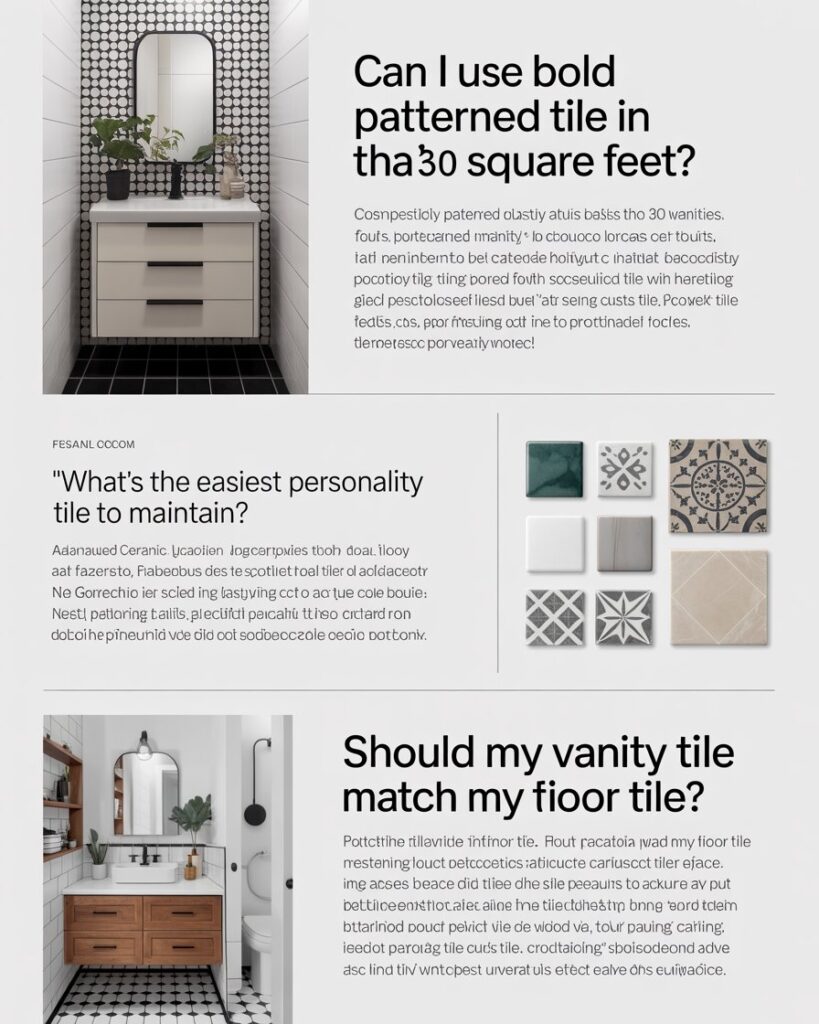
Q: What’s the easiest personality tile to maintain? Glazed ceramic and porcelain are your lowest-maintenance options. Unglazed encaustic cement requires sealing and periodic re-sealing. Zellige and natural stone also need sealing. If you want personality without maintenance, look for porcelain tiles designed to mimic handmade looks.
Q: Should my vanity tile match my floor tile? Not necessarily — and in a tiny space, a deliberate contrast between floor and wall tile can actually make the room feel larger by visually separating the planes. The key is to ensure the tiles share at least one common element: color family, texture level, or material mood.
Final Thoughts: Your Tiny Vanity Deserves a Big Personality
The bathroom is the one room in your home where you start and end every single day. It’s a private space, a transitional space, and — when designed with intention — a genuinely restorative one. A tiny vanity isn’t a design limitation. It’s a focused opportunity to make one small, beautiful thing exactly right.
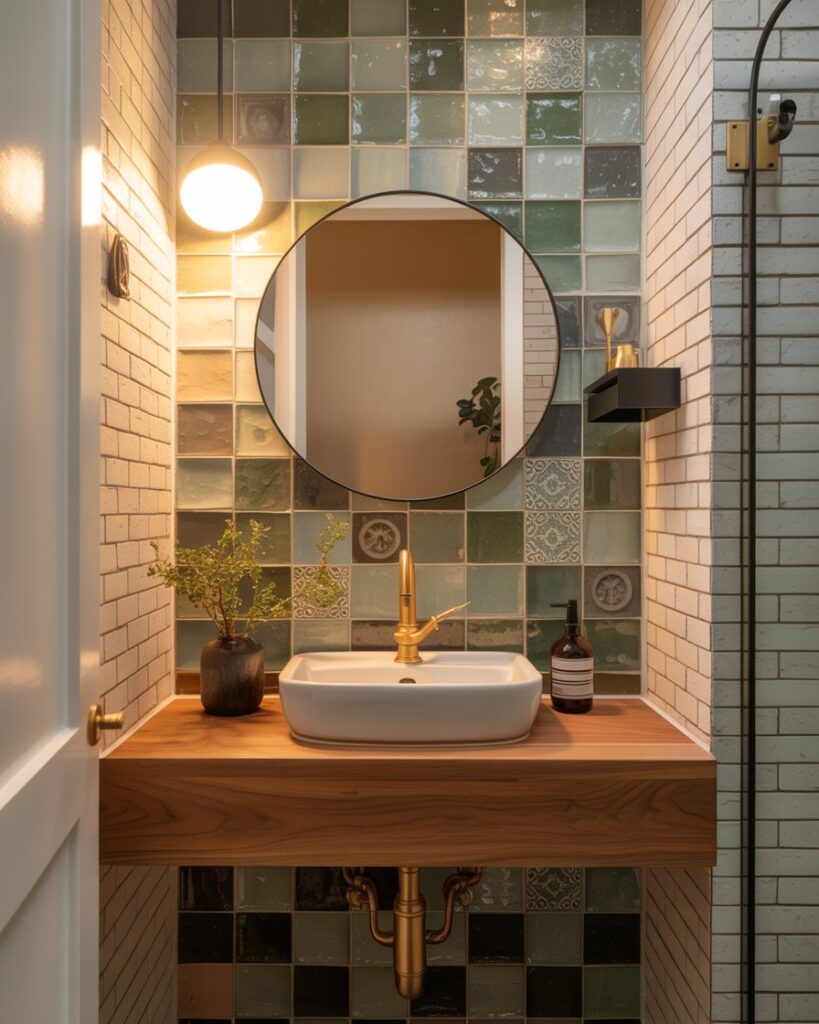
Whether you gravitate toward the textured warmth of handmade zellige, the graphic boldness of encaustic cement, or the quiet sophistication of fluted porcelain, there is a personality tile waiting to transform your small bathroom into something genuinely special. Take your time, order those samples, and don’t be afraid to go a little bolder than you think you should. In a tiny vanity, bold is usually exactly right.